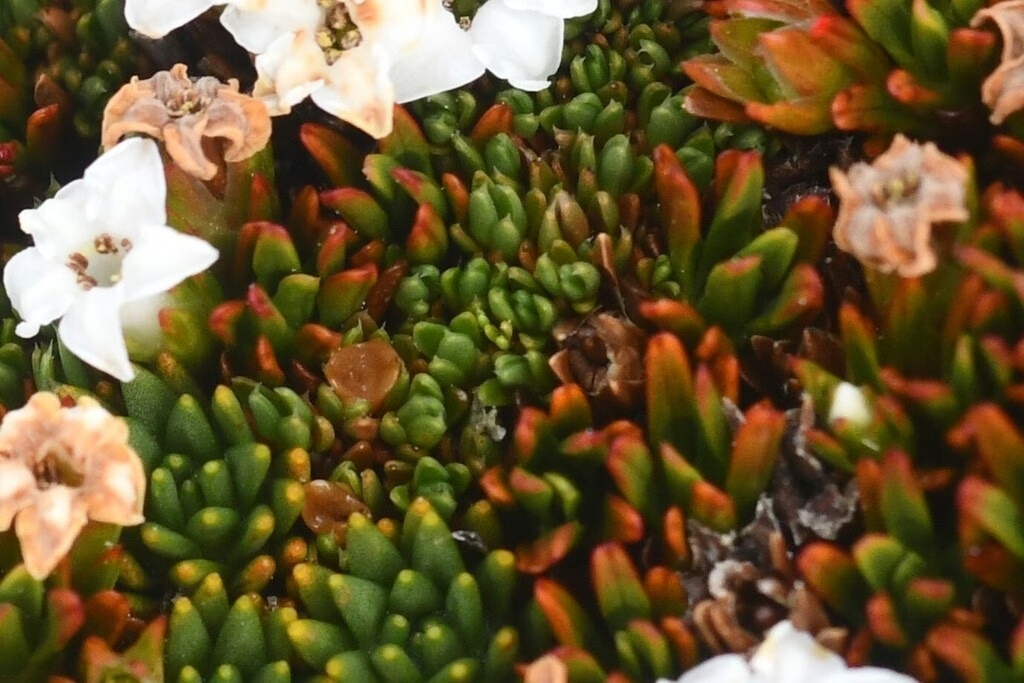
Moss-like Herb
Schizacme novae-zelandiae
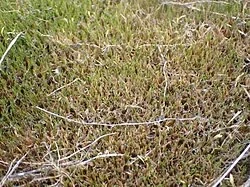
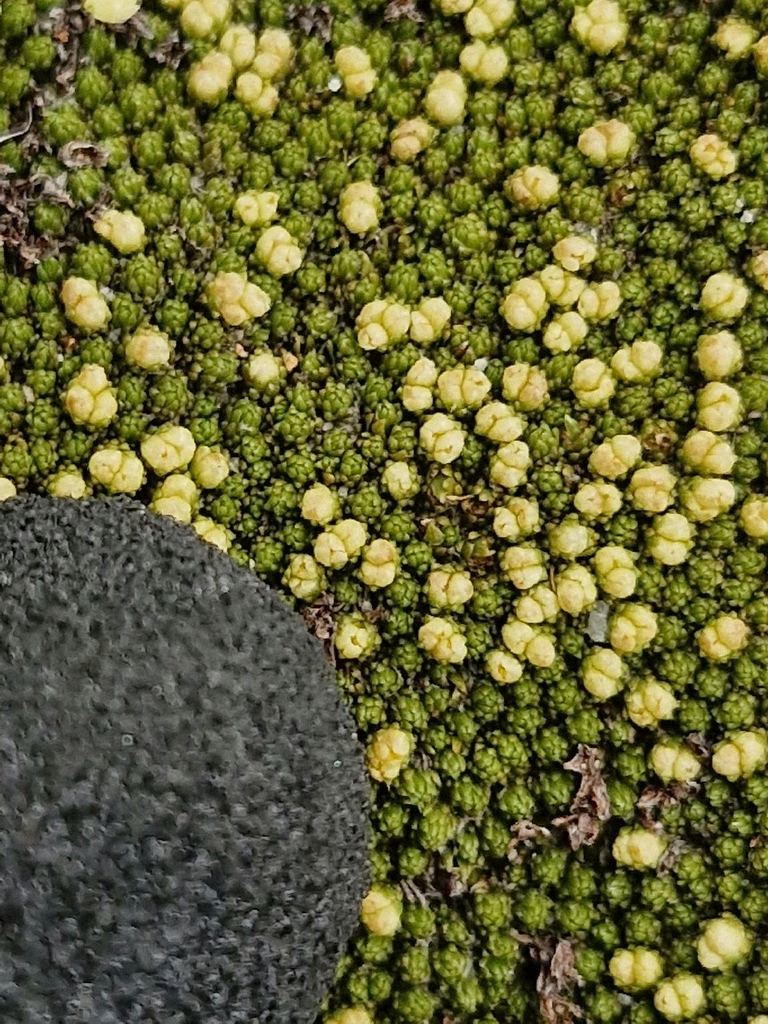
Schizacme novae-zelandiae is a minute endemic cushion plant of wet South Island mountain habitats. Its tightly overlapping leaves hide tiny flowers within the moss-like growth. This perennial subshrub forms compact cushions up to about 3 cm high.
Identification
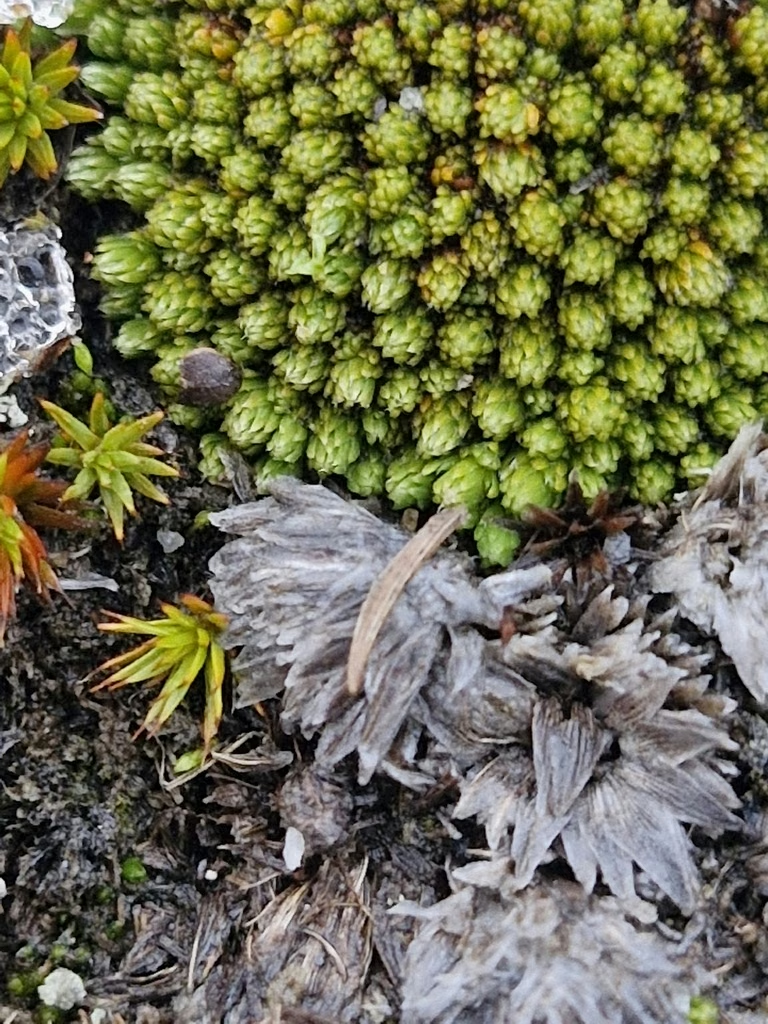
This perennial subshrub forms compact cushions up to about 3 cm high. Its rigid, hairless leaves overlap densely and are narrow-oblong, approximately 2.7-4 mm long and 0.5-0.9 mm wide, excluding the fine tip.
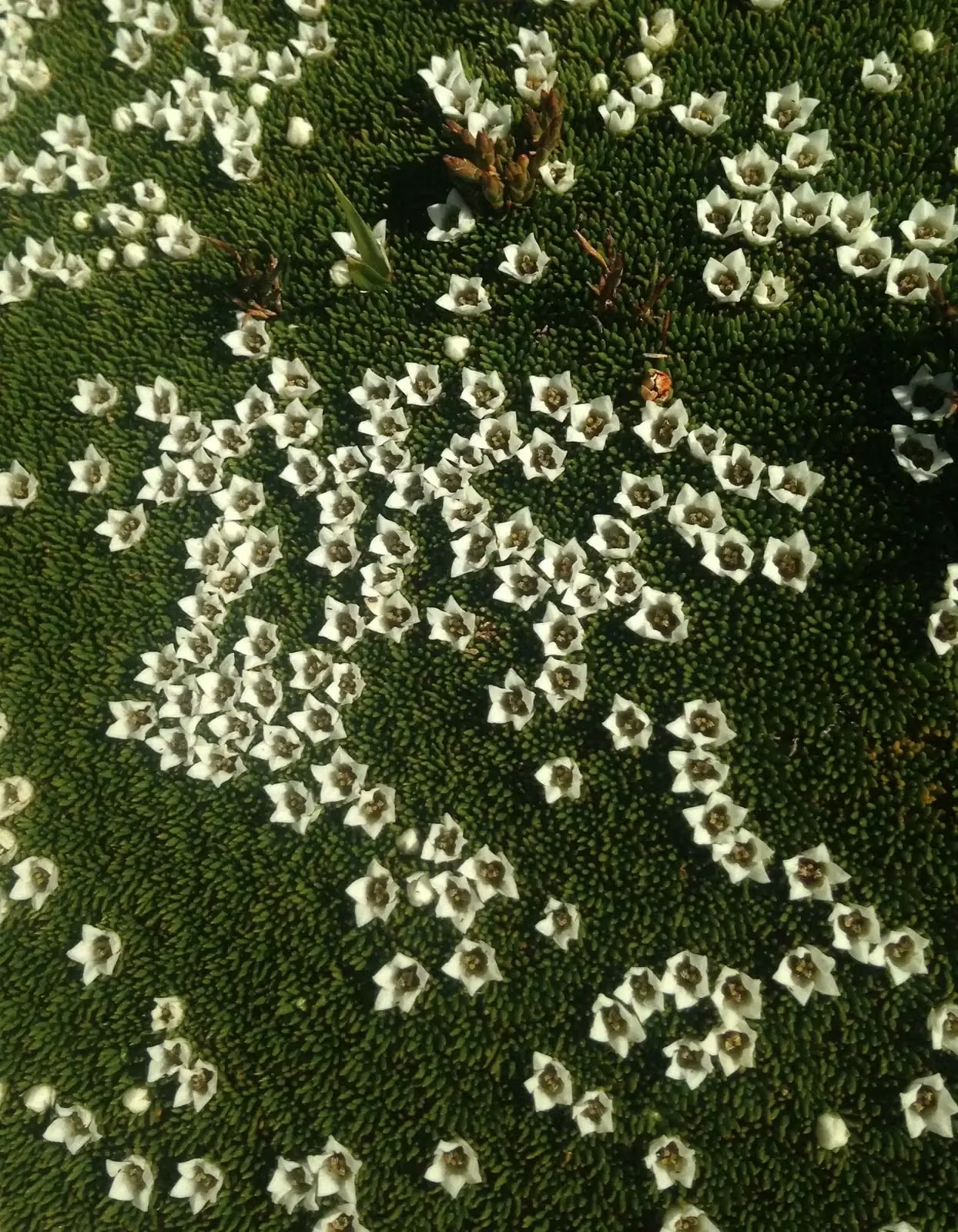
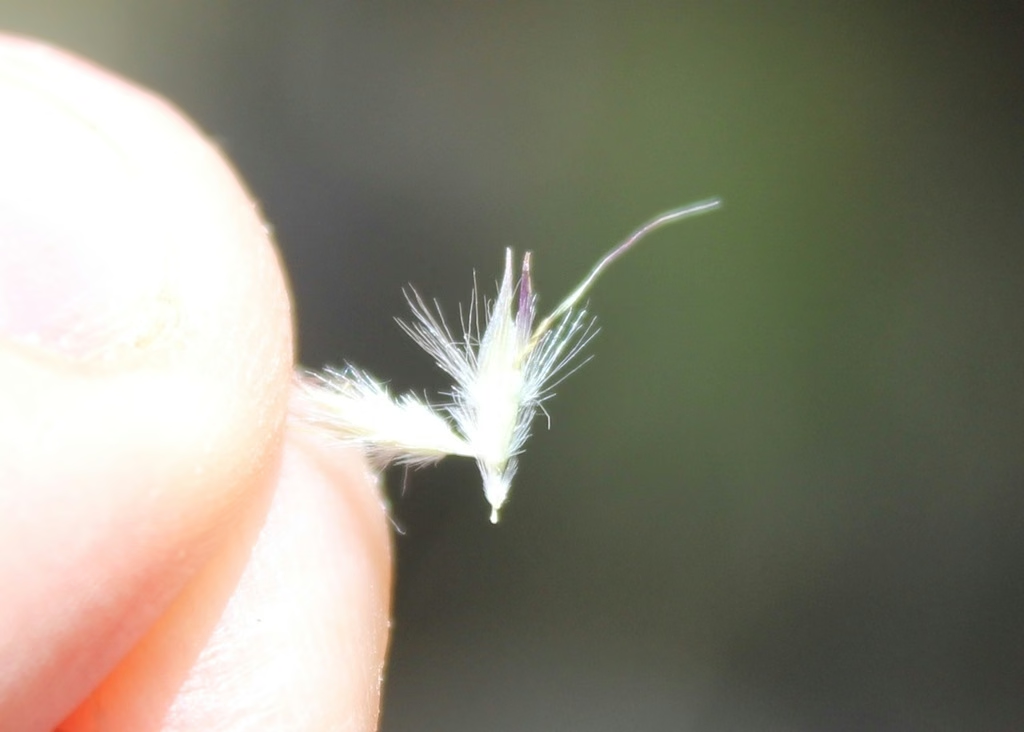
The minute terminal flowers are nearly hidden among the leaves. They have a bell-shaped corolla and short styles; the small capsules are slightly flattened.
Quick facts
| Scientific Name | Schizacme novae-zelandiae |
|---|---|
| Earlier name | Mitrasacme novae-zelandiae |
| Family | Loganiaceae |
| Origin | Endemic to New Zealand |
| Range | South Island, north-west Nelson to Fiordland |
| Habit | Minute cushion-forming subshrub |
| Habitat | Wet mountain heath and cushion bog |
| Flowering | October-February in the NZPCN profile |
| National status | Not Threatened (2023) |
| Height | Low cushions up to about 3 cm high in the revision |
| Water Needs | Wet mountain heath and cushion bogs are recorded habitats |
| Light | Mountain heath and tussock grassland in its natural habitat |
| Spread | Cushions about 10 cm across in the NZPCN description |
| Frost Tolerance | Minimum tolerated temperature is not documented |
| Salt Tolerance | Salt tolerance is not documented |
| Growth Rate | Annual extension is not quantified in the cited accounts |
| Lifespan | Perennial cushion subshrub |
Natural range
The 2014 taxonomic revision records this endemic species in the South Island from north-west Nelson to Fiordland. Its type was collected on hills near Dusky Bay at approximately 3,500 feet in 1863.
| City | Climate Suitability |
|---|---|
| Auckland | Not assessed |
| Wellington | Not assessed |
| Christchurch | Not assessed |
Habitat and distribution
The revision records this plant in wet heath and mountain heath within Chionochloa tussock grassland. It also occurs in mixed cushions dominated by Donatia novae-zelandiae.
The New Zealand Wetland Plant List classifies it as an obligate wetland plant, almost always found in wetland conditions.
Natural growing conditions
Wild records place the species in wet mountain heath and mixed cushion vegetation. These accounts describe its natural habitat; they do not provide a tested garden soil mixture or watering schedule.
Planting considerations
Its tiny cushions reach only about 3 cm high and can grow among other cushion plants. The cited taxonomic and Flora treatments do not provide a species-specific planting or cultivation protocol.
Cushion communities
The species occurs in mosaic cushions dominated by Donatia novae-zelandiae, as well as in wet heath among snow tussocks. Its densely overlapping leaves give it a moss-like appearance within these communities.
Observing the plant
A hand lens is useful for the densely overlapping, hairless leaves, which are less than a millimetre wide in the 2014 description. The solitary terminal flowers are tiny and can be concealed by the foliage.
Garden context
Its compact cushion habit is documented from wet mountain vegetation rather than garden trials. The species is very small, so its wild association with other cushion plants should not be assumed to establish garden compatibility.
Flowers and capsules
The 2014 revision records flowering from November to January and fruit in January. The bell-shaped flowers have a tube about 1.7-3 mm long, with short, blunt lobes.
Capsules are slightly flattened, approximately 2.2-3.4 mm long, with rounded seed chambers and wings toward the tip.
Growth form
This is a perennial cushion-forming subshrub with short branches and tightly packed, stalkless leaves. The 2014 revision describes plants to about 3 cm high; it does not prescribe pruning.
How to Grow Moss-like Herb (Schizacme novae-zelandiae)
Seed and an untested propagation route
NZ Plant Conservation Network does not describe a tested propagation method for Schizacme novae-zelandiae. The taxonomic accounts describe its small capsules, but do not give a seed pretreatment or sowing temperature. Older material may be labelled Mitrasacme novae-zelandiae; retaining that name connection is useful when checking botanical records.
A Small Wet-Heath Cushion
This perennial forms very low cushions in wet mountain heath, cushion bogs and Chionochloa tussock grassland. NZPCN records it mixed with Donatia novae-zelandiae in some bogs. These are moisture-associated natural settings. A generic dry alpine-rockery recommendation would overlook an important part of the species' habitat evidence.
Looking Closely at New Foliage
Its leaves are tiny, rigid and tightly overlapping. The current NZPCN description gives blade lengths of approximately 2.8-4.5 mm and widths of 0.5-0.9 mm, with a fine projecting tip. The leaves are hairless and lack a clearly visible midrib. Their narrow shape and dense arrangement are useful when confirming the identity of an existing cushion.
Recording flowers and capsules
White flowers are nearly stalkless and sit close among the leaves. NZPCN records flowering from October to February and fruit from January to May; the taxonomic revision records a narrower flowering period. Keeping a dated photographic record can therefore add useful local seasonal information. Neither account supplies a measured annual cushion expansion rate or a verified division method.
Plant health
Its hairless, rigid leaves and tiny flowers hidden among the foliage are normal features. The cited botanical treatments do not identify particular pests or diseases affecting Schizacme novae-zelandiae.
Naming and classification
Hooker originally described this plant as Mitrasacme novae-zelandiae. Gibbons transferred it to Schizacme in 2014 after a revision using morphology and DNA evidence to examine the Australasian group.
Distinguishing Schizacme ciliata
The 2014 revision distinguishes this plant from Schizacme ciliata by narrower, hairless leaves, 0.5-0.9 mm wide versus 0.8-1.4 mm, and by differences in its flower tube and lobes.
Other wetland cushion plants
Explore native cushion plants and sedges associated with New Zealand mountain wetlands.
Conservation
Flora records this endemic species as nationally Not Threatened in the 2023 assessment. Otago’s 2025 regional assessment lists it as Regionally Vulnerable, demonstrating that regional status can differ from the national assessment.
Frequently asked questions
Is Mitrasacme novae-zelandiae the same plant?
Yes. That is the earlier generic placement of Schizacme novae-zelandiae.
Does it occupy dry scree?
Its characteristic records concern wet heath, cushion bogs and wet tussock settings rather than a general dry-scree habitat.
Why are the flowers easy to miss?
The small white flowers have extremely short stalks and sit close to the tightly overlapping leaves.
Sources
Detailed morphology, range, habitat and seasonal records: Gibbons and colleagues, Telopea, 2014. Name and national status: Flora of New Zealand. NZ Plant Conservation Network: current description and seasonal records.
Wetland rating: New Zealand Wetland Plant List. Otago regional status: Otago regional assessment.
Last updated: