Alpine Cushion Subshrub
Kelleria croizatii
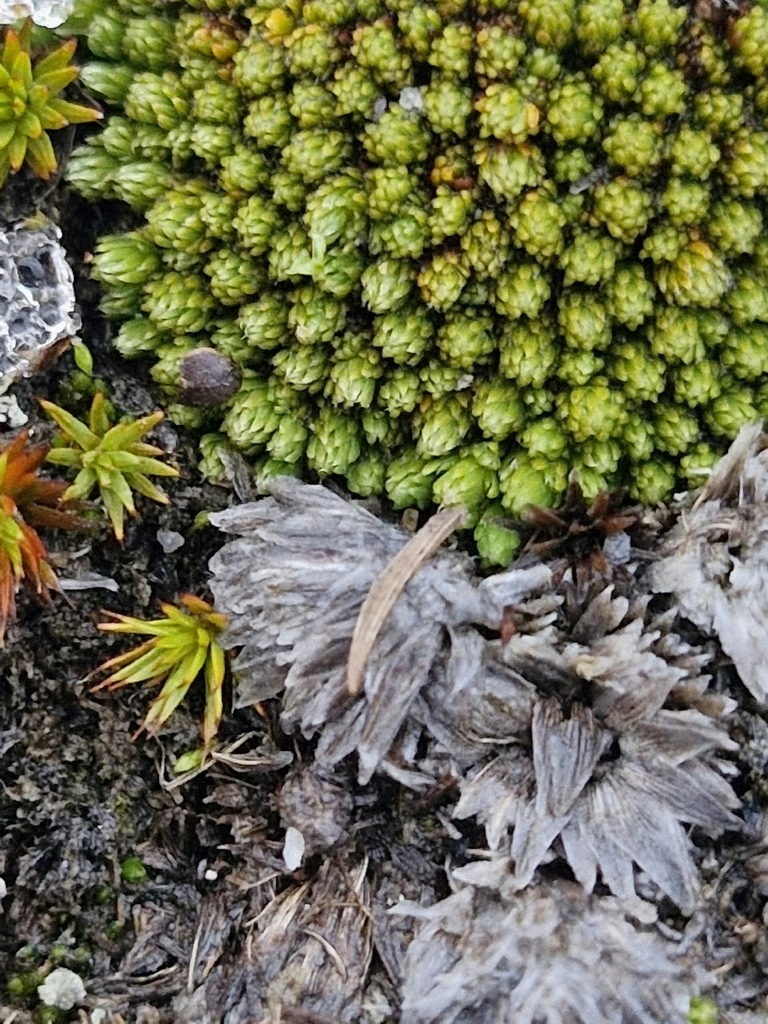
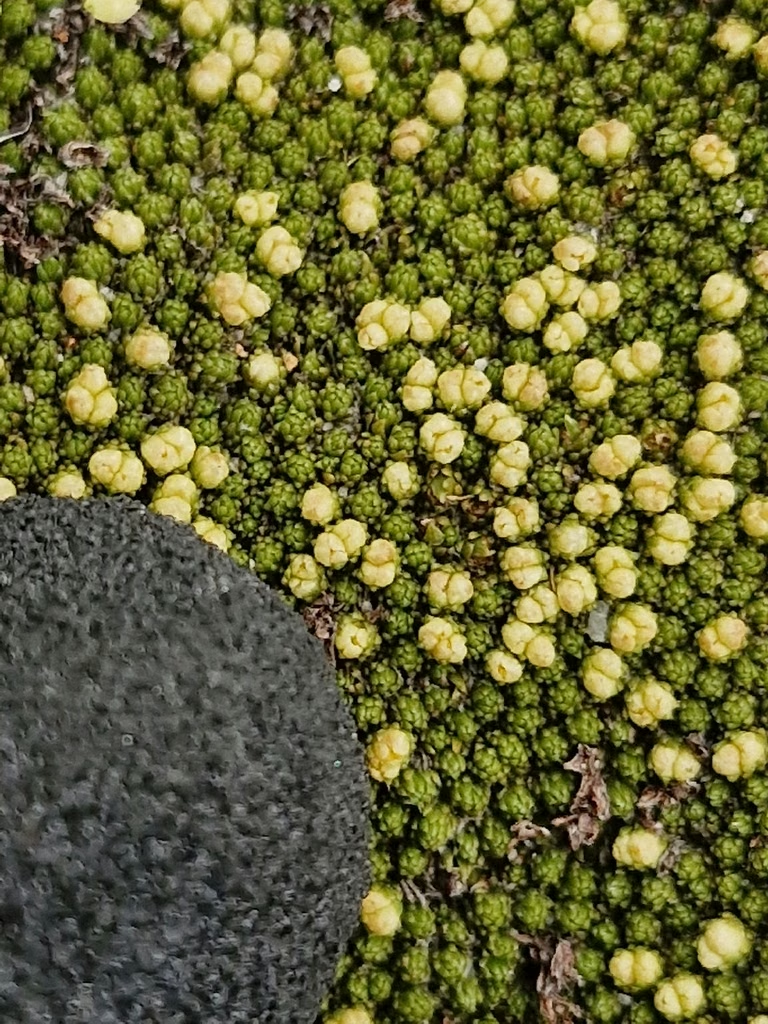
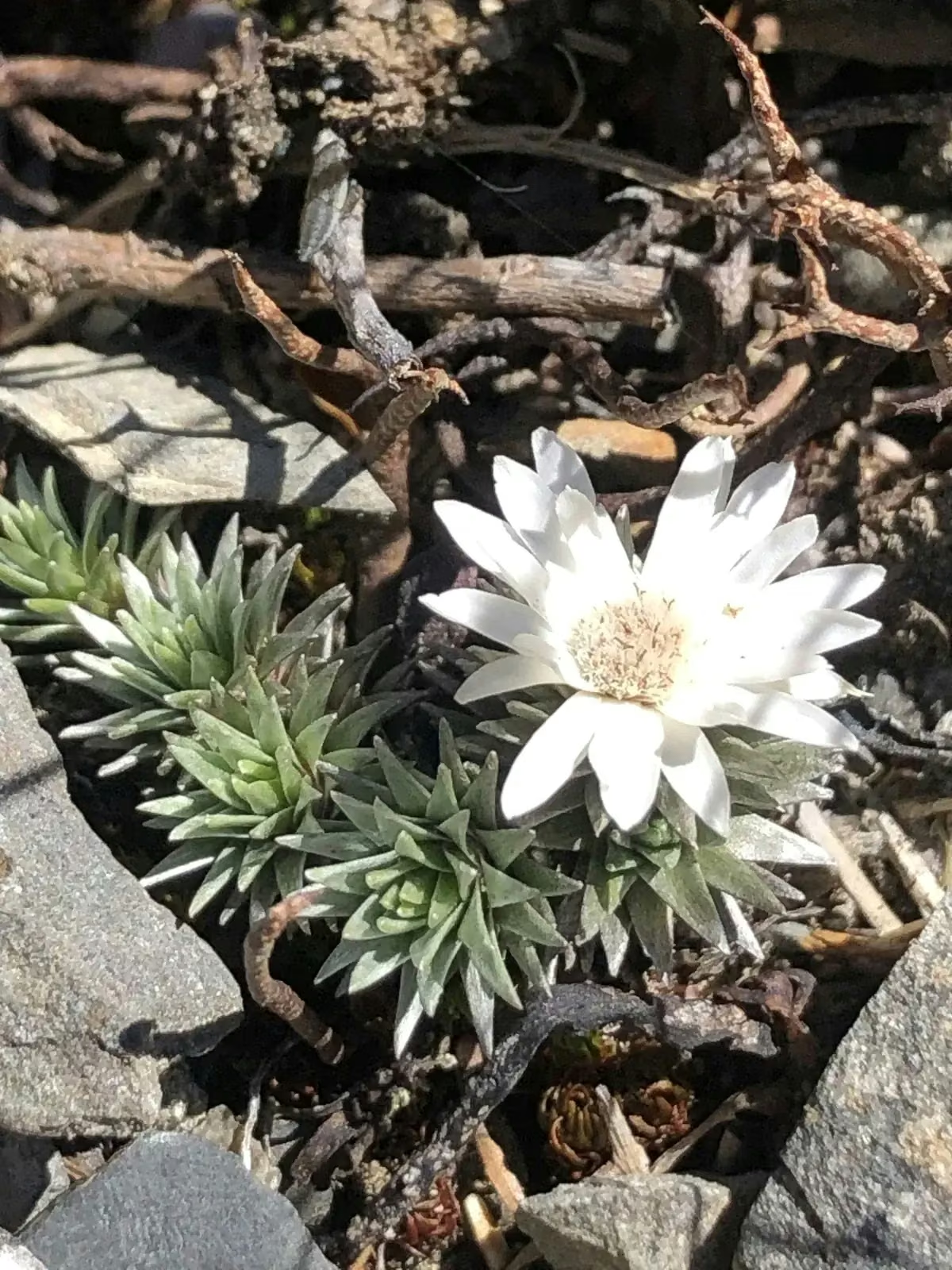
Kelleria croizatii is an endemic South Island alpine subshrub. It makes grey-green cushions of tiny, overlapping leaves among snow tussocks, fellfields and rocky places. This branching subshrub forms grey-green cushions, often soft and dense.
Identification
This branching subshrub forms grey-green cushions, often soft and dense. The detailed botanical description records cushions ranging from loose to very compact, sometimes reaching 1 m across and 20 cm high.
Leaves overlap closely and are 1.2-3 mm long by 0.4-1.3 mm wide. Each is boat-shaped, pale grey-green and usually has a small tuft of hairs at its bluntly pointed tip.
Quick facts
| Scientific Name | Kelleria croizatii Heads |
|---|---|
| Family | Thymelaeaceae |
| Origin | Endemic to New Zealand |
| Range | South Island mountains |
| Habit | Grey-green cushion subshrub |
| Habitat | Alpine grassland, herbfield, fellfield and rocky ground |
| Altitude | About 1,000-2,000 m |
| Flower colour | White |
| National status | Not Threatened (2023) |
| Height | Larger cushions reported up to about 20 cm high |
| Water Needs | Damp fellfield and wet snowbank records; cultivation schedule untested |
| Light | Open alpine grassland, herbfield and rocky sites in its natural habitat |
| Spread | Often small cushions around 20 cm across; larger examples reported up to 1 m |
| Frost Tolerance | Minimum tolerated temperature is not documented |
| Salt Tolerance | Salt tolerance is not documented |
| Growth Rate | Annual extension is not quantified in the cited accounts |
| Lifespan | Woody cushion subshrub |
Natural range
The field guide Above the Treeline records the species from Nelson and southern Marlborough to southern Fiordland, along and east of the Southern Alps. It occurs from low to high alpine elevations.
| City | Climate Suitability |
|---|---|
| Auckland | Not assessed |
| Wellington | Not assessed |
| Christchurch | Not assessed |
Habitat and distribution
Recorded habitats include snow-tussock grassland, herbfield, fellfield and rocky places at roughly 1,000-2,000 m. Near Sunset Saddle in Nelson Lakes it grows in damp fellfield with Phyllachne colensoi and Raoulia subulata.
At Treble Cone it is among the cushion plants documented in snowbank communities with seasonally to permanently wet conditions.
Natural growing conditions
Its documented mountain habitats include both rocky sites and damp snowbank communities. These observations describe wild populations; they do not establish a tested garden watering regime or potting mix for the species.
Planting considerations
Allow for the plant’s spreading cushion form: published descriptions record considerable variation, from small soft mounds to much broader cushions. The references do not provide a verified planting protocol for this alpine species.
Snowbank communities
A Treble Cone ecological assessment records this plant with Donatia novae-zelandiae, Phyllachne rubra and Myosotis pulvinaris in snowbank vegetation. Such communities experience seasonally to permanently wet conditions.
Observing the plant
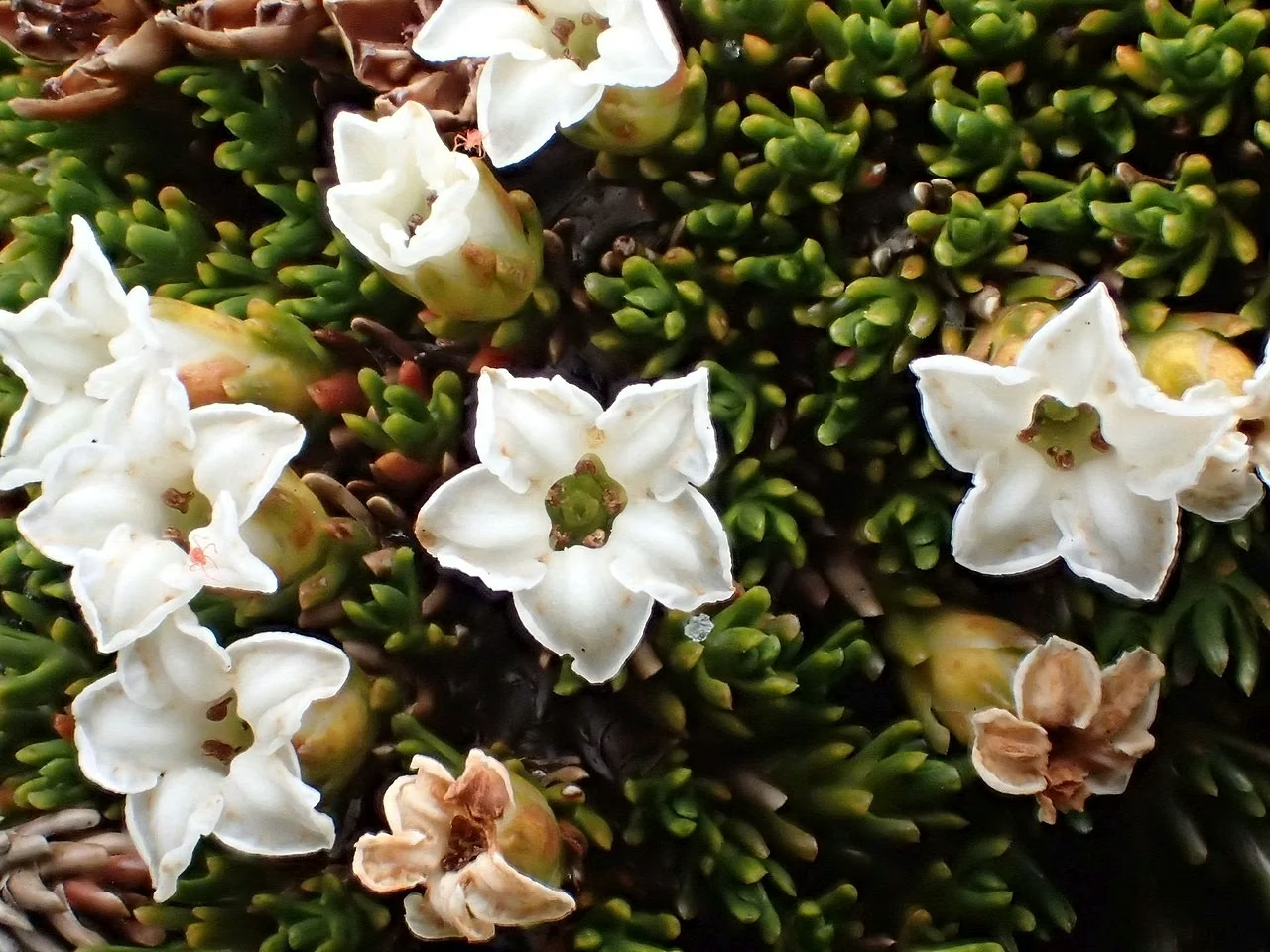
A hand lens helps reveal the scale-like overlapping leaves and the tuft of short hairs at each leaf tip. The tiny white flowers are usually solitary, though botanical descriptions record heads of up to four.
Garden context
Its grey-green, sometimes soft cushions give it a distinctive appearance among high-country vegetation. The published sources describe wild alpine populations and do not report trials establishing how reliably it grows in gardens.
Flowers and fruit
The white flowers are stalkless and generally appear singly, although one to four can occur in a terminal head. They are usually unisexual, with male and female flowers on separate plants; bisexual flowers also occur.
The egg-shaped fruit measures about 1.1 by 0.8 mm. NZPCN notes that wind dispersal of its achenes is possible, rather than confirmed.
Cushion form
Branches can form loose mats or close cushions with a flat, hard or soft surface. The young stems are usually densely hairy, and older stems become grey or dark brown with visible leaf scars.
How to Grow Alpine Cushion Subshrub (Kelleria croizatii)
Seed evidence
The botanical descriptions record small fruits and seeds of Kelleria croizatii, but do not give a tested germination treatment or vegetative propagation method. NZ Plant Conservation Network regards wind dispersal of its achenes as possible. That tentative dispersal interpretation should not be presented as a demonstrated nursery technique.
Recognising variable cushions
The alpine field guide describes dense, soft, grey-green cushions about 20 cm across. More extensive cushions are included in the detailed botanical account, which reports considerable variation in compactness and size. Closely overlapping leaves are approximately 1.2-3 mm long and 0.4-1.3 mm wide. Their boat-like shape and small tuft of hairs at the tip are useful identification features.
Damp fellfield and snowbank sites
Natural habitats include tussock grassland, herbfield, fellfield and rocky places at approximately 1,000-2,000 m. Field records from Sunset Saddle describe damp fellfield, while a Treble Cone assessment includes the species in wet snowbank communities. These observations are more specific than assuming every cushion occupies a permanently dry surface.
Observing flowers and keeping records
White flowers usually occur singly, although small terminal groups can develop. They have very short or absent stalks. Female and male flowers are generally on separate plants, with bisexual flowers also reported. The Flora identifies a Sealy Range collection from February 1911 as the type. Photographs linked to location, season and flower details help retain an identifiable record; cultivation success rates remain unquantified in the cited accounts.
Plant health
Leaves may fall or remain attached as they wither, according to the botanical description. The referenced accounts do not identify species-specific pests or diseases, so a diagnosis should not be inferred from old foliage alone.
Naming and classification
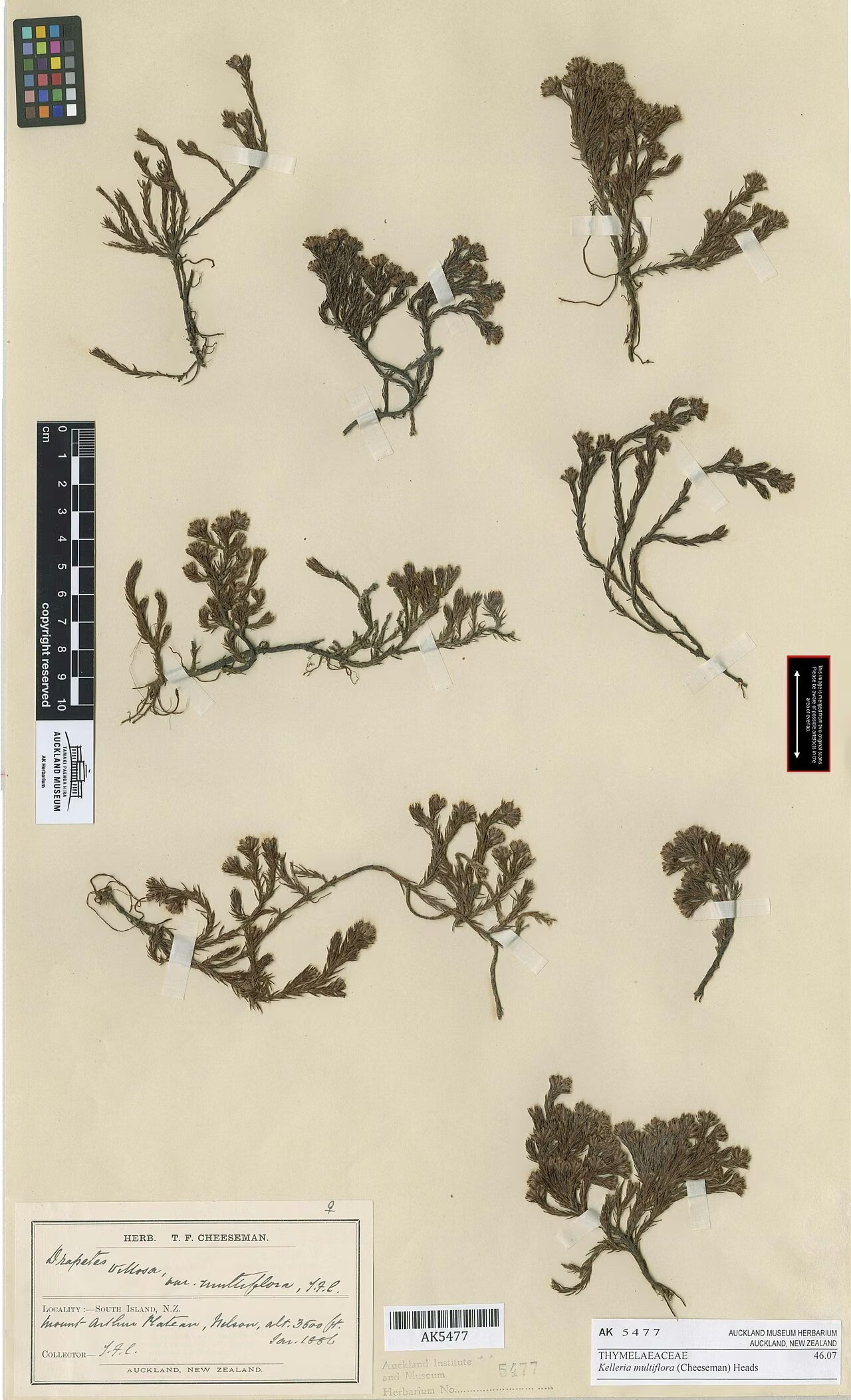
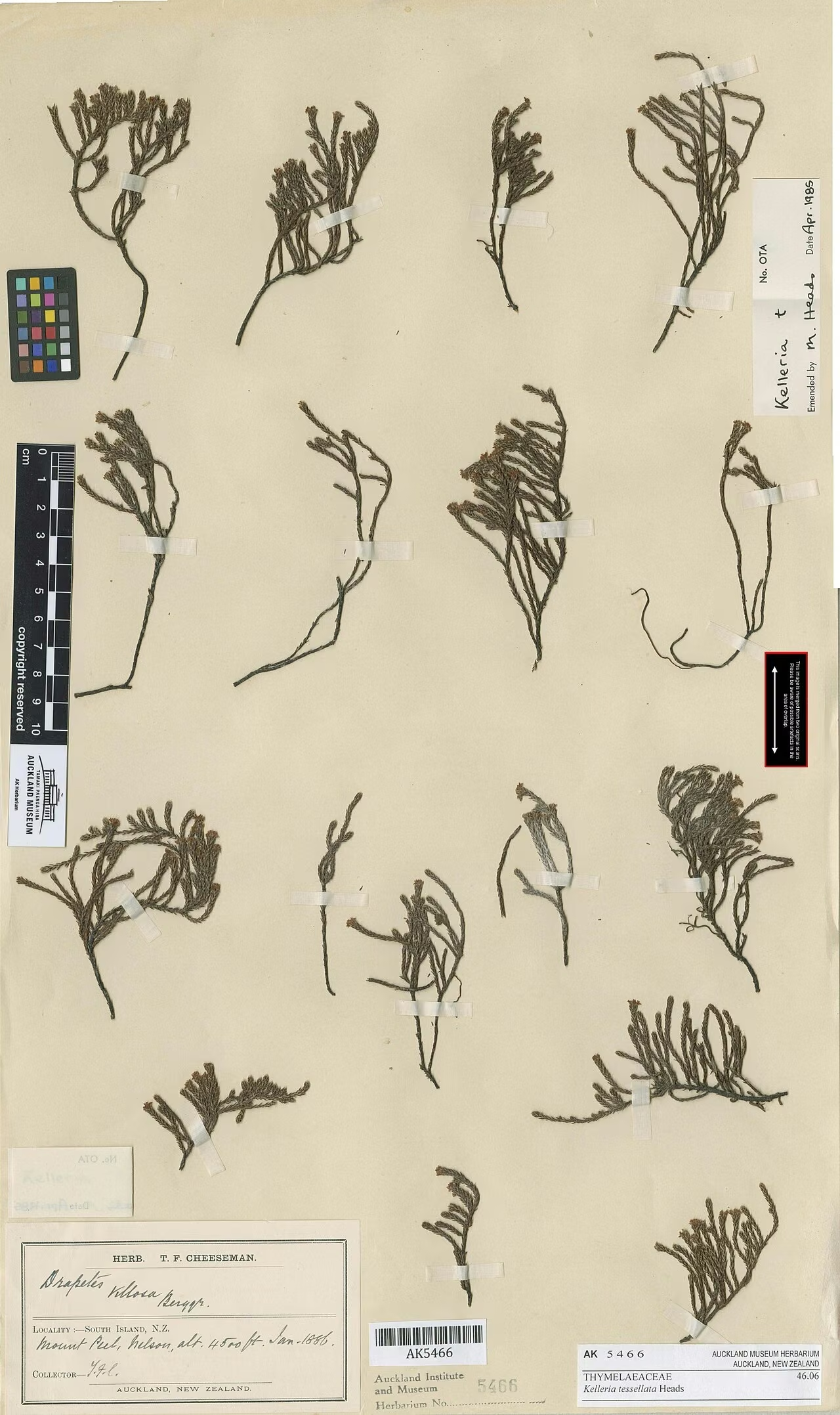
Michael Heads described the species in his 1990 revision of Kelleria and Drapetes. The epithet honours biogeographer Leon Croizat; the type specimen was collected by Donald Petrie on the Sealy Range in February 1911.
Compare Two Cushion Kelleria
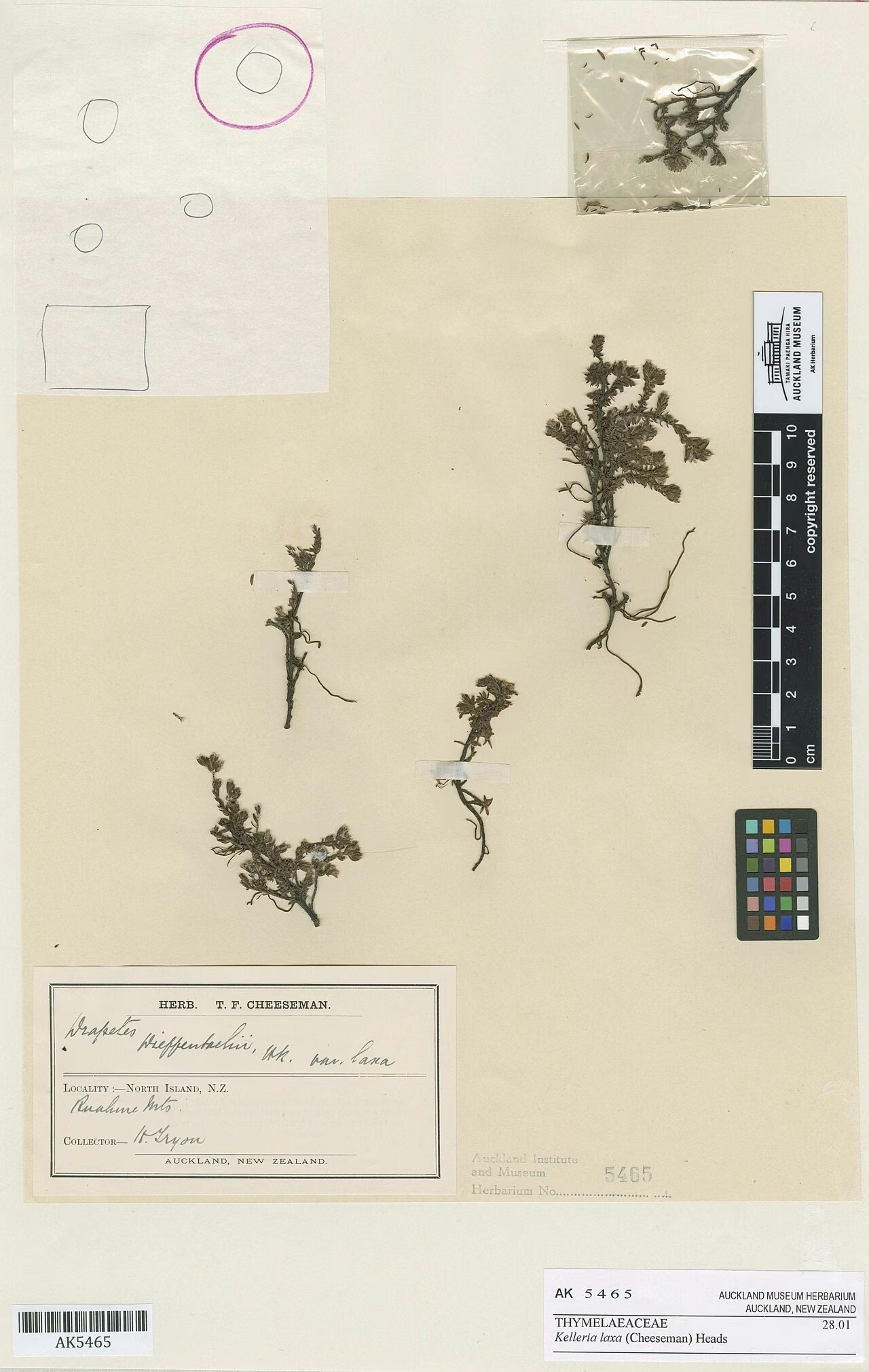
Kelleria croizatii often has soft grey-green cushions and usually single flowers. Kelleria childii is described as forming a hard, peat-accumulating cushion and has one to three flowers in a terminal head.
Related native alpine plants
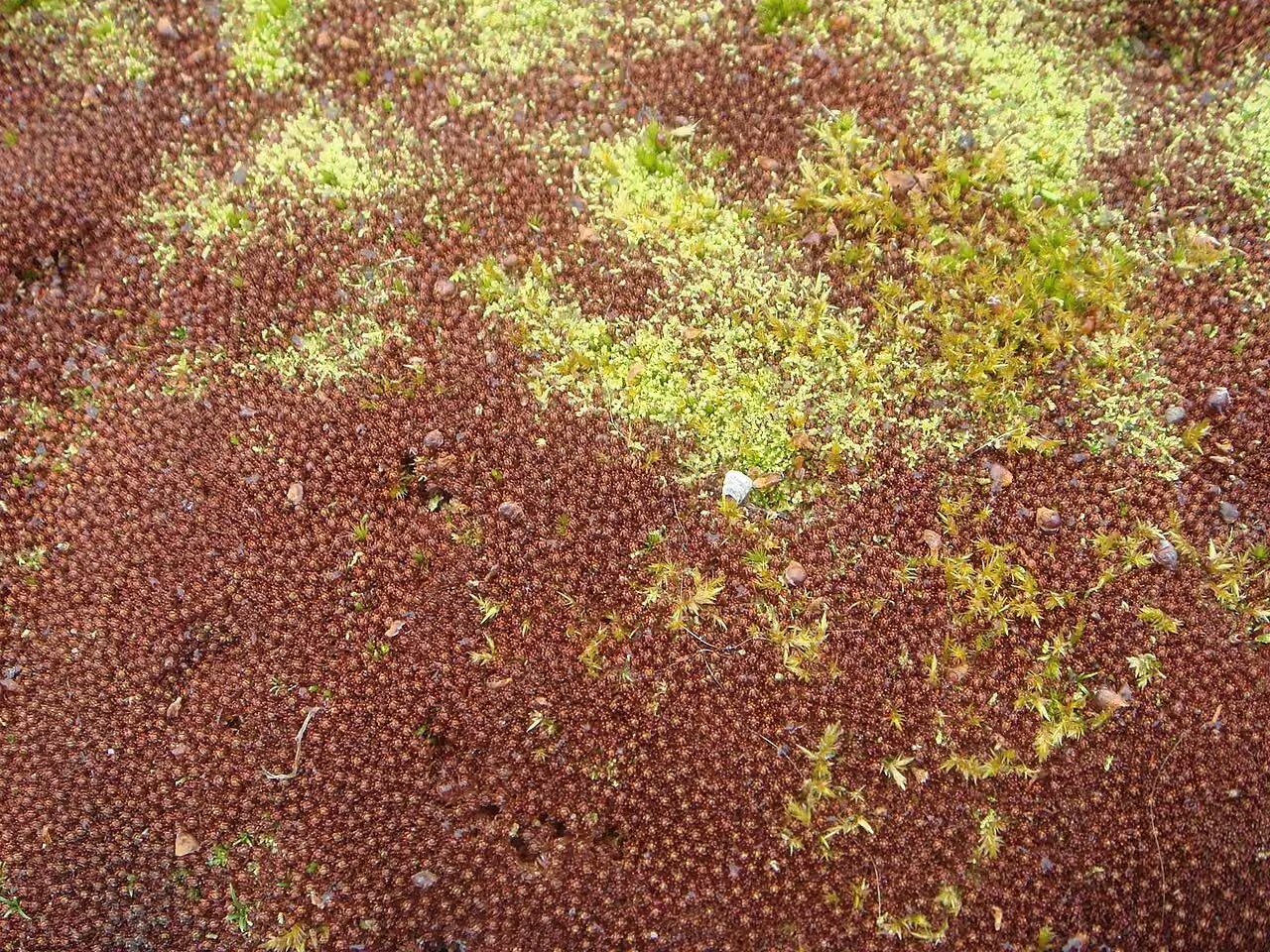
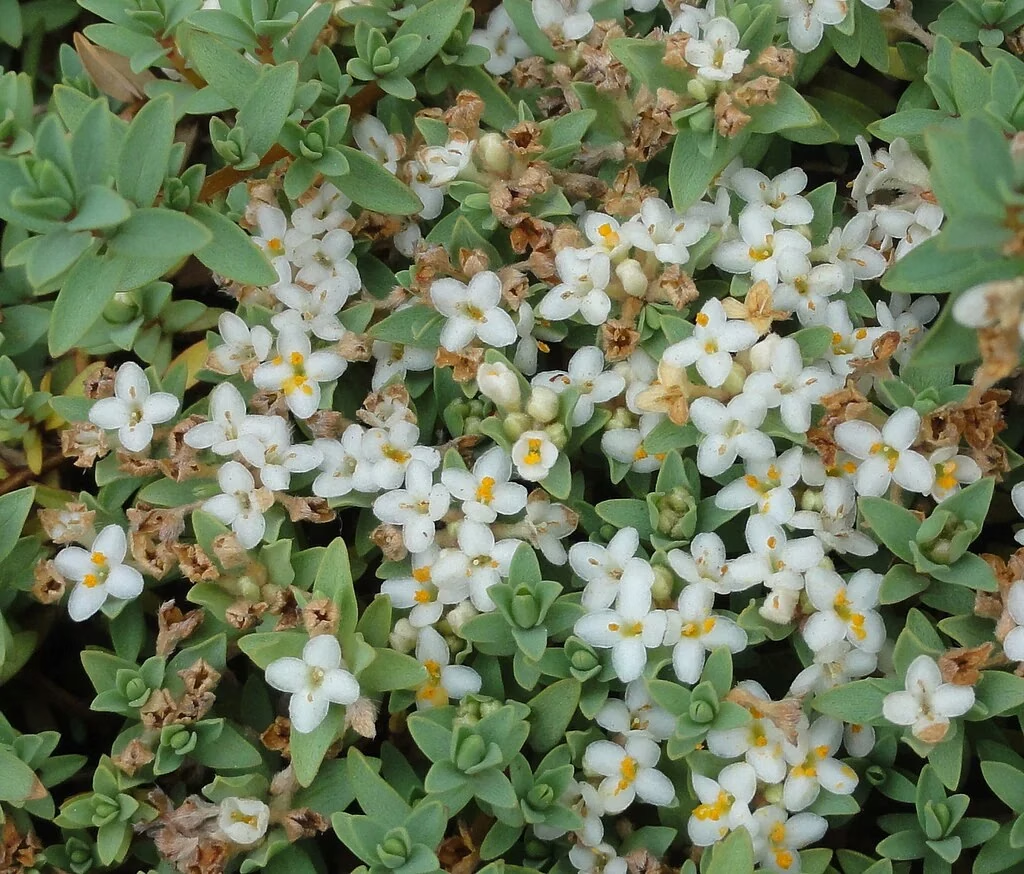
Explore related Kelleria shrubs and other cushion plants recorded in New Zealand alpine vegetation.
Conservation
Nationally, the 2023 New Zealand assessment lists Kelleria croizatii as Not Threatened. In Otago, the 2025 regional assessment lists it as Regionally At Risk - Regionally Naturally Uncommon; national and regional assessments describe different geographic scales.
Frequently asked questions
Are all cushions the same size?
No. The field guide describes small soft cushions, while detailed descriptions include larger and more compact examples.
Are the flowers conspicuously stalked?
No. The small white flowers are stalkless or nearly so and most often occur singly.
Can it occur in wet alpine communities?
Yes. Published records include damp fellfield and seasonally to permanently wet snowbank vegetation.
Sources
Identification, distribution and habitats: Above the Treeline, Kelleria section. Detailed morphology: Dendrologie online. Name and type: Flora of New Zealand.
Conservation, flower colour and dispersal: NZ Plant Conservation Network. Snowbank habitat: Treble Cone ecological assessment. Nelson Lakes field observation: Trilepidea.
Last updated: