Comb Sedge
Oreobolus impar
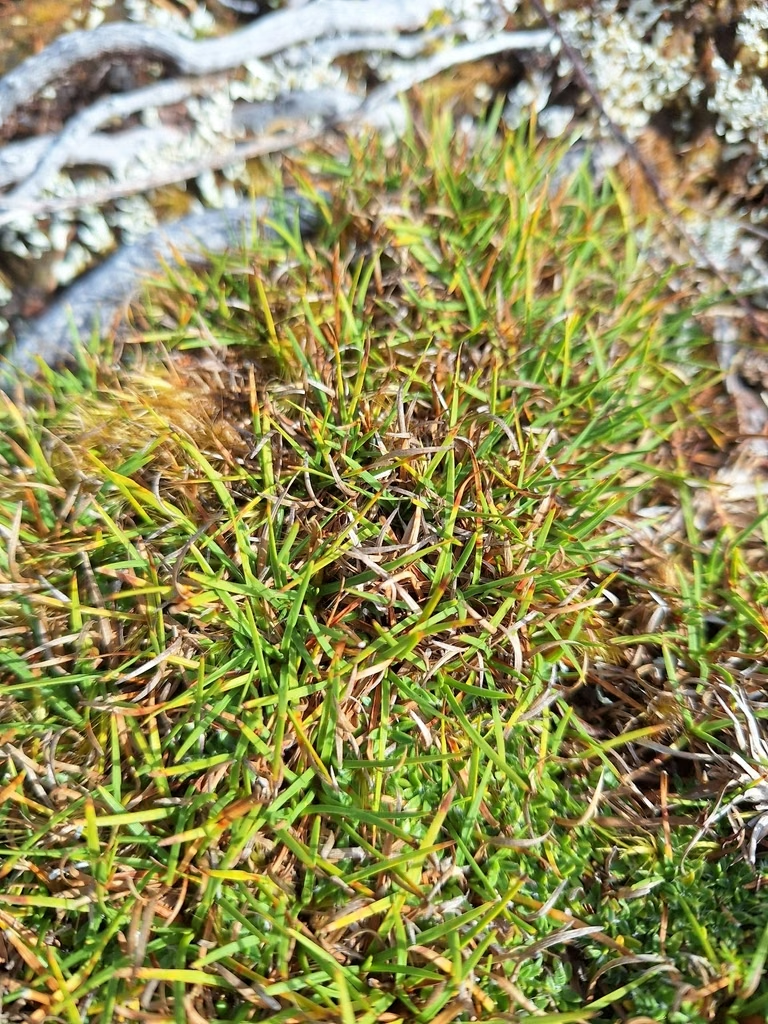
Oreobolus impar is an endemic comb sedge that forms compact, pale green mats in permanently damp ground. It grows mainly in alpine country, descending to the coast in southern New Zealand.
Identification
This perennial sedge forms close whitish-green or yellow-green mats about 2-5 cm high. Its stems are densely packed, and the spreading leaves are not consistently arranged in two neat ranks.
Leaf blades are only 0.5-1 mm wide, channelled at the base and abruptly wider in the flatter upper portion. The mature flower stalk usually carries one to three spikelets.
Quick facts
| Scientific Name | Oreobolus impar Edgar |
|---|---|
| Common name | Comb sedge |
| Family | Cyperaceae |
| Origin | Endemic to New Zealand |
| Habit | Compact mat, 2-5 cm high |
| Habitat | Wet mineral soils near bog margins |
| Flowering | October to December |
| Fruiting | November to April |
| National status | Not Threatened (2023) |
| Height | Compact mats 2-5 cm high |
| Water Needs | Naturally associated with permanently damp mineral soil |
| Light | A cultivation light requirement is not specified |
| Spread | Densely packed mats; total width is not quantified |
| Frost Tolerance | Minimum tolerated temperature is not documented |
| Salt Tolerance | Salt tolerance is not documented |
| Growth Rate | Very slow growing |
| Lifespan | Perennial sedge |
Natural range
The species occurs in the North Island, South Island and Rakiura / Stewart Island. In the North Island it is confined to the Central Volcanic Plateau and nearby main axial ranges; it is mostly alpine elsewhere.
| City | Climate Suitability |
|---|---|
| Auckland | Not assessed |
| Wellington | Not assessed |
| Christchurch | Not assessed |
Habitat and distribution
NZPCN records this sedge on permanently damp mineral soils where grassland or shrubland meets bog. It occurs from the coast to about 1,500 m, reaching sea level in the southern South Island and Rakiura.
Its national wetland indicator rating is obligate wetland: it is almost always found in wetland conditions.
Natural growing conditions
Wild plants favour permanently damp mineral soil at the transition between bog and grassland or shrubland. NZPCN describes the species as very slow growing and recommends a cool climate or an alpine house in cultivation.
Planting considerations
NZPCN reports that rooted pieces grow readily, but notes that this sedge is very slow growing and best suited to cool conditions or a pot in an alpine house. Its natural habitat remains permanently damp.
Bog-Margin Habitat
The plant occupies the meeting zone between grassland and bog or between shrubland and bog. Unlike a sedge of freely draining rock, it is associated with persistently wet mineral ground and is classified as an obligate wetland plant.
Observing the plant
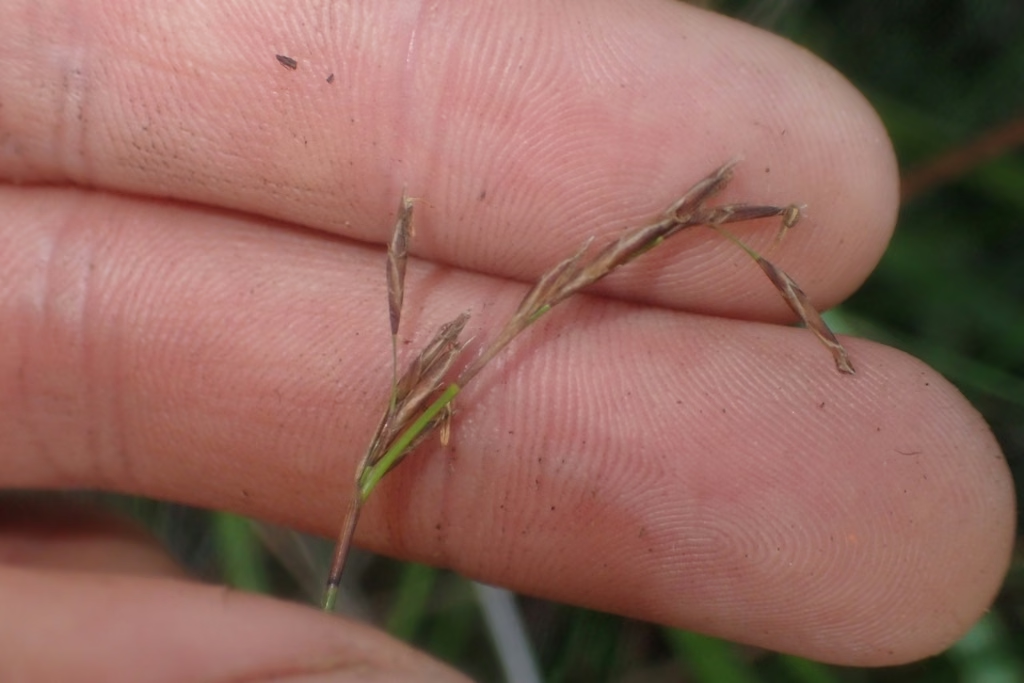
Look for a low pale mat of closely packed shoots rather than a raised, rigid cushion. The tiny spikelets have pale membranous glumes, often tinged red, with stiff green central keels.
Garden context
Its low mat and slow growth make it a specialised plant for a cool setting rather than a rapidly spreading groundcover. NZPCN suggests a cool climate or a pot kept in an alpine house.
Flowers and fruit
NZPCN records flowering from October to December and fruiting from November to April. The short flower stalk usually bears one to three spikelets, each with pale glumes that are often flushed red.
The light grey fruit is slightly over 1 mm long, with a conspicuous depression at its nearly flat tip.
Growth form
Densely crowded stems and spreading leaves produce a close mat only 2-5 cm high. Flora contrasts this with a stiff cushion; the species profile does not prescribe a pruning regime for this small sedge.
How to Grow Comb Sedge (Oreobolus impar)
Rooted pieces and possible seed propagation
NZ Plant Conservation Network records rooted pieces as an easy propagation route for Oreobolus impar. It also suggests fresh seed, but qualifies that method as probable. The distinction is useful: the account provides a firmer recommendation for material already carrying roots than for seed germination, for which it gives no temperature or pretreatment.
A cool growing position
The cultivation advice favours a cooler climate or a pot in an alpine house. The species is very slow growing, so the ease of taking a rooted piece should not be read as a promise of rapid surface coverage. Its perennial mats are compact and only about 2-5 cm high, with densely packed stems.
Moist mineral ground
Wild populations favour permanently damp mineral soil where grassland or shrubland meets bog vegetation. Most sites are alpine, with records reaching about 1,500 m. The plant descends to sea level in the southern South Island and on Stewart Island/Rakiura. Those low-elevation southern records do not establish that a warm northern coastal garden provides the same growing conditions.
Recognising established growth
Leaves are only about 0.5-1 mm wide. Their lower portion is channelled and then widens abruptly into a flatter upper blade. Mats can be whitish green or yellowish green. Flowering is recorded from October to December and fruit from November to April. These small leaf features and the compact mat help distinguish an identified collection while new rooted pieces establish slowly.
Plant health
Whitish-green or yellowish-green foliage and occasional red-tinged glumes are normal features of this sedge. The cited species account does not identify particular pests or diseases; its natural mineral soil habitat is persistently damp.
Naming and classification
Elizabeth Edgar described Oreobolus impar in 1964 after distinguishing New Zealand plants previously called O. pumilio from that Australian species. The epithet refers to differences between the upper and lower leaf surfaces.
Distinguishing comb sedges
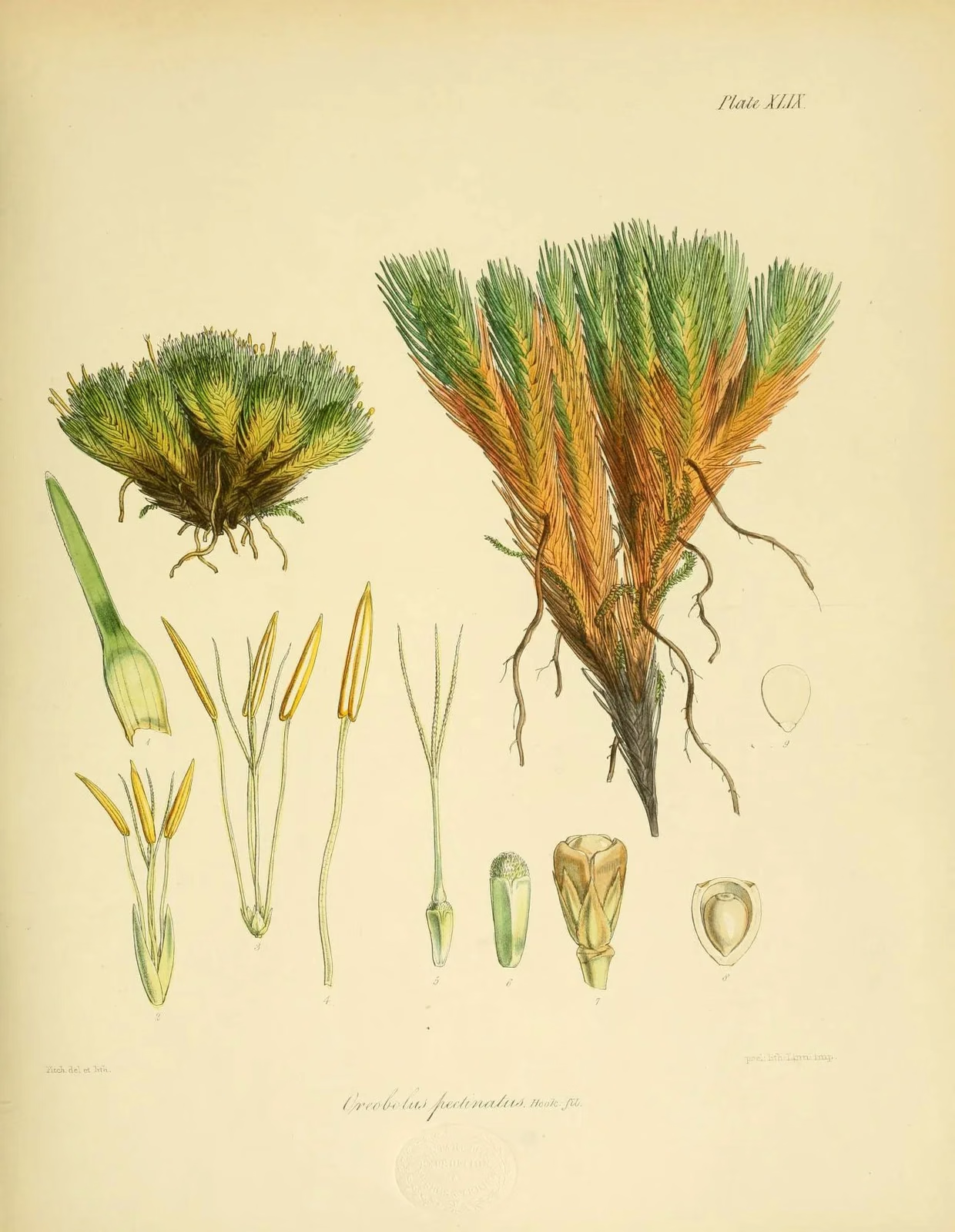
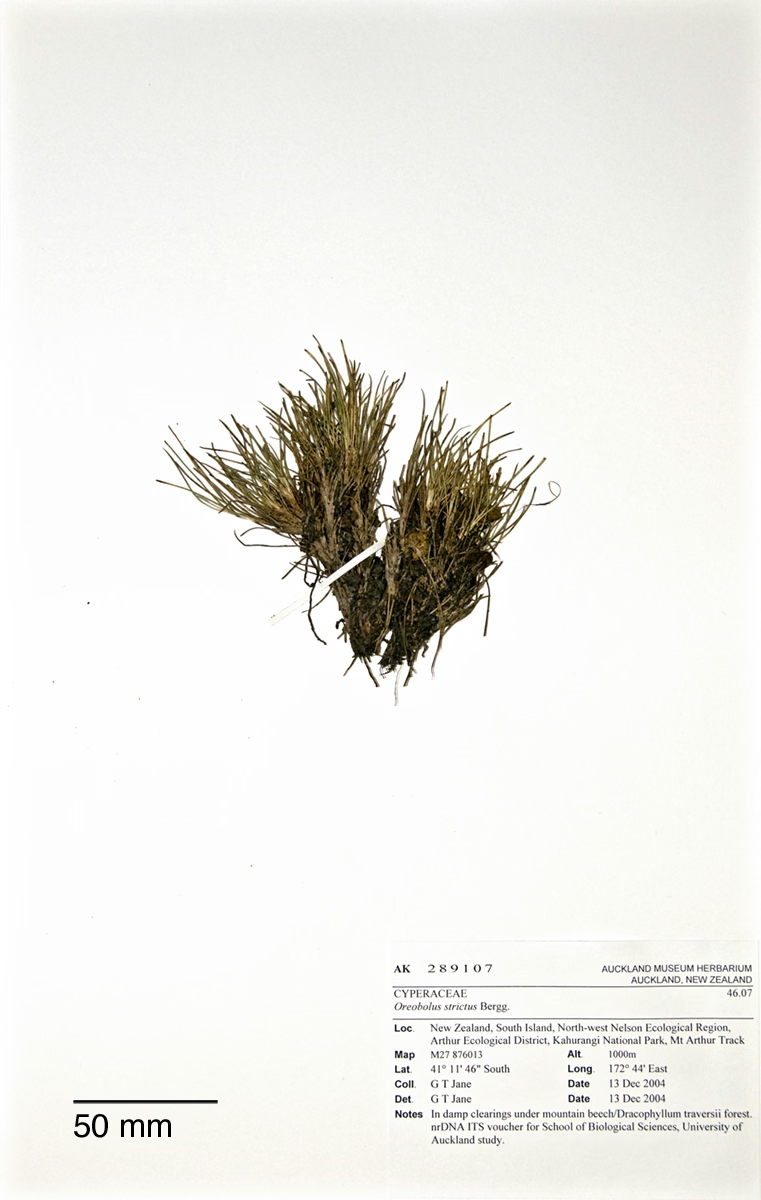
Oreobolus impar forms a compact mat with densely packed stems. O. strictus has more loosely tufted, creeping stems, while O. pectinatus usually has leaves in two ranks and green rather than red-tinged glumes.
Related wetland and alpine plants
Explore other Oreobolus sedges and native plants associated with alpine bogs and wet ground.
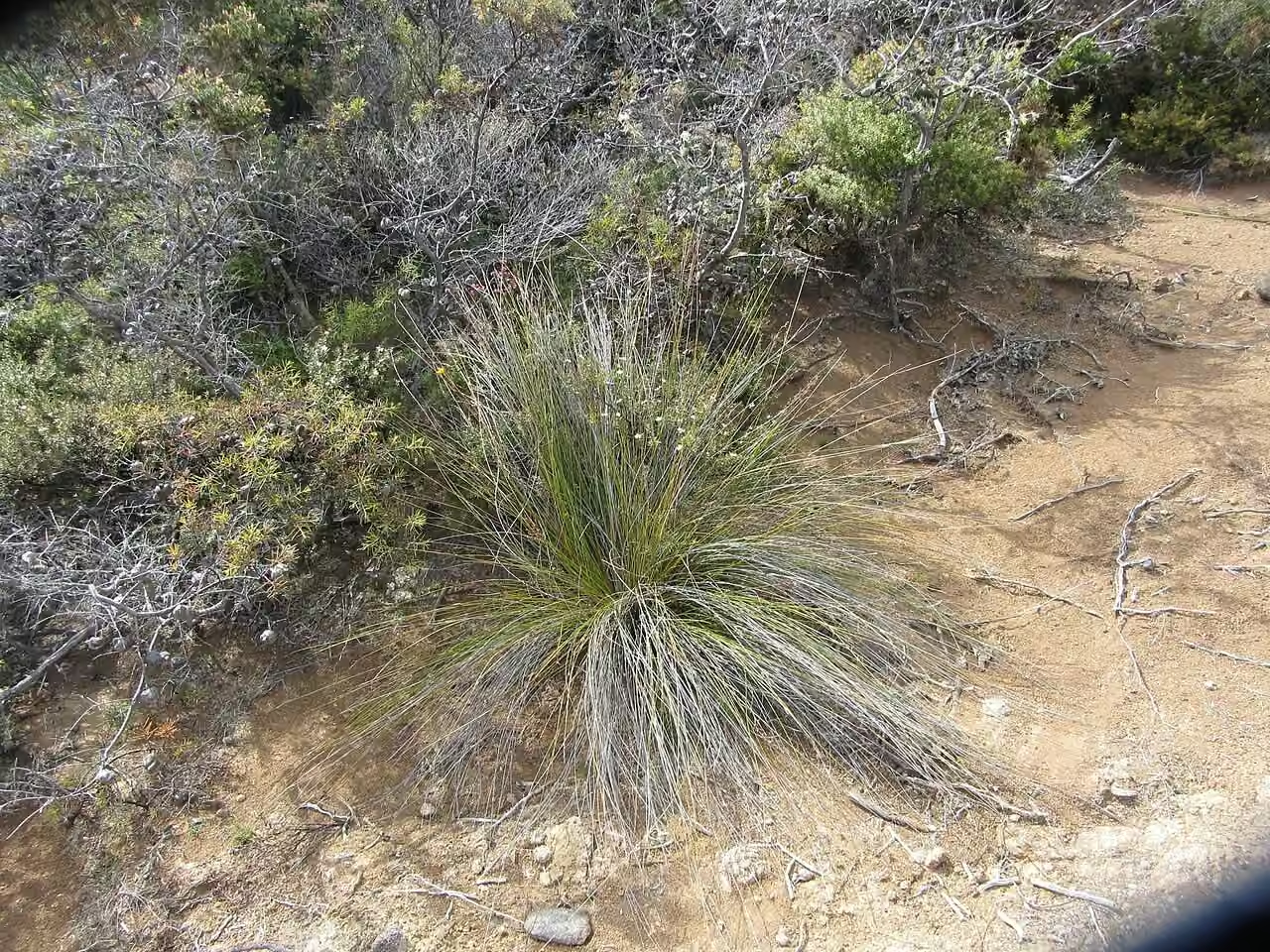
Conservation
NZPCN records Oreobolus impar as endemic and nationally Not Threatened in the 2023 assessment. Its 2025 Otago regional assessment is also Not Threatened; it remains a plant of specifically wet habitats.
Frequently asked questions
Is this the Australian Oreobolus pumilio?
No. New Zealand plants were formerly called O. pumilio , but Edgar described them as a distinct species after comparing leaf and floral characters.
Does it always grow above the tree line?
No. It is mostly alpine, but NZPCN records it down to sea level in the southern South Island and Rakiura / Stewart Island.
Does easy propagation mean rapid coverage?
No. Rooted pieces are reported to establish readily, but Oreobolus impar is explicitly described as very slow growing.
Sources
Description, habitat, seasonal timing and cultivation: NZ Plant Conservation Network. Detailed leaf and flower characters: Flora of New Zealand.
Original distinction from the Australian plant: Elizabeth Edgar’s 1964 paper. Historical type and habitat information: Flora of New Zealand Series.
Last updated: