Bristle Grass
Rytidosperma nigricans
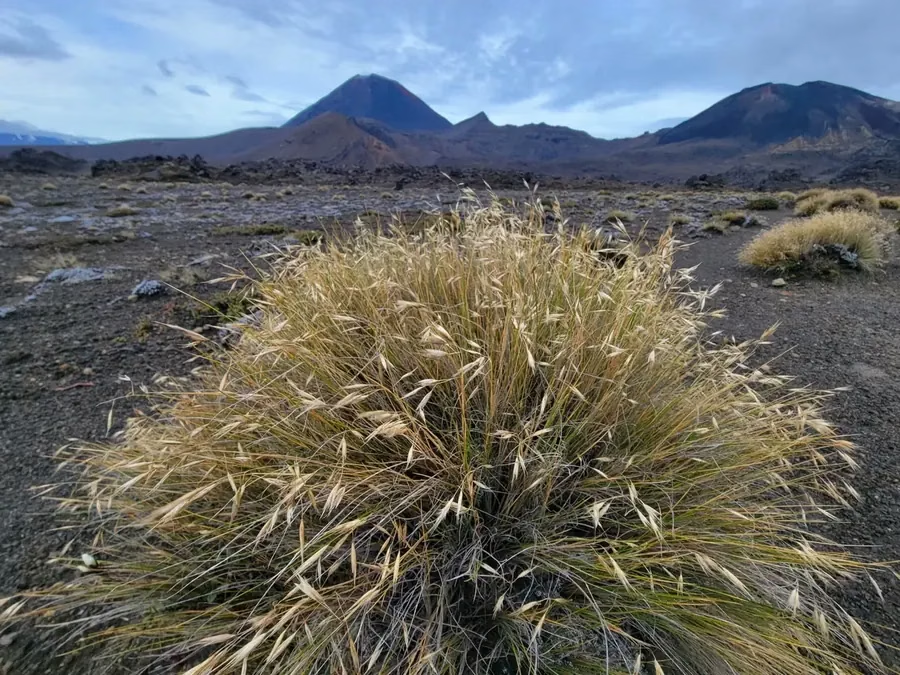
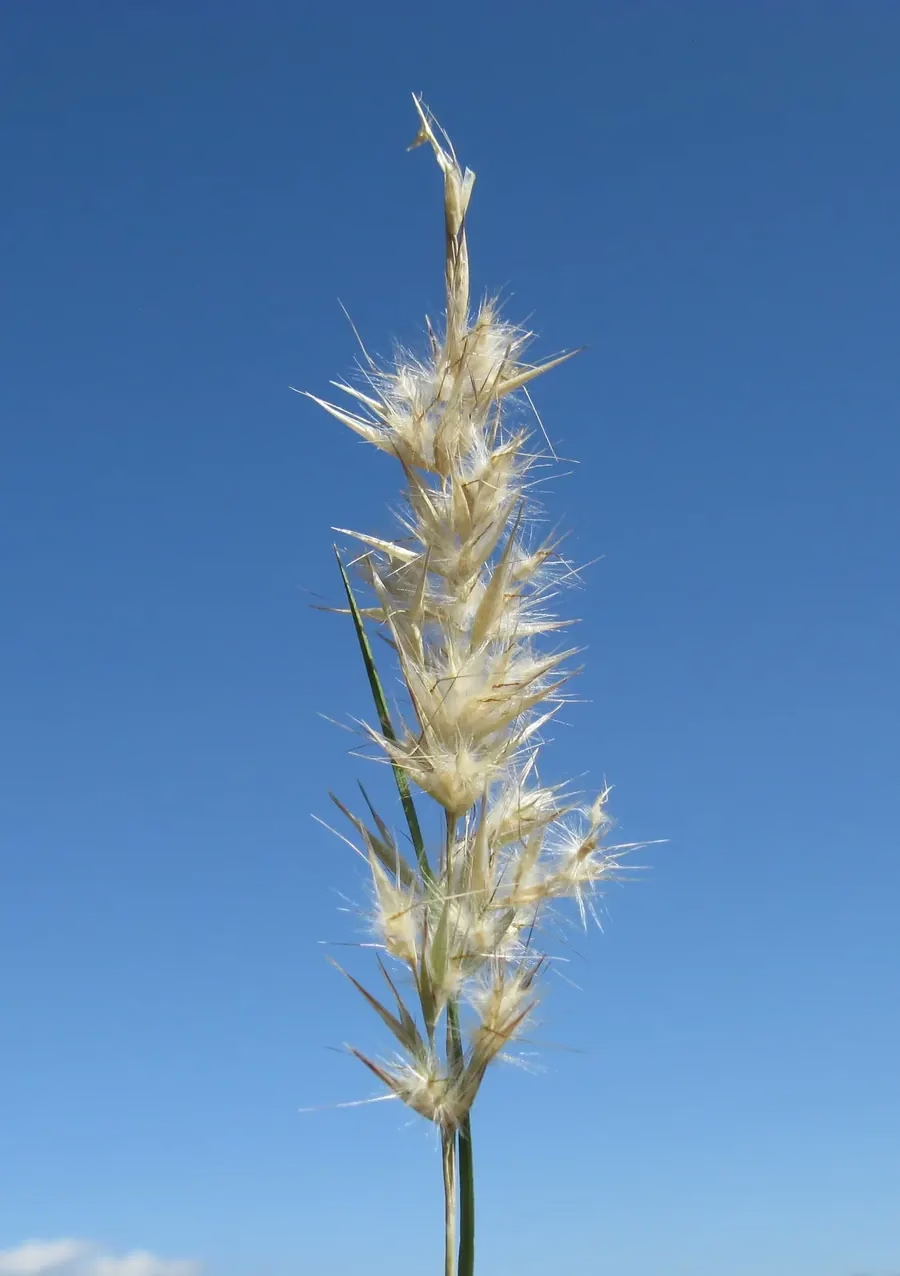
Rytidosperma nigricans is an endemic New Zealand grass of damp mountain sites. It forms upright tufts and bears compact flowering heads with dark spikelets and finely hairy florets. This perennial forms open, rather stiffly erect tufts.
Identification
This perennial forms open, rather stiffly erect tufts. The leaves are folded or rolled inward and the basal sheaths are brownish, often purplish above, and may be hairless or long-hairy.
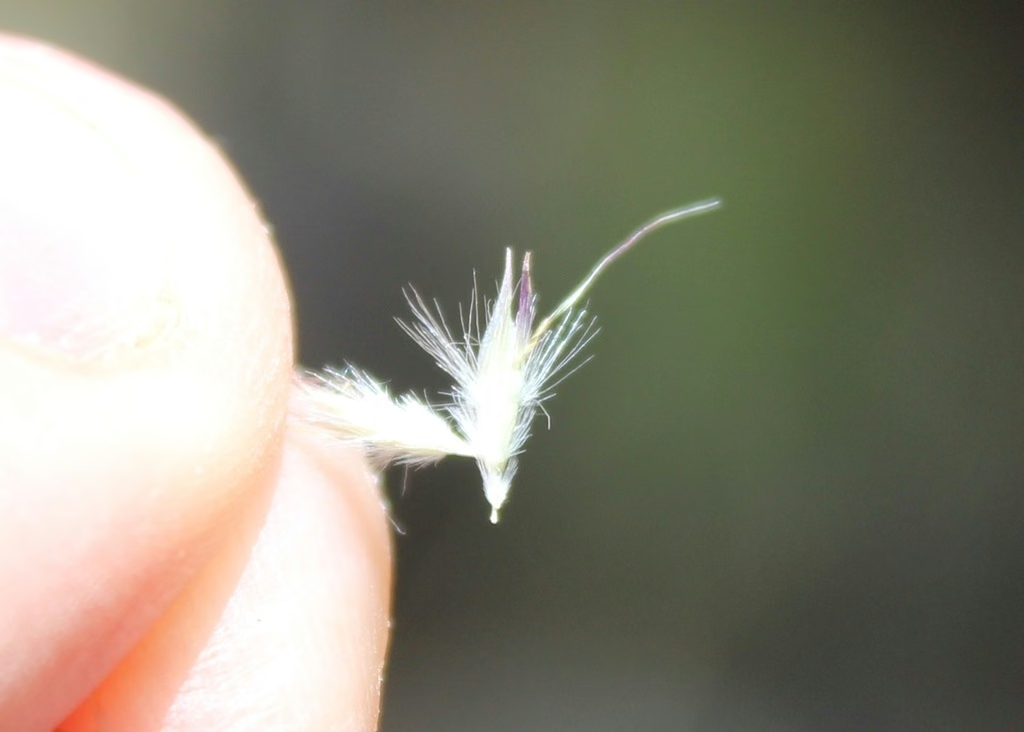
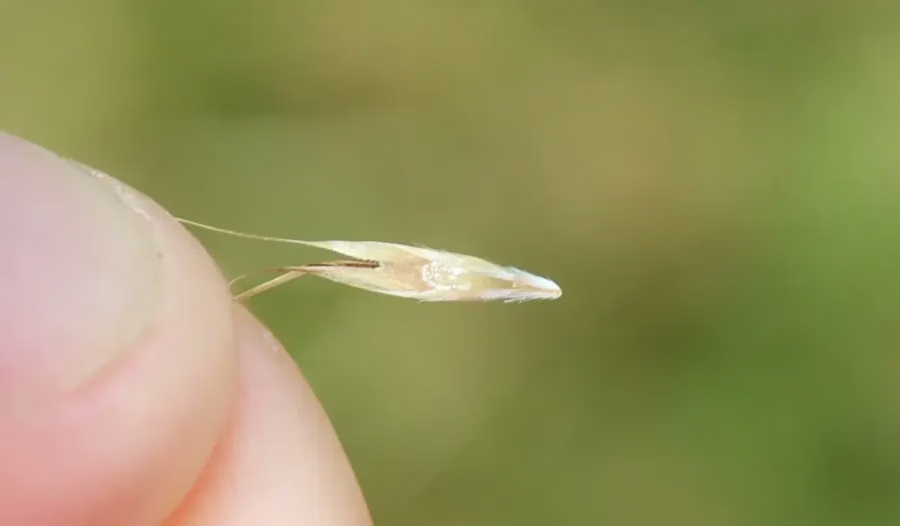
Its compact flowering head carries dark purplish spikelets. The florets have two conspicuous rows of hairs and a projecting bent awn, features best examined with a hand lens.
Quick facts
| Scientific Name | Rytidosperma nigricans |
|---|---|
| Former names | Danthonia nigricans, Notodanthonia nigricans |
| Family | Poaceae |
| Origin | Endemic to New Zealand |
| Habit | Upright, open tufted grass |
| Habitat | Damp mountain grassland, seepages and bogs |
| Flowering head | Compact panicle with dark spikelets |
| National status | Not Threatened (2023) |
| Height | Culms to about 30 cm, occasionally 50 cm |
| Water Needs | Usually associated with wetlands, including mountain seepages and bogs |
| Light | Mountain grassland and heath in its natural range |
| Spread | Open upright tufts; maximum clump width unquantified |
| Frost Tolerance | Minimum tolerated temperature is not documented |
| Salt Tolerance | Salt tolerance is not documented |
| Growth Rate | Annual extension is not quantified in the cited accounts |
| Lifespan | Perennial tufted grass |
Natural range
The species is endemic to New Zealand. The original type was collected at Mount Hector in the Tararua Range; published records also include the Ruahine Range, South Island mountains and Rakiura / Stewart Island.
| City | Climate Suitability |
|---|---|
| Auckland | Not assessed |
| Wellington | Not assessed |
| Christchurch | Not assessed |
Habitat and distribution
The grass occurs in damp montane and alpine vegetation, including seepages and cushion bogs. An ecological report records it in wet seepages among slim snow tussock at Wire Creek, between 1,500 and 1,700 m.
A South Westland vegetation survey records it in subalpine grassland and heath.
Natural growing conditions
The national wetland plant list classifies this grass as facultative wetland: it is usually found in wetlands but can occur outside them. Field records include mountain seepages and cushion bogs.
Planting considerations
The plant forms open upright tufts in damp mountain habitats. Its botanical descriptions and wetland records do not establish a tested garden soil, spacing or planting method for this particular species.
Cushion-Bog Neighbours
An Auckland Botanical Society field report records Rytidosperma nigricans in a cushion bog with Donatia novae-zelandiae, Kelleria dieffenbachii, Carpha alpina and other low wetland plants.
Observing the grass
Examine a mature floret with a lens: the position and length of the two bands of hairs and the bent awn are useful identification features. The spikelets themselves are often dark purple.
Garden context
Its fine leaves and tufted form occur naturally in cool, often wet mountain vegetation. The cited references describe wild plants and do not report species-specific garden trials or a proven maintenance regime.
Flowering heads and grain
The flowering head is a compact panicle with stalked spikelets. Kew’s GrassBase account describes three or four fertile florets per spikelet and a bent awn about 6-8.5 mm long.
The grain is approximately 1.1-1.3 mm long. The consulted sources do not establish a flowering calendar for this page.
Growth form
New shoots emerge outside the preceding leaf sheath, a branching pattern called extravaginal. The leaf sheaths can be bare or long-hairy, while the plant forms upright rather than spreading tufts.
How to Grow Bristle Grass (Rytidosperma nigricans)
Seed and older botanical names
The names Danthonia nigricans and Notodanthonia nigricans occur in older literature for Rytidosperma nigricans. Keeping these combinations together helps trace identified seed or herbarium records. The Flora account describes reproductive structures but does not give a tested germination treatment or a protocol for dividing mature tufts.
Recognising Its Upright Foliage
This perennial forms open, rather stiff tufts. Leaf blades usually remain folded, although some flatten or have inrolled margins. They reach approximately 15 cm long, occasionally 20 cm, and up to 2 mm wide. The basal sheaths are brownish and often purple above, with variable amounts of long hair. Those colour and hair differences are included within the species description.
Following the dark panicle
Flowering stems reach about 30 cm, occasionally 50 cm. The usually upright panicle is dark purple and comparatively compact. Its florets have conspicuous rows of hairs and a projecting bent awn, best checked with a hand lens. These details help confirm that an observed dark-headed mountain grass belongs to this species.
Using wetland and mountain records
The national wetland plant list places the species in the facultative-wetland category: it usually occurs in wetlands but can occur outside them. Records include mountain seepages, cushion bogs and subalpine heath or grassland. The cited sources document these settings without prescribing a garden watering interval or quantifying the annual expansion of a cultivated clump.
Plant health
Purplish upper leaf sheaths and dark spikelets are normal features described for this grass. The sources consulted do not identify particular pests or diseases affecting Rytidosperma nigricans.
Naming and classification
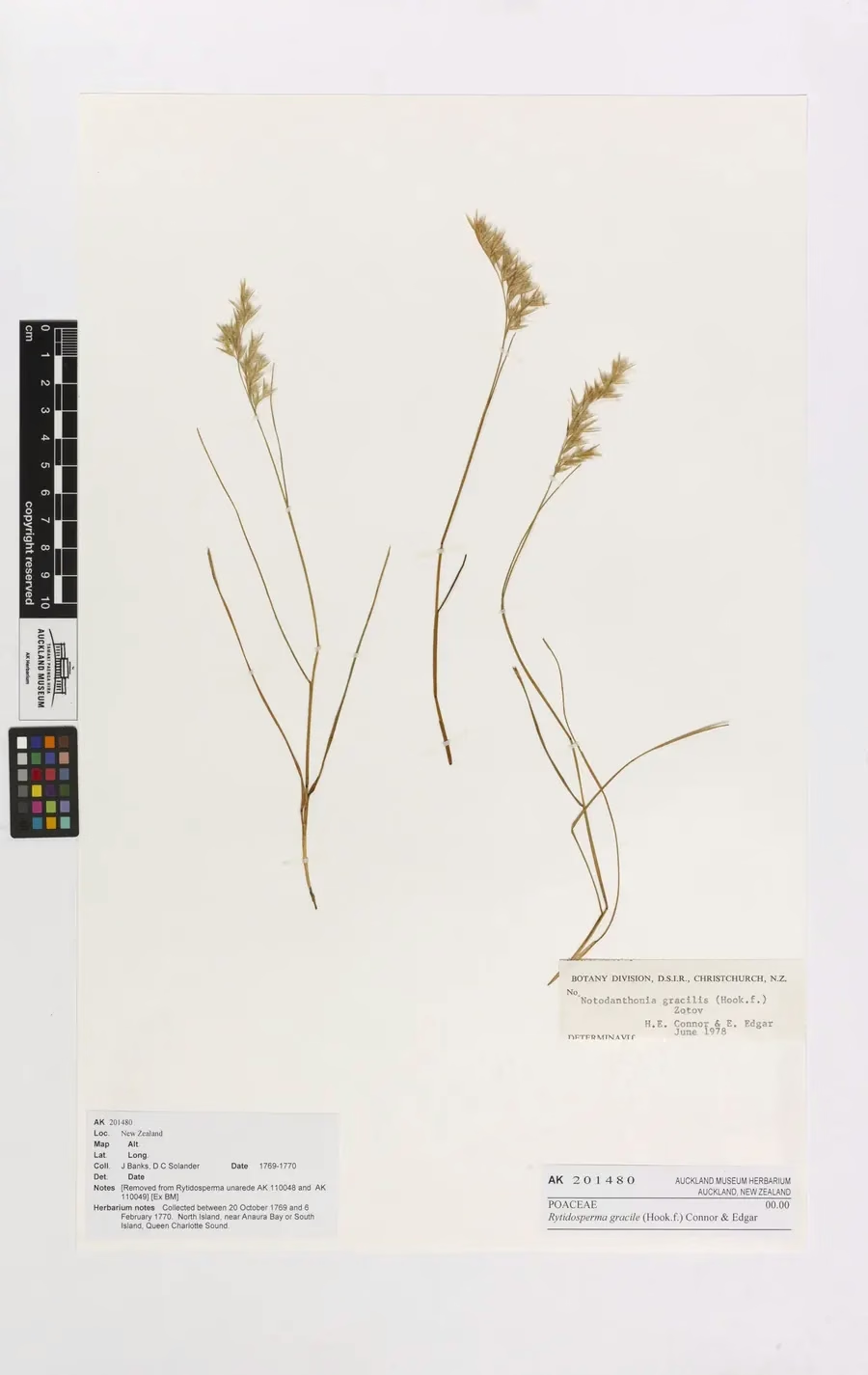
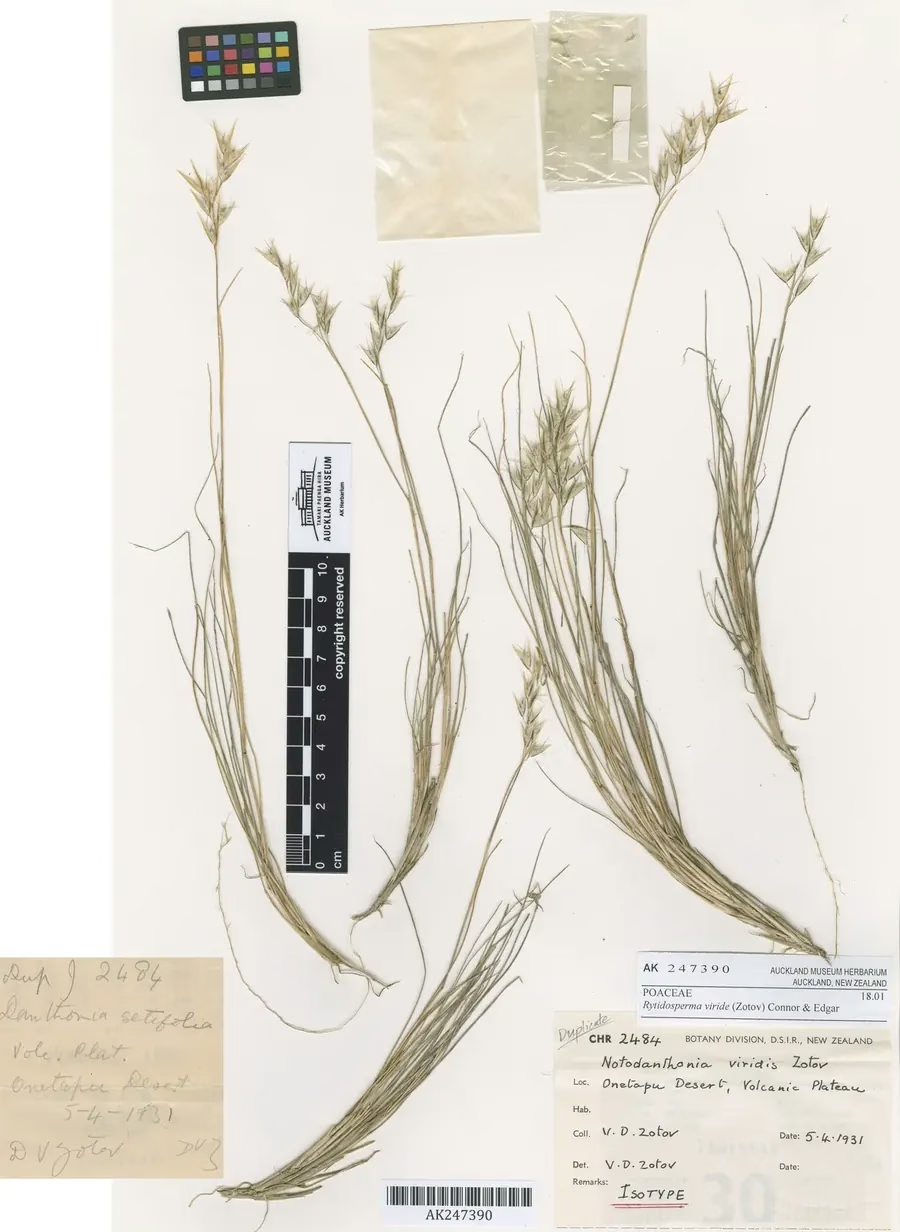
The plant was first named as Danthonia semiannularis var. nigricans. Connor and Edgar placed it in Rytidosperma in 1979; Notodanthonia nigricans is another earlier name.
Distinguishing similar grasses
In Rytidosperma nigricans the upper row of lemma hairs is long and the lower row short. A detailed grass key and a lens are useful because related species differ in hair arrangement and awn proportions.
Related native Rytidosperma
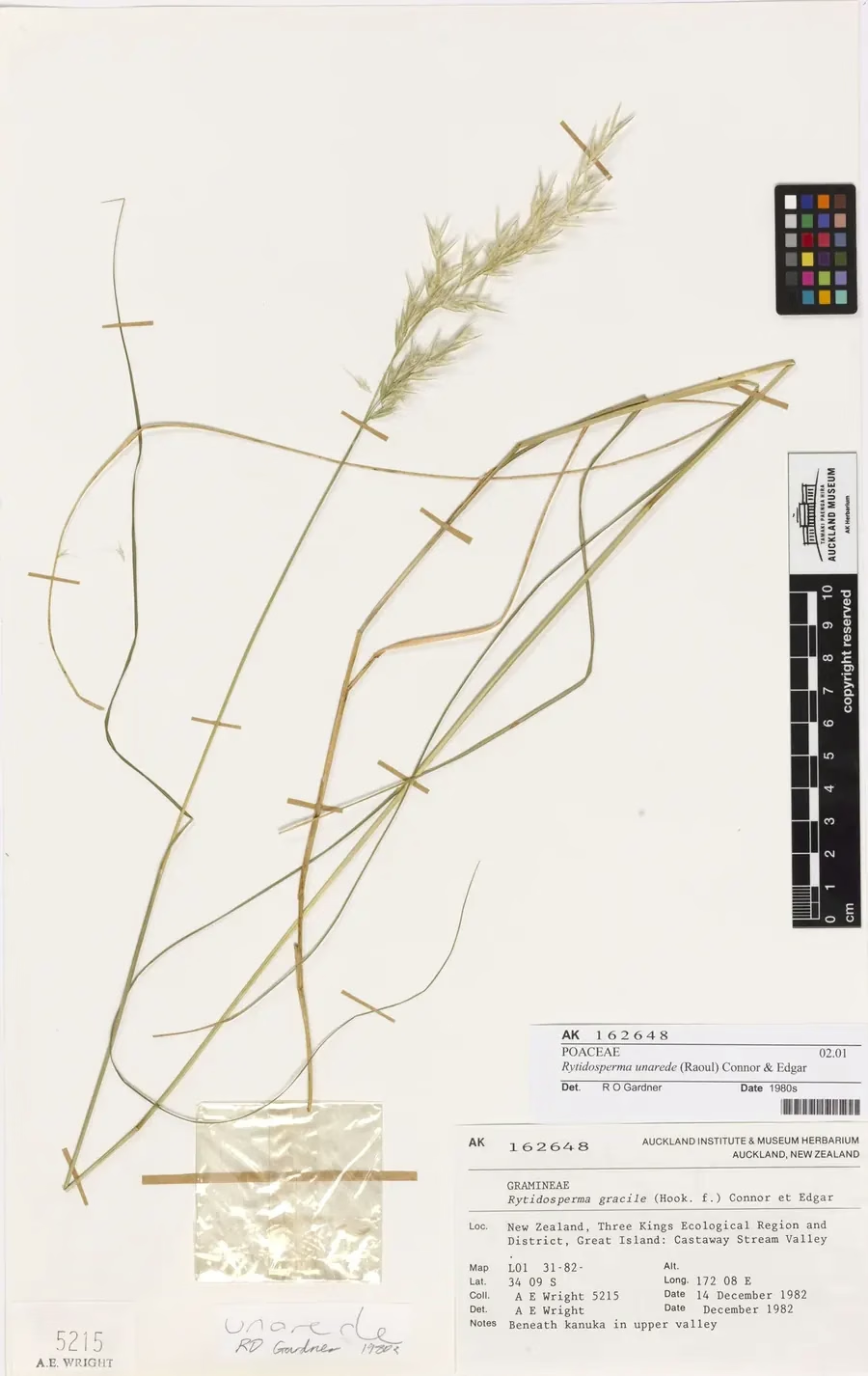
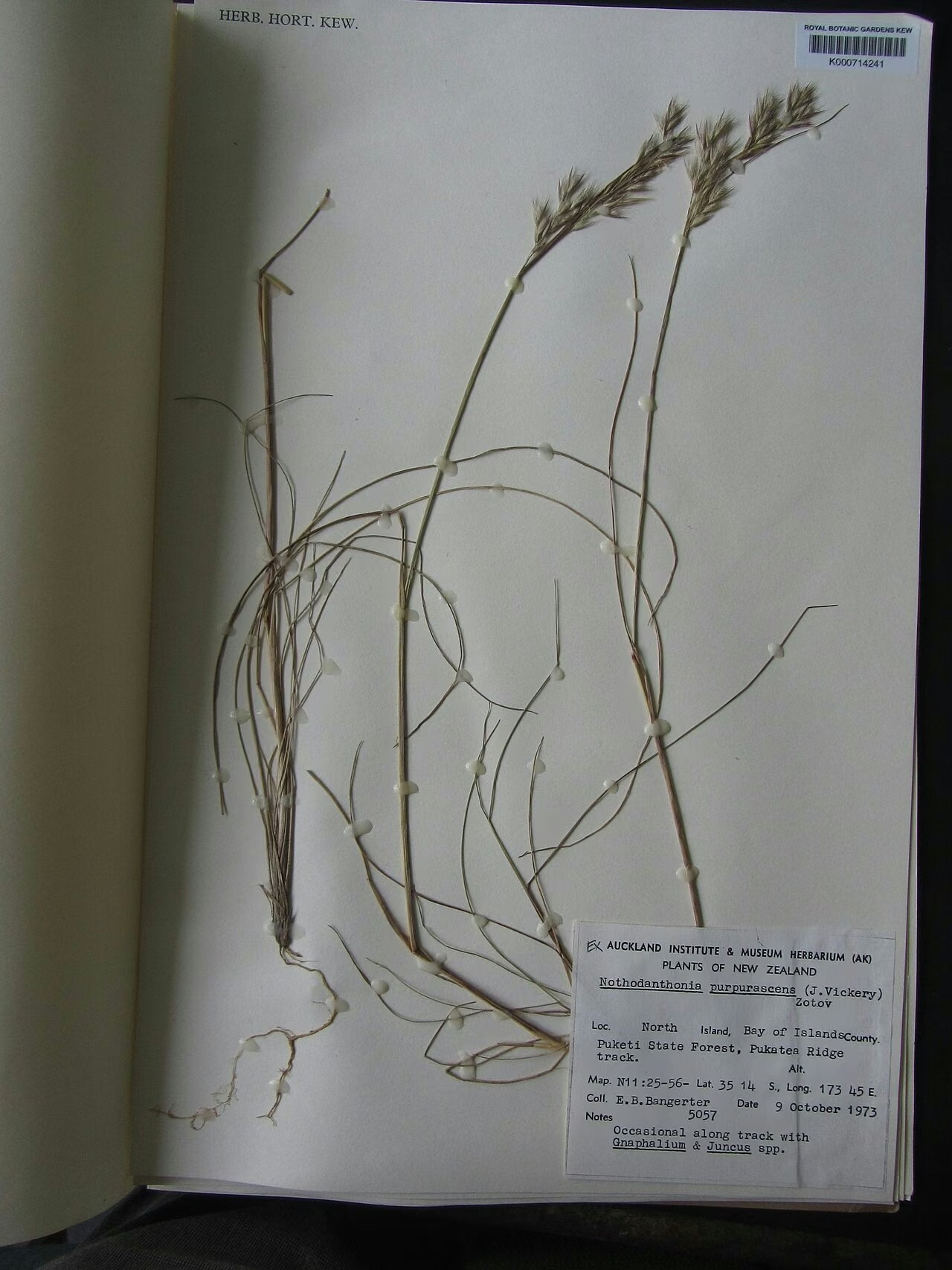
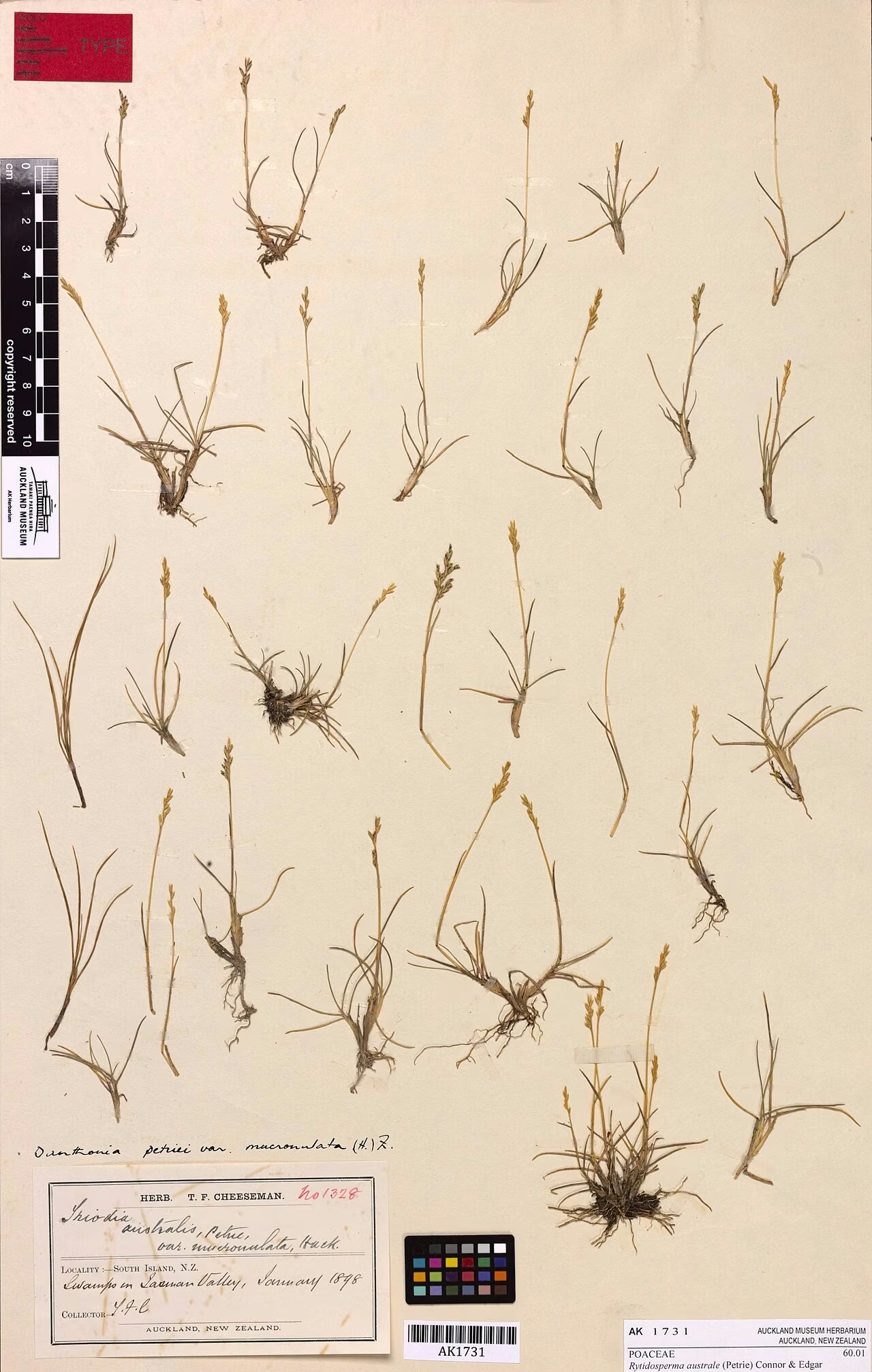
Explore other New Zealand Rytidosperma grasses, including species of grassland and mountain habitats.
Conservation
The 2023 New Zealand assessment lists this endemic grass as Not Threatened. Otago’s regional assessment also lists it as Regionally Not Threatened; its records include wet alpine seepages and bogs.
Frequently asked questions
What does facultative wetland mean for this species?
It usually occurs in wetland settings, while some populations occur outside wetlands. Mountain seepages and cushion bogs are recorded examples.
Are purple leaf sheaths abnormal?
No. The Flora account includes brownish sheaths that are often purplish towards their upper parts.
Which older names might appear in records?
Danthonia nigricans and Notodanthonia nigricans are earlier combinations for the grass.
Sources
Name, leaf sheaths and synonyms: Flora of New Zealand. Detailed grass morphology: Kew GrassBase account. Identification context: Mountain grasses guide.
Wetland status: New Zealand Wetland Plant List. Cushion bog observation: Auckland Botanical Society journal.
Last updated: