Turf Mat Daisy
Raoulia subsericea
Last updated:
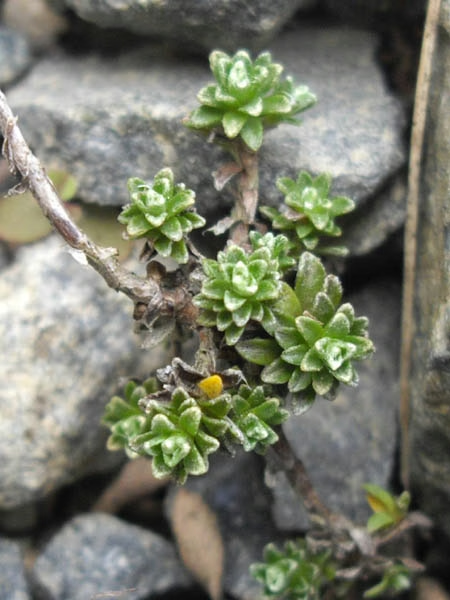
Turf mat daisy (Raoulia subsericea) is a low, spreading mat daisy endemic to the South Island. Its prostrate, much-branched stems root as they creep and form dense pale green or yellowish-green patches only a few centimetres high. It is widespread in tussock grassland from lowland to low-alpine country, mostly between 400 and 1500 m, avoiding only the wettest mountains. In summer the mats are studded with flower heads up to 1 cm across, ringed by white-tipped bracts that look like tiny daisies. It is ranked Not Threatened and is an easy, hardy groundcover for sunny, free-draining gardens. Explore more native ground covers in our native plant guide.
Plant Description
Raoulia subsericea has prostrate, much-branched stems that root as they spread, with branchlets that ascend or spread to form rather dense patches, becoming looser in shade. The leaves are about 3 to 6 mm long and 1 mm wide, pale green with three nerves, and lightly silky, as the epithet subsericea (rather silky) suggests. The overall colour of the mat is light to yellowish green rather than the silver or grey of many other Raoulia.
The flower heads are large for the genus, up to 1 cm across, and contain 25 to 45 florets, about half of them female. NZPCN gives the flower colour as white: the conspicuous white tips of the inner bracts radiate around each head, so a flowering mat looks studded with tiny white daisies in late summer.
It can be confused with celadon mat daisy (Raoulia parkii), which NZPCN describes as paler, with broader, firmer and more closely overlapping leaves. Raoulia glabra is another green mat daisy of similar habitats but has hairless leaves. The silver scabweeds such as Raoulia australis are easily told apart by their grey or silvery colour.
Quick Facts
| Scientific Name | Raoulia subsericea |
|---|---|
| Height | About 5 cm |
| Spread | Dense patches; spread not recorded |
| Water Needs | Low to moderate; dry to moderately moist soil |
| Light | Full sun; looser in shade |
| Frost Tolerance | High |
| Salt Tolerance | No information available; not a coastal plant |
| Growth Rate | Moderate |
| Lifespan | Perennial |
Climate Best Suited to
It suits the South Island's drier inland and eastern climates, from lowland to low-alpine, coping with hard frosts, snow, summer heat and wind.
Regional Suitability
| City | Climate Suitability |
|---|---|
| Auckland | Low |
| Wellington | Medium |
| Christchurch | High |
| Dunedin | High |
Plant Habitat
Turf mat daisy is endemic to the South Island, where it is widespread in tussock grasslands in all but the wettest mountains. It ranges from lowland to low-alpine zones, typically at about 400 to 1500 m.
It grows in open turf and between tussocks, on banks and other sunny sites with short vegetation, where its low mats can spread without being shaded out. It is common in the drier eastern high country.
Growing Requirements
Soil Requirements
It prefers dry to moderately moist, free-draining soil, as found in tussock grassland.
- Free-draining loam, gravel or stony soil
- Low to moderate fertility
- Avoid heavy, waterlogged soil
Light Requirements
A sun-loving mat that forms rather dense patches in the open but becomes looser in shade.
- Full sun for the densest growth
- Tolerates light shade with a looser habit
Water Requirements
It handles dry spells well once established but appreciates some moisture in summer.
- Water in prolonged drought
- Avoid waterlogging
- Good drainage is more important than frequent watering
Planting and Establishing
Plant in autumn or spring in a sunny spot on free-draining soil. It suits rock gardens, gravel gardens, the edges of paths and gaps between paving. Mix grit into heavier soils and set the plant level with the surface.
Space plants about 20 to 30 cm apart for a continuous mat and keep competing grasses and weeds out until they knit together. Water in well after planting and during the first summer.
Ecological Role
Turf mat daisy is a common component of the low herb layer in South Island tussock grasslands, filling gaps between tussocks with mats that bind the soil surface. Its flower heads offer nectar and pollen to small native insects, and nursery growers list it as attractive to pollinators.
Seeds are wind-dispersed. Where tussock grassland has been heavily grazed or invaded by introduced weeds, low mat daisies such as this one can be crowded out, though the species remains widespread.
Uses & Significance
Garden Uses
One of the more garden-friendly Raoulia, useful as a low, fine-textured groundcover in dry, sunny sites.
- Rock gardens and gravel gardens
- Between paving stones and along path edges
- Troughs and container plantings
- Native grassland and tussock garden plantings
Ecological Value
A widespread native groundcover that supports insects and stabilises soil in tussock grassland.
- Binds bare soil between tussocks
- Supplies nectar and pollen for native insects
- Contributes to the diversity of tussock grassland herbs
Landscaping Uses
Use turf mat daisy to create a native turf effect between tussocks such as Chionochloa or Festuca novae-zelandiae, or as a living mulch around rocks in an alpine-style garden. Its yellowish-green colour contrasts well with silver Raoulia and bronze sedges.
It is suitable for areas with light occasional foot traffic at the edge of stepping stones, but not as a lawn substitute in busy areas.
Seasonal Care Calendar
Spring
New growth spreads the mat outward.
- Plant or divide
- Weed around the edges
Summer
Flowers appear in summer, and by late summer the mats are studded with white-rayed flower heads.
- Water during drought
- Enjoy the flower display
Autumn
Fruiting follows in autumn as seed is shed on the wind.
- Collect seed for sowing
- Plant new mats while soil is warm
Winter
The mat sits dormant through frost and snow.
- No frost protection needed
- Ensure drainage stays clear
When to Prune and How Much
No regular pruning is needed. If the mat spreads beyond its allotted space, trim the edges with scissors in spring.
Remove any dead patches and fallen leaves so the surrounding stems can root into the gap.
How to Grow Turf Mat Daisy
Turf mat daisy is straightforward to propagate. Nursery growers report that its seed germinates without pre-treatment, though four weeks of cold stratification speeds germination. Its prostrate, rooting stems also make it easy to divide. NZPCN does not give specific propagation notes for this species. As it is widespread and not threatened, garden plants are a good source of material; avoid digging plants from the wild.
From Seed
Fruiting follows flowering in autumn. Collect heads once the fluffy pappus shows, before the wind takes the seed.
Seedlings are tiny at first, so sow thinly and avoid letting the surface dry out in the first few weeks.
- Collect ripe seed heads in late summer or autumn
- For faster germination, mix with moist sand and chill for about four weeks
- Sow on the surface of a free-draining seed mix and dust lightly with grit
- Keep evenly moist in a bright, sheltered place
- Prick out seedlings when large enough and grow on in small pots
By Division
Rooted sections of stem can be separated from an established mat at almost any time of the growing season, though spring is best.
Small divisions establish faster than large clumps, and a pot of several rooted pieces can be planted out as a single patch to give quicker cover in a rock garden or between paving.
- Lift a rooted section from the edge of the mat with a trowel
- Pot it into gritty potting mix or replant directly
- Water in and keep moist until new growth appears
- Plant out in a sunny, free-draining site
Pests & Diseases
Turf mat daisy has few pest problems. Slugs and snails may graze young plants, and birds sometimes scratch at mats.
Poor drainage or a humid, shaded position can lead to rot. Competing grasses and weeds are the most common cause of decline in gardens, so weed regularly.
Cultural Significance
No Māori name or traditional Māori use is recorded for Raoulia subsericea in the sources consulted.
Joseph Hooker described the species. The epithet subsericea means rather silky, a reference to the fine hairs on its leaves. The genus honours Étienne Raoul, a French naval surgeon whose book Choix de plantes de la Nouvelle-Zélande (1846) was one of the early works on New Zealand plants.
Bonus Tip
For the best flowering, grow turf mat daisy in full sun on lean soil without fertiliser. Rich soil and shade produce a loose, leafy mat with fewer of the white-rayed flower heads that make it so attractive in late summer.
Related Plants
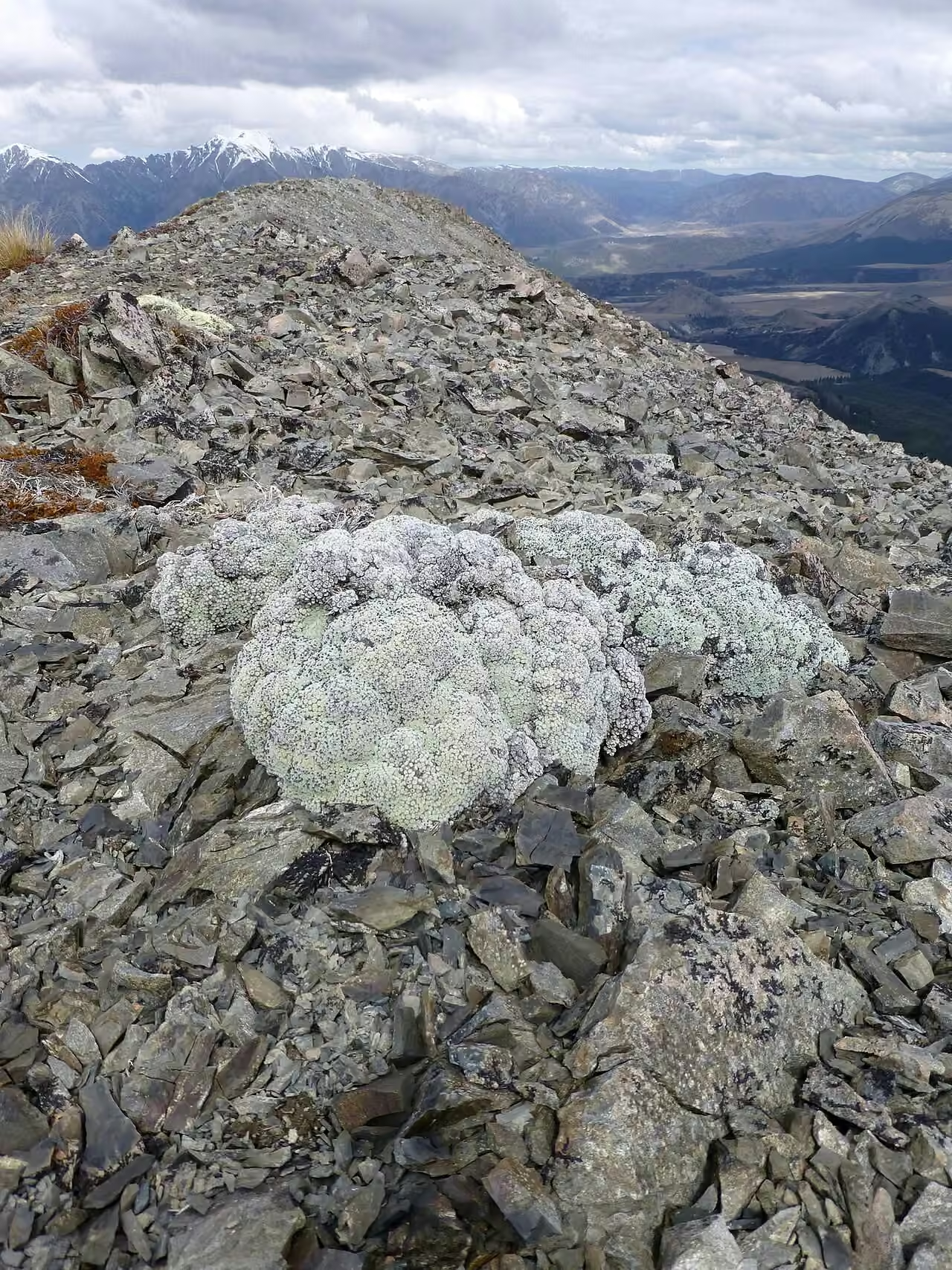
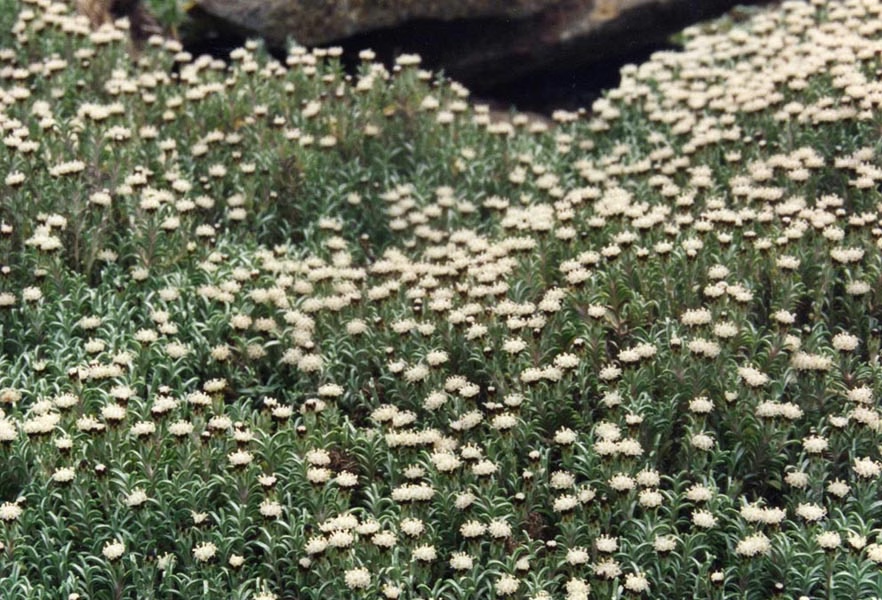
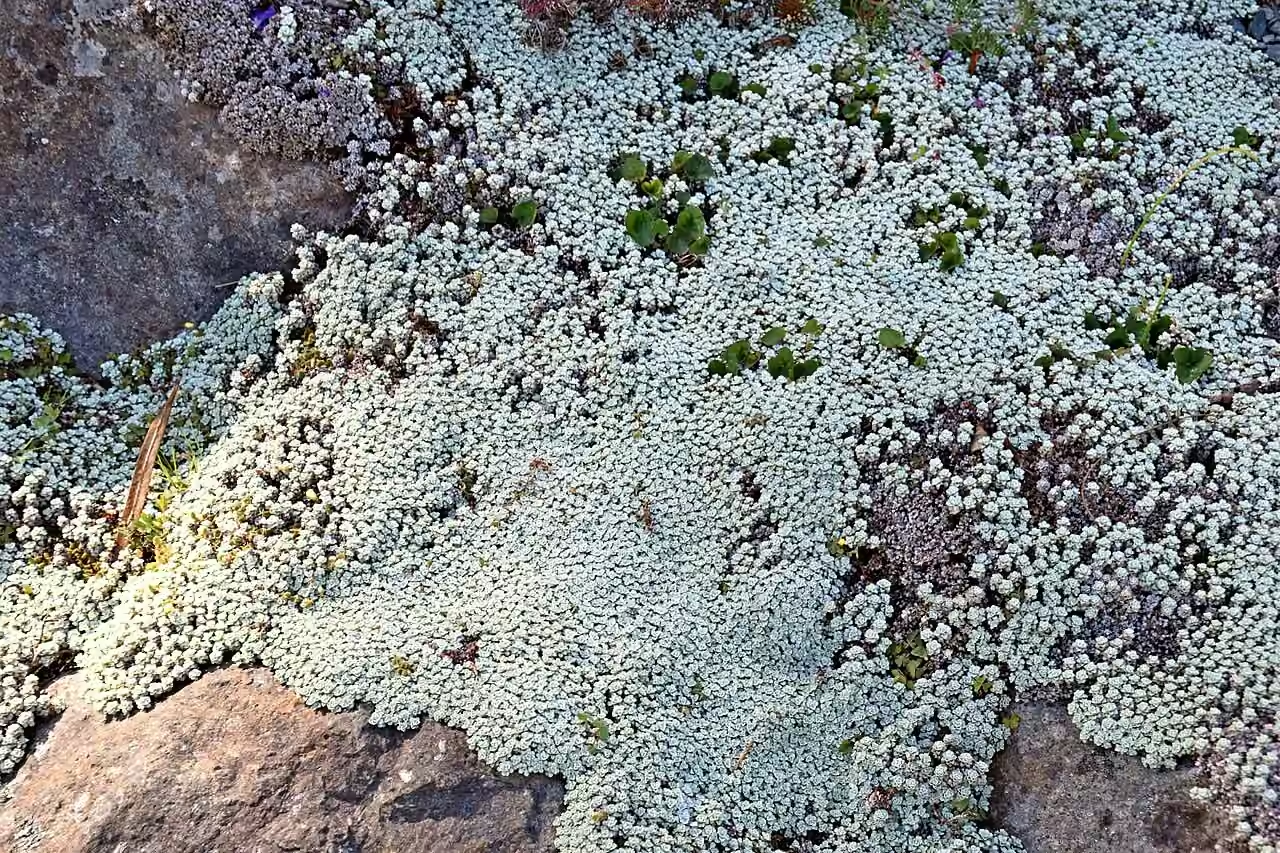
Explore other native plants that share similar characteristics or habitats with Turf Mat Daisy (Raoulia subsericea), offering further insights into New Zealand's diverse flora. These related species provide context and opportunities for complementary planting in your garden.
Plant Conservation
Raoulia subsericea is ranked Not Threatened in the 2023 New Zealand Threat Classification, as it has been in every assessment since 2004, and is Regionally Not Threatened in Otago (2025).
It remains widespread in South Island tussock grasslands. Protecting tussock grassland from conversion and weed invasion benefits this and many other native grassland herbs.
Frequently Asked Questions
What does turf mat daisy look like?
It forms dense, low patches of pale green to yellowish-green foliage made of tiny narrow leaves about 3 to 6 mm long. In summer it bears flower heads up to 1 cm across with radiating white bract tips.
Where does Raoulia subsericea grow?
It is endemic to the South Island, where it is widespread in tussock grasslands in all but the wettest mountains, from lowland to low-alpine zones at roughly 400 to 1500 m.
Is turf mat daisy good for rock gardens?
Yes. It is frost, sun and wind hardy, likes a sunny spot on dry to moderately moist free-draining soil, and makes a low pale green mat between rocks or paving.
Sources and Further Reading
The botanical, growing, and conservation details for Turf Mat Daisy (Raoulia subsericea) on this page draw on the New Zealand plant references below. Consult them for full technical records and the latest distribution data.