Buttercup
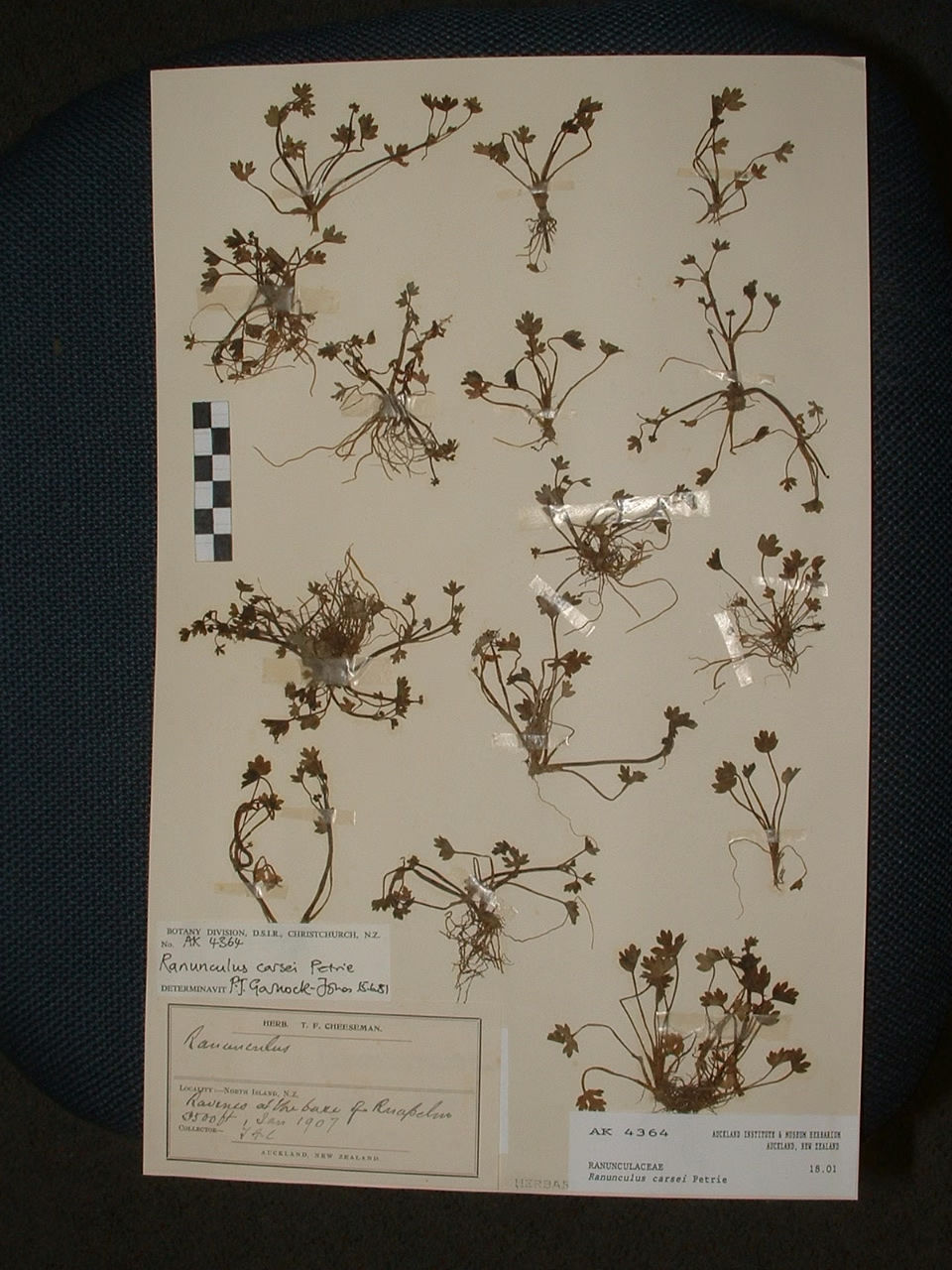
Ranunculus carsei
Last updated:
Ranunculus carsei is a small, creeping buttercup endemic to the mountains of the central North Island. Its tufted rosettes of three-lobed leaves sit on stout, sprawling stolons, and it bears small yellow flowers only 6 to 9 mm across, often with fewer than five petals. It grows in wet places in subalpine tussock grassland on the Volcanic Plateau and in the Kaimanawa, Kaweka and Ruahine ranges, including bogs, flushes, streamsides and tarn margins. It has no established common name and is ranked Not Threatened. NZPCN classes it as an obligate wetland plant, almost always found in wet ground. Explore more native flowering plants in our native plant guide.
Plant Description
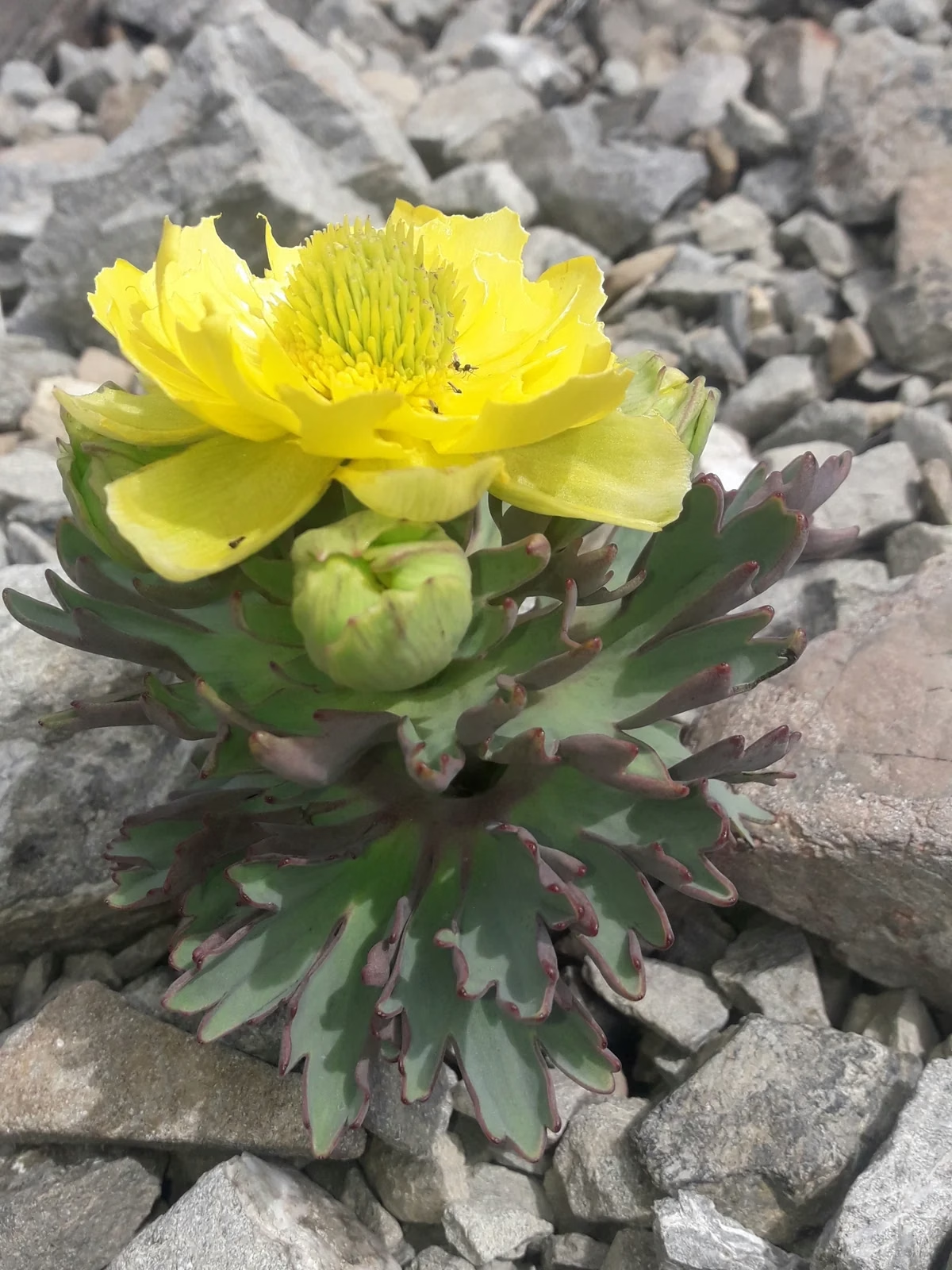
Ranunculus carsei is a prostrate to spreading, sparsely hairy perennial herb. Its tufted rosettes arise along stout, decumbent stolons, and the stems are usually no more than about 15 cm long. The basal leaves are broadly ovate to triangular, truncate to shallowly heart-shaped at the base, and usually cut into three lobes about halfway to the base, with the lobes toothed once or twice. The upper surface is hairless.
The flowers are small, only 6 to 9 mm across, with five hairless sepals and usually two to five narrow, obovate yellow petals. The fruiting heads are about 4 mm across and hold 10 to 30 small, slightly flattened, hairless achenes, which are sometimes blotched with purple and end in a straight or hooked style.
Its tiny flowers with reduced petal numbers, small three-lobed leaves and creeping, stoloniferous habit help distinguish it from the larger-flowered alpine buttercups of the central North Island mountains. Close examination of the achenes is often needed to separate it from other small wetland Ranunculus.
Quick Facts
| Scientific Name | Ranunculus carsei |
|---|---|
| Height | Under 0.1 m |
| Spread | Stems up to about 15 cm long, spreading by stolons |
| Water Needs | Wet; bogs, flushes and seepages |
| Light | Full sun in open tussock grassland |
| Frost Tolerance | High; subalpine |
| Salt Tolerance | No information available; an inland mountain species |
| Growth Rate | No information available |
| Lifespan | Perennial |
Climate Best Suited to
Suits the cool, wet subalpine climate of the central North Island ranges and Volcanic Plateau, with frequent frosts, winter snow and high rainfall.
Regional Suitability
| City | Climate Suitability |
|---|---|
| Auckland | Low |
| Wellington | Low |
| Christchurch | Low |
| Dunedin | Medium |
Plant Habitat
Ranunculus carsei is endemic to the North Island. Flora records place it on the mountains of the Volcanic Plateau, including Mount Tongariro where the type was collected near the base of the mountain, and in the Kaimanawa, Kaweka and Ruahine ranges.
It grows in subalpine grassland and damp places, particularly along watercourses in tussock grassland, in bogs and flushes and at the edges of tarns. Records place it at roughly 1450 to 1650 m above sea level.
Growing Requirements
Soil Requirements
It grows in permanently wet, often peaty or silty soils in bogs, flushes and on stream and tarn margins.
- Saturated, low-fertility soil
- Peat or fine volcanic silt in flushes
- Open ground where it is not overtopped
Light Requirements
Its tussock grassland and bog habitats are open, so it grows in full sun among low vegetation.
- Full sun
- Can be shaded out by taller tussock or shrubs
Water Requirements
As an obligate wetland plant it depends on ground that stays wet through the growing season.
- Never allow the soil to dry out
- Running or seeping water suits it better than stagnant water
Planting and Establishing
Ranunculus carsei is not in general cultivation and no growing records were found. It is best appreciated in its natural setting on the central North Island mountains.
Anyone wishing to grow it for a wetland or alpine collection would need a constantly wet, open, cool site such as the margin of a bog garden, using material obtained without harming wild plants.
Ecological Role
It forms part of the small-herb community of subalpine flushes and tarn edges, where low creeping plants share wet ground under an open canopy of tussock.
Its pollinators and seed dispersal are not documented in the sources consulted. The small hooked styles on the achenes are a common feature among buttercups, but how they function in this species has not been recorded.
Uses & Significance
Garden Uses
It has little ornamental use because of its tiny flowers, but it is of interest to wetland and alpine plant specialists.
- Specialist alpine or bog garden collections
- Restoration of disturbed subalpine flushes within its natural range
Ecological Value
It is one of a small group of buttercups confined to the central North Island mountains, adding to the distinctive flora of the Volcanic Plateau.
- Part of subalpine wetland and flush communities
- A North Island endemic with a restricted range
Landscaping Uses
This plant is not used in landscaping. In a naturalistic bog garden it would suit the wettest edge, mixed with other low creeping wetland herbs, where its yellow flowers would appear among the leaves.
For a more visible effect in wet garden ground, larger native buttercups or creeping herbs available from nurseries are better choices.
Seasonal Care Calendar
Spring
Growth resumes as snow melts from the flushes and tarn margins.
- Look for new rosettes along stream edges
- No intervention needed in the wild
Summer
The small yellow flowers appear during the subalpine growing season; exact flowering months are not recorded in the sources consulted.
- Check wet flushes on Tongariro and the Ruahine tops
- Avoid trampling fragile wetland ground
Autumn
Achenes ripen in the small fruiting heads.
- Leave seed in place in the wild
- Photograph fruiting heads to help identification
Winter
Plants are dormant or nearly so under frost and snow.
- No action required
- Keep any cultivated plants wet but protected from waterlogging with stagnant water
When to Prune and How Much
No pruning is needed for this small creeping herb.
In cultivation, simply remove any dead leaves or encroaching weeds by hand.
How to Grow Buttercup
No published propagation records were found for Ranunculus carsei, and NZPCN gives no propagation information for it. The approaches below are those commonly used for small, stoloniferous wetland buttercups and have not been tested for this species. Because it spreads by stout stolons that root as they go, separating rooted pieces is likely to be the simplest method, while seed may also work if collected ripe. Any material should come from plants already in cultivation, or be collected with the permission of the Department of Conservation, since much of its range lies within Tongariro National Park and conservation land in the Kaimanawa, Kaweka and Ruahine ranges.
By Division of Rooted Stolons
Rosettes that have rooted along the stolons can be separated from the parent and potted on, keeping them wet throughout.
- Choose a rosette with its own roots at a stolon node
- Cut the stolon on either side of the rosette
- Pot into a peaty, gritty mix and stand the pot in a shallow tray of water
- Keep cool and in good light until new leaves appear
From Seed
Achenes from the small fruiting heads can be sown fresh. Many buttercups need a period of cold before germinating, so sowing outdoors in autumn is a sensible approach.
- Collect achenes when they loosen from the fruiting head
- Sow on the surface of a moist, peaty seed mix
- Stand the pot outdoors in a cool place over winter, keeping it wet
- Prick out seedlings into individual pots in spring
Pests & Diseases
No specific pests or diseases are recorded for Ranunculus carsei in the sources consulted.
Possible pressures on its habitat include trampling of wet flushes, changes to drainage and invasion by weeds, but none is identified as a threat to this species, which is ranked Not Threatened.
Cultural Significance
No traditional Māori name or use is recorded for Ranunculus carsei in the sources consulted. Its range lies within the mountains of Tongariro, which are of great significance to Ngāti Tūwharetoa.
The species was described by Donald Petrie in 1926 from a specimen collected near the base of Mount Tongariro by H. Carse, after whom it is named.
Bonus Tip
If you find a tiny yellow buttercup in a wet flush on the Tongariro Alpine Crossing or the Ruahine tops, count the petals and look at the leaves: a creeping plant with small three-lobed leaves and flowers under 1 cm across, often with fewer than five petals, may well be Ranunculus carsei. Posting a photo to iNaturalist NZ helps map its distribution.
Related Plants
Explore other native plants that share similar characteristics or habitats with Buttercup (Ranunculus carsei), offering further insights into New Zealand's diverse flora. These related species provide context and opportunities for complementary planting in your garden.
Plant Conservation
Ranunculus carsei has been ranked Not Threatened in every assessment from 2004 to 2023.
Most of its range lies in national parks and conservation land. Keeping to tracks around bogs and tarns, and controlling weeds in subalpine wetlands, help keep its habitat in good condition.
Frequently Asked Questions
Where does Ranunculus carsei grow?
It is confined to the North Island mountains: the Volcanic Plateau around Tongariro, and the Kaimanawa, Kaweka and Ruahine ranges, in damp subalpine grassland, bogs, flushes and tarn edges.
Who is Ranunculus carsei named after?
The type specimen was collected near the base of Mount Tongariro by H. Carse, and Donald Petrie named the species after him when describing it in 1926.
Is Ranunculus carsei a wetland plant?
Yes. NZPCN rates it as an obligate wetland species, meaning it is almost always a hydrophyte and is rarely found away from wet ground.
Sources and Further Reading
The botanical, growing, and conservation details for Buttercup (Ranunculus carsei) on this page draw on the New Zealand plant references below. Consult them for full technical records and the latest distribution data.