Cut-Leaved Alpine Buttercup
Ranunculus buchananii
Last updated:
Cut-leaved alpine buttercup (Ranunculus buchananii) is a large-flowered alpine buttercup endemic to the southern South Island. A tufted perennial 20 to 30 cm tall, it has fleshy, bluish-grey, silky leaves divided into toothed segments and white flowers 4 to 6 cm across with 15 to 25 narrow petals. It grows on rock ledges, cliffs and coarse fellfield near snowmelt in the mountains of Otago, Southland and southern Westland, south of about latitude 44 degrees. Once regarded as secure, it is now ranked At Risk - Declining. Explore more native flowering plants in our native plant guide.
Plant Description
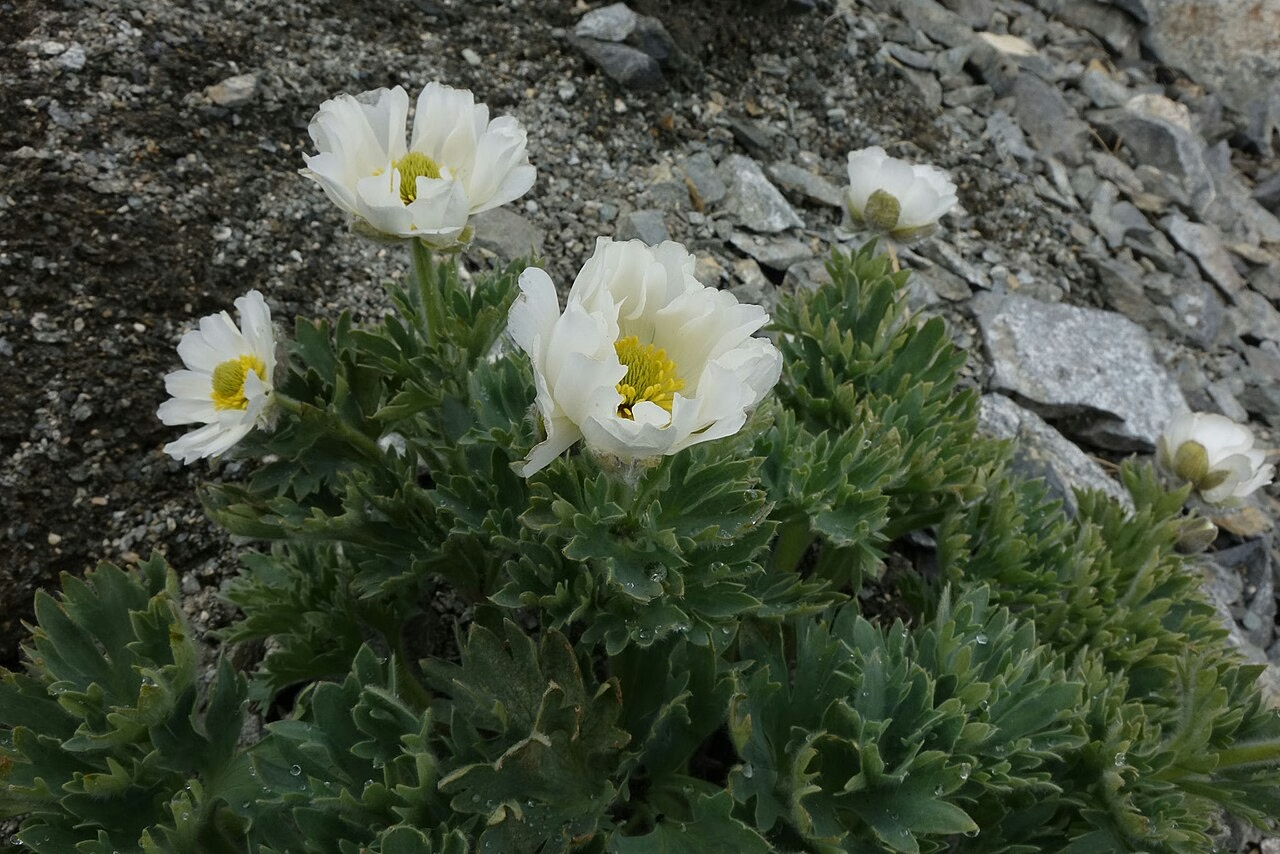
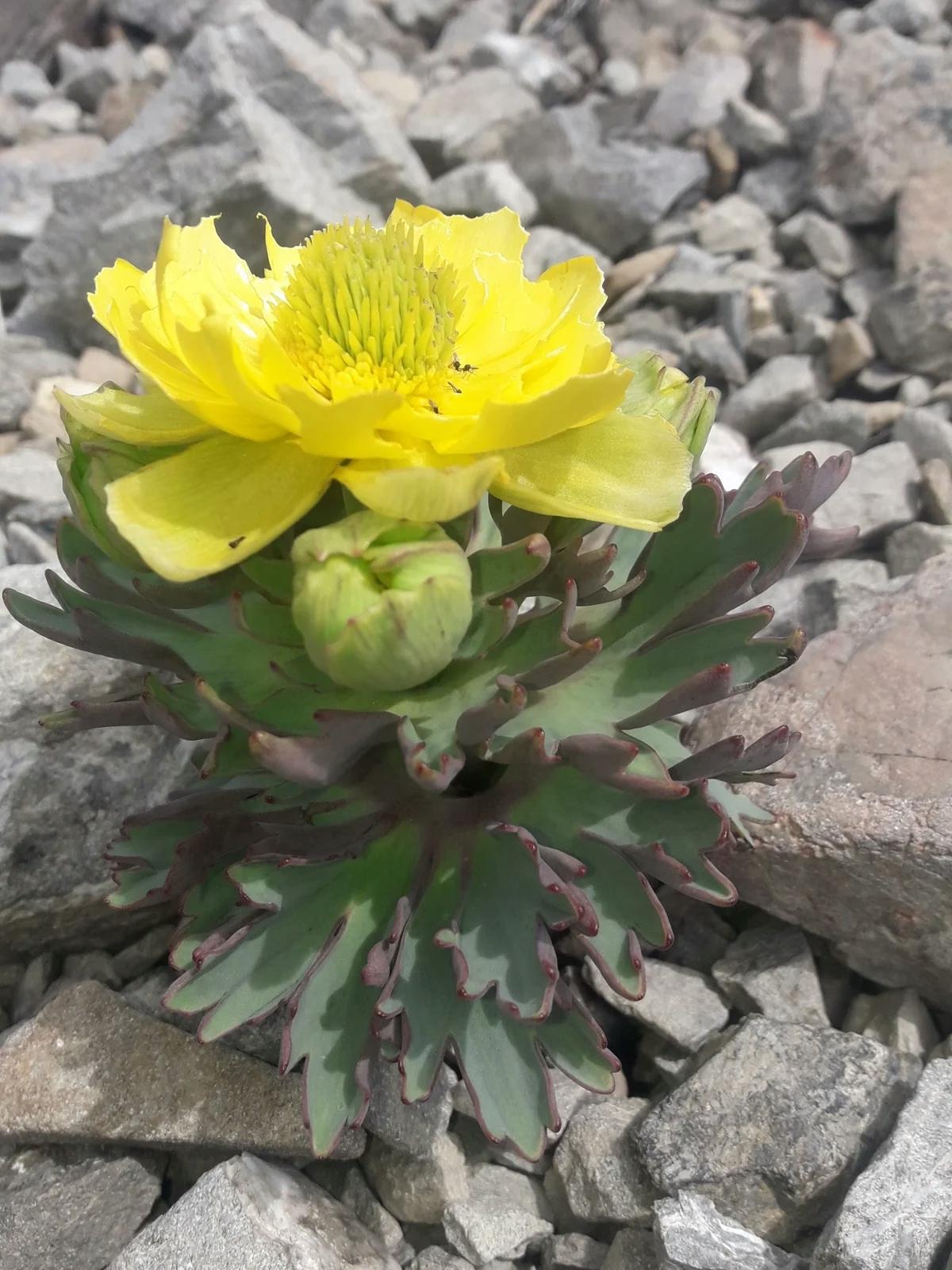
Ranunculus buchananii is a tufted perennial with a very stout rhizome and fleshy main roots that contain a milky juice. The erect flowering stems are 20 to 30 cm tall and either silky-haired or almost hairless. The basal leaves are kidney-shaped in outline, 5 to 15 cm across, and divided once or twice into three stalked parts whose lobes are further toothed or cut. They are fleshy, glaucous and covered in silky hairs, which gives the plant a soft grey-green look.
Each stem carries one to three large flowers, 4 to 6 cm across, sometimes up to 7 cm. The flowers have 15 to 25 white, narrow, linear-oblong petals about 2 cm long, giving them a many-rayed, almost daisy-like appearance. The fruiting head is nearly spherical, 1 to 2 cm across, packed with very numerous hairy, brown, obliquely obovoid achenes.
The white flowers separate it from the yellow-flowered alpine buttercups of the same area. It is most similar to the Mount Cook buttercup (Ranunculus lyallii), which also has white flowers but has large, round, shield-like undivided leaves rather than the finely cut leaves of this species. The two hybridise where they meet.
Quick Facts
| Scientific Name | Ranunculus buchananii |
|---|---|
| Height | 0.2-0.3 m |
| Spread | Clumps about 0.2-0.3 m across |
| Water Needs | Constantly moist, fed by snowmelt |
| Light | Full sun to light shade on rock ledges |
| Frost Tolerance | Very high; alpine |
| Salt Tolerance | No information available; an inland alpine species |
| Growth Rate | Slow |
| Lifespan | Long-lived perennial |
Climate Best Suited to
Suits cold, snowy alpine climates of the southern South Island, with long-lying snow, cool summers and plenty of moisture from snowmelt.
Regional Suitability
| City | Climate Suitability |
|---|---|
| Auckland | Low |
| Wellington | Low |
| Christchurch | Low |
| Dunedin | Medium |
Plant Habitat
Cut-leaved alpine buttercup is endemic to the South Island from about latitude 44 degrees southwards, with herbarium collections from Otago, Southland and Westland. The type was collected in the Otago lakes district around Lakes Wakatipu, Wanaka and Hawea at 5000 to 6000 feet (roughly 1500 to 1800 m), where it was described as growing in large patches.
It is a plant of subalpine and alpine rock clefts, ledges and cliffs. Field observations note that the most luxuriant plants grow in fellfield of very chunky rock close to snowmelt, where the roots stay cool and wet through summer.
Growing Requirements
Soil Requirements
It roots into rock clefts and coarse, rocky debris where fine soil collects between boulders and stays wet from melting snow.
- Very stony, free-draining but constantly moist ground
- Deep crevices that keep the fleshy roots cool
- Low-fertility mineral soil with some organic matter
Light Requirements
It grows on open rock faces and fellfield above the treeline, receiving high alpine light, though plants in clefts are partly shaded by the rock.
- Bright, open alpine sites
- Some shade from surrounding rock is tolerated
Water Requirements
Moisture from late-lying snow is a key feature of its best sites, and the plant does poorly where the roots dry out in summer.
- Keep roots cool and moist through the growing season
- Drier conditions are acceptable during winter dormancy if drainage is sharp
Planting and Establishing
This is a specialist alpine plant rather than a garden perennial. It is offered by some overseas seed companies to rock garden enthusiasts, but in New Zealand it should only be grown from seed or plants already in cultivation, never dug from the wild.
Grow it in a deep pot or raised scree bed filled with coarse grit and some leaf mould, in a cool position where the roots stay moist but the crown does not sit in water. Lowland summer heat is the main reason plants fail.
Ecological Role
The large white flowers of New Zealand alpine buttercups are visited by insects such as flies and native bees, which are the main pollinators in the alpine zone, although the specific pollinators of this species are not documented in the sources consulted.
Where it grows near the Mount Cook buttercup, the two cross, producing hybrids with intermediate leaves. Its many achenes simply fall near the parent, so populations spread slowly across suitable rocky ground.
Uses & Significance
Garden Uses
It is valued by alpine plant growers for its striking white flowers and silky, finely cut foliage.
- Alpine house or deep trough collections
- Cool, moist scree beds in southern gardens
- Botanic garden displays of southern alpine flora
Ecological Value
It is one of the distinctive large-flowered buttercups that make the New Zealand alpine flora internationally notable.
- Provides nectar and pollen for alpine insects in midsummer
- Part of the cliff and fellfield community of southern mountains
- An endemic species now considered to be declining
Landscaping Uses
In a rock garden, place it in a north-facing crevice between large stones in cool southern districts, or on a shaded side of a rock in warmer areas, so the fleshy roots run back under the stone.
Pair it with low alpine cushions and small tussocks so the large white flowers stand out above them in early summer.
Seasonal Care Calendar
Spring
New leaves emerge as the snow retreats from its rocky sites.
- Begin regular watering of cultivated plants
- Top-dress pots with fresh grit
Summer
Large white flowers open in December and January, followed by round heads of hairy achenes.
- Keep roots cool and moist during heat
- Collect seed as heads ripen
Autumn
Seed heads finish ripening and leaves begin to die back.
- Sow fresh seed outdoors
- Reduce watering as growth slows
Winter
Plants rest under snow in the wild, protected from extreme cold and drying winds.
- Keep potted plants cold but not waterlogged
- Protect from slugs on mild days
When to Prune and How Much
No pruning is needed. Spent flowering stems can be removed after seed is collected.
Clear away dead leaves from the crown in autumn to reduce rot in cultivation.
How to Grow Cut-Leaved Alpine Buttercup
Cut-leaved alpine buttercup is propagated mainly from seed, which seed companies offer to alpine growers. No species-specific propagation guidance is given on the NZPCN fact sheet, so the advice below follows general practice for the large New Zealand alpine buttercups, whose seed typically needs a period of cold before it germinates. Because this species is declining in the wild, material should only come from plants already in cultivation or from collections made with appropriate permission. Expect slow results: seedlings often take several years to reach flowering size, and they must be kept cool through their first summers.
From Seed
Seed is best sown fresh in autumn and left outdoors over winter so that it receives natural chilling. Germination can be erratic and may continue over more than one season.
- Collect ripe achenes from the round fruiting heads in late summer
- Sow on a gritty seed mix and cover with a thin layer of fine grit
- Leave the pot outdoors in a cold, shaded place over winter
- Keep the mix moist and watch for germination in spring
- Pot seedlings individually into deep pots once they have true leaves
By Division
Established clumps with several crowns can sometimes be divided, though the fleshy roots resent disturbance and division is slower and riskier than seed.
- Lift a mature cultivated clump in early spring as growth begins
- Gently separate a crown with its own roots attached
- Pot into a deep container of moist, gritty mix
- Keep cool and shaded until new growth appears
Pests & Diseases
Slugs and snails readily damage the soft new growth and flower buds of alpine buttercups in cultivation. Crown rot is likely in warm, wet, poorly drained conditions.
In the wild, browsing animals can damage large alpine herbs, but the specific causes of this species' decline are not described in the sources consulted.
Cultural Significance
No traditional Māori name or use is recorded for Ranunculus buchananii in the sources consulted.
The species was named by Joseph Hooker after John Buchanan (1819 to 1898), a New Zealand botanist and scientific artist and Fellow of the Linnean Society, who collected widely in Otago. The genus name comes from the Latin rana, frog, a reference to the damp places many buttercups grow.
Bonus Tip
When growing this buttercup in a pot, plunge the pot into a bed of sand or grit in a shaded spot over summer. The surrounding material keeps the root zone cool and evenly moist, imitating the snowmelt-fed rock debris it grows in, and greatly reduces summer losses in lowland gardens.
Related Plants
Explore other native plants that share similar characteristics or habitats with Cut-Leaved Alpine Buttercup (Ranunculus buchananii), offering further insights into New Zealand's diverse flora. These related species provide context and opportunities for complementary planting in your garden.
Plant Conservation
Ranunculus buchananii is ranked At Risk - Declining (2023) with the qualifiers Data Poor Size, Data Poor Trend and Range Restricted. It was considered Not Threatened in 2004, 2009 and 2012, and Otago lists it as Regionally Vulnerable (2025).
Reporting sightings with photographs, for example through iNaturalist NZ, helps botanists understand its true population size and trend. Never collect plants from the wild.
Frequently Asked Questions
What does Ranunculus buchananii look like?
It is a tufted alpine herb with fleshy, glaucous, silky-haired leaves divided once or twice into three, and white flowers 4 to 6 cm across with 15 to 25 narrow petals.
Where can you see the cut-leaved alpine buttercup?
It grows in the mountains of the southern South Island, including the Otago lakes district around Wakatipu, Wanaka and Hawea, on rock ledges, cliffs and fellfield near late snow.
Does Ranunculus buchananii hybridise with the Mount Cook buttercup?
Yes. Hybrids between R. lyallii and R. buchananii have been recorded flowering on Mount Burns in Fiordland at about 1500 m.
Why is the cut-leaved alpine buttercup listed as declining?
It was moved from Not Threatened to At Risk - Declining in 2017 and remains there in 2023, with data on its population size and trend still described as poor.
Sources and Further Reading
The botanical, growing, and conservation details for Cut-Leaved Alpine Buttercup (Ranunculus buchananii) on this page draw on the New Zealand plant references below. Consult them for full technical records and the latest distribution data.