Walker's Saltgrass
Puccinellia walkeri
Last updated:
Walker's saltgrass (Puccinellia walkeri) is a tufted, salt-tolerant grass endemic to New Zealand. It forms stiff, erect, bluish-green to pale brownish-green clumps 10 to 50 cm tall, with leaves that often overtop the flowering stems. It grows on small coastal islets and rock stacks, often near seabird nests, and in salt meadow, salt marsh and saline estuary ground from the Brothers Islands in Cook Strait and Banks Peninsula south to Riverton and Stewart Island. It is ranked At Risk - Naturally Uncommon because populations are sparse and scattered, and some appear to produce no seed. Explore more native grasses and flaxes in our native plant guide.
Plant Description
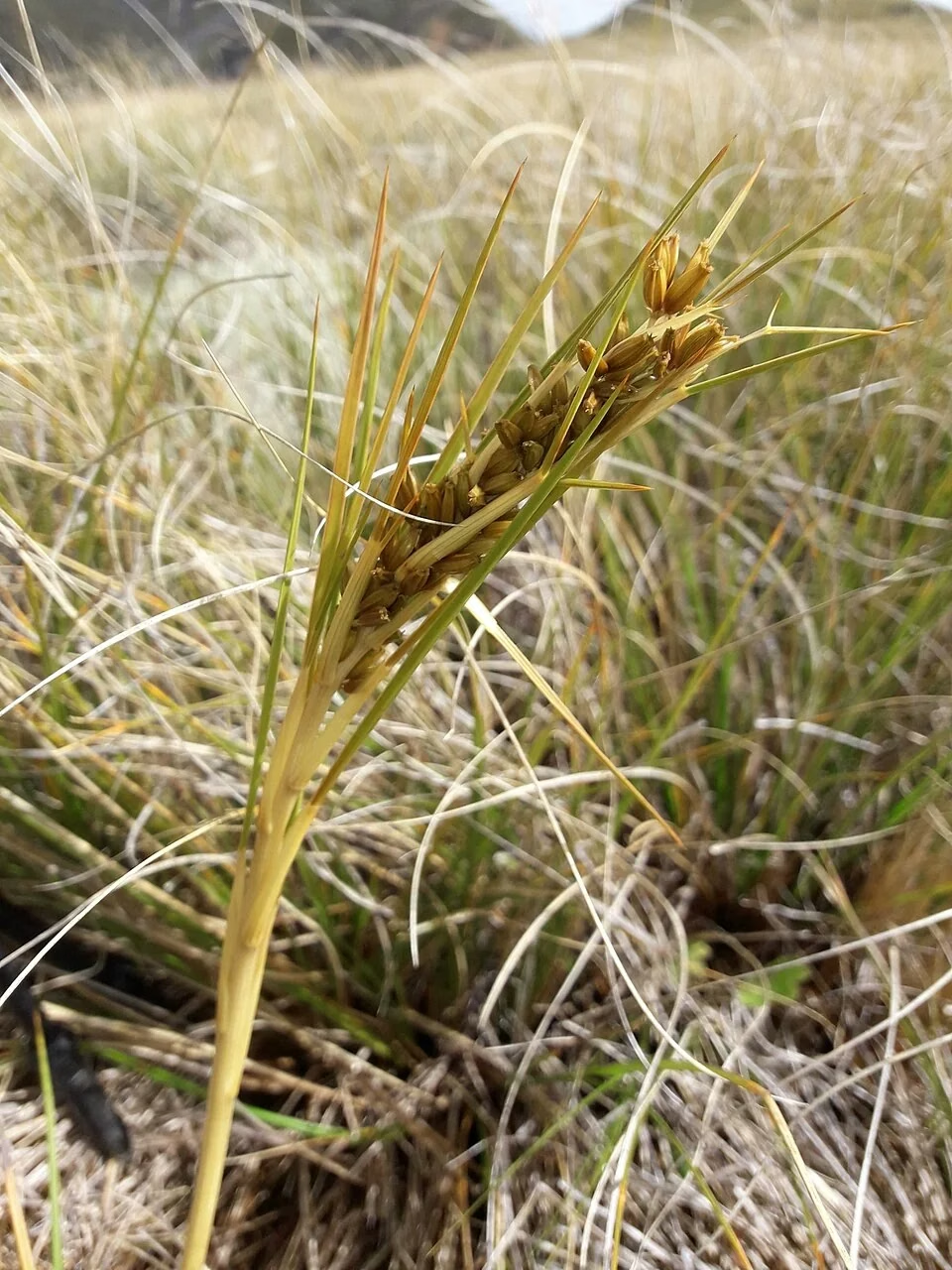
Walker's saltgrass forms dense, erect tufts that make stiff clumps 95 to 500 mm tall. The colour is distinctive: bluish-green to pale brownish-green. The plant is leafy in its upper part, and the folded or almost flat leaf blades, 50 to 250 mm long, often reach above the flowering stems.
The flower head is a contracted, linear-lanceolate panicle 30 to 170 mm long. Spikelets are 3 to 9 mm long and hold 2 to 5 florets. The lemmas are 3 to 5 mm long with 5 to 7 nerves. Flowering runs from October to December and fruiting from November to January, although seed is absent in some populations.
Among New Zealand saltgrasses, it is separated from the Antipodes and Chatham Islands plants by its larger panicles with rough (scabrous), sharply angled branches, and from Puccinellia stricta by its larger lemmas and different panicle structure. A hand lens is needed to see these features.
Quick Facts
| Scientific Name | Puccinellia walkeri |
|---|---|
| Height | 0.1-0.5 m |
| Spread | Compact tufts, roughly 0.2-0.4 m across |
| Water Needs | Moist to wet, tolerates tidal saline soils |
| Light | Full sun |
| Frost Tolerance | Hardy to coastal frosts |
| Salt Tolerance | Very high; grows in salt marsh and at high tide level |
| Growth Rate | Moderate |
| Lifespan | Perennial |
Climate Best Suited to
Suits cool temperate coastal climates of the eastern and southern South Island and Stewart Island, where it is exposed to salt spray, wind and tidal inundation.
Regional Suitability
| City | Climate Suitability |
|---|---|
| Auckland | Low |
| Wellington | Medium |
| Christchurch | High |
| Dunedin | High |
Plant Habitat
Puccinellia walkeri is endemic to New Zealand. It is recorded from the Brothers Islands in Cook Strait, then from Banks Peninsula south along the eastern and southern coast to Riverton, and on Stewart Island.
It grows on small islets and rock stacks, especially near seabird nests where the ground is enriched by guano, and in salt meadow, salt marsh and on saline ground in estuaries. It also grows on sandy and stony ground at about high tide level.
Growing Requirements
Soil Requirements
It grows in saline soils ranging from estuarine mud and salt-meadow turf to thin, guano-enriched soil on rock stacks and sandy or stony beach margins.
- Saline, moist mud or turf in salt marsh
- Stony or sandy ground at high tide level
- Nutrient-enriched soil near seabird colonies
Light Requirements
Its coastal habitats are open and treeless, so it grows in full sun and wind.
- Full sun
- Does not compete well where taller rushes or shrubs shade it
Water Requirements
It is adapted to periodic flooding by salt water and to the drying, salty conditions of exposed rock stacks.
- Tolerates tidal inundation and salt spray
- In cultivation keep the root zone moist
Planting and Establishing
Walker's saltgrass is mainly of interest for coastal and estuarine restoration within its natural range. Plant rooted divisions in the upper salt marsh or salt meadow zone where it would naturally grow, spacing tufts so they can fill in over time.
Use plants raised from local material, ideally from the same estuary or coastline, because populations differ and some are sterile. It is not a typical garden grass, but it can be grown in a pot of gritty, moist soil in full sun.
Ecological Role
On islets and rock stacks it is one of the few plants able to cope with the combination of salt spray and guano-rich soil around seabird nests. In estuaries it forms part of the low salt meadow vegetation alongside other salt-tolerant herbs and grasses.
As a grass it is wind pollinated. NZPCN notes that little is known about its ecology, and its specific invertebrate associations are not documented in the sources consulted.
Uses & Significance
Garden Uses
It has limited ornamental use but is valuable in restoration plantings of salt marsh and estuary margins in the southern South Island.
- Salt marsh and estuary restoration projects
- Coastal plantings exposed to salt spray
- Specialist collections of native grasses
Ecological Value
It contributes to the distinctive endemic flora of New Zealand salt meadows and seabird islets.
- Binds saline mud and gravel at high tide level
- Grows on seabird islets where few plants survive
- An endemic species found nowhere else
Landscaping Uses
In a coastal landscape design, use Walker's saltgrass in drifts along the upper edge of a salt marsh or swale where brackish water sits, with sea primrose (Samolus repens) and other low salt meadow plants.
Its bluish-green tufts give a fine-textured contrast to rushes and succulent salt marsh plants, but it is best used where its natural habitat is being recreated rather than as a general ornamental grass.
Seasonal Care Calendar
Spring
Flowering begins in October, with narrow panicles rising among the leaves.
- Good time to plant divisions
- Check restoration plantings for weed competition
Summer
Flowering finishes in December and seed ripens from November to January in populations that set seed.
- Collect ripe seed if present
- Water potted plants during dry spells
Autumn
Tufts continue growing slowly as conditions cool.
- Divide established clumps
- Remove smothering weeds
Winter
Growth is minimal through the cold months on exposed coasts.
- No action required
- Keep potted plants from becoming waterlogged with fresh water
When to Prune and How Much
No pruning is needed. Old flowering stems can be cut back once seed has fallen if a tidier look is wanted in cultivation.
Dead leaves can be combed out of the tuft by hand in late winter, but in restoration plantings it is best left alone.
How to Grow Walker's Saltgrass
NZPCN describes Walker's saltgrass as easily grown from rooted pieces and from fresh seed when it is produced. Because some populations set no seed, division is usually the more dependable method. Source material should come from plants already in cultivation or be collected with permission from the landowner or the Department of Conservation, taking only a small proportion of any wild population. Keep each batch labelled with its source location so that restoration plantings use plants from the right coastline, which helps preserve local genetic differences within this naturally sparse endemic grass.
By Division
Rooted pieces taken from the edge of an established tuft establish readily. Spring and early autumn, when growth is active and temperatures mild, are the best times.
- Lift a healthy clump or cut a section from its margin with a sharp spade
- Split it into pieces, each with several shoots and a good root system
- Trim long leaves back by about half to reduce water loss
- Pot into a gritty, moist mix and keep in a sheltered, sunny spot
- Plant out once new roots fill the pot
From Seed
Seed ripens from November to January. Check that florets actually contain grain before collecting, since some populations are sterile.
- Collect seed heads as they turn straw-coloured
- Sow fresh on the surface of a free-draining seed mix and cover lightly
- Keep moist in a bright, sheltered place
- Prick out seedlings into small pots once they have several leaves
Pests & Diseases
No specific pests or diseases are recorded for Walker's saltgrass in the sources consulted.
Threats in the wild come mainly from habitat change: reclamation and drainage of salt marsh, weed invasion of salt meadows, and trampling or grazing of estuary margins.
Cultural Significance
No traditional Māori name or use is recorded for Puccinellia walkeri in the sources consulted.
The genus Puccinellia honours the Italian botanist Benedetto Puccinelli (1808 to 1850). The species was first described by Thomas Cheeseman under another genus and later transferred to Puccinellia by H.H. Allan, and it has carried several synonyms including Atropis walkeri and Glyceria novae-zelandiae.
Bonus Tip
If you are trying to identify a saltgrass in a southern estuary, look closely at the lemmas with a hand lens: lemmas 3 to 5 mm long point to Walker's saltgrass, while the smaller lemmas of Puccinellia stricta are 3 mm or less. Taking a specimen photo of the whole panicle beside a ruler also helps experts confirm the identification.
Related Plants
Explore other native plants that share similar characteristics or habitats with Walker's Saltgrass (Puccinellia walkeri), offering further insights into New Zealand's diverse flora. These related species provide context and opportunities for complementary planting in your garden.
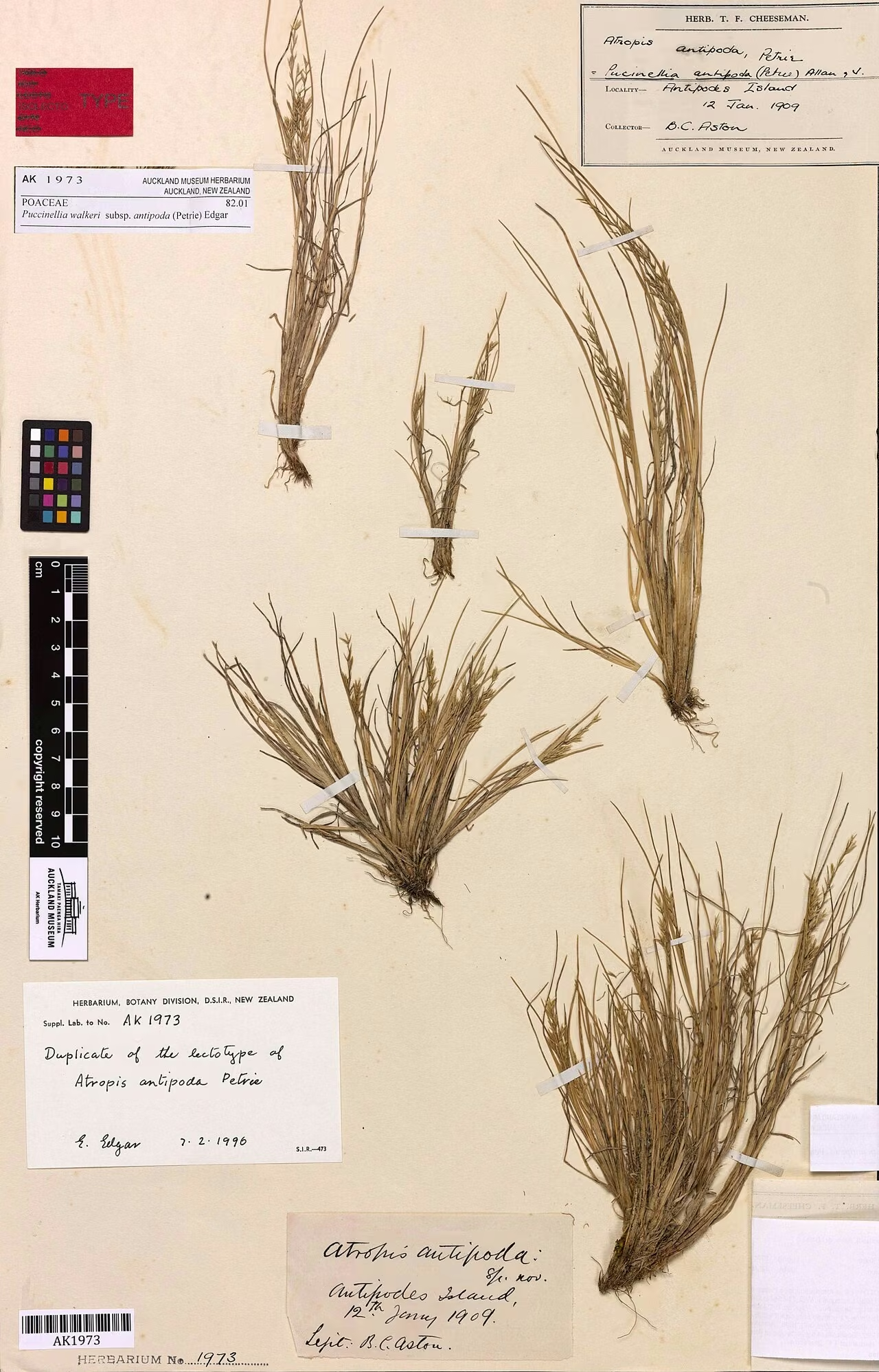
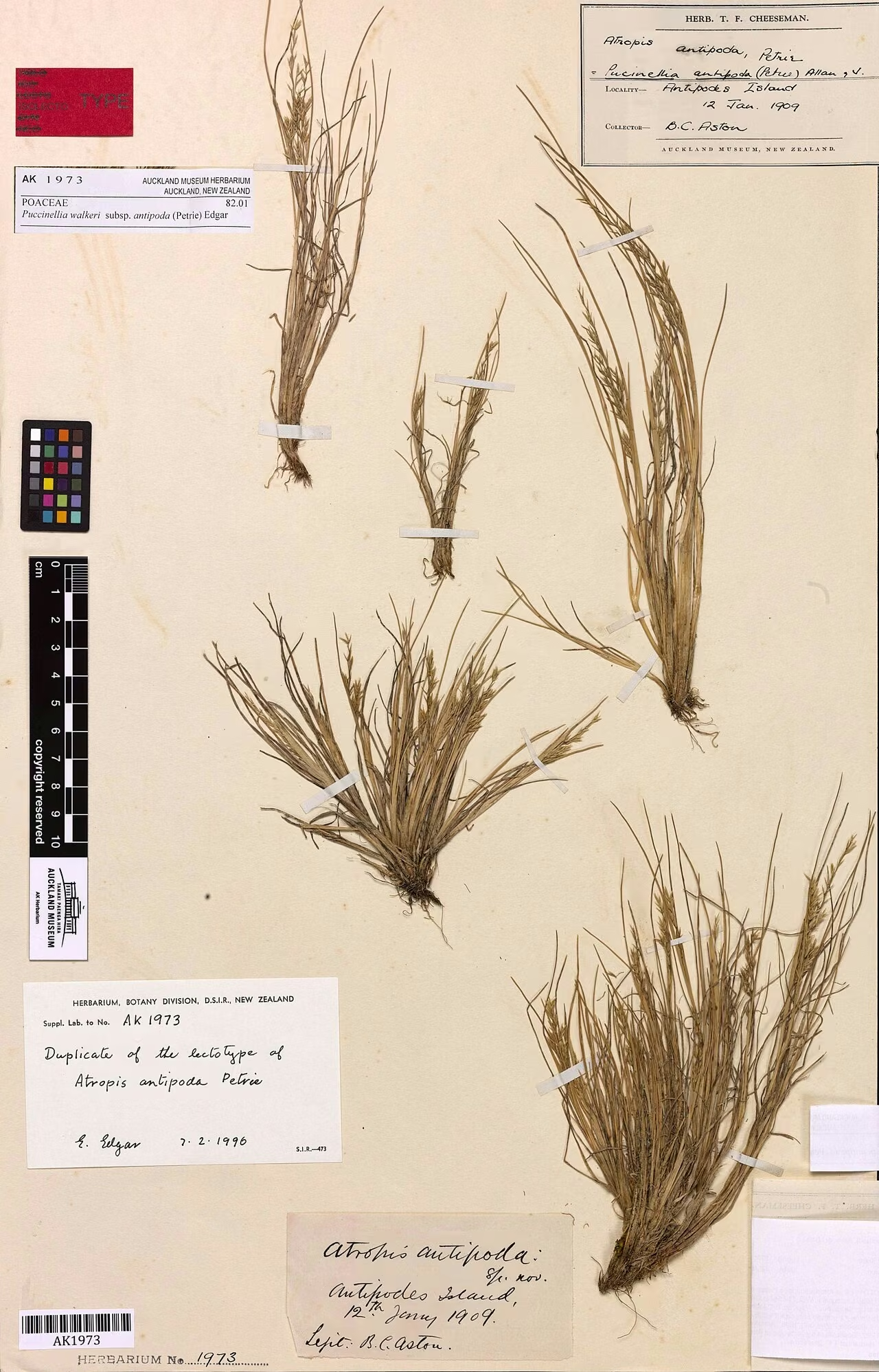
Antipodes Saltgrass
Puccinellia antipoda
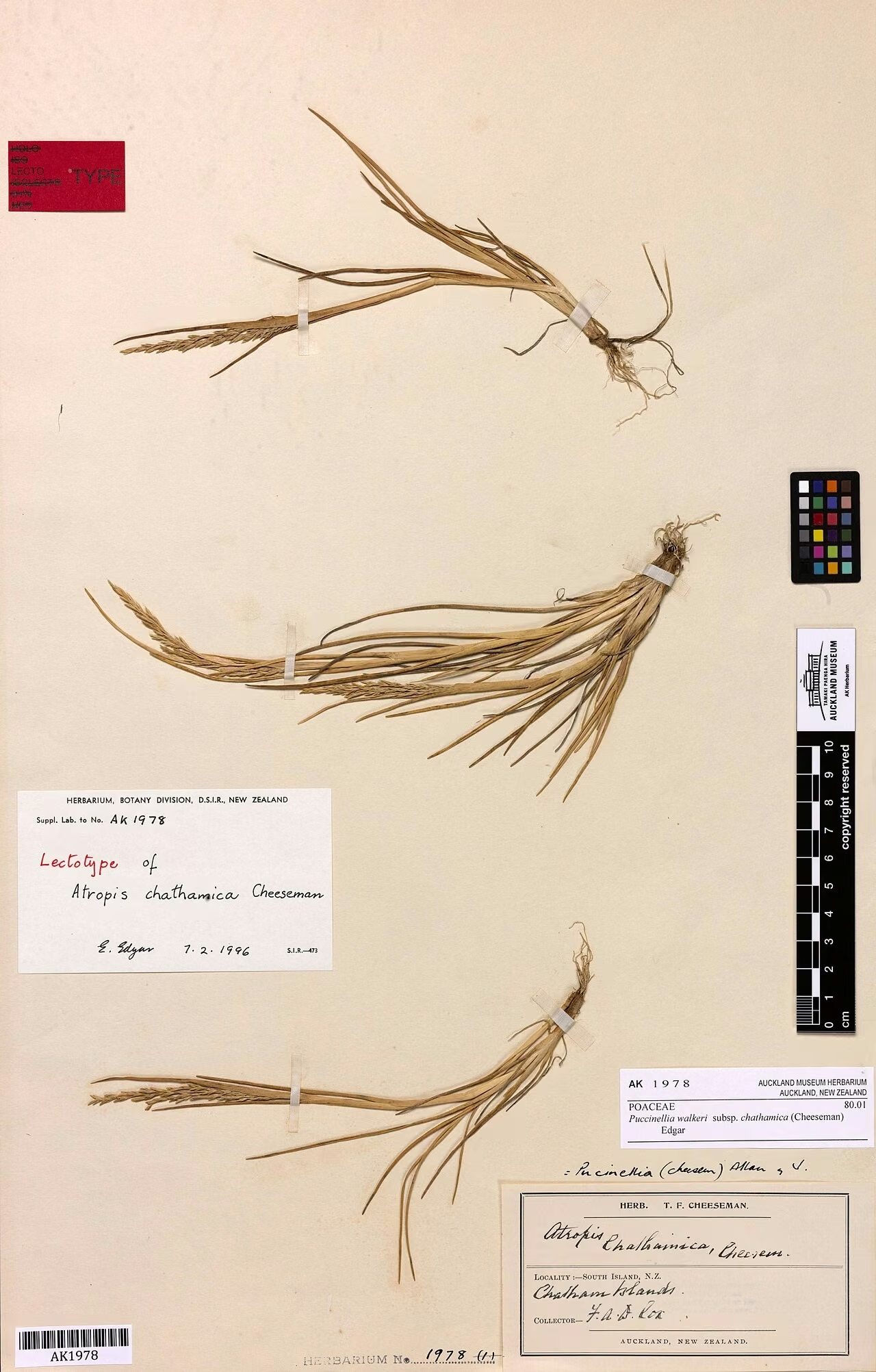
Chatham Islands Salt Grass
Puccinellia chathamica
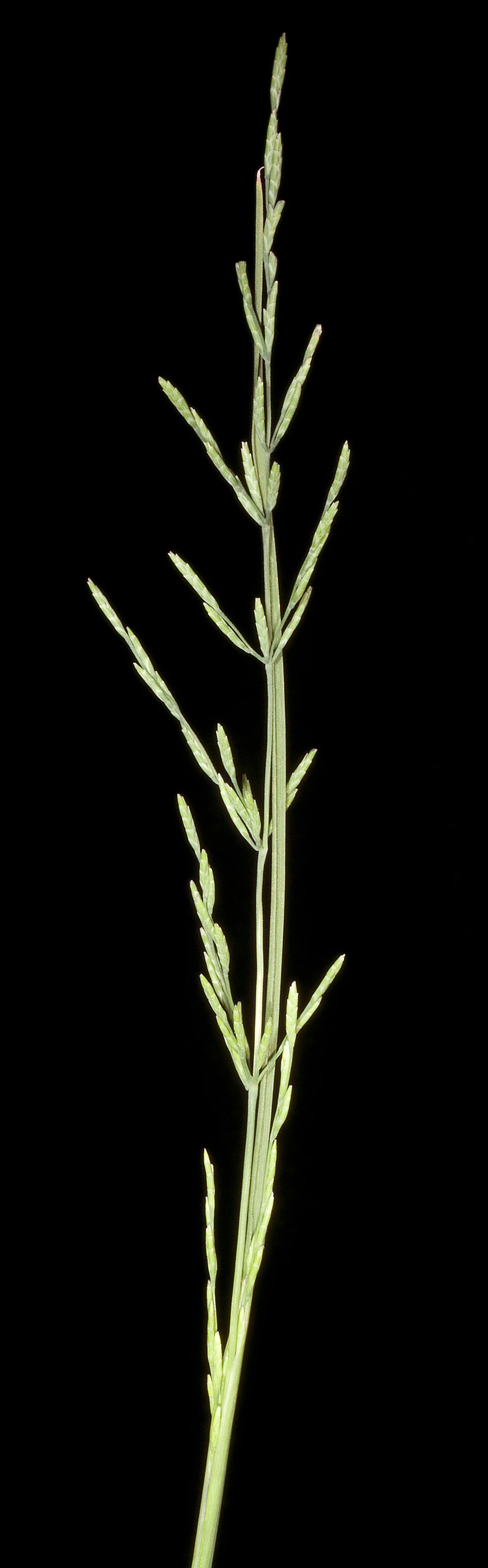
Salt Grass
Puccinellia stricta
Cut-Leaved Alpine Buttercup
Ranunculus buchananii
Ranunculus carsei
Ranunculus carsei
Scree Buttercup
Ranunculus crithmifolius
Petriei Grass
Achnatherum Petriei Grass
Speargrass
Speargrass
Plant Conservation
Walker's saltgrass is ranked At Risk - Naturally Uncommon (2023) with the qualifiers Sparse, Data Poor Size and Data Poor Trend. NZPCN describes it as a range-restricted, sparse endemic and notes that its ecology is poorly known and some populations appear to be sterile.
Protecting salt marsh and estuary margins from reclamation, drainage, weeds and stock, and reporting populations to botanists so that their size and trend can be assessed, are the most useful actions for this species.
Frequently Asked Questions
Where does Walker's saltgrass grow?
It grows on the coast of the South Island, from the Brothers Islands in Cook Strait and from Banks Peninsula south to Riverton, and on Stewart Island, in salt marsh, salt meadow, estuaries and on seabird islets.
How do you tell Puccinellia walkeri from Puccinellia stricta?
Puccinellia walkeri has larger lemmas, 3 to 5 mm long, while the Australian and New Zealand Puccinellia stricta has lemmas about 3 mm long or less, and the two differ in panicle structure.
Is Walker's saltgrass threatened?
It is ranked At Risk - Naturally Uncommon (2023) because it is a sparse endemic with scattered populations, some of which appear to be sterile.
Can Walker's saltgrass be grown from divisions?
Yes. NZPCN notes it is easily grown from rooted pieces, and also from fresh seed when a population produces it.
Sources and Further Reading
The botanical, growing, and conservation details for Walker's Saltgrass (Puccinellia walkeri) on this page draw on the New Zealand plant references below. Consult them for full technical records and the latest distribution data.