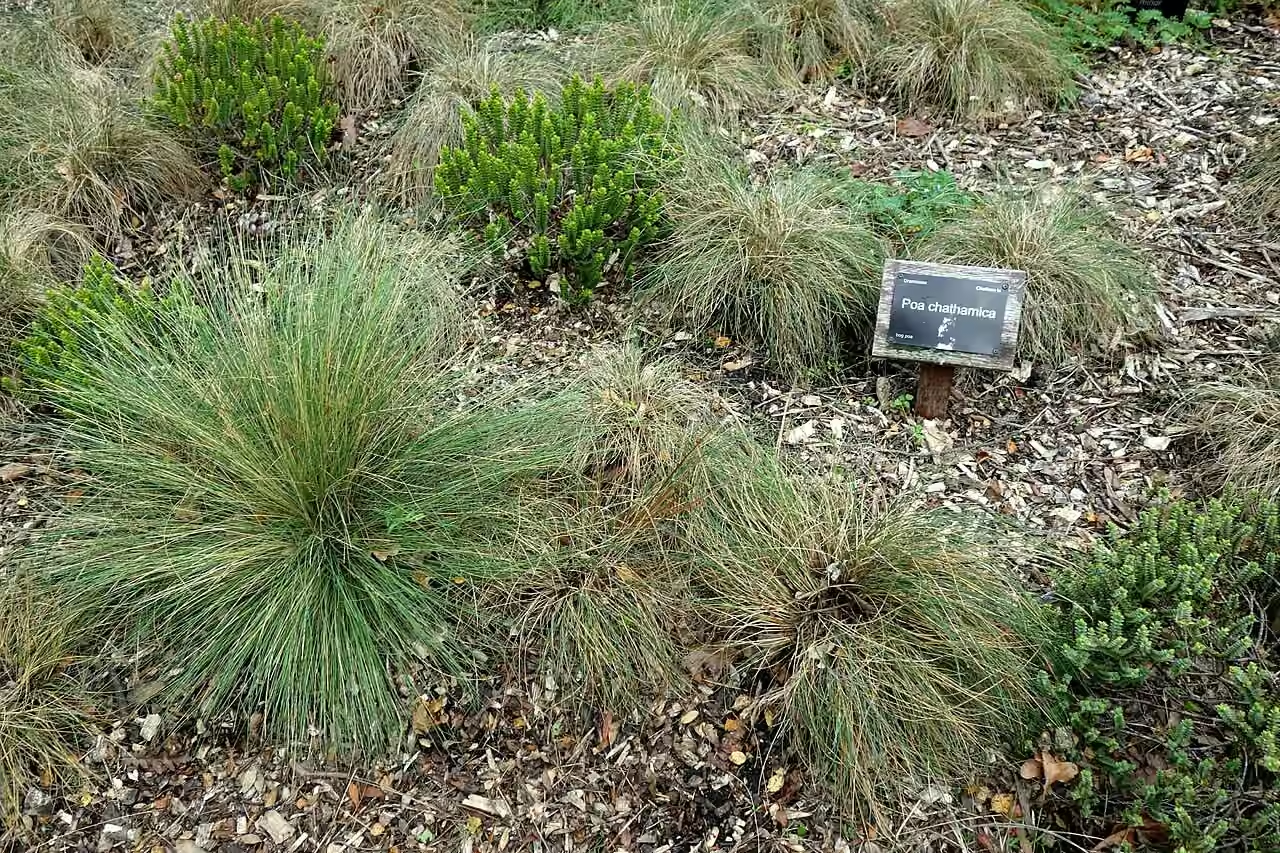
Chatham Islands Poa
Poa chathamica
Last updated:
Chatham Islands poa (Poa chathamica), also called bog poa, is a perennial grass found nowhere else but the Chatham Islands, where it grows on all the main islands. It is variable in form: on dunes and in bogs it creeps by long narrow rhizomes to make dense drooping swards, while on rock it forms stiffly erect tufts up to about 1 m tall. Its leaves range from light green to blue-green and are tough and ribbed. It is ranked At Risk - Naturally Uncommon because of its small island range, and it is affected by grazing and by invasive marram grass on the dunes. Explore more native grasses and flaxes in our native plant guide.
Plant Description
Poa chathamica is a light green, dark green or blue-green perennial grass. Depending on its situation it either creeps widely by long, narrow rhizomes to build dense, leafy, drooping swards, or grows as stiffly erect tufts up to about 1 m tall. The leaf blades are long and narrow, roughly 5 to 60 cm long and 2.5 to 4.5 mm wide, folded or inrolled, tough and leathery in texture, with a ridged upper surface carrying short prickle-teeth and thickened margins.
The flowering stems reach 10 to 80 cm and are densely rough just below the head. The panicle is 5.5 to 12 cm long with spreading or erect branches, carrying large spikelets 6.5 to 14.5 mm long, each with 2 to 5 florets, greyish green to light greenish brown in colour.
Its closest relatives are Poa anceps, P. xenica and hexaploid forms of P. cita. NZPCN notes that it differs from P. anceps in its ribbed leaf blade surfaces and in its high chromosome number (2n = 112). On the Chathams, its combination of rhizomatous spread, tough ribbed leaves and large spikelets helps separate it from other grasses.
Quick Facts
| Scientific Name | Poa chathamica |
|---|---|
| Height | Swards low and drooping; tufts up to about 1 m |
| Spread | Spreads widely by long narrow rhizomes |
| Water Needs | Tolerant of both damp peat bogs and free-draining dunes |
| Light | Full sun |
| Frost Tolerance | Moderate; suited to the cool, mild oceanic Chatham climate |
| Salt Tolerance | High; grows on coastal dunes and sea cliffs |
| Growth Rate | Moderate; spreads steadily by rhizomes |
| Lifespan | Perennial |
Climate Best Suited to
It suits the cool, windy, humid oceanic climate of the Chatham Islands, where frosts are light and salt-laden wind is constant. Mainland gardens with mild winters and plenty of sun and wind are the closest match.
Regional Suitability
| City | Climate Suitability |
|---|---|
| Auckland | Medium |
| Wellington | High |
| Christchurch | Medium |
| Dunedin | High |
Plant Habitat
Poa chathamica is endemic to the Chatham Islands and is found on all the main islands of the group. It grows both near the coast and inland.
It is unusually broad in its habitat choices for a narrow-range endemic. NZPCN records it as widespread on sand dunes, within restiad peat bogs, in rough pasture, along stream banks and in river gorges, and on rock outcrops, cliff faces and boulder falls.
Growing Requirements
Soil Requirements
In the wild it grows on both sand and peat, so it is not fussy about soil type as long as it has an open, sunny position.
- Sandy, free-draining soils suit the sward-forming dune form
- Peaty, damp soils are also tolerated
- Avoid rich garden soil, which encourages weeds that crowd it out
Light Requirements
NZPCN advises full sun, which matches its open dune, bog and cliff habitats.
- Plant in full sun
- Avoid shade from trees or tall shrubs
Water Requirements
It copes with conditions from wet peat bog to dry dune sand. In cultivation, regular moisture while establishing is enough.
- Water new plantings until rhizomes are established
- Established plants handle short dry spells
- Its wetland indicator status is facultative, meaning it occurs in wet and dry places
Planting and Establishing
Plant rooted pieces or seedlings in spring in an open, sunny site. Because it spreads by rhizomes, give it room to form a sward, or contain it where it should stay in one place.
On the Chatham Islands, plants for restoration should be grown from local seed or divisions. Mainland gardeners are unlikely to find it for sale, as NZPCN lists it as not commercially available.
Ecological Role
On Chatham dunes it is one of the native sand-binding grasses, helping to stabilise loose sand. Its spread there is limited by competition from introduced marram grass, which displaces native dune vegetation.
Like other Poa species it is wind pollinated. Its seeds and foliage support native insects, although no specific associations for this species are documented in the sources consulted.
Uses & Significance
Garden Uses
It is a tough grass for exposed coastal gardens and for Chatham Islands restoration plantings.
- Dune and coastal restoration on the Chathams
- Groundcover sward on banks
- Specimen tufts among rocks in a coastal garden
Ecological Value
As a Chatham endemic, it is part of the distinctive native plant cover of the islands.
- Binds sand and stabilises banks
- Forms native cover in peat bogs and on cliffs
- Represents a range-restricted island lineage
Landscaping Uses
Use the rhizomatous form to cover a sunny bank or sandy slope, where its drooping leaves make a soft blue-green sward. Tufted plants from rocky sites can be planted singly as accents in a gravel or coastal garden.
Pair it with other Chatham Islands plants such as Chatham Island forget-me-not where those are grown, or with mainland coastal natives for a hardy seaside planting.
Seasonal Care Calendar
Spring
Flowering begins in September, and new rhizome growth starts.
- Plant out rooted pieces
- Remove competing weeds
Summer
Flowering continues to January and seed ripens from January to February.
- Collect fresh seed
- Water new plants in dry spells
Autumn
Growth slows; a good time to sow fresh seed collected in summer.
- Sow seed
- Tidy dead flower stems
Winter
Plants stay green in the mild Chatham winter but grow little.
- Little care needed
- Check for weeds invading swards
When to Prune and How Much
No regular pruning is needed. Old flowering stems and dead leaves can be combed out by hand to keep tufts tidy.
If a sward spreads beyond where it is wanted, cut out the rhizomes with a spade and use the pieces to start new plants.
How to Grow Chatham Islands Poa
NZPCN reports that Poa chathamica is easily grown from fresh seed and from rooted pieces, so it is one of the more straightforward Chatham grasses to propagate. The catch is that cultivated plants rarely flower, so seed usually has to come from wild plants, collected with permission and in small amounts. Division of rhizomatous plants is therefore the most reliable method in a nursery.
From Seed
Seed ripens in January and February, a month or so after flowering ends. Use fresh seed for the best germination, since NZPCN specifically recommends fresh seed.
- Collect ripe seed heads in late summer when the spikelets turn straw coloured
- Rub out the seed and sow it fresh on a free-draining seed mix
- Cover lightly with fine grit and keep evenly moist in a sunny spot
- Prick out seedlings into individual pots once they have several leaves
- Grow on for a season before planting out
By Division of Rhizomes
Because it spreads by long, narrow rhizomes, rooted pieces can be lifted from the edge of an established sward. Divisions establish quickly and are the easiest way to multiply plants that do not flower in cultivation.
- In spring, dig a clump with a length of rhizome and several shoots
- Trim the leaves back by half to reduce water loss
- Pot into a sandy mix or plant directly into prepared ground
- Keep moist and in full sun until new shoots appear
- Plant out once the division has rooted firmly, giving it space to spread
Pests & Diseases
No specific insect pests or diseases are recorded for this species. Its main problems are grazing by stock and smothering by aggressive introduced grasses.
In gardens, keep it free of couch and other running weeds, which are hard to separate from its own rhizomes once they mingle.
Cultural Significance
No Moriori or Māori name or traditional use is recorded for Poa chathamica in the sources consulted.
It was described by Donald Petrie, the Otago botanist who named many New Zealand grasses. Its epithet chathamica simply means from the Chatham Islands.
Bonus Tip
If your plant never flowers, do not assume it is unhealthy. NZPCN notes that Poa chathamica rarely flowers in cultivation, so propagate it by dividing rhizome pieces instead of waiting for seed.
Related Plants
Explore other native plants that share similar characteristics or habitats with Chatham Islands Poa (Poa chathamica), offering further insights into New Zealand's diverse flora. These related species provide context and opportunities for complementary planting in your garden.
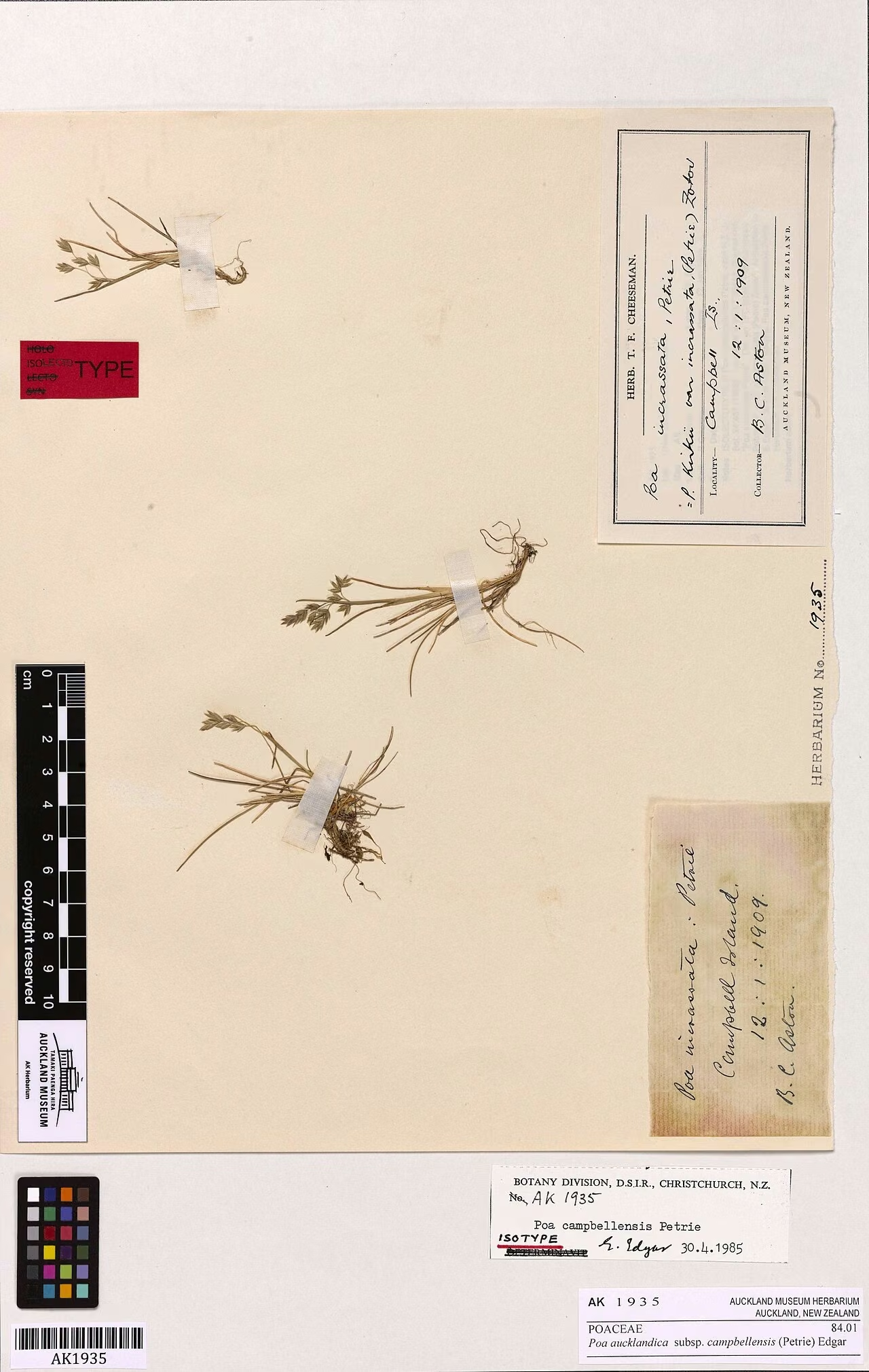
Auckland Island Poa
Poa aucklandica subsp. aucklandica
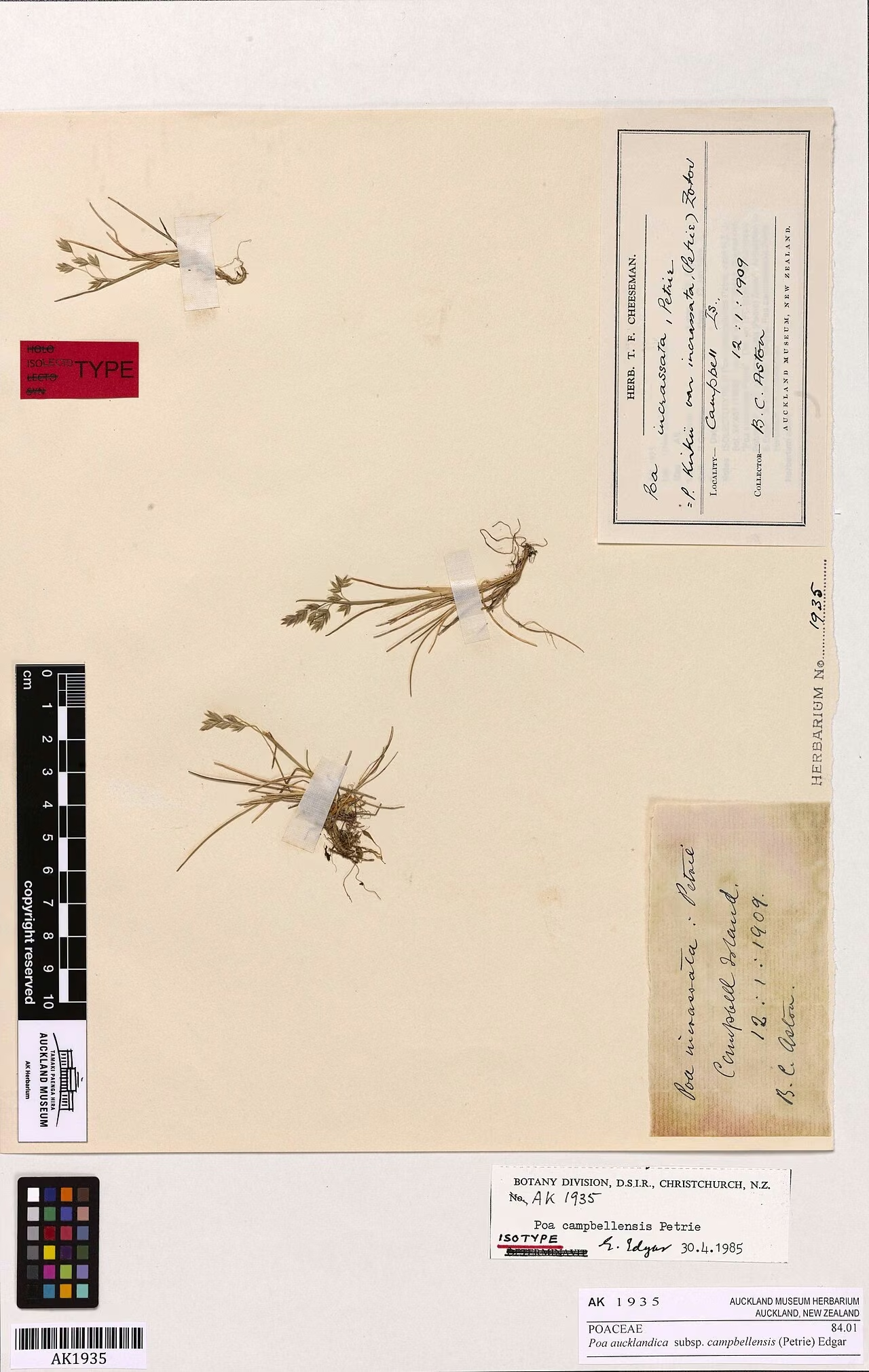
Campbell Island Poa
Poa aucklandica subsp. campbellensis
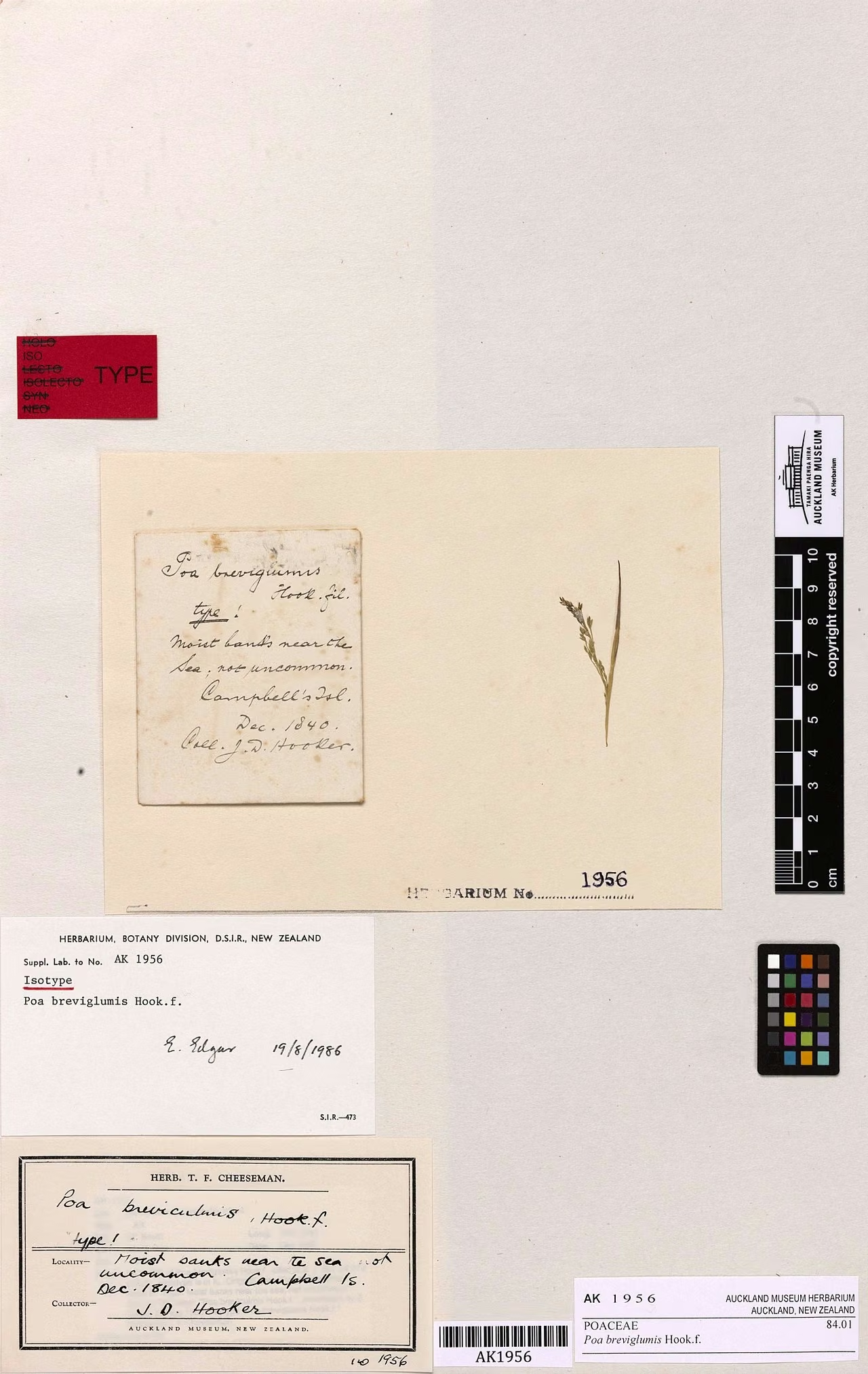
Poa breviglumis
Poa breviglumis
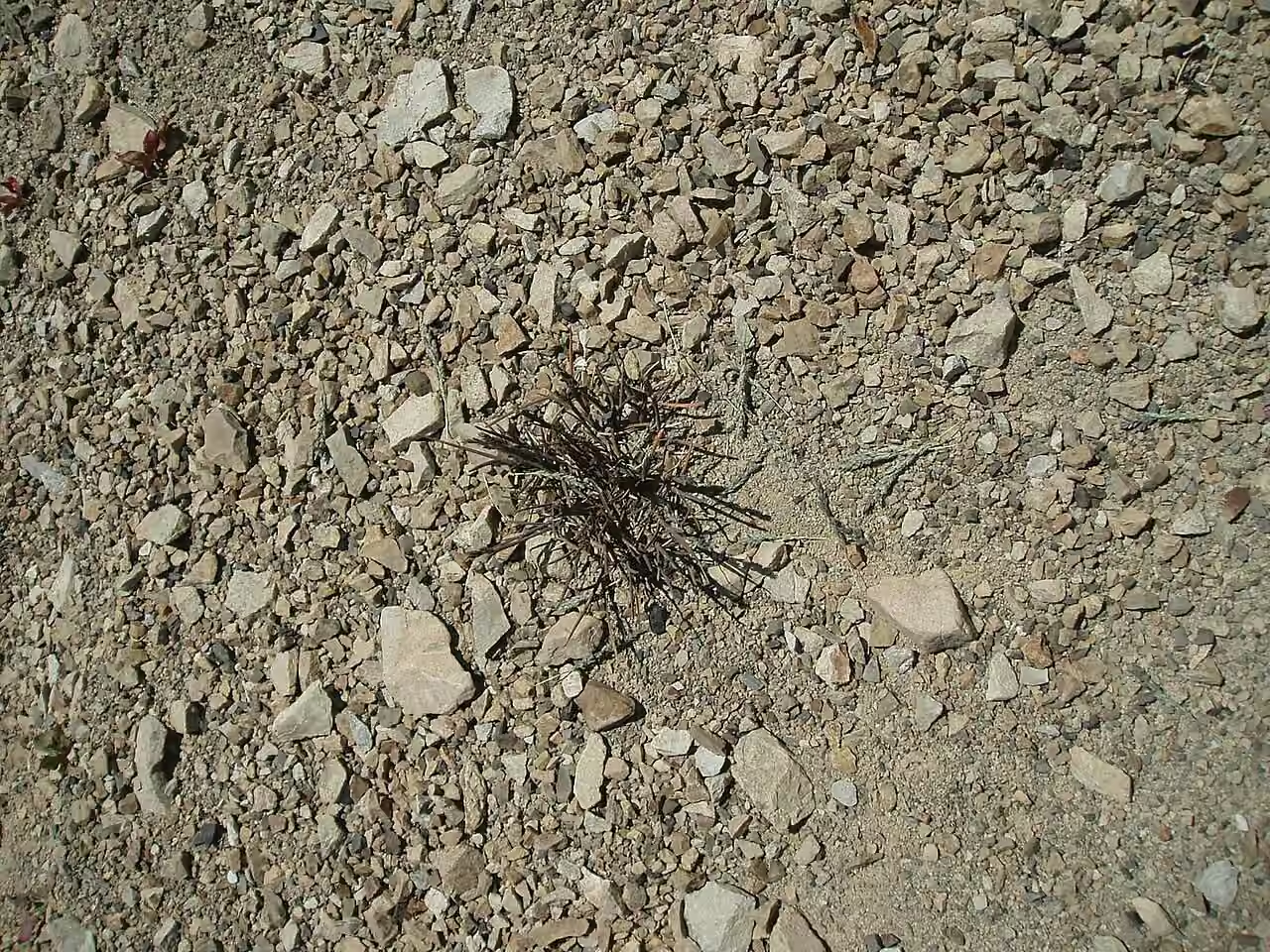
Scree Poa
Poa buchananii
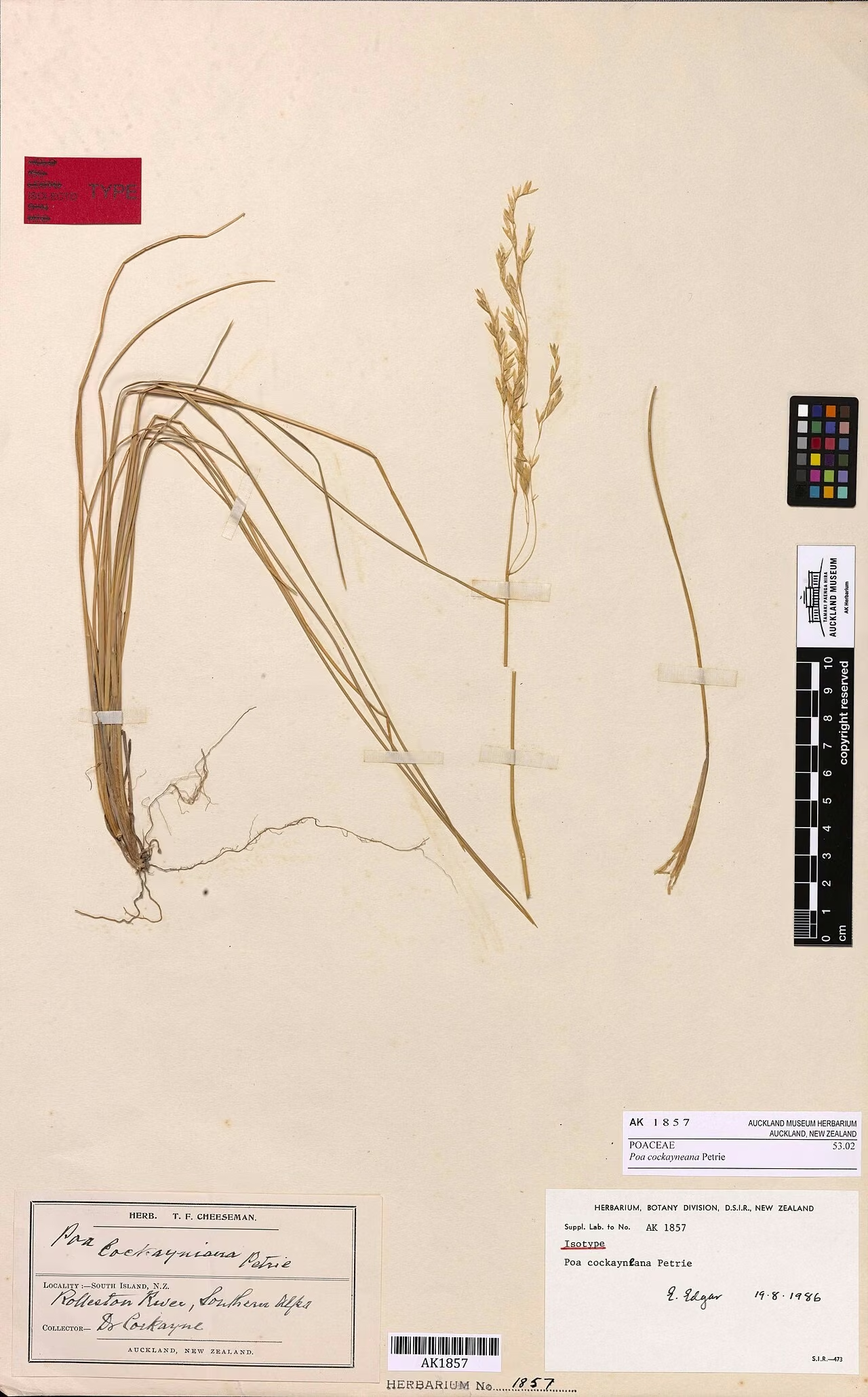
Avalanche Grass
Poa cockayneana
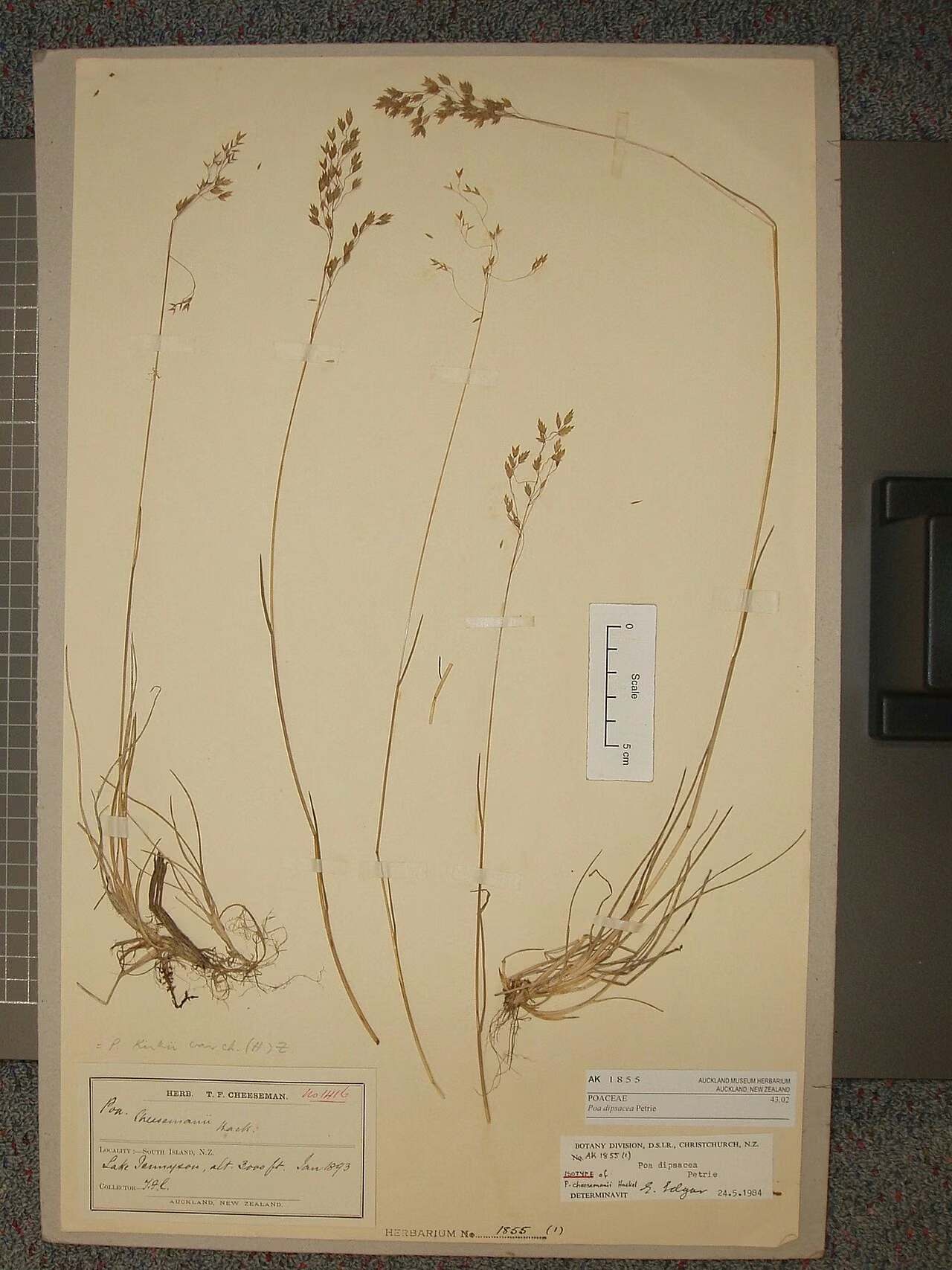
Poa dipsacea
Poa dipsacea
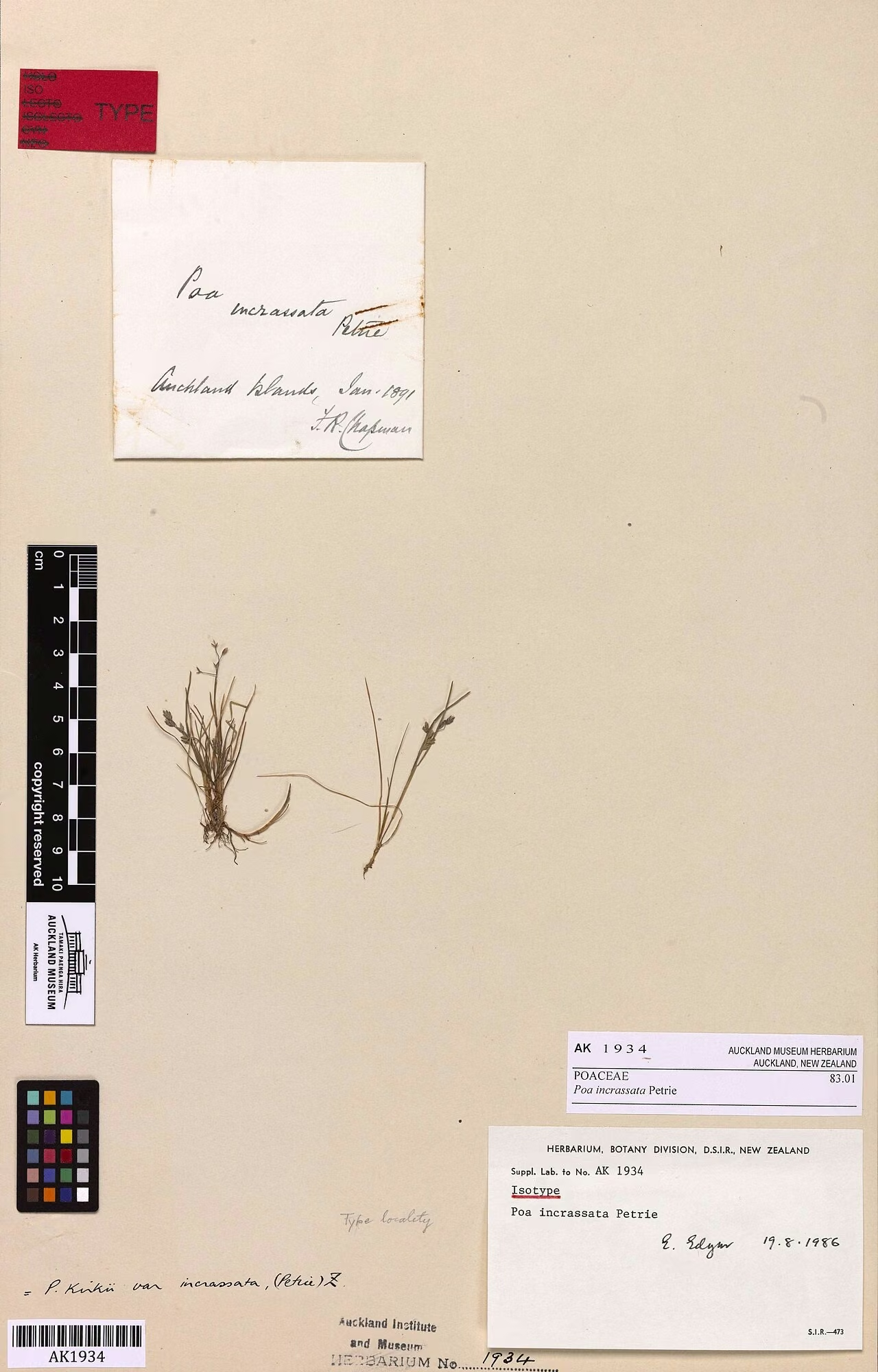
Poa incrassata
Poa incrassata
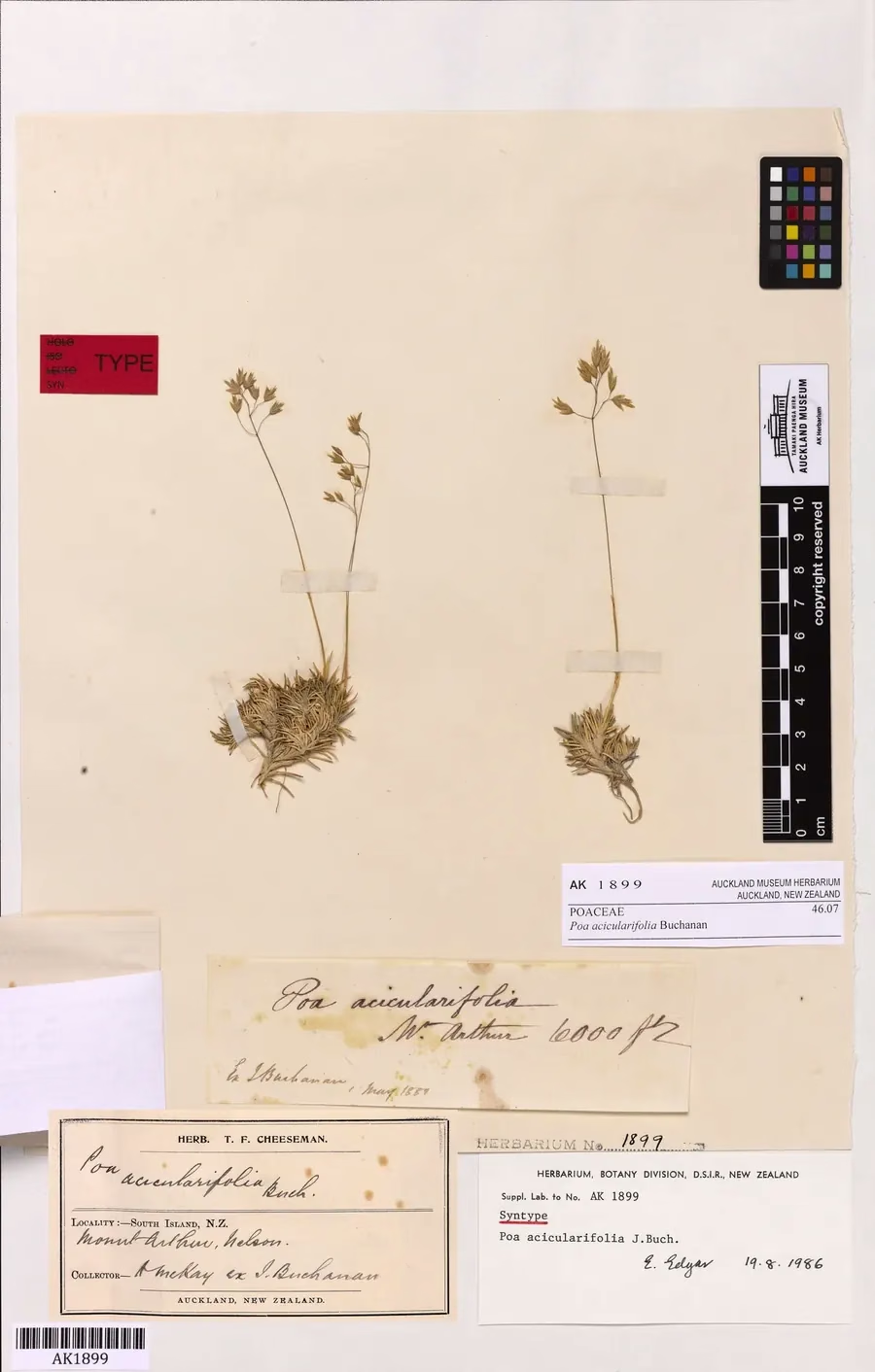
Acicularifolia Grass
Poa Acicularifolia Grass
Plant Conservation
Poa chathamica is ranked At Risk - Naturally Uncommon (2023) with the qualifiers Island Endemic and Range Restricted. It has held a Naturally Uncommon ranking in every assessment since 2009.
NZPCN identifies habitat modification, stock grazing and competition from introduced plants such as marram grass as threats. Fencing out stock, controlling marram on dunes and restoring peatland help secure its habitat.
Frequently Asked Questions
Where does Chatham Islands poa grow?
It is endemic to the Chatham Islands and occurs on all the main islands, from coastal sand dunes and restiad peat bogs to stream banks, river gorges, rock outcrops, cliff faces and boulder falls.
Is Poa chathamica the same as bog poa?
Yes. NZPCN calls it Chatham Islands poa, while the Flora of New Zealand factsheet lists bog poa as its common name. Both names refer to Poa chathamica.
Why is Chatham Islands poa At Risk?
It is classed as Naturally Uncommon because it is confined to one island group. NZPCN lists habitat modification, stock grazing and competition from introduced plants such as marram grass as threats.
Can you grow Poa chathamica from seed?
NZPCN says it is easily grown from fresh seed and from rooted pieces and does best in full sun, although cultivated plants rarely flower.
Sources and Further Reading
The botanical, growing, and conservation details for Chatham Islands Poa (Poa chathamica) on this page draw on the New Zealand plant references below. Consult them for full technical records and the latest distribution data.