Purple Plume Grass
Pentapogon micranthus
Last updated:
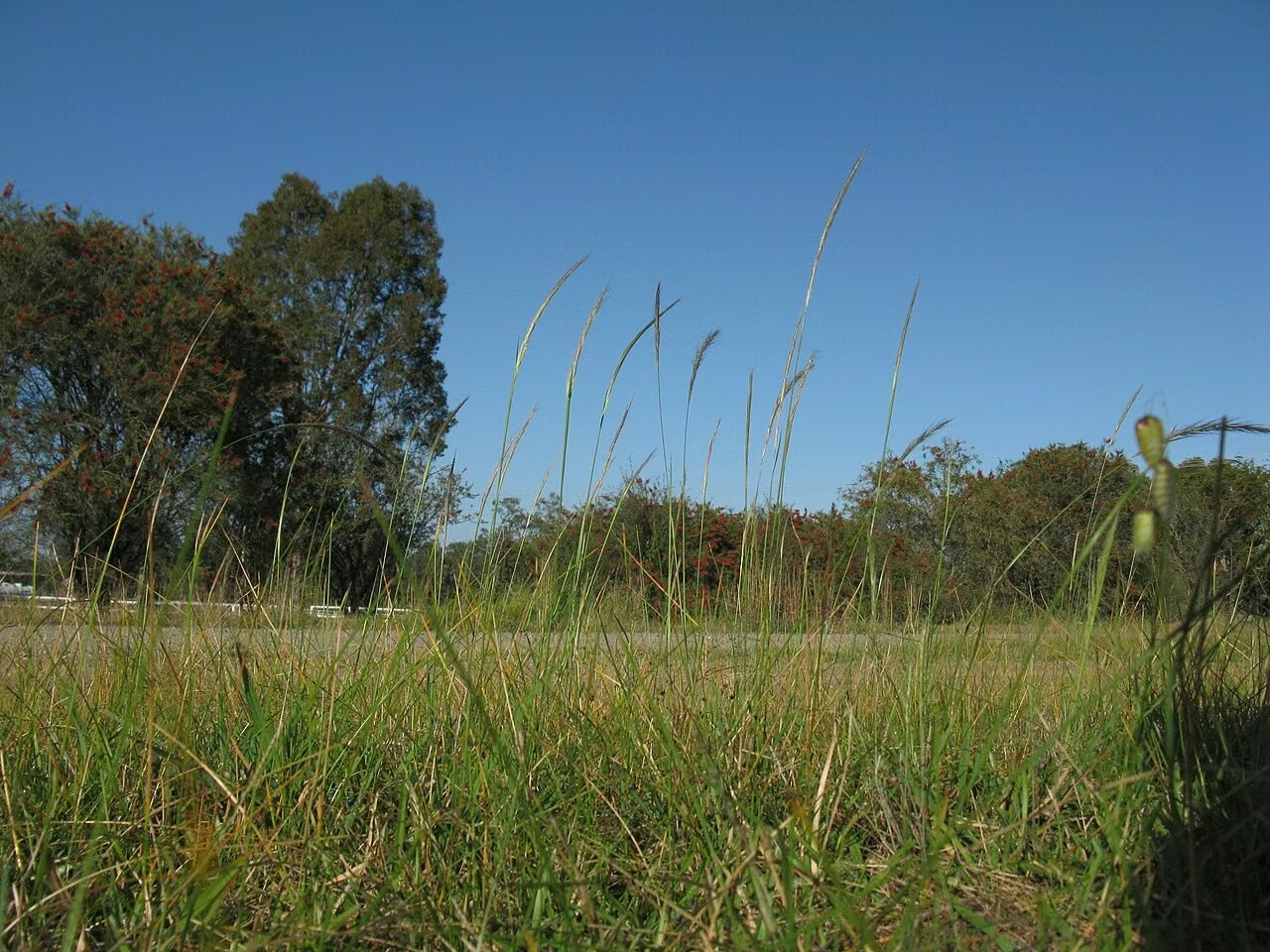
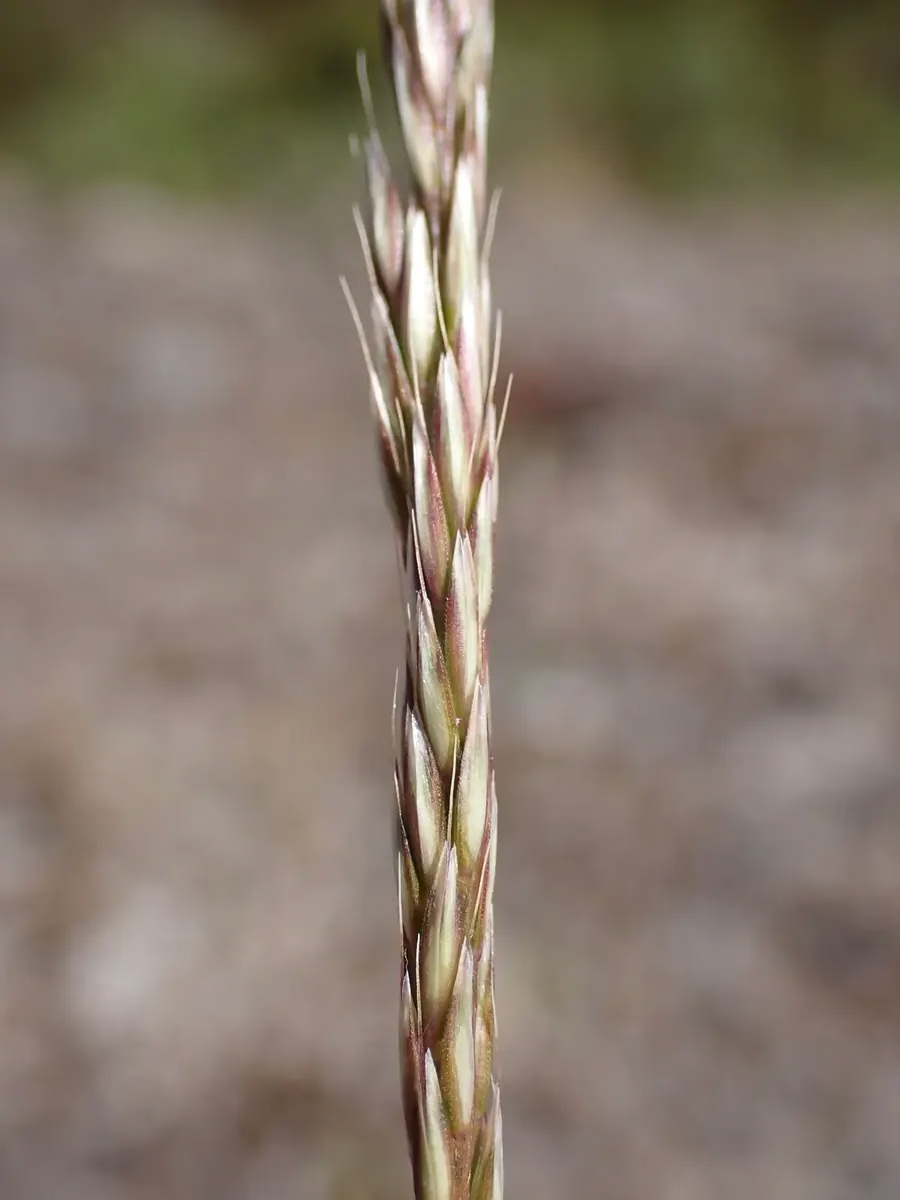
Purple plume grass (Pentapogon micranthus, now Pentapogon micranthus) is a stout, rigid, tufted grass with stiffly erect stems 0.4 to 1 m tall topped by dense, spike-like, often purplish panicles of fine-awned spikelets. In New Zealand it grows locally on the Three Kings Islands and from Te Paki to about Auckland, around East Cape and in the eastern Wairarapa, in open coastal shrubland, clay pans, grassland, cliffs and lava fields. It also occurs on Norfolk Island, in Australia, New Guinea and on Easter Island. It is ranked Threatened - Nationally Critical, largely because the introduced Australian plume grass Pentapogon rarus is replacing it. It was previously known as Dichelachne micrantha. Explore more native grasses and flaxes in our native plant guide.
Plant Description
Purple plume grass forms stout, rather rigid tufts with stiff leaves that are shorter than the stiffly erect flowering stems. The leaf sheaths are straw coloured to dull brown, often lined with purple, and carry minute, flattened, scattered hairs. The ligule is short, 0.3 to 1 mm, membranous and minutely fringed. The leaf blades are flat and stiff, up to 20 cm long and 1.5 to 2.5 mm wide, tapering to the tip, with minutely rough ribs and margins.
The flowering stems are 0.4 to 1 m tall and often purplish. The panicle is 10 to 25 cm long, erect and spike-like, often purplish or tinged red, with branches spreading at first. Its spikelets are numerous, delicate and close-set. The glumes are narrow, often suffused purple or red, the lower 3 to 4 mm and about as long as the lemma, the upper 3.5 to 5 mm and longer than the lemma. The lemma is 2.5 to 4 mm long with a very fine awn 12 to 18 mm long that curves and twists two or three times. Each flower has a single anther.
It is most often confused with Pentapogon rarus (formerly Dichelachne rara), an eastern Australian species now widely naturalised in the North Island and northern South Island. P. rarus usually has smaller, narrower panicles and a lower glume usually longer than 4 mm and obviously longer than the lemma.
Quick Facts
| Scientific Name | Pentapogon micranthus |
|---|---|
| Height | 0.4-1 m in flower |
| Spread | Compact, stiff tufts |
| Water Needs | Low; prefers dry, open clay soils |
| Light | Full sun |
| Frost Tolerance | Low to moderate; a coastal and lowland species |
| Salt Tolerance | Moderate; grows on coastal cliffs and behind boulder beaches |
| Growth Rate | Fast |
| Lifespan | Short-lived perennial |
Climate Best Suited to
Suits warm, frost-light coastal and lowland climates of the northern and eastern North Island. It tolerates dry summers and exposed coastal conditions.
Regional Suitability
| City | Climate Suitability |
|---|---|
| Auckland | High |
| Wellington | Medium |
| Christchurch | Low |
| Dunedin | Low |
Plant Habitat
In New Zealand purple plume grass is local on the Three Kings Islands and from Te Paki south to about Auckland, with further populations around East Cape and in the eastern Wairarapa on the northern Aorangi Range. NZPCN notes it was never very common. Outside New Zealand it is common on Norfolk Island and also known from Australia, New Guinea and Easter Island.
It is a coastal to lowland grass of open shrubland, clay pans and open grassland. It often grows on cliff faces, among talus, on lava fields and at the back of boulder beaches, places where taller vegetation is held back by poor soil, exposure or disturbance.
Growing Requirements
Soil Requirements
NZPCN notes it does best in dry, open clay soils, matching the clay pans and thin cliff soils it occupies in the wild.
- Dry, infertile clay soils
- Rocky talus, lava and cliff ledges
- Avoid rich, moist garden soil where weeds outgrow it
Light Requirements
It needs open, sunny sites and declines when shrubland closes over.
- Full sun is essential
- Shading by maturing vegetation is one cause of its decline
Water Requirements
A plant of dry, exposed coastal sites, it copes well with summer drought.
- Water only while establishing
- Free drainage prevents winter rot
Planting and Establishing
Purple plume grass is not commercially available. Plants for conservation should be raised from fresh seed of local origin under the guidance of the Department of Conservation or regional council, given its Nationally Critical status.
Plant into open, sunny, dry clay or rocky sites with little competition. Keep Pentapogon rarus and other naturalised grasses well away, since cross-contamination of sites and seed lots is a real risk.
Ecological Role
The florets are wind dispersed (Thorsen et al. 2009). It produces both open flowers and closed, self-pollinating (cleistogamous) flowers, so plants can set seed without pollen from another plant. It is rather short-lived and maintains populations by self-sowing into open ground.
It is an early-succession grass that depends on open, low-competition habitats such as clay pans, cliffs and young lava. When these sites mature into taller scrub, or are taken over by naturalised grasses, it disappears.
Uses & Significance
Garden Uses
Given its Nationally Critical status, it is best grown in conservation and restoration plantings rather than general gardens.
- Coastal restoration on dry clay banks within its range
- Cliff-top and rocky coastal plantings
- Seed orchards for conservation projects
Ecological Value
It is a characteristic grass of open coastal shrubland and clay pans in northern New Zealand, habitats that are themselves uncommon.
- Colonises bare clay, talus and lava
- Part of the northern coastal grass flora
- A Nationally Critical species of high conservation value
Landscaping Uses
In a coastal restoration planting, set small groups on a dry, sunny clay bank where the stiff, purple-tinged plumes stand upright above the foliage. Keep surrounding plants low so they do not shade it.
Its upright, spike-like panicles contrast well with low, spreading coastal natives, but always confirm plant identity, as the weedy Pentapogon rarus looks very similar.
Seasonal Care Calendar
Spring
Flowering begins in September, with purplish spike-like panicles rising above the leaves.
- Check plants are not being shaded
- Weed around plantings
Summer
Flowering continues until January, and fruiting runs from October onwards.
- Collect ripe seed for conservation sowing
- No watering needed once established
Autumn
Fruiting continues until May, and self-sown seedlings may appear on bare ground.
- Protect seedlings from weeds
- Remove any Pentapogon rarus nearby
Winter
Plants are slow growing in winter.
- Avoid waterlogged sites
- Plan replacement sowings for short-lived plants
When to Prune and How Much
No regular pruning is needed. Spent flowering stems can be removed after seed has been collected.
Because it is short-lived, management should focus on keeping open ground for new seedlings rather than cutting back old tufts.
How to Grow Purple Plume Grass
NZPCN describes purple plume grass as easy from fresh seed. It is rather short-lived and self-sows readily, and NZPCN notes that in gardens it can even become invasive. It does best in dry, open, clay soils. Because it is Nationally Critical and easily confused with the naturalised Pentapogon rarus, any propagation for restoration should use seed from verified local plants, collected with permission and in consultation with the Department of Conservation, and the parent plants should be checked carefully for the distinguishing glume features before seed is taken.
From Seed
Fruiting runs from October to May. The grains are 2 to 2.3 mm long and are shed inside awned florets, so collect panicles as they ripen and sow fresh.
Keep seed lots clearly labelled with their collection site, and grow them well away from any Pentapogon rarus so that the two cannot be mixed up in the nursery.
- Confirm the identity of the parent plant using glume length
- Collect ripe panicles into a paper bag
- Sow florets fresh on a free-draining, low-fertility mix
- Cover lightly with grit and keep barely moist in full sun
- Pot on seedlings and plant out into dry, open clay sites
By Division
Established tufts can be split, but as the plants are short-lived this is mainly useful to rescue or duplicate a particular plant rather than to build numbers.
- Lift a vigorous tuft in autumn
- Split into a few well-rooted pieces
- Pot into gritty mix and keep in full sun
Pests & Diseases
No insect pests or diseases are recorded as significant. The main threat is competition: NZPCN reports that many places where purple plume grass was formerly common are now dominated by Pentapogon rarus, which is expanding its range and increasing in abundance.
Other naturalised plants occupying its open habitats, and the natural maturing of coastal shrubland into taller vegetation, also squeeze it out.
Cultural Significance
No Māori name or traditional Māori use is recorded for purple plume grass in the sources consulted.
The species was first described by the Spanish botanist Antonio José Cavanilles in 1799 as Stipa micrantha. It was later known as Dichelachne sciurea and then Dichelachne micrantha before its move to Pentapogon in 2022. The epithet micranthus means small-flowered.
Bonus Tip
If you think you have found purple plume grass, measure the lower glume of a spikelet: about 3 to 4 mm and roughly as long as the lemma points to Pentapogon micranthus, while a lower glume over 4 mm and clearly longer than the lemma suggests the weedy Pentapogon rarus. Record finds with photographs on iNaturalist NZ, as every population matters.
Related Plants
Explore other native plants that share similar characteristics or habitats with Purple Plume Grass (Pentapogon micranthus), offering further insights into New Zealand's diverse flora. These related species provide context and opportunities for complementary planting in your garden.
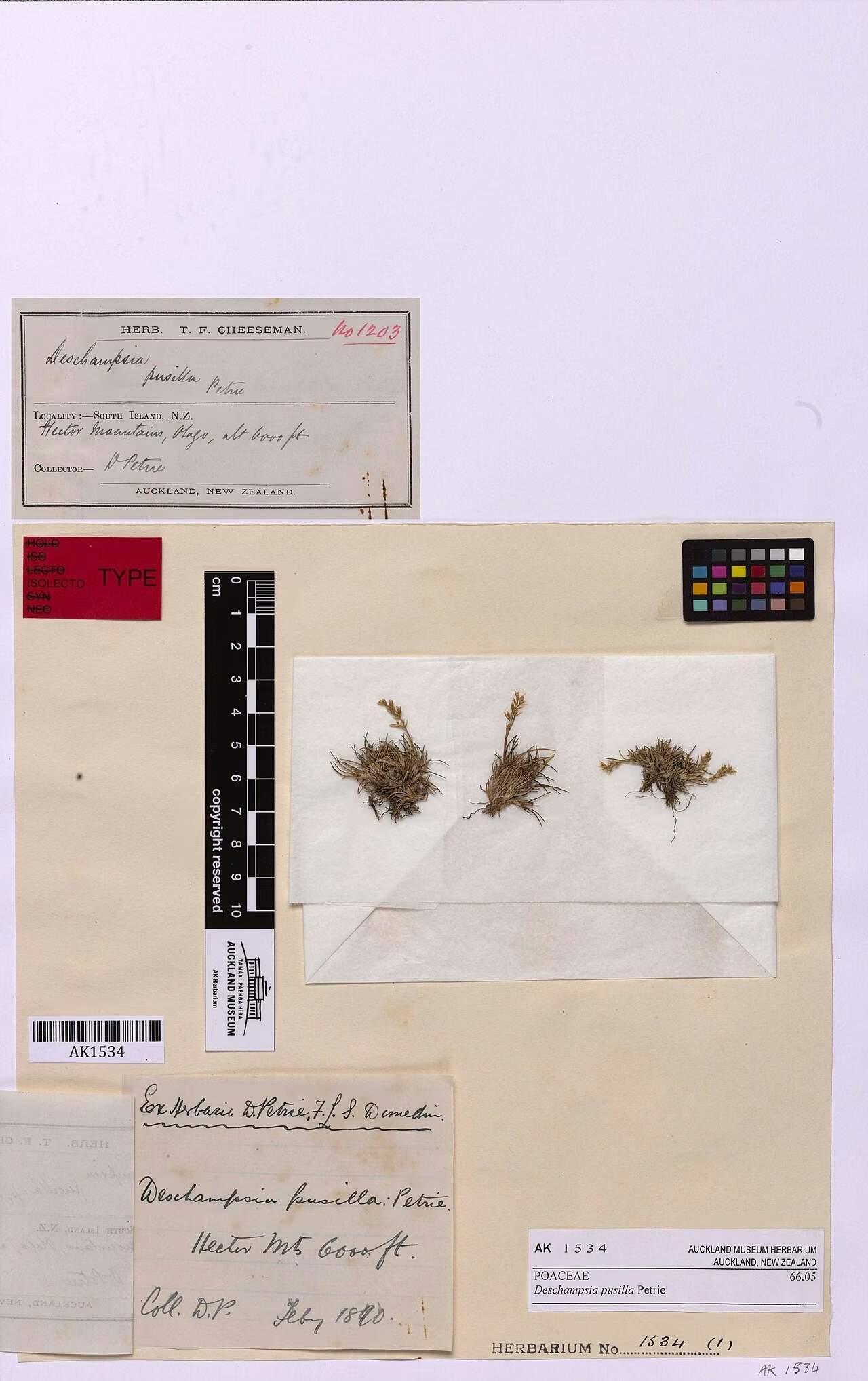
Deschampsia pusilla
Deschampsia pusilla
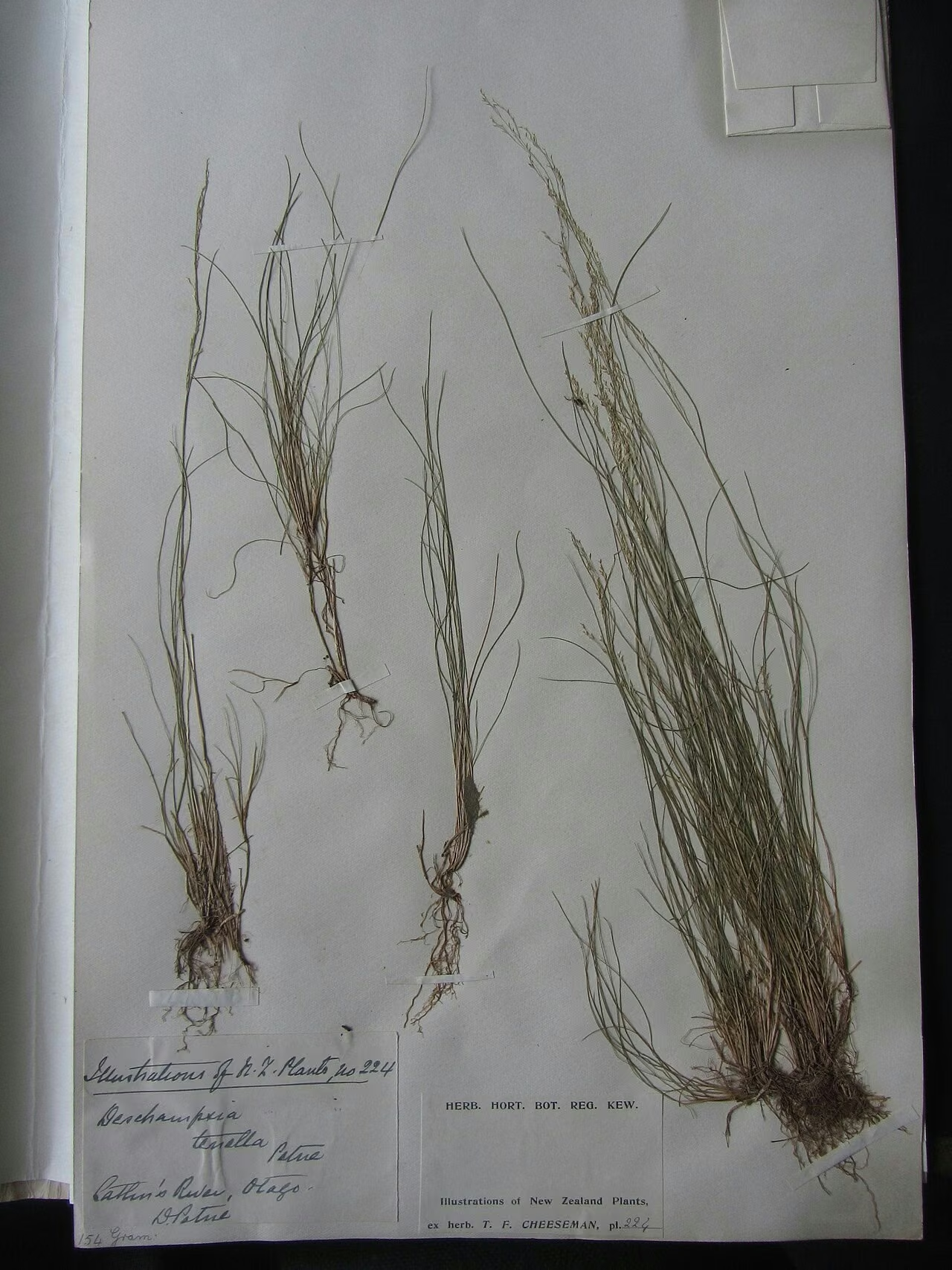
Deschampsia tenella
Deschampsia tenella
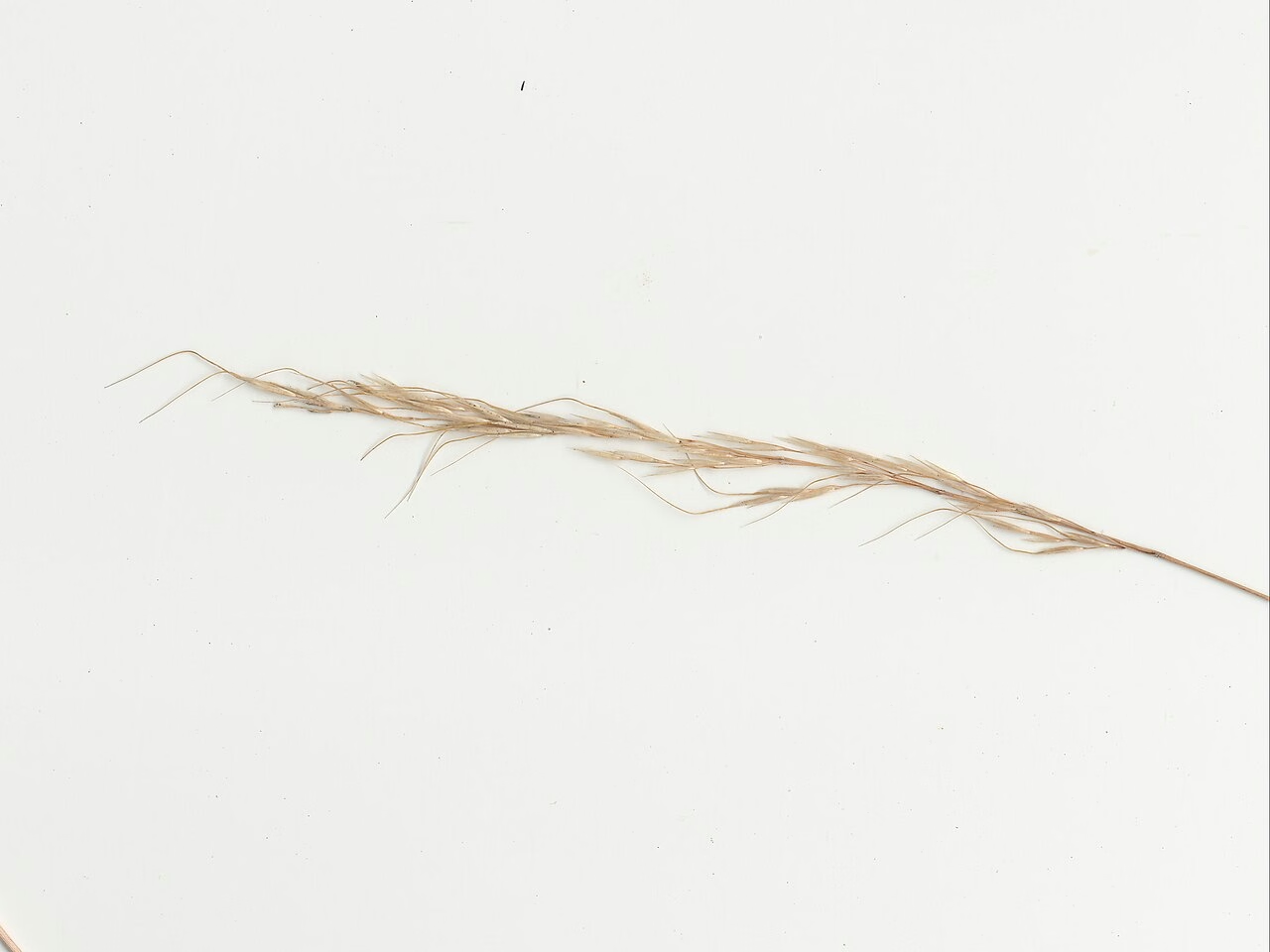
Short-Hair Plume Grass
Pentapogon inaequiglumis
Dicranopteris linearis
Dicranopteris linearis
Austral Lady Fern
Diplazium australe
Jellybeans
Disphyma clavellatum
White Snow Marguerite
Dolichoglottis scorzoneroides
Avenoides Grass
Pentapogon Avenoides Grass
Plant Conservation
Pentapogon micranthus is ranked Threatened - Nationally Critical (2023), worsened from Nationally Vulnerable in 2009, 2012 and 2017. NZPCN reports it was formerly widespread but its range has contracted considerably over the last 20 years or so.
Losses come from open coastal shrublands and clay pans giving way to taller vegetation, and above all from naturalised plants, particularly Pentapogon rarus, occupying its habitat. Protecting remaining sites, controlling invasive grasses and restoring open, dry ground are key to its survival.
Frequently Asked Questions
Why is purple plume grass Nationally Critical?
Its range has contracted sharply over about 20 years. Open coastal shrublands and clay pans are maturing into taller vegetation, and naturalised plants, especially Pentapogon rarus, now dominate many places where it was once common.
How do you tell purple plume grass from Pentapogon rarus?
Pentapogon rarus usually has smaller, narrower panicles and a lower glume over 4 mm long that is clearly longer than the lemma. In purple plume grass the lower glume is 3 to 4 mm and about equal to the lemma.
When does purple plume grass flower?
NZPCN records flowering from September to January and fruiting from October to May.
Where can purple plume grass be found?
It occurs locally on the Three Kings Islands, from Te Paki south to about Auckland, around East Cape and in the eastern Wairarapa near the northern Aorangi Range, usually near the coast.
Sources and Further Reading
The botanical, growing, and conservation details for Purple Plume Grass (Pentapogon micranthus) on this page draw on the New Zealand plant references below. Consult them for full technical records and the latest distribution data.