Short-Hair Plume Grass
Pentapogon inaequiglumis
Last updated:
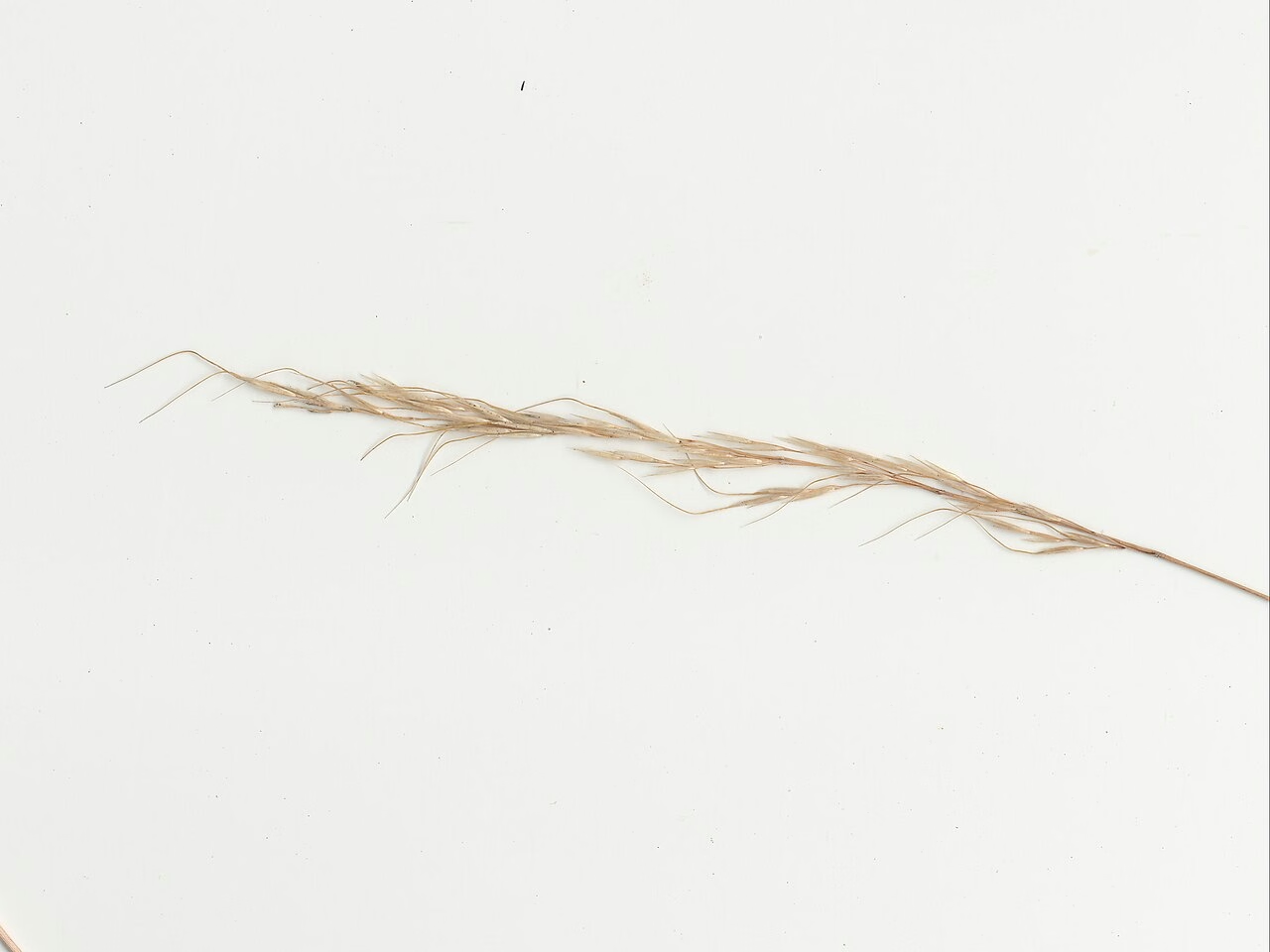
Short-hair plume grass (Pentapogon inaequiglumis, now Pentapogon inaequiglumis) is a slender, tufted native grass with flowering stems 25 to 70 cm tall carrying lax, purple-tinged panicles of long-awned spikelets. It is indigenous to New Zealand and also grows in eastern Australia and Tasmania. Here it is common in places from North Cape to Auckland, around Wellington, the Wairarapa and Hutt Valley, and in Nelson, Marlborough and Westland, growing in scrub, grassland and disturbed sites in lowland and montane areas. It is ranked At Risk - Declining. NZPCN notes it is easy from fresh seed, short-lived and good in dry clay soils. It was previously known as Dichelachne inaequiglumis. Explore more native grasses and flaxes in our native plant guide.
Plant Description
Short-hair plume grass forms rather small, slender tufts whose leaves are much shorter than the flowering stems. The leaf sheaths are dull or light brown and smooth or minutely rough, sometimes with scattered hairs. The ligule is tiny, 0.1 to 0.5 mm long, membranous and fringed. The leaf blades are flat, up to 15 cm long and 1 to 2.5 mm wide, tapering, with minutely rough margins and ribbed upper surfaces.
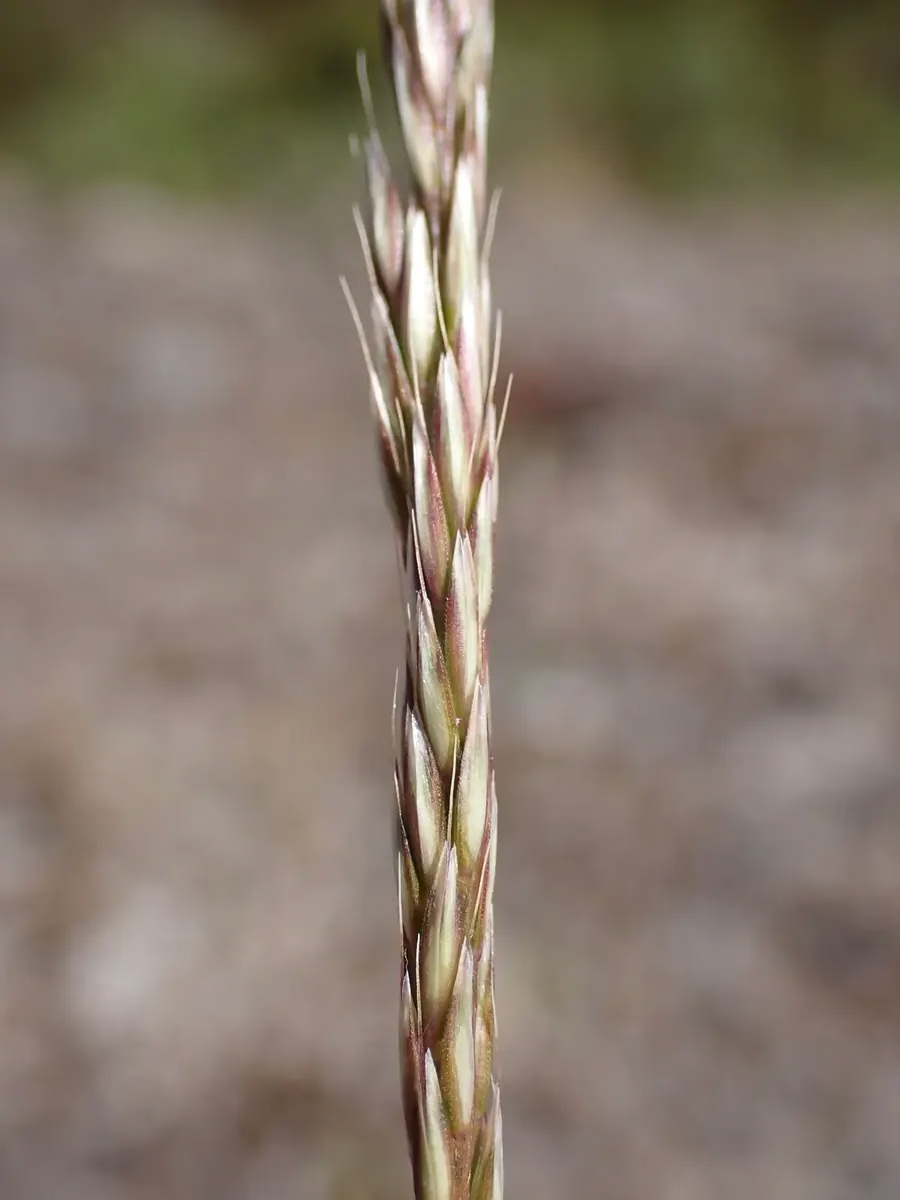
The flowering stems are 25 to 70 cm tall with smooth internodes and purplish nodes. The panicle is 10 to 30 cm long and lax, with a few slender branches arranged in well-spaced whorls and bare below, so the rachis and branchlets are visible between the spikelets. The spikelets are purple and relatively few. The lower glume is shorter than the lemma and the upper glume about equal to it, which gives the species its name. The lemma is 4 to 6 mm long with a slender purple awn 13.5 to 18.5 mm long that twists two or three times, and the callus hairs are short, about 1 mm or less.
Its lax, open, few-flowered purple panicle separates it from purple plume grass (Pentapogon micranthus), which has a dense, erect, spike-like panicle with numerous spikelets and a single anther per flower. Short-hair plume grass has three anthers in its open flowers, and its short callus hairs distinguish it from the longer-haired plume grasses.
Quick Facts
| Scientific Name | Pentapogon inaequiglumis |
|---|---|
| Height | 0.25-0.7 m in flower |
| Spread | Small, slender tufts |
| Water Needs | Low; good in dry clay soils |
| Light | Full sun |
| Frost Tolerance | Moderate; grows from lowland to montane zones |
| Salt Tolerance | No information available |
| Growth Rate | Fast |
| Lifespan | Short-lived perennial |
Climate Best Suited to
Suits mild to warm temperate lowland and hill-country climates, including dry summers. It is commonest in the north of the North Island, the Wellington region and the northern South Island.
Regional Suitability
| City | Climate Suitability |
|---|---|
| Auckland | High |
| Wellington | High |
| Christchurch | Medium |
| Dunedin | Low |
Plant Habitat
In the North Island, the Flora of New Zealand records it as common from North Cape to Auckland, with one collection from Taranaki, and common in Wellington Province, especially in the Wairarapa and Hutt Valley. In the South Island it is common in Nelson, Marlborough and Westland. NZPCN adds single records from Stewart Island (2000) and Rēkohu/Chatham Island (2008). The type specimen was collected by Donald Petrie at Western Park, Auckland, in December 1895. Outside New Zealand it occurs in eastern Australia and Tasmania.
It grows in scrub, grassland and modified sites in lowland and montane zones, and was described as common in low hill country in danthonia grassland, the short native and naturalised grasslands dominated by Rytidosperma. It tolerates open, dry clay soils.
Growing Requirements
Soil Requirements
It favours the dry, often infertile clay soils of open hill country and grassland.
- Dry clay soils suit it well, according to NZPCN
- Low fertility is tolerated
- Free drainage helps prevent winter rot
Light Requirements
Its habitats are open grassland, scrub margins and modified sites with plenty of sun.
- Full sun is best
- Dense shade and tall competing vegetation exclude it
Water Requirements
It is a grass of dry, open ground and copes with summer drought once established.
- Water seedlings until established
- Avoid wet, poorly drained sites
Planting and Establishing
Raise plants from fresh seed and plant them into open, sunny sites with dry clay or other free-draining soil. Because it is short-lived, it persists by self-sowing, so allow some bare ground nearby for seedlings.
In restoration, use it in lowland grassland and scrub-margin plantings within its natural range, sourcing seed locally. Keep taller exotic grasses in check, as they quickly crowd out small tufted natives.
Ecological Role
Its florets are wind dispersed (Thorsen et al. 2009), helped by the long, twisting awns. Plants produce both open flowers with three larger anthers and closed, self-pollinating (cleistogamous) flowers with tiny anthers, which helps ensure seed set.
As a short-lived species that self-sows readily, it behaves as a colonist of open and disturbed ground, appearing in grassland, scrub and modified sites. The animals that use it are not documented in the sources consulted.
Uses & Significance
Garden Uses
It is an attractive grass for dry, sunny native plantings, with purple plumes that shimmer above the leaves.
- Dry banks and clay slopes
- Native meadow and grassland restoration
- Self-seeding filler in naturalistic gardens
Ecological Value
It is a component of New Zealand's lowland and hill-country native grasslands, which have been greatly reduced.
- Part of the native grass flora of dry, open sites
- Colonises bare and disturbed ground
- A declining species that benefits from active planting
Landscaping Uses
Plant in loose groups on a sunny, dry bank so the lax purple panicles and fine awns are backlit by low sun. It combines well with other small native grasses and low-growing shrubs.
Because individual plants are short-lived and it can spread by seed, it suits informal meadow areas better than formal beds.
Seasonal Care Calendar
Spring
New growth and flowering stems develop; exact flowering months are not recorded in the sources consulted.
- Sow fresh seed or plant seedlings
- Clear competing weeds
Summer
The lax purple panicles and twisted awns are at their showiest.
- Collect seed as panicles ripen
- No summer watering needed once established
Autumn
Seed is shed and self-sown seedlings appear in open ground.
- Thin seedlings where they are unwanted
- Leave some to replace older plants
Winter
Plants are slow growing over winter.
- Avoid waterlogging
- Little maintenance needed
When to Prune and How Much
Little pruning is required. Cut off flowering stems once seed has ripened if you want to stop it self-sowing into unwanted areas.
As plants are short-lived, replace old, declining tufts with seedlings rather than cutting them hard back.
How to Grow Short-Hair Plume Grass
NZPCN describes short-hair plume grass as easy from fresh seed. It is short-lived but self-sows readily and can become invasive, and it is good in dry clay soils. Because individual plants do not live long, seed is the natural way to keep it going, and in a suitable site a planting will often maintain itself from self-sown seedlings. As the species is declining, seed for restoration should come from local populations, with only a small proportion taken from any wild site and the landowner's permission obtained.
From Seed
The grains are 2 to 2.5 mm long and are shed inside florets carrying long, twisting awns. Collect panicles as they turn straw coloured and sow while fresh, which is when NZPCN reports it is easiest.
- Cut ripe panicles into a paper bag
- Rub out the florets and sow fresh on a free-draining mix
- Press the seed in lightly and cover with a thin layer of grit
- Keep the tray just moist in a sunny spot
- Pot on seedlings and plant out into dry, sunny ground
By Division
Small tufts can be divided, but because the species is short-lived, division gives only a temporary increase and seed is generally the better option.
- Lift a vigorous young tuft in autumn or early spring
- Separate it into a few rooted pieces
- Replant into free-draining soil and water in well until new growth appears
Pests & Diseases
No specific pests or diseases are recorded for this species. Its main threat comes from competition with taller naturalised grasses and weeds that take over open grassland.
In gardens the main thing to manage is its own readiness to self-sow, which NZPCN notes can make it invasive.
Cultural Significance
No Māori name or traditional Māori use is recorded for short-hair plume grass in the sources consulted.
Eduard Hackel first named it Dichelachne sciurea var. inaequiglumis in Cheeseman's 1906 Manual of the New Zealand Flora, based on Donald Petrie's 1895 Auckland collection. Elizabeth Edgar and Henry Connor raised it to species rank in 1982, and it was moved to Pentapogon in 2022.
Bonus Tip
To separate short-hair plume grass from purple plume grass in the field, look at the panicle shape: short-hair plume grass has a lax, open panicle with few spikelets on slender, whorled branches, while purple plume grass has a dense, erect, spike-like panicle crowded with spikelets.
Related Plants
Explore other native plants that share similar characteristics or habitats with Short-Hair Plume Grass (Pentapogon inaequiglumis), offering further insights into New Zealand's diverse flora. These related species provide context and opportunities for complementary planting in your garden.
Deparia petersenii subsp. congrua
Deparia petersenii subsp. congrua
Deschampsia pusilla
Deschampsia pusilla
Deschampsia tenella
Deschampsia tenella
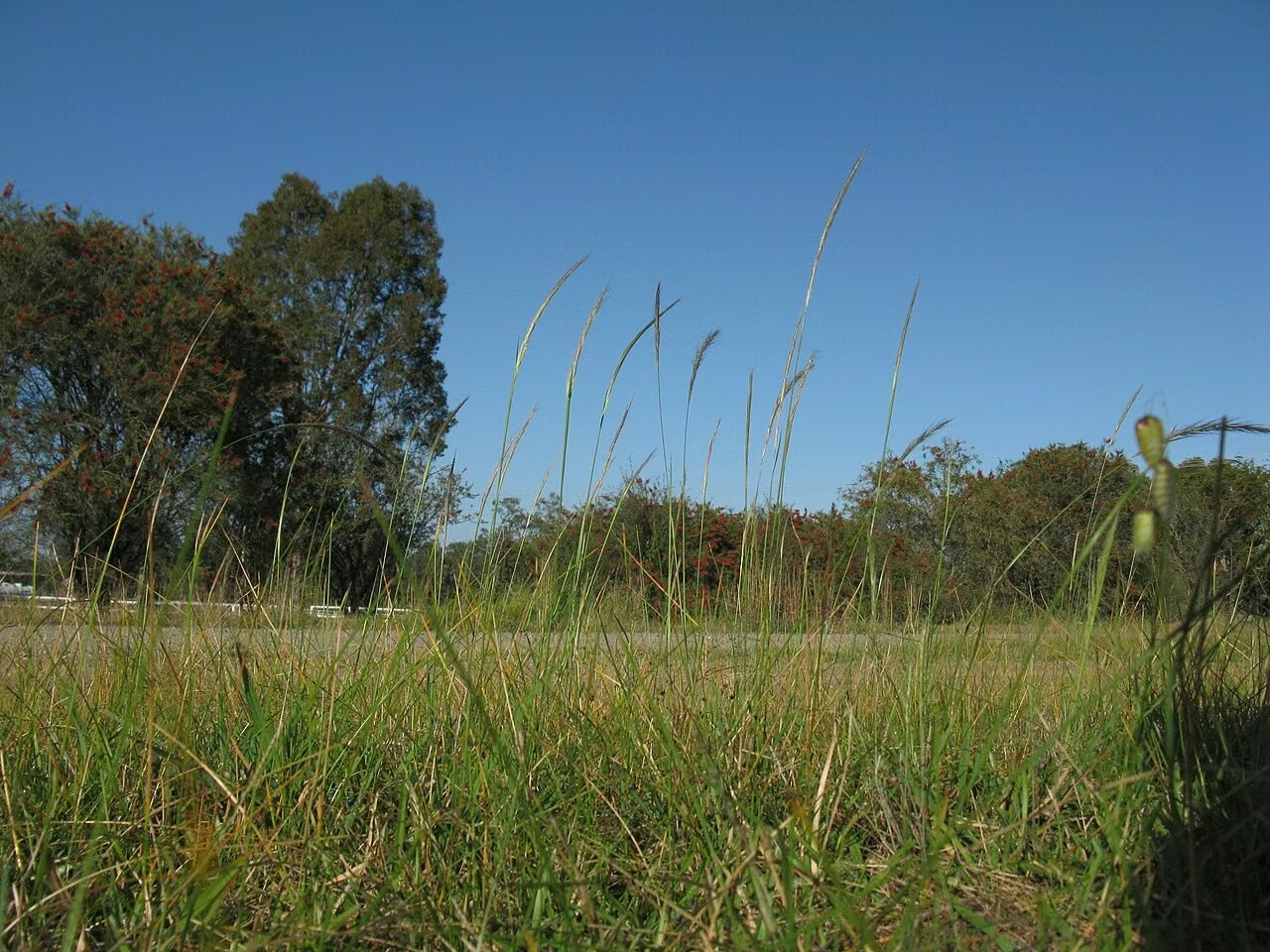
Purple Plume Grass
Pentapogon micranthus
Dicranopteris linearis
Dicranopteris linearis
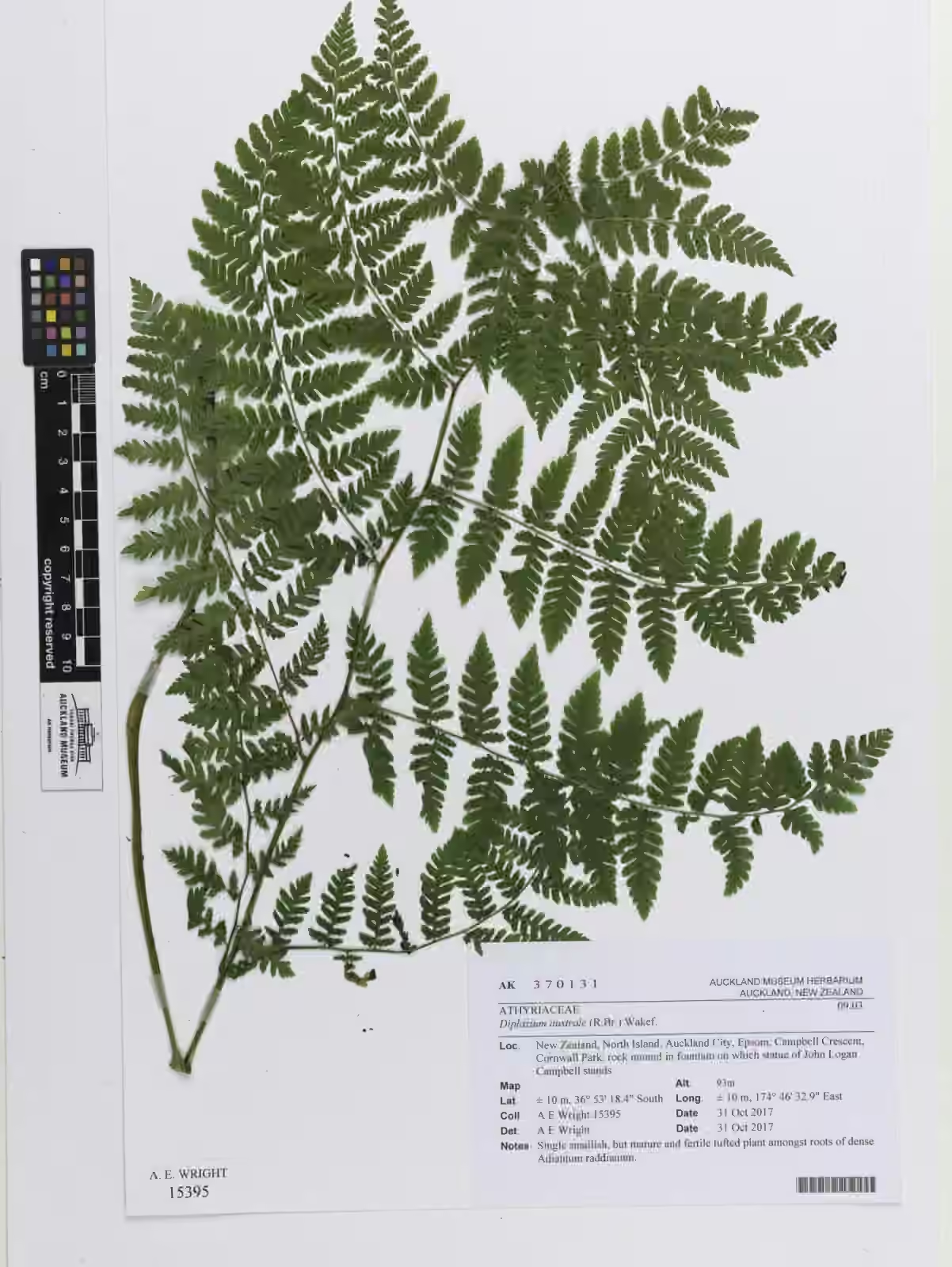
Austral Lady Fern
Diplazium australe
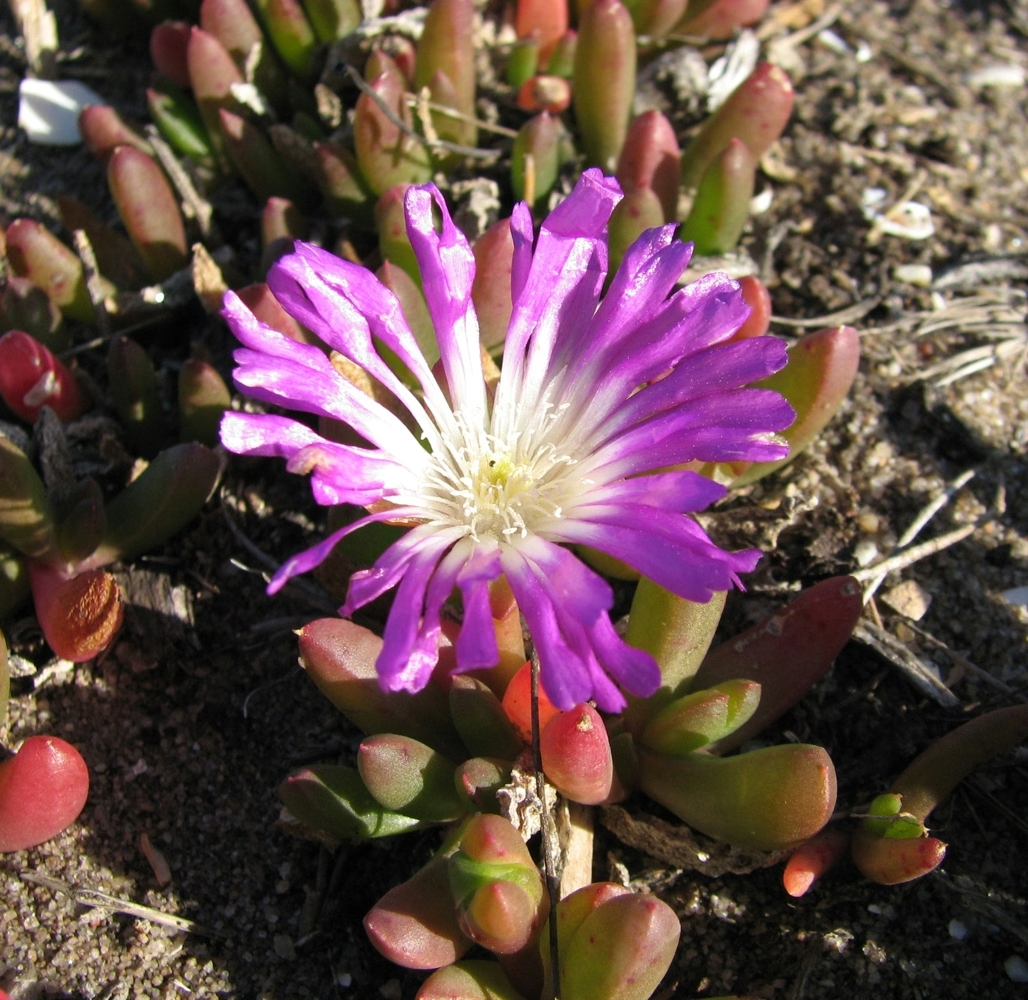
Jellybeans
Disphyma clavellatum
Avenoides Grass
Pentapogon Avenoides Grass
Plant Conservation
Pentapogon inaequiglumis is ranked At Risk - Declining (2023). It was previously ranked Naturally Uncommon in the 2009, 2012 and 2017 assessments under the name Dichelachne inaequiglumis. NZPCN notes it is often uncommon over large parts of its range.
Like its close relative purple plume grass, it depends on open, dry grassland and scrub that are being lost to taller vegetation and increasingly dominated by naturalised grasses. Planting it in suitable dry, open sites and controlling invasive grasses will help.
Frequently Asked Questions
What is short-hair plume grass?
It is Pentapogon inaequiglumis, formerly Dichelachne inaequiglumis, a slender tufted native grass with lax purple panicles and fine awns 13.5 to 18.5 mm long, found in lowland and montane grassland and scrub.
Why is it called inaequiglumis?
The name means unequal glumes. Its lower glume is 3 to 3.5 mm long and shorter than the lemma, while the upper glume is longer at 4 to 5 mm.
Is short-hair plume grass threatened?
It is ranked At Risk - Declining (2023). Earlier assessments in 2009, 2012 and 2017 ranked it Naturally Uncommon.
Is short-hair plume grass easy to grow?
NZPCN says it is easy from fresh seed and good in dry clay soils, but it is short-lived and self-sows readily, so it can become invasive.
Sources and Further Reading
The botanical, growing, and conservation details for Short-Hair Plume Grass (Pentapogon inaequiglumis) on this page draw on the New Zealand plant references below. Consult them for full technical records and the latest distribution data.