Hair Sedge
Netrostylis capillaris
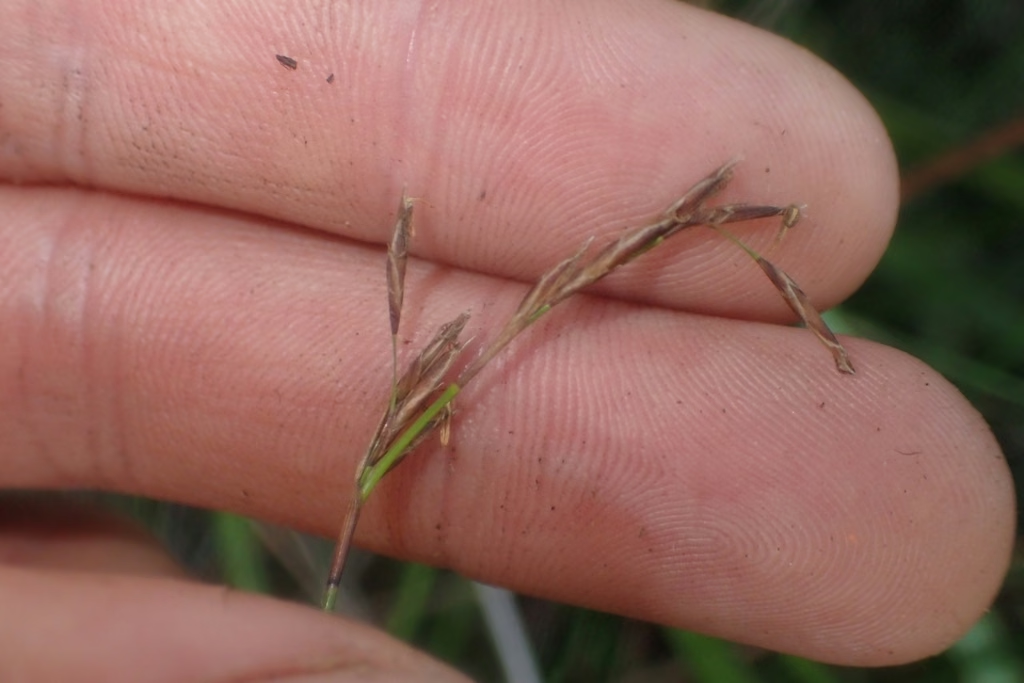
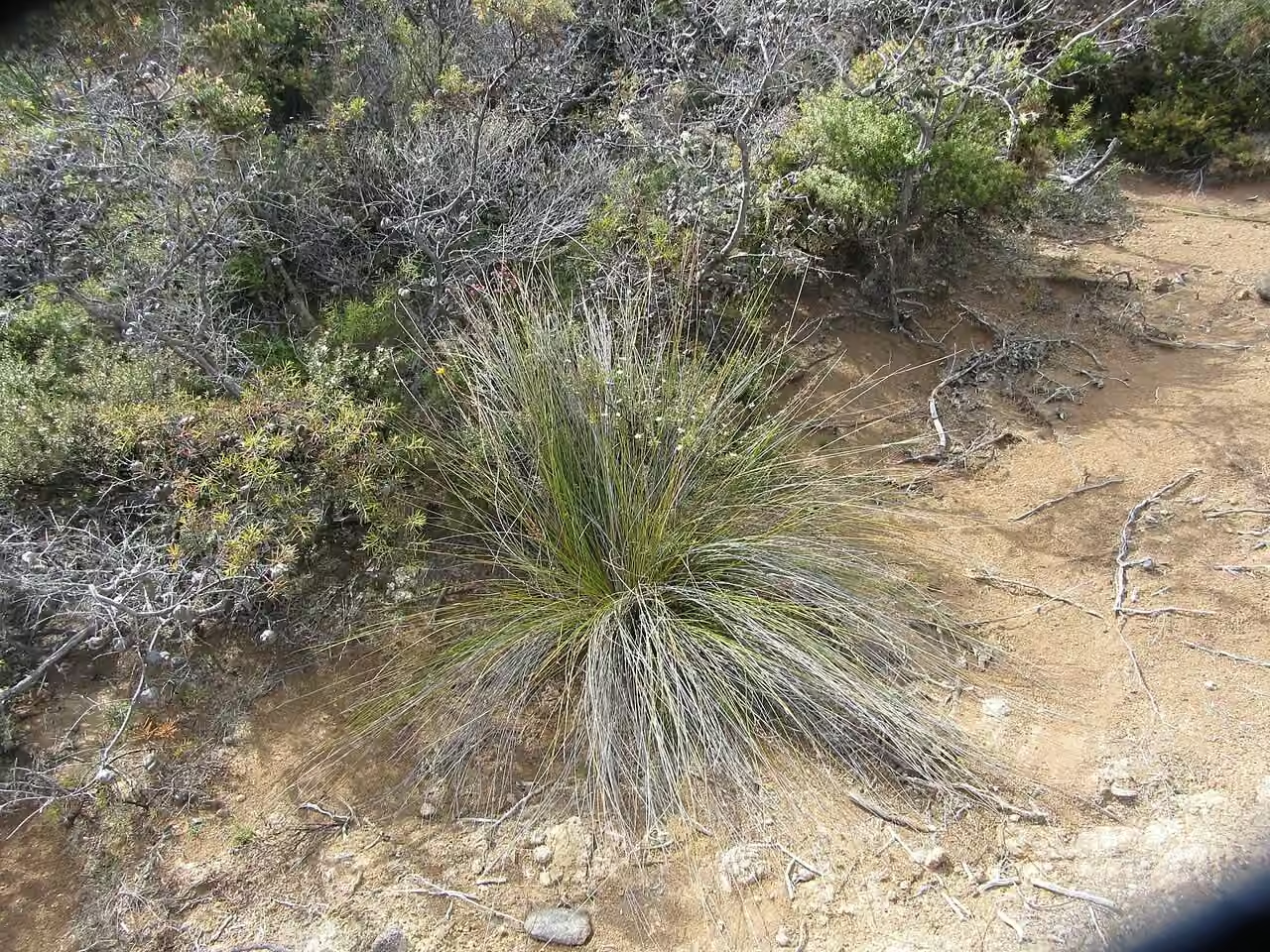
Netrostylis capillaris is a slender tufted sedge native to New Zealand and Australia. Its wiry green stems carry a few small brown spikelets in wetlands, gumlands and open scrub. This tufted perennial has bright green to yellow-green, wiry stems 15-120 cm tall and about 0.5 mm across.
Identification
This tufted perennial has bright green to yellow-green, wiry stems 15-120 cm tall and about 0.5 mm across. Basal leaves are reduced to reddish sheaths; the uppermost may have a very short, slender blade.
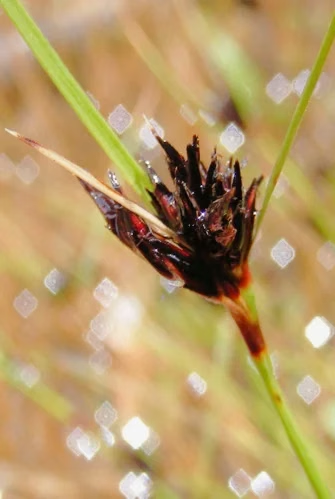
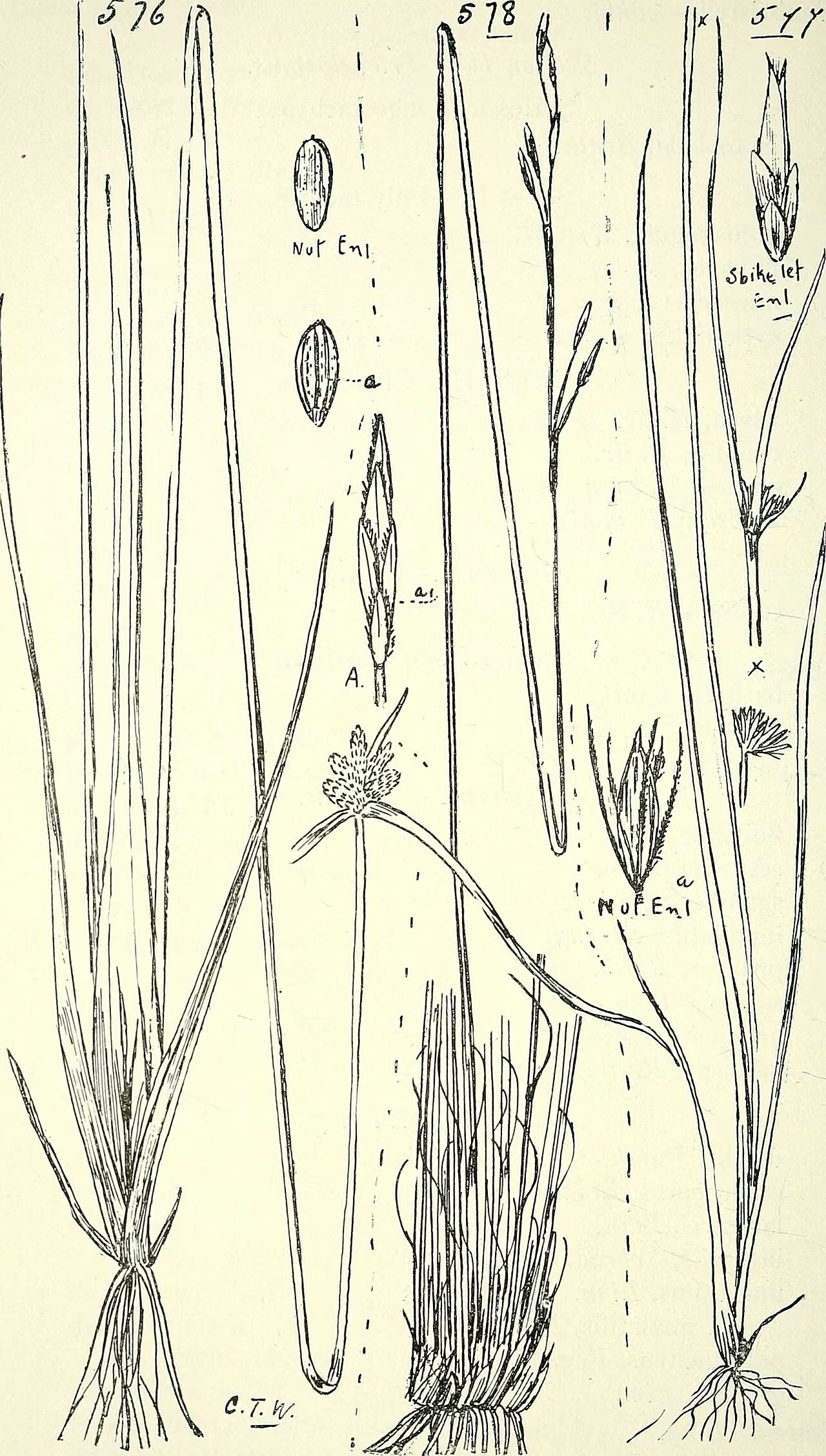
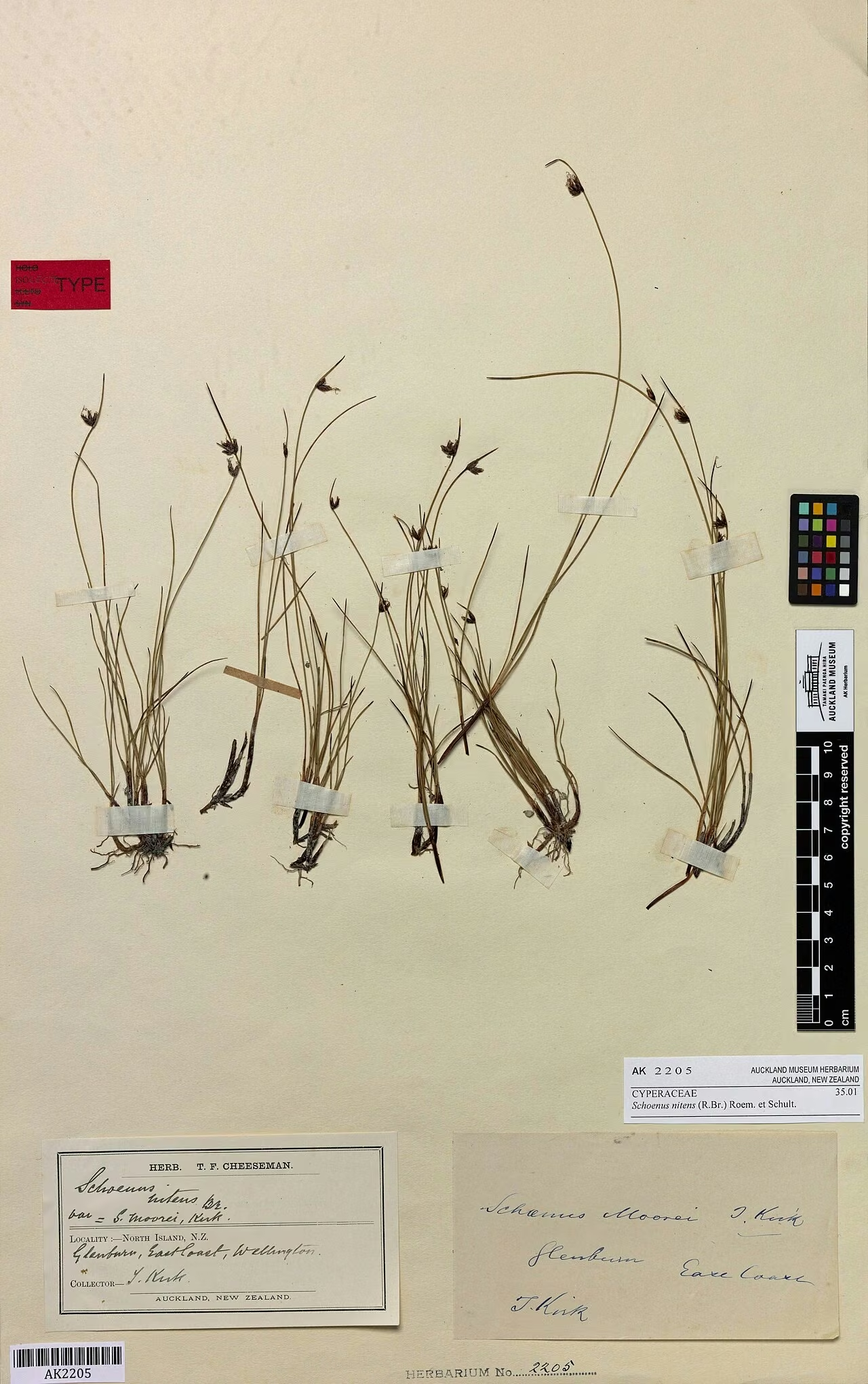
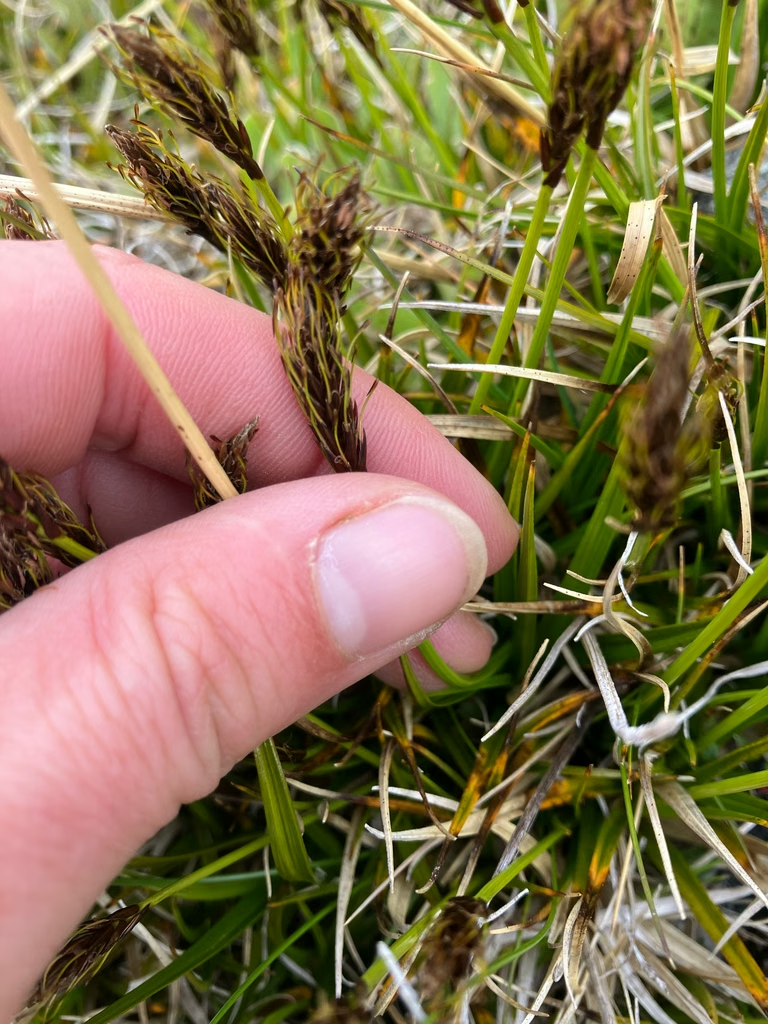
The small flowering cluster is 15-30 mm long and has two to eight usually stalked spikelets. Each narrow spikelet is approximately 5 mm long and dark brown or reddish.
Quick facts
| Scientific Name | Netrostylis capillaris |
|---|---|
| Earlier name | Tetraria capillaris |
| Family | Cyperaceae |
| Origin | Native to New Zealand and Australia |
| Growth | Tufted sedge with fine, wiry stems |
| Habitat | Swamps, peat bogs, gumland and dune slacks |
| Flowering | October to March |
| Fruiting | January to June, sometimes year-round |
| National status | Not Threatened (2023), Secure Overseas |
| Height | Slender culms 15-120 cm tall |
| Water Needs | Poorly draining clay soil is recommended |
| Light | Full sun |
| Spread | Tufts with a short woody rhizome; clump width is not quantified |
| Frost Tolerance | Minimum tolerated temperature is not documented |
| Salt Tolerance | Salt tolerance is not documented |
| Growth Rate | Annual extension is not quantified in the cited accounts |
| Lifespan | Perennial herb |
Natural range
In New Zealand this sedge occurs from Te Paki south to approximately Taranaki and Hawke’s Bay, with South Island records in Nelson and Westland. Its wider indigenous range also includes Australia.
| City | Climate Suitability |
|---|---|
| Auckland | Not assessed |
| Wellington | Not assessed |
| Christchurch | Not assessed |
Habitat and distribution
NZPCN records it from coastal to montane sites in swamps, peat bogs, pakihi, gumland scrub, dune slacks and open ground in regenerating kauri forest. It sometimes grows around burn pools in peat bogs.
It is classed as a facultative wetland plant: usually associated with wetlands, but occasionally found outside them.
Natural growing conditions
The species occupies damp and poorly drained sites, including peat bogs and dune slacks, as well as sand podzols and open regenerating forest. NZPCN recommends full sun and poorly draining clay soil in cultivation.
Planting considerations
NZPCN recommends a sunny position with poorly draining clay soil. It notes that the sedge can be divided, but root disturbance can delay recovery after transplanting, so established roots need careful handling.
Wetland setting
In peat bogs this sedge can fringe pools formed by burning. Its wetland indicator rating is FACW, meaning it usually grows in wetland conditions but is also occasionally recorded in upland sites.
Observing the plant
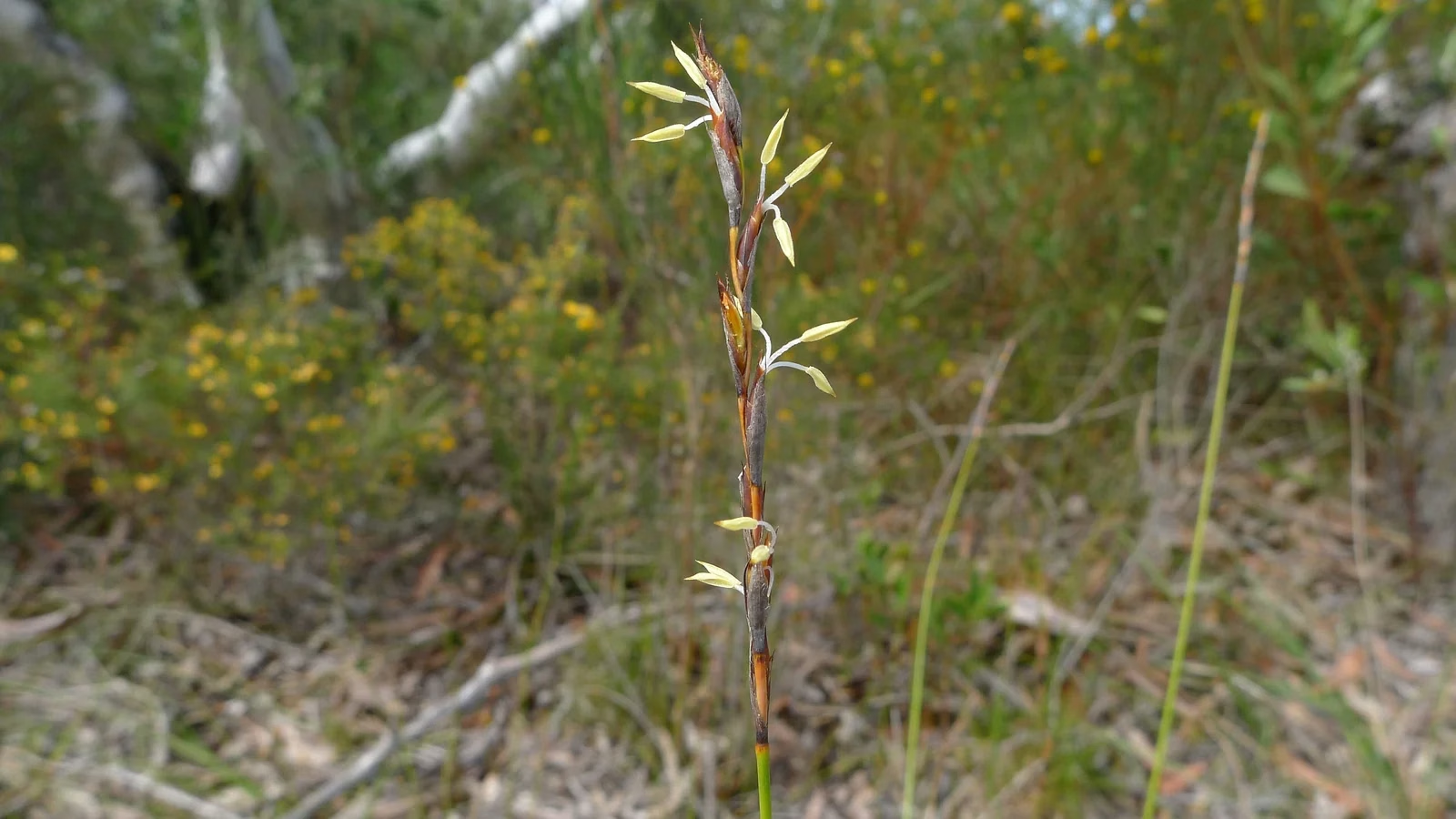
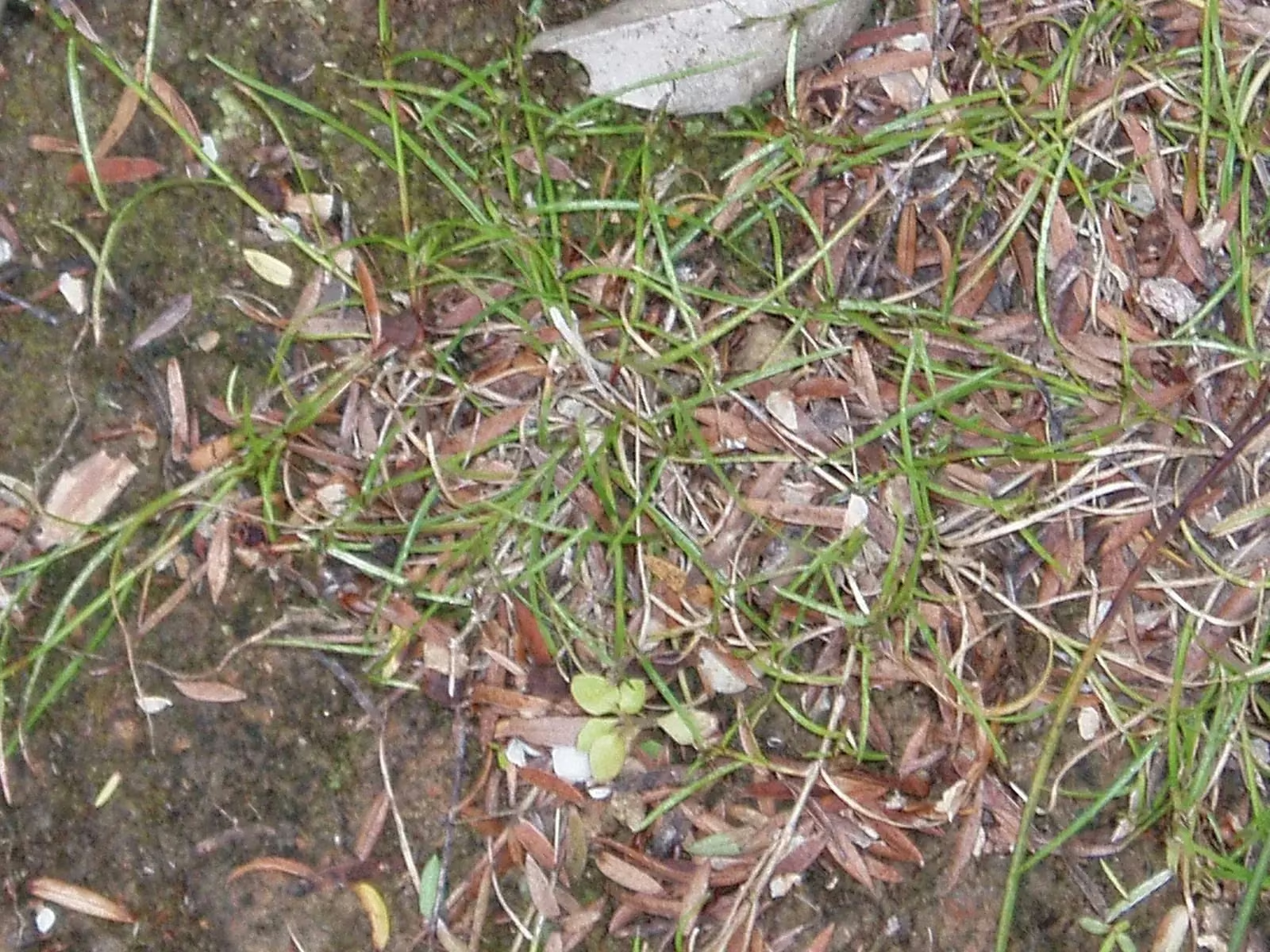
Look for a loose tuft of fine green stems with reddish basal sheaths and a small head of dark, narrow spikelets. Bracts below the flowering cluster have long blades that extend past the spikelets.
Garden context
The fine upright stems and small brown spikelets make this a light-textured sedge rather than a broad-leaved rush. NZPCN recommends full sun and poorly draining clay for cultivation of this wetland-associated plant.
Flowers and fruit
NZPCN records flowering from October to March and fruiting mainly from January to June, though fruits may occur throughout the year. Spikelets usually contain two flowers and have pointed glumes with pale membranous margins.
Flora of New Zealand gives a narrower flowering period of December to February; both sources describe the species’ summer flowering.
Growth form
The sedge forms a tuft from a short woody rhizome, which is covered in overlapping reddish or pale brown bracts. The leaves at the stem base are mostly reduced to sheaths rather than long blades.
How to Grow Hair Sedge (Netrostylis capillaris)
Fresh seed and division
NZ Plant Conservation Network records fresh seed and division of whole plants as propagation routes for Netrostylis capillaris. It also notes that specimens resent root disturbance and can take time to recover after transplanting. Successful division and immediate recovery are therefore separate matters when planning work on an established cultivated tuft.
Sun and retentive clay
The specific cultivation recommendation is full sun on poorly draining clay. Natural populations occur in swamps, peat bogs, pakihi, gumland scrub, dune slacks and open regenerating kauri forest, among other sites. Records from the margins of burn pools in peat bogs describe habitat; the cultivation entry does not provide a fire-based treatment for germinating the seed.
Its Slender Above-Ground Form
The wiry, glossy culms can be 15-120 cm tall while remaining only about half a millimetre thick. They range from bright green to yellow-green. Basal leaves are largely reduced to red sheathing bracts, and even the uppermost slender leaf blade may be only a few millimetres long. This explains the plant's fine, almost leafless appearance without assuming that missing broad blades indicate damage.
Flowering heads and fruit
The small panicle is approximately 1.5-3 cm long and usually contains two to eight stalked spikelets. Each narrow, dark-brown or reddish spikelet bears one or two flowers. Flowering is recorded from October to March. The main fruiting period is January to June, although fruit can persist at other times, useful context when checking a cultivated plant for ripe material.
Plant health
The narrow dark brown spikelets and red basal sheaths are normal features of this sedge. The cited NZPCN profile does not identify species-specific pests or diseases; slow recovery can follow root disturbance.
Naming and classification
The plant was formerly known as Tetraria capillaris, among other names. Barrett, Bruhl and Wilson established Netrostylis in 2021, transferring this species from Tetraria; it is the genus’s type species.
Distinguishing a similar sedge
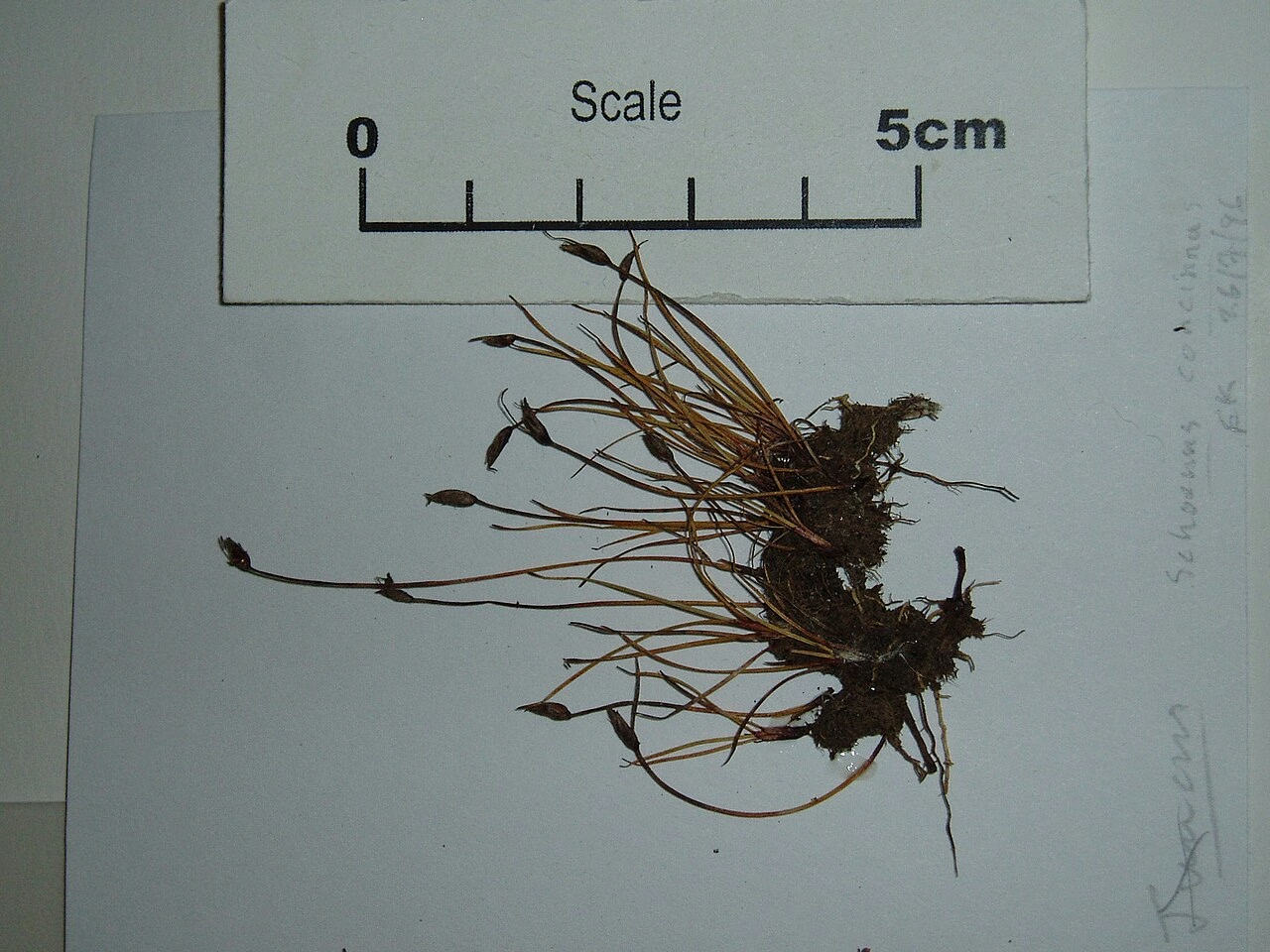
Schoenus carsei can grow alongside this species. Netrostylis capillaris has a light brown nut with three white ribs and a hairy persistent style base; the comparison sedge has a uniformly white nut without that style base.
Related native sedges
Explore other New Zealand sedges, including Schoenus species and plants found in wetland habitats.
Conservation
The 2023 New Zealand assessment lists Netrostylis capillaris as Not Threatened with the qualifier Secure Overseas. The species is indigenous rather than endemic: it also occurs naturally in Australia.
Frequently asked questions
Is Tetraria capillaris the same plant?
Yes. NZPCN lists Tetraria capillaris as a synonym of Netrostylis capillaris , the name adopted after the genus was established in 2021.
Is it a grass?
No. It is a sedge in Cyperaceae. Its fine, wiry stems can look grass-like, but its small spikelets and three-ribbed fruits help identify it.
Why does the plant look almost leafless?
Most basal leaves are reduced to sheathing bracts, and the small upper blades are very short. The tall, wiry culms are its most conspicuous above-ground parts.
Sources
Identification, range, habitat and cultivation: NZ Plant Conservation Network species profile. Description, flowering and conservation: Flora of New Zealand. Name and taxonomic history: New Zealand Organisms Register.
The genus and its type species are also listed by Flora of New Zealand’s genus profile, which cites the 2021 taxonomic revision.
Last updated: