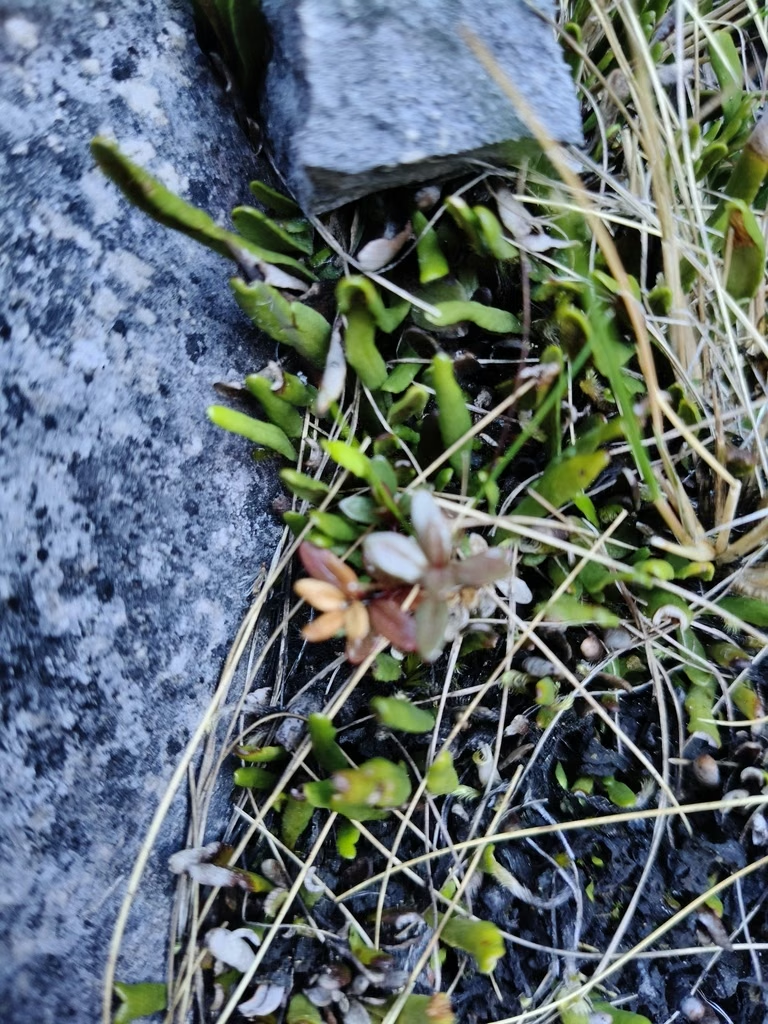
Strapfern
Notogrammitis givenii
Notogrammitis givenii is a small rock-dwelling strap fern endemic to New Zealand. Its creeping rhizome produces leathery, undivided fronds on distinct dark stalks. The fronds are undivided, leathery and pale green, narrowing towards a distinct dark brown or black stalk.
Identification
The fronds are undivided, leathery and pale green, narrowing towards a distinct dark brown or black stalk. Flora of New Zealand describes blades 9-115 mm long and 3-12 mm wide, usually broadest toward the tip.
The rhizome creeps and bears pale brown scales. Spore-bearing structures form one to ten pairs of hairless, oblique sori on the upper half of fertile fronds.
Quick facts
| Scientific Name | Notogrammitis givenii |
|---|---|
| Earlier name | Grammitis givenii |
| Common name | Strap fern |
| Family | Polypodiaceae |
| Origin | Endemic to New Zealand |
| Habitat | Damp rocks, crevices and overhangs |
| Reproduction | Wind-dispersed spores |
| National status | Not Threatened (2023) |
| Height | Leaf blades usually 1.9-4.7 cm long, occasionally 9.9 cm; stalks additional |
| Water Needs | A cultivation watering requirement is not given in the species profile |
| Light | Often on south-facing rock; no tested cultivation light rating |
| Spread | Creeping rhizomes; maximum patch width unquantified |
| Frost Tolerance | Minimum tolerated temperature is not documented |
| Salt Tolerance | Salt tolerance is not documented |
| Growth Rate | Annual extension is not quantified in the cited accounts |
| Lifespan | Rhizomatous rock fern |
Natural range
Flora records this fern in the North and South Islands, Stewart and Chatham Islands, and the Antipodes, Auckland and Campbell Islands. It is rare in the North Island, where known populations occur in subalpine and alpine ranges.
| City | Climate Suitability |
|---|---|
| Auckland | Not assessed |
| Wellington | Not assessed |
| Christchurch | Not assessed |
Habitat and distribution
This fern grows on damp rock bluffs, boulders and crevices, and beneath overhangs in montane forest, subalpine scrub, tussock grassland and alpine herbfield. Flora records it on rock types including schist, limestone, granite and basalt.
In Fiordland it has been found from about 600 m; on Campbell Island it descends to about 150 m.
Natural growing conditions
The species grows on damp, sheltered rock rather than as an ordinary garden groundcover. On the mainland it is associated with montane to alpine habitats; its island records occur at lower elevations.
Planting considerations
NZPCN describes this fern as difficult to propagate and advises against removing it from the wild. Its recorded natural sites include damp rock crevices, sinkholes and the shelter of overhangs.
Rock-Dwelling Growth
The rhizome creeps across or through rocky sites, producing separate stalked fronds along its length. Plants can grow in rock joints, on boulders and under overhangs among forest, scrub or alpine vegetation.
Observing the fronds
Look for simple, leathery blades that widen toward the tip, with a clearly defined dark stalk. On fertile fronds the oblique sori occur in pairs on the upper half and lack hairs.
Garden context
Wild plants occupy damp rocks in cool mountain habitats and on offshore islands. NZPCN describes propagation as difficult, so its natural rock habitat should not be treated as a simple garden recipe.
Spores and fronds
As a fern, it produces spores in sporangia grouped into sori rather than flowers or seeds. The sori are roughly 3-7 mm long and lie at an angle along veins in the upper frond.
Growth form
The rhizome ranges from short- to long-creeping and bears small pale brown scales. Frond stalks are usually distinct and may carry white to pale red-brown hairs, although the blade surface is generally hairless.
How to Grow Strapfern (Notogrammitis givenii)
Spore propagation and established plants
NZ Plant Conservation Network describes propagation of Notogrammitis givenii as difficult and advises that wild plants remain in place. The account supplies no spore-sowing temperature or medium. Its creeping rhizomes and distinct leaf stalks are important identification features, although neither is presented as a tested route for propagating this species in cultivation.
The rock crevice environment
Look for this fern on south-facing rocks and cliff faces, including joints, crevices and the edges of cave entrances. These sites occur within forest, scrub and alpine tussock grassland. In the North and South Islands its recorded habitat is montane; coastal records come from the Chatham and subantarctic islands. A single lowland climate rating would obscure that geographical difference.
Recognising the narrow leaves
The leathery blade is generally spoon-shaped to narrowly tapering towards its base. The main description gives a usual length of approximately 19-47 mm and occasional extremes from 11 to 99 mm. Most blades are about 3.8-7 mm wide. Their veins are hidden, while the midrib is slightly raised underneath. Young blades may have sparse whitish hairs concentrated on the midrib.
Examining fertile fronds
Spore-bearing sori occupy the upper half or upper third of the blade. They occur in one to ten pairs and range from nearly rounded to oblong, set obliquely to the midrib. Documenting these features alongside the stalk and creeping rhizome helps confirm an existing plant's identity. The account gives no seasonal propagation calendar or measured success rate for transplanted material.
Plant health
Hairless blade surfaces and sori, together with a sometimes hairy dark stalk, are normal identification features. The cited sources do not specify particular diseases or pests affecting Notogrammitis givenii.
Naming and classification
The epithet honours David Roger Given, a New Zealand fern specialist and conservationist. His 1965 collection from Mount Stewart near Arthur’s Pass is the type specimen; the plant was formerly called Grammitis givenii.
Distinguishing strap ferns
Compared with Notogrammitis gunnii and N. patagonica, this species lacks hairs on the blade surfaces, margins and sori. The usually obvious stalk and creeping rhizome also help distinguish it from N. billardierei.
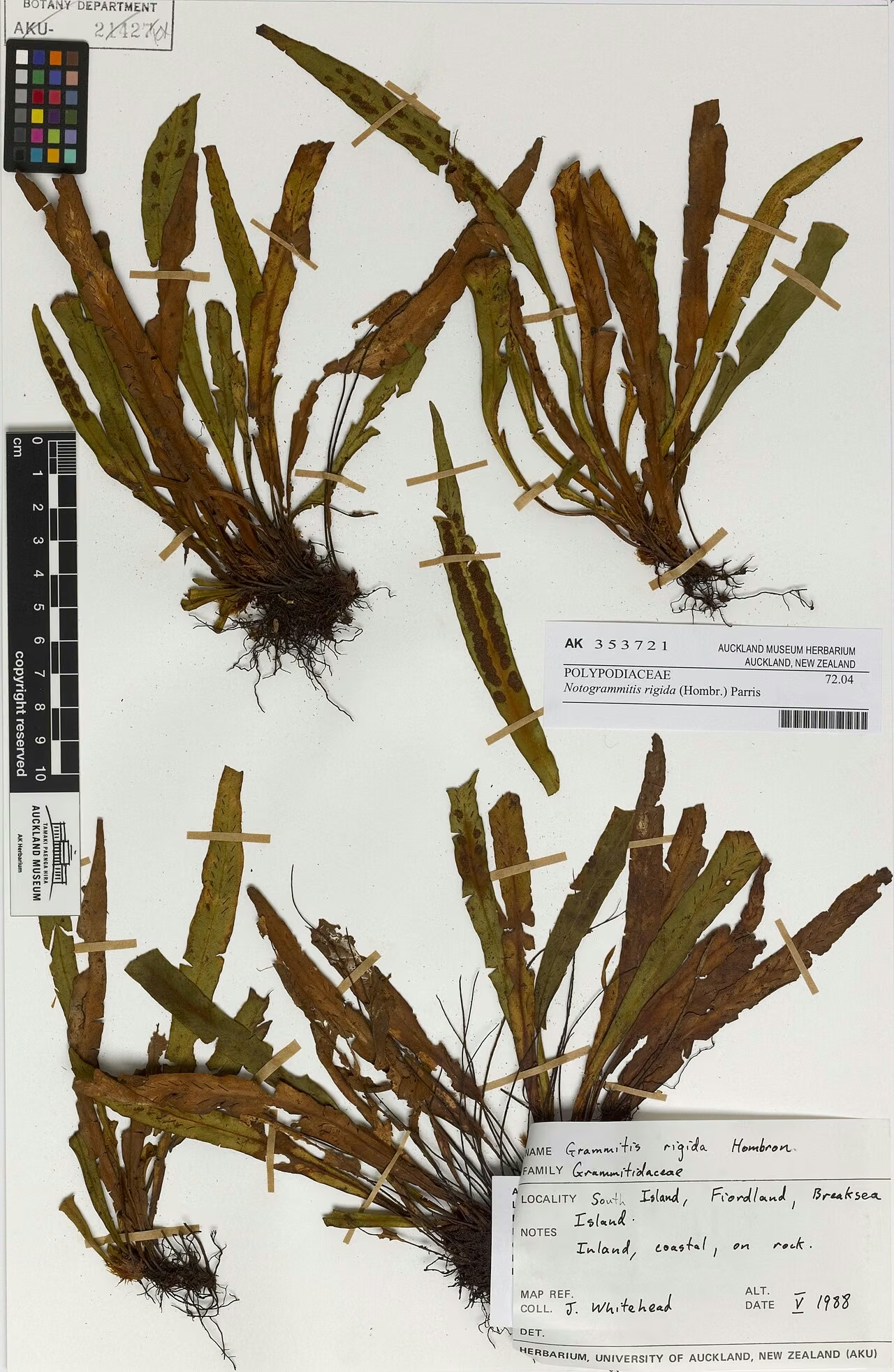
Related native strap ferns
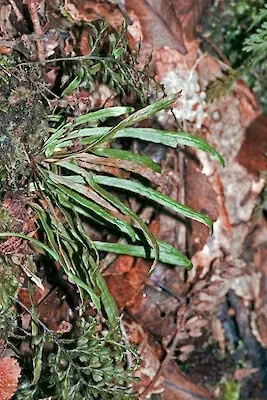
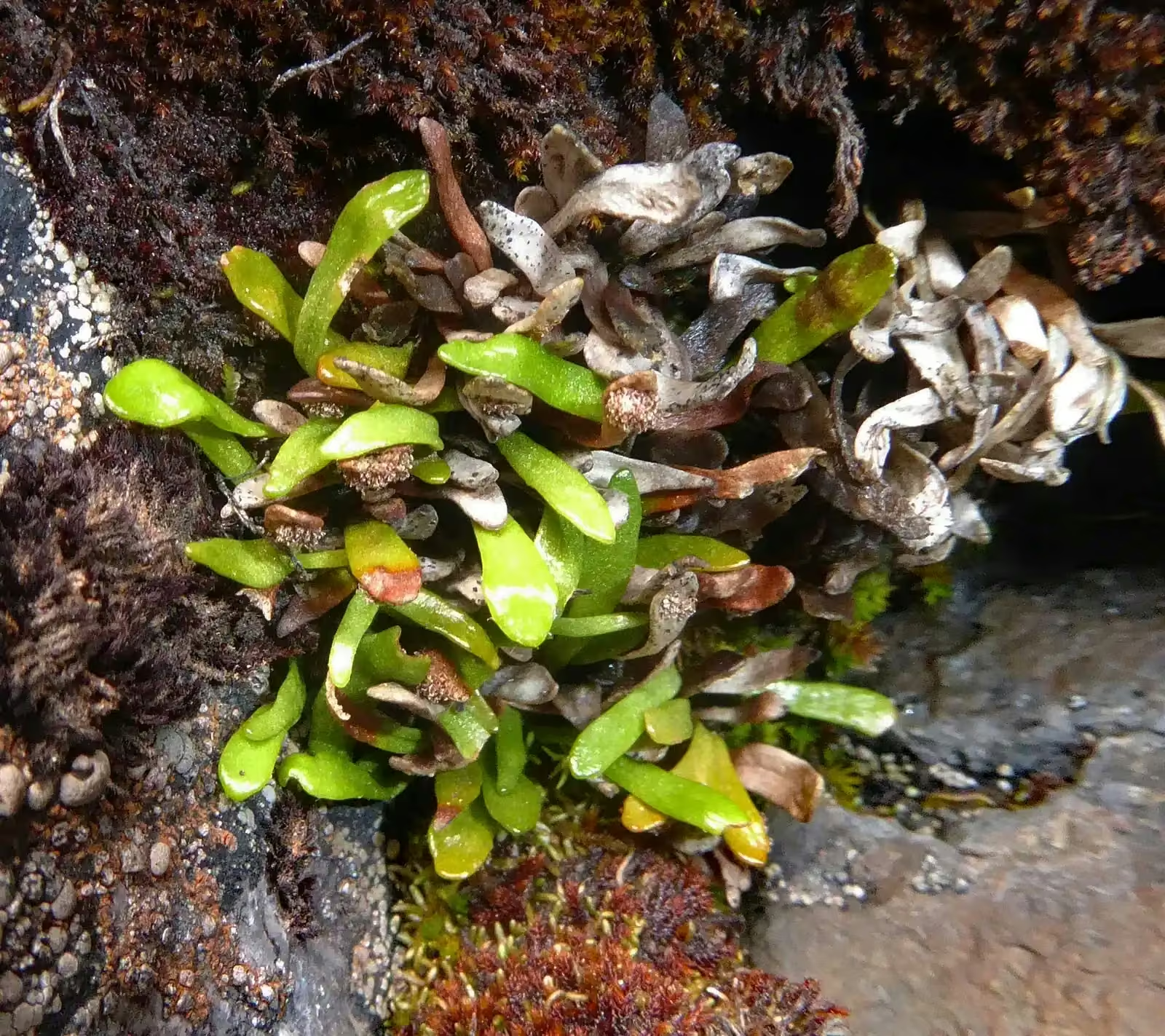
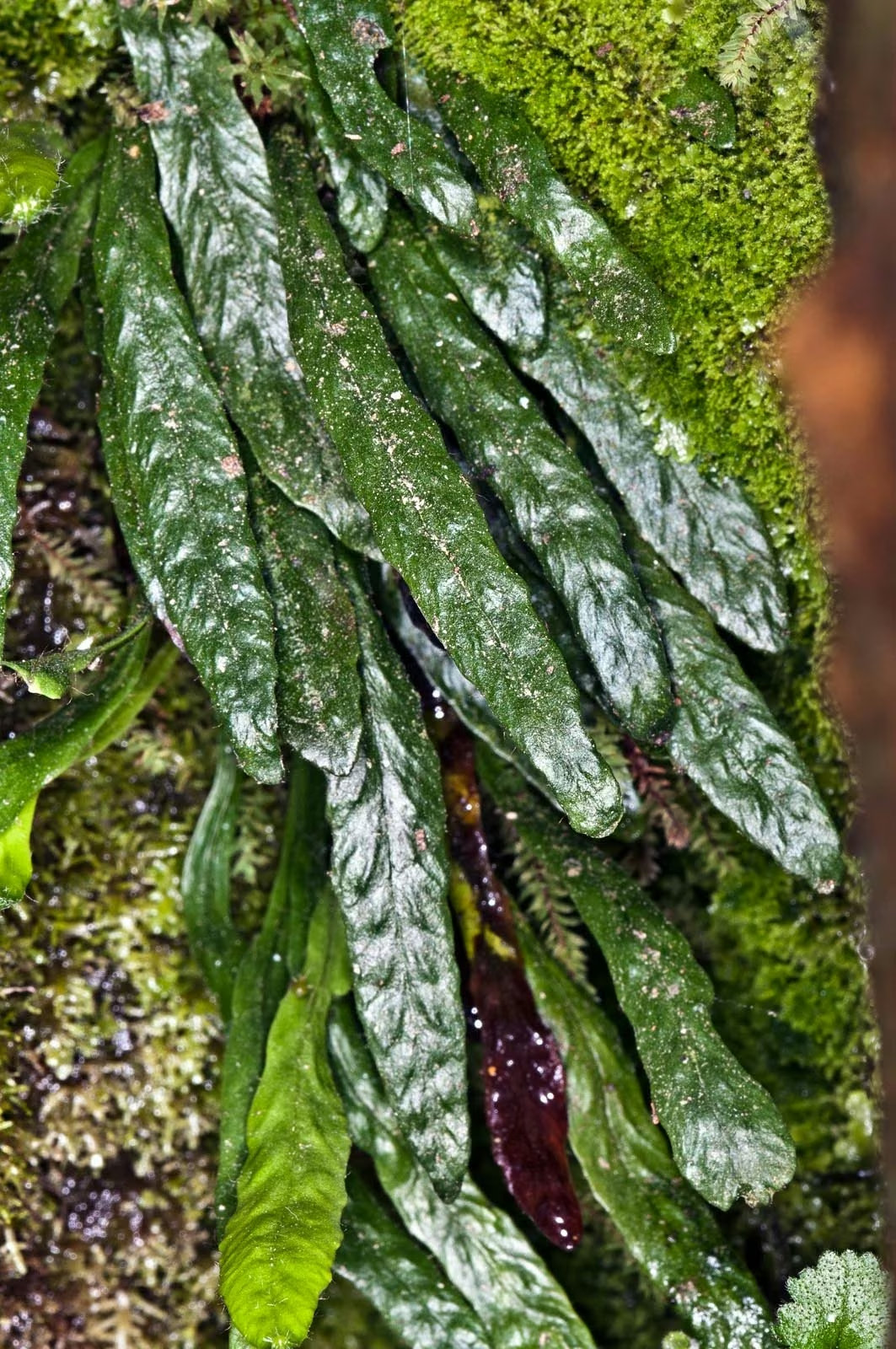
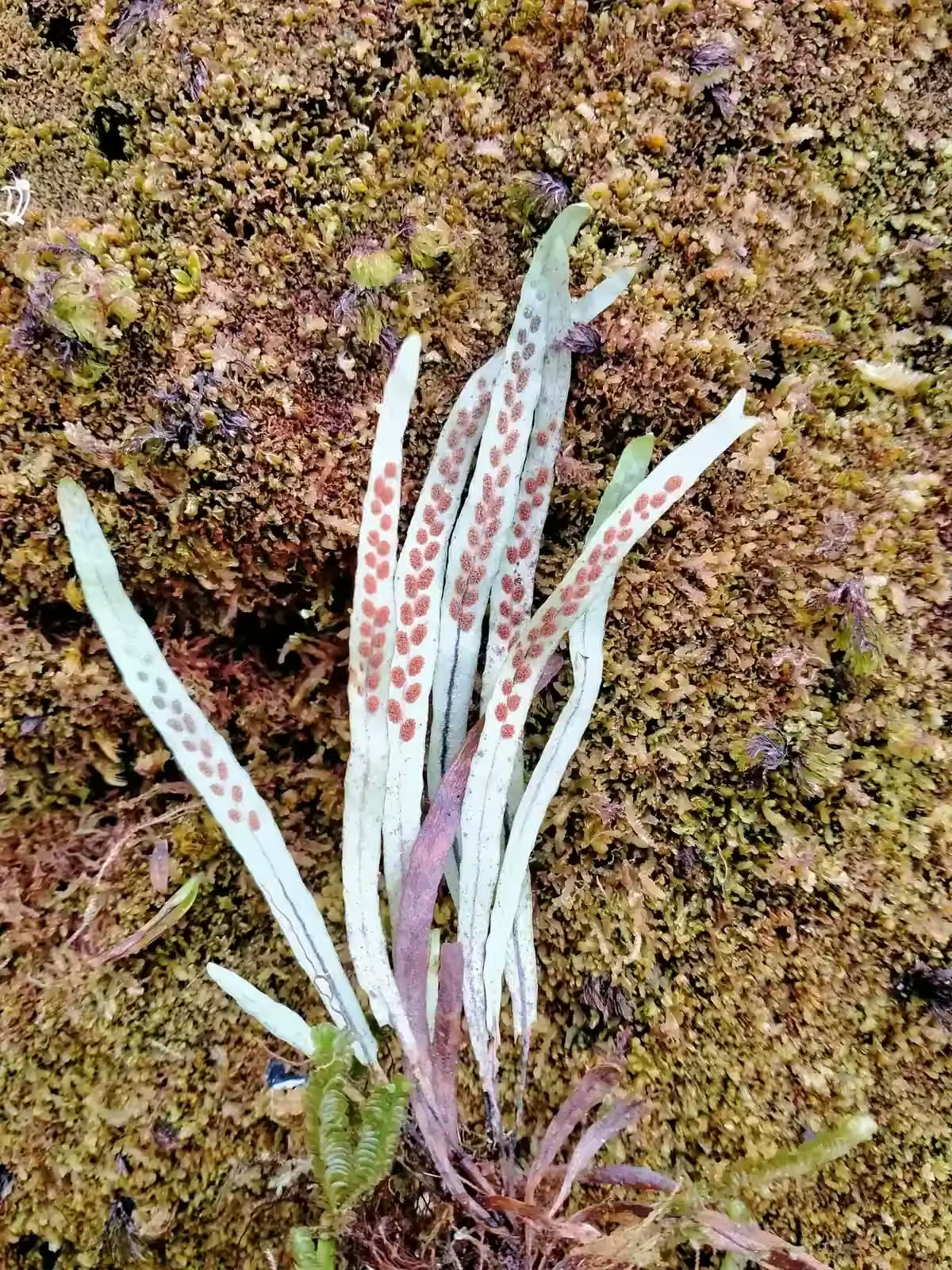
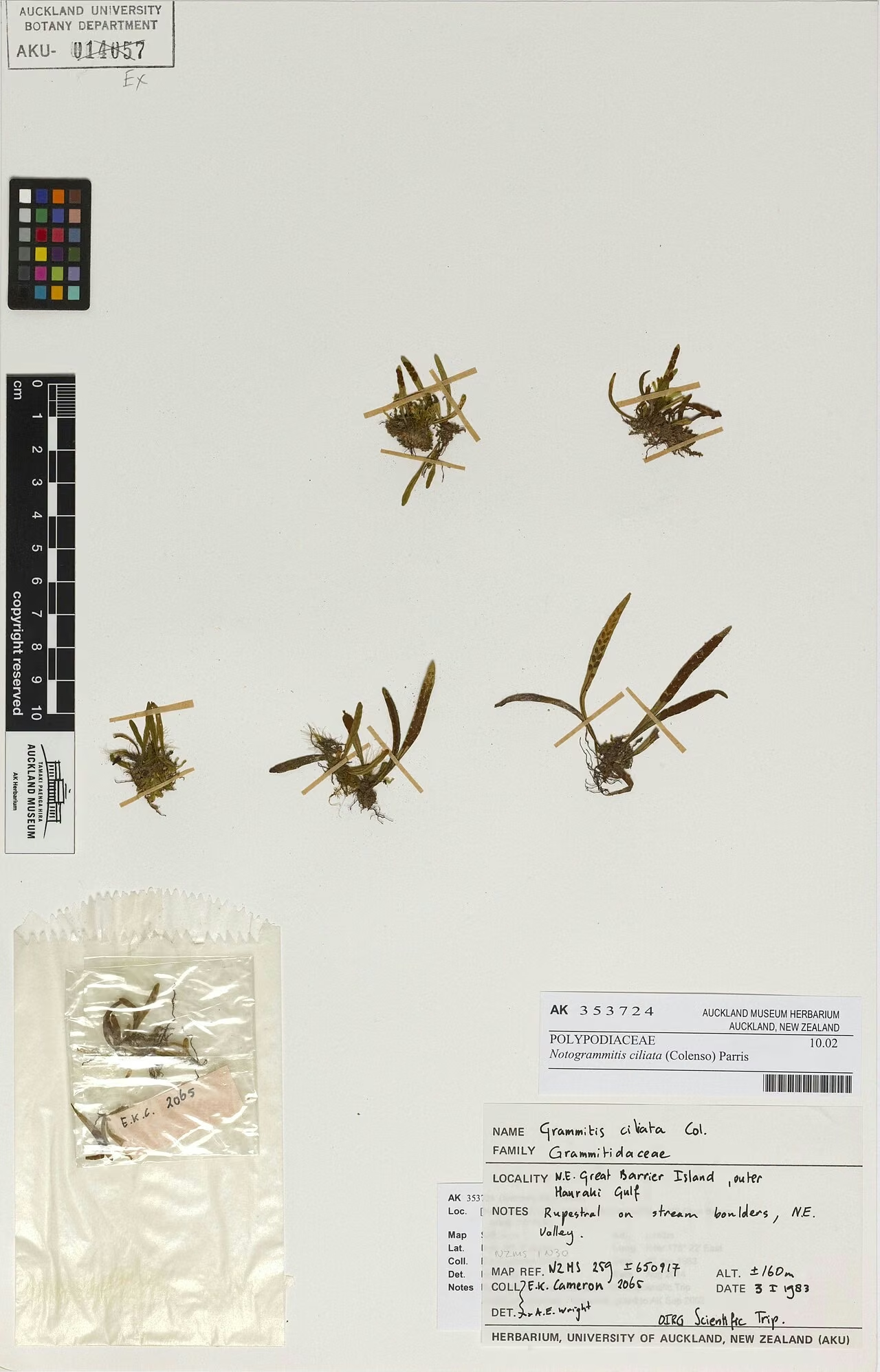
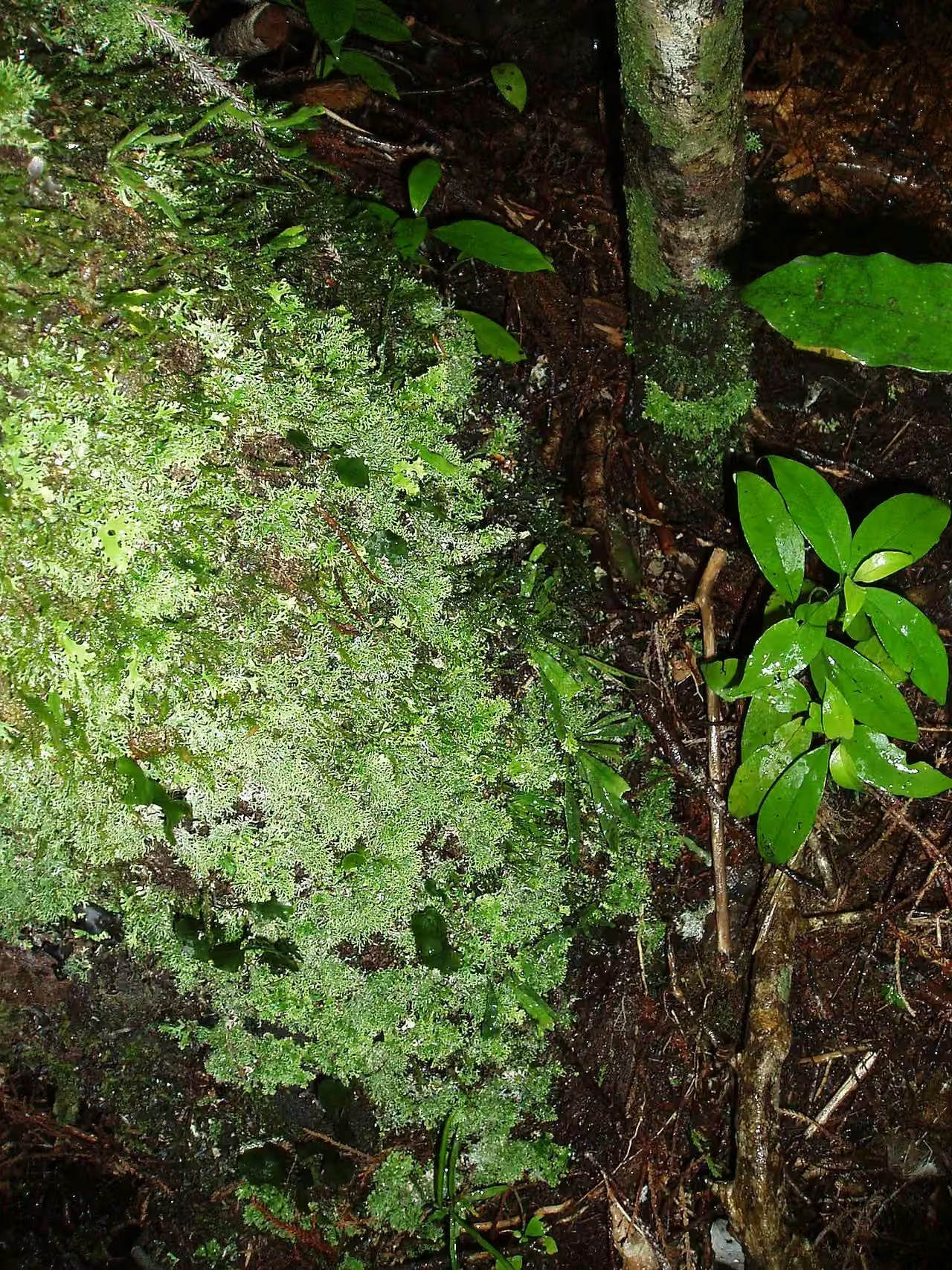
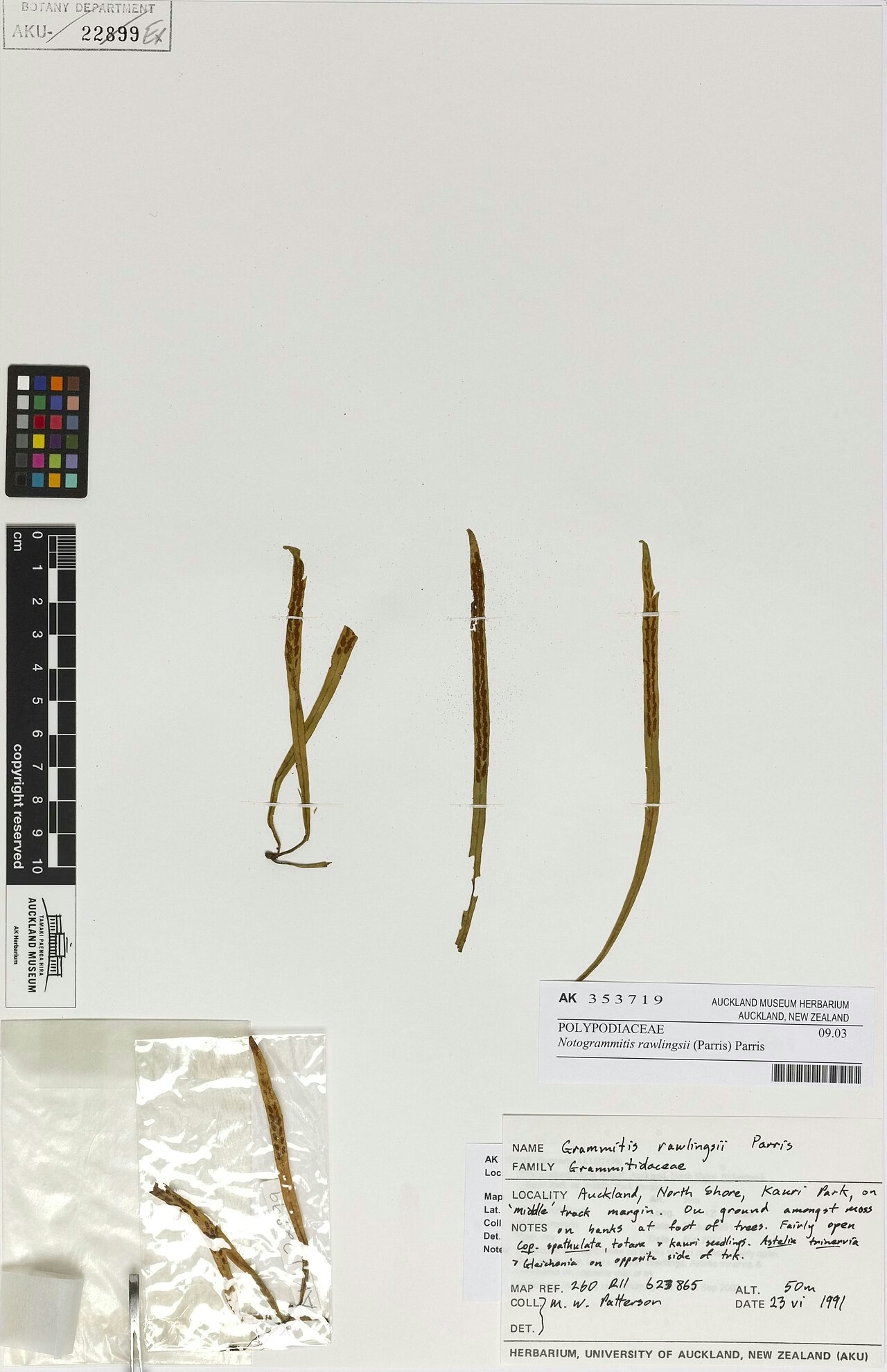
Explore other Notogrammitis species found in New Zealand forests, mountains and offshore islands.
Conservation
Flora of New Zealand records this endemic fern as nationally Not Threatened in the 2023 assessment. NZPCN lists its Otago and Wellington regional assessments as Data Deficient, reflecting limited regional information.
Frequently asked questions
Where are its spore-bearing structures?
The sori are concentrated in the upper half to upper third of the leaf blade, typically in paired, oblique rows.
Does it reach the coast throughout New Zealand?
Its coastal habitat records concern the Chatham and subantarctic islands. On the North and South Islands it is described as a montane fern.
Are visible branching veins an identification feature?
No. The blade's veins are hidden in the published description; its slightly raised lower midrib and arrangement of sori are more useful visible features.
Sources
Identification, range, habitat and naming: Flora of New Zealand fern profile. Conservation, dispersal and propagation: NZ Plant Conservation Network.
Taxonomic context for the southern strap ferns: Flora of New Zealand genus profile. The fern profile cites the 2012 chloroplast DNA study by Perrie and Parris and the 2021 fern flora treatment.
Last updated: