Montia
Montia sessiliflora
Last updated:
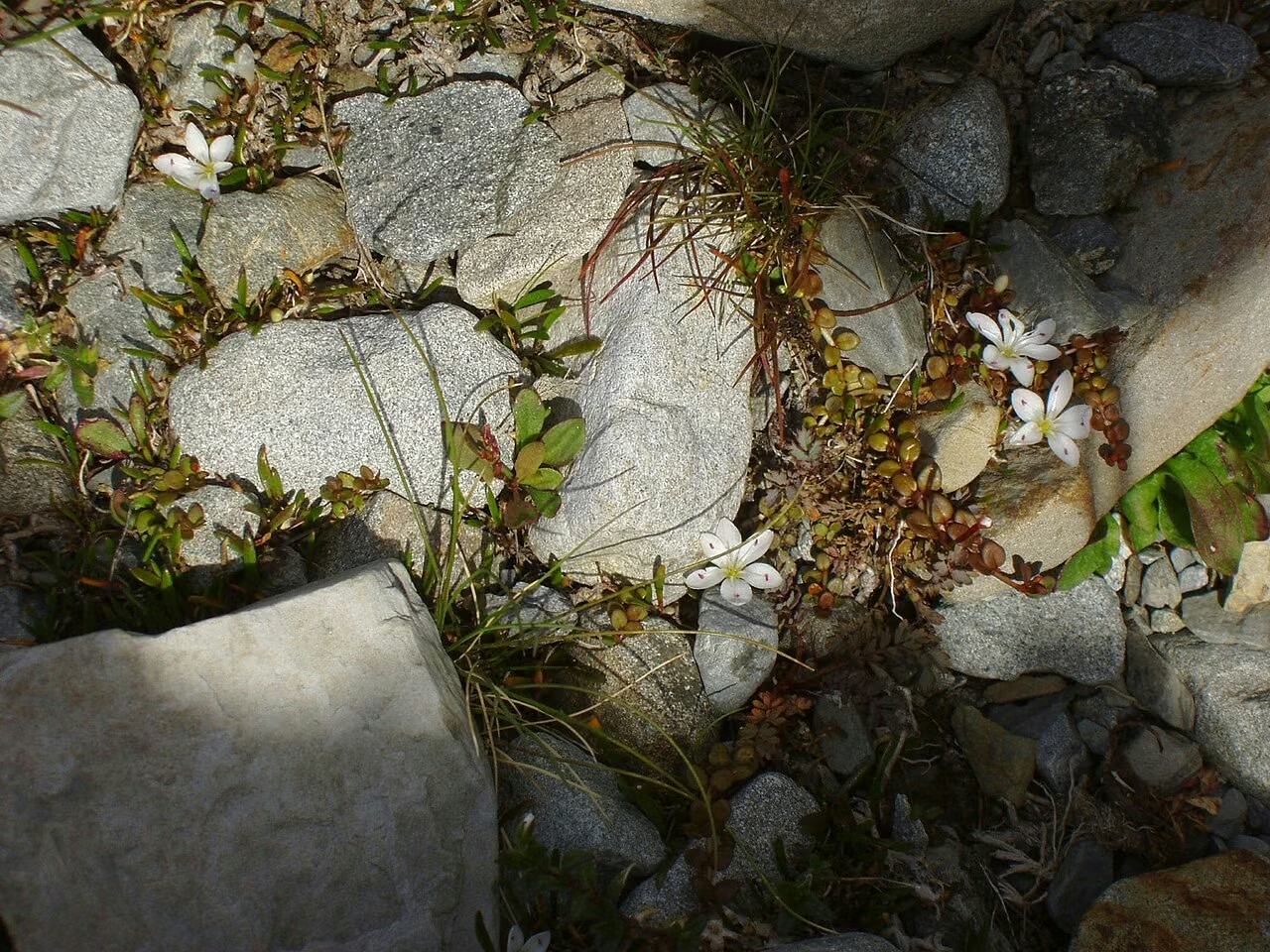
Montia sessiliflora is an endemic mat-forming herb of wet places in the South Island mountains. Its loose to compact mats can reach 80 cm or even several metres across, often weaving through other herbs, and are made up of spathulate leaves up to 40 mm long. From November to February it bears comparatively large white flowers, 10 to 20 mm across, with notched tepals, held without stalks as its name suggests. It grows on wet stream banks, seepages and gravels in tussockland and herbfield, especially in Otago, Canterbury and Southland. It is ranked Not Threatened. Explore more native ground covers in our native plant guide.
Plant Description
Montia sessiliflora is a herb forming loose to compact mats up to 80 cm in diameter, sometimes spreading several metres across, and often intertwined with other herbs. The leaves are spathulate, up to 40 mm long and 4 mm wide, with narrowly to broadly elliptic blades.
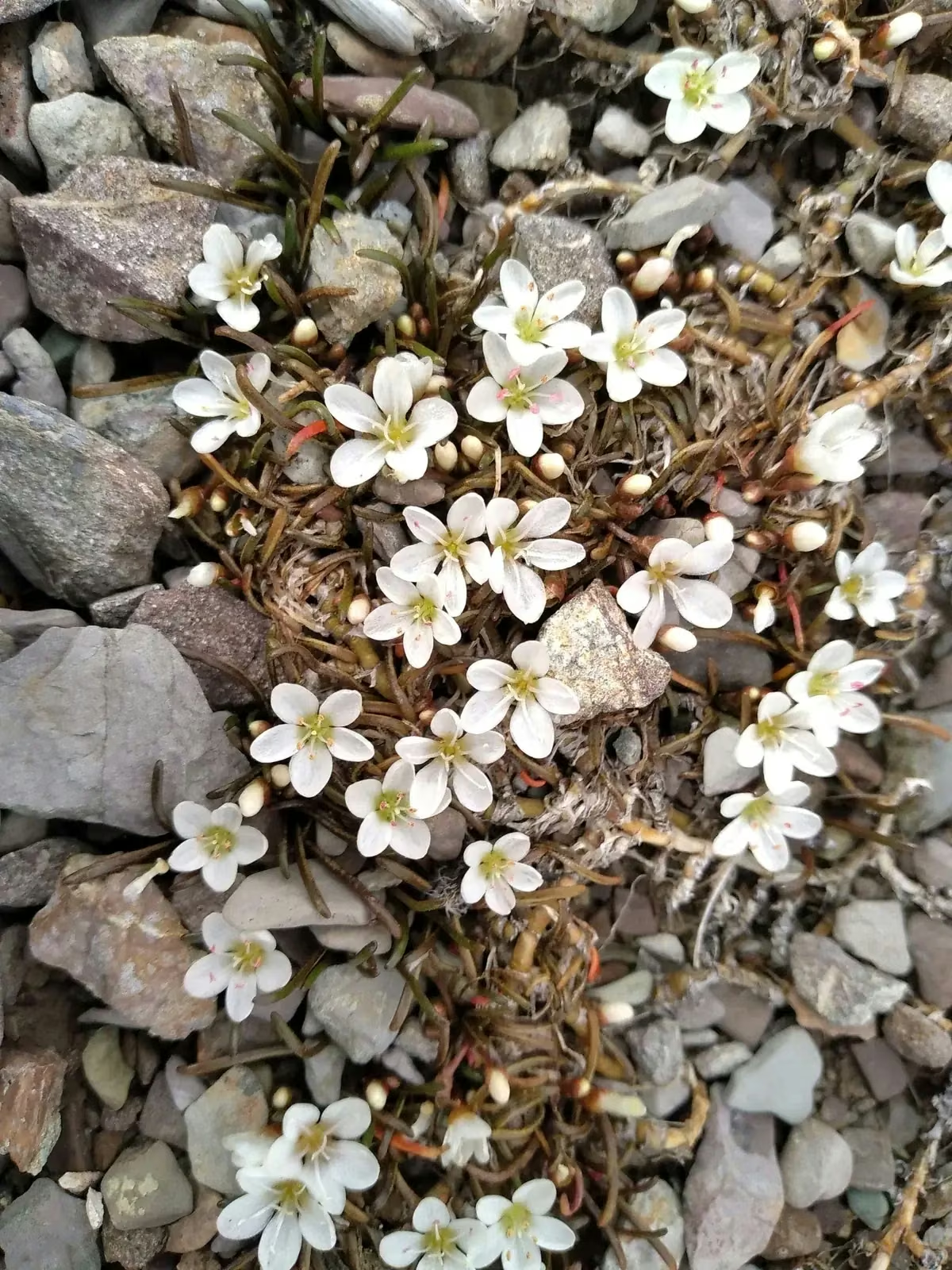
The flowers are among the largest in New Zealand Montia, 10 to 20 mm in diameter, with white tepals that do not overlap and have a conspicuous notch at the apex. As the name says, the flowers are sessile. Flowering is from November to February. The capsule is 2.3 to 2.7 mm long and holds dark brown to black, slightly to moderately wrinkled seeds that ripen from December to March.
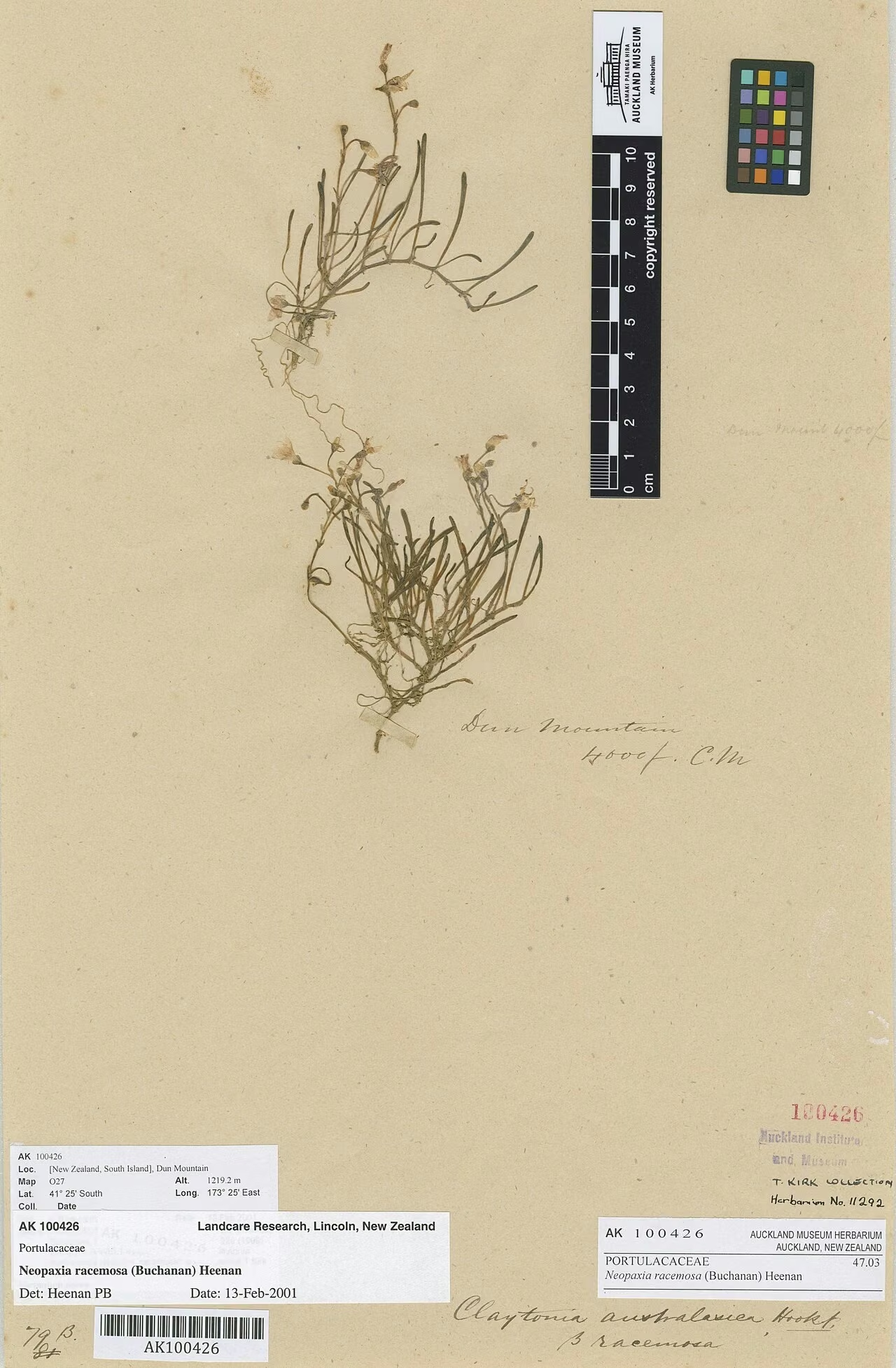
Its broad spathulate leaves and large notched flowers distinguish it from Montia angustifolia, which has strictly linear leaves and smaller overlapping tepals, and from M. racemosa, a tufted plant of Nelson ultramafic scree with narrow leaves and pink-flushed flowers.
Quick Facts
| Scientific Name | Montia sessiliflora |
|---|---|
| Height | Under 0.05 m (prostrate mats) |
| Spread | Mats to 0.8 m, sometimes several metres |
| Water Needs | Wet; streamsides and seepages |
| Light | Full sun to light shade |
| Frost Tolerance | High; montane to alpine |
| Salt Tolerance | No information available |
| Growth Rate | No information available |
| Lifespan | Perennial |
Climate Best Suited to
It suits cold mountain climates with long frosty winters, snow cover and moist summers, from montane valleys up into alpine herbfield.
Regional Suitability
| City | Climate Suitability |
|---|---|
| Auckland | Low |
| Wellington | Low |
| Christchurch | Medium |
| Dunedin | High |
Plant Habitat
Montia sessiliflora is endemic to New Zealand. Its type was collected at the Cardrona River in Otago in 1946, and herbarium specimens come from the Remarkables, the Garvie Mountains, the Hector Mountains and the Torlesse Range near Porters Pass. iNaturalist NZ observations are concentrated in Otago, Canterbury and Southland, including the Old Man Range, Lake Ōhau and Mt Hutt, with scattered records from Tasman and the West Coast.
Specimen labels describe wet banks of small streams, sphagnum in shaded seepages, and gravel beside streams in wet tussockland and herbfield, up into the penalpine zone above 1000 m. NZPCN rates it as a facultative wetland plant, usually found in wetlands but occasionally on drier ground.
Growing Requirements
Soil Requirements
It grows in wet mineral soils, stream gravels and mossy seepages.
- Constantly moist ground
- Gravels, silts and sphagnum
- Open turf or herbfield
Light Requirements
It grows in open tussockland and herbfield and also in darker seepages, so it tolerates some shade.
- Full sun to light shade
- Avoid dense overtopping vegetation
Water Requirements
Water is the key requirement; it grows where seepage or streamflow keeps the ground wet.
- Keep permanently moist
- Ideal beside a trickle or seep
Planting and Establishing
There is no published cultivation guidance for this species. Methods used for related Montia, such as pots kept moist or partly standing in water and kept weed free, are a sensible approach, with cool conditions in summer.
In cool southern gardens, a shaded corner of a bog garden or the edge of a small stream suits its natural preference for wet, mossy ground.
Ecological Role
Montia sessiliflora is a common component of wet places in South Island montane and alpine country, where its mats intertwine with other herbs, mosses and small sedges along streams and in seepages.
Its relatively large white flowers are likely visited by flies and other small alpine insects, but no species-specific pollination or dispersal studies were found.
Uses & Significance
Garden Uses
A choice plant for cool, wet alpine gardens in the south.
- Edges of small streams or trickles
- Moist alpine troughs
- Bog gardens in cool districts
Ecological Value
It helps carpet and stabilise wet ground in mountain herbfields.
- Binds stream gravels and seepage soils
- Flowers provide nectar for alpine insects
- Part of endemic mountain wetland flora
Landscaping Uses
In Otago and Southland gardens with a natural seep or rill, its spreading mats can soften stony edges and provide white flowers through early summer.
Combine it with other low wetland natives that will not overtop it, and avoid hot, dry sites.
Seasonal Care Calendar
Spring
Mats green up as snow melts and stream flows rise.
- Divide cultivated mats
Summer
Large white flowers appear from November to February.
- Keep plants wet in hot spells
Autumn
Capsules ripen through to March, releasing dark seed.
- Collect seed from cultivated plants
Winter
Plants are dormant under frost or snow.
- No action needed
When to Prune and How Much
No pruning is required. This low, mat-forming perennial herb keeps its own neat shape without trimming.
If mats overrun neighbouring plants, pull back or divide the edges in spring, and remove any dead or yellowing stems by hand.
How to Grow Montia
No propagation guidance has been published specifically for Montia sessiliflora. NZPCN records that the closely related M. angustifolia is easily grown in pots partly submerged in water, from division of whole plants and from seed, and this mat-forming, wetland species can be expected to respond the same way. As it is Not Threatened, small amounts of seed may be collected where permitted, but plants should not be dug from conservation land. Raised plants generally do best in cool, humid conditions; in warm northern gardens they are likely to struggle through summer even when kept wet, so this is chiefly a plant for southern growers. Keep a note of where each plant came from.
By Division
Its broad mats, which can spread several metres in the wild, are made of rooting stems that can be separated into independent plants.
- In spring, lift an established cultivated mat
- Cut or tease it into rooted sections
- Pot into a damp, peaty or silty mix
- Keep pots standing in shallow water in a cool, bright place
From Seed
Seed ripens between December and March in small capsules about 2.5 mm long. Sow it fresh and keep it cool and wet.
- Collect capsules as they turn papery
- Sow seed on the surface of a fine, moist mix
- Leave outdoors in a cool shaded spot over winter if germination is slow
- Prick out seedlings into individual pots when they have several leaves
Pests & Diseases
No pests or diseases are recorded for this species.
In lowland gardens, summer heat and drying out are greater risks than pests.
Cultural Significance
No Māori name or traditional Māori use specific to Montia sessiliflora is recorded in the sources consulted.
It was first described by George Simpson as Claytonia australasica var. sessiliflora and later raised to species rank by Peter Heenan, first in Neopaxia and then in Montia. The genus honours Italian botanist Giuseppe Monti (1682 to 1760).
Bonus Tip
On a summer tramp in Central Otago ranges, check the wettest seepages and stream edges for white starry flowers sitting flat on a green mat; a notched tip on each separate tepal confirms Montia sessiliflora.
Related Plants
Explore other native plants that share similar characteristics or habitats with Montia (Montia sessiliflora), offering further insights into New Zealand's diverse flora. These related species provide context and opportunities for complementary planting in your garden.
Plant Conservation
Montia sessiliflora has been ranked Not Threatened in every assessment since 2004, and Otago lists it as Regionally Not Threatened.
Protecting mountain wetlands and seepages from drainage, stock trampling and weed invasion keeps its habitat secure.
Frequently Asked Questions
What does sessiliflora mean?
It means with unstalked flowers, referring to the sessile flowers of this Montia that sit directly among the leaves.
Where can you see Montia sessiliflora?
It grows beside streams, in seepages and on wet gravels in montane to alpine tussockland and herbfield, especially in Otago, Canterbury and Southland, including ranges such as the Remarkables, Garvie Mountains and Old Man Range.
How do you recognise Montia sessiliflora?
Look for broad mats of spathulate leaves up to 40 mm long and 4 mm wide, and white flowers 10 to 20 mm across whose separate tepals have a conspicuous notch at the tip.
Sources and Further Reading
The botanical, growing, and conservation details for Montia (Montia sessiliflora) on this page draw on the New Zealand plant references below. Consult them for full technical records and the latest distribution data.