Montia
Montia campylostigma
Last updated:
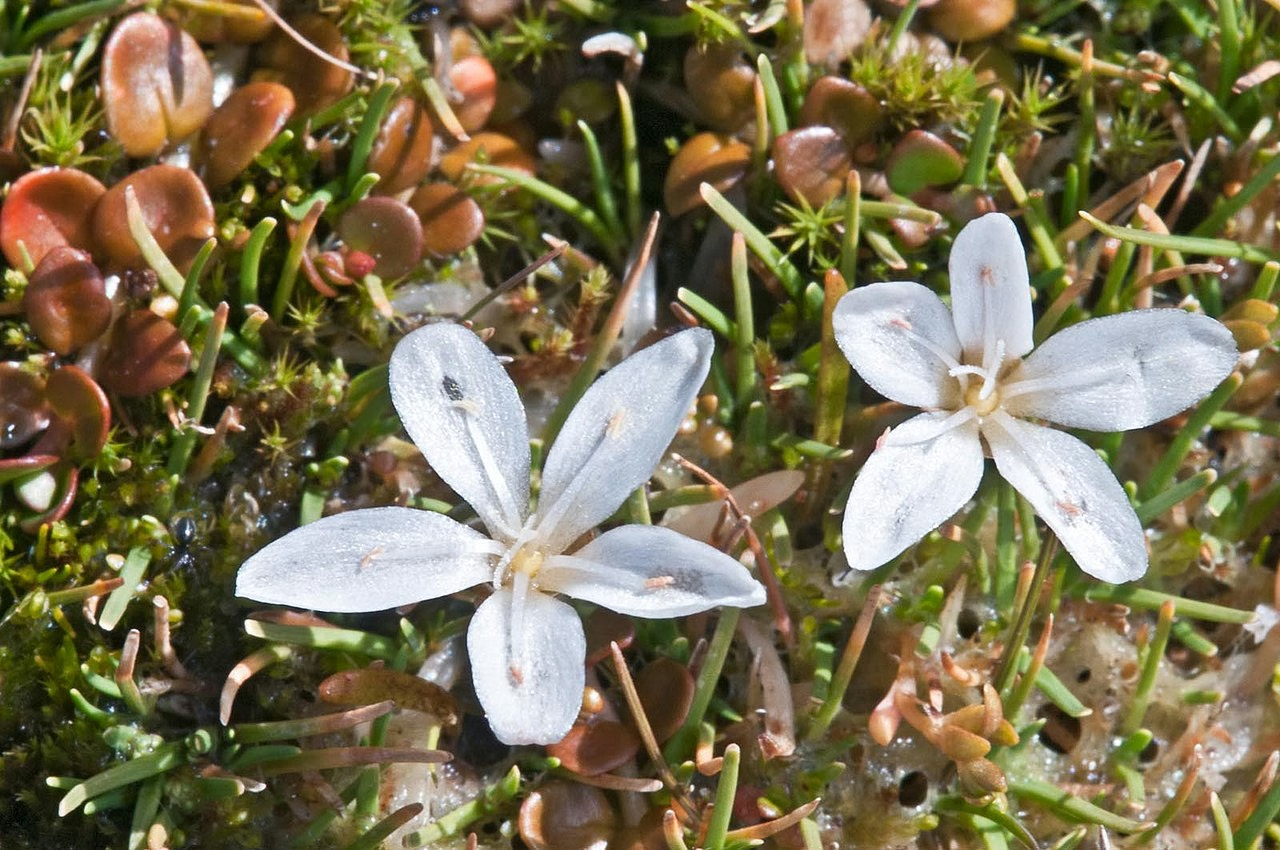
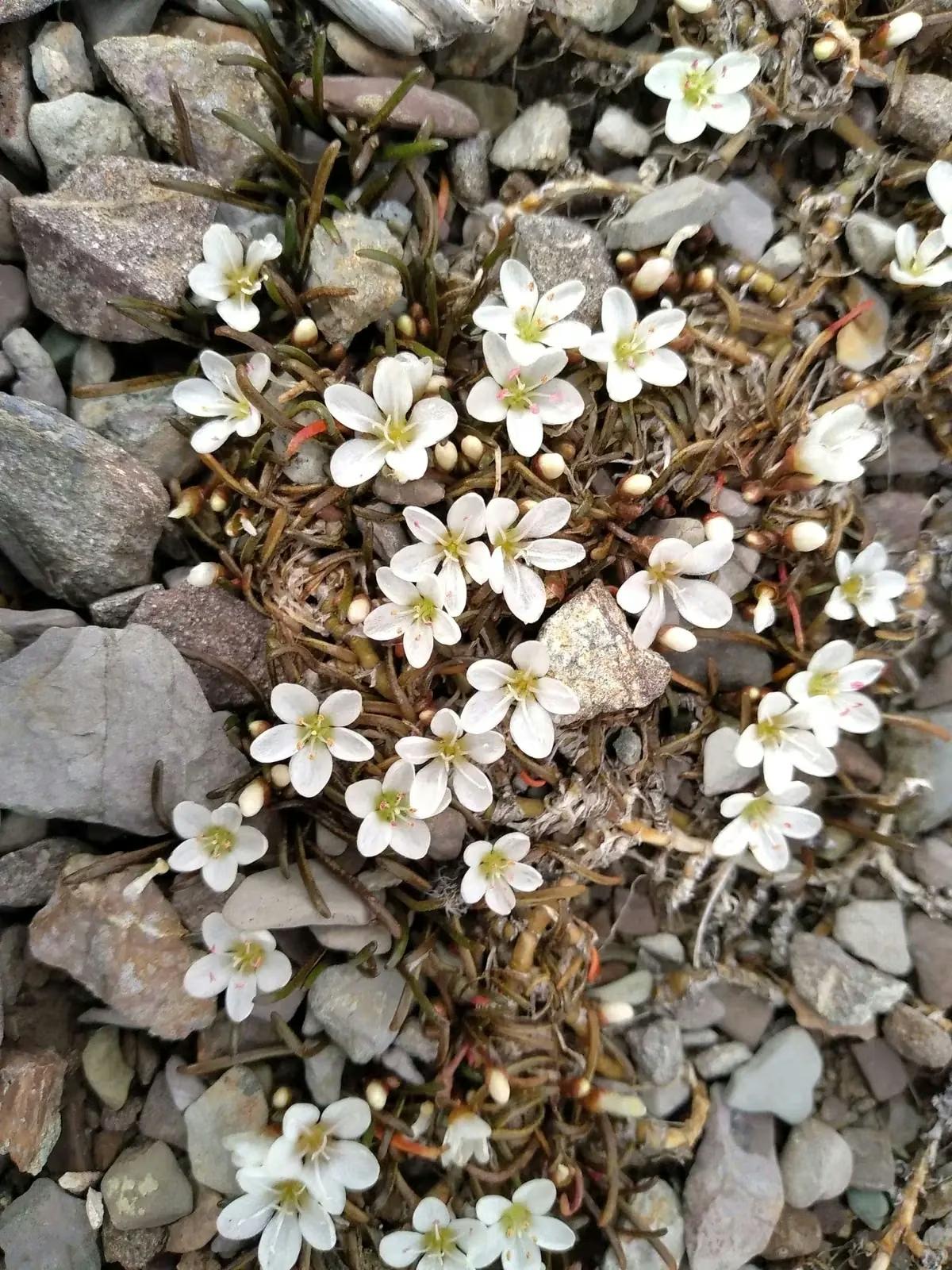
Montia campylostigma is a small endemic herb of the family Montiaceae that forms loose to compact mats up to 70 cm across. Its narrowly lanceolate to almost linear, slightly glossy leaves are up to about 32 mm long, and between October and February it bears white flowers 8 to 12 mm in diameter. Its name refers to its curved stigma branches, which cross over one another before spreading. Herbarium records come from streamsides and swampy ground on Mt Taranaki and in Tongariro National Park. It was ranked At Risk - Naturally Uncommon in 2023. Explore more native ground covers in our native plant guide.
Plant Description
Montia campylostigma is a herb forming loose to compact mats up to 70 cm in diameter. Its leaves are up to 32 mm long (occasionally 40 mm) and about 1.6 mm wide, narrowly lanceolate to nearly linear, and slightly glossy.
The flowers are 8 to 12 mm in diameter with white tepals. The style is 2.0 to 2.5 mm long, slightly bulbous at the base and white flushed green, and the stigmatic branches, 1.0 to 1.8 mm long, curve across each other before spreading, the feature behind its name. The capsule holds brown to red-brown seeds. Flowering is from October to February and fruiting from November to April.
It closely resembles other New Zealand Montia species, and the Flora of New Zealand separates them using leaf shape, flower size and stigma and seed characters. Montia sessiliflora, for example, has broader, spathulate leaves and larger, notched flowers, while M. angustifolia of eastern South Island lakeshores has strictly linear leaves and smaller seeds.
Quick Facts
| Scientific Name | Montia campylostigma |
|---|---|
| Height | Under 0.05 m (prostrate mats) |
| Spread | Mats up to 0.7 m across |
| Water Needs | Wet; streamsides and swampy ground |
| Light | Full sun to light shade |
| Frost Tolerance | High; a montane to subalpine plant |
| Salt Tolerance | No information available |
| Growth Rate | No information available |
| Lifespan | Perennial |
Climate Best Suited to
It grows in the cool, wet montane climate of the central North Island volcanoes, with frequent rain and frosty winters.
Regional Suitability
| City | Climate Suitability |
|---|---|
| Auckland | Low |
| Wellington | Medium |
| Christchurch | Low |
| Dunedin | Medium |
Plant Habitat
Montia campylostigma is endemic to New Zealand. Its holotype was collected beside the Stony River on Mt Taranaki at about 3000 feet (around 900 m), and other herbarium specimens come from Ahukawakawa Swamp on Taranaki and from the Mangaturuturu valley on Mt Ruapehu and the Mangahouhounui valley in Tongariro National Park.
Specimen labels indicate streamside and swampy sites in montane to subalpine country. NZPCN rates it as a facultative wetland plant, meaning it occurs in both wetland and non-wetland settings. A detailed published account of its full range and habitat could not be found.
Growing Requirements
Soil Requirements
Its recorded sites are wet volcanic gravels, stream margins and swampy ground.
- Damp to wet soils
- Volcanic gravels and stream sediments
- Open sites with little competition
Light Requirements
Mat-forming Montia are plants of open, low vegetation; specific light requirements for this species are not documented.
- Open sites in full sun or light shade
- Avoid dense overtopping vegetation
Water Requirements
As a plant of streamsides and swamps it should be kept constantly moist.
- Never allow to dry out
- Tolerates wet, seasonally flooded ground
Planting and Establishing
There is no published cultivation guidance for this species. Related New Zealand Montia are grown in pots standing partly in water and kept weed free, and that approach is the most sensible starting point.
Because it is Naturally Uncommon and confined to national parks, wild plants must not be collected; material for any conservation planting should come through the Department of Conservation.
Ecological Role
Montia campylostigma forms mats among other low herbs on wet montane ground, where open conditions are maintained by flooding, frost and the volcanic substrate.
Its white flowers presumably attract small insects, but no pollination or dispersal studies specific to this species were found.
Uses & Significance
Garden Uses
This is a conservation and botanical-interest plant, not a general garden subject.
- Specialist collections of New Zealand Montia
- Wet alpine troughs in cool districts
Ecological Value
It adds to the endemic plant diversity of Mt Taranaki and the Tongariro volcanoes.
- Part of montane wetland herbfield
- Endemic to the central North Island volcanic region on current records
Landscaping Uses
Outside botanical collections it has no established landscaping role. In a cool, wet garden a pot or trough kept standing in water could display its mats and white flowers.
Visitors to Egmont and Tongariro national parks are better rewarded looking for it along stream edges in early summer than trying to grow it.
Seasonal Care Calendar
Spring
Flowering begins in October as mats resume growth.
- Look for it along montane streams
Summer
Flowering continues to February and capsules develop.
- Keep cultivated plants wet
Autumn
Capsules ripen through to April, releasing brown to red-brown seed.
- Seed collection only under permit
Winter
Growth is dormant or slow under frost and snow.
- Protect potted plants from drying winds
When to Prune and How Much
No pruning is needed. Remove any weeds or taller plants that invade the mat.
Congested potted mats can be divided rather than cut back.
How to Grow Montia
No propagation information has been published specifically for Montia campylostigma. Its close relative M. angustifolia is recorded by NZPCN as easily grown in pots partly submerged in water, from division of whole plants and from seed, and the same methods are likely to work for this similar mat-forming species. Any propagation should be for conservation purposes and use material obtained with permission, since the known populations lie within national parks. Anyone attempting to grow it should keep the plants cool and permanently moist, as in their montane streamside habitat, and record the origin of all stock. Material from Mt Taranaki and from the Tongariro volcanoes is best kept separate, since the two areas may hold genetically distinct populations, and surplus plants should be offered back to conservation programmes rather than released.
By Division
As a mat-forming herb, it can be expected to divide into rooted sections. This is the most reliable way to multiply an existing cultivated plant.
- Lift the mat from its pot in spring
- Separate it into pieces that each have roots
- Pot into a moist, low-fertility mix
- Stand pots in shallow water and keep weed free
From Seed
Capsules ripen between November and April. Seed of related Montia species germinates when sown fresh and kept constantly moist.
- Collect ripe capsules from cultivated plants
- Sow seed on the surface of a fine, damp mix
- Keep the tray wet, ideally standing in water
- Prick out seedlings when large enough to handle
Pests & Diseases
No pests or diseases are recorded for this species.
As with other small wetland herbs, competition from taller weeds and damage to wet ground are likely to be the greatest risks.
Cultural Significance
No Māori name or traditional Māori use specific to Montia campylostigma is recorded in the sources consulted.
The genus honours Italian botanist Giuseppe Monti (1682 to 1760). The species was described by Peter Heenan in 1999 as Neopaxia campylostigma and later moved to Montia.
Bonus Tip
To tell this species from other New Zealand Montia in the field, use a hand lens on an open flower: the white stigma branches crossing over one another before spreading are the character the name is based on.
Related Plants
Explore other native plants that share similar characteristics or habitats with Montia (Montia campylostigma), offering further insights into New Zealand's diverse flora. These related species provide context and opportunities for complementary planting in your garden.
Small Onion Orchid
Microtis oligantha
Onion-Leaved Orchid
Microtis parviflora
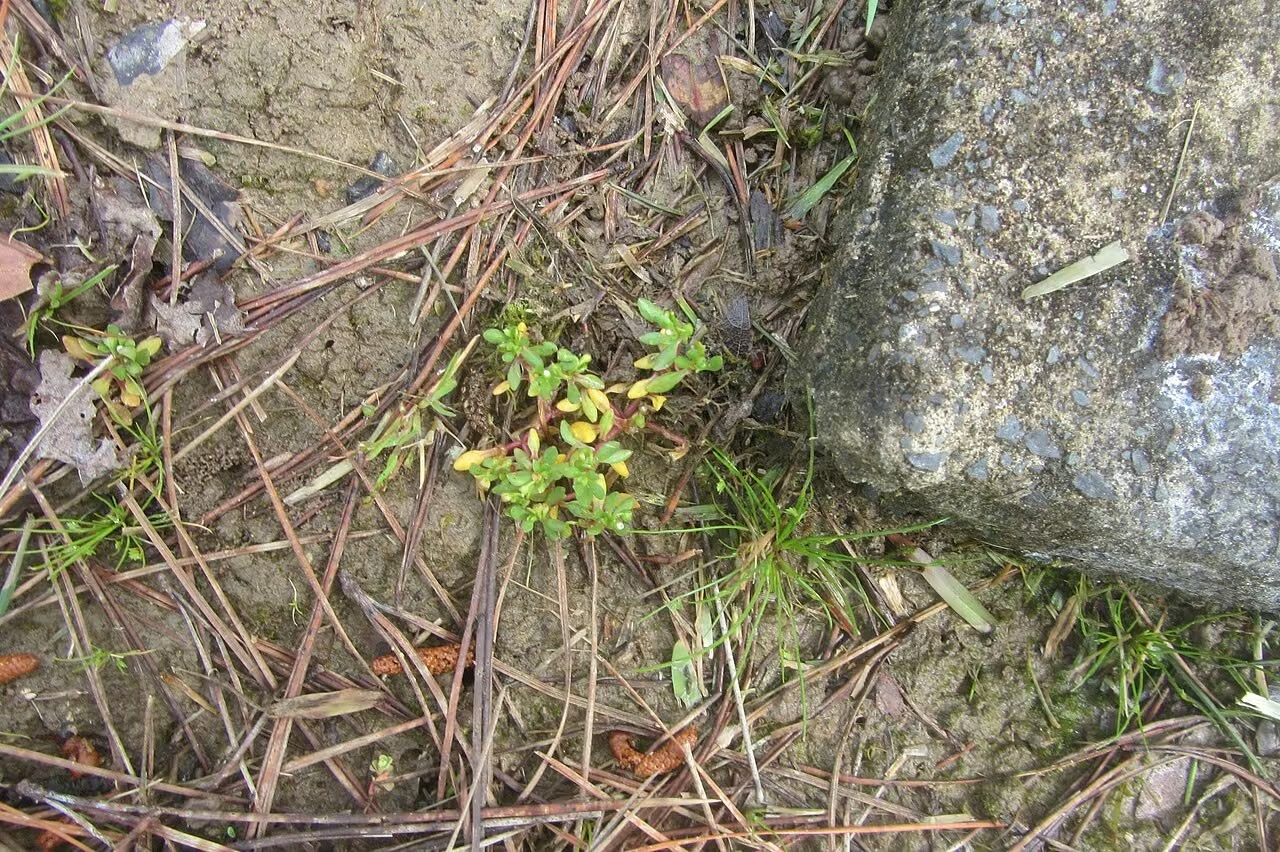
Montia angustifolia
Montia angustifolia
Blinks
Montia fontana subsp. fontana
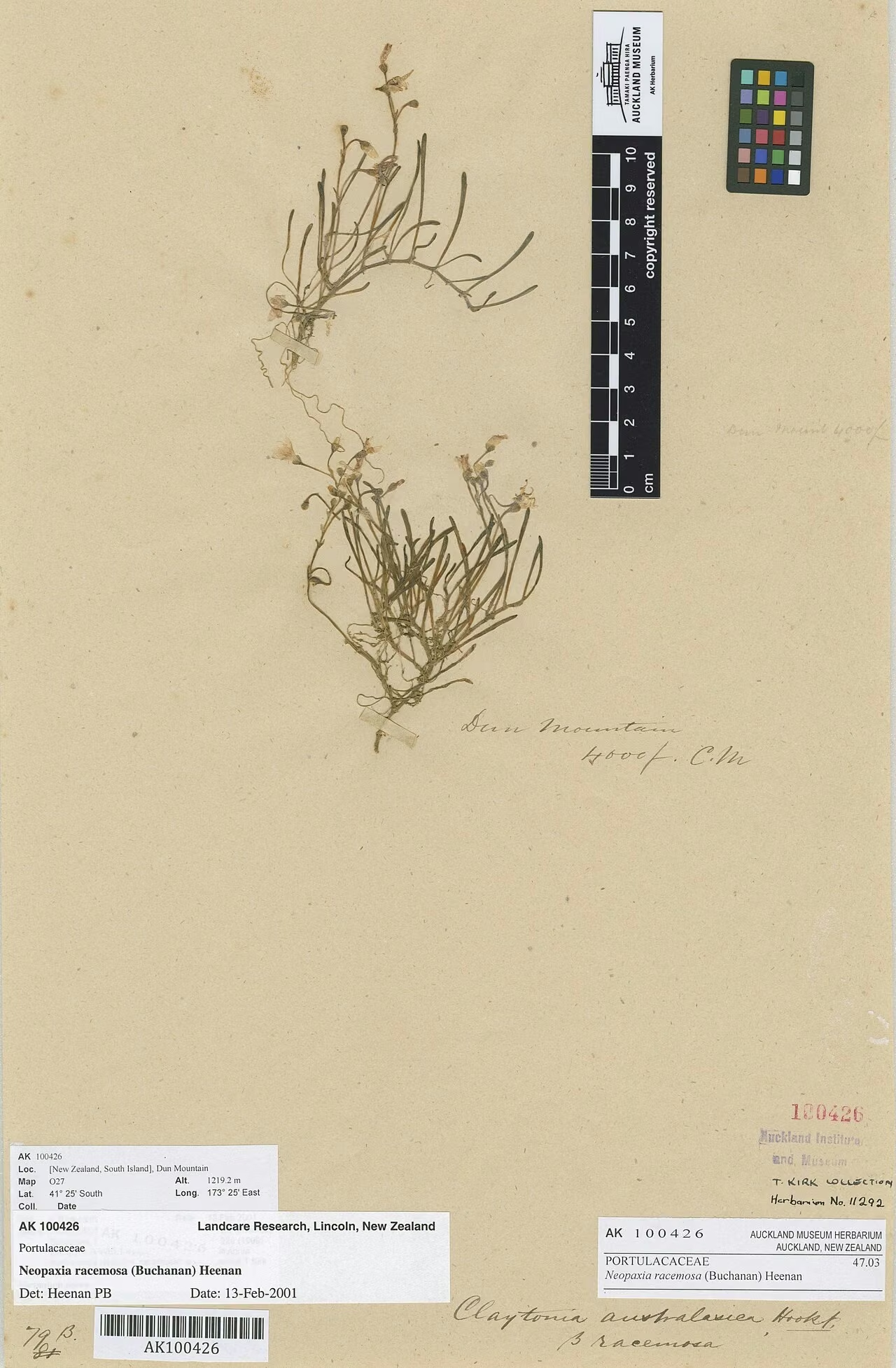
Montia racemosa
Montia racemosa
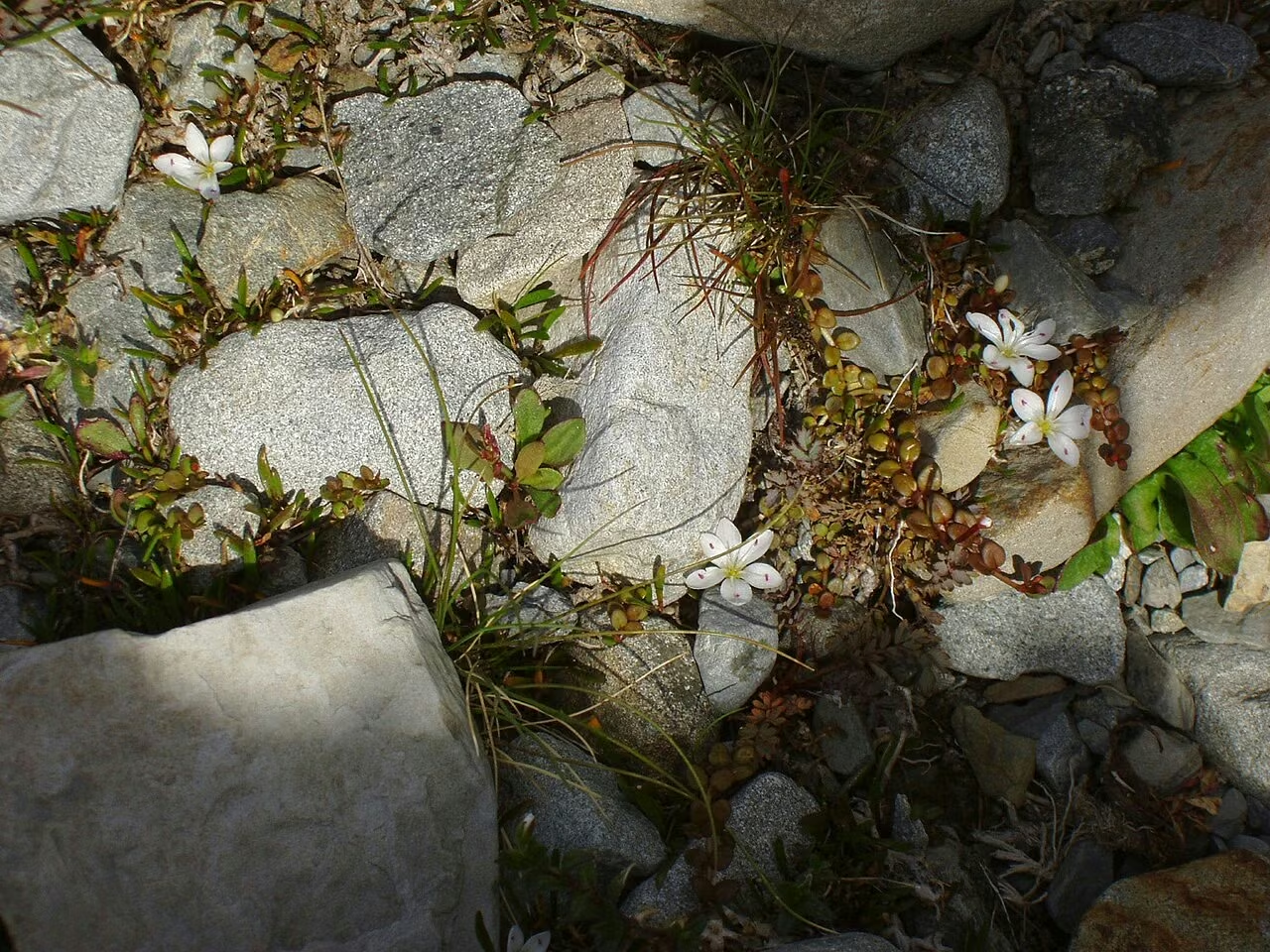
Montia sessiliflora
Montia sessiliflora
Montigena novae zelandiae
Montigena novae zelandiae
Calycina Plant
Calycina Plant
Plant Conservation
Montia campylostigma was assessed as Not Threatened from 2004 to 2017 but was ranked At Risk - Naturally Uncommon in 2023 (qualifiers Sp, DPR, DPS, DPT), and Otago lists it as Regionally Data Deficient.
Its known sites are within Egmont and Tongariro national parks, where protecting wetlands and streamsides from weeds and trampling is the main safeguard. Further survey would clarify its true range.
Frequently Asked Questions
What does campylostigma mean?
It refers to the curved stigma. The Flora of New Zealand describes the white stigma branches as 1.0 to 1.8 mm long and curved across each other before they spread.
Where is Montia campylostigma found?
Herbarium specimens come from the central North Island volcanoes, including Stony River and Ahukawakawa Swamp on Mt Taranaki and the Mangaturuturu and Mangahouhounui valleys in Tongariro National Park.
Was Montia campylostigma always in the genus Montia?
No. It was described as Neopaxia campylostigma by Peter Heenan, and New Zealand plants were earlier lumped under Neopaxia australasica, a name now applied to an Australian species. Heenan later transferred it to Montia.
Sources and Further Reading
The botanical, growing, and conservation details for Montia (Montia campylostigma) on this page draw on the New Zealand plant references below. Consult them for full technical records and the latest distribution data.