Montia
Montia angustifolia
Last updated:
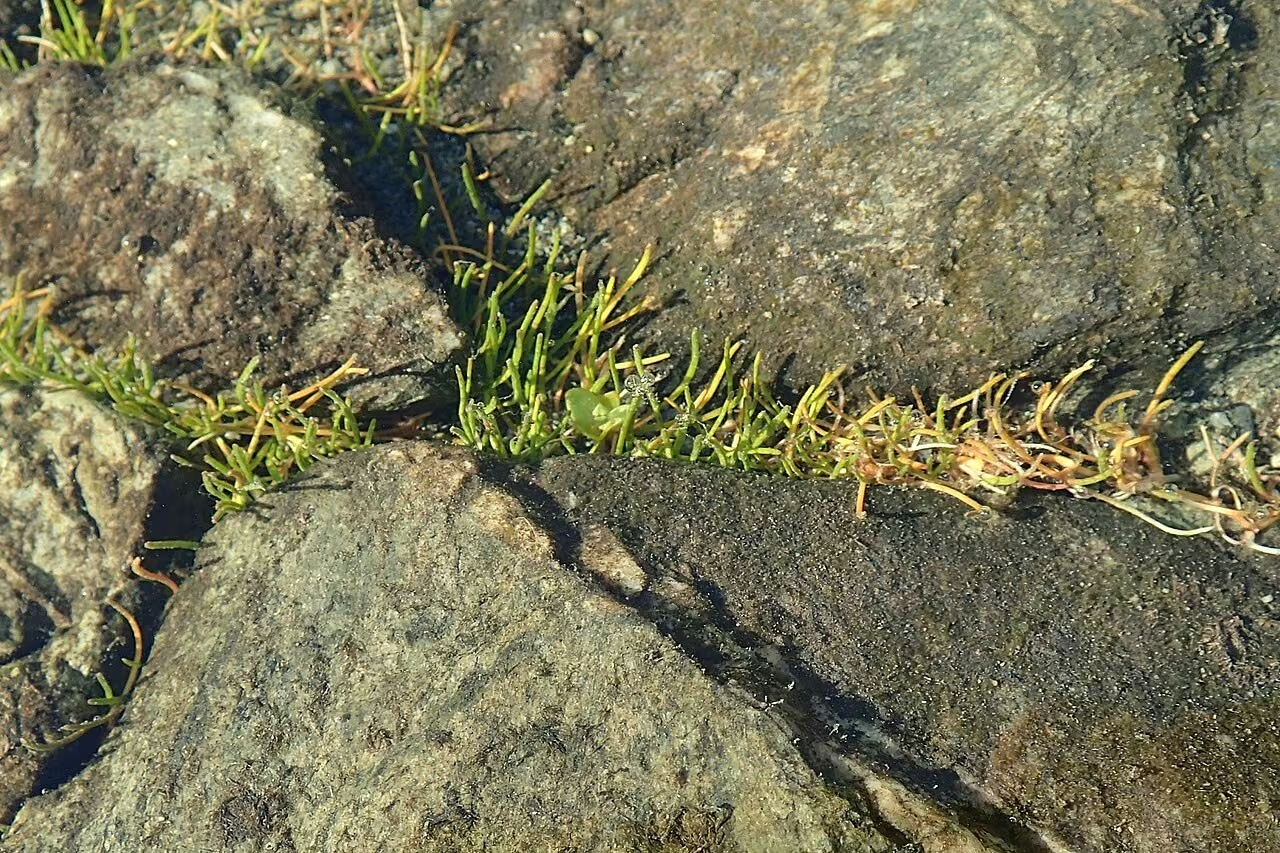
Montia angustifolia is a small, mat-forming endemic herb of lake and tarn shores in the eastern South Island. Its stems and very narrow, linear leaves form loose to compact mats that often weave through other turf plants, and the leaves mature to red-brown or orange-red. From November to February it produces white flowers 6 to 10 mm across. It occurs east of the main divide from Nelson to Southland, with its type locality on the Lake Tekapo foreshore. It is ranked At Risk - Declining because its specialised turf habitat has been heavily modified and invaded by weeds. Explore more native ground covers in our native plant guide.
Plant Description
Montia angustifolia is a low herb in the family Montiaceae that forms loose to compact mats of creeping stems and leaves, frequently intertwined with other turf herbs. The leaves are linear, usually up to 30 mm long (occasionally to 90 mm) and only about 1.2 to 1.5 mm wide, and they mature to a red-brown or orange-red colour.
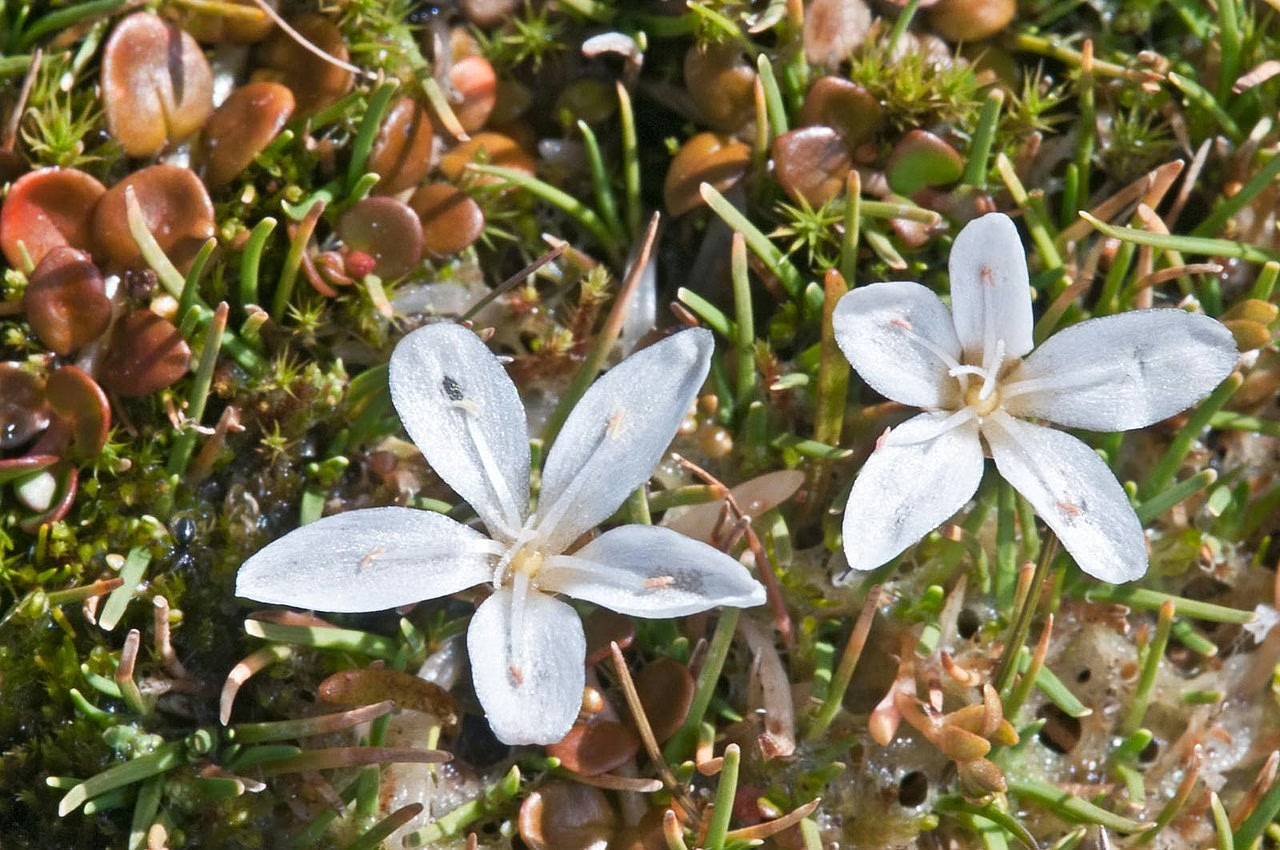
The flowers are 6 to 10 mm in diameter, with broadly elliptic to obovate white tepals that usually overlap. Flowering is from November to February and fruit follows from December to March. The seeds are 0.9 to 1.0 mm long, slightly to moderately wrinkled and dark brown to black.
It is distinguished from the other New Zealand Montia species by its uniformly narrow leaves and smaller seeds. Montia racemosa of the Nelson ultramafic screes has slightly broader, elliptic to lanceolate leaves and larger seeds, while M. sessiliflora has broader spathulate leaves and larger, notched flowers.
Quick Facts
| Scientific Name | Montia angustifolia |
|---|---|
| Height | Under 0.05 m (prostrate mats) |
| Spread | Loose to compact mats among other turf herbs |
| Water Needs | Wet; seasonally flooded lake margins |
| Light | Full sun |
| Frost Tolerance | High; a plant of inland basins with hard frosts |
| Salt Tolerance | No information available |
| Growth Rate | Moderate |
| Lifespan | Perennial |
Climate Best Suited to
It suits cold, continental inland basins with hot summers and frosty winters, where lake and tarn levels rise and fall through the year.
Regional Suitability
| City | Climate Suitability |
|---|---|
| Auckland | Low |
| Wellington | Low |
| Christchurch | Medium |
| Dunedin | Medium |
Plant Habitat
This species is endemic to the South Island, east of the main divide from Nelson to Southland. iNaturalist NZ records come mostly from Canterbury, including the Castle Hill basin and the Tekapo and Glentanner areas of the Mackenzie Basin, with some Otago records. Its distribution is sporadic.
It is an inhabitant of the marginal turf communities of lakes and tarns, the short, seasonally flooded herbfield on gently shelving shores where water levels fluctuate. These turfs support many small specialist herbs and are easily lost to drainage, damming, grazing and invasion by taller weeds.
Growing Requirements
Soil Requirements
It grows in the fine, damp silts, sands and gravels of lake and tarn shores.
- Permanently moist to seasonally flooded ground
- Open turf with low competition
- Low-fertility substrates
Light Requirements
As a turf plant it needs full sun and is quickly lost when taller plants shade it.
- Full sun
- Keep competing grasses short
Water Requirements
NZPCN notes it grows easily in pots partially submerged in water, reflecting its seasonally inundated lakeshore habitat.
- Keep wet at all times in cultivation
- Tolerates periodic submergence
Planting and Establishing
In cultivation it is best grown in a pot standing in water, kept weed free, in full sun. A shallow tray or the margin of a small pond with fluctuating levels suits it.
Restoration planting should use locally sourced material and only go into suitable intact lakeshore turf, where weeds are controlled.
Ecological Role
Montia angustifolia is part of the specialised turf communities of eastern South Island lakes and tarns, where water levels rise and fall and only small, low-growing plants persist. Its mats intertwine with other turf herbs, together forming a dense, short sward.
Its small white flowers are open to insect visitors, but no studies of its pollinators or seed dispersal could be found in the sources consulted.
Uses & Significance
Garden Uses
A plant for specialist native wetland collections and lakeshore restoration.
- Pots stood in water
- Edges of a sunny alpine-style pond
- Conservation collections of threatened turf plants
Ecological Value
It is one of the characteristic endemic herbs of eastern South Island lakeshore turf.
- Part of a threatened, specialised turf community
- Helps bind fine lakeshore sediments
- Indicator of intact, weed-free lake margins
Landscaping Uses
In a constructed wetland or pond in Canterbury or Otago, Montia angustifolia can be used as a low carpet on the gently sloping, sunny shore that is flooded in winter and exposed in summer.
Pair it with other low native turf plants rather than with tall sedges or rushes that would overtop it.
Seasonal Care Calendar
Spring
New shoots grow as lake levels begin to fall and soils warm.
- Divide plants in pots
Summer
White flowers appear from November to February.
- Keep pots standing in water
Autumn
Capsules ripen through to March; leaves are red-brown to orange-red.
- Collect seed from ripe capsules
Winter
Growth slows and wild plants may be submerged.
- Weed pots and margins
When to Prune and How Much
No pruning is required. The main task in cultivation is keeping pots and margins free of weeds, which NZPCN highlights as part of successful growing.
Old, congested mats can be refreshed by dividing them.
How to Grow Montia
NZPCN reports that Montia angustifolia is easily grown in pots partially submerged in water and kept weed free, and that plants can be grown both by division of whole plants and from seed. Because it is At Risk - Declining, material should come from plants already in cultivation or be collected only with the landowner's and Department of Conservation's permission, and wild populations should not be stripped. Plants raised this way are valuable for conservation collections and for reintroduction to restored lakeshore turf, so record the source population of every pot and keep stock from different lakes separate.
By Division
Mats of creeping stems can be split into smaller pieces, each with roots attached. This is the quickest way to bulk up stock, and pieces establish readily when kept constantly wet.
- Lift a healthy mat from its pot in spring or early summer
- Gently tease it into rooted portions
- Pot each piece into a damp, low-fertility mix
- Stand the pots in shallow water in full sun and keep them weed free
From Seed
Seed ripens from December to March inside small capsules. The seeds are small and dark, about 1 mm long, and are best sown fresh.
- Collect capsules as they ripen and dry them on paper
- Sow seed on the surface of a fine, moist mix
- Keep the tray constantly damp, standing in water if possible
- Prick seedlings out once they have several leaves
Pests & Diseases
No particular insect or disease pests are recorded for this species. In pots, weeds are the main problem and should be removed promptly.
In the wild, taller weeds invading lake margins, along with habitat modification, are the key threats.
Cultural Significance
No Māori name or traditional Māori use specific to Montia angustifolia is recorded in the sources consulted.
The genus Montia honours Italian botanist Giuseppe Monti (1682 to 1760), and angustifolia means narrow-leaved. It was described by New Zealand botanist Peter Heenan.
Bonus Tip
If you are surveying a lake edge for this plant, go in summer when water levels have dropped and the white flowers are open; the red-brown linear leaves are easy to mistake for a fine grass until you find a flower.
Related Plants
Explore other native plants that share similar characteristics or habitats with Montia (Montia angustifolia), offering further insights into New Zealand's diverse flora. These related species provide context and opportunities for complementary planting in your garden.
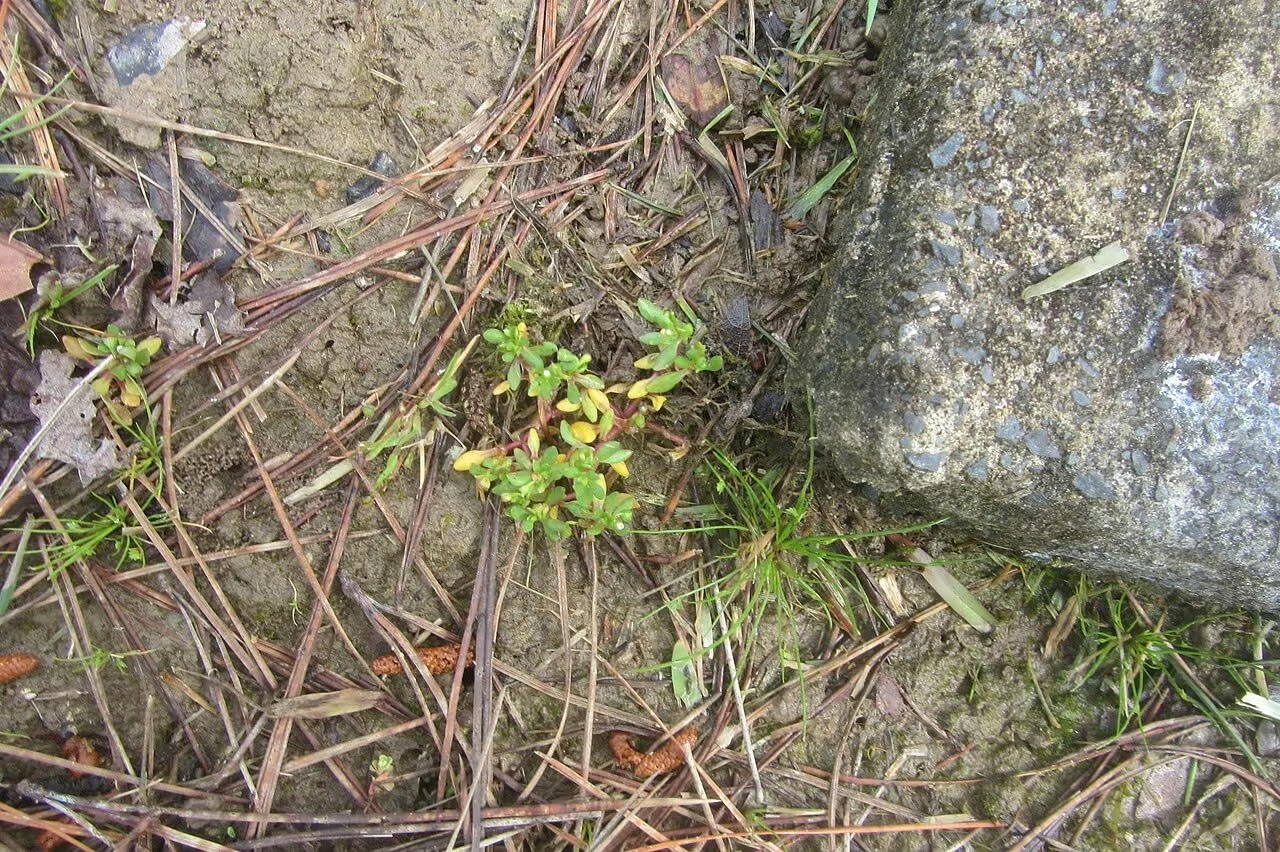
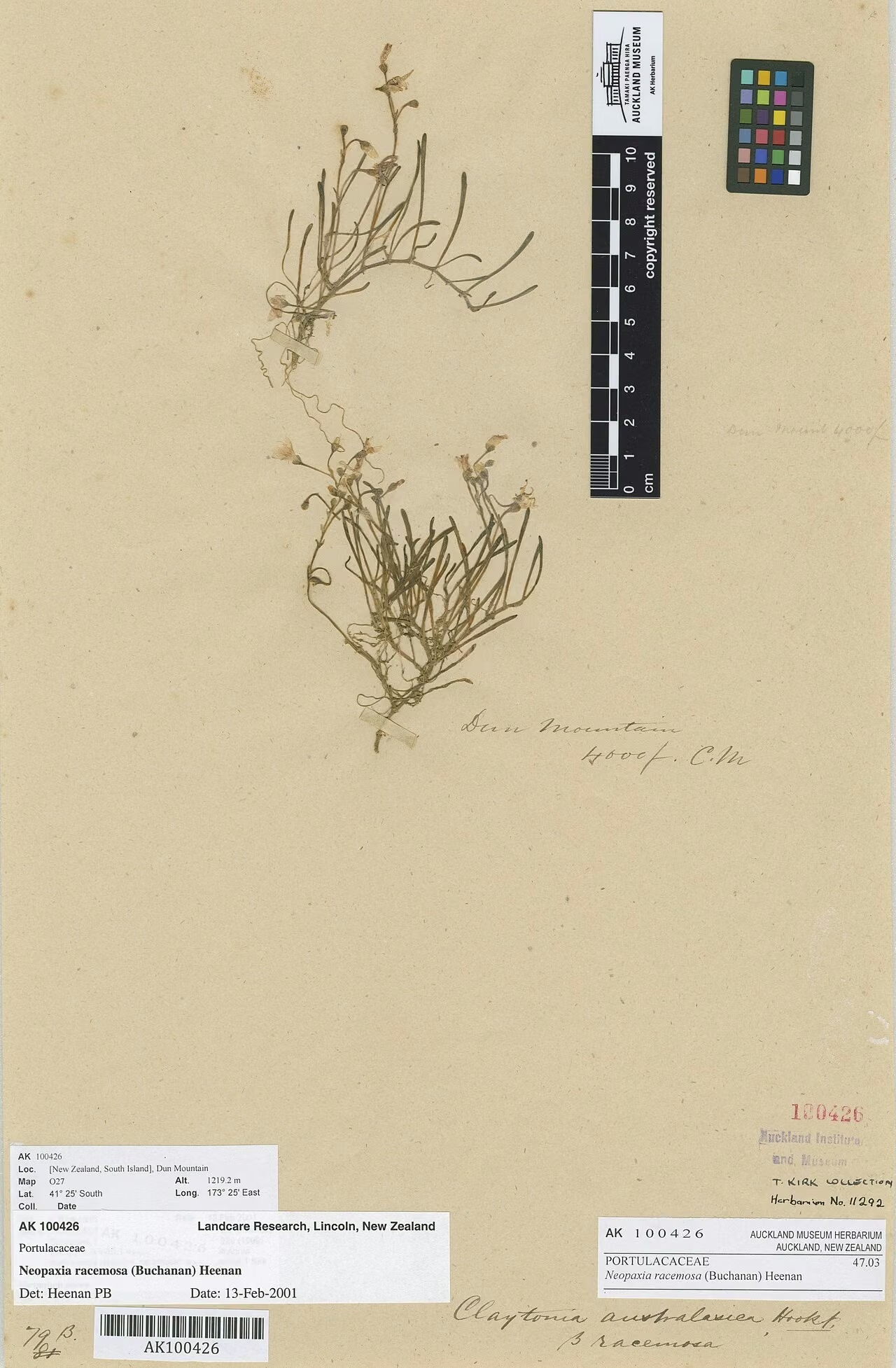
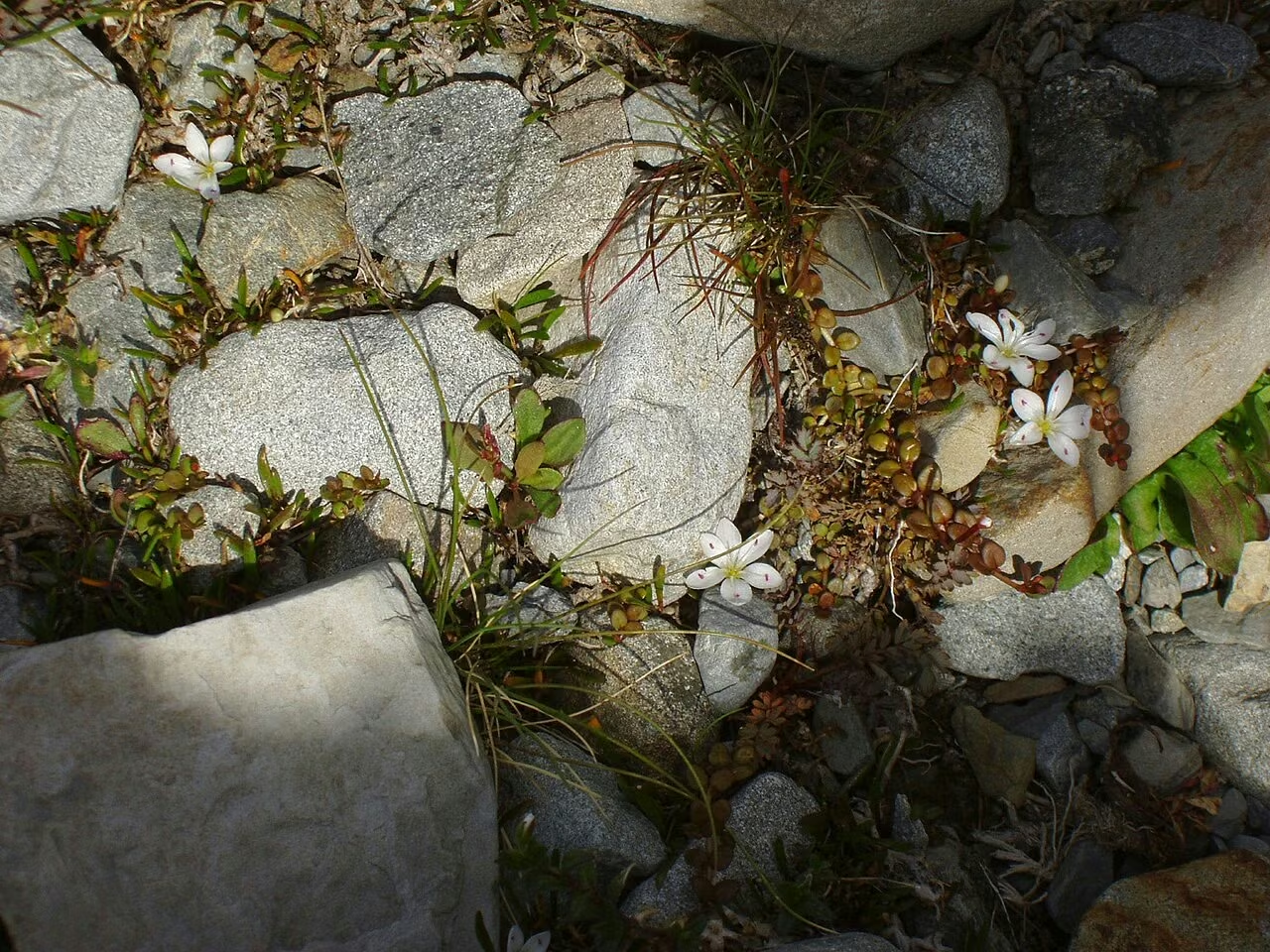
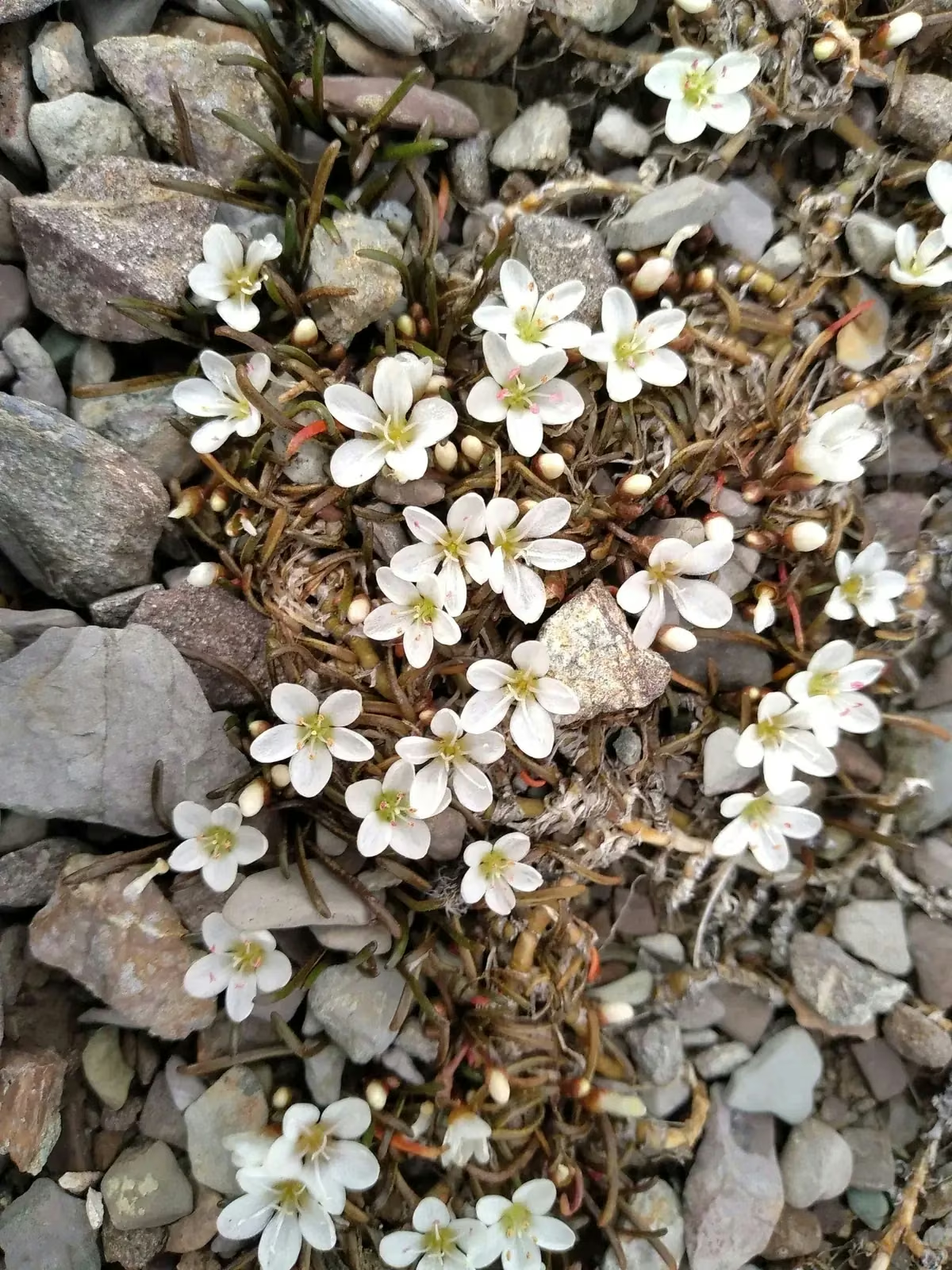
Plant Conservation
Montia angustifolia is ranked At Risk - Declining (2023, qualifiers Sp, DPR, DPS, DPT, RR), and Otago lists it as Regionally Endangered. It has specific habitat requirements and a sporadic distribution, and many pre-1980 collection sites are now heavily modified or invaded by taller weeds.
Protecting lakeshore and tarn turf from drainage, stock damage and weeds, and maintaining natural water-level fluctuations, are the most important actions.
Frequently Asked Questions
Where does Montia angustifolia grow?
It is endemic to the South Island east of the main divide, from Nelson to Southland, in the low turf communities around the margins of lakes and tarns, such as the Lake Tekapo foreshore where it was first collected.
How do you identify Montia angustifolia?
Look for a low mat with uniformly narrow, linear leaves up to about 30 mm long and barely over 1 mm wide, white flowers 6 to 10 mm across, and small dark seeds about 1 mm long, smaller than in other New Zealand Montia.
Why is Montia angustifolia declining?
NZPCN reports that many of the sites where it was collected before 1980 are now heavily modified or invaded by taller weeds, which smother the short lakeshore turf it depends on.
Sources and Further Reading
The botanical, growing, and conservation details for Montia (Montia angustifolia) on this page draw on the New Zealand plant references below. Consult them for full technical records and the latest distribution data.