Morelotia
Morelotia affinis
Last updated:
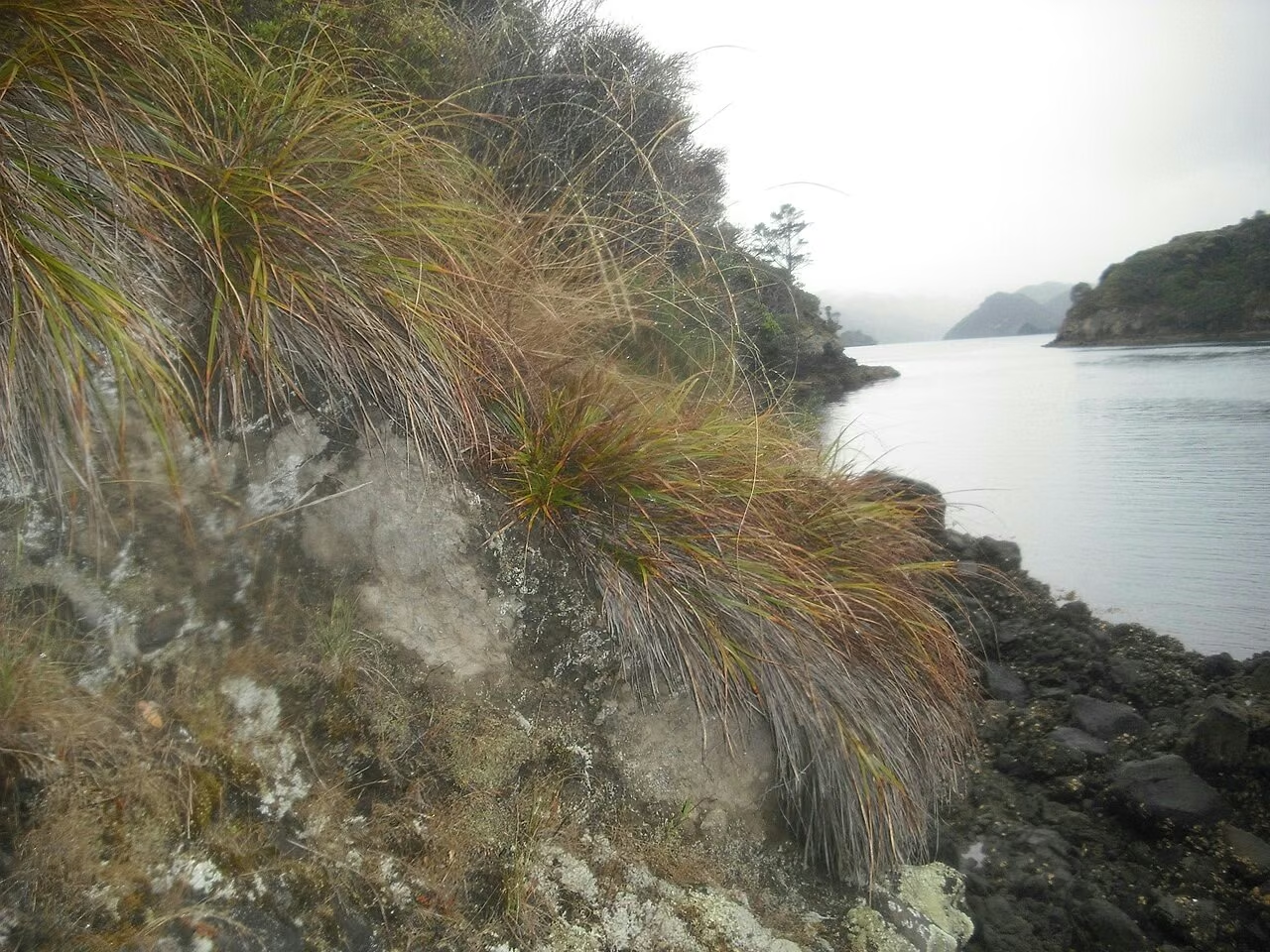
Morelotia (Morelotia affinis) is a harsh, leafy, tufted sedge endemic to New Zealand, growing 20-70 cm tall from a stout, woody rootstock. Its stiff, scabrid, yellow-green leaves arch beyond the flowering stems, which carry a rigid, upright panicle of narrow spikelets and lustrous red-brown to black nuts. It is found from Te Paki in the far north to south-west Nelson, mostly on steep clay banks and hillsides in gumland scrub and regenerating native vegetation. Closely related to Gahnia, it is a tough colonist of poor ground but notoriously difficult to cultivate. Explore more native grasses and flaxes in our native plant guide.
Plant Description
Morelotia affinis forms scattered, harsh, leafy tufts 20-70 cm tall from a stout, woody rootstock. The numerous leaves are longer than the flowering culms, 200-620 mm long and 4-8 mm wide, green to yellow-green, usually flat and curving, and rough to the touch because of tiny teeth on the surfaces and margins. Old, dry leaves persist on the plant with their margins tightly rolled under.
The flowering stem ends in an erect, rigid panicle 60-300 mm long with short, widely spaced branchlets. The spikelets are narrow-lanceolate, 6.5-10 mm long. The fruit is an elliptic-oblong nut about 2.5-3 x 1.5 mm, lustrous red-brown to black with three longitudinal ribs. NZ Flora notes that the ripe nut is briefly held on the plant by being tangled in the staminal filaments, and old flower heads persist all year.
It resembles a small Gahnia, and some botanists include it in that genus as Gahnia affinis. It can be told from Gahnia species by its smaller size and the distichous, two-ranked arrangement of its glumes.
Quick Facts
| Scientific Name | Morelotia affinis |
|---|---|
| Height | 0.2-0.7 m |
| Spread | A compact tuft, wider with age |
| Water Needs | Low once established; drought resistant |
| Light | Full sun |
| Frost Tolerance | Moderate; coastal to montane |
| Salt Tolerance | Some; grows near the coast but not on the foreshore |
| Growth Rate | Slow |
| Lifespan | Perennial |
Climate Best Suited to
It suits the warm to mild, humid climates of northern and central New Zealand, from frost-free northern coasts to moderately frosty montane hill country.
Regional Suitability
| City | Climate Suitability |
|---|---|
| Auckland | High |
| Wellington | Medium |
| Christchurch | Low |
| Dunedin | Low |
Plant Habitat
Morelotia affinis is endemic to New Zealand, occurring in the North Island and northern South Island from Te Paki south to south-west Nelson. It is regionally not threatened in Northland and Auckland, but naturally uncommon in the Wellington region.
It grows from coastal to montane elevations, usually on steep clay banks and hillsides in gumland scrub and regenerating native vegetation, and sometimes in pine plantations. It also colonises steep rock faces and boulder falls, showing a preference for open, infertile ground where competition is low.
Growing Requirements
Soil Requirements
It favours infertile, often poorly drained clay and rocky ground, typical of northern gumlands.
- Compact, low-fertility clay banks
- Rock faces and boulder falls
- Acidic gumland soils
Light Requirements
It grows in open sites and NZPCN recommends full sun in cultivation.
- Full sun
- Tolerates light shade in regenerating scrub but declines under a closed canopy
Water Requirements
Once established it is drought resistant, coping with clay banks that are wet in winter and baked dry in summer.
- Little watering needed once established
- Tolerates seasonal wetness on poorly drained clay
Planting and Establishing
Morelotia is very difficult to establish. Plants resent root disturbance and usually die when transplanted, so any attempt should use young, container-grown plants planted straight into their final position with the root ball left intact.
NZPCN recommends full sun on rock or poorly drained clay. Plant into a clay bank or rocky site rather than rich garden soil, firm in gently, water until established, and then leave the plant alone.
Ecological Role
Morelotia is a characteristic plant of northern gumland scrub, growing with stunted mānuka and other plants adapted to poor, acidic clays. It is a pioneer on bare clay banks and rock faces, helping to bind exposed ground during the early stages of regeneration.
Like other sedges it is wind pollinated. Specific information on seed dispersal or insects that feed on it was not found in the sources consulted.
Uses & Significance
Garden Uses
It is rarely grown because it is so hard to establish, but suits specialist native collections on poor clay or rock.
- Clay banks and cuttings in full sun
- Gumland restoration plantings
- Rock gardens with very poor soil
Ecological Value
It is part of the distinctive gumland plant community and helps stabilise bare clay and rock.
- Pioneer on eroding clay banks
- Component of northern gumland scrub
- Endemic sedge related to Gahnia
Landscaping Uses
Where it can be established, morelotia gives a stiff, harsh-textured tussock effect similar to a small Gahnia, with persistent upright seed heads. It suits informal native plantings on banks where its rough foliage will not be brushed against.
It is best used in restoration of gumland and clay bank sites within its natural range, rather than as an ornamental feature.
Seasonal Care Calendar
Spring
Flowering runs from October to December, with rigid upright panicles rising among the leaves.
- Keep new plantings watered until established
- Avoid disturbing the roots
Summer
Fruiting begins in November and continues through summer as the glossy nuts ripen.
- Collect ripe nuts for sowing
- Established plants need no watering
Autumn
Fruiting continues until about April, and old seed heads remain on the plant.
- Sow fresh seed promptly
- Leave old heads for their structural effect
Winter
The tufts remain evergreen, with old inflorescences persisting through the year.
- No action needed
- Tolerates wet clay in winter
When to Prune and How Much
Pruning is not needed. Dead leaves can be pulled out gently by hand if you want a tidier tuft, wearing gloves because the leaves are harsh and scabrid.
Avoid cutting the plant hard back, as slow-growing sedges of this kind can be slow to recover.
How to Grow Morelotia
Morelotia affinis is described by NZPCN as very difficult to cultivate. Its seed germinates poorly, and plants resist root disturbance and typically die when transplanted, which rules out lifting wild plants. NZPCN does record one unusual success: considerable success has been achieved both growing plants and germinating seed in untreated sawdust. That makes seed the most realistic route, with seedlings raised in their own containers so they can be planted out without disturbing the roots. Patience is essential, because growth is slow even when germination succeeds.
From Seed
Fruit ripens from November to April. The lustrous red-brown to black nuts are held on the plant for a time by being tangled in the old stamen filaments, which gives a window for collection. Following NZPCN's note, untreated sawdust can be used as the sowing medium.
- Collect ripe, glossy nuts in summer or autumn
- Sow fresh on the surface of untreated sawdust or a sawdust-rich mix
- Keep the tray in a warm, bright spot and evenly moist
- Be prepared for slow and uneven germination
- Prick out seedlings very carefully into individual deep pots while small
By Division
Division is not recommended. Because plants resent root disturbance and usually die when moved, dividing an established tuft is likely to kill it. If a cultivated plant must be split, take only small outer pieces with as much root as possible.
- Only attempt on a vigorous cultivated plant
- Separate a small outer portion in spring with roots attached
- Pot into sawdust-rich or gritty clay mix
- Keep sheltered and moist until new growth appears
Pests & Diseases
No significant pests or diseases of Morelotia affinis are recorded in the sources consulted. In the wild, the main pressures are habitat loss and weed invasion of open clay and gumland sites.
In cultivation, failure is usually due to root disturbance or rich, wet potting conditions rather than pests.
Cultural Significance
No Māori name or traditional use of Morelotia affinis was found in the sources consulted. The epithet affinis is Latin for neighbouring, allied to or akin to, likely referring to its closeness to related sedges such as Gahnia.
It was first described in 1834 as Lampocarya affinis and has since been moved through Gahnia, Mariscus and Machaerina before S.T. Blake placed it in Morelotia in 1969, a history that reflects how hard this group of sedges has been to classify.
Bonus Tip
If you want to try growing morelotia, follow NZPCN's tip and sow seed into untreated sawdust, then raise each seedling in its own deep pot from the start. Plant it out once, into a sunny clay bank, without teasing the roots, because root disturbance is the main reason this sedge dies in cultivation.
Related Plants
Explore other native plants that share similar characteristics or habitats with Morelotia (Morelotia affinis), offering further insights into New Zealand's diverse flora. These related species provide context and opportunities for complementary planting in your garden.

Plant Conservation
Morelotia affinis has been ranked Not Threatened nationally in every recent assessment, including 2023. Regionally it is Not Threatened in Northland and Auckland, and Regionally Naturally Uncommon in Wellington.
Protecting gumland and regenerating scrub on clay hill country from clearance and weed invasion is the best way to keep it common.
Frequently Asked Questions
How do you tell Morelotia affinis from Gahnia?
NZPCN notes it is rather close to Gahnia but differs in its smaller stature and in the distichous, two-ranked arrangement of the glumes in its spikelets.
Where does Morelotia affinis grow in New Zealand?
It grows in the North Island and the northern South Island, from Te Paki south to south-west Nelson, from coastal to montane elevations, usually on steep clay banks in gumland scrub.
Is Morelotia affinis easy to grow?
No. NZPCN describes it as very difficult to cultivate: seed germinates poorly and plants resent root disturbance, usually dying if transplanted.
Sources and Further Reading
The botanical, growing, and conservation details for Morelotia (Morelotia affinis) on this page draw on the New Zealand plant references below. Consult them for full technical records and the latest distribution data.