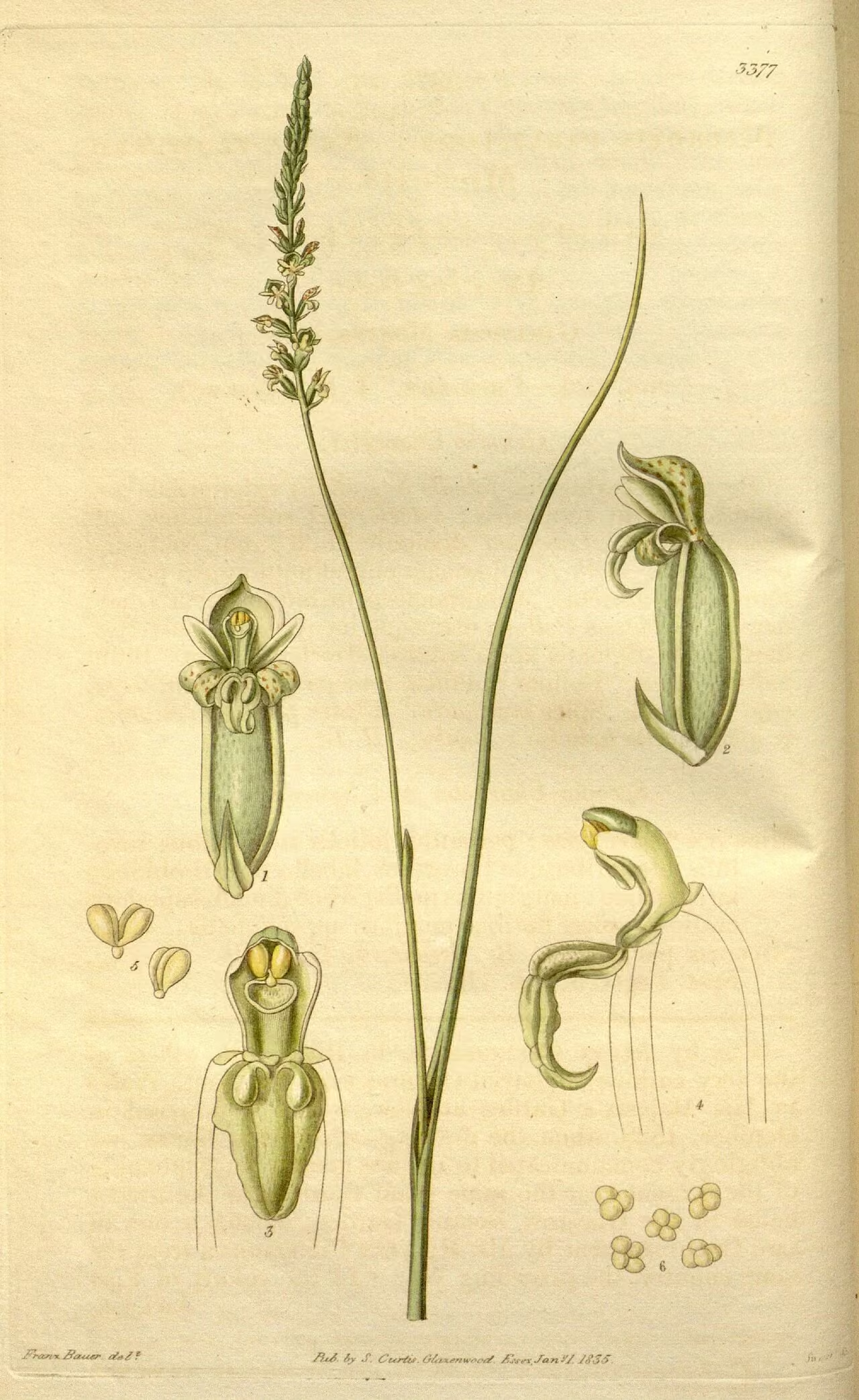
Onion-Leaved Orchid
Microtis parviflora
Last updated:
Onion-leaved orchid (Microtis parviflora) is a native terrestrial orchid with a single hollow, onion-like leaf and a slender spike of 10 to 80 tiny green flowers. Flowering plants are usually 100 to 400 mm tall, occasionally up to 700 mm. In New Zealand it is mainly northern, occurring on the Kermadec and Three Kings Islands, through the northern North Island and in a few northern South Island districts. It favours open clay pans, dune hollows, gumland scrub and geothermal ground. It also grows in Australia and is ranked At Risk - Declining in New Zealand. Explore more native flowering plants in our native plant guide.
Plant Description
Microtis parviflora is a colony-forming terrestrial orchid that grows from fleshy underground tubers. Each plant has a solitary bright green to yellow-green leaf that is linear, cylindrical and hollow, much like an onion leaf, with the flowering stem emerging from it.
Flowering plants are 100 to 400 mm tall, occasionally reaching 700 mm. The racemose spike carries 10 to 80 small overlapping flowers up to about 3 mm across, with a green to yellow-green perianth. The labellum is tongue-like and triangular to heart-shaped, with dark green calli at its base. Flowering runs from September to March and fruit ripens from December to May.
It is distinguished from Microtis unifolia and M. oligantha by its more or less triangular labellum that narrows abruptly to a down-turned pointed tip, has a pouched base and an almost entire, smooth margin. NZPCN notes that New Zealand plants referred to this species may prove distinct from the Australian ones.
Quick Facts
| Scientific Name | Microtis parviflora |
|---|---|
| Height | 0.1-0.4 m in flower (rarely 0.7 m) |
| Spread | Single stems forming loose colonies |
| Water Needs | Moist to seasonally dry |
| Light | Full sun, open ground |
| Frost Tolerance | Low to moderate; a coastal and lowland northern plant |
| Salt Tolerance | Moderate; grows in coastal dune hollows |
| Growth Rate | Seasonal; grows each year from a tuber |
| Lifespan | Perennial (tuberous) |
Climate Best Suited to
It suits warm-temperate northern climates with mild winters, growing from the subtropical Kermadec Islands to Northland, Auckland and geothermal sites further south.
Regional Suitability
| City | Climate Suitability |
|---|---|
| Auckland | High |
| Wellington | Low |
| Christchurch | Low |
| Dunedin | Low |
Plant Habitat
In New Zealand it occurs on the Kermadec Islands, Manawatāwhi/Three Kings Islands and the North Island, where it becomes scarce south of Waikato and Bay of Plenty. In the South Island it is known from the Marlborough Sounds, north-west Nelson and the northern West Coast. It probably also occurs in Australia.
It is a coastal to lowland plant of open clay pans, sand dune hollows and other areas of exposed soil with little overhead vegetation. It is common in gumland scrub, on peat bog margins, in seral forest and within geothermal fields.
Growing Requirements
Soil Requirements
It favours bare or thinly vegetated infertile soils such as gumland clays, peat margins and sand.
- Low-fertility clay, peat or sand
- Open, exposed soil with little competition
- Tolerates seasonally wet then dry ground
Light Requirements
It needs full sun and little overhead cover; shading by regenerating scrub causes it to decline.
- Full sun
- Open ground or short turf
Water Requirements
Its habitats are often wet in winter and spring and dry in summer, matching its growth from spring into summer.
- Moist during spring growth
- Tolerates summer drying once seeding
Planting and Establishing
NZPCN describes it as easily grown in a sunny position but advises that it should not be removed from the wild. Where it already appears in lawns or bare ground, the simplest approach is to leave patches unmown from spring until the capsules ripen.
Pot-grown plants from legitimate sources do best in a lean, open mix in full sun, with no fertiliser and minimal competition.
Ecological Role
Microtis parviflora is an early-successional plant of open, disturbed or naturally sparse ground. Its many tiny green flowers are pollinated by small insects, and its dust-like seed travels on the wind, letting it colonise newly bared clay, dune hollows and geothermal ground.
As scrub and forest close over a site, the orchid declines, so it depends on processes such as fire, erosion, geothermal activity or mowing that keep ground open. Like other orchids, it relies on soil fungi for germination.
Uses & Significance
Garden Uses
Best treated as a welcome volunteer rather than a planted feature.
- Unmown native lawn patches near gumland
- Sunny pots of lean mix for orchid enthusiasts
- Restoration of open gumland and clay pan sites
Ecological Value
It is a characteristic orchid of northern gumlands and other open infertile habitats.
- Part of the threatened gumland plant community
- Provides nectar for small insects
- Indicates open, low-nutrient ground
Landscaping Uses
Where onion-leaved orchids pop up in a lawn, consider changing mowing so that a patch is left uncut from September until late summer; the spikes are subtle but interesting close up.
In restoration of gumland or clay pan habitats, avoid planting shrubs over the open patches where these orchids grow.
Seasonal Care Calendar
Spring
Leaves and flower spikes emerge and flowering begins from September.
- Pause mowing over colonies
Summer
Flowering continues to March while early capsules ripen from December.
- Leave spikes standing to shed seed
Autumn
The last capsules ripen by May and foliage withers.
- Mowing can resume once seed has shed
Winter
Plants are dormant as underground tubers.
- Avoid cultivating the ground
When to Prune and How Much
No pruning is required. Let foliage and spikes die back naturally so tubers are replenished and seed disperses.
If the orchid is growing in a lawn, delay the first spring mow over that area until after seeding.
How to Grow Onion-Leaved Orchid
Onion-leaved orchid is described by NZPCN as easily grown in a sunny position, and it spreads readily on its own into suitable open ground, which is why it turns up in some west Auckland lawns. It should not be dug from the wild. Its seed is microscopic and needs a compatible mycorrhizal fungus to germinate, so in practice new plants come from natural seedling recruitment or from the tubers of colonies already in cultivation. Patience matters: a colony usually builds up slowly over several seasons rather than in a single year.
From Seed (natural Spread)
Mature plants release very large numbers of dust-like seeds between December and May. Where the soil fungus is present and the ground is open, seedlings may appear without any help.
- Let flower spikes ripen and split open naturally
- Keep the surrounding ground open and low in fertility
- Avoid herbicides and fertilisers near the colony
- Look for new single onion-like leaves in the following spring
By Tuber Division
Colonies in pots or garden patches gradually increase as the fleshy tubers multiply. During dormancy, crowded pots can be split and the tubers replanted in fresh lean mix combined with some of the old medium to retain the fungal partner.
- Wait until the foliage has completely died down
- Lift the tubers gently and separate them
- Replant just below the surface in a free-draining, low-nutrient mix
- Place in full sun and water when new growth appears
Pests & Diseases
No serious pests are specifically recorded for this orchid. Slugs and snails can graze young shoots, and mowing or trampling during flowering removes the season's seed.
Its main threat is habitat change: weeds and regenerating scrub shading out the open ground it needs.
Cultural Significance
No traditional Māori use or name specific to Microtis parviflora was found in the sources consulted.
The species was described by Robert Brown in 1810 from Australian material. Its name means small-flowered, from the Latin parvus and flos, and the genus name Microtis means tiny eared.
Bonus Tip
If you live near gumland scrub in west Auckland or Northland and notice slender green spikes in your lawn in spring, check for the pouched, triangular lip under a hand lens; you may be hosting an At Risk native orchid and can protect it simply by mowing around it until autumn.
Related Plants
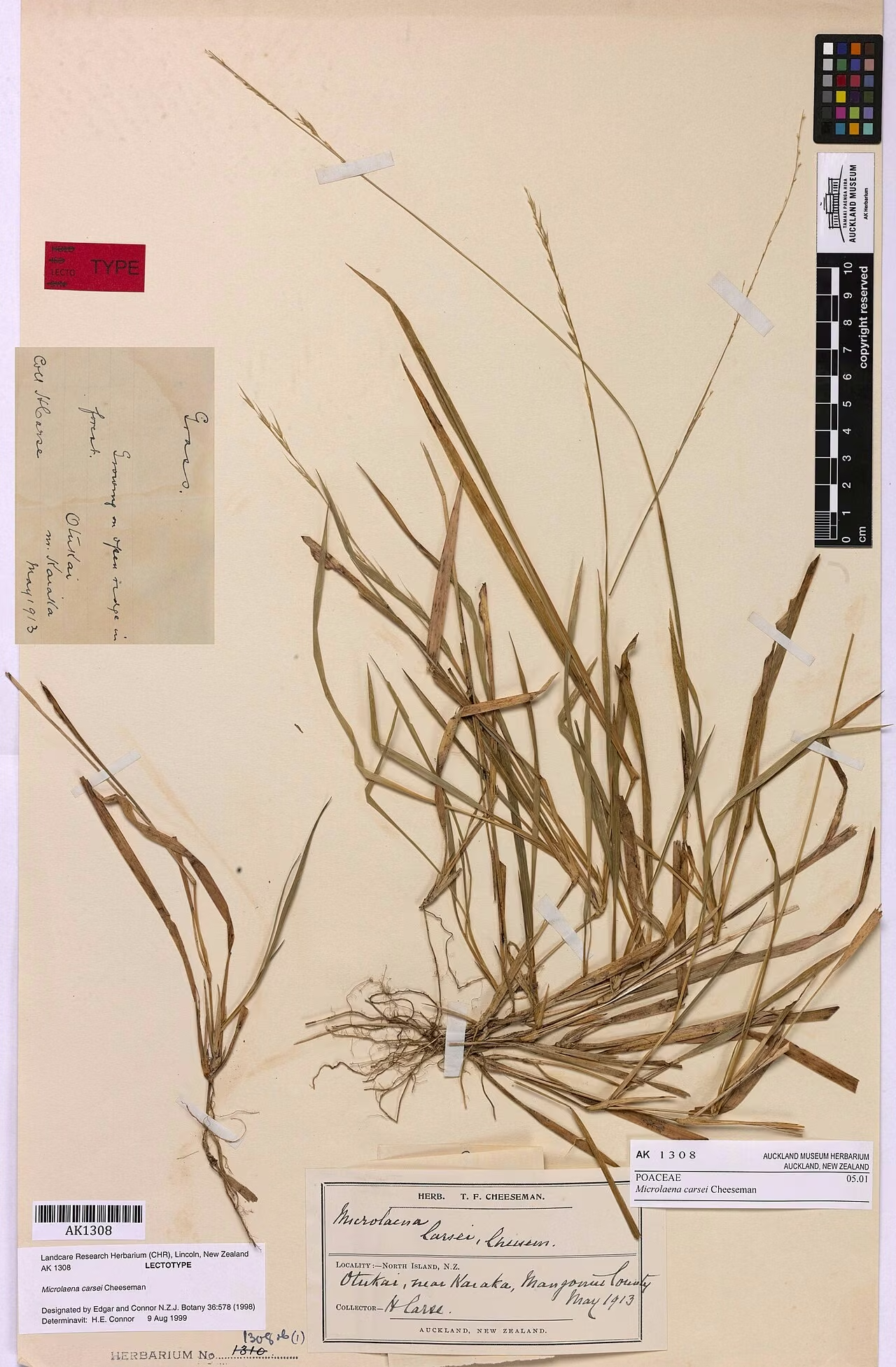
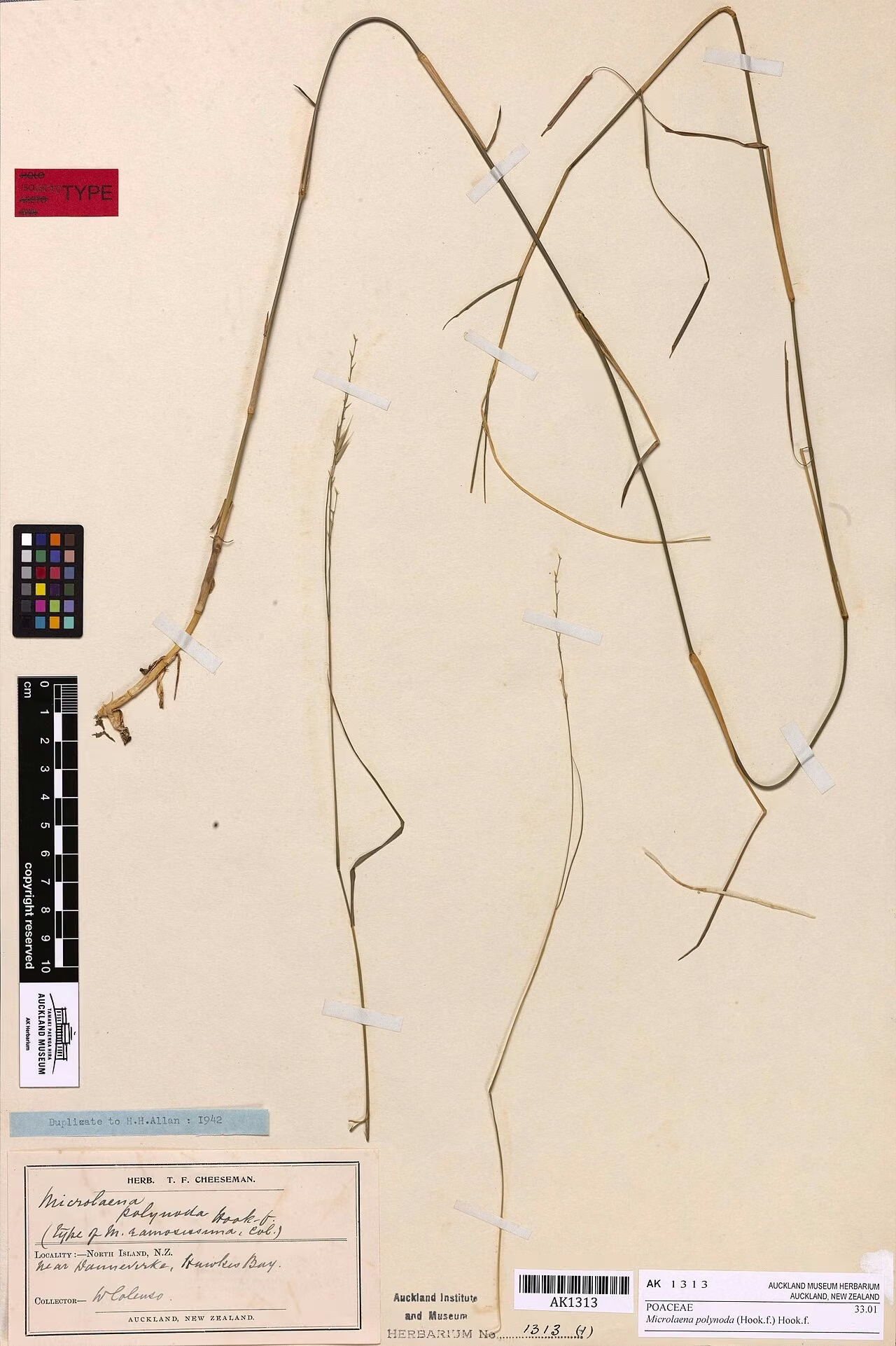
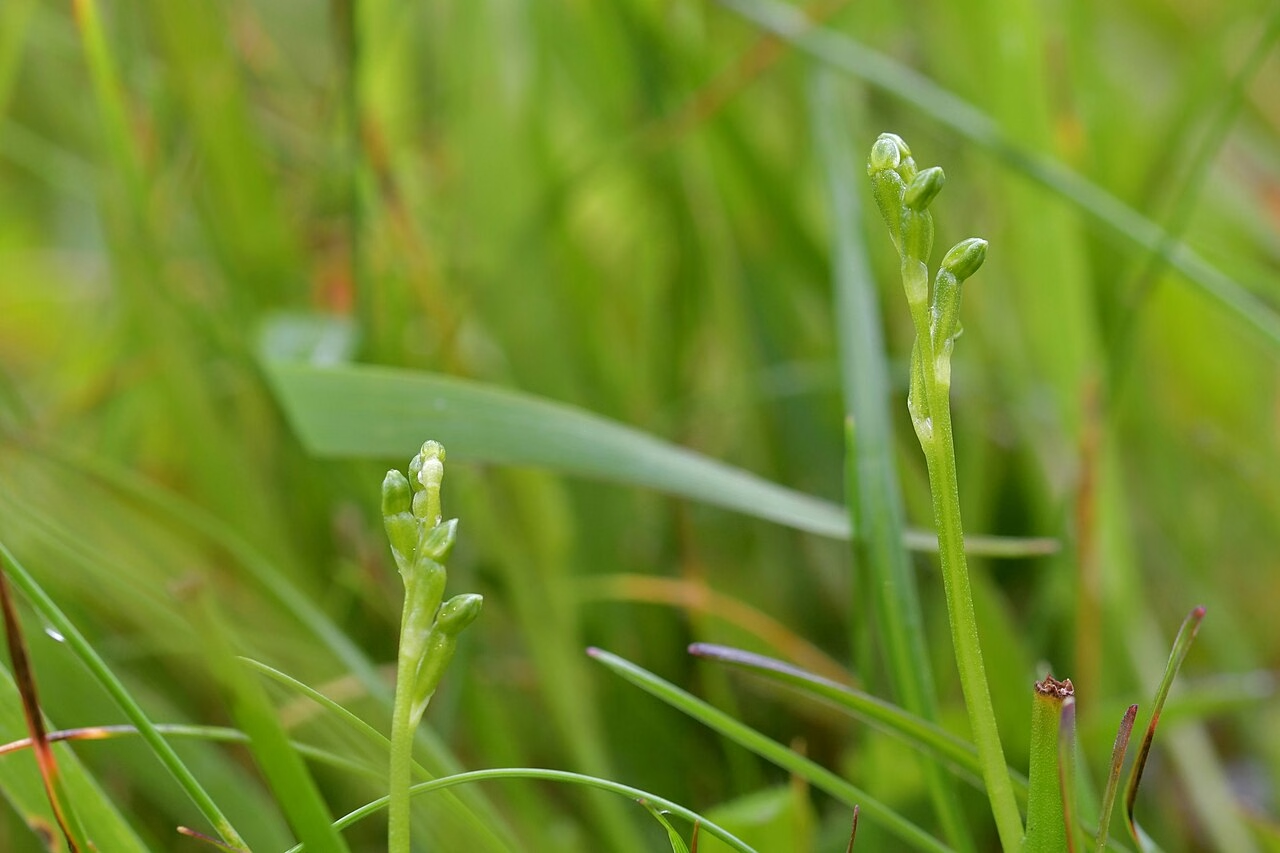
Explore other native plants that share similar characteristics or habitats with Onion-Leaved Orchid (Microtis parviflora), offering further insights into New Zealand's diverse flora. These related species provide context and opportunities for complementary planting in your garden.
Plant Conservation
Microtis parviflora is ranked At Risk - Declining (2023). Regionally it is ranked Regionally Declining in Northland, Regionally Vulnerable in Auckland and Data Deficient in Wellington.
Loss of open gumland, clay pan and dune habitats to development, weeds and succession is the main pressure. Keeping these habitats open and protecting known colonies from herbicide and earthworks helps the species persist.
Frequently Asked Questions
What does Microtis parviflora look like?
It has one bright green to yellow-green, hollow, cylindrical leaf and an upright spike of 10 to 80 overlapping green flowers, each up to about 3 mm across, on plants typically 10 to 40 cm tall.
How is the onion-leaved orchid different from the common onion orchid?
NZPCN separates it from Microtis unifolia and M. oligantha by its roughly triangular labellum, which narrows abruptly to a down-turned pointed tip, has a pouched base and a nearly smooth margin.
Why do onion orchids appear in lawns?
NZPCN notes Microtis parviflora often invades urban lawns next to gumland scrub, for example in west Auckland, because it thrives on open, sunny, low-fertility ground.
Is the onion-leaved orchid threatened?
Yes. It is ranked At Risk - Declining nationally, and Auckland lists it as Regionally Vulnerable, mainly through loss of open early-successional habitats.
Sources and Further Reading
The botanical, growing, and conservation details for Onion-Leaved Orchid (Microtis parviflora) on this page draw on the New Zealand plant references below. Consult them for full technical records and the latest distribution data.