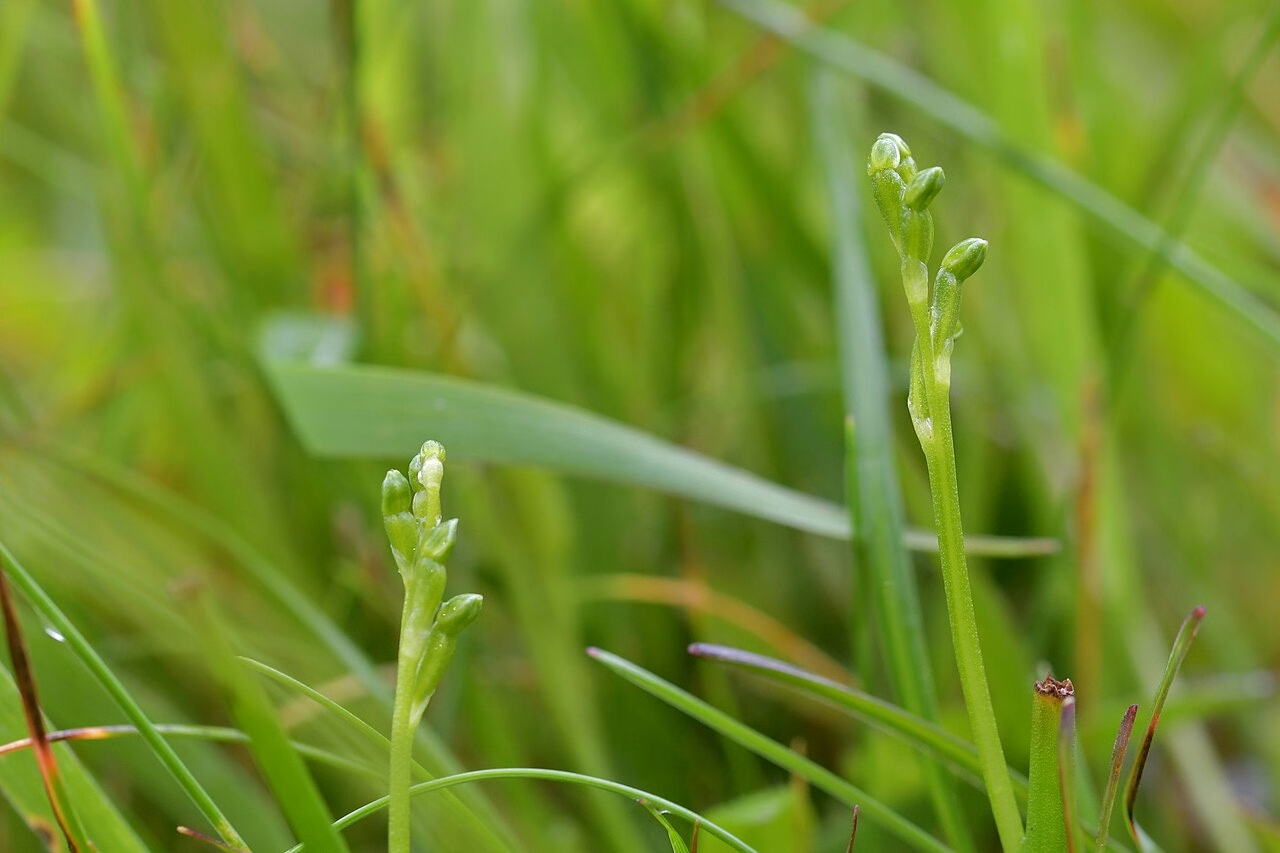
Small Onion Orchid
Microtis oligantha
Last updated:
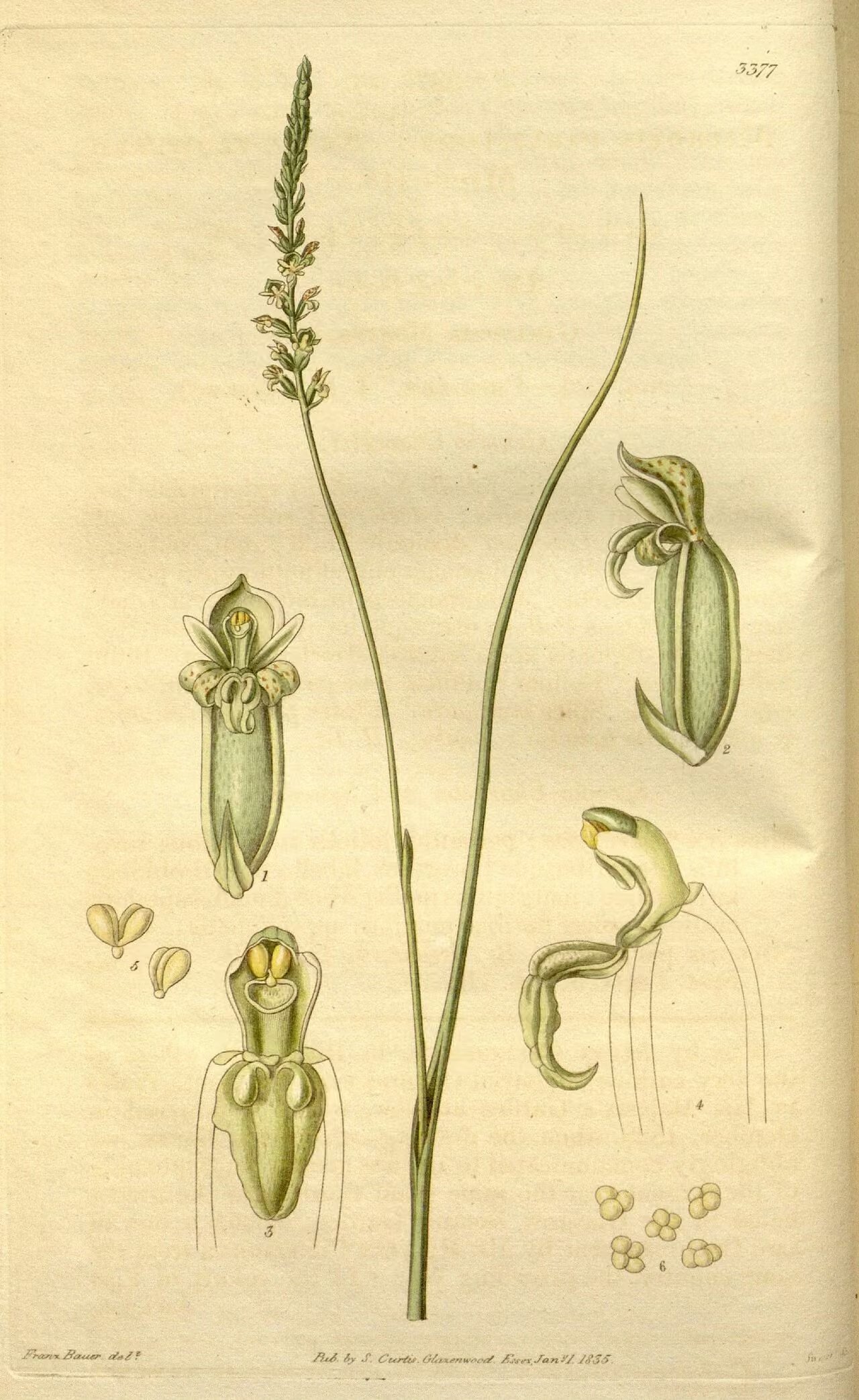
Small onion orchid (Microtis oligantha) is a tiny endemic ground orchid that rarely stands more than 150 mm tall in flower. Each plant grows from an underground tuber and sends up a single hollow, onion-like leaf and a short spike of usually fewer than ten small green flowers between December and March. It grows from the coast to the subalpine zone on the North, South and Chatham Islands, favouring damp ground in tussock grassland and on the edges of lakes, tarns, rivers and wetlands. It is ranked Not Threatened nationally but is easily overlooked because of its size and colour. Explore more native flowering plants in our native plant guide.
Plant Description
Microtis oligantha is a deciduous terrestrial orchid that survives the dormant season as a small underground tuber. Each year it produces a single erect, smooth, tubular leaf up to about 200 mm long, through which the flowering stem emerges. In flower the plant rarely exceeds 150 mm in height, making it one of the smallest members of its genus in New Zealand.
The flower spike usually carries fewer than ten small green to yellowish-green flowers spaced along the stem. The dorsal sepal forms a hood that is broader than the lateral sepals, with a blunt (obtuse) tip that is not upturned, and when viewed from above it appears opaque. The labellum, or lip, is distinctively squarish. Flowering runs from December to March and the capsules ripen from March to May.
Its relatives, the onion-leaved orchid (Microtis parviflora) and the common onion orchid (Microtis unifolia), are generally taller and carry many more flowers. Microtis parviflora has a roughly triangular labellum with a down-turned tip, while M. unifolia has a pointed dorsal sepal. Chatham Islands plants of M. oligantha are often noticeably larger than those on the main islands.
Quick Facts
| Scientific Name | Microtis oligantha |
|---|---|
| Height | Usually under 0.15 m in flower |
| Spread | Single stems; small scattered colonies |
| Water Needs | Damp to moist ground |
| Light | Full sun in open sites |
| Frost Tolerance | High; reaches the subalpine zone |
| Salt Tolerance | No information available |
| Growth Rate | Seasonal; leaf and flower spike grow each year from a tuber |
| Lifespan | Perennial (tuberous) |
Climate Best Suited to
It suits cool to mild climates with reliably damp ground in summer, from lowland Chatham Islands sites to subalpine tussock grassland.
Regional Suitability
| City | Climate Suitability |
|---|---|
| Auckland | Low |
| Wellington | Medium |
| Christchurch | Medium |
| Dunedin | High |
Plant Habitat
The small onion orchid is endemic to New Zealand and occurs on the North Island, South Island and Chatham Islands. It ranges from coastal sites to the subalpine zone and was first described by Lucy Moore from a specimen collected near Lake Roundabout.
It grows in damp places in tussock grassland and on the margins of lakes, tarns, rivers and wetlands, where low, open vegetation lets in plenty of light. Its wetland indicator rating is facultative, meaning it is found in both wetland and non-wetland settings.
Growing Requirements
Soil Requirements
In the wild it grows in damp, often peaty or silty soils around wetlands and in moist tussock turf.
- Keep the soil damp through the growing season
- Low-fertility soils suit it; avoid rich fertiliser
- Open, sparsely vegetated ground prevents smothering
Light Requirements
It needs full sun and low surrounding vegetation, since it is far too small to compete with taller plants.
- Full sun
- Keep neighbouring grasses short or sparse
Water Requirements
NZPCN notes it is easily grown in a damp, sunny position, reflecting its natural home on wet margins.
- Moist soil while in leaf and flower
- Tolerates seasonal saturation at wetland edges
Planting and Establishing
NZPCN advises that this orchid should not be removed from the wild. Plants occasionally appear by themselves in suitable damp, open ground, and those are best left in place and protected from mowing until the seed capsules have ripened.
If plants are obtained legitimately in pots, place them in a sunny, damp spot such as the edge of a bog garden or a shallow wet depression, with low companions that will not shade them.
Ecological Role
Like other onion orchids, Microtis oligantha produces tiny green flowers that are pollinated by small insects; species-specific pollinator studies for this orchid could not be found. Its dust-like seed is spread by wind and, as in most orchids, needs a compatible soil fungus to germinate.
It is part of the low herb layer of tarn margins and damp tussock grassland, often growing among sedges, small herbs and mosses. Its winter dormancy as a tuber lets it persist where the ground is frozen or flooded for part of the year.
Uses & Significance
Garden Uses
This is a plant for specialist native orchid growers and wetland restoration rather than general gardens.
- Damp margins of a sunny bog garden
- Restoration plantings on tarn and wetland edges
- Pots kept moist for orchid collections
Ecological Value
It contributes to the diversity of native turf and wetland-margin herbfields.
- Part of the native orchid flora of damp grassland
- Indicator of intact, open wetland margins
- Relies on soil fungi, so its presence reflects healthy soil biology
Landscaping Uses
In a planted wetland, small onion orchid works best in a deliberately low zone of moss, small sedges and turf herbs on the sunny side of a pond or swale, where it will not be overtopped by flax, rushes or taller sedges.
Because the whole plant disappears below ground after seeding, mark its position so the area is not dug or replanted while it is dormant.
Seasonal Care Calendar
Spring
The single tubular leaf emerges from the tuber as soils warm.
- Keep the area moist and weed-free
Summer
Flower spikes appear from December, carrying a few small green flowers.
- Do not mow or trample while flowering
Autumn
Capsules ripen from March to May and release fine seed before the foliage dies back.
- Leave spikes in place until the seed has shed
Winter
The plant is dormant as an underground tuber.
- Avoid digging over the site
When to Prune and How Much
No pruning is needed. Leave the leaf and flower spike to die back naturally so the tuber can store energy and the seed can disperse.
The main maintenance task is keeping surrounding grasses and weeds low so the orchid is not shaded out.
How to Grow Small Onion Orchid
NZPCN describes the small onion orchid as easily grown in a damp, sunny position but stresses that it should not be removed from the wild. Like all orchids, it produces very fine seed that lacks food reserves and depends on a partner mycorrhizal fungus to germinate, so propagation in practice relies on encouraging natural recruitment or on growing on tubers from plants already in cultivation. Specialist orchid growers sometimes raise native orchids from seed in sterile laboratory culture, but that is beyond most home gardeners.
From Seed (natural Recruitment)
The simplest approach is to let established plants set and shed their seed where the right fungus is already present in the soil. Seedlings may then appear nearby over the following seasons in damp, open ground.
- Allow flower spikes to ripen fully between March and May
- Avoid mowing, weeding or disturbing the ground around the plants
- Keep the soil damp and the surrounding vegetation short
- Watch for new single leaves appearing in later springs
By Tuber Division
Established plants in cultivation may form more than one tuber over time. Pots can be checked during dormancy and any extra tubers carefully separated and replanted in the same kind of damp, low-fertility mix, ideally with some of the original potting medium to carry the fungus across.
- Tip out the pot when the plant is dormant in winter
- Separate any additional tubers gently by hand
- Replant at the same depth in moist mix that includes some of the old medium
- Keep the pots damp and in full sun once growth resumes
Pests & Diseases
No specific pest problems are recorded for this orchid. In general, slugs and snails can damage emerging leaves and flower spikes of small ground orchids, and trampling or grazing at wetland margins can destroy plants.
The bigger risk is competition: rank grasses and weeds quickly shade out a plant this small.
Cultural Significance
No traditional Māori use or name specific to Microtis oligantha is recorded in the sources consulted.
The species was formally described by New Zealand botanist Lucy Moore. The genus name Microtis means tiny eared, referring to the small lobes on the flower column, and oligantha means few-flowered.
Bonus Tip
To find this orchid in the wild, search damp tussock or tarn edges in midsummer and look for a short, single tubular leaf with a sparse green spike; if you count more than about ten flowers, you are probably looking at a different Microtis.
Related Plants
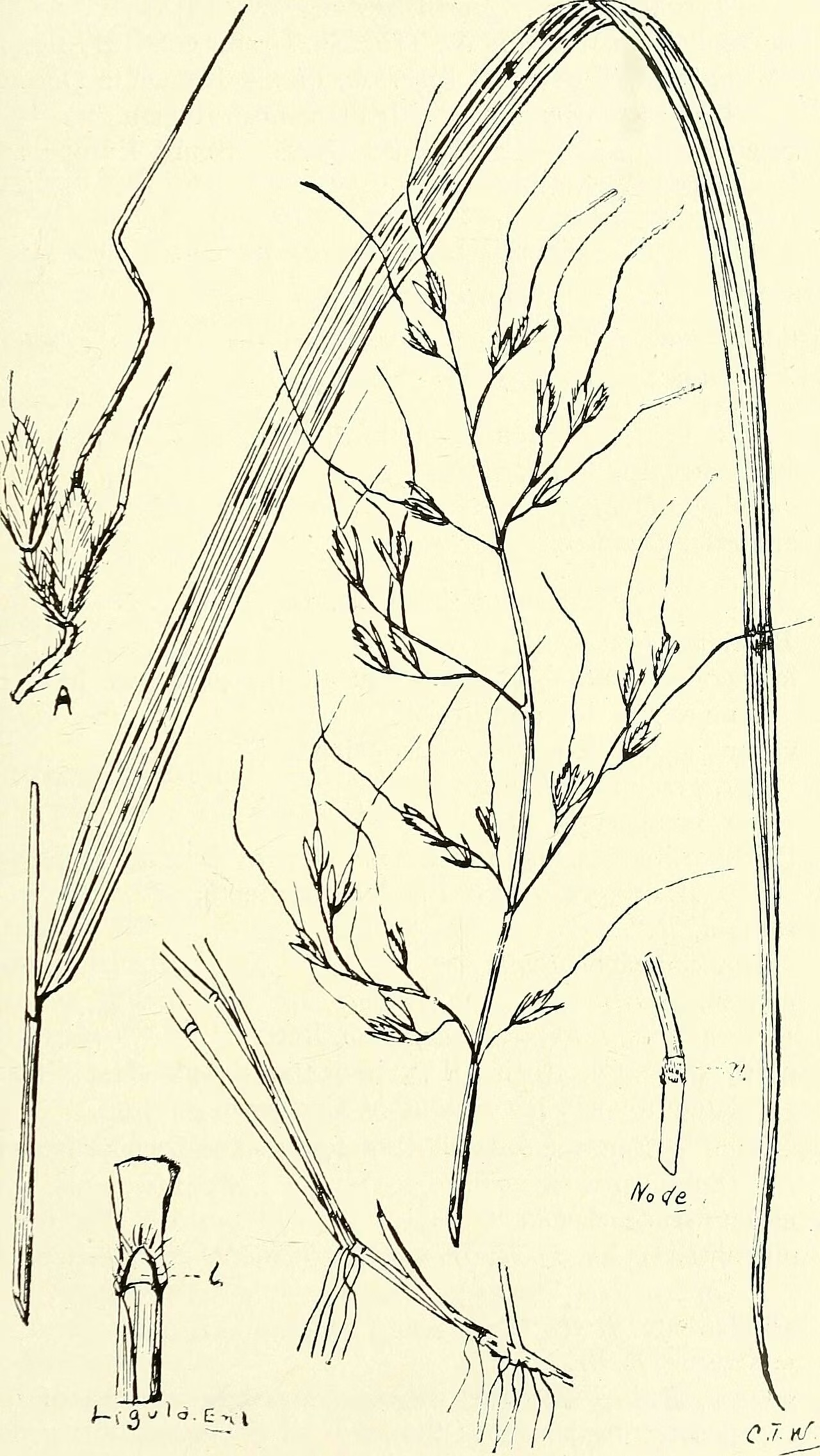
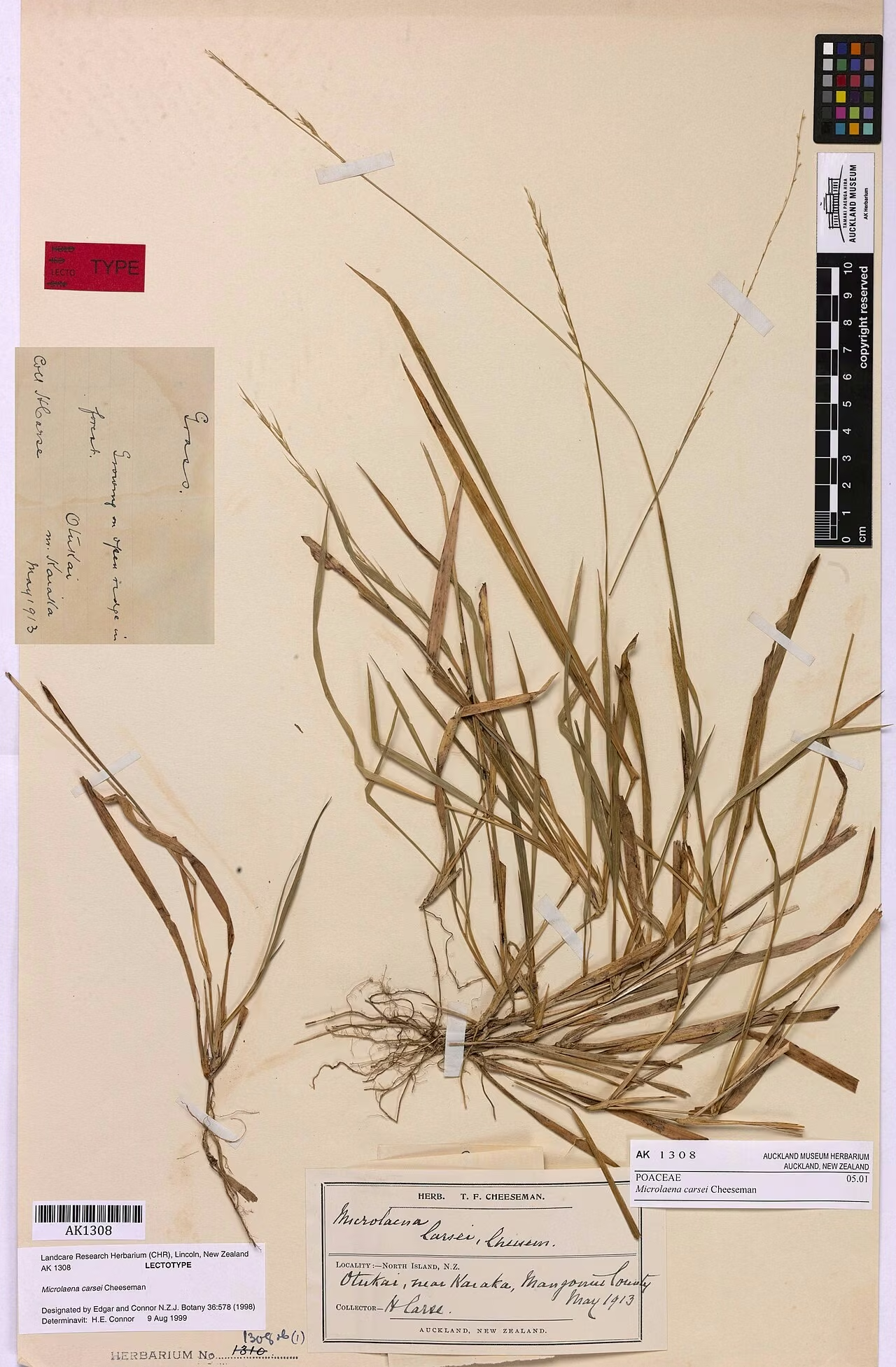
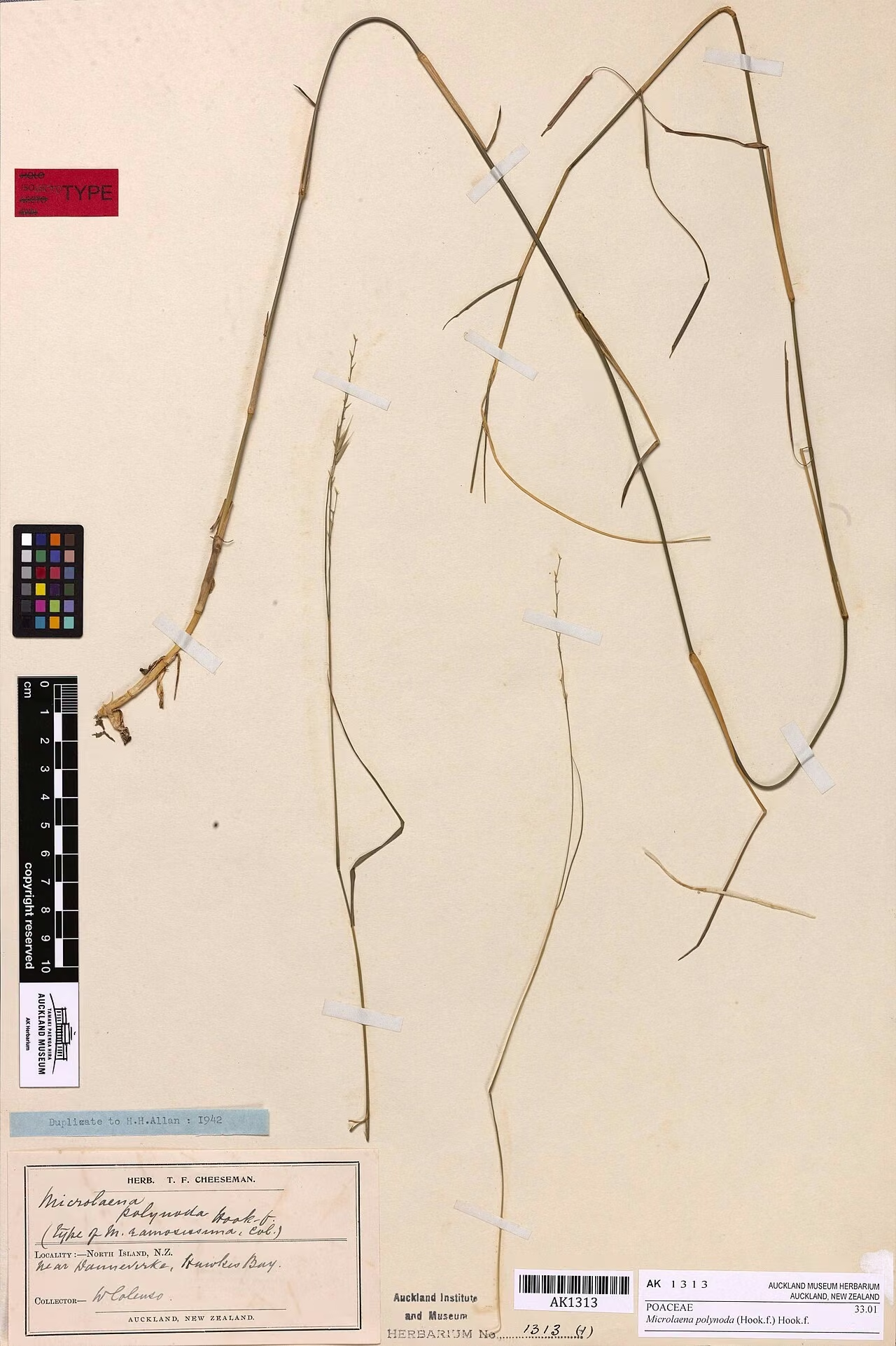
Explore other native plants that share similar characteristics or habitats with Small Onion Orchid (Microtis oligantha), offering further insights into New Zealand's diverse flora. These related species provide context and opportunities for complementary planting in your garden.
Plant Conservation
Microtis oligantha is ranked Not Threatened nationally (2023), and Otago lists it as Regionally Not Threatened, but the Wellington region ranks it Regionally Endangered.
Protecting wetland margins from drainage, stock trampling and weed invasion, and keeping vegetation low around known populations, are the most useful actions. Plants should not be dug from the wild.
Frequently Asked Questions
How do you tell Microtis oligantha from other onion orchids?
It is smaller and has fewer flowers, usually under ten per spike. NZPCN notes its dorsal sepal tip is blunt rather than pointed and not upturned, the dorsal sepal looks opaque from above, and the labellum is squarish.
When does the small onion orchid flower?
It flowers from December to March, later than the common onion orchid, and its seed capsules ripen from March to May.
Where does the small onion orchid grow?
It is found on the North, South and Chatham Islands in damp places in tussock grassland and on lake, tarn, river and wetland margins, from the coast up to the subalpine zone.
Is the small onion orchid rare?
Nationally it is ranked Not Threatened, but the Wellington region lists it as Regionally Endangered, and it is easy to miss because of its small green flowers.
Sources and Further Reading
The botanical, growing, and conservation details for Small Onion Orchid (Microtis oligantha) on this page draw on the New Zealand plant references below. Consult them for full technical records and the latest distribution data.