Bamboo Grass
Microlaena polynoda
Last updated:
Bamboo grass (Microlaena polynoda), also called knot-jointed rice grass, is an unusual endemic grass whose stout, much-branched leafy stems scramble and cascade like miniature bamboo, reaching up to 1.5 m. It grows in open forest, scrub and on steep ground, often near the coast, and is recorded from Northland to Otago. Its flowers are few, in narrow racemes of 3 to 20 spikelets, and it also produces hidden self-fertilising flowers. Once considered secure, it was reclassified as At Risk - Declining in 2023. In gardens it is a tough, glossy ground cover for banks and shade. Explore more native grasses and flaxes in our native plant guide.
Plant Description
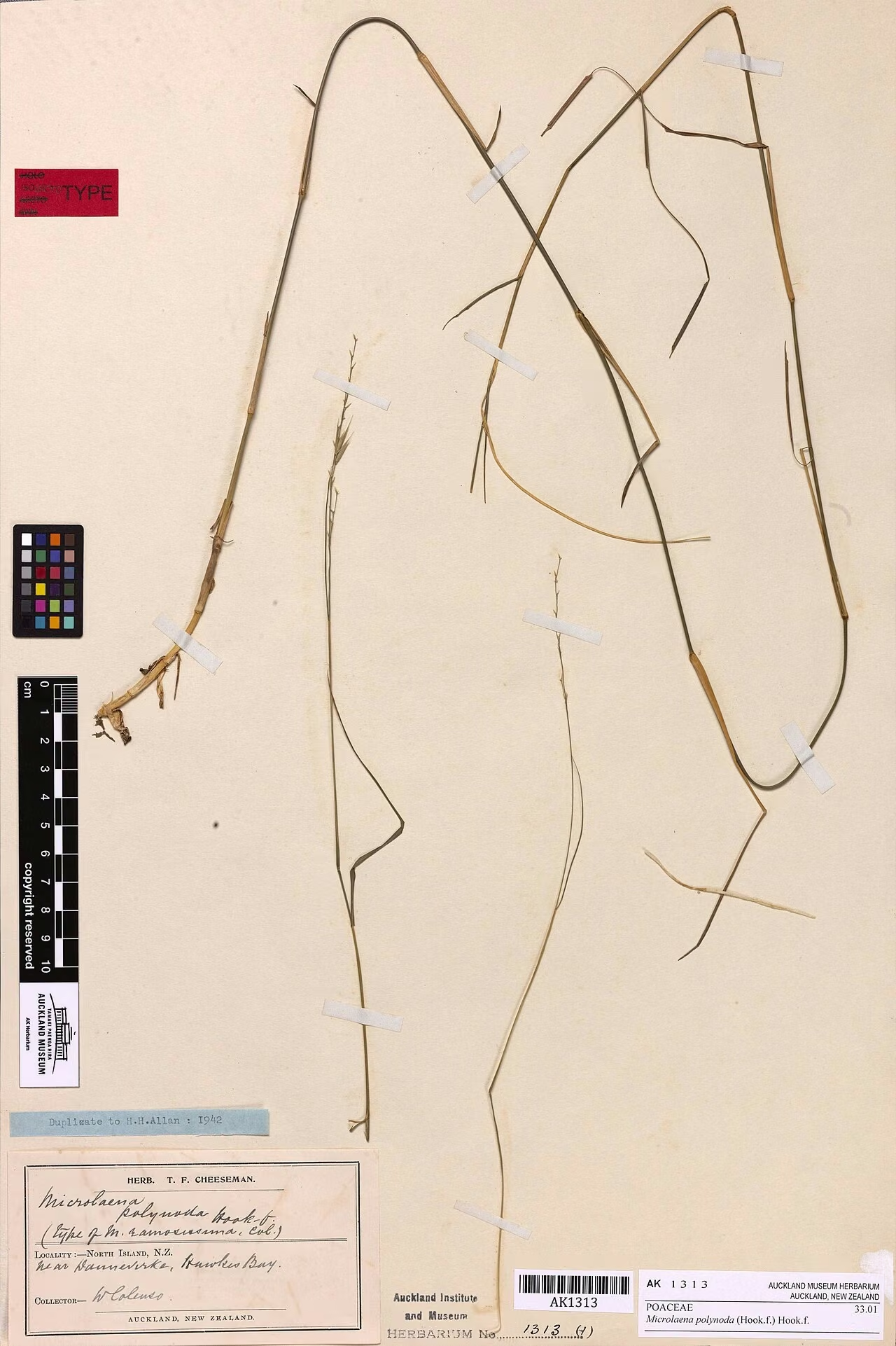
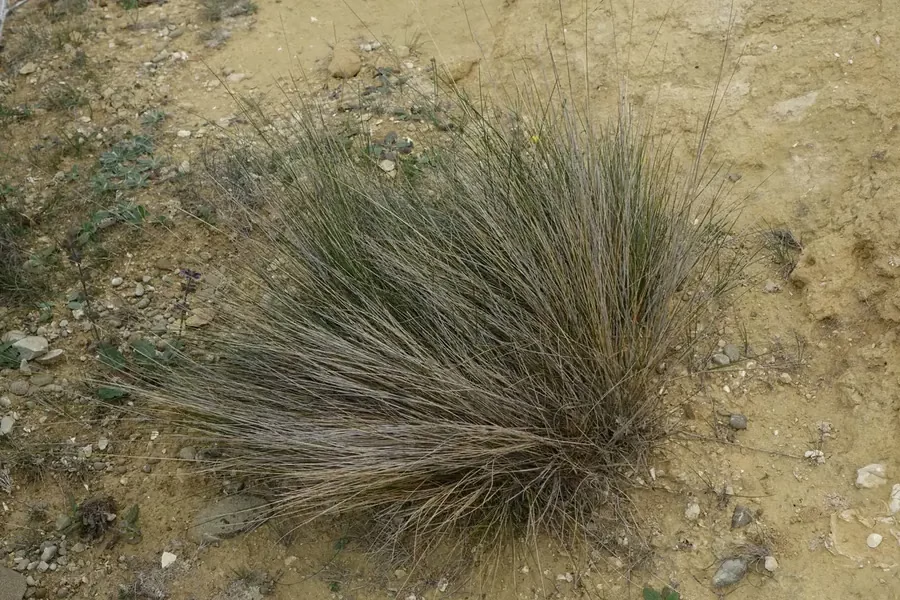
Microlaena polynoda is a scrambling, bambusiform perennial grass with rhizomes and stout, leafy, branching stems up to 1.5 m tall. The many nodes along the stems give the epithet polynoda, meaning many-noded, and the alternative common name knot-jointed rice grass. Leaf blades are 10 to 30 cm long with rough, scabrid margins, and the foliage is dark green and glossy.
The inflorescence is a narrow raceme or small panicle with only 3 to 20 spikelets, and the flowers have four stamens. As well as normal open flowers, the plant produces cleistogenes, closed self-fertilising flowers, so it can set seed without cross-pollination. The grains are about 3 to 5.5 mm long.
It is easily distinguished from other New Zealand Microlaena. Bush rice grass (Microlaena avenacea) and Microlaena carsei are tufted plants with long panicles of many spikelets, and Microlaena stipoides is a fine, low grass of open ground, whereas bamboo grass forms tangled, cascading masses of branched leafy stems.
Quick Facts
| Scientific Name | Microlaena polynoda |
|---|---|
| Height | Up to 1.5 m (often about 1 m) |
| Spread | 1-2 m, scrambling |
| Water Needs | Low to moderate; tolerates free-draining soil |
| Light | Sun to shade |
| Frost Tolerance | Moderate to high |
| Salt Tolerance | Moderate; often grows near the sea |
| Growth Rate | Moderate |
| Lifespan | Perennial |
Climate Best Suited to
Adaptable from warm northern lowlands to cooler southern districts, coping with wind and coastal exposure as well as forest shade.
Regional Suitability
| City | Climate Suitability |
|---|---|
| Auckland | High |
| Wellington | High |
| Christchurch | Medium |
| Dunedin | Medium |
Plant Habitat
Bamboo grass is endemic to New Zealand. It has been assessed in Northland, Auckland, Wellington and Otago, showing it occurs from the far north to the south of the South Island, although it is now regionally uncommon or declining in several of those regions.
It grows naturally in open forest and scrub and on steep ground, often near the sea, where its scrambling stems cascade down banks and slopes.
Growing Requirements
Soil Requirements
It is tolerant of free-draining soils and copes with the thin soils of steep banks.
- Free-draining soil preferred
- Tolerates low fertility
- Useful on steep, unstable banks
Light Requirements
It grows in open forest and scrub, so it handles a range of light from partial sun to shade.
- Good under trees and in dappled shade
- Tolerates sunnier coastal banks
Water Requirements
Once established it is fairly hardy, though seedlings and new plantings need steady moisture.
- Water new plantings through their first summer
- Established plants tolerate dry, free-draining sites
Planting and Establishing
Plant on banks, slopes or under trees in autumn or spring, spacing plants about 1 m apart so their stems can knit into a continuous cover.
In restoration, use eco-sourced stock from your own region, particularly given its declining status, and plant it along forest margins, scrub and coastal banks where it would naturally occur.
Ecological Role
It reproduces both through open, wind-pollinated flowers and through cleistogamous self-fertilising flowers, which may help small or isolated populations keep setting seed. Its rhizomes and scrambling stems help it spread across slopes.
NZPCN classes it as a facultative upland species, usually found away from wetlands. Animals that depend on it are not documented in the sources consulted.
Uses & Significance
Garden Uses
A resilient, glossy ground cover that brings an unusual bamboo-like texture to native plantings.
- Bank stabilisation and steep slopes
- Ground cover under trees
- Coastal and windy gardens
- Forest restoration
Ecological Value
Planting it helps a declining endemic grass and restores ground cover to forest edges and scrub.
- At Risk - Declining endemic species
- Binds soil on steep ground
- Adds the native grass layer to forest margin plantings
Landscaping Uses
Let it cascade over retaining walls, down banks or among rocks where its arching, leafy stems create a soft, flowing mass of dark green.
It combines well with ferns and low shrubs in shady areas, and with coastal shrubs on exposed banks.
Seasonal Care Calendar
Spring
New leafy shoots grow and flowering begins.
- Plant out new stock
- Mulch young plants
Summer
The plant is in full leaf, with small yellowish flowering heads.
- Water new plantings in dry spells
- Collect seed as it ripens
Autumn
Seed can still be collected and conditions suit planting and division.
- Divide established clumps
- Sow fresh seed
Winter
Growth slows; seed sown in autumn germinates from late winter.
- Little care needed
- Trim any dead stems
When to Prune and How Much
Bamboo grass needs little pruning. Cut out dead or tangled stems at the base occasionally to keep the planting fresh.
If it spreads beyond its space, trim back the scrambling stems; it recovers readily from the rhizomes.
How to Grow Bamboo Grass
Bamboo grass can be raised from seed or by dividing established plants. A Nelson native nursery raises it by stripping seed from the flower heads and pressing it into seed-raising mix, noting that seed germinates without treatment but that four weeks of cold stratification speeds things up, with seedlings emerging in late winter or early spring. Because the plant sets seed from self-fertilising cleistogamous flowers as well as open ones, even a single cultivated plant can provide seed. Given its declining status, eco-sourced material from local populations is strongly preferred for restoration.
From Seed
Keep seedlings consistently moist during germination, as drying out is the main cause of losses.
Collect seed from several plants within the same local population where possible, so that the young plants carry a good share of that population's genetic variety.
- Strip ripe seed from the flower heads
- Optionally stratify in damp material in the fridge for four weeks
- Press into seed-raising mix and cover lightly
- Keep moist and sheltered until seedlings appear in late winter or spring
- Pot on when large enough to handle
By Division
Established plants spread by rhizomes and can be divided in autumn or spring.
Divisions taken where stems have rooted at the nodes as they scramble across the ground establish especially quickly, because each piece already carries its own roots. Water divisions well after planting and shade them from strong sun for the first few weeks.
- Dig up a section of rhizome with several leafy stems attached
- Cut back the stems by about half
- Pot or replant into free-draining soil
- Keep moist until new shoots appear
Pests & Diseases
No specific pests or diseases are recorded for bamboo grass in the sources consulted. In gardens it is regarded as very hardy.
In the wild, weeds that overgrow forest margins and scrub, and browsing animals, are likely pressures on ground-layer plants, but the specific causes of this species' decline are not documented in the sources consulted.
Cultural Significance
No Māori name or traditional Māori use is recorded for Microlaena polynoda in the sources consulted.
Joseph Hooker first described it as Diplax polynoda and later transferred it to Microlaena. William Colenso independently named it Microlaena ramosissima, meaning much-branched, a name now treated as a synonym.
Bonus Tip
Use bamboo grass on a steep shady bank where mowing is impossible and little else will grow. Planted about a metre apart, its scrambling stems interlock into a cascading cover that holds the soil, and you will be growing a declining endemic at the same time.
Related Plants
Explore other native plants that share similar characteristics or habitats with Bamboo Grass (Microlaena polynoda), offering further insights into New Zealand's diverse flora. These related species provide context and opportunities for complementary planting in your garden.
Chatham Island Māhoe
Melicytus chathamicus
Large-Leaved Māhoe
Melicytus macrophyllus
Bush Rice Grass
Microlaena avenacea
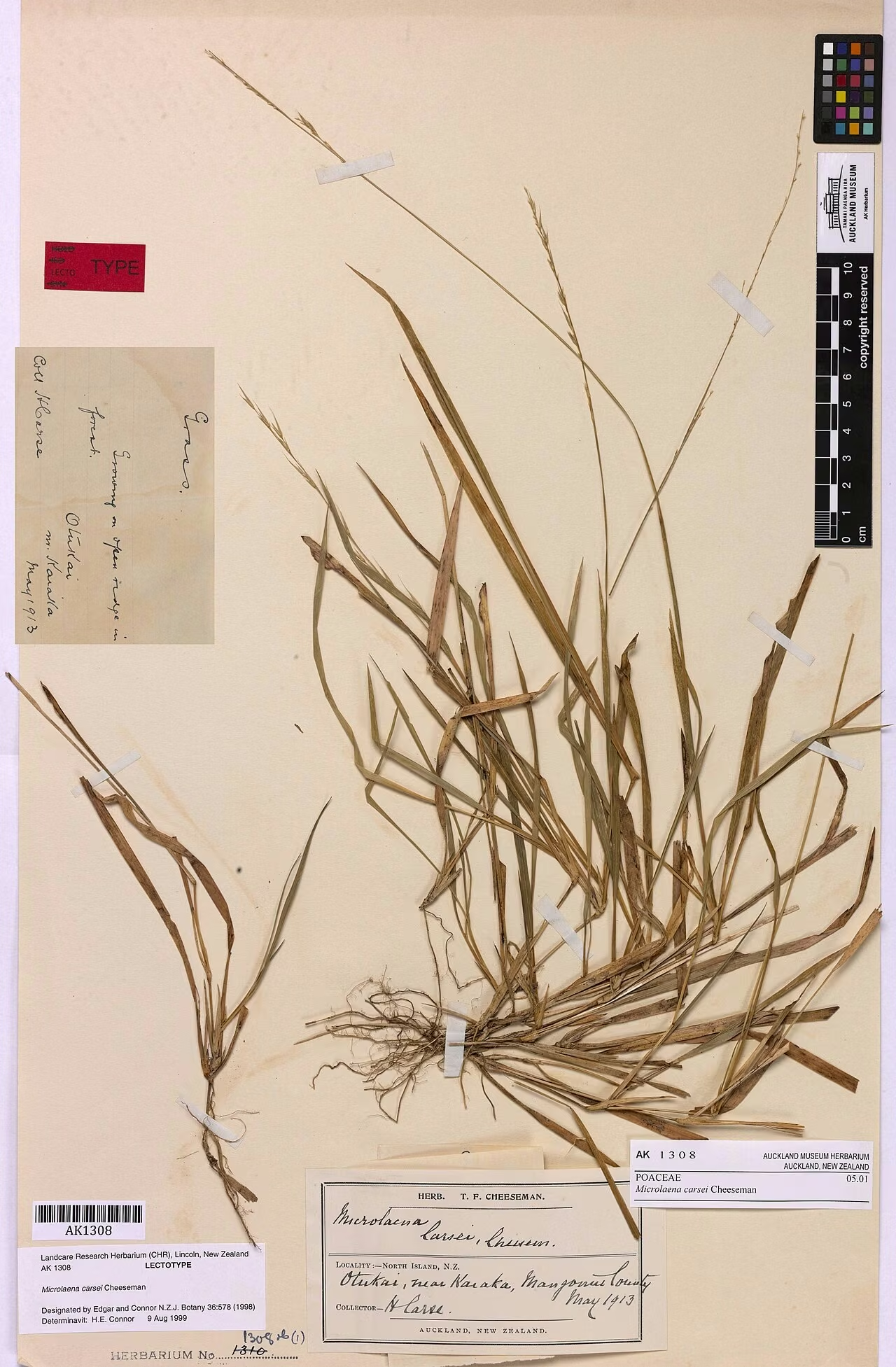
Microlaena carsei
Microlaena carsei
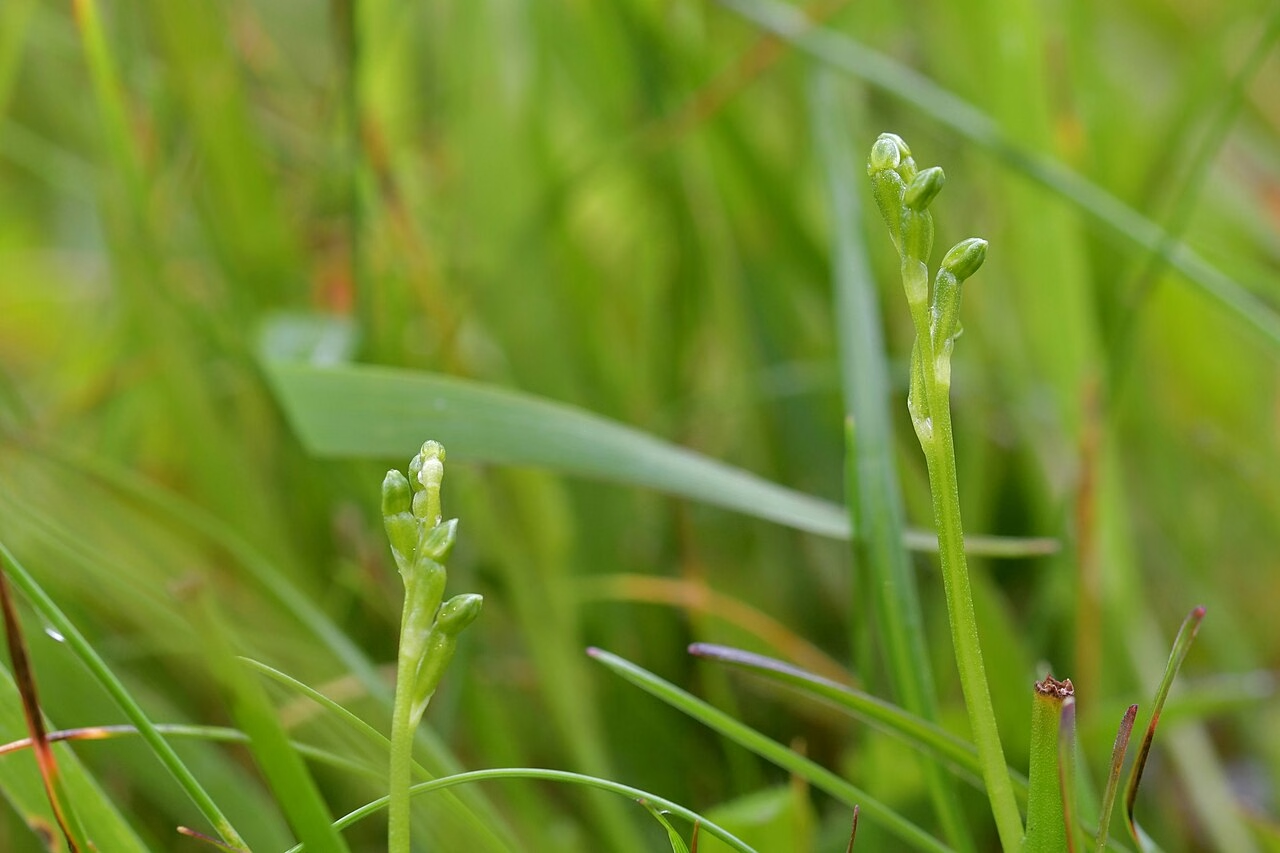
Small Onion Orchid
Microtis oligantha
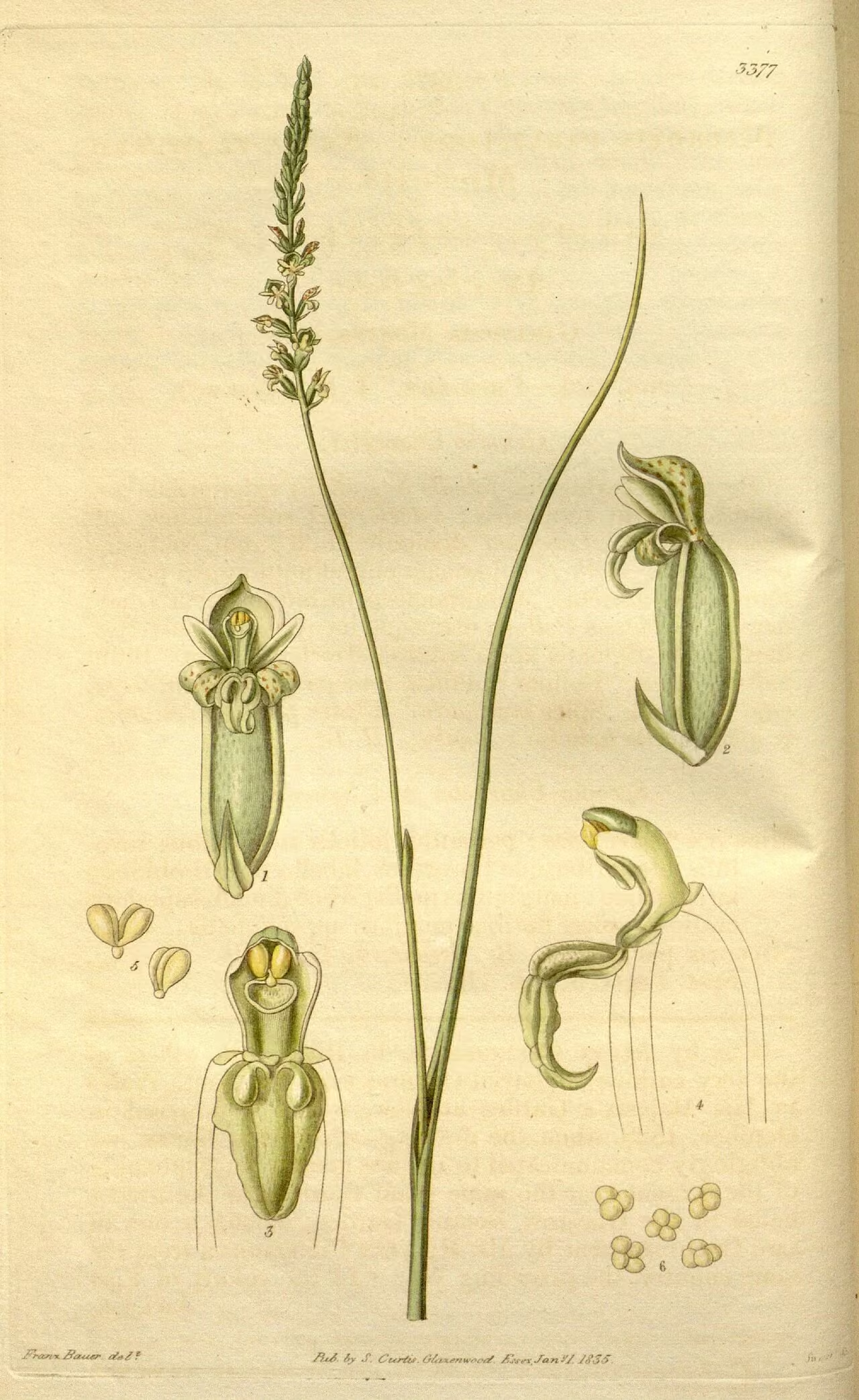
Onion-Leaved Orchid
Microtis parviflora
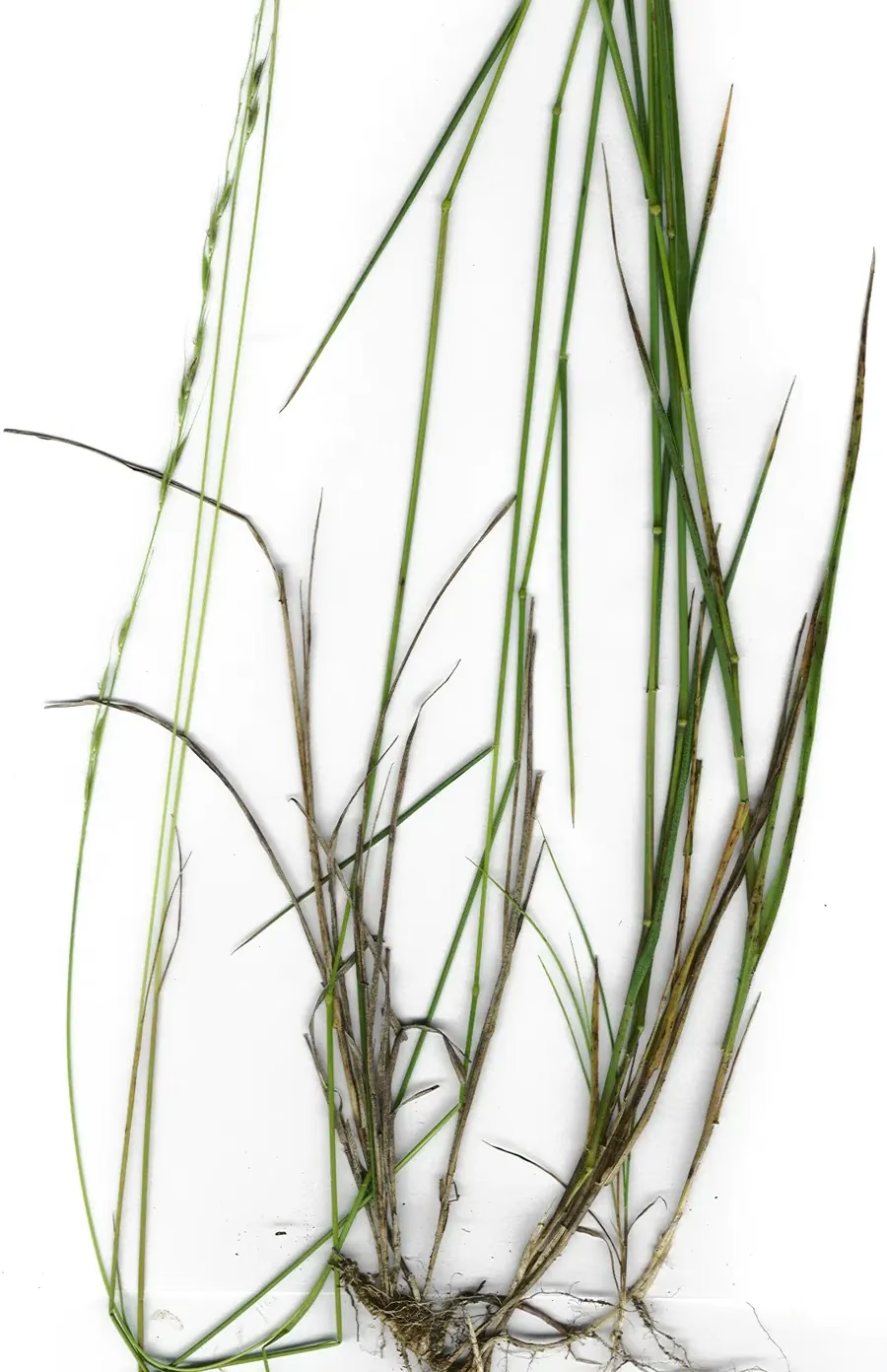
Stipoides Grass
Microlaena Stipoides Grass
Petriei Grass
Achnatherum Petriei Grass
Plant Conservation
Microlaena polynoda was ranked Not Threatened in 2004, 2009, 2012 and 2017, but moved to At Risk - Declining in 2023. Regionally it is Naturally Uncommon in Northland, Declining in Auckland and Regionally Vulnerable in Otago, while it remains Not Threatened in Wellington.
The reasons for its decline are not set out in the sources consulted. Protecting forest margins and scrub, controlling weeds and planting eco-sourced stock in restoration projects all help. It is occasionally sold by specialist native nurseries.
Frequently Asked Questions
Is bamboo grass a real bamboo?
No. Microlaena polynoda is a native New Zealand grass in the rice grass genus. It is called bamboo grass because its stout, jointed, leafy stems resemble a small scrambling bamboo.
Why is Microlaena polynoda listed as Declining?
It was ranked Not Threatened until 2017 but moved to At Risk - Declining in 2023. The published sources consulted do not explain the reasons, and several regions now list it as uncommon or declining.
Where can you plant bamboo grass?
Nursery growers describe it as tolerant of frost, shade, wind, coastal conditions and free-draining soils, making it useful under trees and on steep banks.
How do you grow bamboo grass from seed?
Strip seed from the flower heads and press it into seed-raising mix with a light covering; seedlings appear in late winter or spring, and four weeks of cold stratification can speed germination.
Sources and Further Reading
The botanical, growing, and conservation details for Bamboo Grass (Microlaena polynoda) on this page draw on the New Zealand plant references below. Consult them for full technical records and the latest distribution data.