Bush Rice Grass
Microlaena avenacea
Last updated:
Bush rice grass (Microlaena avenacea), also called oat grass, is a broad-leaved, tufted perennial grass of shaded New Zealand forest. It forms loose clumps of drooping, sharp-edged leaves up to 50 cm long and sends up long, arching flowering stems to about 1.25 m that carry large, open, oat-like panicles. It grows through much of the North Island and in the wetter western and southern South Island, Stewart Island and the Auckland Islands, from sea level to about 1300 m, usually in moist bush and along streams. It is ranked Not Threatened and makes an elegant, shade-loving ground layer for native woodland gardens. Explore more native grasses and flaxes in our native plant guide.
Plant Description
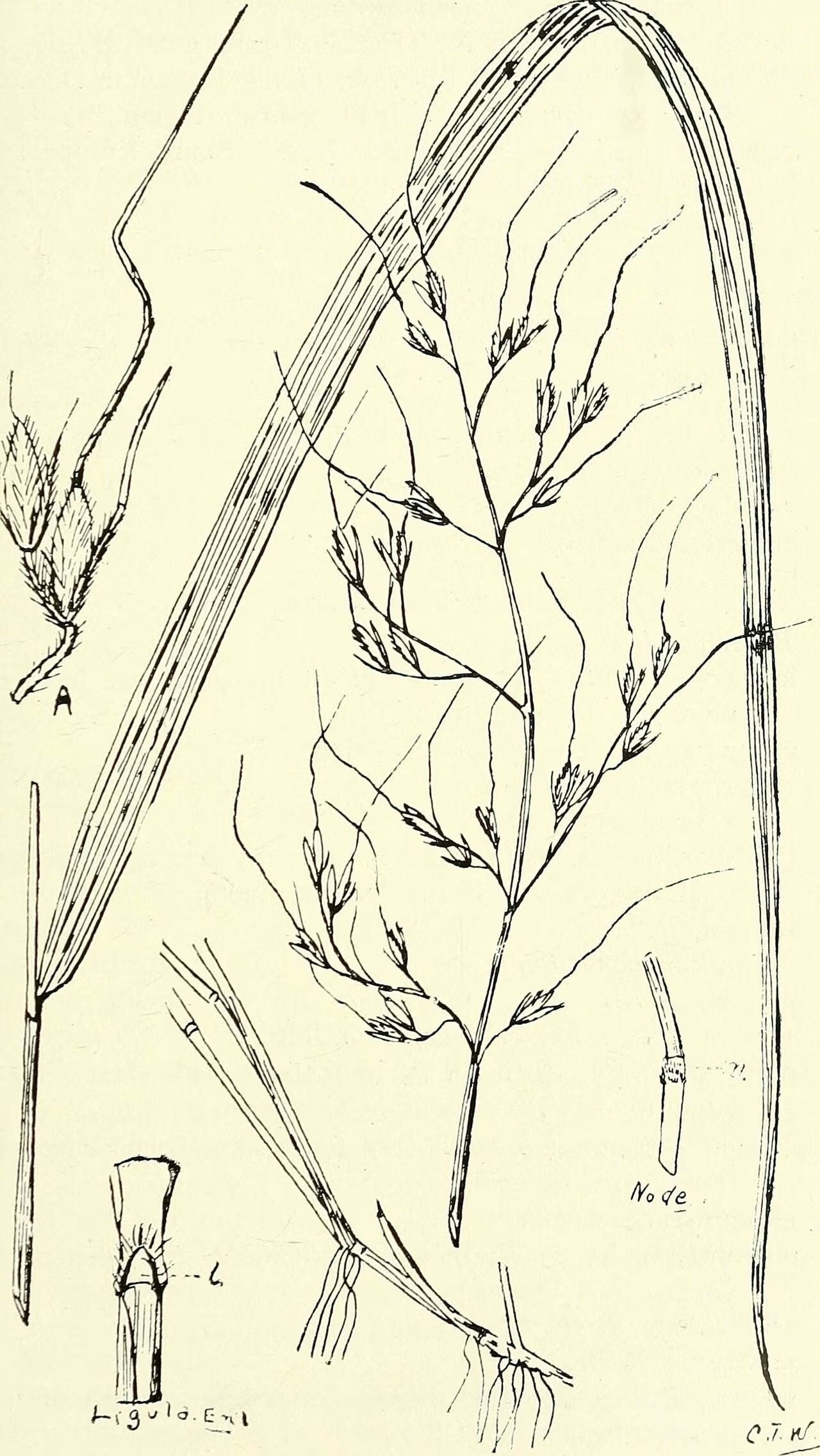
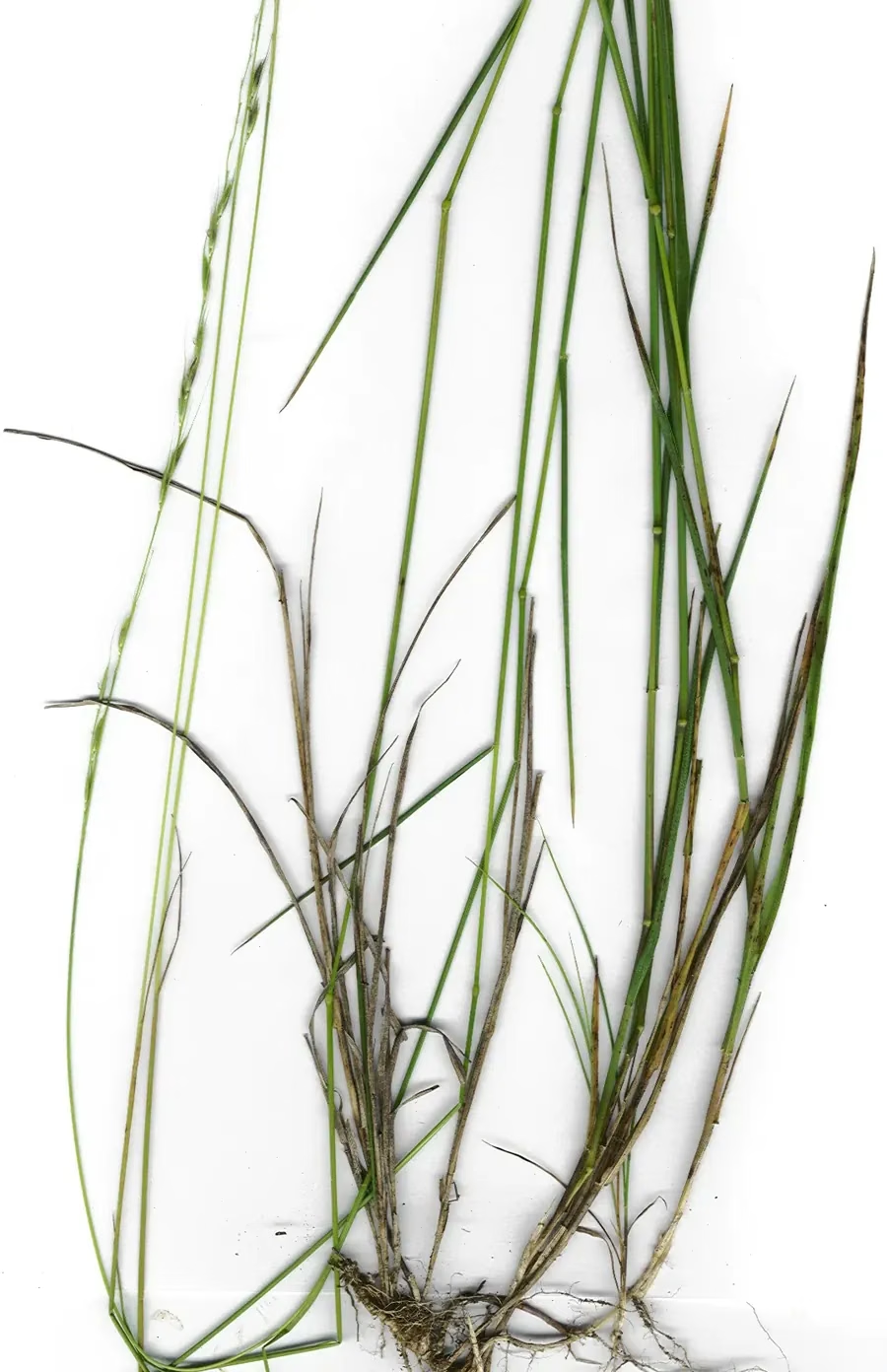
Microlaena avenacea is a tufted, broad-leaved perennial grass arising from a short rhizome. Its leaf blades are up to about 50 cm long and droop gracefully; their margins carry sharp prickles, so they feel rough when drawn through the fingers. The foliage is green to blue-green.
The flowering culms are long and slender, reaching up to about 1.25 m, and arch outward from the clump. They carry large, open panicles 25 to 65 cm long with relatively big spikelets 18 to 30 mm long, which give the plant its oat-like appearance and the epithet avenacea, meaning oat-like.
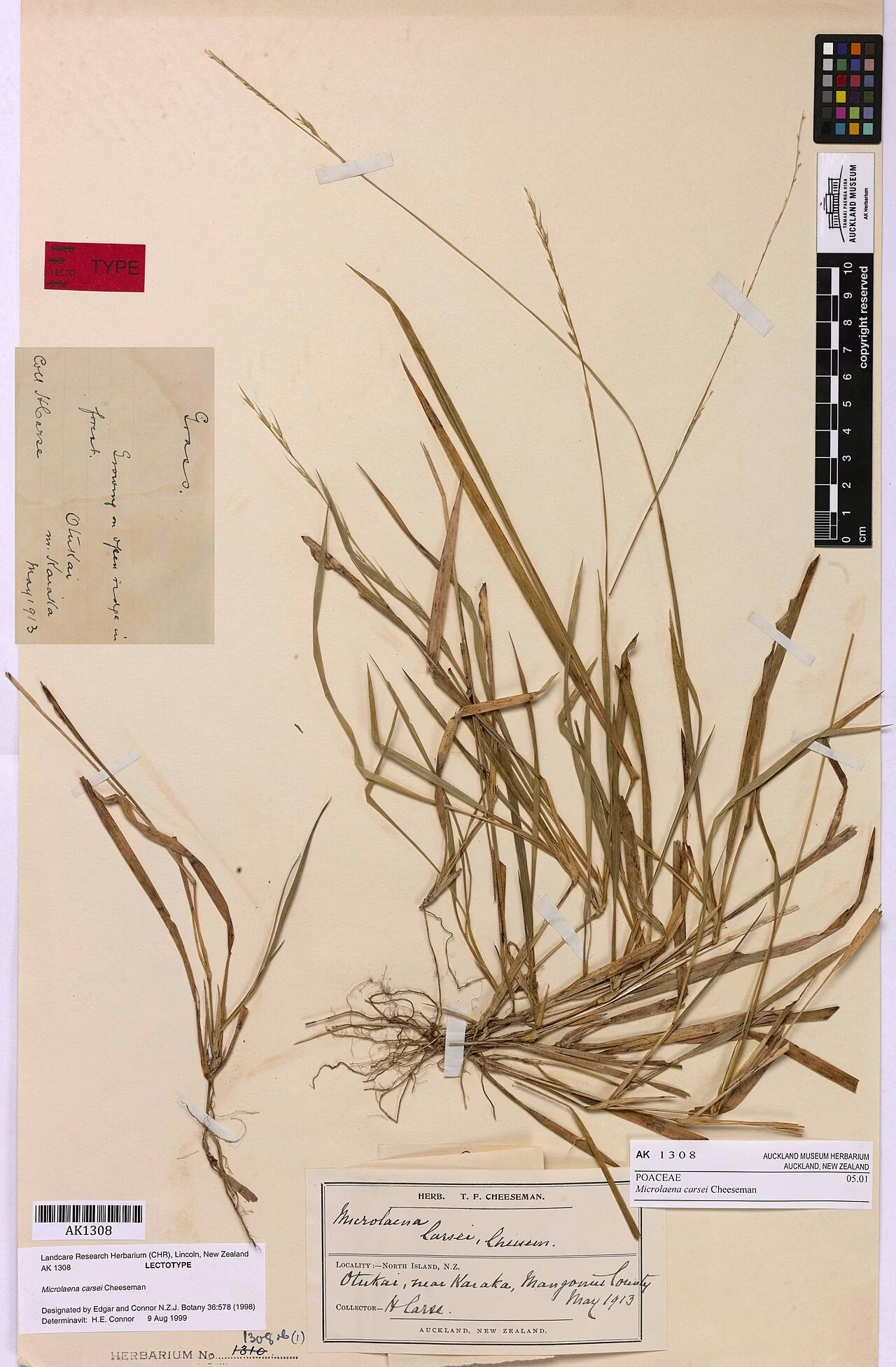
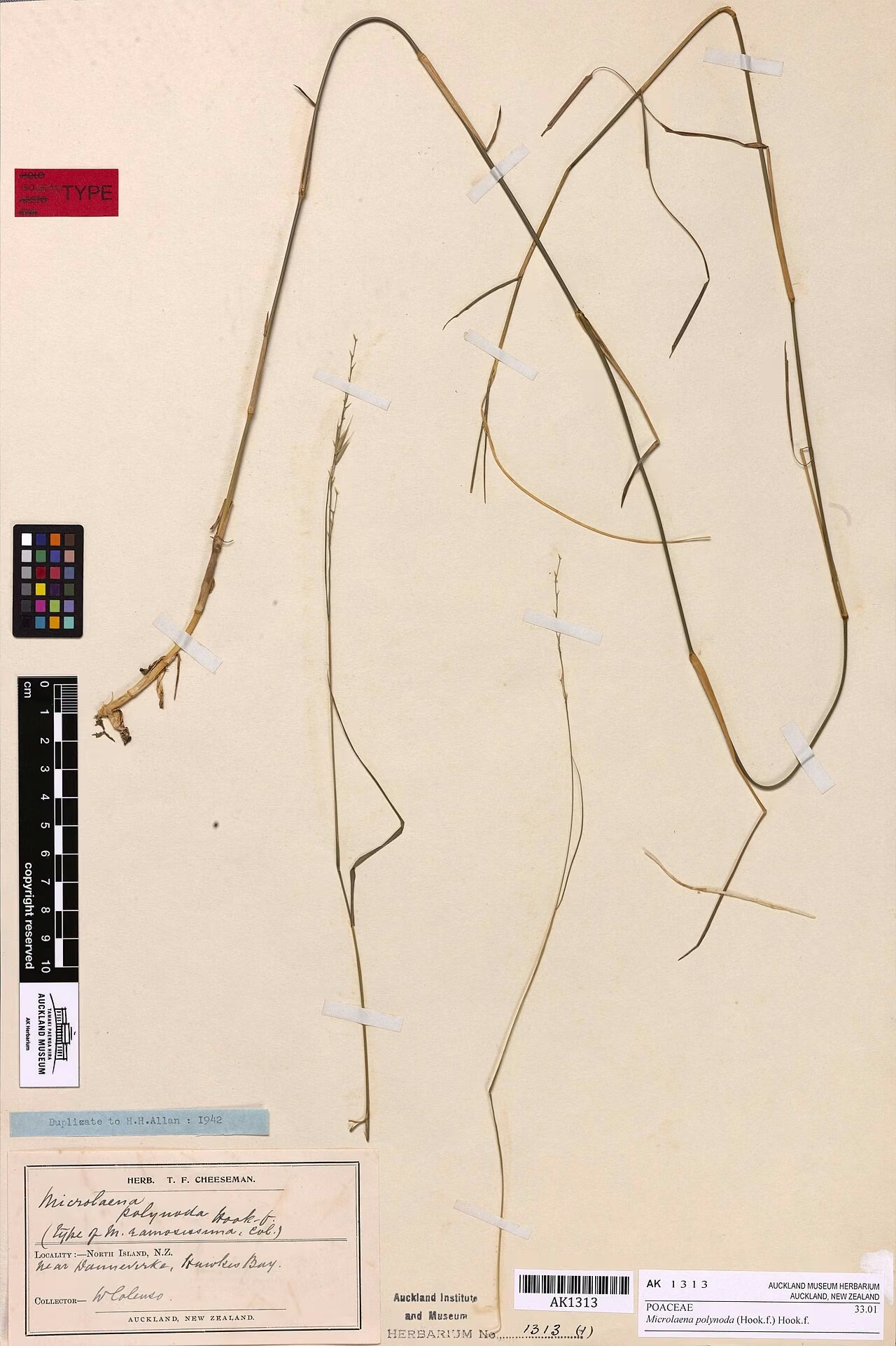
Its relative Microlaena carsei, a rare Northland grass, is smaller, with a shortly creeping rhizome, narrower leaves and smaller panicles. Microlaena polynoda differs in having scrambling, branched, bamboo-like stems with few-flowered racemes, and the common Microlaena stipoides is a much finer, lower grass of open ground.
Quick Facts
| Scientific Name | Microlaena avenacea |
|---|---|
| Height | 0.7-1.25 m in flower |
| Spread | 0.5-1 m |
| Water Needs | Moist; dislikes drought |
| Light | Partial to full shade |
| Frost Tolerance | Moderate to high; grows up to about 1300 m |
| Salt Tolerance | Low; no specific information available |
| Growth Rate | Moderate |
| Lifespan | Perennial |
Climate Best Suited to
Suits cool, moist, humid climates with reliable rainfall, from lowland to montane forest. It dislikes hot, dry, exposed conditions.
Regional Suitability
| City | Climate Suitability |
|---|---|
| Auckland | Medium |
| Wellington | High |
| Christchurch | Medium |
| Dunedin | High |
Plant Habitat
Bush rice grass occurs throughout the North Island, and in the South Island from Nelson and down the west of the Main Divide to Fiordland, becoming less frequent in the drier east. It also reaches Stewart Island and the subantarctic Auckland Islands. It ranges from sea level to around 1300 m.
It is a forest grass that grows mainly in the shade of the bush, particularly at higher altitudes and along streamsides where the air is moist, reflecting its sensitivity to drought.
Growing Requirements
Soil Requirements
In the wild it grows in moist, humus-rich forest soils under a leaf-litter layer.
- Moist, well-drained soil rich in organic matter
- Leaf mould or compost helps hold moisture
- Avoid dry, sandy or compacted ground
Light Requirements
This is a shade-loving understorey grass rather than an open-country tussock.
- Best in dappled or full shade
- Morning sun is tolerated if the soil stays moist
- Hot afternoon sun will brown the leaves
Water Requirements
Drought is its main weakness, so steady moisture matters more than anything else in cultivation.
- Water deeply in dry spells, especially in its first year
- Mulch around the clump
- Streamside and damp shady sites suit it well
Planting and Establishing
Plant in autumn or early spring into a shaded spot with moist, organic soil. Space plants about 50 to 80 cm apart so the arching leaves and flower stems have room to fall naturally.
In restoration it is best added once a canopy exists, as an under-planting along forest edges, gullies and stream margins rather than on open sunny ground.
Ecological Role
As a grass it is wind pollinated. Its large spikelets and seed fall close to the parent clump, and it is a natural component of the ground layer of moist forest throughout much of the country.
NZPCN classes it as a facultative upland plant: occasionally found in wet ground but usually in non-wetland forest. Specific insects or birds that use it are not documented in the sources consulted.
Uses & Significance
Garden Uses
Bush rice grass brings a soft, flowing grass texture to shaded native gardens, where few grasses perform well.
- Ground layer under trees and tree ferns
- Shady banks and stream edges
- Woodland and fern gardens
- Contrast with broad-leaved forest shrubs
Ecological Value
It restores the grassy element of the native forest floor, which is often missing from plantings.
- Covers and binds soil on shaded slopes and stream banks
- Adds structural diversity to the forest ground layer
- Widespread native suited to eco-sourced restoration in many regions
Landscaping Uses
Plant in drifts beneath a canopy so the arching panicles catch low light. Its weeping habit softens the edges of paths and steps through shady gardens.
It pairs well with ferns such as Blechnum and Asplenium and with low shrubs like Coprosma, giving a natural forest-floor look.
Seasonal Care Calendar
Spring
New leaves grow strongly and flowering stems start to emerge.
- Remove old dead leaves
- Mulch while the soil is moist
Summer
The tall arching panicles are at their best, and moisture stress is the main risk.
- Water during dry periods
- Watch for browning in sun
Autumn
Seed ripens and can be stripped from the heads.
- Collect seed
- Good time to plant or divide
Winter
The clump stays evergreen with slower growth.
- Little care needed
- Cut back spent flower stems if untidy
When to Prune and How Much
No regular pruning is needed. Cut spent flowering stems at the base once seed has fallen, and comb out dead leaves by hand, wearing gloves because the leaf edges are prickly.
Avoid shearing the whole clump, which spoils its graceful drooping form.
How to Grow Bush Rice Grass
Bush rice grass is propagated from seed or by dividing established clumps. A Nelson native nursery raises it from seed stripped from the flower heads, reporting that it germinates without special treatment but that four weeks of cold stratification speeds the process, with seedlings appearing in late winter or early spring. Division is quicker and gives a sizeable plant at once. Because it is a widespread species with regional variation, use eco-sourced material from your own district for restoration work.
From Seed
Strip seed from the panicles once it is ripe and the spikelets come away easily. Seedlings need consistent moisture through germination and early growth.
- Strip ripe seed from the flower heads in late summer or autumn
- Optionally chill the seed in a damp medium in the fridge for four weeks
- Press seed into a seed-raising mix and cover lightly
- Keep evenly moist in a shaded, sheltered place
- Pot on seedlings when large enough to handle
By Division
Mature clumps arising from short rhizomes can be split in autumn or early spring when the soil is moist and temperatures are mild.
- Lift the clump with a fork
- Cut it into sections, each with several shoots and roots
- Trim the leaves back by half to reduce water loss
- Replant or pot up immediately and keep moist and shaded until re-established
- Water through the following summer, since new divisions are especially sensitive to drought
Pests & Diseases
No significant pests or diseases are recorded for bush rice grass in the sources consulted. The main cause of failure in gardens is drought stress or too much sun.
In the wild, browsing animals and weeds that smother the forest floor can reduce the ground layer in which it grows.
Cultural Significance
No Māori name or traditional Māori use is recorded for Microlaena avenacea in the sources consulted.
It was first described by the French naval surgeon Étienne Raoul in 1844 as Diplax avenacea, and later transferred to Microlaena by Joseph Hooker. The genus name means small cover, referring to the small outer scales of the spikelet.
Bonus Tip
If a planted clump keeps browning off at the leaf tips, it is telling you the site is too dry or sunny. Move it to the shade of a tree or tree fern near a damp spot, which is exactly where it grows in the bush.
Related Plants
Explore other native plants that share similar characteristics or habitats with Bush Rice Grass (Microlaena avenacea), offering further insights into New Zealand's diverse flora. These related species provide context and opportunities for complementary planting in your garden.
Dwarf Musk
Mazus novaezeelandiae subsp. novaezeelandiae
Mazus pumilio
Mazus pumilio
Chatham Island Māhoe
Melicytus chathamicus
Large-Leaved Māhoe
Melicytus macrophyllus
Microlaena carsei
Microlaena carsei
Bamboo Grass
Microlaena polynoda
Small Onion Orchid
Microtis oligantha
Stipoides Grass
Microlaena Stipoides Grass
Plant Conservation
Microlaena avenacea is ranked Not Threatened (2023) with the qualifier Secure Overseas, and it has held that rank in every assessment since 2004. It is also ranked Regionally Not Threatened in Northland, Auckland, Wellington and Otago.
Protecting moist native forest and controlling weeds that smother the forest floor keep it secure. It is occasionally offered by specialist native plant nurseries.
Frequently Asked Questions
What does bush rice grass look like?
It forms a clump of broad, drooping green to blue-green leaves up to 50 cm long with prickly margins, and tall arching culms up to 1.25 m bearing large open panicles of long spikelets.
Will Microlaena avenacea grow in shade?
Yes. It is a forest-floor grass that grows naturally in the shade of the bush, especially in moist sites and beside streams, and it struggles in dry, sunny spots.
How do you tell bush rice grass from Microlaena polynoda?
Bush rice grass is a tufted clump with long flowering stems and big panicles, whereas Microlaena polynoda, bamboo grass, has scrambling, bamboo-like leafy stems and small racemes of only 3 to 20 spikelets.
Sources and Further Reading
The botanical, growing, and conservation details for Bush Rice Grass (Microlaena avenacea) on this page draw on the New Zealand plant references below. Consult them for full technical records and the latest distribution data.