Shore Hard Fern
Austroblechnum banksii
Last updated:
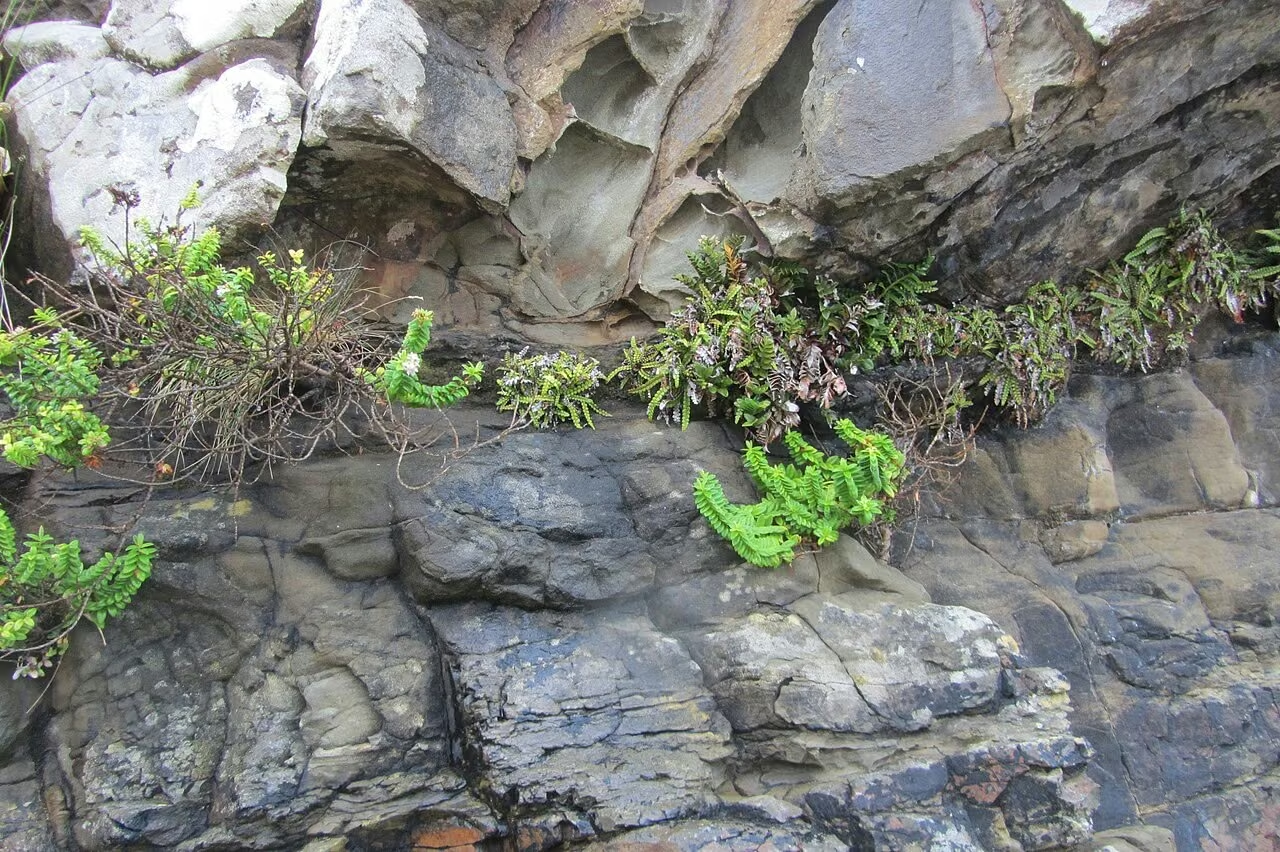
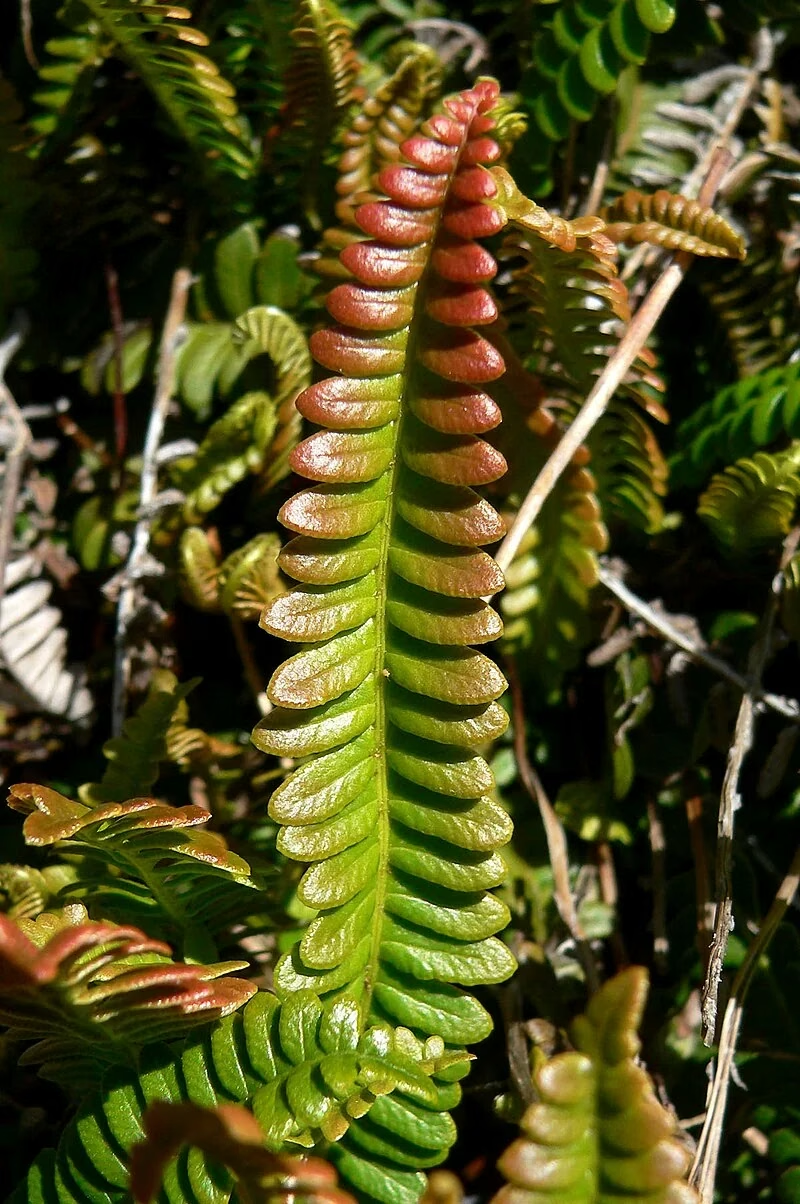
Shore hard fern (Blechnum blechnoides, now known as Blechnum banksii or Austroblechnum banksii) is a small, tufted native fern that grows only near the sea, on damp rocks, overhangs, crevices and seepages within reach of salt spray. Its slightly fleshy, dark green sterile fronds are ladder-like and spread in low rosettes up to about 50 cm long, while narrower fertile fronds stand upright in the centre. It occurs around the coasts of the North, South, Stewart, Auckland and Campbell Islands, though patchily and rarely north of Auckland. It is Not Threatened and makes a tough fern for shaded coastal gardens. Explore more native ferns in our native plant guide.
Plant Description
Shore hard fern has an erect or suberect rhizome up to 60 mm long, covered in chestnut-brown, ovate scales 5-10 mm long. The sterile fronds are 35-500 mm long and lie prostrate to semi-erect in a rosette. Their red-brown stipes are short (5-80 mm), and the yellow-brown rachis is grooved and hairless. The blade is pinnatisect, cut almost to the midrib into 7-40 pairs of triangular to rounded, blunt-tipped pinnae with entire or slightly scalloped margins, giving a ladder-like look. The fronds are dark green, stiff and slightly fleshy.
The fertile fronds are usually shorter (25-400 mm) and held erect in the centre of the plant. Their pinnae are much narrower, linear to narrowly oblong and often curved, more widely spaced, with continuous lines of sori along both sides of each pinna midrib. This contrast between broad sterile and skeletal fertile fronds (dimorphism) is typical of the hard ferns.
It can be confused with Blechnum chambersii, which has wider, less fleshy sterile fronds, and with Blechnum durum, which is substantially larger, with more crowded fertile pinnae and two-coloured rhizome scales. Its strictly coastal habitat is a strong clue to identity.
Quick Facts
| Scientific Name | Austroblechnum banksii |
|---|---|
| Height | 0.1-0.5 m |
| Spread | 0.2-0.6 m |
| Water Needs | Moist; likes seepage and damp rock |
| Light | Partial to full shade |
| Frost Tolerance | Light frosts on mild coastal sites; not documented further |
| Salt Tolerance | High; a salt-spray coastal fern |
| Growth Rate | Slow to moderate |
| Lifespan | Perennial |
Climate Best Suited to
Suited to mild, humid coastal climates throughout New Zealand, from Northland to the subantarctic Auckland and Campbell Islands, where sea air keeps temperatures moderate.
Regional Suitability
| City | Climate Suitability |
|---|---|
| Auckland | Medium |
| Wellington | High |
| Christchurch | Medium |
| Dunedin | High |
Plant Habitat
Shore hard fern occurs around the coasts of the North Island from Northland to Wellington and the Bay of Plenty, and in the South Island from the Marlborough Sounds to Dunedin, with an outlying population on Banks Peninsula. It also grows on Stewart Island and the subantarctic Auckland and Campbell Islands. It ranges from sea level to about 200 m. Its distribution is patchy, and it is quite uncommon north of Auckland.
It is a salt-spray species confined to damp rocks, overhangs, rock crevices, shaded seepages and stream banks close to the sea. It may grow on exposed coastal rocks or among other vegetation, including beneath coastal scrub.
Growing Requirements
Soil Requirements
In the wild it roots into crevices and thin, wet organic matter on coastal rocks, so in gardens it needs a moist but free-draining, humus-rich mix.
- Moist, free-draining soil
- Humus-rich or leaf-mould based
- Crevices in rock walls suit it well
- Avoid stagnant, waterlogged soil
Light Requirements
It naturally grows on shaded overhangs and seepages, so partial to full shade gives the best results.
- Partial to full shade
- Morning sun only in warmer districts
- Protect from hot afternoon sun inland
Water Requirements
It depends on constant seepage or damp rock in the wild, so it must never dry out completely.
- Keep evenly moist
- Ideal beside dripping rock or water features
- Water through dry summer spells
Planting and Establishing
Plant into a damp rock wall, shaded rockery or crevice where moisture seeps through. Set the crown at soil level and pack humus-rich mix around the roots, keeping it moist until established.
In coastal gardens it can be planted in exposed sites as long as it is shaded and moist. In inland gardens give it extra shelter and humidity, as it is adapted to cool, moist sea air.
Ecological Role
Like all ferns, it has no flowers or seeds and reproduces by minute spores that are dispersed by wind. Its chromosome number is 2n = 66.
On coastal cliffs and seepages it forms part of a specialised salt-tolerant fern and herb community, and in southern regions Flora of New Zealand records it growing in association with particular other coastal ferns. Its rosettes help bind thin organic matter on rock faces.
Uses & Significance
Garden Uses
A compact, tough fern for difficult shady coastal spots where few other ferns survive salt spray.
- Coastal fern gardens
- Damp rock walls and shaded rockeries
- Streamside and water-feature edges
- Coastal restoration plantings
Ecological Value
As one of few ferns adapted to salt spray, it contributes to the distinctive vegetation of New Zealand's rocky coasts and subantarctic islands.
- Salt-tolerant coastal fern
- Colonises damp coastal rock and seepages
- Part of subantarctic island coastal flora
Landscaping Uses
Use it in the crevices of a shaded retaining wall, between boulders by the coast or beside a water feature, where its low rosettes and upright fertile fronds create a neat, architectural pattern.
Group several plants with other small coastal natives that like shade and moisture for a naturalistic seaside rock garden.
Seasonal Care Calendar
Spring
New fronds unfurl from the centre of the rosette as temperatures rise.
- Plant out new ferns
- Mulch with leaf litter to hold moisture
Summer
Fertile fronds mature, and spores are released from the continuous sori.
- Keep plants moist in dry weather
- Collect fertile fronds for spores
Autumn
Growth continues while conditions stay mild and moist.
- Remove dead fronds
- Divide congested clumps
Winter
The evergreen rosettes persist through winter in mild coastal sites.
- Little maintenance needed
- Shelter pot plants from hard frost inland
When to Prune and How Much
Simply remove old, brown fronds at the base when they become untidy. Avoid cutting the central growing point.
Old fertile fronds can be removed once they have shed their spores.
How to Grow Shore Hard Fern
As a fern, shore hard fern reproduces by minute, wind-dispersed spores, and propagation in cultivation is by spores or careful division. NZPCN gives no specific propagation notes for this species, so the methods below follow standard practice for small hard ferns. Fertile fronds with continuous rows of sori along each pinna are the source of spores. The rhizome is erect and short, so plants form compact rosettes and can only be divided when a clump has developed several crowns. Use plants from cultivated stock or nursery sources rather than digging wild plants from coastal rocks.
From Spores
Spores are collected from mature fertile fronds and sown on a sterile surface. Germination produces small green prothalli, from which young fern fronds grow after fertilisation.
- Pick a fertile frond when the sori are dark and ripe
- Dry it on paper for a day or two to release spores
- Sow spores thinly on sterilised fine mix in a covered container
- Keep in bright, indirect light and constantly moist
- Prick out young sporelings in small clumps and grow on in humid shade
By Division
Older plants sometimes form several crowns, which can be separated with roots attached.
- Divide in spring as new fronds begin to grow
- Separate crowns carefully with a sharp knife
- Pot into moist, humus-rich mix
- Keep shaded and humid, and never let the mix dry out, until new fronds show the division has established
Pests & Diseases
No specific pests are recorded for this fern in the sources consulted. In gardens, drying out is the most common cause of failure.
In the wild, coastal development, weeds on cliffs and seepages, and trampling around popular coastal rocks can damage local populations.
Cultural Significance
No Māori name or traditional use specific to this fern was found in the sources consulted.
The current epithet banksii honours Sir Joseph Banks (1743-1820), the English naturalist on Cook's first voyage. The older name blechnoides comes from Lomaria blechnoides, described by Bory, and reflects the long-held view that New Zealand and Chilean plants were the same species.
Bonus Tip
If your coastal garden has a damp, shaded rock face or retaining wall, tuck small plants of shore hard fern into the joints. It thrives in exactly the salty, seeping situations where most ferns sulk, and it stays compact.
Related Plants
Explore other native plants that share similar characteristics or habitats with Shore Hard Fern (Austroblechnum banksii), offering further insights into New Zealand's diverse flora. These related species provide context and opportunities for complementary planting in your garden.
Plant Conservation
Shore hard fern is ranked Not Threatened nationally (2023) with the qualifier Secure Overseas. Regionally it is At Risk - Naturally Uncommon in Northland and Wellington, At Risk - Declining in Auckland, and Not Threatened in Otago.
Its narrow coastal habitat is vulnerable to development, weeds and disturbance. Protecting coastal cliffs and seepages and keeping them free of weeds helps maintain populations, especially in the north where it is scarce.
Frequently Asked Questions
What is the current name of Austroblechnum banksii in New Zealand?
Flora of New Zealand uses Blechnum banksii and NZPCN uses Austroblechnum banksii. Blechnum blechnoides was the name used when New Zealand and Chilean plants were treated as one species.
How do you tell shore hard fern from Blechnum chambersii?
Shore hard fern grows only near the sea and has narrower, slightly fleshy sterile fronds. B. chambersii, lance fern, has wider, thinner sterile fronds and grows in damp forest.
Can shore hard fern handle salt spray?
Yes. It is a salt-spray species confined to rocks, overhangs and seepages close to the sea, below about 200 m, and is used in coastal fern gardens.
Is shore hard fern found in Northland?
Only patchily. NZPCN notes it is quite uncommon north of Auckland, and it is ranked Regionally At Risk - Naturally Uncommon in Northland.
Sources and Further Reading
The botanical, growing, and conservation details for Shore Hard Fern (Austroblechnum banksii) on this page draw on the New Zealand plant references below. Consult them for full technical records and the latest distribution data.