Creeping Lobelia
Lobelia glaberrima
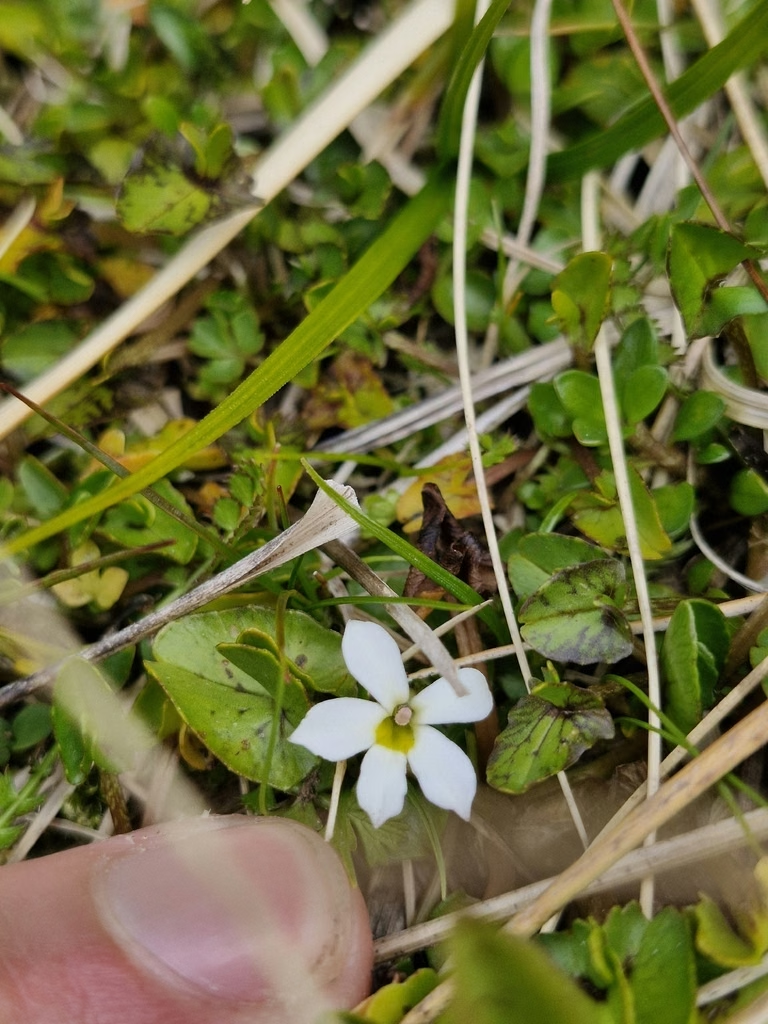
Lobelia glaberrima is a small creeping herb endemic to mountains of the southern South Island. Its round, toothed leaves and solitary white flowers grow among damp alpine vegetation. This prostrate herb creeps and roots at its leaf nodes.
Identification
This prostrate herb creeps and roots at its leaf nodes. The alternate leaves are nearly round, 2.5-7 mm long, with five to seven lateral teeth and a prominent tooth at the tip.
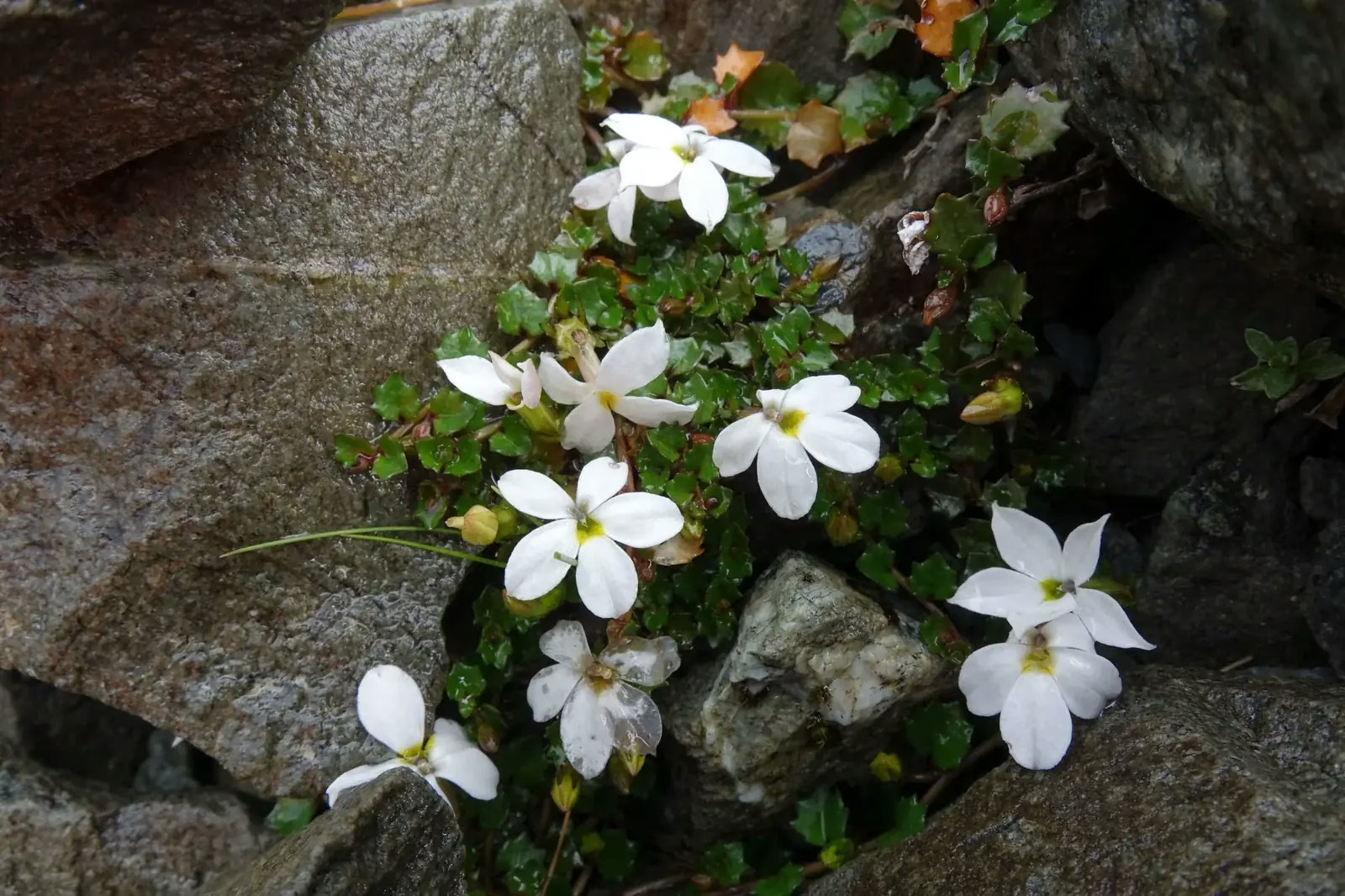
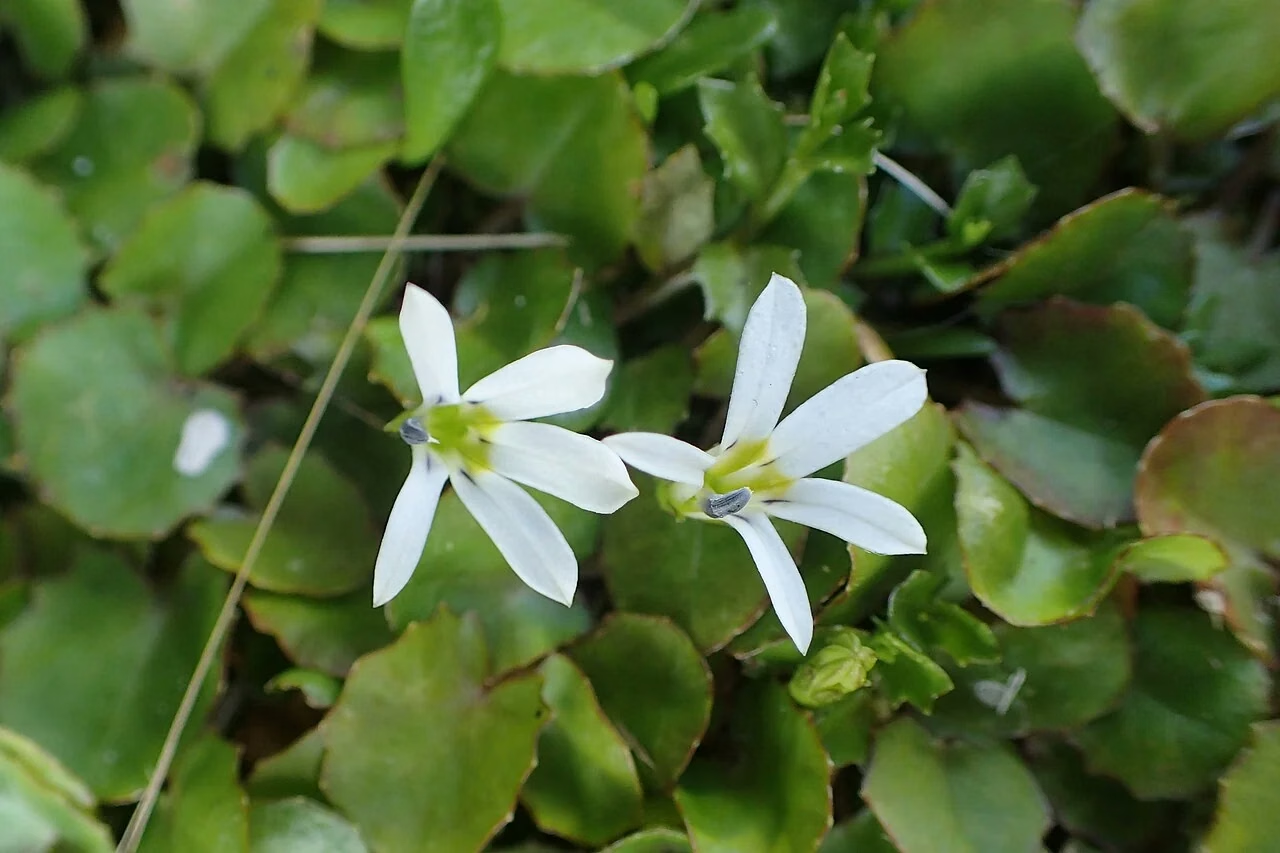
Leaves are green, often flushed red underneath and around the edges. Solitary flowers sit in the leaf axils; they open white and measure about 6-12 mm across.
Quick facts
| Scientific Name | Lobelia glaberrima Heenan |
|---|---|
| Family | Campanulaceae |
| Origin | Endemic to New Zealand |
| Range | Southern South Island mountains |
| Habit | Creeping herb, rooting at nodes |
| Habitat | Snowbanks, tarn margins and alpine herbfield |
| Flowering | October to March |
| Fruiting | November to May |
| National status | Not Threatened (2023) |
| Height | Prostrate, ground-hugging herb; height is not quantified |
| Water Needs | A cultivation watering requirement is not specified |
| Light | A cultivation light requirement is not specified |
| Spread | Creeping stems root at leaf nodes; patch width is not quantified |
| Frost Tolerance | Minimum tolerated temperature is not documented |
| Salt Tolerance | Salt tolerance is not documented |
| Growth Rate | Annual extension is not quantified in the cited accounts |
| Lifespan | Longevity in years is not documented |
Natural range
NZPCN records the species in south-west Canterbury, Otago, southern Westland and Southland. The 2008 species description places herbarium records at approximately 1,000-1,800 m in montane and alpine country.
| City | Climate Suitability |
|---|---|
| Auckland | Not assessed |
| Wellington | Not assessed |
| Christchurch | Not assessed |
Habitat and distribution
The plant grows on snowbanks, along tarn and bog margins, in grassland and herbfield, and on rock bluffs and debris slopes. Its habitats are often damp and sheltered, with open spaces for creeping stems.
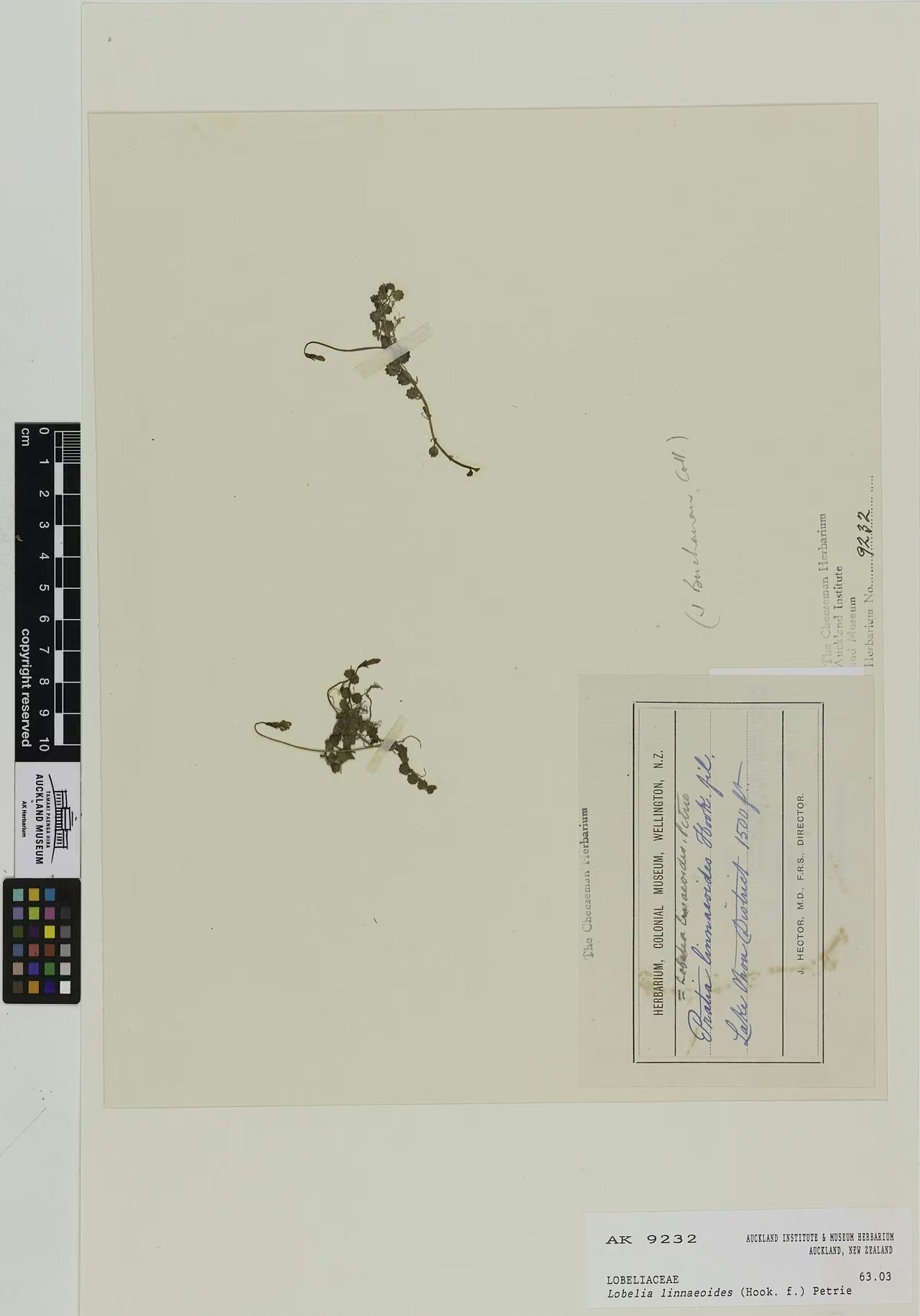
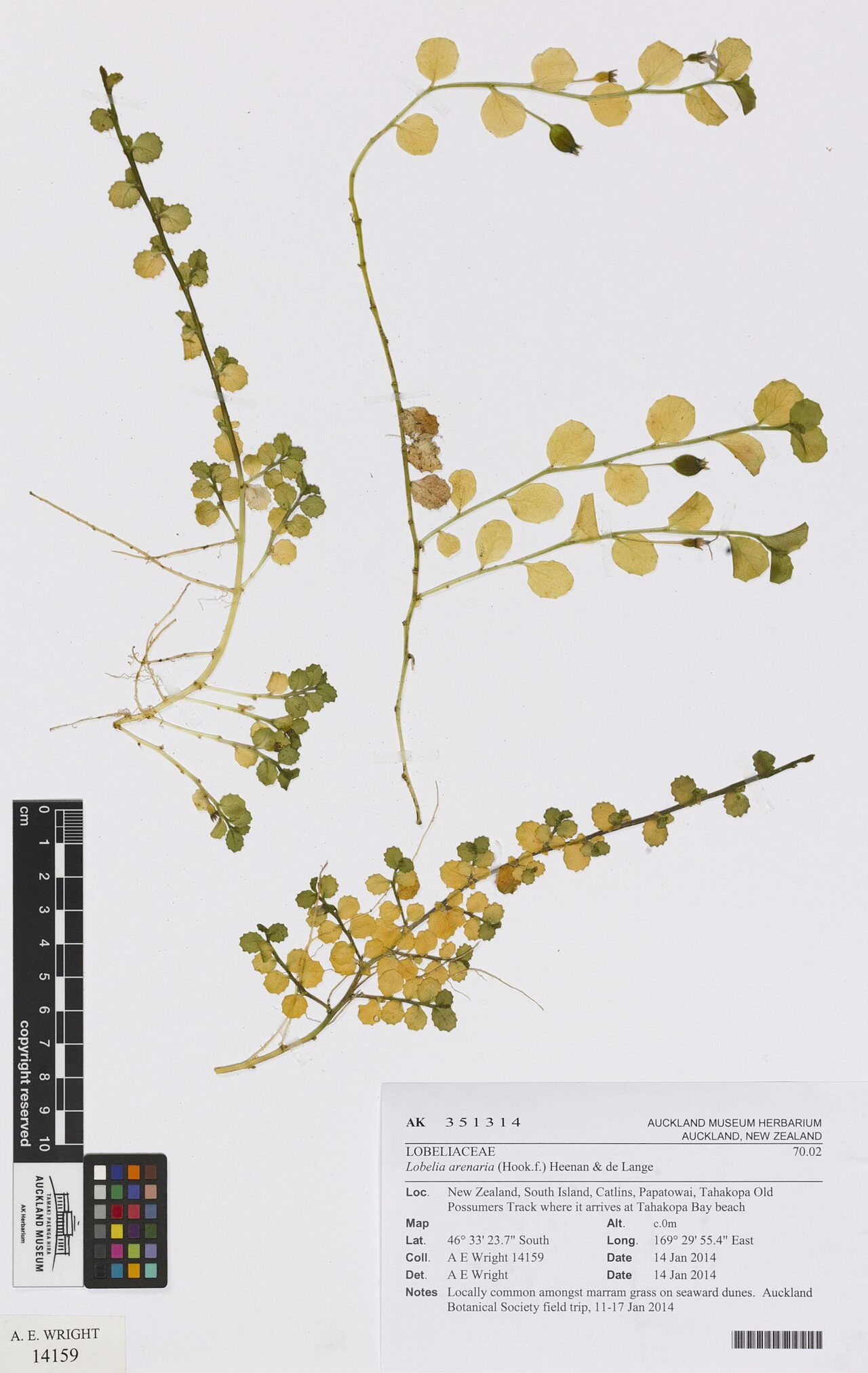
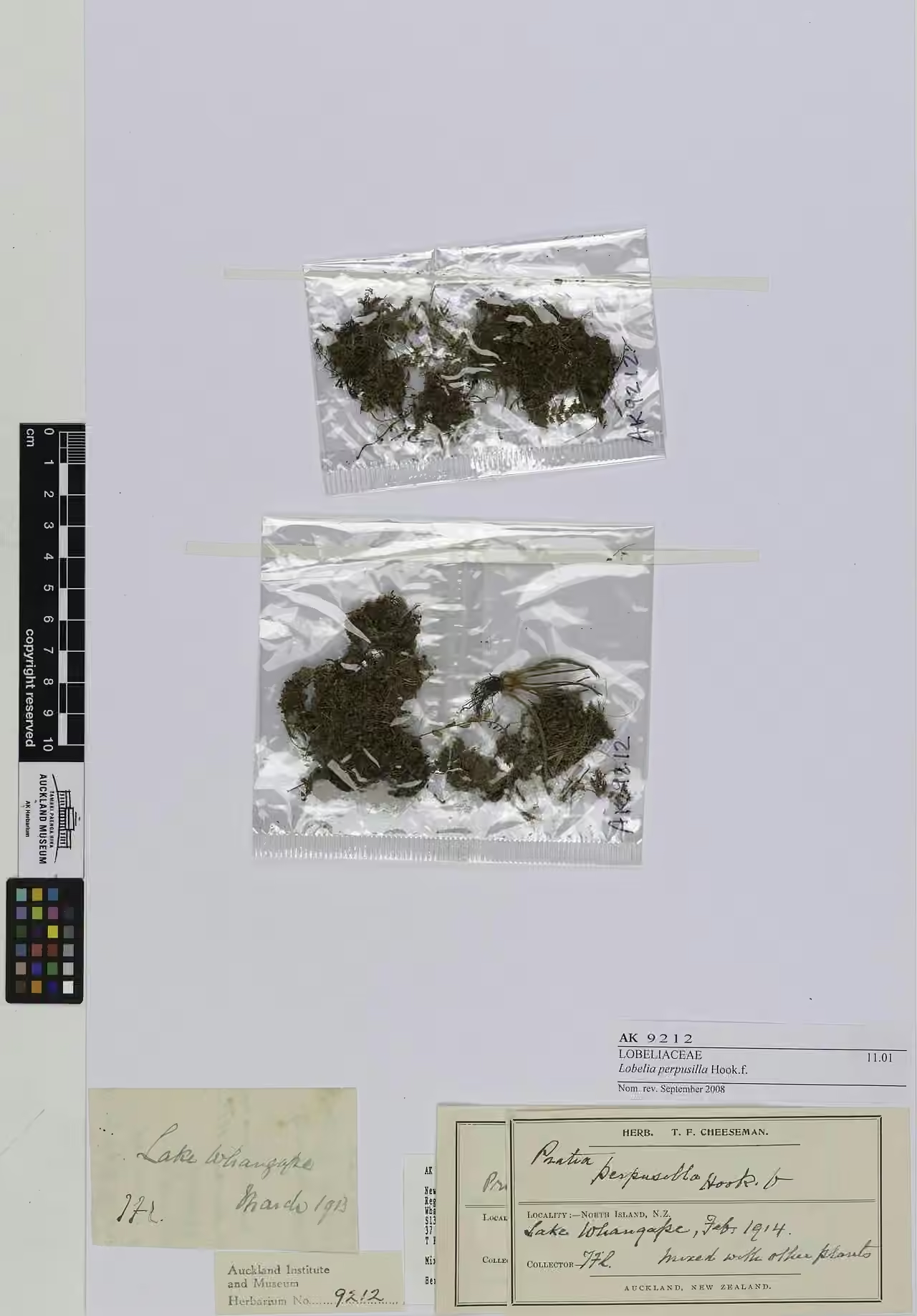
An Old Man Range herbarium record describes plants threaded among other turf-forming species near melting snow.
Natural growing conditions
Many recorded sites are damp and sheltered, including margins of tarns and places near snowmelt. NZPCN suggests a rock garden or pot for cultivation, though it does not specify a watering schedule.
Planting considerations
NZPCN reports that the species can be grown from rooted pieces or fresh seed and suggests keeping it in a pot or rock garden. Its creeping stems root at nodes and can thread through neighbouring turf.
Creeping growth
The stems grow prostrate and produce roots at leaf nodes. This allows the small herb to extend through gaps in alpine vegetation; an Old Man Range specimen was collected among other turf-forming plants.
Observing the plant
Look for leaves with rounded outlines, toothed edges and a red flush on the underside. The short flower stalks are just 2-4 mm long, keeping the solitary blooms close to the creeping shoots.
Garden context
NZPCN recommends a rock garden or pot for this small species. A New Zealand nursery account also reports successful trials in Auckland; that is a specific cultivation observation rather than evidence of performance in every climate.
Flowers and fruit
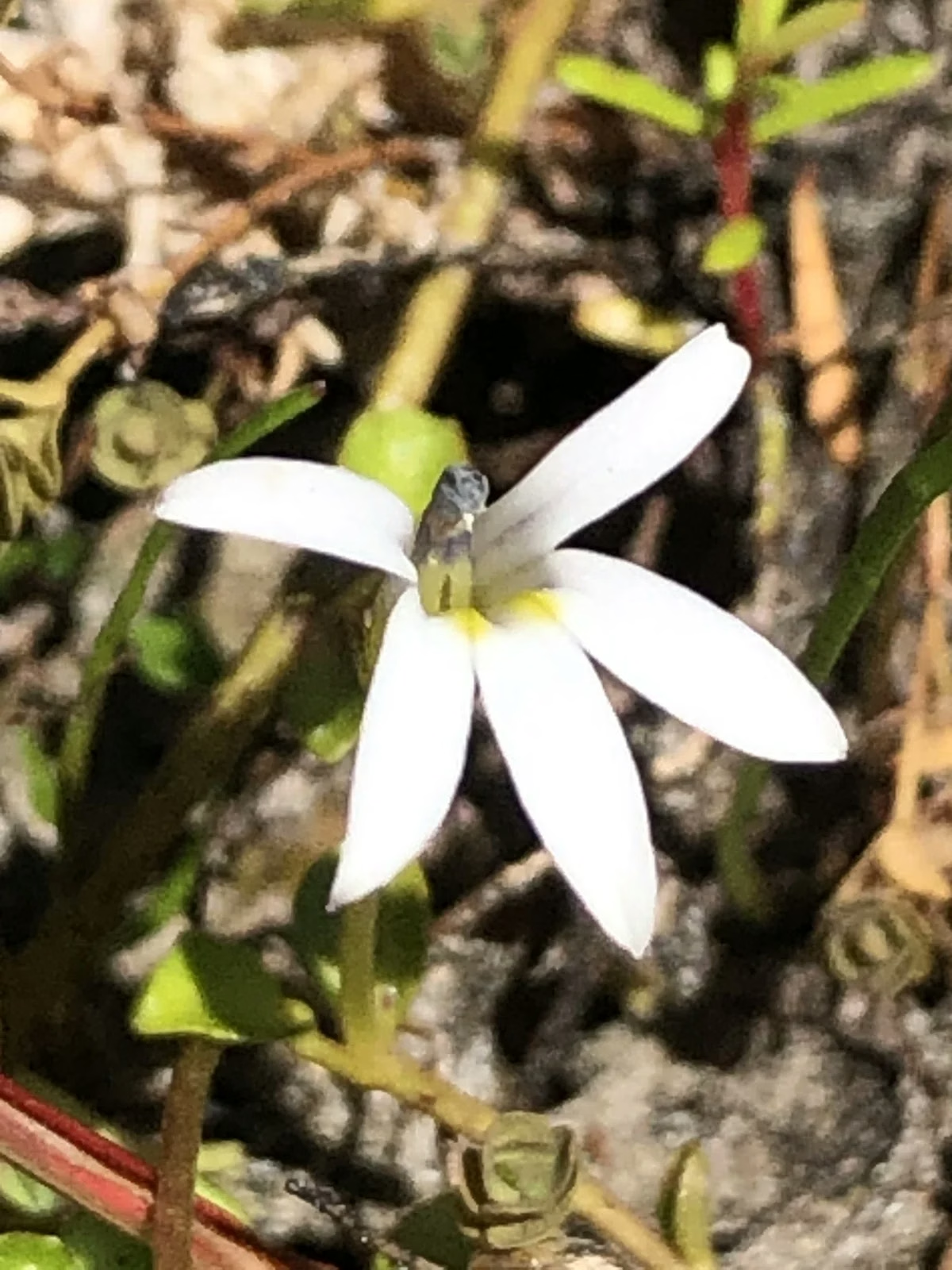
Flowering is recorded from October to March and fruiting from November to May. Flowers are bisexual and usually white, with five lobes and purple-black anthers joined in a tube around the style.
The rounded capsule is thin-walled and gradually breaks down; the small seeds can be seen through its wall.
Growth form
Rather than making a tall clump, the species grows as a hairless, prostrate herb with stems that root at the nodes. Its leaves are alternate and may stand upright or spread from the shoot.
How to Grow Creeping Lobelia (Lobelia glaberrima)
Rooted pieces and fresh seed
Both rooted pieces and fresh seed are documented propagation routes for Lobelia glaberrima. The plant's prostrate stems root at leaf nodes, giving a clear biological basis for using pieces that already have roots. NZ Plant Conservation Network describes these methods as easy and recommends a rock garden or a pot for cultivation.
Interpreting Its Natural Settings
The species occupies varied montane and alpine habitats: snowbanks, tarn and bog margins, herbfield, grassland, rock bluffs and debris slopes. Those records describe a wider range of sites than a single label such as bog plant would suggest. The cultivation recommendation identifies a rock garden or container, but does not supply a numerical irrigation interval, soil mixture or shade percentage.
Recognising a growing piece
Leaves arise alternately on the creeping stems and can stand upright or spread outward. The rounded blades are approximately 2.5-7 mm long and 2.5-8.5 mm wide. Their margins have a conspicuous terminal tooth and usually five to seven lateral teeth. Red flushing can occur on the leaf margins, undersides and stalks, while most surfaces are hairless.
Following reproductive growth
Solitary flowers arise in the leaf axils on short stalks, rather than in a large elevated flowering head. Flowering is recorded from October to March and fruit from November to May. The rooting nodes, alternate rounded leaves and sharply toothed margins provide useful identity checks before taking material from an established cultivated patch or selecting a seed-bearing parent.
Plant health
A red flush beneath leaves and along their margins is part of the botanical description, not necessarily damage. The cited species profile does not list specific pests or diseases affecting this lobelia.
Naming and classification
Peter Heenan formally named Lobelia glaberrima in 2008. Its epithet refers to the usually hairless stamens compared with those of Lobelia macrodon; some older specimens had been identified as that related species.
Distinguishing similar lobelias
Lobelia glaberrima has usually hairless stamen filaments and flowers 6-12 mm wide. Similar L. macrodon has hairy filaments and generally larger flowers, though the reported flower-size ranges overlap.
Related native lobelias
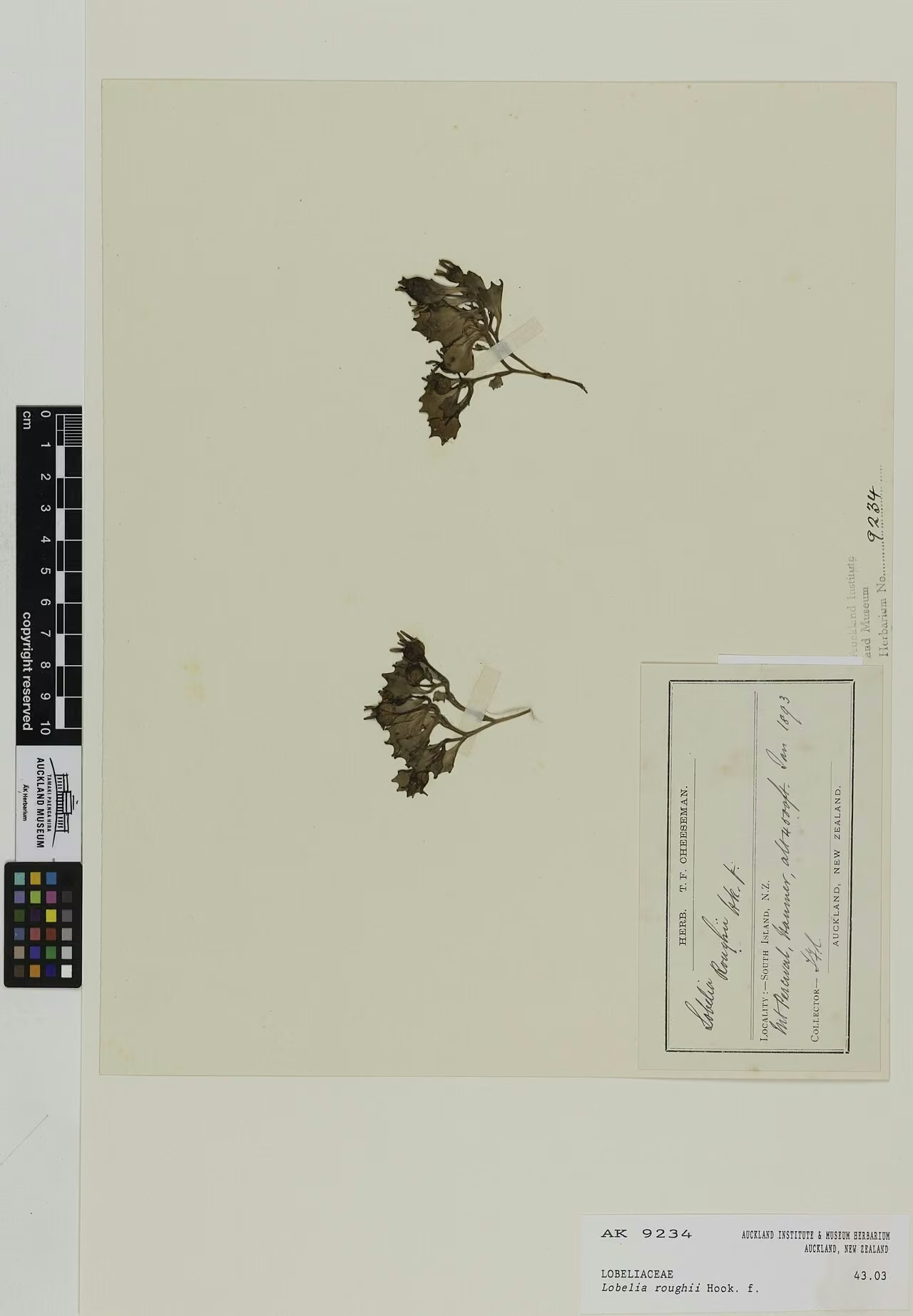
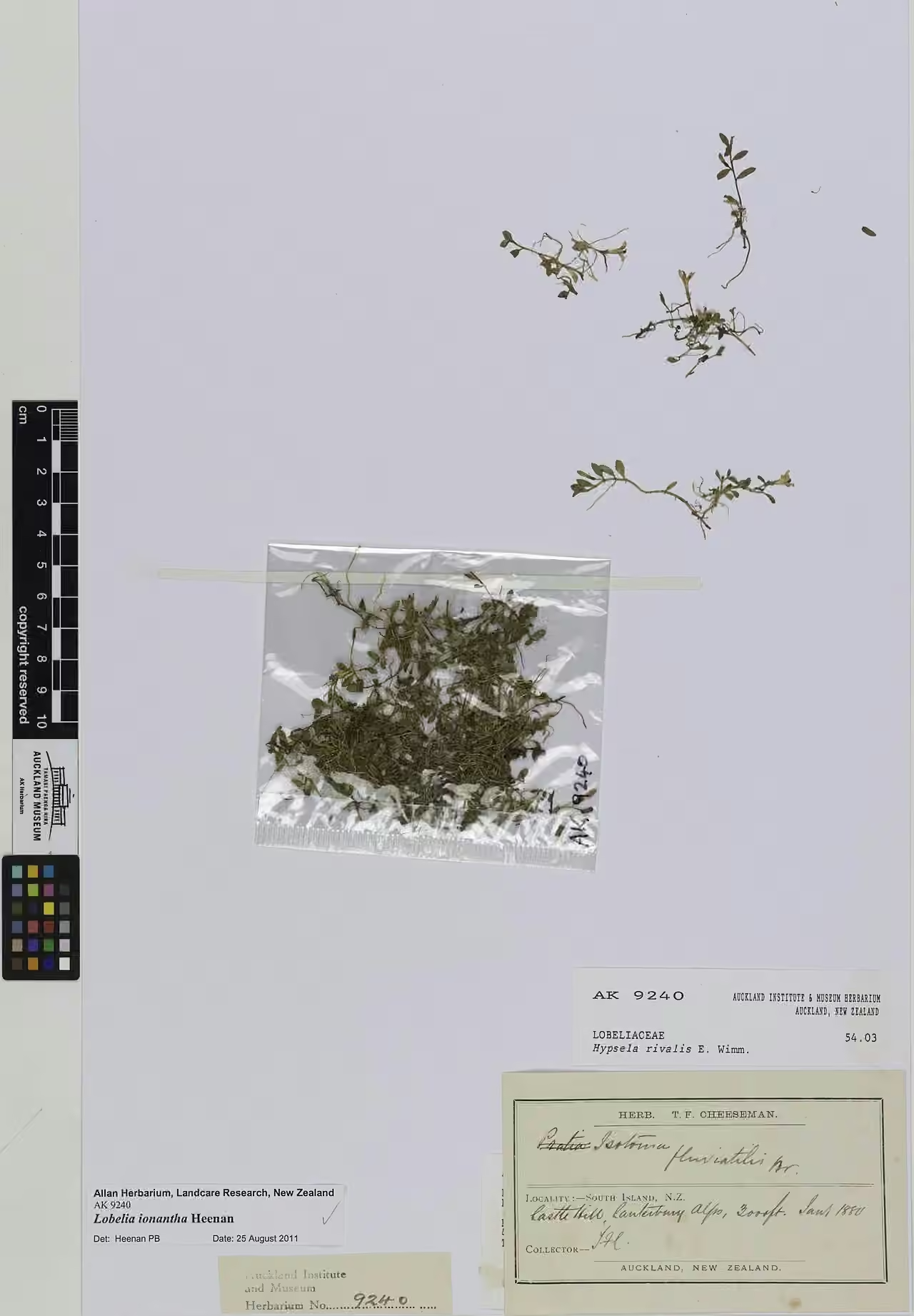
Explore other New Zealand Lobelia species, including alpine herbs and low-growing plants of wetter places.
Conservation
NZPCN records the species as nationally Not Threatened in the 2023 assessment. The 2025 Otago regional assessment lists it as Regionally At Risk - Regionally Naturally Uncommon; these assessments apply at different geographic scales.
Frequently asked questions
Is this the same species as Lobelia macrodon?
No. Some older specimens were identified as L. macrodon , but the 2008 study recognised L. glaberrima as distinct using floral, chromosome and DNA evidence.
Can it be grown from seed?
NZPCN reports that fresh seed and rooted pieces can both be used. It recommends a pot or rock garden for this small creeping herb.
Where do the creeping stems produce roots?
Roots form at the leaf nodes, supporting propagation from pieces that already carry roots.
Sources
Description, range, conservation and propagation: NZ Plant Conservation Network. Original species description and comparison: Knox and colleagues, New Zealand Journal of Botany, 2008.
Old Man Range specimen: Auckland Museum collection record. Cultivation observation: O2 Landscapes. Otago regional context: Otago conservation assessment.
Taxonomy and New Zealand biostatus: Flora of New Zealand genus account.
Last updated: