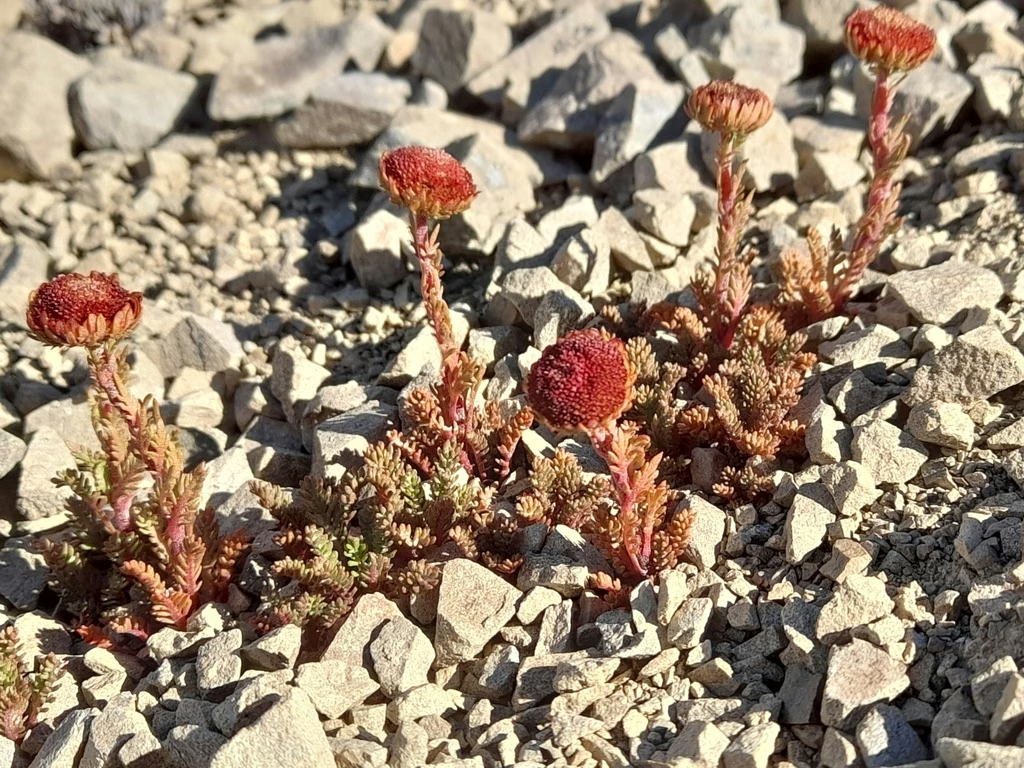
Dendy's Scree Button Daisy
Leptinella dendyi
Dendy’s scree button daisy, Leptinella dendyi, is an endemic alpine herb of the eastern South Island. Its divided grey-green leaves emerge in small tufts between moving stones. This somewhat fleshy perennial produces one or more summer-green tufts among loose rocks.
Identification
This somewhat fleshy perennial produces one or more summer-green tufts among loose rocks. Its leaves are finely divided twice, grey-green and often tinged red, especially along the central axes.
The leaf blade is 10-30 mm long, with eight to twelve pairs of primary divisions. Numerous fleshy roots branch extensively, while the thick, pale or pinkish rhizome becomes buried as the plant ages.
Quick facts
| Scientific Name | Leptinella dendyi |
|---|---|
| Common name | Dendy’s scree button daisy |
| Earlier name | Cotula dendyi |
| Family | Asteraceae |
| Origin | Endemic to New Zealand |
| Habitat | Open, mobile alpine scree |
| Flowering | November to January |
| Fruiting | January to April |
| National status | Not Threatened (2023) |
| Height | Low leaf tufts; whole-plant height is not separately quantified |
| Water Needs | A cultivation watering requirement is not supplied by the species account |
| Light | Open, sparsely vegetated scree in its natural habitat |
| Spread | One or more tufts linked to fleshy rhizomes; width unquantified |
| Frost Tolerance | Minimum tolerated temperature is not documented |
| Salt Tolerance | Salt tolerance is not documented |
| Growth Rate | Annual extension is not quantified in the cited accounts |
| Lifespan | Summer-green perennial |
Natural range
The species is endemic to the South Island, east of the main divide, from eastern Nelson and Marlborough south to Canterbury. It grows from the subalpine zone into alpine country, above 1,000 m.
| City | Climate Suitability |
|---|---|
| Auckland | Not assessed |
| Wellington | Not assessed |
| Christchurch | Not assessed |
Habitat and distribution
NZPCN records the plant in open, mobile screes where vegetation is sparse. The leaves appear as small tufts between loose rocks, while the ascending rhizome becomes deeply buried as the plant grows.
Its very long, branching roots are a notable feature of this specialised scree herb.
Natural growing conditions
In the wild, Leptinella dendyi occupies mobile, sparsely vegetated scree above 1,000 m. Those observations describe its natural setting and do not establish a tested garden soil mixture or watering schedule.
Planting considerations
NZPCN describes propagation as difficult and says plants should not be removed from the wild. Its long branching roots and buried rhizome belong to a plant specialised for loose, moving rock.
Life in moving scree
The rhizome starts at or near the rock surface and becomes deeply buried with age. Roots are numerous, fleshy and extensively branched, reaching about 1.5 mm in thickness in the botanical description.
Observing the plant
Look for compact tufts of finely divided foliage in open scree rather than a continuous mat. The grey-green leaf blades may carry a reddish tinge along their axes, and the flowers have yellow florets with red-brown tips.
Garden context
This species is a specialised plant of high, mobile scree, unlike the mat-forming button daisies often grown as ground covers. NZPCN describes it as difficult to propagate and advises against removing wild plants.
Flowers and fruit
NZPCN records flowering from November to January and fruiting from January to April. Flower heads are about 20 mm across, with yellow florets tipped red-brown, and have a flat receptacle.
The papery fruits are dispersed by wind and possibly by attachment to passing animals or other surfaces.
Growth form
Leaves usually cluster close to the rhizome tip, although they can eventually be spaced up to 25 mm apart. Several branches may emerge near flowering nodes, but most die during their first season.
How to Grow Dendy's Scree Button Daisy (Leptinella dendyi)
Rhizomes and the propagation assessment
NZ Plant Conservation Network describes propagation of Leptinella dendyi as difficult and advises against removing plants from the wild. The species' very fleshy rhizomes and extensive roots are described in detail, but the profile does not provide a successful division size, seed pretreatment or germination period. Its specialised underground structure deserves attention when assessing an established plant.
Growth beneath moving scree
Young rhizomes lie at or near the rock surface and become deeply buried as the plant ages. Roots are numerous, fleshy, very long and extensively branched. Short branches can form in groups around a flowering node, although many die in their first season. This is a specific growth pattern of a scree plant, rather than the persistent surface carpet familiar from some other button daisies.
Following the Summer-Green Tufts
One or more leaf tufts emerge among mobile stones. The grey-green foliage is often tinged red, particularly along the leaf axes. Blades are approximately 10-30 mm long and divided twice, with eight to twelve pairs of primary divisions. Recording the appearance of these tufts helps document seasonal growth without disturbing the buried parts.
Flowering in Its Mountain Setting
Natural habitats are open, sparsely vegetated screes above about 1,000 m. Flowers are recorded from November to January and fruit from January to April. The source describes this habitat and seasonal cycle without quantifying a garden watering regime or the time needed for a propagated plant to produce its first flower head.
Plant health
The foliage is summer-green, and the rhizome can be buried well below the surface of older plants. The botanical references do not identify particular pests or diseases affecting this species.
Naming and classification
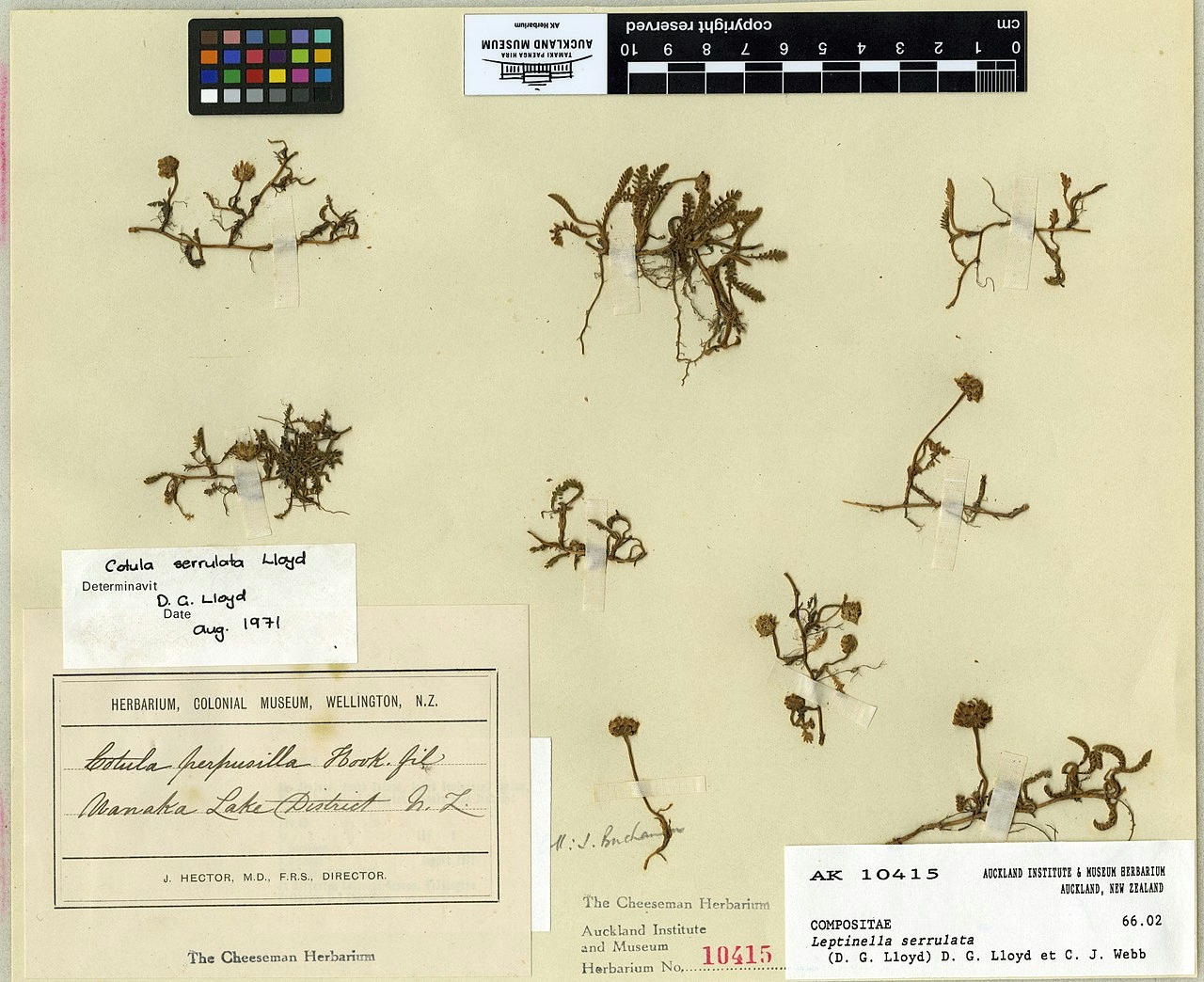
Cotula dendyi is the earlier name for Leptinella dendyi. Lloyd and Webb placed it in Leptinella in 1987 when they reinstated that genus; it belongs to the daisy family, Asteraceae.
Distinguishing scree button daisies
NZPCN distinguishes this plant from both subspecies of Leptinella atrata by its larger heads, about 20 mm compared with 12-13 mm, and its flat receptacle. It also differs in flower-sex arrangement.
Related native button daisies
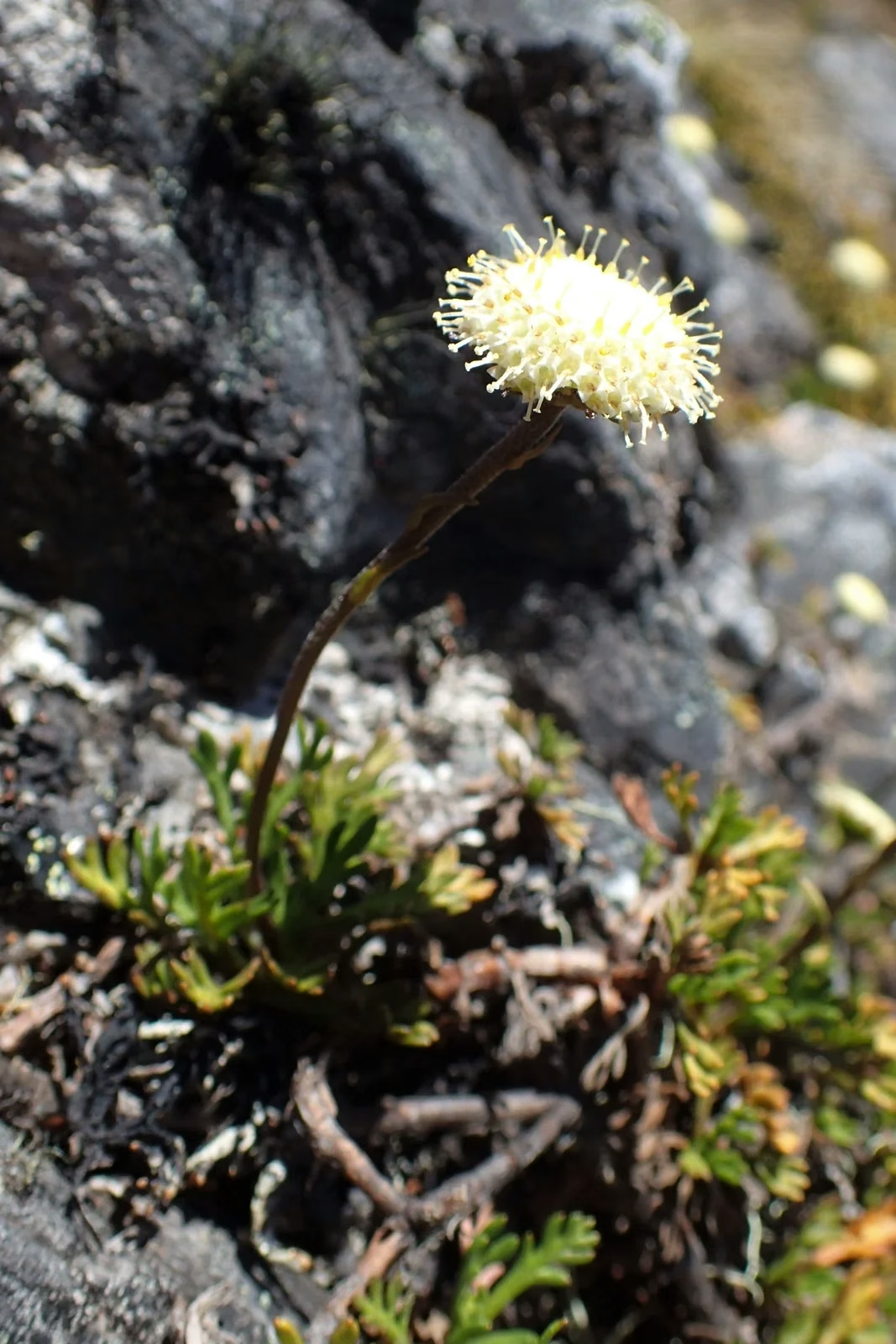
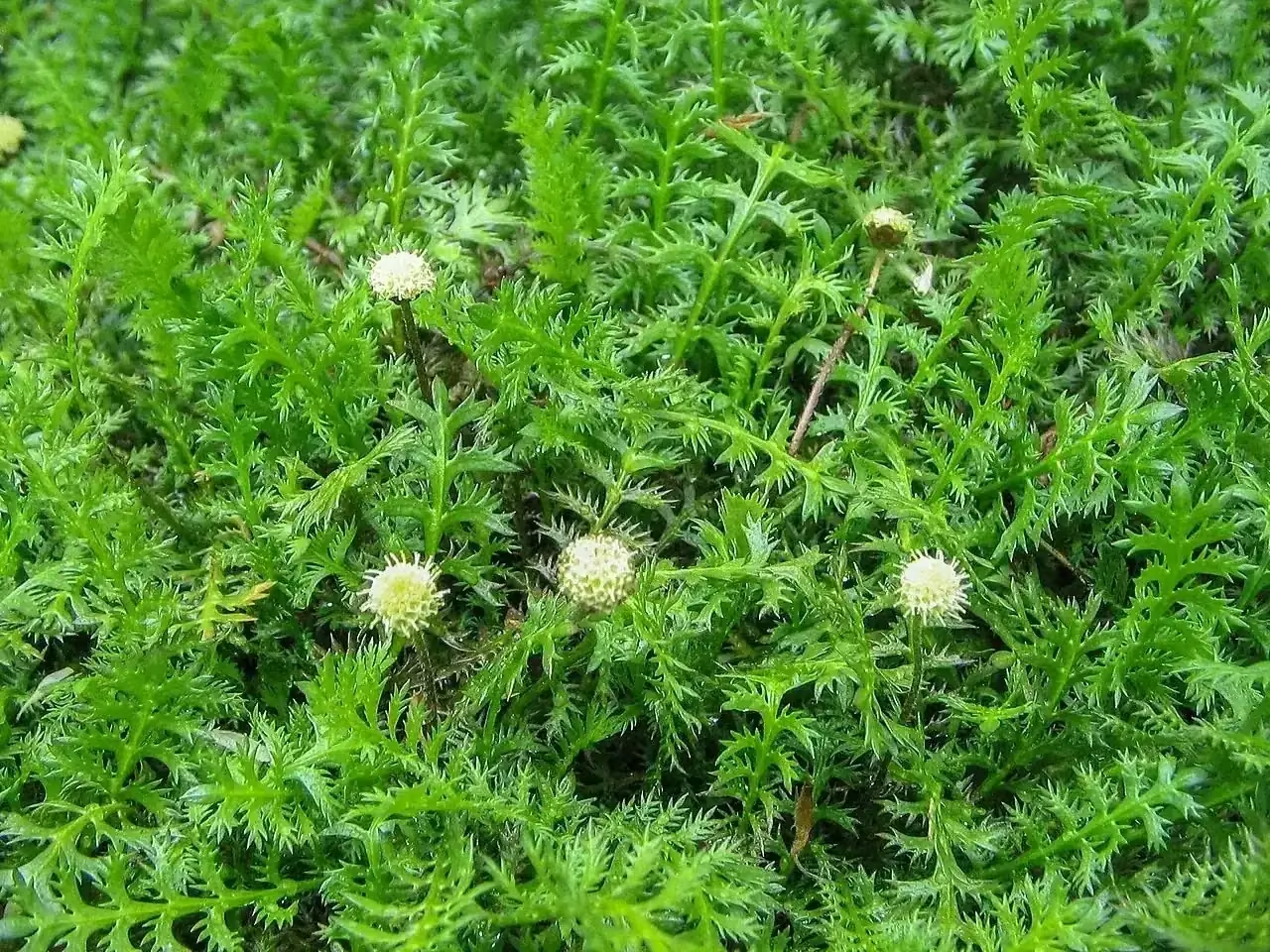
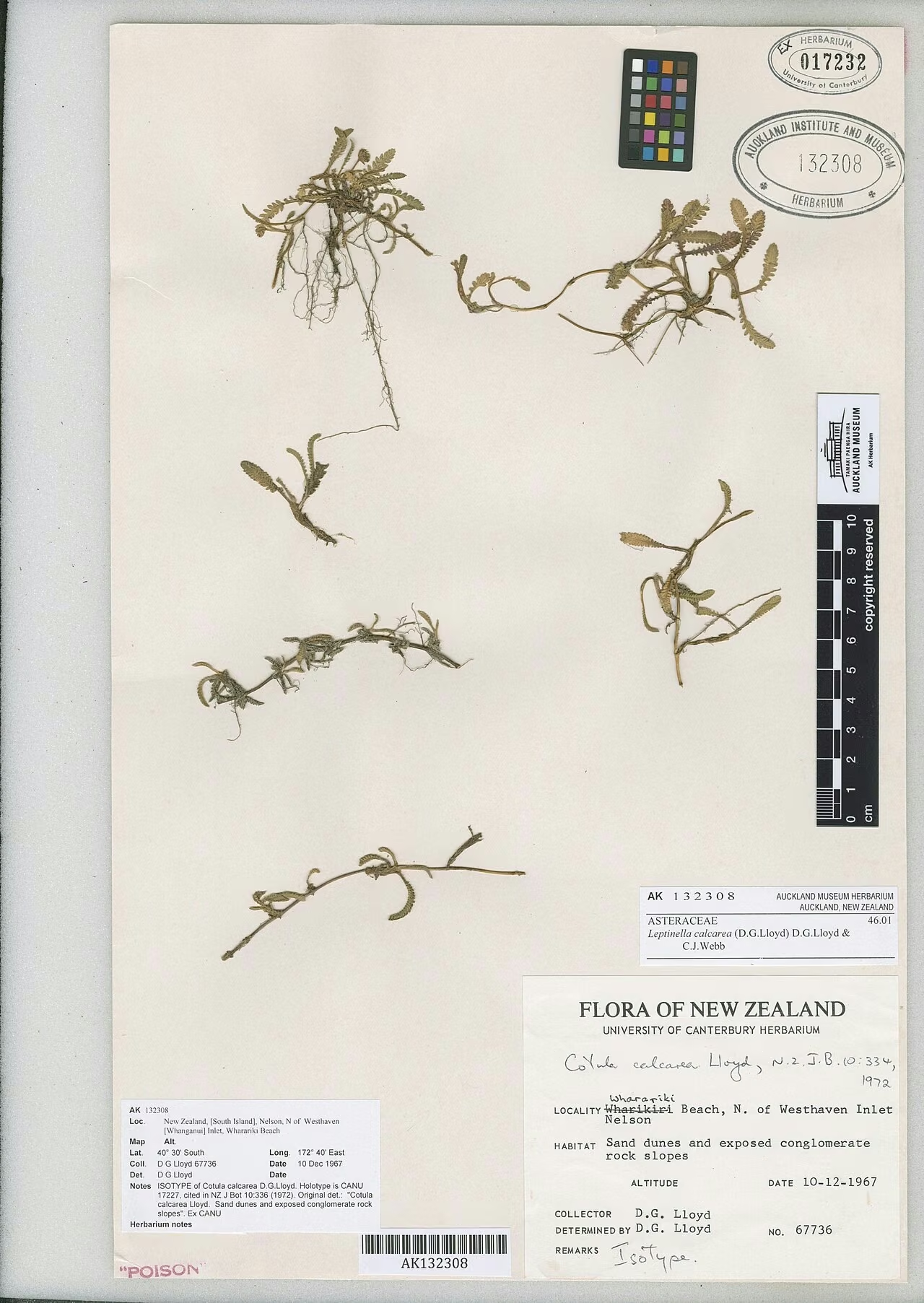
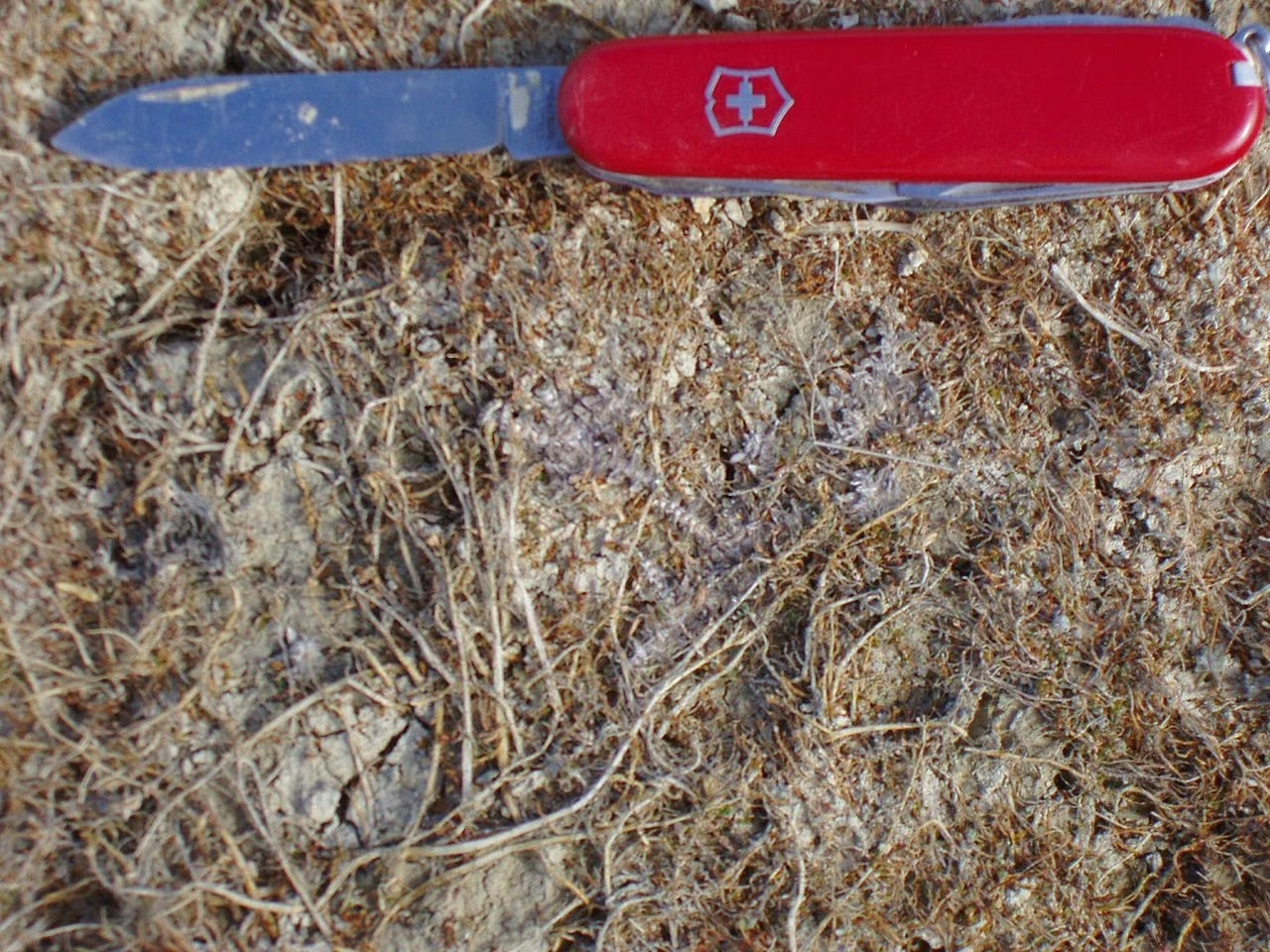
Explore other New Zealand Leptinella species, including alpine and low-growing button daisies.
Conservation
Leptinella dendyi is endemic and was assessed as Not Threatened in the 2023 national assessment. NZPCN recommends leaving wild plants in place because this scree species is difficult to propagate.
Frequently asked questions
Does it form an evergreen lawn-like mat?
The species is described as summer-green, producing discrete leaf tufts among mobile scree from fleshy underground structures.
Why can its rhizome be difficult to see?
Rhizomes begin near the rock surface but become deeply buried as the plant ages.
Which months have fruit records?
NZ Plant Conservation Network records fruit from January to April, following the November-January flowering period.
Sources
Identification, range, flowering and dispersal: NZ Plant Conservation Network species profile. Rhizomes, roots, fruits and scientific names: Flora of New Zealand. Accepted name and classification: Kew Plants of the World Online.
For additional comparison of New Zealand scree button daisies, see the New Zealand Garden Journal article.
Last updated: