Mānuka
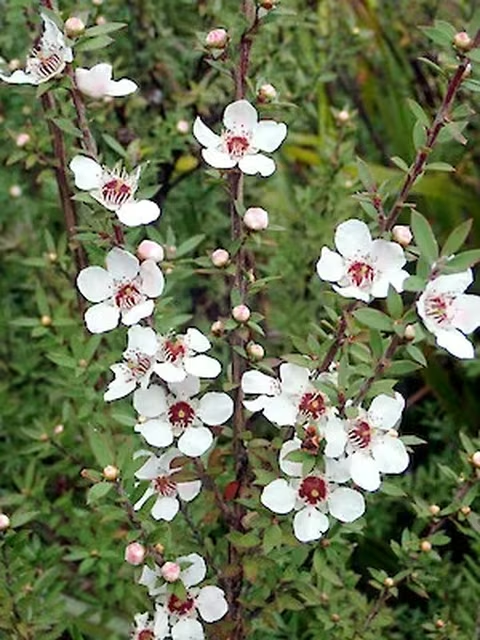
Leptospermum hoipolloi is an endemic mānuka described in 2023. The nominate form is a shrub or tree usually around 3 m tall, with crowded narrow leaves that retain silky hairs along the margins and midrib, and flowers commonly white but sometimes pink-tinged, pink or red. NZPCN records it from the North Island and north-west South Island, from coastal sites to 900 m. Its distinction from L. scoparium is debated: a 2023 genetic study found little support for splitting New Zealand populations, so the name should be read as one current taxonomic treatment rather than settled consensus.
Leaves and shoots
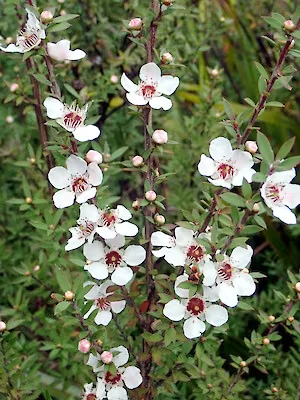
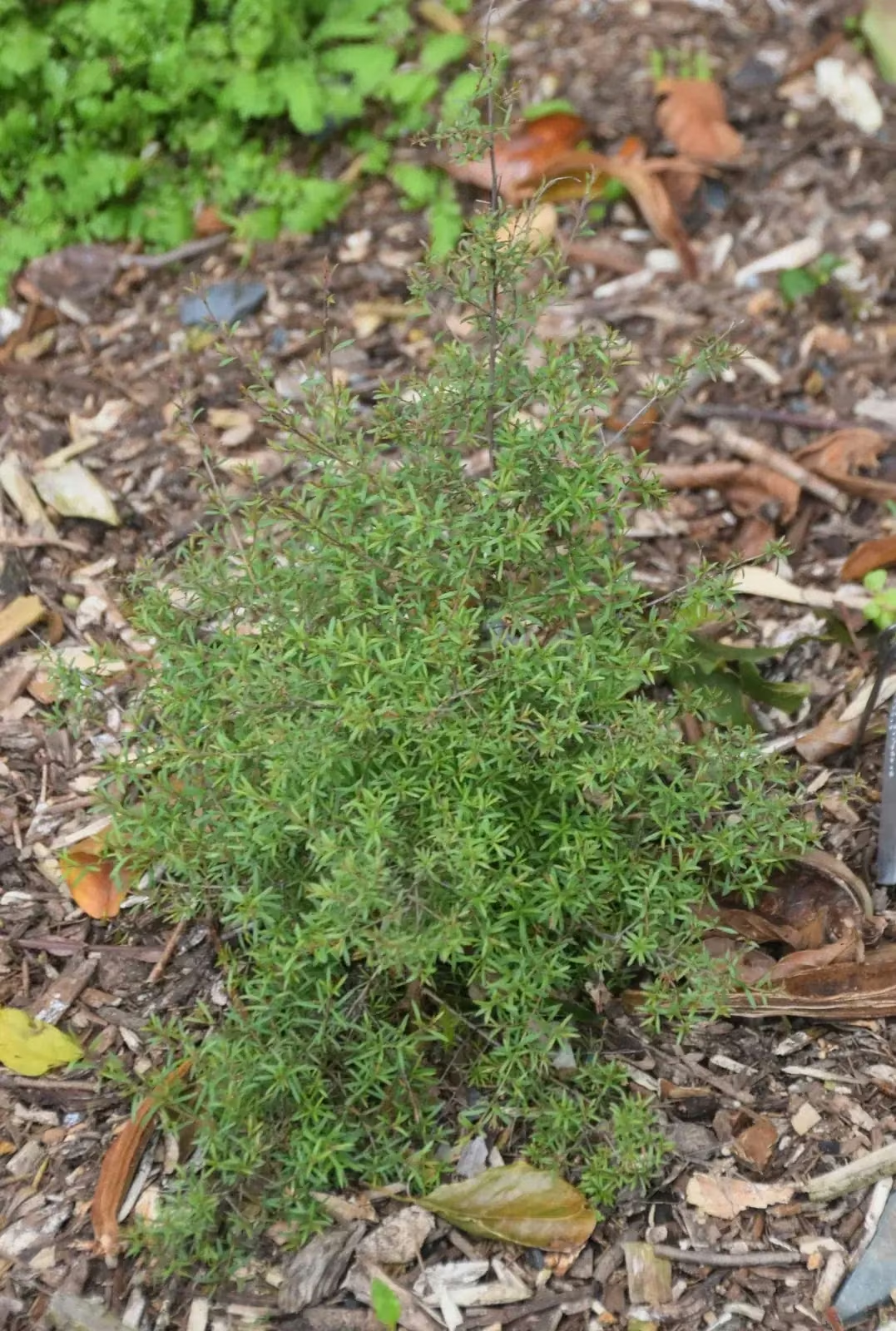
The crowded leaves smell spicy when crushed. In the nominate form they are usually 9.6-17.5 mm long and about 2.8 mm wide, lanceolate to elliptic-lanceolate, with a pointed tip. Young growth bears appressed silky hairs, especially near the leaf base and midrib; mature leaves lose many hairs but commonly retain them at the margins.
Quick facts
| Scientific Name | Leptospermum hoipolloi L.M.H. Schmid & de Lange |
|---|---|
| Height | Usually 3 m; range 1-10 m, dwarf in extreme acid wetlands |
| Spread | Branches erect, semi-erect or widely spreading |
| Water Needs | No cultivation watering schedule is given in the cited taxonomic account |
| Light | Regenerating shrubland and gumland in the recorded natural range |
| Frost Tolerance | Not specified in the cited flora account |
| Salt Tolerance | Not specified in the cited flora account |
| Growth Rate | Not specified in the cited flora account |
| Lifespan | Woody perennial tree or shrub |
Range and elevation
The nominate form is endemic to the North Island and north-western South Island, from sea level to about 900 m. It spans coastal, lowland, montane and subalpine settings. These records describe a broad environmental range, so elevation alone cannot identify this mānuka or separate it from L. scoparium.
| City | Climate Suitability |
|---|---|
| Auckland | Not assessed |
| Wellington | Not assessed |
| Christchurch | Not assessed |
Substrates and habitat
NZPCN records the plant on igneous, ultramafic and sedimentary rocks, mobile sand, alluvium, peat and derived soils. It occurs especially in regenerating shrubland and gumland. In extremely acidic wetlands individuals may be drastically reduced, sometimes to 10 cm or less, despite the species usually growing as a substantial shrub or tree.
Growth form
Plants are trees or shrubs, usually around 3 m and ranging from 1 to 10 m. The trunk is often unbranched near ground level, with loosely attached bark that flakes in irregular pieces, grey on the outside and reddish beneath. Branches may be erect, semi-erect or widely spreading.
Field and cultivation context
The cited species account documents wild substrates and communities rather than a tested horticultural recipe. Its occurrence on peat, alluvium, sand and several rock types shows considerable ecological breadth. Identification in cultivation should rely on mature leaf shape and hair distribution, since flower colour varies and overlaps with L. scoparium.
Flowering and fruiting
Flowers may occur throughout the year, often peaking in late winter and early spring; fruit is also present throughout the year. The long flowering period is consistent with its varied lowland and montane habitats. Plants can grow alongside L. scoparium, so shared flowering dates do not imply that they are the same taxon.
Ecology and Mānuka Name
Mānuka and kahikatoa are common names applied to several named Leptospermum taxa in New Zealand. This species is one taxonomic treatment within that wider group. The account notes the economic importance associated with mānuka, while the epithet hoipolloi is an academic wordplay referring to a formerly disregarded common plant.
Appearance in the landscape
The narrow pointed leaves and silky hairs on young growth give this mānuka a different foliage texture from the broader-leaved L. scoparium sensu stricto. It may become a 3 m shrub or small tree, but acid wetlands can produce strikingly dwarfed plants. Flower colour ranges from white through pink to red.
Flowers through the year
NZPCN reports flowers throughout the year, with a common peak in late winter and early spring, and fruit throughout the year. White is usual, but pink-tinged, streaked, pink or red petals occur. Because L. scoparium can also have pink or red petals, colour is not a dependable diagnostic character.
Branching distinctions
The nominate form is more heavily branched than the related L. repo described in the NZPCN comparison. L. hoipolloi f. procumbens instead has a decumbent, sprawling habit with pendulous branchlets and distinctly silvery hairy leaves. These are botanical distinctions; the source does not prescribe a pruning method.
How to Grow Mānuka (Leptospermum hoipolloi)
Seed within persistent capsules
The NZ Plant Conservation Network account for the nominate form describes persistent woody fruit, whose valves open on dead branches or following fire. This is an observation about natural seed release. It does not establish that seeds require heating before sowing, and the account gives no tested germination temperature or nursery pretreatment for Leptospermum hoipolloi.
Checking the Material's Identity
Taxonomic treatments of New Zealand mānuka differ. The NZPCN notes discuss the recognition of this species alongside studies favouring a broader treatment of Leptospermum scoparium. Record the source of an identification when comparing cultivated material. Dimensions in the detailed NZPCN description concern Leptospermum hoipolloi f. hoipolloi, rather than proving identical growth in every named form.
Space for a variable woody plant
The described plants are usually about 3 m tall, with recorded extremes of 1-10 m. Some plants in strongly acidic wetlands remain only 10 cm high or less. Branches can be upright or spreading. The species' occurrence on sand, alluvium, peat and several rock types shows substantial natural variation in both setting and stature.
Recognising flowering and fruiting growth
The nominate form has spicy-scented leaves and flowers approximately 18-24 mm across. Woody capsules persist after flowering, and the slender seeds are about 2.4-2.8 mm long. NZPCN records flowering throughout the year, often peaking in late winter or early spring. These reproductive details support identification and observation, while cutting and seed-raising procedures remain unspecified in that account.
Myrtle rust
The 2023 national assessment considered the nominate form Not Threatened because there was then no evidence that myrtle rust was affecting wild populations. NZPCN notes the disease as a potential threat and says it has been found on garden plants. That status reflects the assessment’s evidence at the time, not a guarantee of future security.
Taxonomic note
Leptospermum hoipolloi was published by L.M.H. Schmid and P.J. de Lange in 2023. NZPCN recognises three forms under the species. An alternative treatment follows Chagné et al.’s SNP analysis, which found little support for subdividing New Zealand L. scoparium; the evidence has not been fully reconciled, and further study is needed.
Separating It from L. scoparium
Check several mature leaves: L. hoipolloi has consistently longer, narrower lanceolate leaves, often retaining marginal hairs, while L. scoparium sensu stricto has broader ovate to orbicular leaves that tend to become glabrous. Flower colour is not diagnostic, and the two may grow together.
Related myrtles
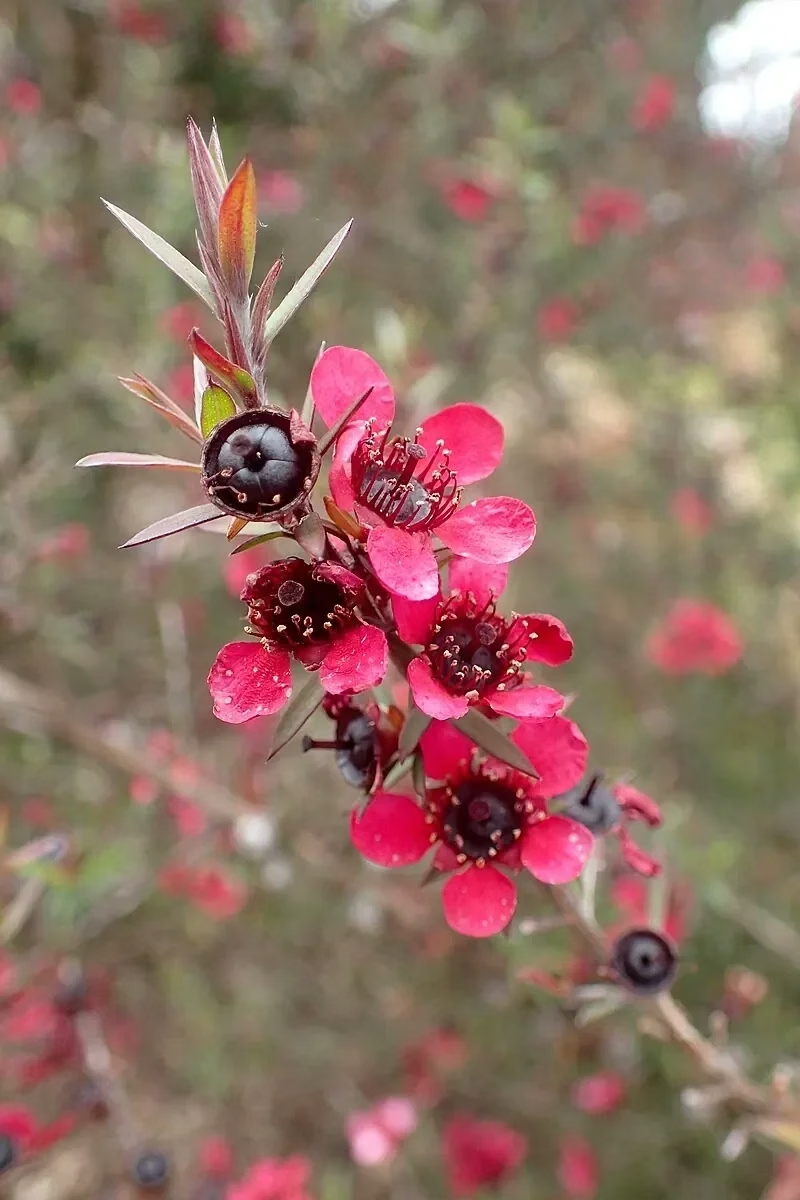
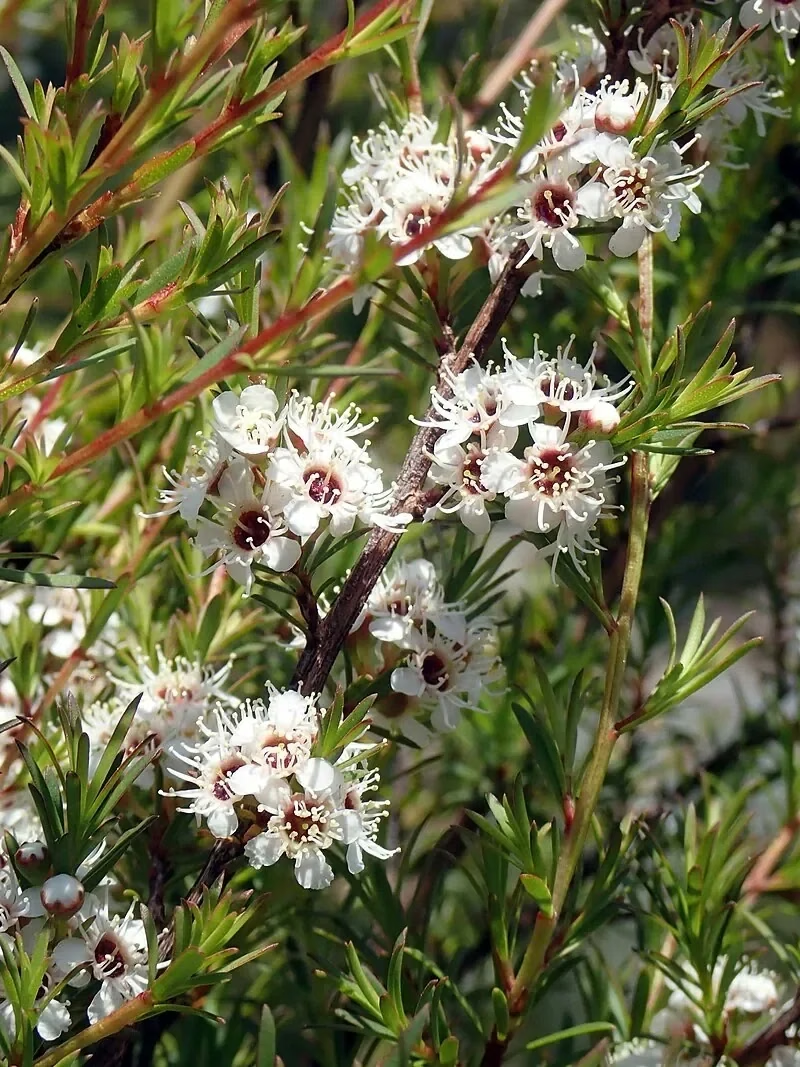
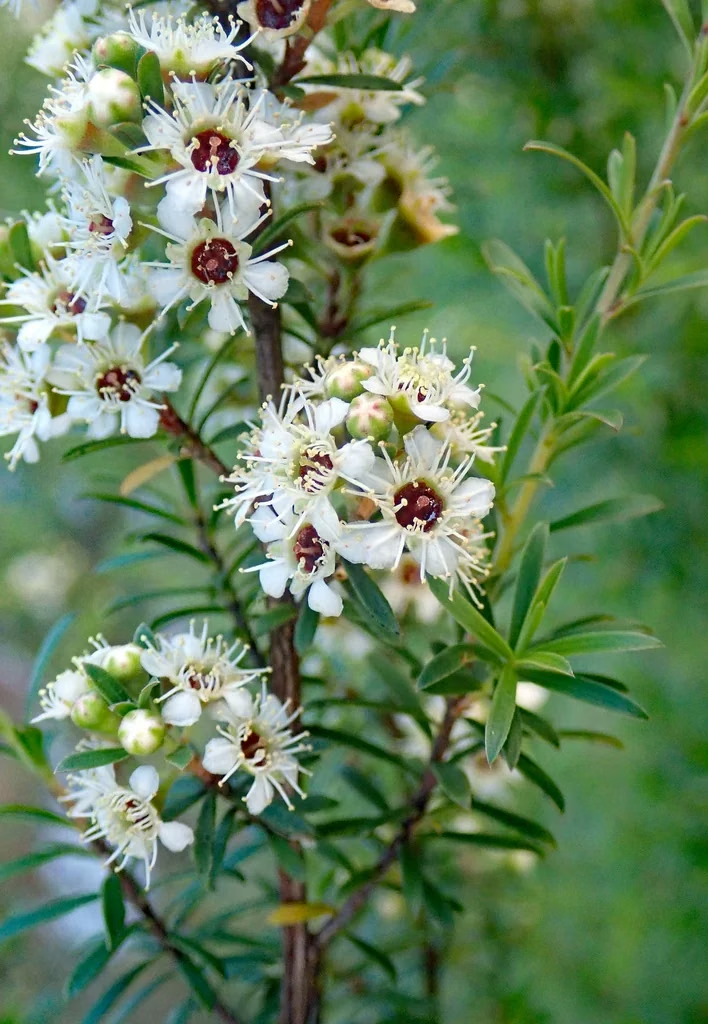
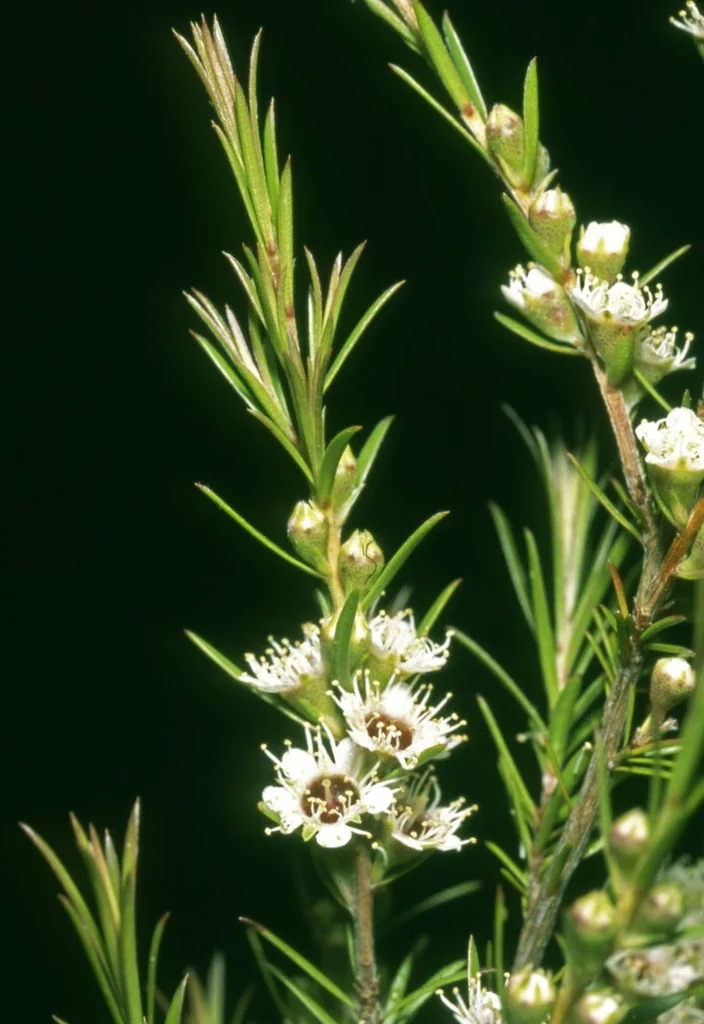
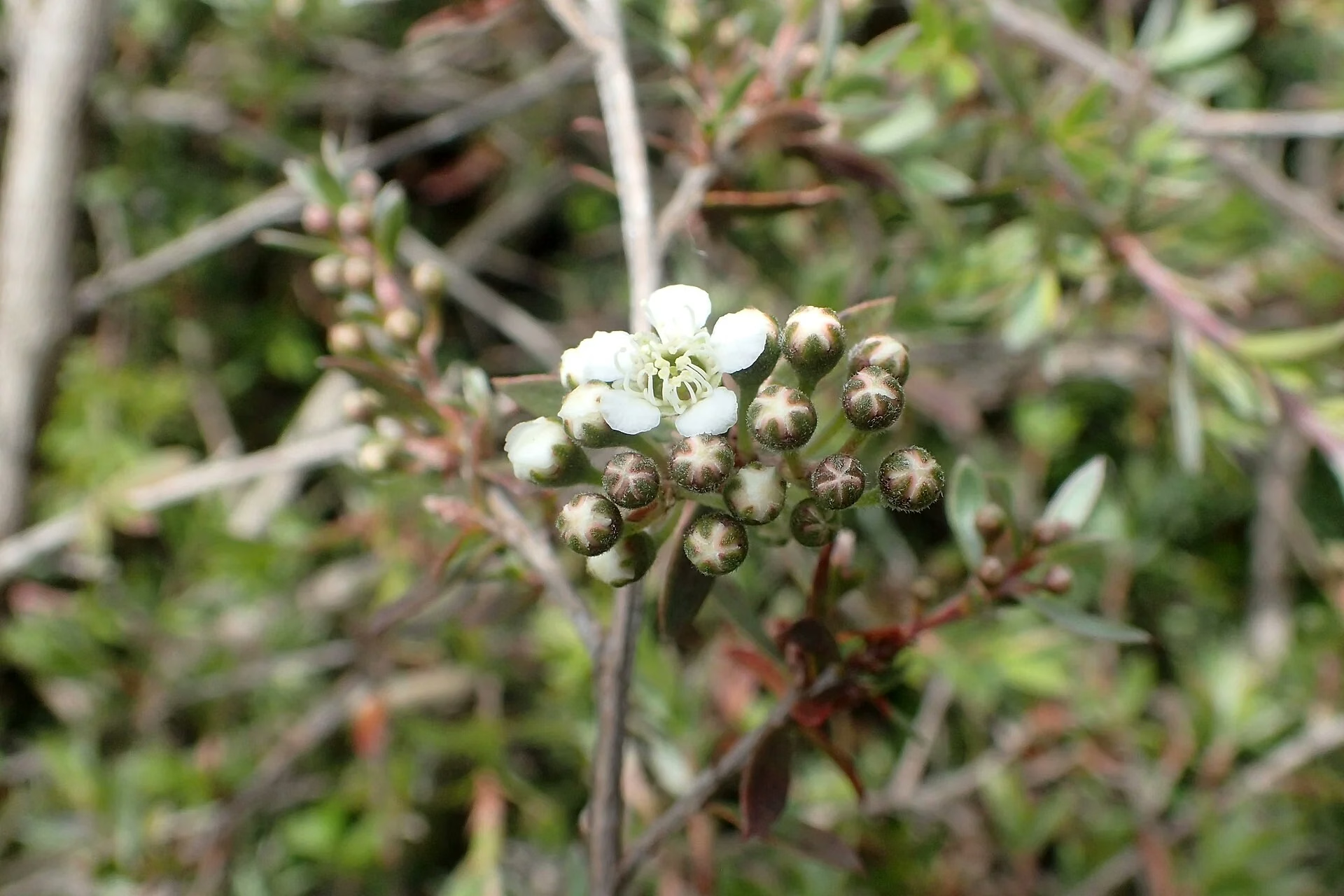
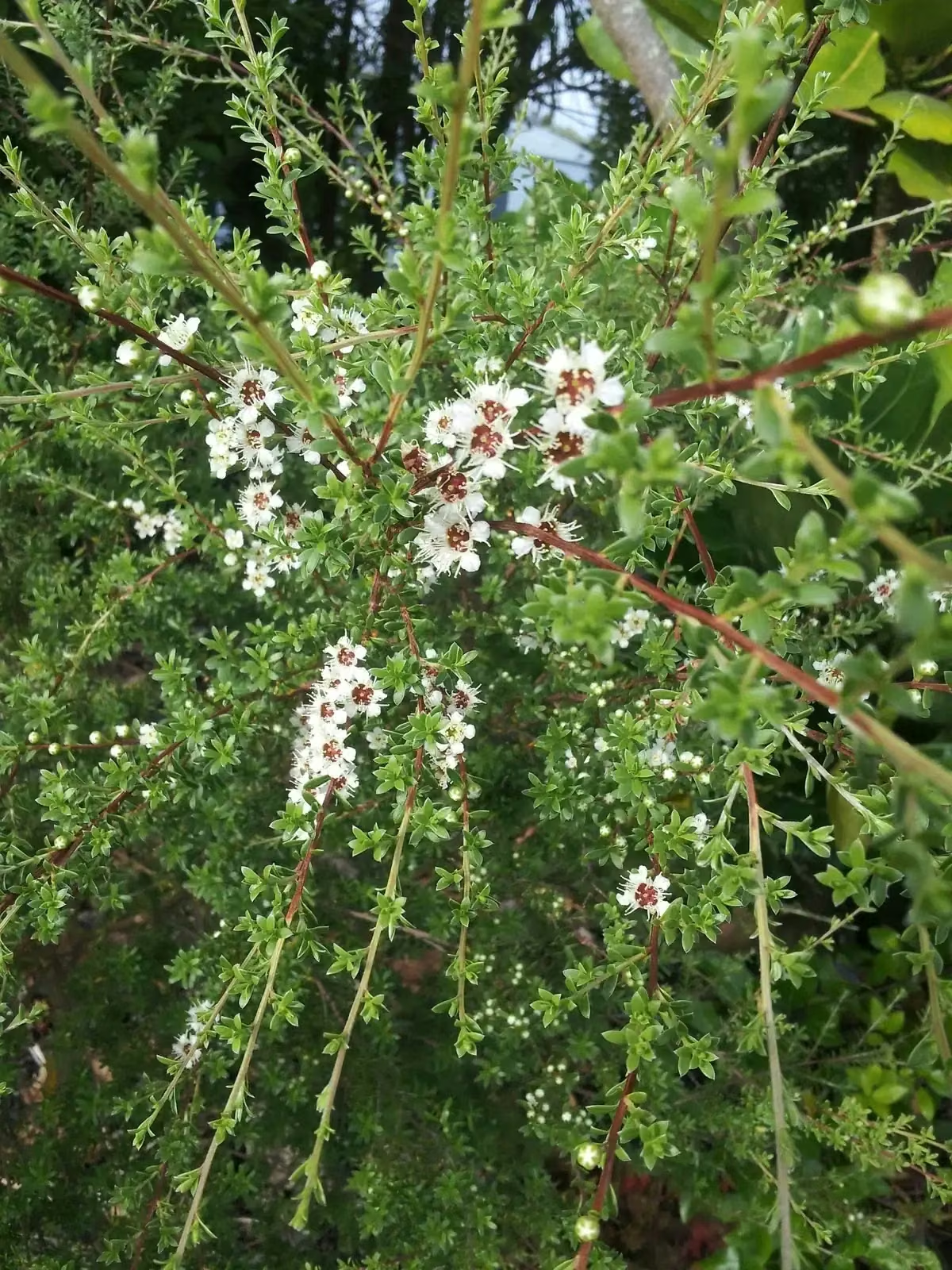
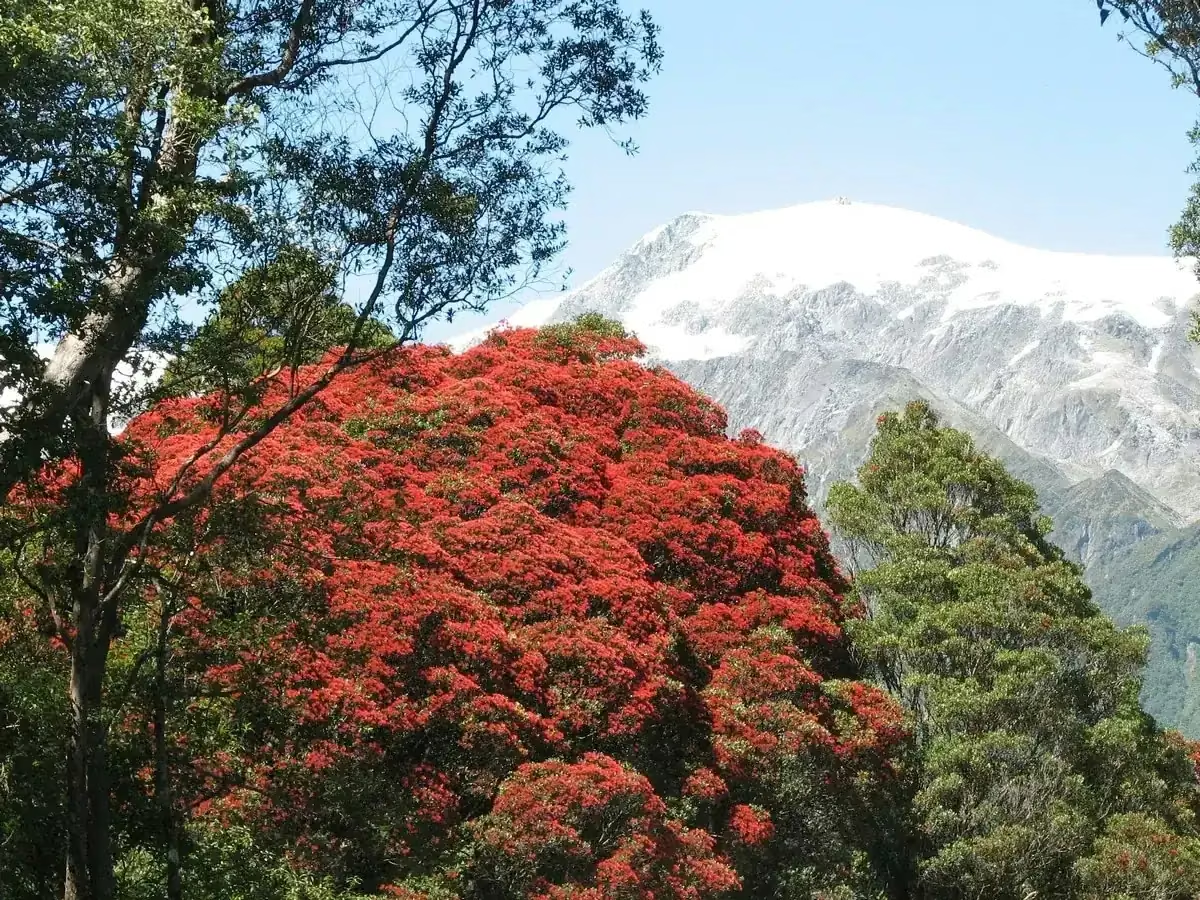
Leptospermum hoipolloi was named in 2023 for a mānuka form distinguished in its description by narrow, silky-haired leaves and larger flowers. Its taxonomic separation from L. scoparium remains debated, so the two profiles are direct comparisons rather than settled, separate lineages. The six Kunzea profiles show the diversity of New Zealand kānuka, including island endemics; southern rātā is a more distant Myrtaceae comparison with a conspicuous tree form and red flowers.
Conservation status
The 2023 national assessment lists the nominate form as Not Threatened, based on its abundance and the absence at that time of demonstrated wild-population impacts from myrtle rust. The status is specific to the nominate form; other forms have separate assessments. Ongoing surveillance matters because the disease has been found on cultivated plants.
Frequently asked questions
Does capsule opening after fire prove seeds need heat?
No. The profile describes the opening of woody capsule valves after branch death or fire. It does not report a required heat treatment for germination.
Do all plants reach the same height?
No. The nominate form is usually about 3 m tall, but the account records both taller trees and extremely dwarfed wetland plants.
Why do some sources retain a broader mānuka name?
Botanical treatments differ over subdivision of Leptospermum scoparium. NZPCN explicitly discusses that disagreement in its taxonomic notes.
Sources
Identification, distribution, habitat and ecology: authoritative botanical account. Image reuse terms and source record are stated in the figure caption.
Additional botanical reference: Department of Conservation 2023 threat assessment.
Last updated: