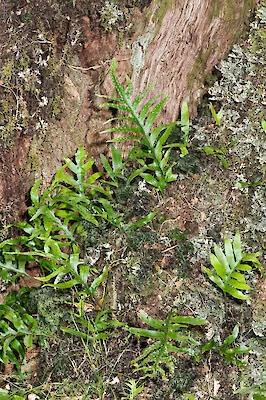
Climbing Fern
Lecanopteris novae-zealandiae
Mountain Hound’s-Tongue Fern
Lecanopteris novae-zealandiae is an endemic fern of North Island mountain forests. It usually grows on other plants, with a creeping scaly rhizome and divided, glossy green fronds. NZPCN uses the name Zealandia novae-zealandiae for the same fern.
Identification
The leathery, divided frond blade can reach 1.2 metres long and has three to thirty pairs of narrow leaflets. Its upper surface is glossy green and its underside is paler. The long creeping rhizome bears erect, rust-coloured scales; the wiry frond stalk is pale brown and pliant.
Quick facts
| Scientific Name | Lecanopteris novae-zealandiae (Baker) Perrie & Brownsey |
|---|---|
| Also known as | Zealandia novae-zealandiae; Microsorum novae-zealandiae |
| Common name | Mountain hound’s-tongue fern |
| Family | Polypodiaceae |
| Origin | Endemic to New Zealand |
| Habitat | Montane cloud forest and scrub |
| Frond length | Blade up to 1.2 m |
| National status | Not Threatened (2023) |
| Height | Leaf blades 10-120 cm long, with stalks another 10-30 cm |
| Water Needs | Cloud-forest habitat; a cultivation watering requirement is not documented |
| Light | Montane cloud forest and scrub in its natural habitat |
| Spread | Long-creeping rhizomes; maximum patch width is not quantified |
| Frost Tolerance | Minimum tolerated temperature is not documented |
| Salt Tolerance | Salt tolerance is not documented |
| Growth Rate | Annual extension is not quantified in the cited accounts |
| Lifespan | Creeping epiphytic fern |
Natural range
NZPCN records the fern in North Island ranges from around Maumaupaki, Table Mountain in the Kauaeranga Valley and Mount Karioi south to the southern Tararua Range. It is endemic to New Zealand.
| City | Climate Suitability |
|---|---|
| Auckland | Not assessed |
| Wellington | Not assessed |
| Christchurch | Not assessed |
Habitat
This is primarily an epiphyte of montane to subalpine cloud forest and scrub, generally from about 600 to 1,400 metres. NZPCN notes that it is only very rarely found on rocks or fallen logs on the forest floor.
Natural growing conditions
Mountain cloud forest provides the setting for this fern’s usually epiphytic growth. Its creeping rhizome grows on a host plant, rather than normally rooting in the ground; the cited profile does not provide a tested garden growing medium.
Planting considerations
NZPCN describes the fern as difficult to propagate and advises against removing it from the wild. Its usual habitat is montane cloud forest, where it grows on other plants and only rarely on rocks or logs.
Life on a host
The fern grows chiefly as an epiphyte, with a long-creeping rhizome carrying divided fronds. It occupies forest and scrub in the cloud zone, where NZPCN notes that it can be locally common.
Observing the fern
Look for long, divided, dark glossy fronds and the upright orange-brown scales on the creeping rhizome. In fertile plants, orange sori are conspicuous near the margins on the undersides of the leaflets.
Garden context
The fern’s large divided fronds and rusty rhizome scales are attractive features, but its natural home is cool montane cloud forest. NZPCN describes propagation as difficult and advises leaving wild plants in place.
Spores and fertile fronds
Like other ferns, this species reproduces by spores rather than flowers or seeds. Its sporangia are grouped in conspicuous orange sori near the leaflet margins, on the underside of the fertile frond.
Rhizome and frond growth
Its rhizome is long creeping and about 5-10 mm in diameter, with upright orange-brown scales. Pale brown frond stalks support glossy, leathery blades; the cited species account does not specify a pruning regime.
How to Grow Climbing Fern (Lecanopteris novae-zealandiae)
Spores and the published propagation assessment
NZ Plant Conservation Network treats this fern as Zealandia novae-zealandiae and describes propagation as difficult. It advises that wild plants should remain in place. Its account does not supply a spore-culture recipe or a verified method for dividing the creeping rhizome. Nursery or research records need to retain the link between these alternative generic names.
The Cloud-Forest Environment
This North Island epiphyte occupies montane to subalpine cloud forest and scrub, with recorded elevations of roughly 600-1,400 m. It very rarely grows on rocks or fallen logs on the forest floor. Its usual position on trees, together with that elevated forest setting, provides more specific context than a general recommendation for a shaded ground bed.
Recognising New Rhizome Growth
The creeping rhizomes are approximately 5-10 mm thick and carry distinctive upright, translucent orange-brown scales. Leaf stalks are pale brown, wiry and flexible, measuring about 10-30 cm. The blade is leathery and pinnate, with a glossy upper surface and a paler, duller underside. Blade lengths vary considerably, from about 10 cm to 1.2 m.
Inspecting mature fronds
Each blade can carry three to thirty pairs of narrow pinnae. Conspicuous orange sori form close to the pinna margins. These reproductive structures and the rust-coloured rhizome scales are useful characters when confirming an established plant's identity. The account does not quantify the time needed to produce a mature fertile frond under cultivation.
Plant health
The orange-brown scales on the rhizome and orange sori on fertile fronds are normal features, not signs of disease. The cited NZPCN profile does not list a species-specific pest or disease treatment.
Names and classification
Flora of New Zealand and the New Zealand Organisms Register use Lecanopteris novae-zealandiae, following the expanded circumscription of Lecanopteris published in 2021. NZPCN follows the 2019 classification and uses Zealandia novae-zealandiae. These names, and the earlier Microsorum novae-zealandiae, refer to the same North Island fern.
Distinguishing Hound’s-Tongue Ferns
NZPCN distinguishes this mountain fern from related hound’s-tongue ferns by its larger, narrower, non-fragrant fronds, upright rust-coloured rhizome scales and association with North Island montane cloud forests.
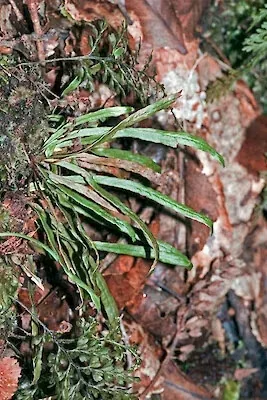
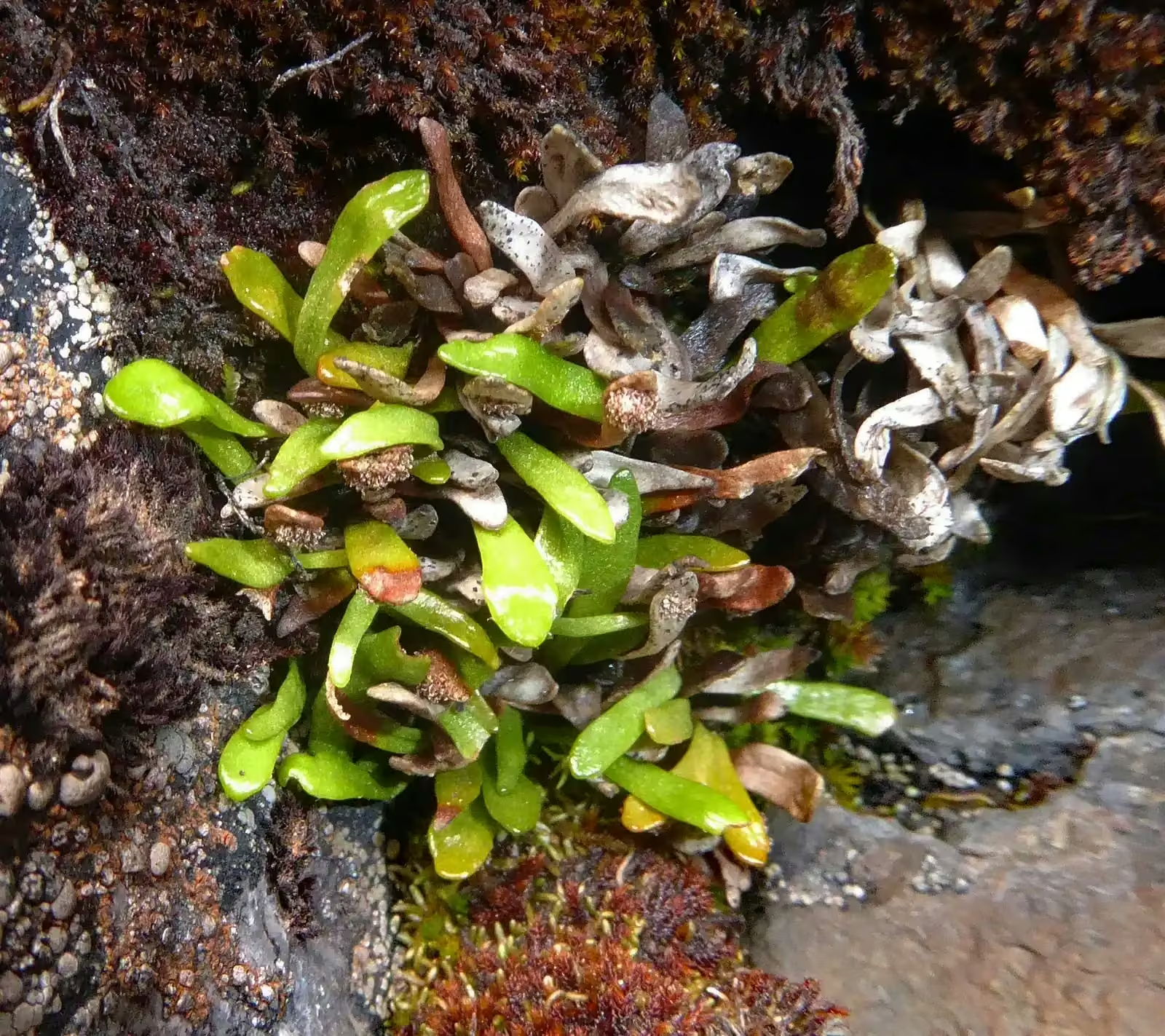
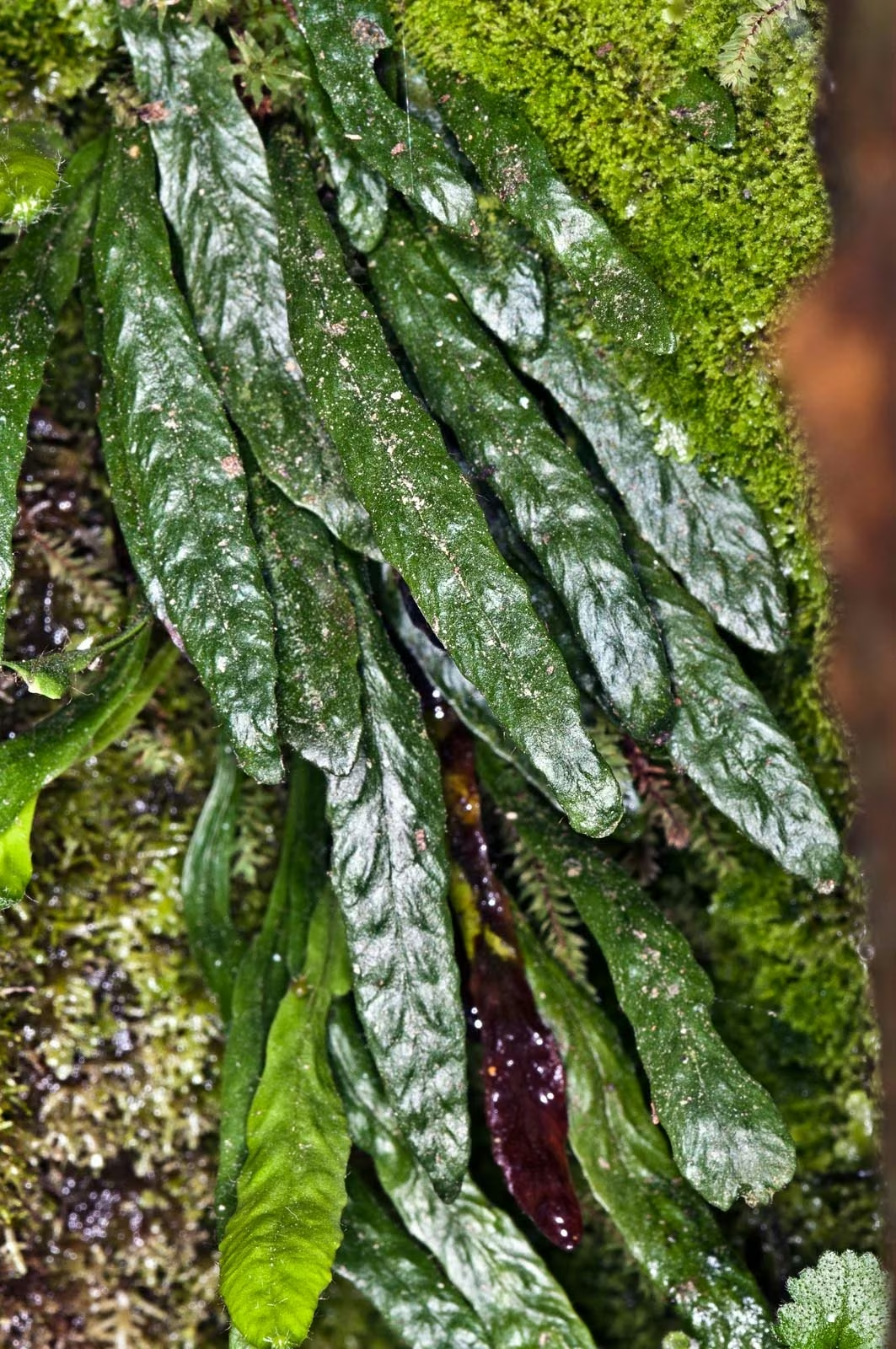
Other native ferns
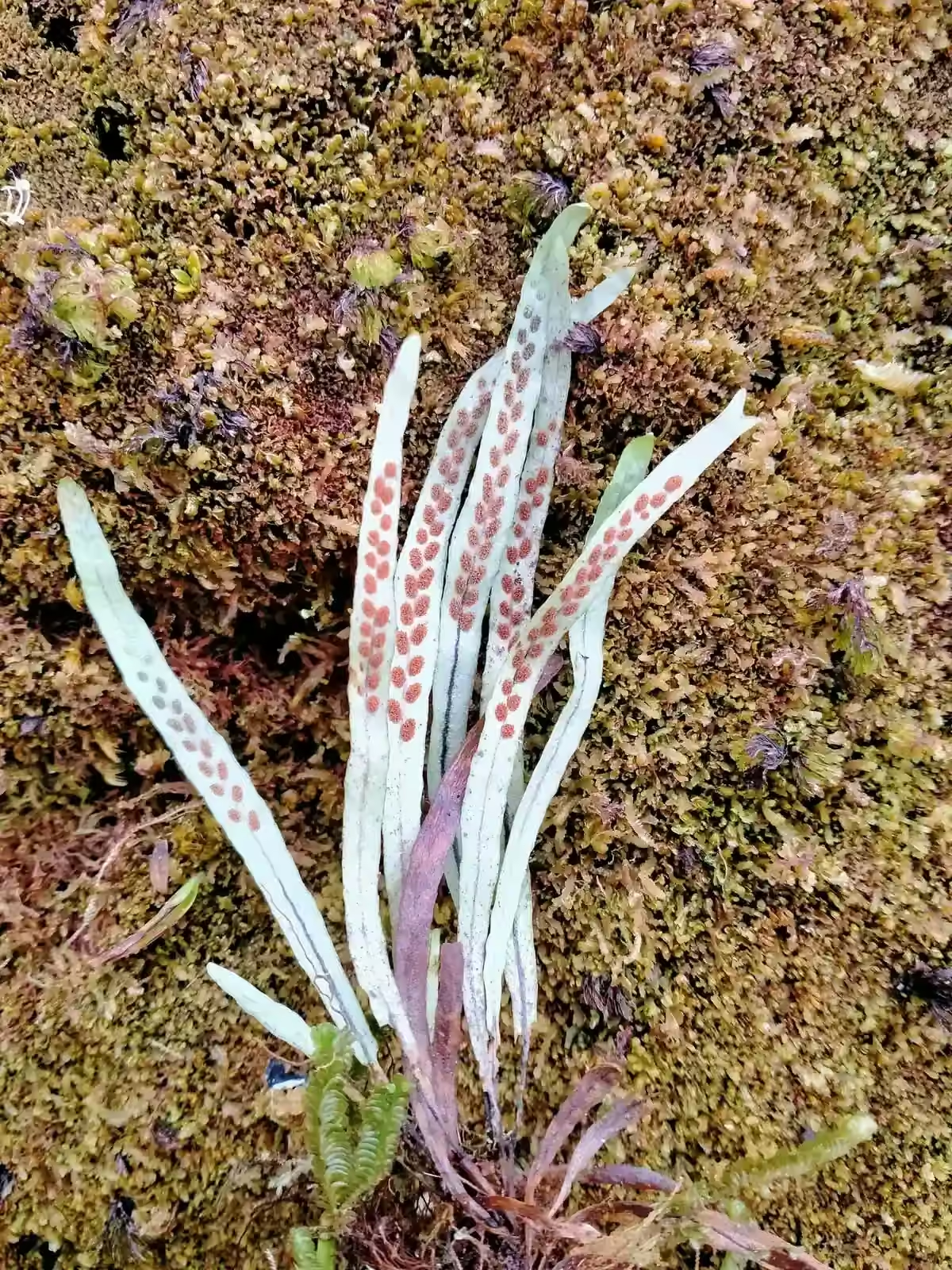
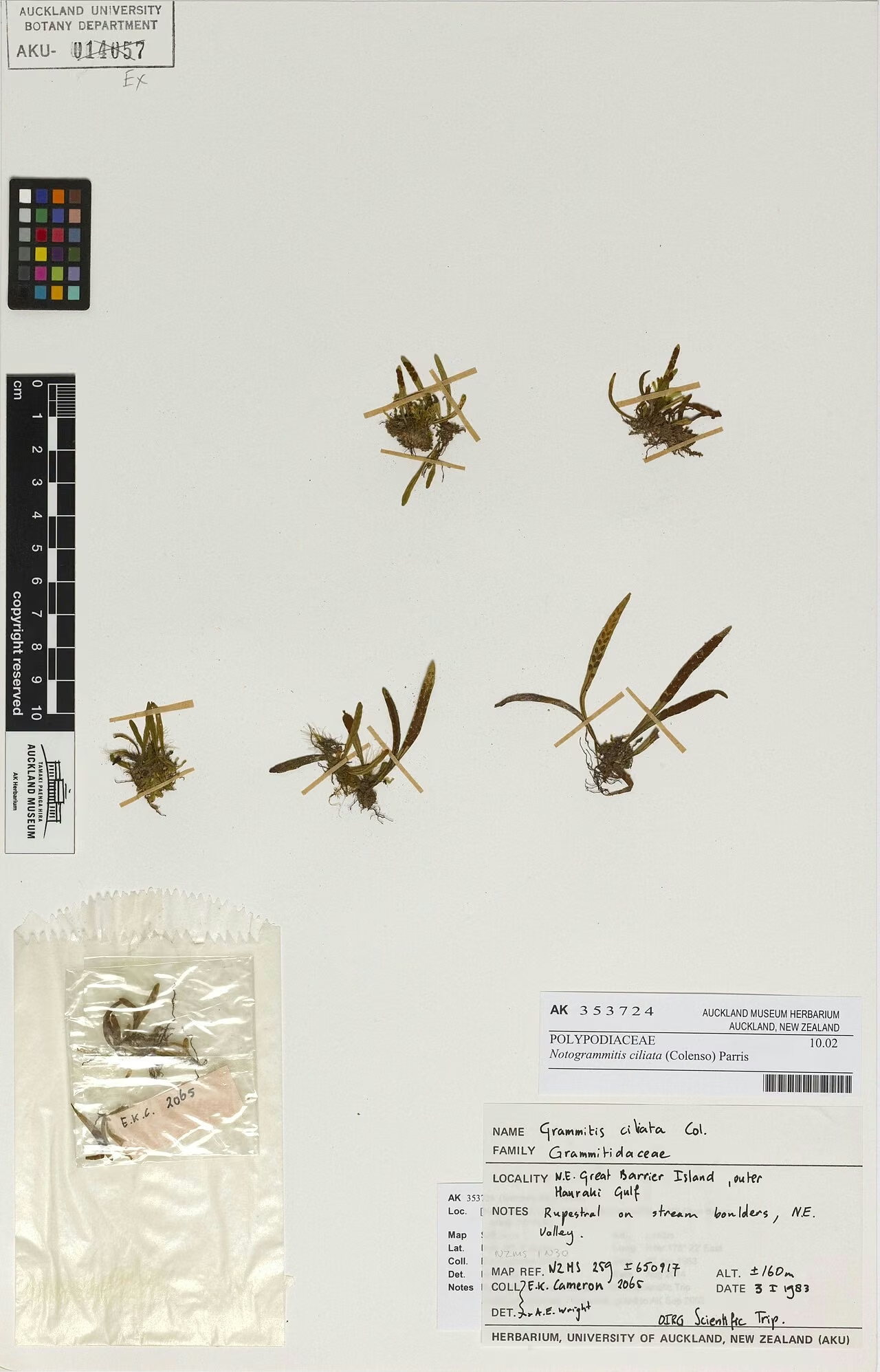
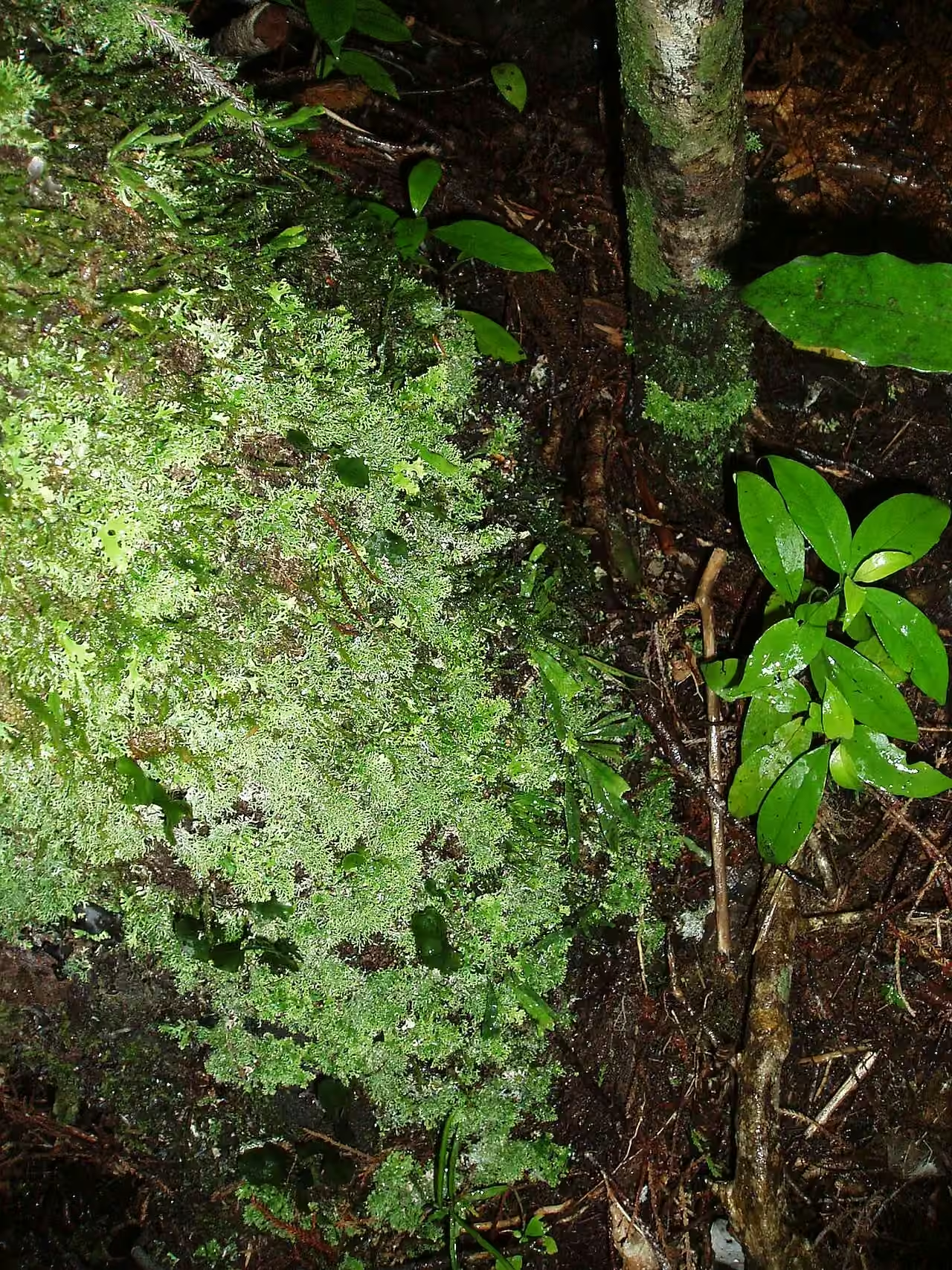
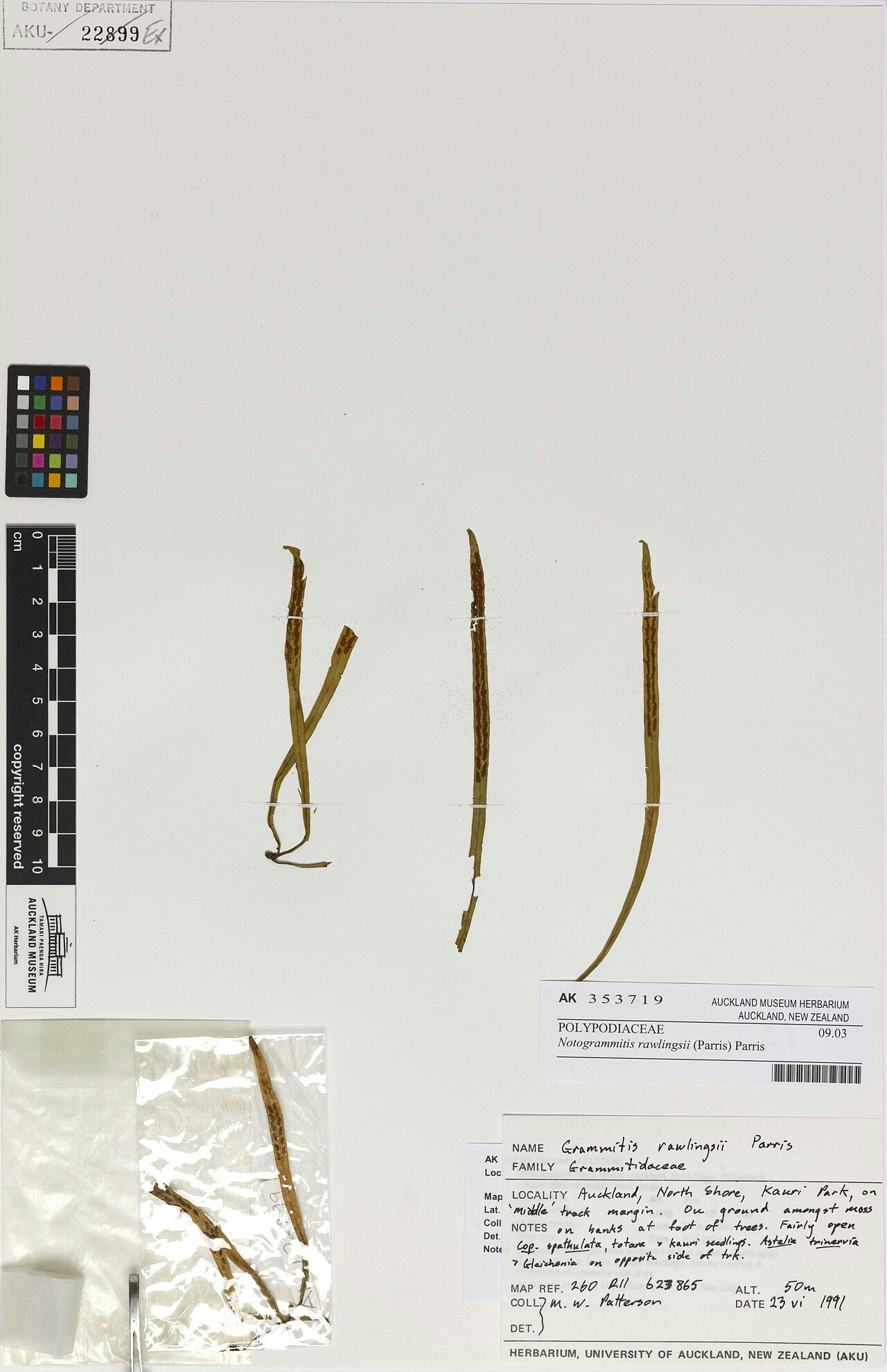
Explore other New Zealand ferns, including species of the same family.
Conservation
The fern is endemic and was assessed nationally as Not Threatened in 2023. NZPCN reports it as locally common in upper montane and cloud forest, while its 2025 Wellington regional assessment is Regionally Naturally Uncommon.
Frequently asked questions
Is Zealandia novae-zealandiae the same fern?
Yes. NZPCN treats the fern as Zealandia novae-zealandiae, while Flora of New Zealand and NZOR use Lecanopteris novae-zealandiae. They apply different generic classifications to the same species.
Where does this fern usually grow?
Its characteristic setting is North Island cloud forest and scrub at approximately 600-1,400 m, usually growing on trees.
Which rhizome feature helps identify it?
Its rhizomes bear upright, translucent scales with a distinctive orange-brown or rusty colour.
Sources
Identification, habitat, range and conservation: NZ Plant Conservation Network. Frond photographs: University of Auckland NZ Plants. The 2019 generic classification: Testo and colleagues. Accepted name, spelling and New Zealand biostatus: Flora of New Zealand and NZOR.
Genus classification referenced by NZPCN: Testo and colleagues, 2019.
Taxonomy and New Zealand biostatus: Flora of New Zealand species account.
Last updated: