Mudmat
Glossostigma diandrum
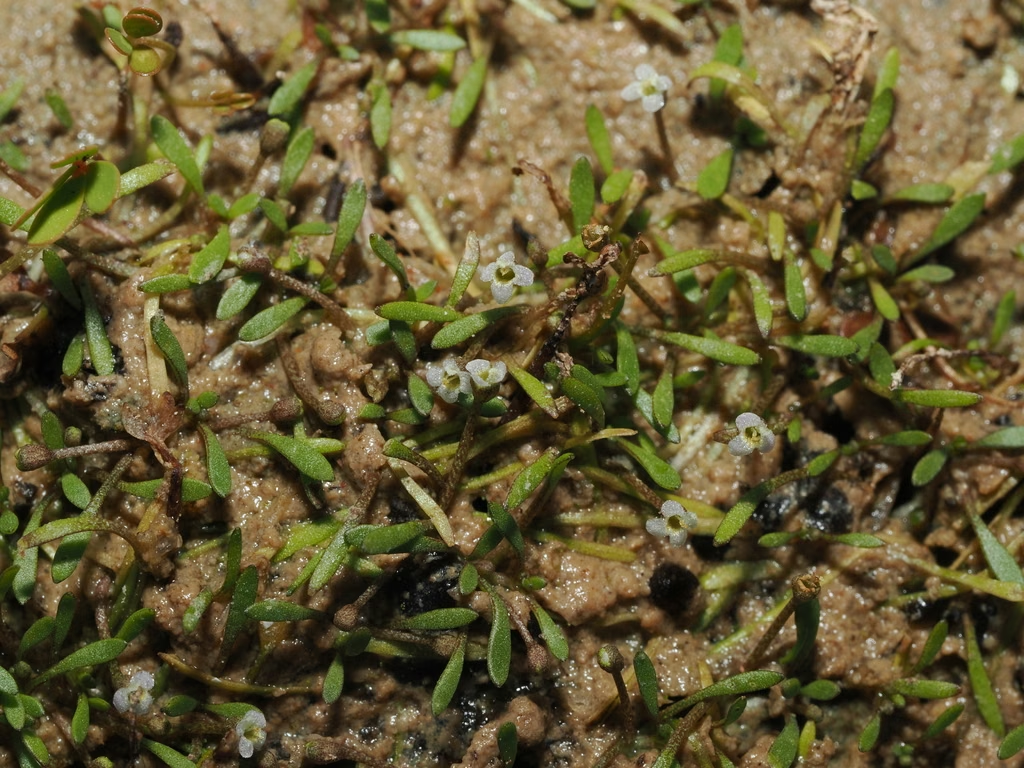
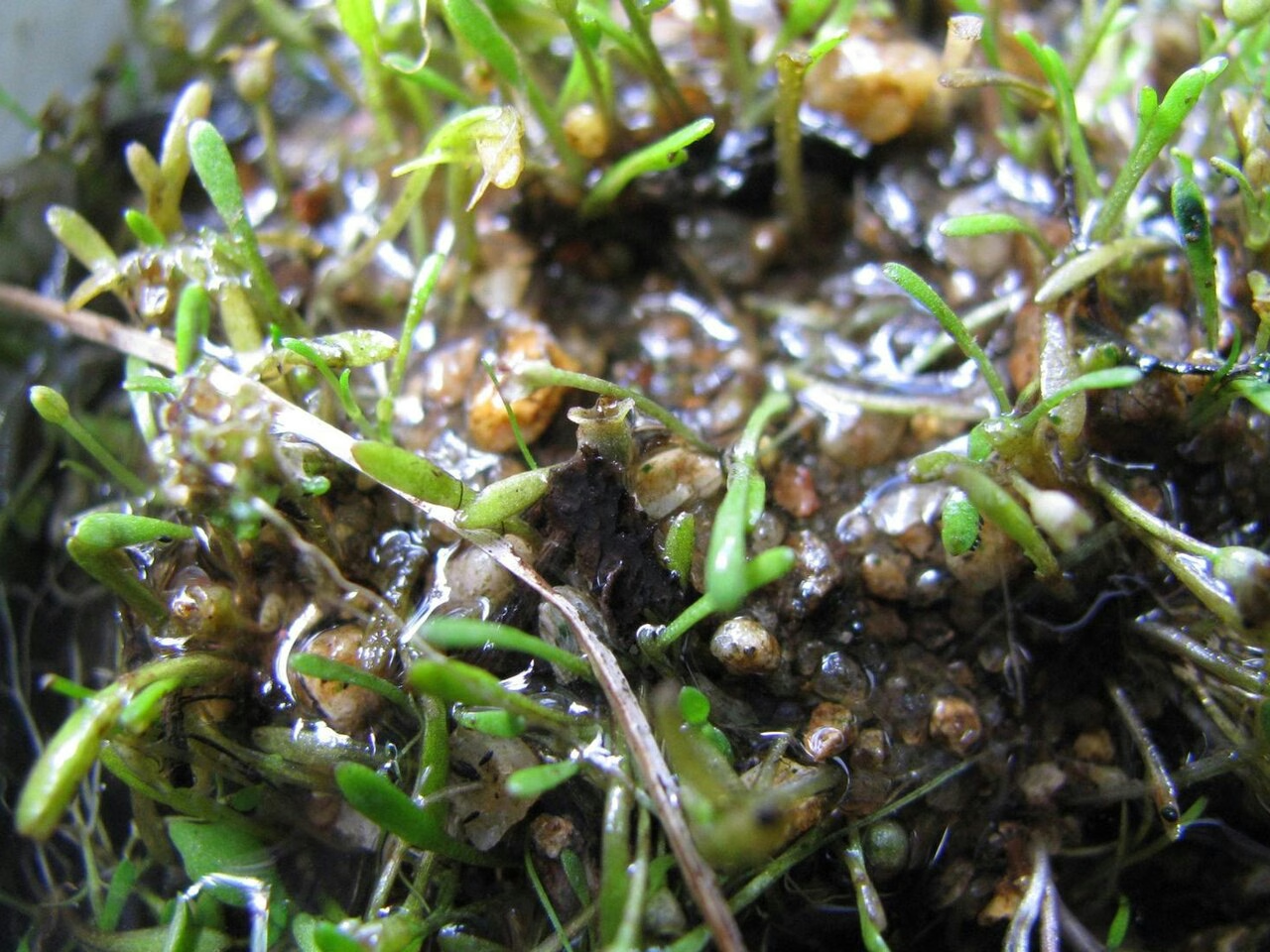
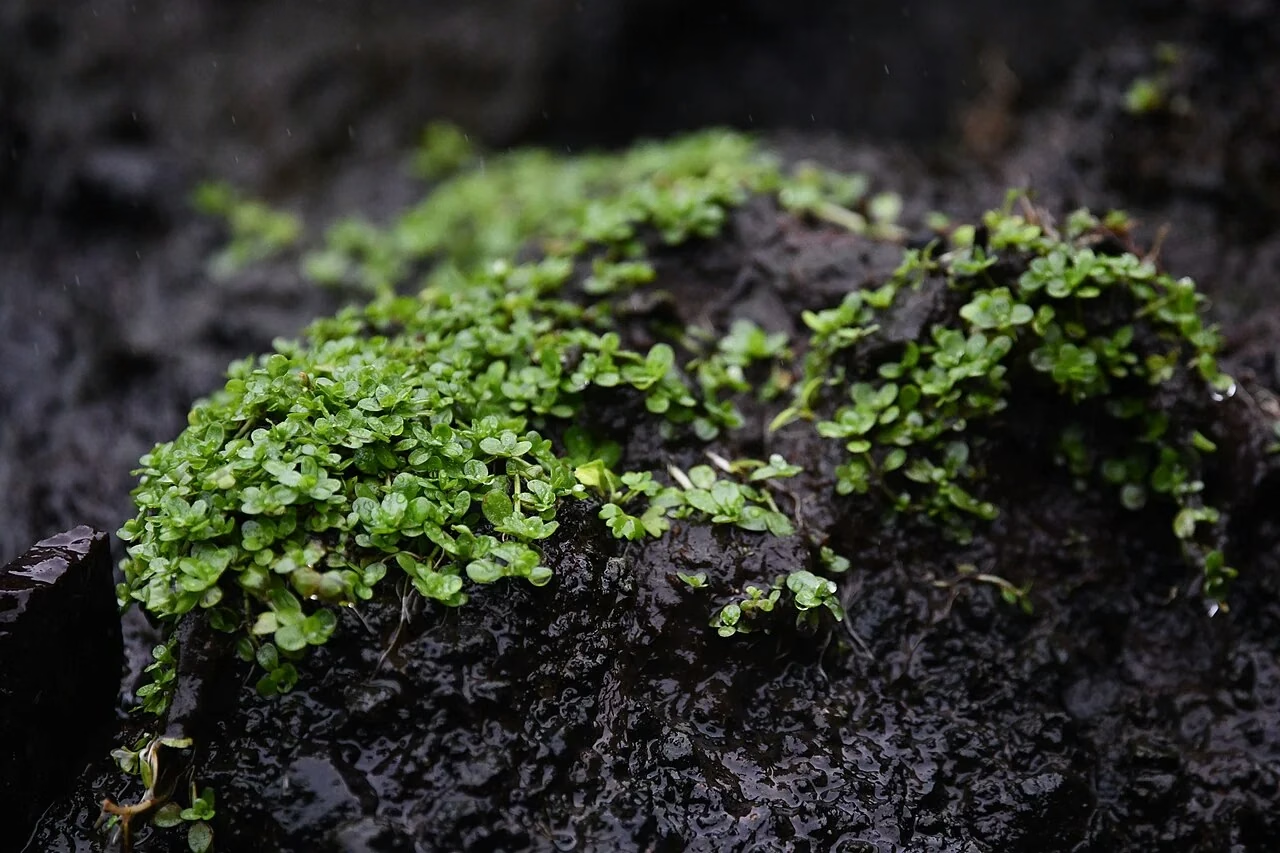
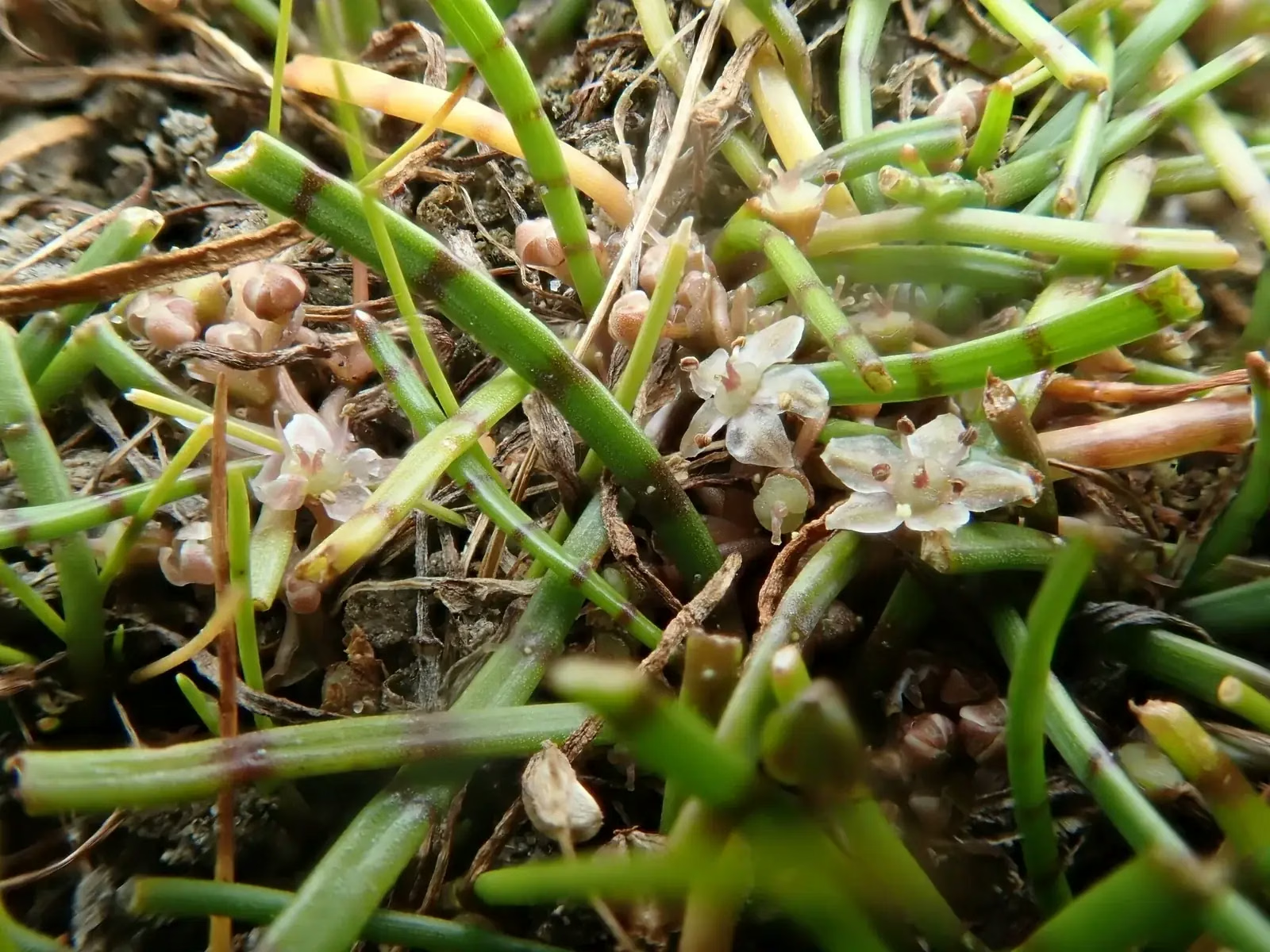
Glossostigma diandrum is a tiny native mudmat that grows in shallow water and on damp waterway margins. Its creeping stems root at their nodes and form small, dense patches. This minute, hairless herb has almost threadlike stems that creep and root at the nodes.
Identification
This minute, hairless herb has almost threadlike stems that creep and root at the nodes. Its leaves are generally 4-6 mm long, linear to narrow-spoon-shaped, and arranged opposite one another or sometimes in clusters.
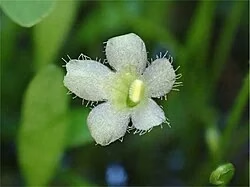
Flowers arise singly from leaf axils and are about 1.5 mm across. Each has two stamens; the round capsule is about 1.5-1.75 mm across.
Quick facts
| Scientific Name | Glossostigma diandrum |
|---|---|
| Former name | Glossostigma submersum |
| Family | Phrymaceae |
| Leaf length | Usually 4-6 mm |
| Flowers | About 1.5 mm across; two stamens |
| Habitat | Shallow water and damp margins |
| National status | Not Threatened (2023) |
| Height | Minute creeping herb; leaf length usually 4-6 mm |
| Water Needs | Shallow water and damp margins; classified as an obligate wetland plant |
| Light | A tested cultivation light rating is not supplied |
| Spread | Small dense patches from stems rooting at nodes |
| Frost Tolerance | Minimum tolerated temperature is not documented |
| Salt Tolerance | Salt tolerance is not documented |
| Growth Rate | Annual extension is not quantified in the cited accounts |
| Lifespan | Aquatic or amphibious herb; longevity is not quantified |
Natural range
NIWA describes this native mudmat as widespread in New Zealand. It also occurs in Australia and other regions; NZPCN classifies it as native but not endemic to New Zealand.
| City | Climate Suitability |
|---|---|
| Auckland | Not assessed |
| Wellington | Not assessed |
| Christchurch | Not assessed |
Habitat and distribution
The plant grows in shallow water and on damp margins around waterways. It is classified as an obligate wetland plant in New Zealand, meaning it is almost always found in wetland conditions.
NIWA describes both G. diandrum and the related G. elatinoides as widespread native aquatic herbs.
Natural growing conditions
This slender mudmat grows in shallow water or on damp ground at waterway edges. NIWA classifies it as amphibious; the cited species guide does not prescribe a garden soil or water-depth range.
Planting considerations
NIWA identifies Glossostigma diandrum as a freshwater amphibious plant. Its rooting stems can form patches in wet margins, but the cited species description does not give a species-specific planting depth or spacing.
Growth and dispersal
Creeping stems root at nodes and can spread vegetatively through stems and fragments. NZPCN also reports that seeds can be dispersed by ballistic projection, wind and water.
Observing the plant
A hand lens helps reveal its tiny flowers and narrow leaves. The leaf stalk is approximately as long as the blade; flowers sit singly in the leaf axils and have two enclosed stamens.
Freshwater context
NIWA lists this mudmat among native plants suitable for aquatic cultivation and describes it as freshwater and amphibious. Its natural form is a low creeping patch rather than a tall emergent plant.
Flowers and capsules
The flowers are inconspicuous and about 1.5 mm across in the New Zealand Flora description. The round capsule does not exceed the calyx and measures approximately 1.5-1.75 mm across.
Growth form
Nearly threadlike creeping stems root where their nodes touch the substrate, forming dense patches. The cited NZPCN and Flora profiles do not specify a pruning method for this tiny wetland herb.
How to Grow Mudmat (Glossostigma diandrum)
Seed and nodal rooting
Flora of New Zealand describes almost thread-like creeping stems that root at their nodes, together with minute rounded capsules. These structures explain the patch-forming habit of Glossostigma diandrum. The cited account does not give a tested seed-germination treatment, cutting length or establishment time for cultivated fragments.
Understanding an amphibious plant
NIWA describes this mudmat as an amphibious native aquatic herb, able to occupy shallow water and damp waterway margins. Its obligate-wetland classification in New Zealand indicates that it is almost always associated with wetland conditions. The cited species guide does not give a precise horticultural water depth or aquarium-light specification.
Checking the minute foliage
Most leaves are only about 4-6 mm long, with occasional smaller examples. They occur in opposite pairs or small clusters and are linear to narrowly spoon-shaped. Their stalks are approximately as long as their blades. A hand lens or close photograph is useful when distinguishing the tiny rooted stems from neighbouring aquatic vegetation.
Counting stamens on flowers
Flowers arise singly in the leaf axils and measure about 1.5 mm across. Each has two stamens enclosed within the corolla, an important character when separating this species from other mudmats. The capsule is roughly 1.5-1.75 mm across and remains within the calyx. Older descriptions use Glossostigma submersum; preserve that link when comparing botanical records or labelled material.
Plant health
The cited New Zealand species profiles do not list particular pest or disease treatments. Narrow hairless leaves and minute pale flowers are normal characteristics of the mudmat, rather than indications of poor growth.
Naming and classification
The former name Glossostigma submersum is a synonym of G. diandrum. Flora of New Zealand places it in Phrymaceae and records an earlier name, Limosella diandrum.
Distinguishing related mudmats
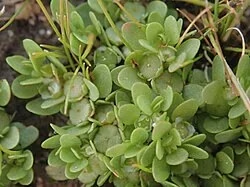
NIWA distinguishes G. diandrum from G. elatinoides by its linear to narrow-spoon-shaped leaves and two stamens. The latter has narrower obovate leaves and four stamens.
Other New Zealand freshwater plants
Explore related mudmats and other native plants of shallow water and wetland margins.
Conservation
Glossostigma diandrum was assessed as Not Threatened nationally in 2023. NZPCN lists it as Regionally Data Deficient in Auckland in 2025; a Wellington regional assessment classifies it as Regionally Endangered.
Frequently asked questions
How many stamens does a flower have?
Each flower has two stamens enclosed within its tiny corolla, a useful identification character.
Can it grow at the water's edge?
Yes. It is amphibious, occurring in shallow water and on damp margins.
What earlier name appears in the Flora description?
The historical description was published as Glossostigma submersum, now included under Glossostigma diandrum.
Sources
Botanical measurements: Flora of New Zealand. Habitat and comparison: NIWA aquatic plant guide. Conservation and dispersal: NZPCN and the Wellington regional assessment.
Last updated: