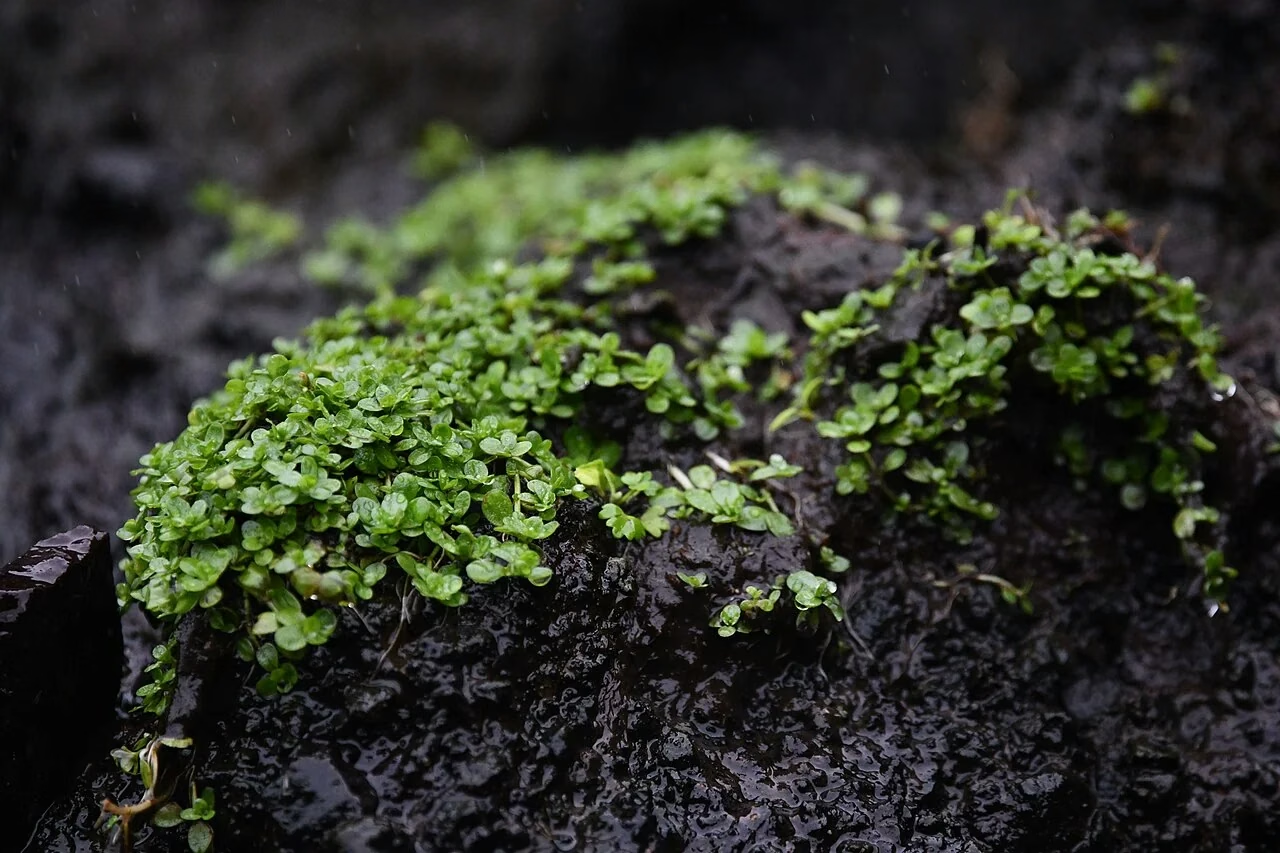
Antarctic Starwort
Callitriche antarctica
Last updated:
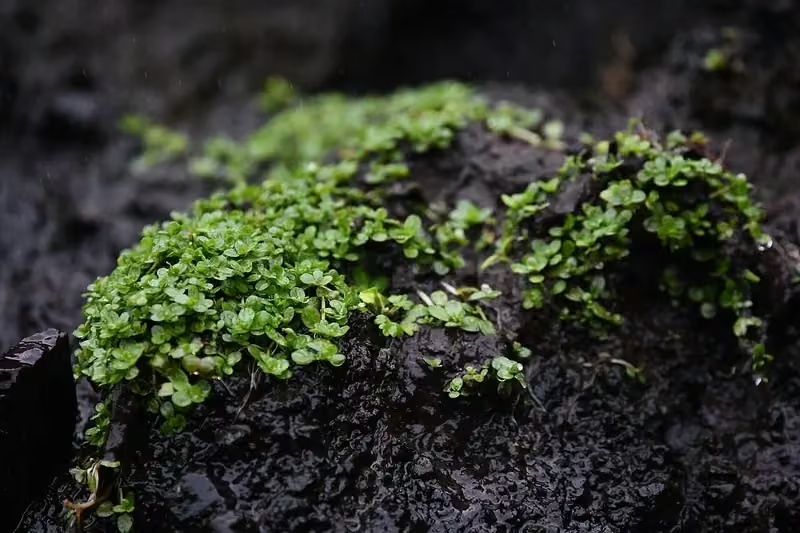
Antarctic Starwort (Callitriche antarctica) is a succulent, mat-forming perennial herb of New Zealand's subantarctic islands. It creeps along the ground on extensively branched stems up to 100 mm long, rooting at the nodes and forming dense, prostrate mats of bright to dark green foliage no more than about 10 cm high. Its small, fleshy, spoon-shaped leaves are typically 3 to 5 mm long, and it produces tiny, inconspicuous yellow flowers from September to March. Growing in wet, boggy, peaty ground on Campbell and Auckland Islands, it is highly frost and salt tolerant. It is classed as At Risk - Naturally Uncommon. Explore more wetland native plants in our native plant guide.
Plant Description
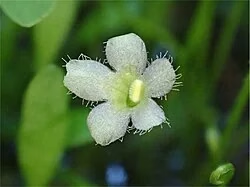
Antarctic Water-Starwort ( Callitriche antarctica ) is a distinctive, succulent, perennial herb forming dense, prostrate mats of bright to dark green foliage. Its stems are extensively branched, creeping along the ground and rooting at the nodes, with ascending branches that can reach up to 100 mm in length. The small, fleshy leaves are spoon-shaped (spathulate), typically measuring 3-5 mm long and 1-2.5 mm wide, though they can sometimes grow up to 10 mm long and 4.8 mm wide, supported by stout petioles 2-3 mm long. Each leaf usually has three prominent nerves. It produces tiny, inconspicuous yellow flowers, which appear between September and March. The fruits are small, yellowish to dull brown, roughly 1 mm in diameter, elliptic in shape, and laterally compressed. This species is well-adapted to cold, wet environments.
Quick Facts
| Scientific Name | Callitriche antarctica |
|---|---|
| Height | Up to 10 cm |
| Spread | Mat-forming |
| Water Needs | Aquatic to very wet conditions |
| Light | Full Sun |
| Frost Tolerance | High |
| Salt Tolerance | High |
| Growth Rate | Fast |
| Lifespan | Perennial |
| Max Length | Stems up to 100 mm long |
| Leaf Size | 3-5 mm long (up to 10 mm) |
| Soil/Substrate | Wet, boggy, peaty ground, various soil types |
| Flowering Season | September to March |
Climate Best Suited to
Antarctic Water-Starwort is indigenous to the subantarctic islands of New Zealand (Campbell and Auckland Islands) and other similar cold, wet regions. It thrives in perpetually damp, boggy, and peaty ground, often in coastal to montane areas. It is adapted to cold habitats and requires full sun, as it cannot grow in shade. Its ability to remain active all winter further highlights its preference for cool, consistent moisture.
Regional Suitability
| City | Climate Suitability |
|---|---|
| Best suited to cool, wet, and often boggy environments typical of subantarctic islands. Requires full sun. Not suitable for warm, dry climates. | |
Plant Habitat
Callitriche antarctica is an indigenous New Zealand species, primarily known from Campbell and Auckland Islands, and also found on other subantarctic islands like Macquarie, Heard Island, and Tasmania. It inhabits wet, boggy areas, along stream banks, and around freshwater pools. This plant thrives in damp, peaty, and boggy ground, often found in coastal to montane regions. It is particularly common in open, disturbed habitats such as around seabird nesting grounds, penguin rookeries, and seal haul-outs, benefiting from the nutrient enrichment. It is well-adapted to cold habitats and clear, oligotrophic (low nutrient) waters.
Growing Requirements
Substrate & Soil Requirements
Antarctic Water-Starwort requires wet to aquatic conditions, rooting in mud or soil at the bottom of ponds or in perpetually damp ground. It thrives in damp, peaty, or boggy soil and can grow in light (sandy), medium (loamy), and heavy (clay) soil types. It is adaptable to mildly acidic, neutral, or mildly alkaline pH levels. Good water retention is key.
- Wet to aquatic conditions
- Mud, damp, peaty, or boggy ground
- Various soil types and pH levels
Light Requirements
Callitriche antarctica requires full sun exposure to thrive and cannot grow in shaded conditions. Its natural habitats are open and exposed, indicating a strong need for high light intensity.
- Full Sun (essential)
- Cannot grow in shade
Water & Humidity Requirements
This plant is fundamentally aquatic or semi-aquatic, requiring consistently wet to submerged conditions. It is crucial to maintain high moisture levels, mimicking its natural boggy and stream-side habitats. It can also function as an excellent oxygenator in water environments.
- Aquatic to very wet conditions
- Consistently high moisture
- Good oxygenator for water
Planting and Establishing
To cultivate Antarctic Water-Starwort, replicate its natural wet, boggy environment with full sun exposure. Choose a location where the plant can be consistently submerged or in very damp, peaty soil, such as the edge of a pond, a bog garden, or a shallow aquatic container. Ensure the substrate is rich in organic matter and maintains high moisture. Gently press stem cuttings or whole plant fragments into the mud or substrate. It roots readily from nodes. During establishment, ensure constant wetness and full sun. This plant can remain active all winter, making it a robust choice for appropriate conditions.
Ecological Role
As an indigenous species with an 'At Risk - Naturally Uncommon' conservation status, Callitriche antarctica plays a significant ecological role in the subantarctic island ecosystems. It forms dense mats that contribute to stabilizing mud and peat in wet, disturbed areas, helping to prevent erosion. It provides important habitat and a food source for aquatic invertebrates, which in turn support higher trophic levels like seabirds and seals. Its ability to oxygenate water also benefits other aquatic life. Its presence in nutrient-rich disturbed sites around animal colonies highlights its unique ecological niche. This species is a vital component of the aquatic flora of New Zealand's subantarctic region.
Uses & Significance
Garden & Landscape Uses
Antarctic Water-Starwort can be used in specialized garden designs that replicate its wet, boggy habitat. It is an excellent choice for bog gardens, shallow edges of ponds, or aquatic containers where its mat-forming growth can create lush green coverage. Its role as an oxygenator in water makes it beneficial for pond ecosystems.
- Bog Gardens
- Pond Edges & Shallow Water
- Aquatic Containers
- Oxygenator Plant
- Erosion Control (in wet areas)
Ecological Value
The ecological value of Callitriche antarctica is substantial, particularly in the unique subantarctic ecosystems. It contributes to soil stabilization, prevents erosion in wet areas, and provides critical habitat and a food source for aquatic invertebrates. Its presence in disturbed, nutrient-rich environments like seabird colonies underscores its resilience and ecological importance in these sensitive environments.
- Habitat Provider
- Food Source for Invertebrates
- Soil Stabilizer (in wet areas)
- Water Oxygenator
Landscaping Uses
Callitriche antarctica is a specialized landscaping plant, ideal for creating naturalistic wet and boggy areas. It is perfect for lining the edges of natural ponds, streams, or constructing dedicated bog gardens. Its dense, mat-forming habit can provide attractive groundcover in consistently wet, sunny locations, helping to define aquatic margins and support local wildlife. Given its specific requirements, it is best suited for designs that can faithfully replicate its unique subantarctic habitat.
Seasonal Care Calendar
Spring
As new growth appears, ensure consistent wet conditions and full sun exposure. This is a good time for initial planting or division.
- Ensure consistent wetness
- Full sun exposure
- Planting/Division
Summer
Maintain constant wet conditions. Protect from any potential drying out, especially in warmer periods. Flowering occurs.
- Maintain constant wetness
- Protect from drying out
- Flowering
Autumn
Maintain wet conditions. The plant remains active. Clear any debris that might fall onto the mats.
- Maintain wetness
- Clear debris
Winter
The plant remains active throughout winter. Ensure continued wet conditions and full sun. Minimal maintenance is required.
- Remains active
- Continued wetness
- Full sun
When to Maintain and How Much
Maintenance for Antarctic Water-Starwort is minimal and primarily involves ensuring optimal growing conditions and tidying.
- Gently remove any dead or decaying plant material to maintain tidiness and prevent water stagnation.
- Clear away debris (e.g., fallen leaves) that might cover the mats.
- Trim back any excessive growth if the plant spreads beyond desired areas, especially in smaller aquatic features.
Regular monitoring of water quality and depth is also beneficial in cultivated aquatic environments.
How to Grow Antarctic Starwort
Cultivating Antarctic Water-Starwort ( Callitriche antarctica ) successfully involves replicating its natural aquatic or very wet, boggy environment, typically found in full sun on New Zealand's subantarctic islands. This small, mat-forming perennial herb is relatively straightforward to propagate, primarily through fragmentation or stem cuttings, due to its ability to root readily from nodes. Understanding its preference for cool, consistently moist, and well-lit conditions is crucial for successful establishment and growth.
From Cuttings/Fragmentation
Propagation from stem cuttings or fragmentation is the easiest and most effective method for Callitriche antarctica .
- Gently collect healthy stem sections or small plant fragments from an existing patch. Ensure each fragment has a few nodes, as these are where roots will develop.
- Prepare the planting site by ensuring a consistently wet to submerged substrate, such as mud, peat, or a suitable aquatic soil mix.
- Carefully press the stem cuttings or fragments into the mud or substrate, ensuring good contact. If planting in water, the fragments can often be allowed to float initially, and they will root down.
- Maintain consistently wet to submerged conditions. The plant thrives on high moisture.
- Provide full sun exposure. This plant cannot tolerate shade.
- Roots will readily form from the nodes, and the plant will begin to spread, forming dense mats.
From Seed
While Callitriche antarctica produces fruits containing seeds, propagation from seed is less common in cultivation compared to vegetative methods.
- Collect the small, elliptic, laterally compressed fruits after they mature.
- Sow seeds directly into a consistently wet, muddy, or submerged substrate in full sun.
- Germination rates can be variable, and conditions need to remain constantly moist.
- This method often results in slower establishment compared to using cuttings.
Additional Considerations
Success in growing Antarctic Water-Starwort depends heavily on providing its preferred environment: full sun, consistently wet to submerged conditions, and a cool climate. It is not suitable for dry or shaded garden beds. Its ability to remain active all winter makes it a robust choice for appropriate aquatic or bog garden settings. Regular monitoring of water levels and substrate moisture is important, especially during warmer periods.
Pests & Diseases
Antarctic Water-Starwort ( Callitriche antarctica ) is generally a robust and healthy perennial herb when grown in its preferred conditions. Its primary vulnerabilities are related to environmental factors rather than specific pests or diseases.
- Desiccation: The most significant threat is allowing the plant to dry out. Prolonged periods without consistent moisture will lead to stress and death.
- Insufficient Light: It requires full sun and will not thrive in shaded conditions. Lack of adequate light can lead to weak, leggy growth.
- Water Quality: In cultivated aquatic environments, poor water quality (e.g., excessive pollutants, extreme pH fluctuations) can negatively impact its health. It thrives in clear, oligotrophic (low nutrient) waters naturally.
- Physical Disturbance: Being a small, prostrate plant, it can be easily damaged by physical disturbance from animals or heavy foot traffic, especially in its natural habitats like seabird colonies.
- Overcompetition: In dense aquatic environments, it might be outcompeted by more aggressive aquatic plants if not managed.
Maintaining its ideal environment of full sun and consistent wet to submerged conditions with good water quality is the best defense against potential problems for Antarctic Water-Starwort.
Cultural Significance
Antarctic Water-Starwort ( Callitriche antarctica ) holds ecological and scientific significance as an indigenous New Zealand species, part of the unique flora of the subantarctic islands. Its 'At Risk - Naturally Uncommon' conservation status highlights its importance for biodiversity conservation. While specific traditional Māori cultural uses are not widely documented for this particular subantarctic plant, its role in providing habitat and food within sensitive ecosystems, particularly around seabird and seal colonies, contributes to the overall health and balance of these culturally and biologically rich environments. Its presence is a testament to the resilience of life in extreme southern latitudes.
- Indigenous to New Zealand (subantarctic islands)
- 'At Risk - Naturally Uncommon' conservation status
- Ecologically important in subantarctic ecosystems
- Indicator of healthy aquatic habitats
Bonus Tip
When using Antarctic Water-Starwort in a bog garden or aquatic feature, consider pairing it with other native subantarctic or wetland plants that thrive in similar cool, wet, and sunny conditions to create a cohesive and ecologically appropriate display.
Related Plants
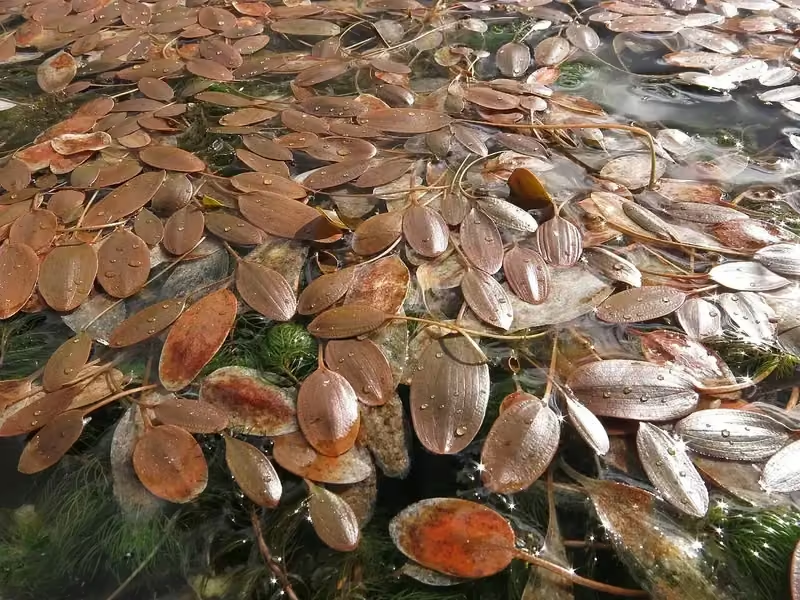
Explore other native aquatic or wetland plants that share similar characteristics or habitats with Antarctic Water-Starwort ( Callitriche antarctica ), offering further insights into New Zealand's diverse flora. These related species provide context and opportunities for complementary planting in your garden. For another native wetland plant, explore Tassel Sedge.


Plant Conservation
Callitriche antarctica is classified as 'At Risk - Naturally Uncommon' under the New Zealand Threat Classification System. This status reflects its restricted geographical distribution to the subantarctic Campbell and Auckland Islands. While it is common within these specific habitats, its limited range makes it inherently vulnerable to potential threats such as climate change, habitat alteration, and the introduction of non-native species. Conservation efforts focus on protecting the pristine environments of these islands and monitoring the health of its populations to ensure the continued survival of this unique indigenous aquatic herb.
Frequently Asked Questions
How tall does Antarctic Starwort grow?
It grows up to about 10 cm high, forming dense creeping mats with stems up to 100 mm long.
Where does Callitriche antarctica grow?
It grows in wet, boggy, peaty ground on New Zealand's subantarctic Campbell and Auckland Islands and other southern islands.
When does Antarctic Starwort flower?
It produces tiny, inconspicuous yellow flowers from September to March.
Is Antarctic Starwort salt and frost tolerant?
Yes, it has high salt and high frost tolerance, suiting exposed, cold, wet coastal habitats.
Sources and Further Reading
The botanical, growing, and conservation details for Antarctic Starwort (Callitriche antarctica) on this page draw on authoritative New Zealand plant references and citizen-science observation records. Consult the sources below for full technical records and the latest distribution data.