Small Mud-Mat
Glossostigma elatinoides
Last updated:
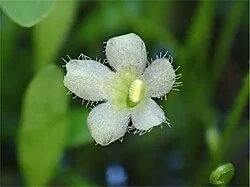
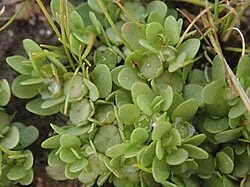
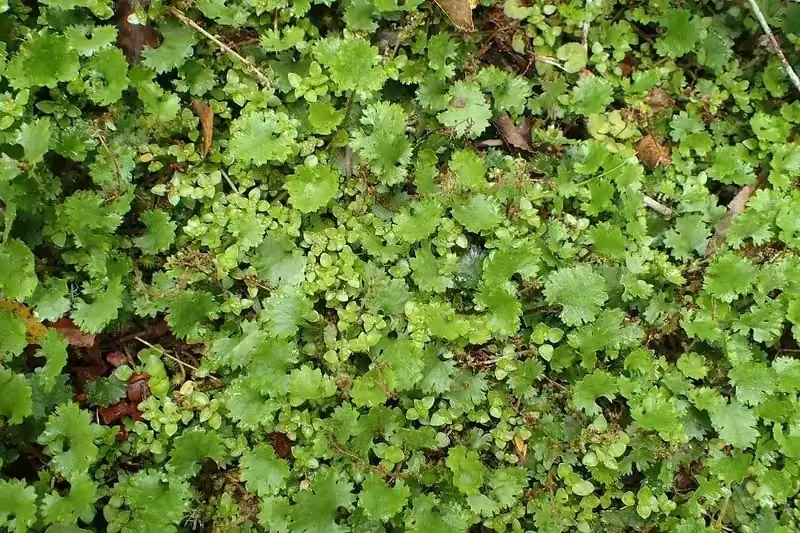
Glossostigma elatinoides, or Small Mud-Mat, is a tiny creeping perennial herb that forms dense, low green mats just 1 to 5 cm high. Its small spatula-shaped leaves grow in pairs along rooting stems, and it can live fully submerged in clear water or as a terrestrial mat on damp mud. Native to New Zealand and Australia, it grows on the muddy margins of lakes, rivers and streams, and in bogs, swamps and ephemeral ponds. Fast-growing and fond of full sun and constant moisture, it stabilises sediment in the wild and has become a famous carpeting plant in the aquarium hobby. Explore more wetland native plants in our native plant guide.
Plant Description
Identification and Physical Characteristics
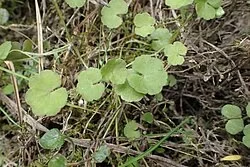
Glossostigma elatinoides is a creeping, perennial herb that forms dense, low mats. The leaves are small, typically 5-15 mm long, spatula-shaped (spathulate), and bright green. They grow in pairs or small clusters along rooting stems. When submerged, the plant stays very low to the ground, often less than 3 cm tall. In its terrestrial form on damp mud, the leaves may be slightly smaller and thicker. It produces tiny, inconspicuous white flowers in the leaf axils, usually when growing out of water or in very shallow water during summer.
Quick Facts
| Scientific Name | Glossostigma elatinoides |
|---|---|
| Height | 1-5 cm |
| Spread | Indefinite |
| Water Needs | Very High / Aquatic |
| Light | Full Sun |
| Frost Tolerance | Moderate |
| Salt Tolerance | Low |
| Growth Rate | Fast |
| Lifespan | Perennial |
Climate Best Suited to
Glossostigma elatinoides is widely distributed across New Zealand and Australia, adapting to a variety of temperate climates. It prefers conditions where moisture is constant. In colder regions, it may die back or grow slower in winter but will recover in spring. It thrives in open, sunny wetlands and along the margins of waterways where light is abundant.
Regional Suitability
| City | Climate Suitability |
|---|---|
| Auckland | Suitable |
| Wellington | Suitable |
| Christchurch | Suitable |
| Dunedin | Suitable |
| Queenstown | Suitable (hardy) |
Plant Habitat
Natural Occurrence and Ecology
This species is an aquatic or semi-aquatic herb found in lowlands to montane areas. Its natural habitats include the muddy margins of lakes, rivers, and streams, as well as bogs, swamps, and ephemeral ponds. It is capable of growing fully submerged in clear water or as a terrestrial mat plant on constantly damp soil, often exposed during low water levels.
Growing Requirements
Soil Requirements
Needs nutrient-rich, wet substrate.
- Mud, silt, or fine sand
- High organic content
- Must be constantly wet
- Aquarium soil in tanks
Light Requirements
Demands high light levels to stay compact.
- Full sun outdoors
- High intensity light in aquariums
- Grows vertically in low light
Water Requirements
Aquatic or semi-aquatic nature.
- Can be fully submerged
- Needs constant moisture if emersed
- Intolerant of drying out
Planting and Establishing
Establishment Guidance
For outdoor ponds or bog gardens, plant small plugs of Glossostigma elatinoides into wet mud at the water's edge. Space them about 5 cm apart. Ensure they are kept moist until established. In an aquarium, plant individual stems or small bunches into the substrate with tweezers, spacing them out to encourage the runners to fill in the gaps.
Ecological Role
Biodiversity and Ecosystem Impact
In the wild, Glossostigma elatinoides helps stabilize sediment along water margins, reducing erosion. It provides habitat and cover for aquatic invertebrates and small fish fry. Its dense mats also help to oxygenate the water and sediment interface.
Uses & Significance
Garden Uses
Popular in aquascaping and bog gardening.
- Aquarium carpet plant
- Pond margins
- Bog gardens
- Terrariums
Ecological Value
Important native wetland herb.
- Sediment stabilization
- Habitat for aquatic life
The versatility of this plant makes it a valuable addition to many New Zealand gardens. Beyond its aesthetic appeal, it offers practical benefits such as soil stabilization and shelter for smaller plants. Its historical and modern uses highlight its enduring importance in both traditional practices and contemporary landscape design, making it a thoughtful choice for any restoration or gardening project.
Landscaping Uses
Outdoors, it is an excellent ground cover for the muddy edges of a pond where other plants might struggle with fluctuating water levels. It softens the transition from water to land. In aquariums, it is one of the premier "carpet" plants, creating a lush, lawn-like effect in the foreground of a tank when provided with sufficient light and CO2.
Seasonal Care Calendar
Spring
Rapid growth begins.
- Divide established clumps
- Fertilize if in containers
Summer
Peak growth period.
- Ensure water levels don't drop too low
- Monitor for algae
Autumn
Growth slows.
- Trim back excessive growth
- Tidy pond margins
Winter
Dormant or slow growth.
- Hardy to frost if wet
- No special care needed outdoors
When to Prune and How Much
Pruning is essential, especially in aquariums, to maintain a dense, low carpet.
- Trim horizontally to encourage runners
- Remove vertical growth
- Thin out if mats become too thick
If the mat becomes too thick, the lower layers may die off due to lack of light and flow, causing the carpet to lift. Regular thinning prevents this.
How to Grow Small Mud-Mat
Growing Small Mud-Mat ( Glossostigma elatinoides ) is a rewarding project for both pond gardeners and aquarists. Its rapid growth rate means it can quickly cover bare substrates, but this also implies a need for specific conditions to maintain its compact form. The primary method of propagation is vegetative, utilizing the plant's natural tendency to produce runners (stolons).
From Cuttings or Runners
This plant spreads vigorously by sending out horizontal stems that root at the nodes. To propagate, you simply need to separate these runners.
Divide and replant to expand your carpet.
- Lift a section of the mat or cut a runner from the parent plant. Ensure the cutting has several healthy leaves and some roots attached.
- Separate the clump into smaller plantlets. Ideally, plant individual stems or small groups of 2-3 stems.
- Using fine tweezers (for aquariums) or your fingers (for outdoor mud), plant the stems into the substrate. Bury them deep enough so that only the leaves are visible above the soil/gravel.
- Space the plantings about 3-5 cm apart in a grid pattern. This allows room for the new runners to spread into the empty spaces.
- In an aquarium, providing high light and CO2 injection will significantly speed up the carpeting process and ensure the plants stay low. Without sufficient light, they will grow vertically towards the surface.
By Seed (Dry Start)
For aquariums or terrariums, the "Dry Start Method" is highly effective. This involves growing the plant terrestrially in a humid environment before flooding the tank.
Establish roots before adding water.
- Plant your Glossostigma into wet, nutrient-rich substrate in your empty tank.
- Cover the tank with plastic wrap to maintain 100% humidity.
- Provide 12 hours of light per day.
- Mist daily to keep the leaves and soil wet but not flooded.
- After 4-6 weeks, when a root system is established and the carpet has spread, fill the tank with water. The plants will transition to their submerged form.
Pests & Diseases
In aquariums, Glossostigma elatinoides can be prone to algae growth (like hair algae) on its leaves if nutrient balance is off or CO2 is fluctuating. Outdoors, it is relatively pest-free but can be damaged by waterfowl or foraging fish if submerged.
Cultural Significance
While specific Māori uses are not widely recorded, wetland plants occupy a significant place in the ecosystem (mauri of the wetland). This plant is significant as a widespread native species that has found global fame in the aquarium hobby.
- Global aquarium favourite
- Indicator of wetland health
Bonus Tip
To get that perfect "lawn" look in an aquarium, you must be ruthless with pruning. Mowing the tops off the plants forces them to send out side shoots, creating a denser and lower carpet.
Related Plants
Explore other native plants that share similar characteristics or habitats with Small Mud-Mat ( Glossostigma elatinoides ), offering further insights into New Zealand's diverse flora. These related species provide context and opportunities for complementary planting in your garden.
Plant Conservation
Conservation Status and Threats
Glossostigma elatinoides is abundant and widespread, classified as Not Threatened. However, wetland habitats in New Zealand are under threat from drainage and development. Preserving these habitats ensures the survival of species like the Small Mud-Mat and the diverse ecosystems they support.
Frequently Asked Questions
How tall does Small Mud-Mat grow?
Glossostigma elatinoides grows just 1 to 5 cm high, forming dense low mats.
Where does Small Mud-Mat grow naturally?
It grows on muddy lake, river and stream margins, and in bogs and swamps.
Can Small Mud-Mat grow underwater?
Yes, it can grow fully submerged in clear water or as a terrestrial mat on damp mud.
How fast does Small Mud-Mat grow?
It is a fast-growing plant that quickly forms a dense carpet in suitable conditions.
Sources and Further Reading
The botanical, growing, and conservation details for Small Mud-Mat (Glossostigma elatinoides) on this page draw on authoritative New Zealand plant references and citizen-science observation records. Consult the sources below for full technical records and the latest distribution data.