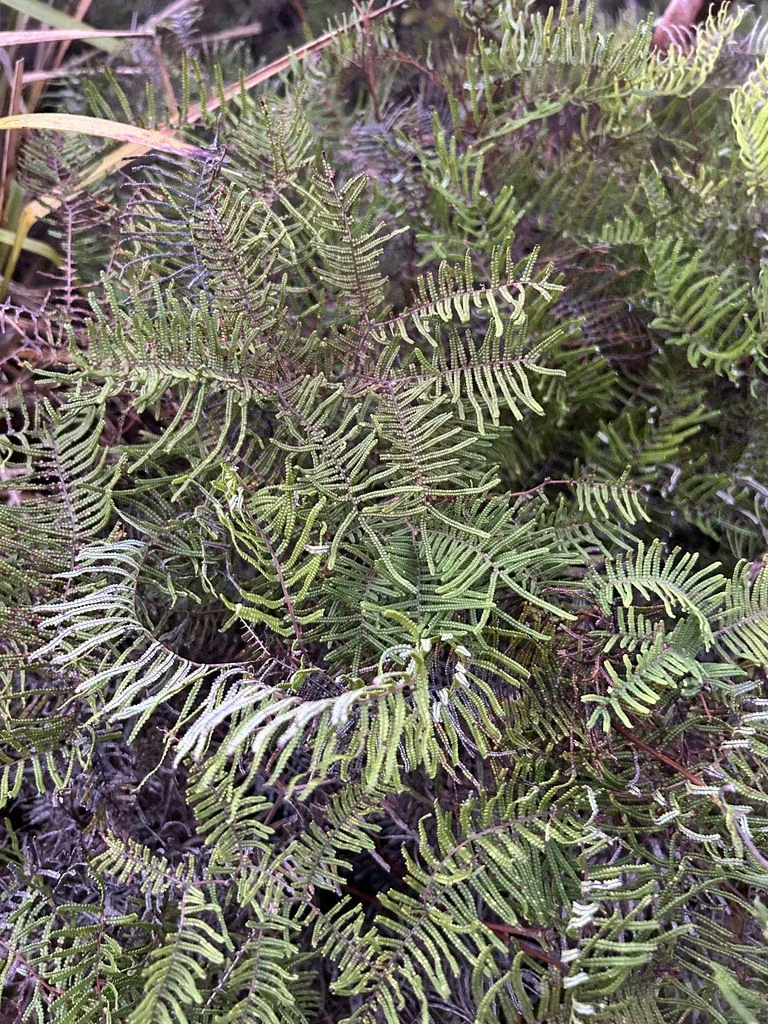
Tangle Fern
Gleichenia inclusisora
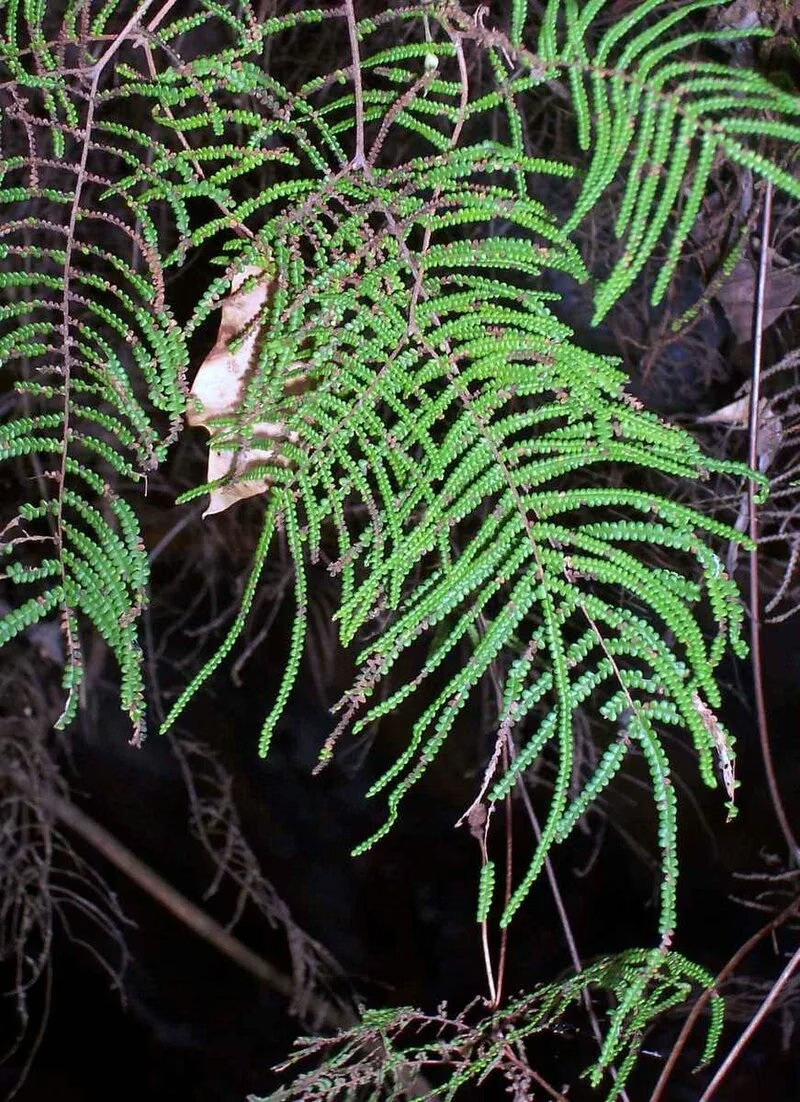
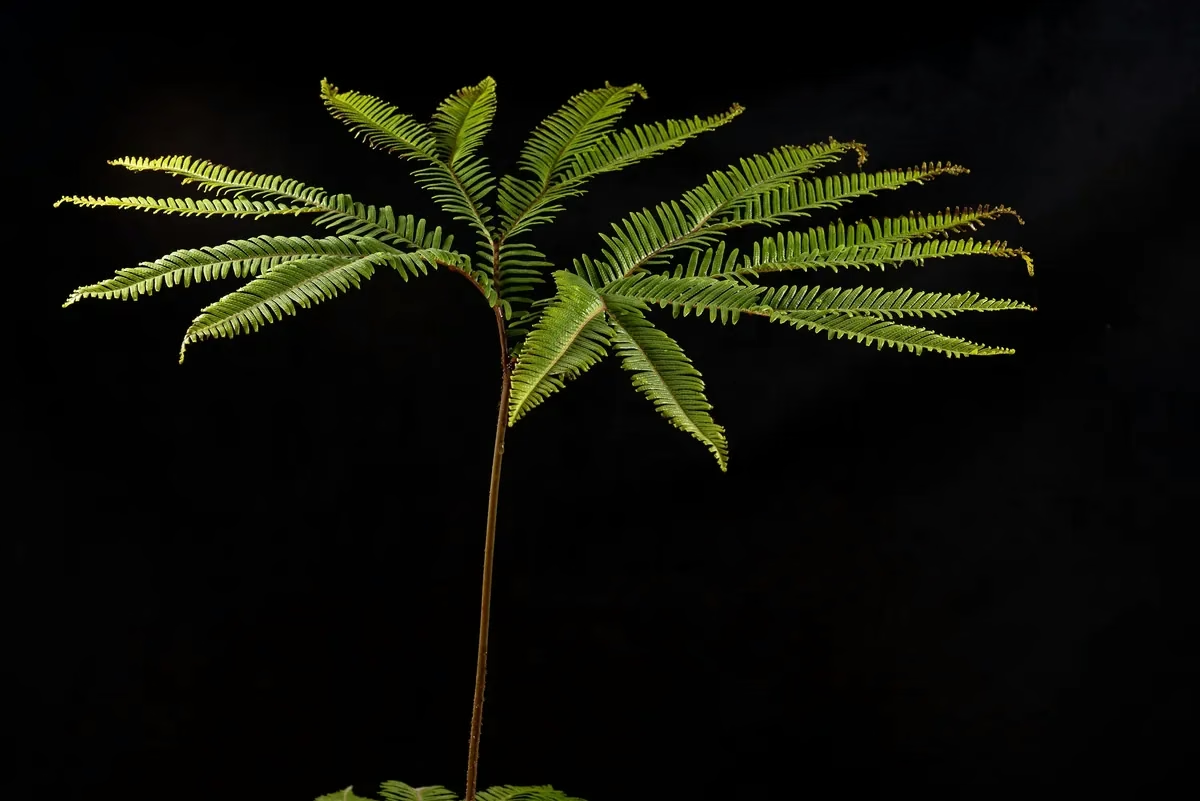
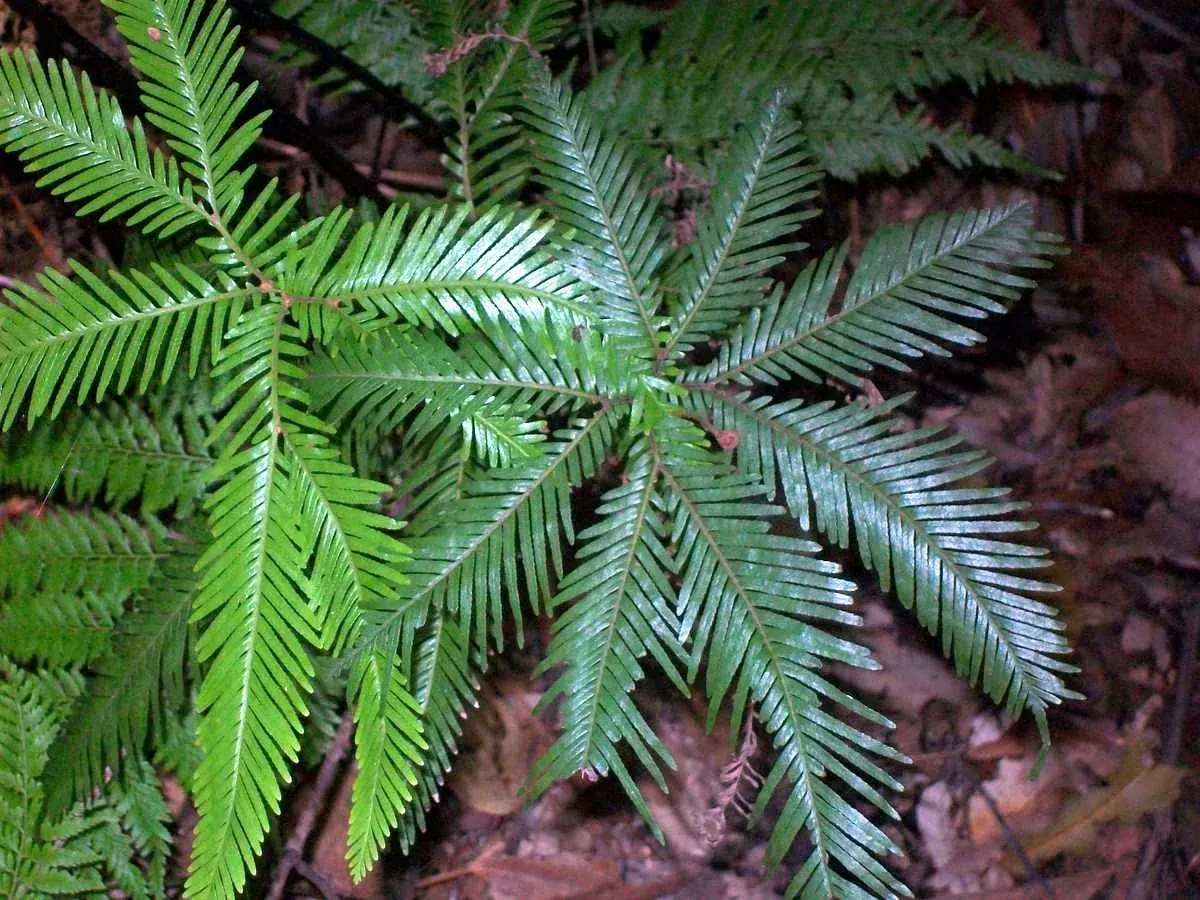
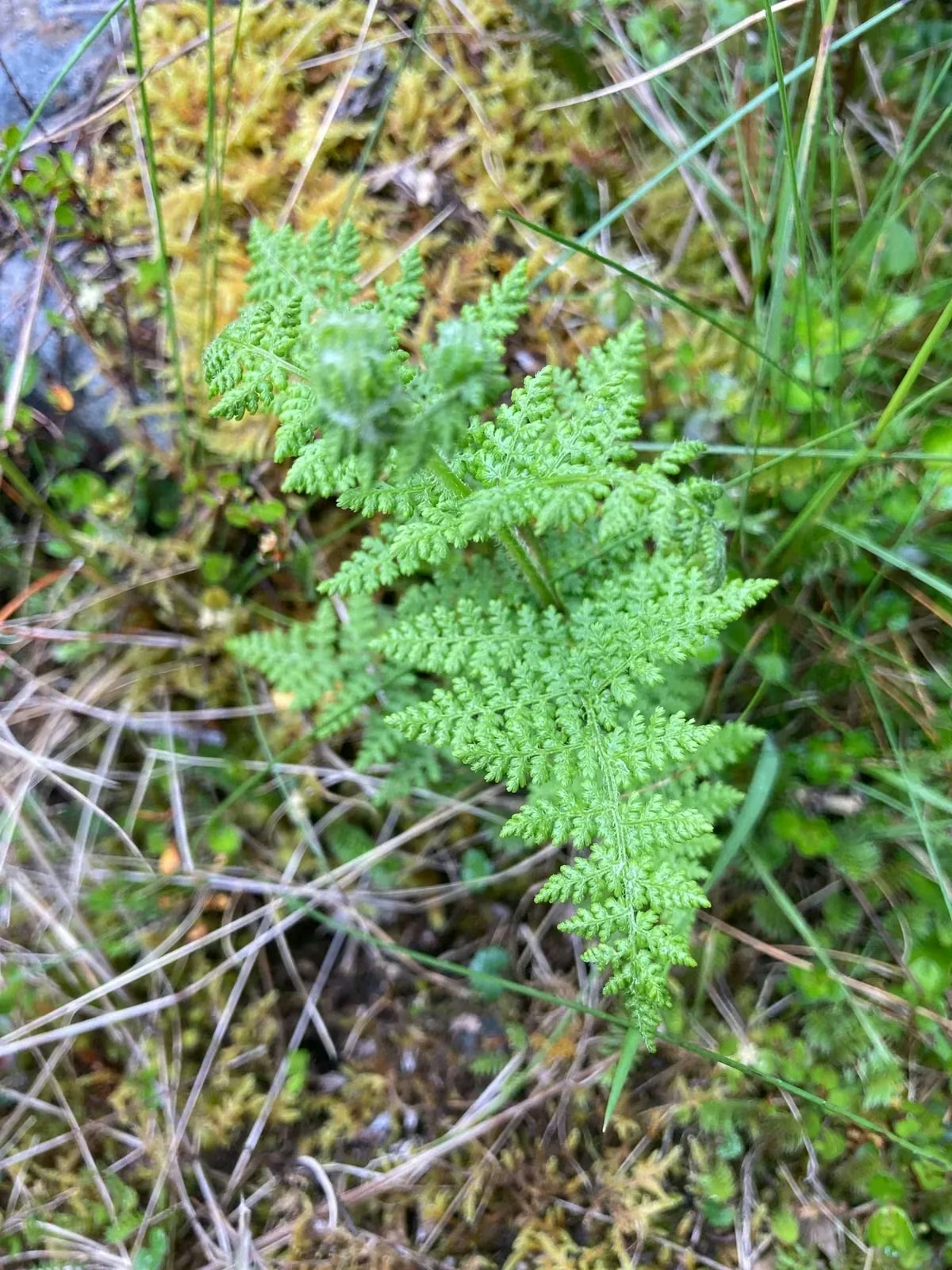
Gleichenia inclusisora is an endemic New Zealand tangle fern. Its glossy fronds have white undersides and distinctive spore clusters embedded in small pits. This terrestrial fern has long-creeping rhizomes and repeatedly divided, umbrella-like fronds.
Identification
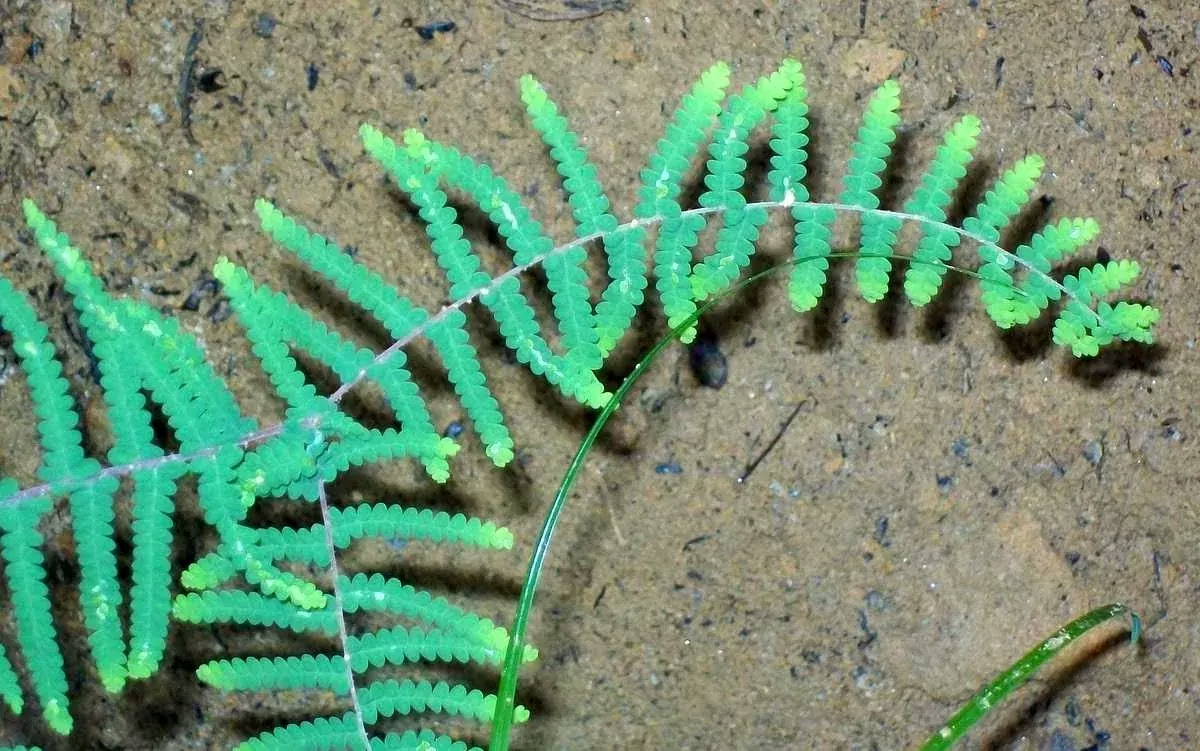
This terrestrial fern has long-creeping rhizomes and repeatedly divided, umbrella-like fronds. The upper surfaces are glossy green; the undersides of the final segments are white or blue-green.
Its sori, the clusters of spore-producing structures, sit in pits on the underside of the frond. Rounded, two-coloured scales are another feature visible with magnification.
Quick facts
| Scientific Name | Gleichenia inclusisora |
|---|---|
| Family | Gleicheniaceae |
| Growth | Long-creeping rhizome |
| Fronds | Glossy above, white beneath |
| Reproduction | Spores in embedded sori |
| Habitat | Pakihi and open shrubland |
| National status | Not Threatened (2023) |
| Height | Leaf stalks 4-110 cm long; pinnae extend beyond them |
| Water Needs | Wet, infertile pakihi is a recorded habitat; a watering schedule is untested |
| Light | Open shrubland and treeland in its natural habitat |
| Spread | Long-creeping rhizomes; maximum patch width is not given |
| Frost Tolerance | Minimum tolerated temperature is not documented |
| Salt Tolerance | Salt tolerance is not documented |
| Growth Rate | Annual extension is not quantified in the cited accounts |
| Lifespan | Creeping terrestrial fern |
Natural range
Flora of New Zealand records this endemic fern from lowland to montane elevations. Its South Island stronghold is the Westport-Greymouth area; an outlying North Island population is known from northern Coromandel.
| City | Climate Suitability |
|---|---|
| Auckland | Not assessed |
| Wellington | Not assessed |
| Christchurch | Not assessed |
Habitat and distribution
The fern grows in pakihi, the wet infertile heaths of western New Zealand, and in open shrubland or treeland. Flora notes that it often grows with Gleichenia dicarpa but tends to occupy rockier sites.
South Island records extend along the west coast toward Haast. Flora lists a doubtful old Ōpepe collection but does not map it as a confirmed location.
Natural growing conditions
Pakihi and open shrubland are the fern’s recorded habitats. The published Flora profile does not provide a tested garden soil or watering protocol; its occurrence in wet, infertile heath is a field observation.
Planting considerations
Flora of New Zealand describes the fern’s natural habitats and creeping rhizome, but does not provide a species-specific planting method. Its long-spreading rhizome is relevant when considering its growth form.
Growth and ecology
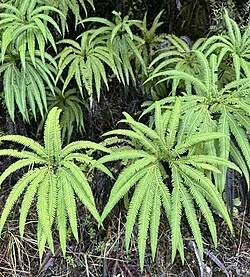
Fronds arise at intervals along a long-creeping rhizome. The frond branches repeatedly divide, allowing the foliage to become entangled with other vegetation; this fern often occurs alongside Gleichenia dicarpa.
Observing the fronds
Turn a frond over and use a hand lens to inspect its white underside. The sori are set into pits, sometimes leaving empty depressions where spore-producing structures have fallen out.
Landscape context
Its long-creeping rhizome and repeatedly divided fronds make this a spreading fern in natural vegetation. Flora documents pakihi and open shrubland habitats but does not report garden trials for this species.
Spores and fronds
As a fern, Gleichenia inclusisora produces spores rather than flowers. Its sori occur in groups of three or four and are embedded in the lower frond surface, a key identifying feature.
Growth form
The creeping rhizome produces stipes at intervals, while fronds may form a single tier or several tiers of branches. The cited botanical descriptions do not specify a species-specific pruning method.
How to Grow Tangle Fern (Gleichenia inclusisora)
Spores and rhizomes
The NZ Plant Conservation Network account does not describe a tested propagation method for Gleichenia inclusisora, which suggests leaving established plants alone. The fern has a long-creeping rhizome only about 1-3 mm thick. Leaf stalks arise at intervals of approximately 5-90 mm, sometimes farther apart. This describes how a patch occupies its site, without establishing a successful division method.
Recognising the pakihi setting
Natural sites include pakihi, the wet and infertile heathlands, together with open shrubland and treeland. The recorded elevation range extends from lowland country into montane habitats, reaching about 850 m on Te Moehau. These substrate and vegetation associations are more informative than assigning an unsupported general garden-soil rating.
Following the branching fronds
Many fronds have a single tier of pinnae because the central bud does not develop into an extended axis. Other fronds produce two to four tiers. This variation matters when recognising the species and following growth in an existing population: a simple, one-tiered frond and a more extended one need not represent different plants.
Comparing neighbouring tangle ferns
The species most frequently grows with Gleichenia dicarpa, and associations with Gleichenia alpina and Gleichenia microphylla are also recorded. Identification should therefore include the structures of the actual frond and rhizome. The species account offers no planting depth, fertiliser programme, spore-germination period or measured response to transplanting for this fern.
Plant health
The cited Flora and NZPCN profiles do not list species-specific pest or disease treatments. Pits beneath the frond can remain after the spore-producing structures fall out; they are part of the fern’s normal structure.
Naming and discovery
Leon Perrie, Lara Shepherd and Patrick Brownsey described the species in 2012. Its name comes from the Latin for enclosed, referring to the embedded sori. Te Papa notes that it was first recognised from museum specimens.
Distinguishing tangle ferns
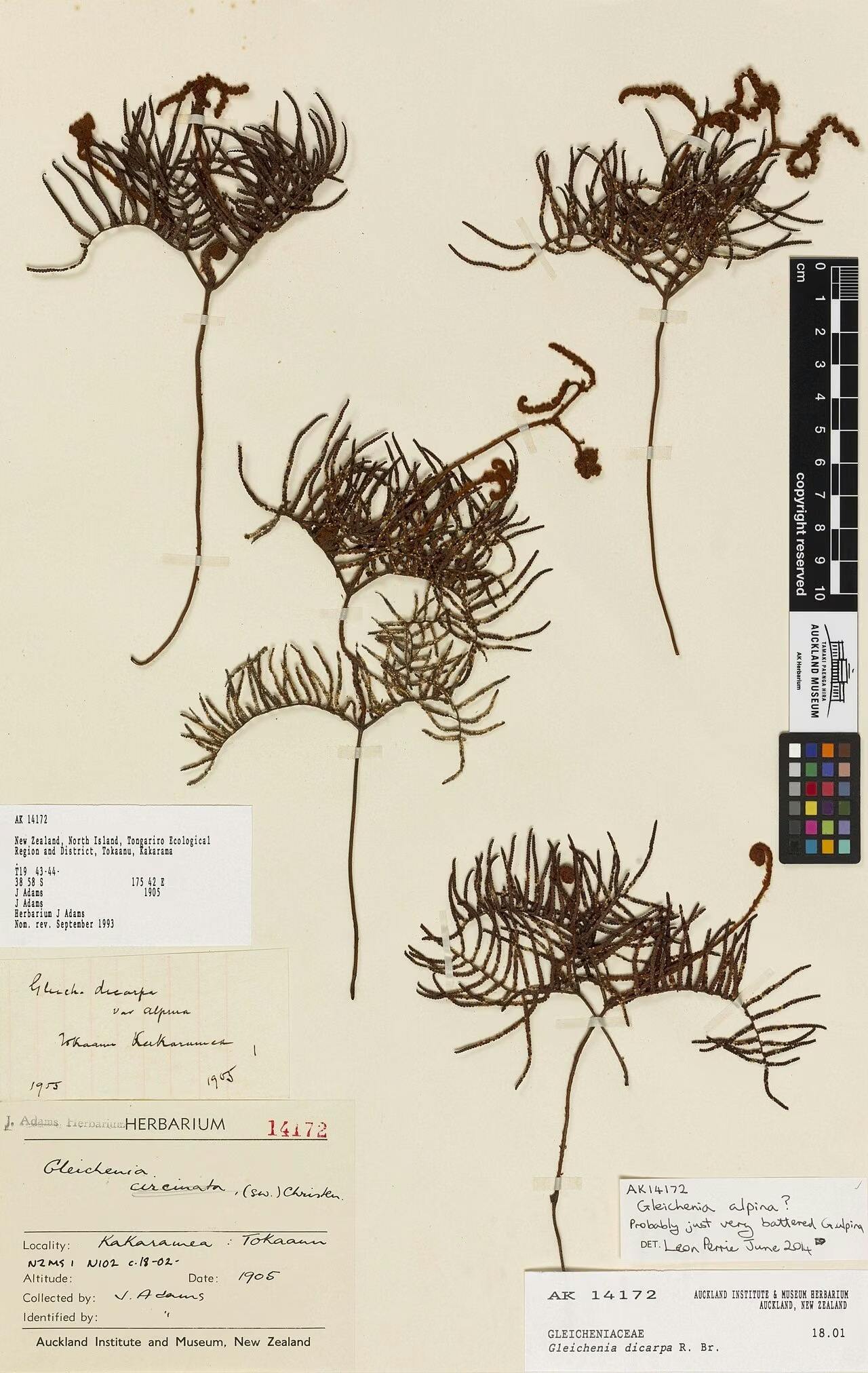
Compared with Gleichenia dicarpa, which often grows nearby, this fern usually has a shinier upper frond surface. Its embedded sori and white, unpouched segment undersides provide stronger diagnostic clues.
Related New Zealand ferns
Explore other tangle and umbrella ferns, plus species with contrasting frond architecture from New Zealand.
Conservation
Gleichenia inclusisora was assessed as Not Threatened nationally in 2023, with a regional decline qualifier. It had previously been assessed as Naturally Uncommon; NZPCN lists it as Regionally Naturally Uncommon in Auckland in 2025.
Frequently asked questions
What is pakihi?
In this species' habitat description, pakihi refers to wet, infertile heathland. It is one of the characteristic settings recorded for the fern.
Do all fronds have the same number of tiers?
No. A single tier is frequent, while some fronds develop two to four tiers as the axis continues from its central bud.
Which other tangle fern commonly grows nearby?
The most frequently recorded companion is Gleichenia dicarpa, making careful identification useful where the species occur together.
Sources
Identification, range, habitat and conservation: NZPCN. Botanical description and discovery: Flora of New Zealand. Background on tangle ferns: Te Papa.
The species account clarifies the diagnostic sori recessed into pits beneath the frond segments.
Last updated: