Winter Orchid
Cyrtostylis rotundifolia
Last updated:
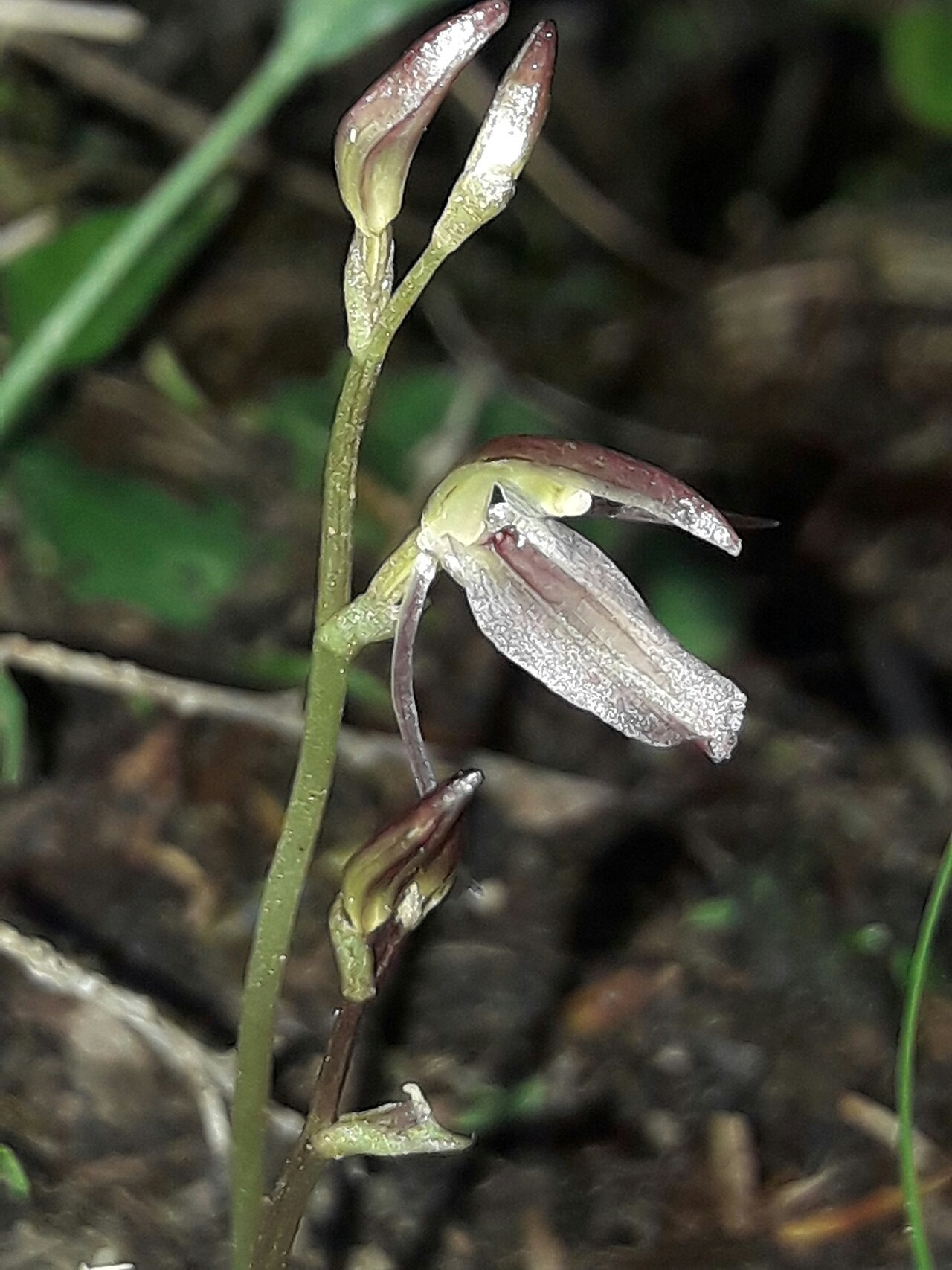
Winter orchid (Cyrtostylis rotundifolia) is a small native ground orchid with a single grey-green, rounded leaf marked with whitish veins. From June to October it sends up a thin stem, usually less than 100 mm tall, bearing one to four pink or pinkish-green flowers with a forward-pointing labellum. NZPCN records it from the southern two-thirds of the North Island and the upper South Island, mainly North-west Nelson, on open clay pans, mossy rock and lightly shaded scrub from the coast to lower hills. It is Not Threatened but cannot be cultivated, so it is best admired in the wild. Explore more native flowering plants in our native plant guide.
Plant Description
Cyrtostylis rotundifolia is a winter to spring flowering perennial herb growing from an underground tuber. Its single sessile leaf sits almost at ground level and measures 10 to 40 mm long by 8 to 17 mm wide. The leaf is ovate with an obtuse to slightly pointed tip, grey-green with whitish veins on the upper surface and pale silvery green below.
The slender, erect flowering stem is up to 100 mm tall, though usually shorter, and elongates further as seed develops. A raceme up to 30 mm long carries one to four flowers with spreading pink or pinkish-green perianth parts 8 to 10 mm long. The oblong labellum projects horizontally forward with a blunt, non-recurved tip, toothed margins and two prominent rounded calli at its base.
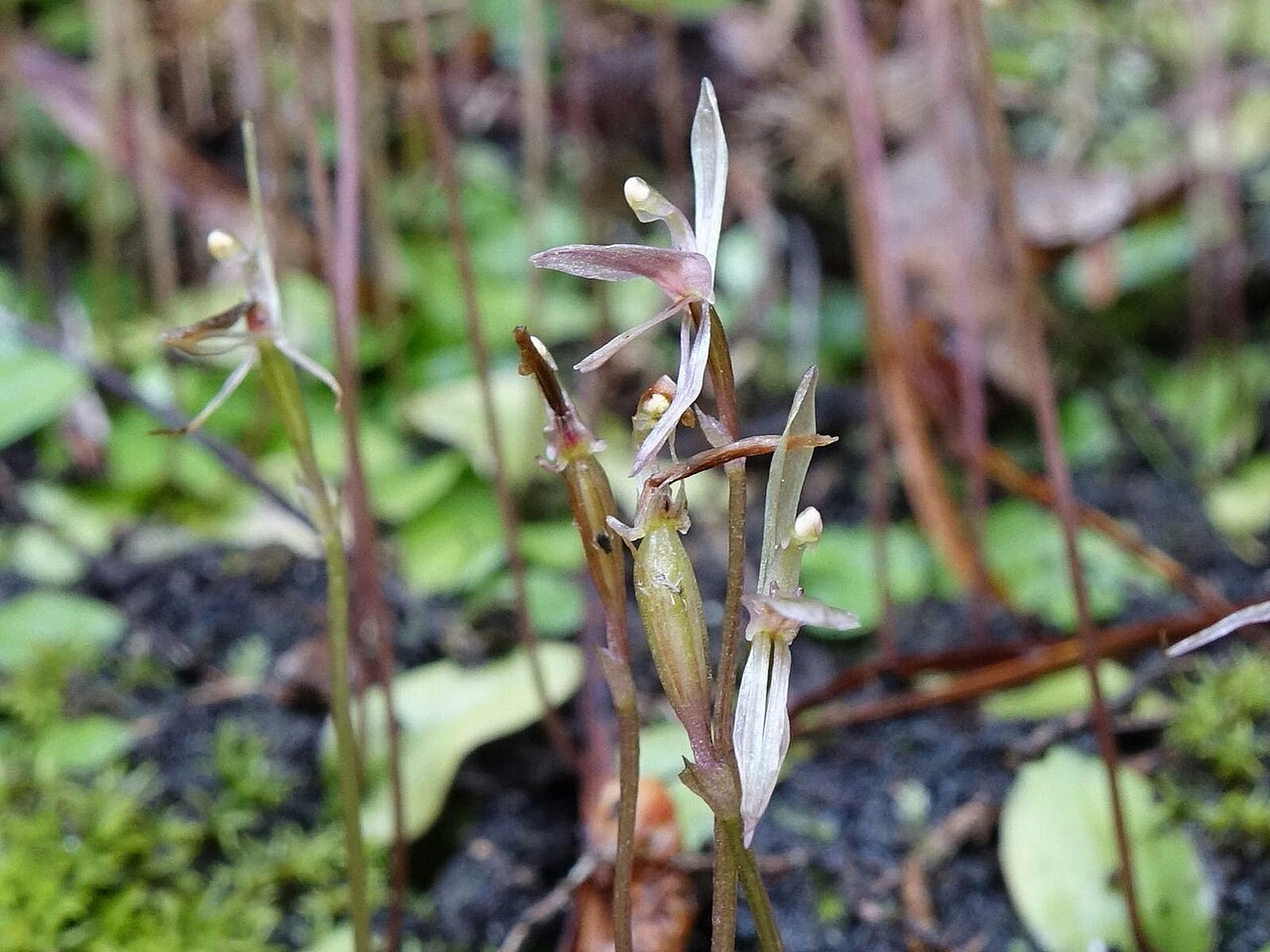
When only the leaf is visible it is easily confused with spider orchids (Corybas), which also have a single rounded leaf, but its leaf colour and venation and its multi-flowered raceme distinguish it. From Cyrtostylis oblonga it differs in the grey-green, ovate leaf rather than a yellow-green, oblong one.
Quick Facts
| Scientific Name | Cyrtostylis rotundifolia |
|---|---|
| Height | Usually under 0.1 m in flower |
| Spread | Single leaf 10-40 mm; can form colonies |
| Water Needs | Moist in winter, dry in summer dormancy |
| Light | Open ground or light shade |
| Frost Tolerance | Moderate; grows from coast to lower montane zone |
| Salt Tolerance | Low to moderate; occurs in some coastal sites |
| Growth Rate | Slow; seasonal from an underground tuber |
| Lifespan | Perennial (tuberous, summer dormant) |
Climate Best Suited to
Grows in temperate lowland to lower montane climates where winters are cool and moist, completing its growth before summer drought.
Regional Suitability
| City | Climate Suitability |
|---|---|
| Auckland | Low |
| Wellington | High |
| Christchurch | Low |
| Dunedin | Low |
Plant Habitat
NZPCN records Cyrtostylis rotundifolia from the southern two-thirds of the North Island and, in the South Island, mainly from North-west Nelson in the upper half of the island. Wellington lists it as Regionally Not Threatened, while Northland rates it Regionally Data Deficient.
It grows from the coast to lower montane elevations in open clay pans and lightly shaded scrub, sometimes among mosses on basalt rock. It is most commonly found in shallow leaf litter among sparse mosses or on hard, exposed clay soils, where taller plants are kept sparse by poor soil.
Growing Requirements
Soil Requirements
It favours hard, infertile clay or thin leaf litter where competition is low.
- Exposed hard clay or thin litter
- Sparse moss cover suits it
- Low fertility; no fertiliser
Light Requirements
It needs open ground or light shade, typical of early-successional scrub and banks.
- Open clay pans or light scrub
- Declines under dense canopy or thick grass
Water Requirements
Active growth coincides with wet winter and spring weather, followed by a dry summer rest.
- Moist soil in winter and spring
- Tolerates summer drying while dormant
- Avoid ponding water
Planting and Establishing
This orchid is not planted. NZPCN says propagation is difficult and plants should not be removed from the wild. Its tuber and roots depend on soil fungi, so dug-up plants almost never survive.
If it grows on your land, protect the site by keeping it open and weed free, fencing out stock where needed and avoiding herbicides, topsoiling or mowing during the June to January growth and seeding period.
Ecological Role
Winter orchid is a plant of open, low-competition habitats such as clay banks and young scrub. Cyrtostylis species often form dense clonal colonies by producing new tubers, so populations may appear as carpets of similar leaves.
The pollinators of this species are not documented in the sources consulted, although the genus is known as gnat orchid for its small, insect-like flowers. Seed ripens from October to January and is dust-fine, spread by wind.
Uses & Significance
Garden Uses
It is not a garden plant but can be cared for where it occurs naturally.
- Leave naturally occurring colonies undisturbed
- Keep competing weeds away
- Photograph and record rather than collect
Ecological Value
It contributes to the native orchid diversity of open clay and scrub habitats.
- Part of the specialised flora of infertile clay sites
- Forms colonies that signal undisturbed ground
- Provides winter flowers when few others are open
Landscaping Uses
There is no landscaping role for this orchid. On properties where it grows, the best approach is to leave open clay banks and thin scrub as they are rather than planting them up with dense cover.
Restoration plantings near known colonies should keep a clear margin so the orchids are not shaded or smothered.
Seasonal Care Calendar
Spring
Late flowers fade and capsules develop as the stems lengthen.
- Avoid trampling
- Leave seed stems standing
Summer
Seed is shed and the leaf withers as the plant retreats to its tuber.
- Sites can appear bare
- Do not dig or scrape
Autumn
New grey-green leaves appear with the return of autumn rain.
- Look for white-veined leaves on clay banks
Winter
Flowering begins in June and peaks through winter.
- Best time to see flowers
- Keep weeds off colonies
When to Prune and How Much
No pruning is needed; leaves and stems die back naturally after seeding.
Avoid mowing or trimming known sites between June and January, while plants are in leaf, flower or seed.
How to Grow Winter Orchid
NZPCN describes Cyrtostylis rotundifolia as difficult to propagate and says it should not be removed from the wild. It is not grown commercially. The information below describes how the orchid reproduces naturally, which is useful for anyone managing land where it grows, rather than instructions for cultivation.
From Seed (Natural Reproduction)
Each pollinated flower forms a capsule that ripens between October and January while the stem lengthens, lifting it for wind dispersal. The seed is minute and carries almost no food reserve.
Like other ground orchids, germinating seed needs to be colonised by suitable soil fungi before it can grow. Bare clay and thin moss and litter that support these fungi are therefore important for new plants. No method for raising this species from seed is documented in the sources consulted.
- Leave seed stems to ripen and shed seed naturally.
- Keep the surrounding ground open and free of thick weeds.
- Avoid fertiliser, lime and herbicide on or near colonies.
By Tuber Division (Natural Colony Spread)
Cyrtostylis plants produce replacement tubers and can form clonal colonies this way. Deliberately lifting and dividing tubers is not recommended because disturbance usually kills the plants and their fungal partners.
- Allow colonies to spread unaided.
- Mark known colonies so they are not disturbed by track or garden work.
Supporting Seedling Recruitment on Site
Because new plants arise from seed only where the right fungi and open ground coincide, the most effective help is habitat management. Light disturbance that keeps clay exposed without destroying existing tubers, combined with removal of rank grasses and woody weeds, gives seedlings the best chance.
- Hand-weed around colonies in autumn before leaves emerge.
- Record leaf counts each winter to see whether the colony is growing.
Pests & Diseases
No specific pests are recorded for this species in the sources consulted. Slugs and snails are general grazers of small ground orchids and may damage leaves or flowers.
Habitat change is a bigger concern: weeds, rank grass and closing scrub can smother the open sites it needs, and soil disturbance destroys tubers.
Cultural Significance
No Māori name or traditional use specific to this orchid is recorded in the sources consulted.
Joseph Dalton Hooker described the species in 1853 in Flora Novae-Zelandiae. The epithet rotundifolia comes from the Latin rotundus (round) and folium (leaf), describing its rounded leaf, while Cyrtostylis means curved style.
Bonus Tip
To separate the two winter orchids in the field, look at the leaf before the flowers: grey-green with distinct whitish veins means Cyrtostylis rotundifolia, while a plain yellow-green, oblong leaf points to Cyrtostylis oblonga.
Related Plants
Explore other native plants that share similar characteristics or habitats with Winter Orchid (Cyrtostylis rotundifolia), offering further insights into New Zealand's diverse flora. These related species provide context and opportunities for complementary planting in your garden.
Milne's Tree Fern
Alsophila milnei
Cyrtostylis oblonga
Cyrtostylis oblonga
Cystopteris tasmanica
Cystopteris tasmanica
Damnamenia vernicosa
Damnamenia vernicosa
Deparia petersenii subsp. congrua
Deparia petersenii subsp. congrua
Deschampsia pusilla
Deschampsia pusilla
Cushion Daisy
Cushion Daisy
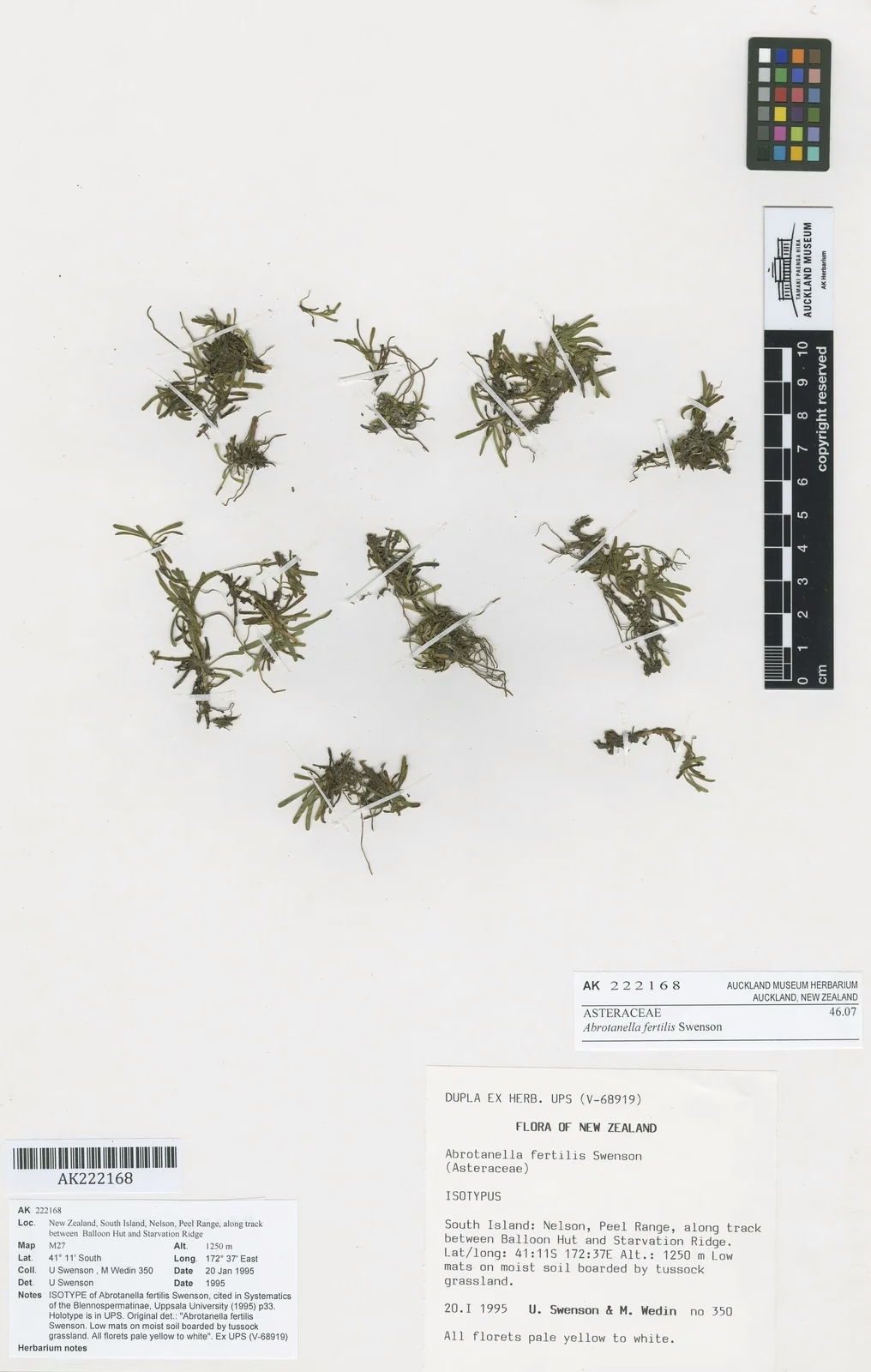
Fertilis Plant
Fertilis Plant
Plant Conservation
Cyrtostylis rotundifolia is ranked Not Threatened nationally (2023). It is Regionally Not Threatened in Wellington (2025) but Regionally Data Deficient in Northland (2026), reflecting uncertainty about northern records.
Protecting open clay banks and scrub from weeds and disturbance, and reporting sightings to iNaturalist NZ, helps clarify its distribution and supports its persistence.
Frequently Asked Questions
What does Cyrtostylis rotundifolia look like?
It has one flat, ovate leaf 10 to 40 mm long that is grey-green with whitish veins above and pale silvery green beneath, plus a slender stem with up to four small pink flowers in winter.
When does Cyrtostylis rotundifolia flower?
NZPCN gives a flowering season of June to October, with fruit from October to January. The stem lengthens after flowering as the seed ripens.
How is it different from the northern winter orchid, Cyrtostylis oblonga?
Cyrtostylis rotundifolia has a grey-green, ovate leaf with whitish veins, while Cyrtostylis oblonga has a yellow-green, oblong leaf and grows in the northern North Island and Three Kings Islands.
Can you grow winter orchids at home?
No. NZPCN describes propagation as difficult and says the plant should not be removed from the wild, because it relies on soil fungi and specific habitat conditions.
Sources and Further Reading
The botanical, growing, and conservation details for Winter Orchid (Cyrtostylis rotundifolia) on this page draw on the New Zealand plant references below. Consult them for full technical records and the latest distribution data.