Winter Orchid
Cyrtostylis oblonga
Last updated:
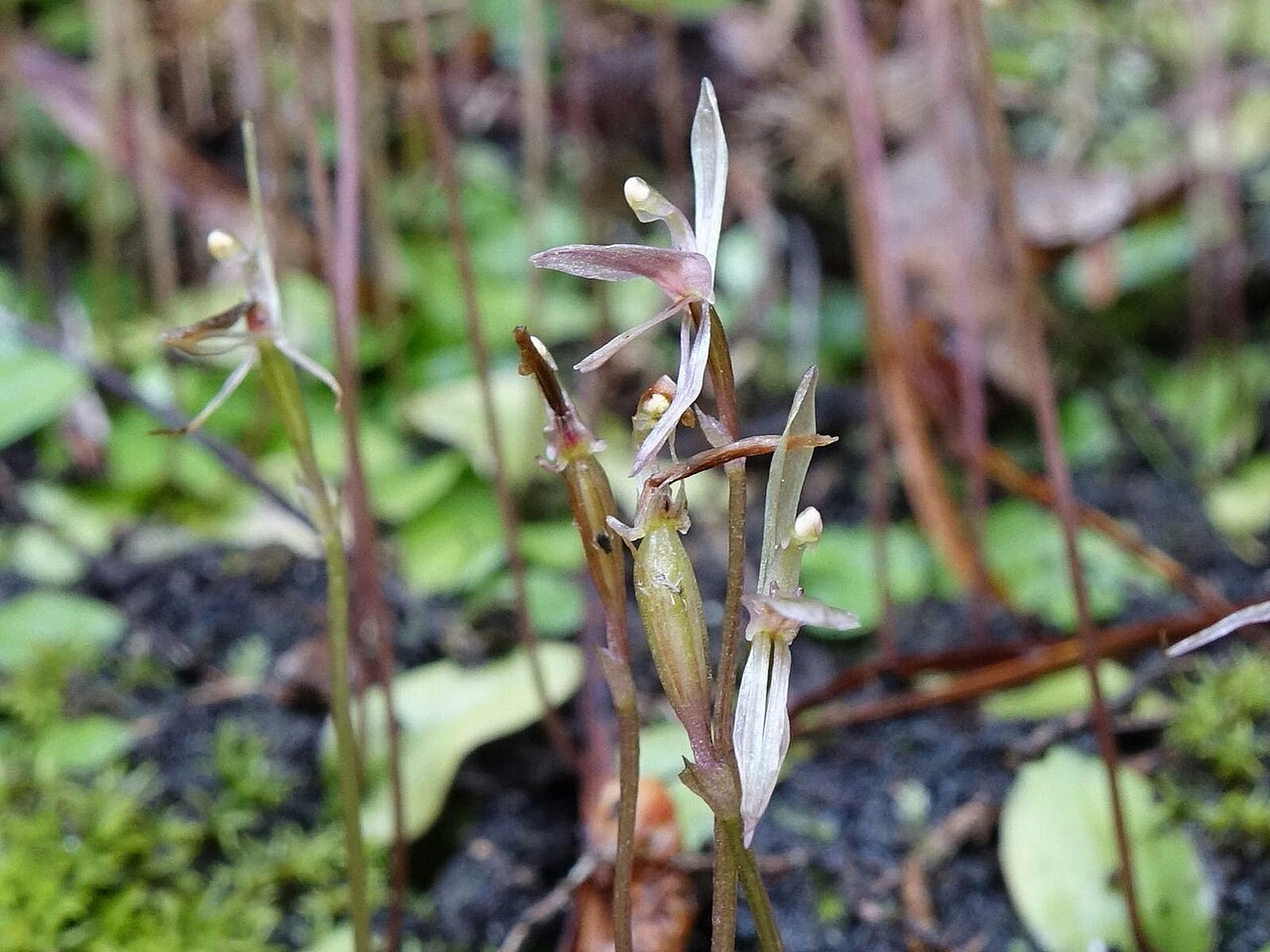
Winter orchid (Cyrtostylis oblonga) is a tiny terrestrial orchid endemic to the northern North Island and Manawatāwhi/Three Kings Islands. Each plant has a single yellow-green, oblong leaf 10 to 40 mm long lying near the ground and, from July to November, a slender stem up to 100 mm tall carrying one to four pink or pinkish-green flowers. It grows in open clay pans, lightly shaded scrub and shallow leaf litter from the coast to lower hills. It is one of New Zealand's few winter-flowering orchids, and it should never be dug from the wild as it is very difficult to grow. Explore more native flowering plants in our native plant guide.
Plant Description
Cyrtostylis oblonga is a small perennial herb that grows from an underground tuber. Each plant produces a single sessile leaf lying at or near the base of a slender, erect stem. The leaf is oblong, 10 to 40 mm long and 8 to 17 mm wide, yellow-green to green, with a heart-shaped to rounded base.
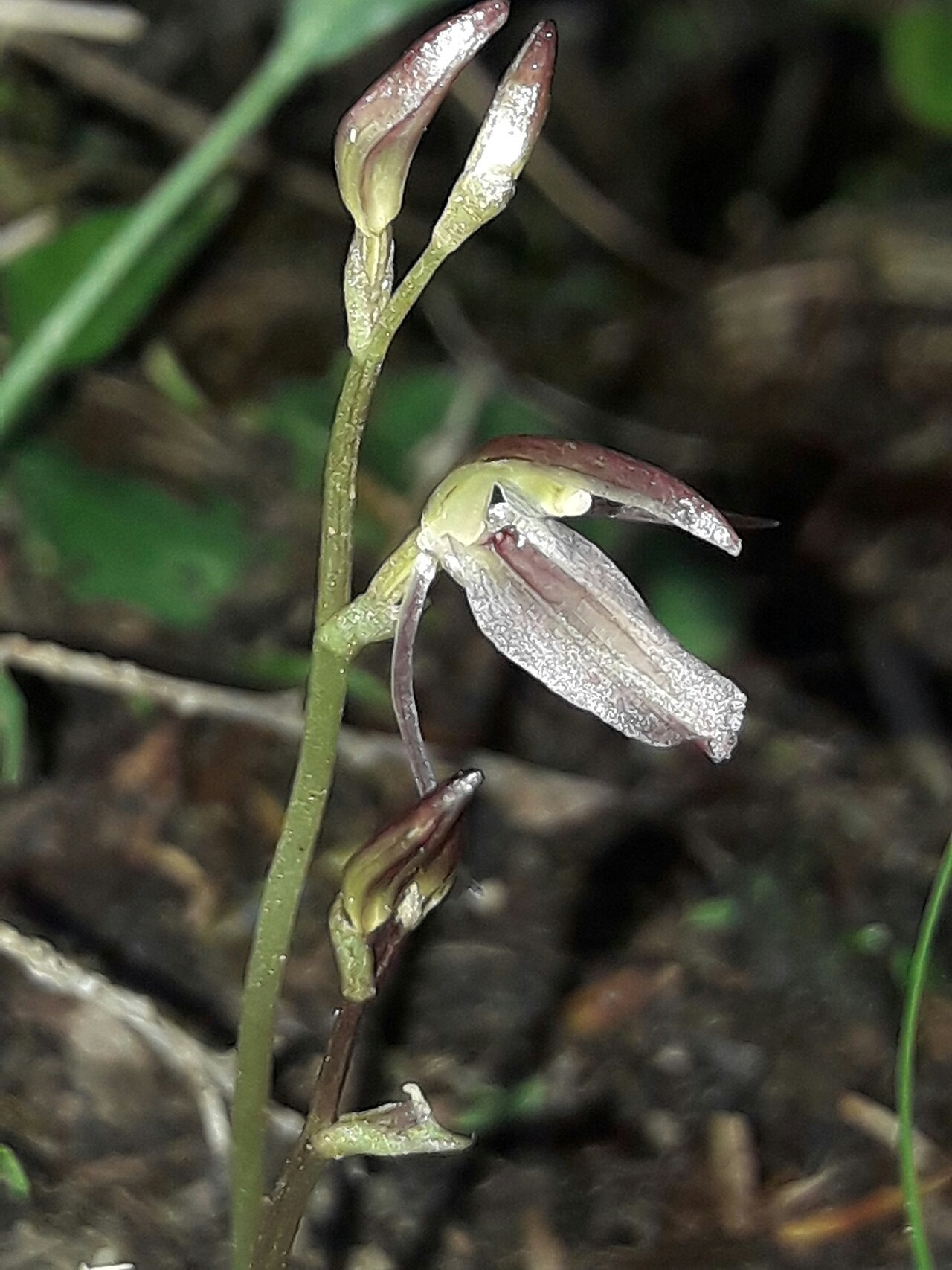
In flower the plant is up to 100 mm tall. The raceme, up to 30 mm long, carries one to four flowers whose spreading perianth parts are 8 to 10 mm long and pink or pinkish-green. The most conspicuous part is the oblong labellum, about 10 by 4 mm, which projects horizontally forward. It has toothed margins near the base, two prominent rounded basal calli and two flat longitudinal ridges.
Vegetative plants are easily mistaken for spider orchids (Corybas), which also have a single round leaf, but Cyrtostylis bears several flowers in a raceme. Acianthus sinclairii grows in shadier forest; Cyrtostylis differs in its more open habitat, sessile basal leaf and larger, oblong labellum. The closest relative, Cyrtostylis rotundifolia, has a grey-green, ovate leaf with whitish veins.
Quick Facts
| Scientific Name | Cyrtostylis oblonga |
|---|---|
| Height | Up to 0.1 m in flower |
| Spread | Single leaf 10-40 mm; forms small colonies |
| Water Needs | Moist in winter and spring, dry when dormant |
| Light | Open sites or light shade |
| Frost Tolerance | Moderate; grows in mild northern lowlands |
| Salt Tolerance | Low to moderate; occurs in coastal scrub |
| Growth Rate | Slow; seasonal growth from an underground tuber |
| Lifespan | Perennial (tuberous, summer dormant) |
Climate Best Suited to
Suited to the mild, wet winters and warm, dry summers of northern New Zealand, growing actively in the cool season and dying back over summer.
Regional Suitability
| City | Climate Suitability |
|---|---|
| Auckland | High |
| Wellington | Low |
| Christchurch | Low |
| Dunedin | Low |
Plant Habitat
Cyrtostylis oblonga is endemic to New Zealand. It occurs on Manawatāwhi/Three Kings Islands and in the northern parts of the North Island, where it ranges from the coast to lower montane elevations. It is listed as Regionally Naturally Uncommon in Northland but Regionally Not Threatened in Auckland.
It grows in open clay pans and lightly shaded scrub, sometimes among mosses on basalt rock, and is most often found in shallow leaf litter or on hard clay.
Growing Requirements
Soil Requirements
In the wild it favours poor, hard clay and thin leaf litter rather than rich soil.
- Hard clay or thin leaf litter over clay
- Low fertility; avoid fertiliser
- Sometimes in moss over basalt rock
Light Requirements
It needs open conditions or only light shade, and declines where scrub closes over.
- Open clay pans or light scrub shade
- Avoid deep forest shade
- Sensitive to being overgrown by weeds and grass
Water Requirements
Growth happens during the wet winter and spring; the tuber rests underground in dry summer soil.
- Moist during the winter and spring growth period
- Dry or barely moist during summer dormancy
- Avoid waterlogged, stagnant ground
Planting and Establishing
NZPCN describes the winter orchid as difficult to grow and says it should not be removed from the wild. It is not available from nurseries and is not a garden plant. Like most New Zealand ground orchids it depends on soil fungi, so transplanted plants usually fail.
The best way to encourage it is to protect and manage existing sites: keep clay banks and open scrub free of weeds such as gorse, pampas and kikuyu, and avoid spraying, mowing or trampling during the winter and spring growing season.
Ecological Role
Winter orchid is a seasonal plant of open, low-fertility habitats in northern New Zealand. Wikipedia notes that Cyrtostylis orchids often form dense colonies of genetically identical plants, spreading vegetatively from their tubers, so a single site may hold many leaves but few genetically distinct individuals.
The genus is called gnat orchid for its small, insect-like flowers, but the pollinators of Cyrtostylis oblonga in New Zealand are not documented in the sources consulted. Its seed capsules ripen from August to March, releasing dust-like seed carried by wind.
Uses & Significance
Garden Uses
This orchid is not suited to garden cultivation and should be enjoyed in the wild.
- Protect existing populations on private land
- Keep clay banks open and weed free
- Record sightings on iNaturalist NZ
Ecological Value
It is part of the distinctive orchid flora of northern clay and scrub habitats.
- Endemic to northern New Zealand
- Indicator of intact open clay and scrub habitats
- Contributes to the diversity of winter-flowering native plants
Landscaping Uses
Winter orchid has no role in planted landscapes. Where it occurs naturally on a property, for example on an open clay bank or in light manuka scrub, the most useful landscaping choice is to leave that area unplanted, unmown and free of weeds.
Avoid planting dense groundcovers or trees over known colonies, which would shade them out.
Seasonal Care Calendar
Spring
Flowering continues into early spring, and seed capsules begin to swell.
- Avoid trampling colonies
- Watch for flowering stems elongating in seed
Summer
Leaves die back and the plant survives as a dormant tuber underground.
- Sites can look empty
- Avoid soil disturbance
Autumn
New leaves emerge from the tubers as autumn rains return.
- Look for small oblong leaves on clay
Winter
Main growing and flowering time, from July onwards.
- Best season to search for flowers
- Keep weeds off known sites
When to Prune and How Much
No pruning is needed. The leaf and flowering stem die back naturally each summer.
Do not cut or mow known colonies while they are in leaf or seed, from autumn to early summer.
How to Grow Winter Orchid
NZPCN states that Cyrtostylis oblonga is difficult to propagate and should not be removed from the wild. Like other ground orchids, its seed is dust-like and needs specific soil fungi to germinate, so neither home sowing nor transplanting is practical. The notes below explain how the plant reproduces naturally, to help with protecting wild populations rather than growing it.
From Seed (Natural Reproduction)
After pollination each flower forms a small capsule that ripens between August and March. The flowering stem elongates as the seed matures, lifting the capsule so the minute seed can be carried by wind.
Orchid seed has almost no stored food, so seedlings rely on a partnership with soil fungi in their first stages. This is why undisturbed clay and leaf litter, with its fungal life, matters for new plants to establish. Laboratory symbiotic germination has been used for some native orchids, but no protocol for this species is documented in the sources consulted.
- Leave flowering stems intact so seed can ripen and disperse.
- Keep the site free of weeds that smother small seedlings.
- Avoid fertilisers or herbicides that alter the soil fungi.
By Tuber Division (Natural Colony Spread)
Plants in this genus spread vegetatively by forming new tubers, which is how dense colonies of genetically identical plants build up. Digging and dividing tubers is not recommended, as disturbance usually kills the plants and wild collecting is not appropriate.
- Allow colonies to expand on their own.
- Protect the colony edges from mowing and spraying.
Pests & Diseases
Specific pests of this orchid are not documented in the sources consulted. Slugs and snails graze many small ground orchids and may damage leaves and flowers.
The more serious threats are weeds and habitat change: invasive grasses, gorse and other dense growth can smother the open clay sites it needs, and land development removes habitat.
Cultural Significance
No Māori name or traditional use specific to this orchid is recorded in the sources consulted.
Joseph Dalton Hooker described the species in 1853 in Flora Novae-Zelandiae. The genus name Cyrtostylis means curved style, describing the curved column of the flower, and oblonga refers to the oblong shape. It has at times been placed in Acianthus and Caladenia.
Bonus Tip
Search Northland and Auckland clay banks on a dry winter day: the flat, yellow-green oblong leaves are easiest to spot against bare orange clay, and a pink flowering stem nearby confirms you have found a winter orchid rather than a spider orchid.
Related Plants
Explore other native plants that share similar characteristics or habitats with Winter Orchid (Cyrtostylis oblonga), offering further insights into New Zealand's diverse flora. These related species provide context and opportunities for complementary planting in your garden.
Sinclair's Stonecrop
Crassula sinclairii
Milne's Tree Fern
Alsophila milnei
Cyrtostylis rotundifolia
Cyrtostylis rotundifolia
Cystopteris tasmanica
Cystopteris tasmanica
Damnamenia vernicosa
Damnamenia vernicosa
Deparia petersenii subsp. congrua
Deparia petersenii subsp. congrua
Cushion Daisy
Cushion Daisy
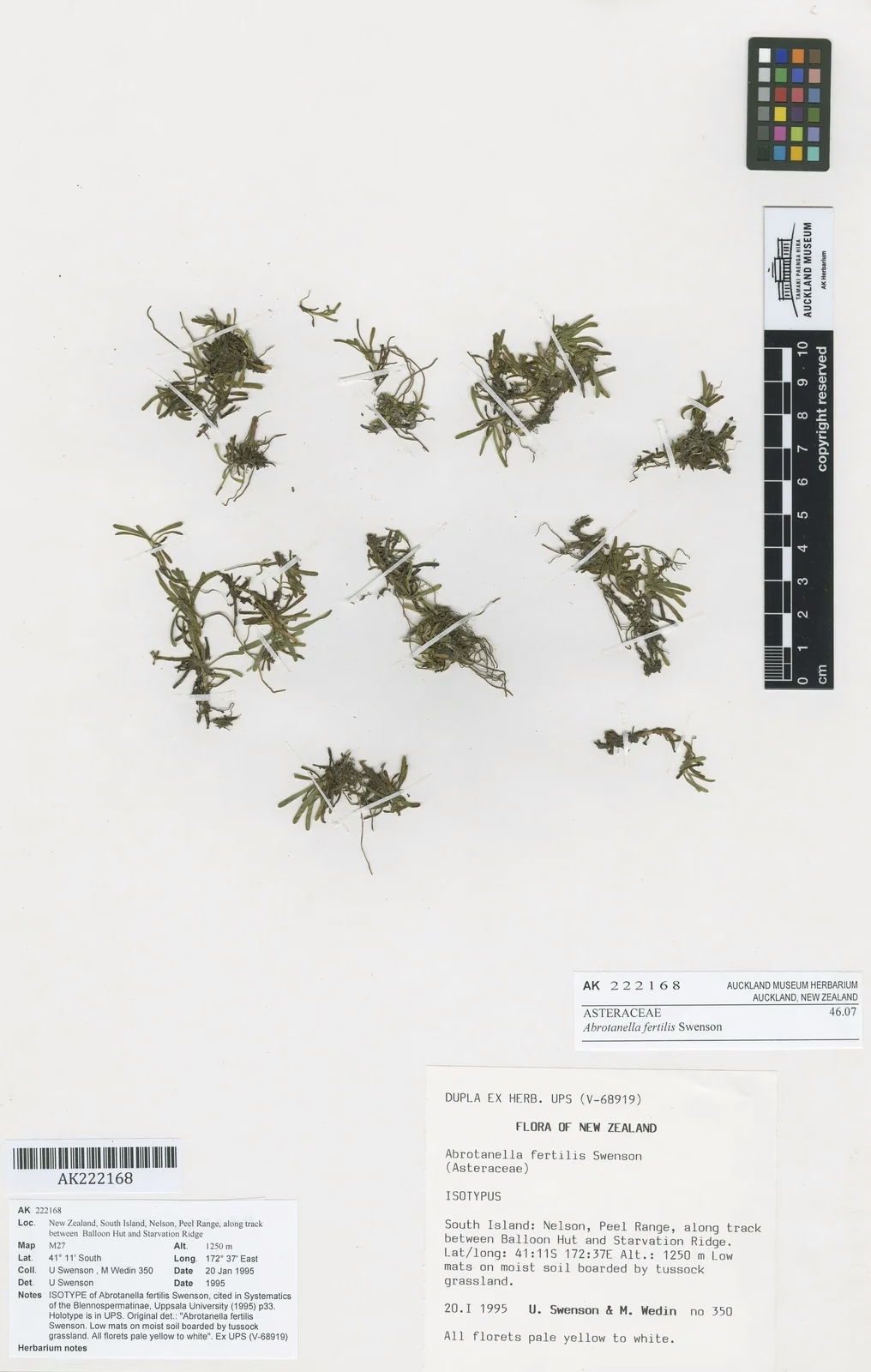
Fertilis Plant
Fertilis Plant
Plant Conservation
Cyrtostylis oblonga is ranked Not Threatened nationally (2023), but Northland lists it as Regionally Naturally Uncommon (2026), while Auckland rates it Regionally Not Threatened.
Its open clay and scrub habitats can be lost to weed invasion, succession to closed forest and development. Weed control on known sites and leaving open clay habitat unplanted help keep populations healthy.
Frequently Asked Questions
When does the winter orchid flower?
Cyrtostylis oblonga flowers from July to November, through late winter and spring, with fruit following from August to March.
How do I tell Cyrtostylis oblonga from Cyrtostylis rotundifolia?
NZPCN separates them by the leaf: Cyrtostylis oblonga has a yellow-green to green, oblong leaf, while Cyrtostylis rotundifolia has a grey-green, ovate leaf with whitish veins. Their ranges also differ, with Cyrtostylis oblonga in the northern North Island.
Is the winter orchid a spider orchid?
No. When not in flower its single leaf resembles a Corybas spider orchid, but Cyrtostylis carries a raceme of up to four flowers, while Corybas has solitary or paired flowers.
Where can I find winter orchids in Northland?
Look on open clay banks, clay pans and lightly shaded scrub from the coast to lower montane country, often among mosses or in shallow leaf litter, during winter and spring.
Sources and Further Reading
The botanical, growing, and conservation details for Winter Orchid (Cyrtostylis oblonga) on this page draw on the New Zealand plant references below. Consult them for full technical records and the latest distribution data.