Milne's Tree Fern
Alsophila milnei
Last updated:
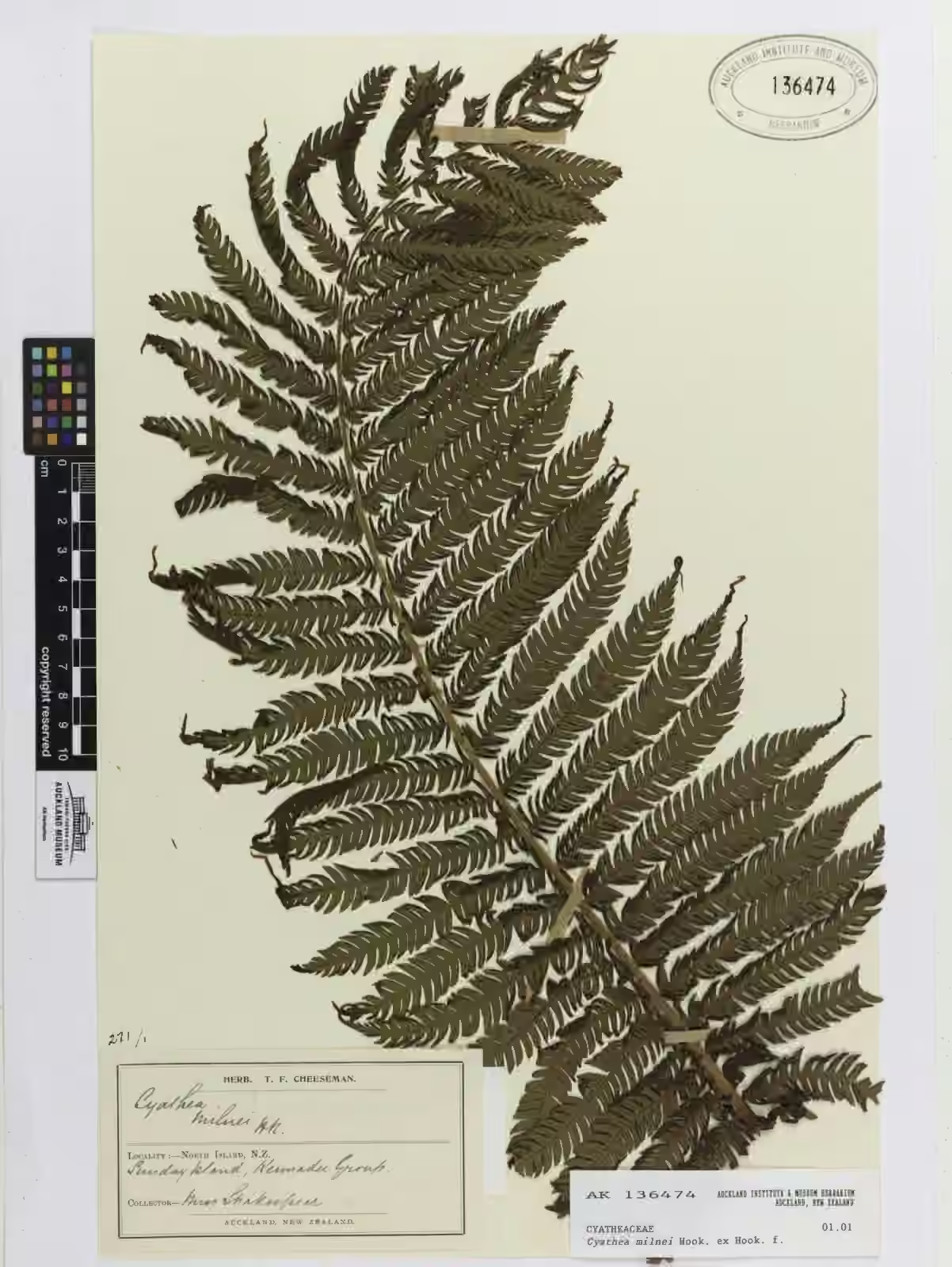
Milne's tree fern (Alsophila milnei, now Alsophila milnei) is a tree fern endemic to Raoul Island in the Kermadec Islands. It grows a trunk about 8 to 10 m tall, wrapped in a dense skirt of persistent dead fronds, and holds its bright yellow-green fronds, up to 4 m long, almost horizontally. It is most common in the lower, drier pōhutukawa-type forest of the island, though some plants reach the wetter uplands. Closely related to the silver fern but green beneath, it is ranked At Risk - Naturally Uncommon because it lives only on one island, where it is abundant. It was previously known as Cyathea milnei. Explore more native ferns in our native plant guide.
Plant Description
Milne's tree fern has a woody trunk up to about 8 to 10 m tall and 50 to 280 mm in diameter, with projecting old stipe bases. Its dead fronds are long persistent and hang down to form a dense skirt around the trunk, a feature that makes it easy to recognise at a distance.
The fronds are 1.5 to 4 m long and up to 2 m wide, held horizontally from the crown. They are leathery, bright yellow-green to dark glossy green above and paler, dull green beneath, and finely divided (described as three-pinnate by NZPCN and deeply two-pinnate-pinnatifid by the Flora). The stout stipes are pale brown and covered in persistent scales without marginal spines, and the underside of the primary pinnae, up to 450 mm long, carries fine curly hairs.
It closely resembles the mainland silver fern (Cyathea dealbata), but differs from the silver fern in its green, not white, frond undersides and its fragile indusia. From the other Raoul Island endemic, the Kermadec tree fern, it differs in its shorter stature, scaly stipes, horizontal fronds and skirt of dead fronds.
Quick Facts
| Scientific Name | Alsophila milnei |
|---|---|
| Height | Trunk up to about 8-10 m |
| Spread | Crown 4-6 m across |
| Water Needs | Moderate to high; moist but free-draining soil |
| Light | Semi-shade |
| Frost Tolerance | Low; young plants are cold sensitive |
| Salt Tolerance | Moderate; grows in lowland coastal forest on Raoul Island |
| Growth Rate | Moderate to fast in warm conditions |
| Lifespan | Long-lived perennial |
Climate Best Suited to
A subtropical island species that does best in warm, frost-free, humid climates with shelter from cold wind.
Regional Suitability
| City | Climate Suitability |
|---|---|
| Auckland | High |
| Wellington | Medium |
| Christchurch | Low |
| Dunedin | Low |
Plant Habitat
Milne's tree fern is found naturally only on Raoul Island, the largest of the Kermadec Islands, at altitudes of roughly 25 to 500 m. It is the more common of the island's two endemic tree ferns.
It grows most commonly in the lower-altitude, drier Metrosideros (Kermadec pōhutukawa) forest, though occasional plants extend into the wetter, higher-elevation forest where the Kermadec tree fern is more typical.
Growing Requirements
Soil Requirements
NZPCN recommends free-draining but moist soil, ideally rich in organic matter.
- Free-draining, humus-rich soil
- Keep moist, especially while young
- Mulch with leaf litter to protect roots
Light Requirements
Semi-shade suits it best; young plants appreciate overhead cover.
- Semi-shade or dappled light
- Shelter from strong or cold wind
- Older plants tolerate more sun with good moisture
Water Requirements
Young plants are drought sensitive, so regular watering is important until established.
- Water through dry summer spells
- Avoid waterlogged ground
- Wet the trunk in very dry weather
Planting and Establishing
Choose a warm, sheltered spot in semi-shade with moist, free-draining soil. Plant in spring once frosts are over so the fern has a full growing season before its first winter.
Initially plants are cold and drought sensitive, so protect them from frost and keep them watered for the first few years. In cooler districts a site under evergreen canopy or against a warm wall gives the best chance.
Ecological Role
On Raoul Island Milne's tree fern is an important part of the lowland forest understorey and subcanopy beneath Kermadec pōhutukawa. Its skirt of dead fronds forms a sheltered, humid space around the trunk used by invertebrates and other small animals.
It reproduces by wind-dispersed spores. Specific pollinator or disperser relationships do not apply to ferns, and no particular invertebrate associations are documented in the sources consulted.
Uses & Significance
Garden Uses
A handsome tree fern with a tropical silhouette for warm northern gardens.
- Specimen tree fern with a frond skirt
- Subtropical gardens and courtyards in frost-free areas
- Shelterbelt understorey in warm coastal gardens
Ecological Value
Cultivating this island endemic helps spread risk for a species found in only one place.
- Endemic to Raoul Island
- Frond skirt provides shelter for invertebrates
- Important understorey structure in Kermadec forest
Landscaping Uses
Its horizontally held, yellow-green fronds and shaggy skirt give a strong, layered look that contrasts well with the slender, clean-trunked Kermadec tree fern or with mainland ponga. Plant it where the skirt can be seen, such as at the edge of a lawn or courtyard.
Leave the skirt intact for the most natural appearance. It pairs well with other Kermadec and northern coastal natives such as Kermadec pōhutukawa and kawakawa in a warm, sheltered setting.
Seasonal Care Calendar
Spring
New fronds unroll from the crown and spread horizontally.
- Plant out after frost risk has passed
- Feed with compost or leaf mould
Summer
Main growing season; keep moisture up for young plants.
- Water deeply in dry weather
- Check for wind damage
Autumn
Fronds harden and spores ripen beneath the pinnae.
- Collect spores
- Ease off watering
Winter
Cold is the main threat to young plants outside the far north.
- Cover young plants on frosty nights
- Avoid cold, waterlogged soil
When to Prune and How Much
Milne's tree fern keeps its dead fronds as a skirt. Leaving them is natural and protects the trunk, but they can be cut off close to the trunk if a tidier look is wanted.
Never cut into the crown at the top of the trunk, as it is the only growing point.
How to Grow Milne's Tree Fern
NZPCN describes Milne's tree fern as easily grown from spores, and spore-raised plants are the source of nursery stock. Spores are the only practical method because the trunk does not branch or produce offsets. Do not collect from Raoul Island, which is a nature reserve; use spores from cultivated plants.
From Spores
Ripe sori form on the underside of the fertile pinnae under fragile indusia that break up easily as the sporangia mature. Cut a fertile pinna when the sori turn brown and leave it in a folded paper sheet for a few days to release the spores.
Sow the spores on a sterile surface and keep them warm and humid. Green prothalli form first, followed by tiny fronds. Because young plants are cold sensitive, raise them in a warm, sheltered place and grow them on under cover through their first winter.
- Sterilise fine seed-raising mix in a small pot with boiling water and allow it to cool.
- Sprinkle spores evenly and thinly over the surface.
- Cover with clear plastic and keep warm in bright, indirect light.
- Keep the surface constantly moist by watering from below.
- Prick out small clumps once the first fronds are visible.
- Pot on in free-draining mix and keep frost free until well grown.
Raising Sporelings to Planting Size
Sowing in late spring or early summer gives sporelings the warmest months to establish, and stored spores in a dry envelope kept cool can be sown later if timing does not suit.
Grow young plants on in pots for two to three years, potting up as roots fill each container, and keep them in a sheltered, shaded, frost-free place until they have a short trunk.
- Use a free-draining, humus-rich potting mix.
- Harden off gradually before planting out in spring.
Pests & Diseases
No pests of note are recorded for Milne's tree fern in the sources consulted. In gardens the main risks are frost and drought, which damage young plants.
On Raoul Island the removal of introduced mammals by the Department of Conservation has reduced pressure on the forest in which it grows.
Cultural Significance
No Māori name or traditional use specific to this tree fern is recorded in the sources consulted. The Kermadec Islands are known in Māori as Rangitāhua.
The species was first collected by John MacGillivray on Raoul Island in July 1854 during the voyage of HMS Herald and named by Joseph Hooker in 1867 in honour of W. G. Milne, another collector on that voyage. Plants grown at Otari-Wilton's Bush in Wellington have been measured by Te Papa botanists for the Flora of New Zealand.
Bonus Tip
For a silver-fern look in a frost-free garden without the silver underside, Milne's tree fern is a fine choice, and its persistent frond skirt makes a useful screen; just give young plants a damp, sheltered start.
Related Plants
Explore other native plants that share similar characteristics or habitats with Milne's Tree Fern (Alsophila milnei), offering further insights into New Zealand's diverse flora. These related species provide context and opportunities for complementary planting in your garden.
Crassula ruamahanga
Crassula ruamahanga
Sinclair's Stonecrop
Crassula sinclairii
Cyrtostylis oblonga
Cyrtostylis oblonga
Cyrtostylis rotundifolia
Cyrtostylis rotundifolia
Cystopteris tasmanica
Cystopteris tasmanica
Damnamenia vernicosa
Damnamenia vernicosa
Colensoi Plant
Colensoi Plant
Cunninghamii Plant
Cunninghamii Plant
Plant Conservation
Milne's tree fern is ranked At Risk - Naturally Uncommon (2023) with the qualifier IE (island endemic). NZPCN reports no apparent threats: it is abundant within its natural range on Raoul Island.
Raoul Island lies within the Kermadec Islands Nature Reserve, where the Department of Conservation controls landings and biosecurity. Its main vulnerability is its confinement to one volcanic island, so cultivation elsewhere offers some insurance.
Frequently Asked Questions
Who is Milne's tree fern named after?
The epithet honours W. G. Milne, who collected plants on the Pacific voyage of HMS Herald (1852 to 1861). The type specimen was actually collected on Raoul Island by John MacGillivray in July 1854.
Is Milne's tree fern related to the silver fern?
Yes. It is closely related to the silver fern (Cyathea dealbata) but lacks the silver-white underside, having green frond undersides and more fragile indusia that break up easily.
How can I tell Milne's tree fern from the Kermadec tree fern?
Milne's tree fern is shorter, with scaly stipes, horizontally held fronds, fine curly hairs on the pinnae and a dense skirt of dead fronds. The Kermadec tree fern grows to 20 m on a slender clean trunk.
Can Milne's tree fern be grown on the mainland?
Yes, in warm areas. NZPCN says it is easily grown from spores but young plants are cold and drought sensitive, so a sheltered, frost-free spot in semi-shade with moist, free-draining soil is best.
Sources and Further Reading
The botanical, growing, and conservation details for Milne's Tree Fern (Alsophila milnei) on this page draw on the New Zealand plant references below. Consult them for full technical records and the latest distribution data.