Mudstone Spider Orchid
Corybas papa
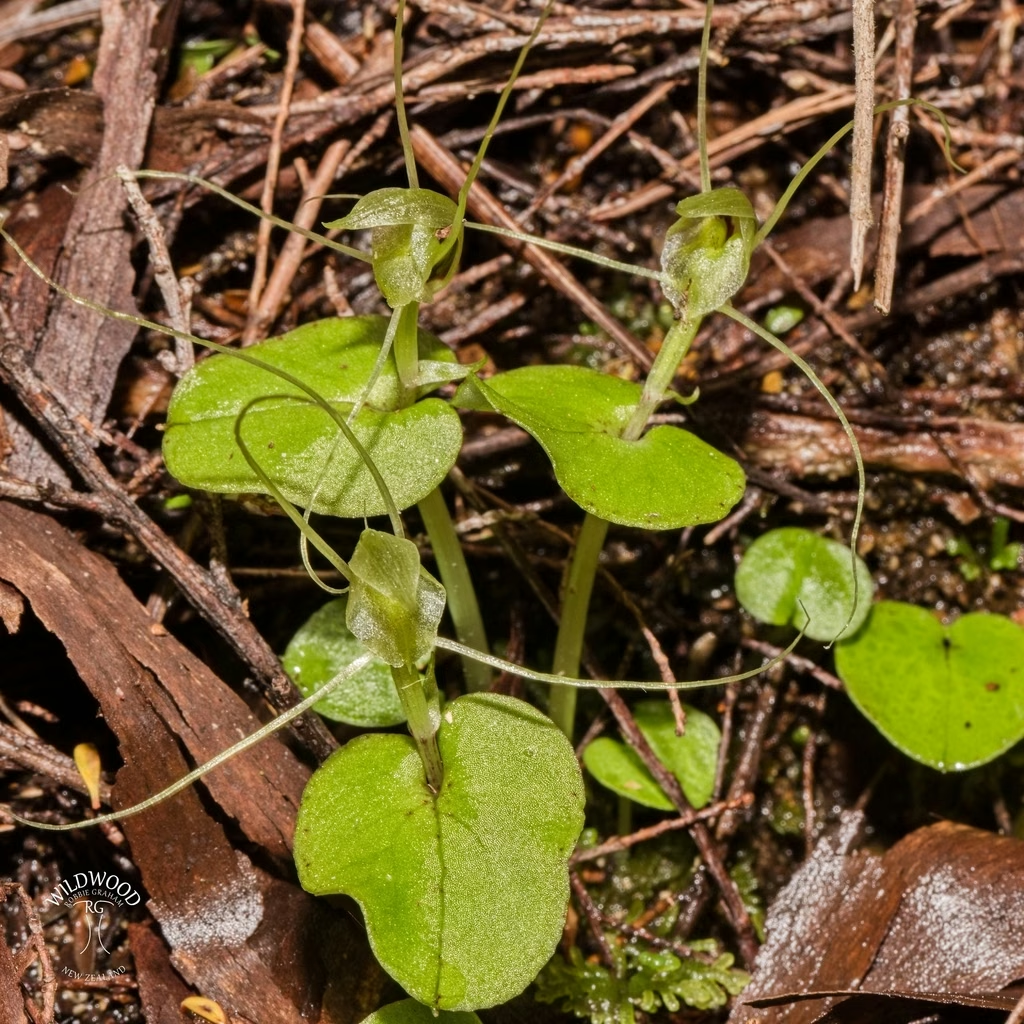
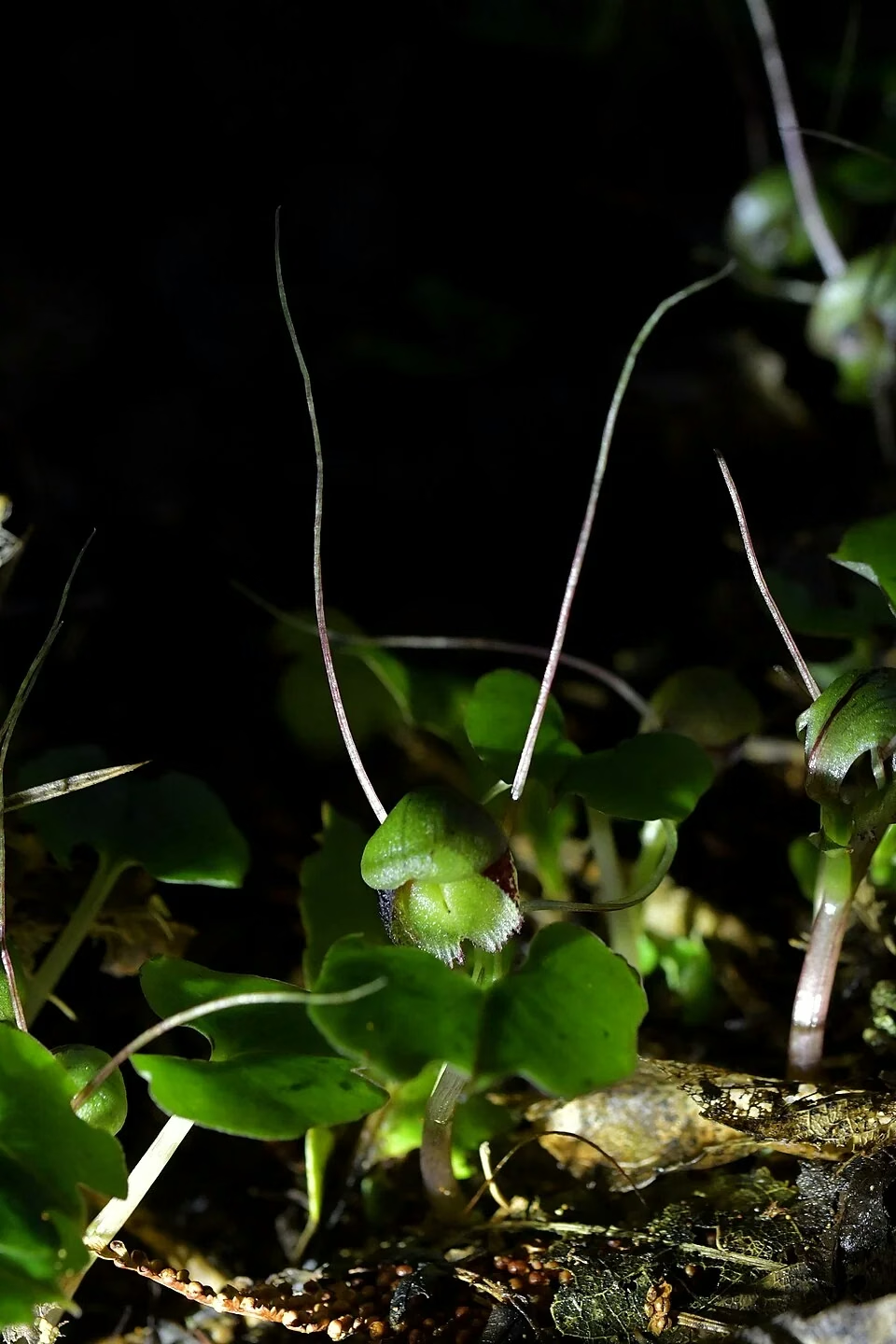
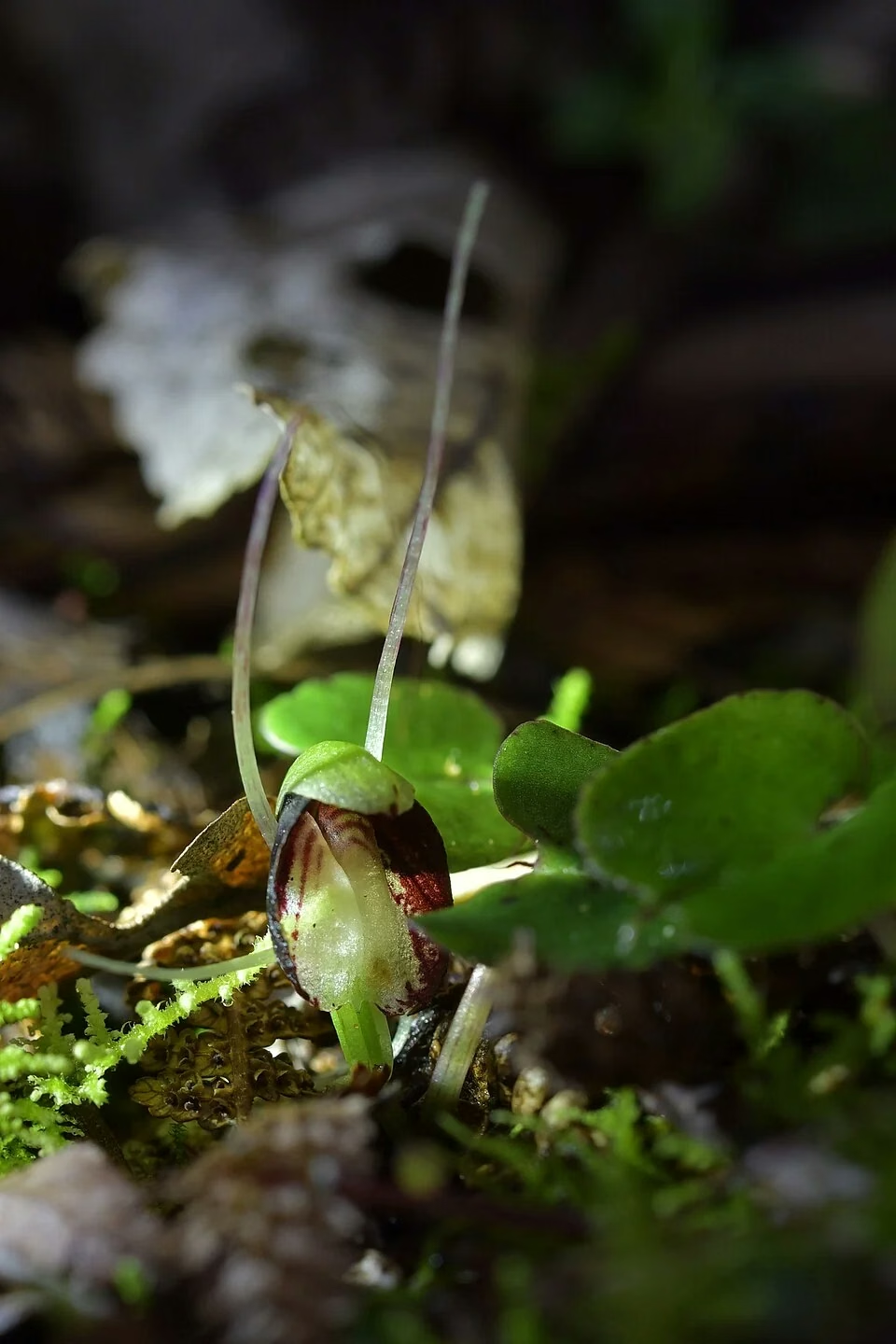
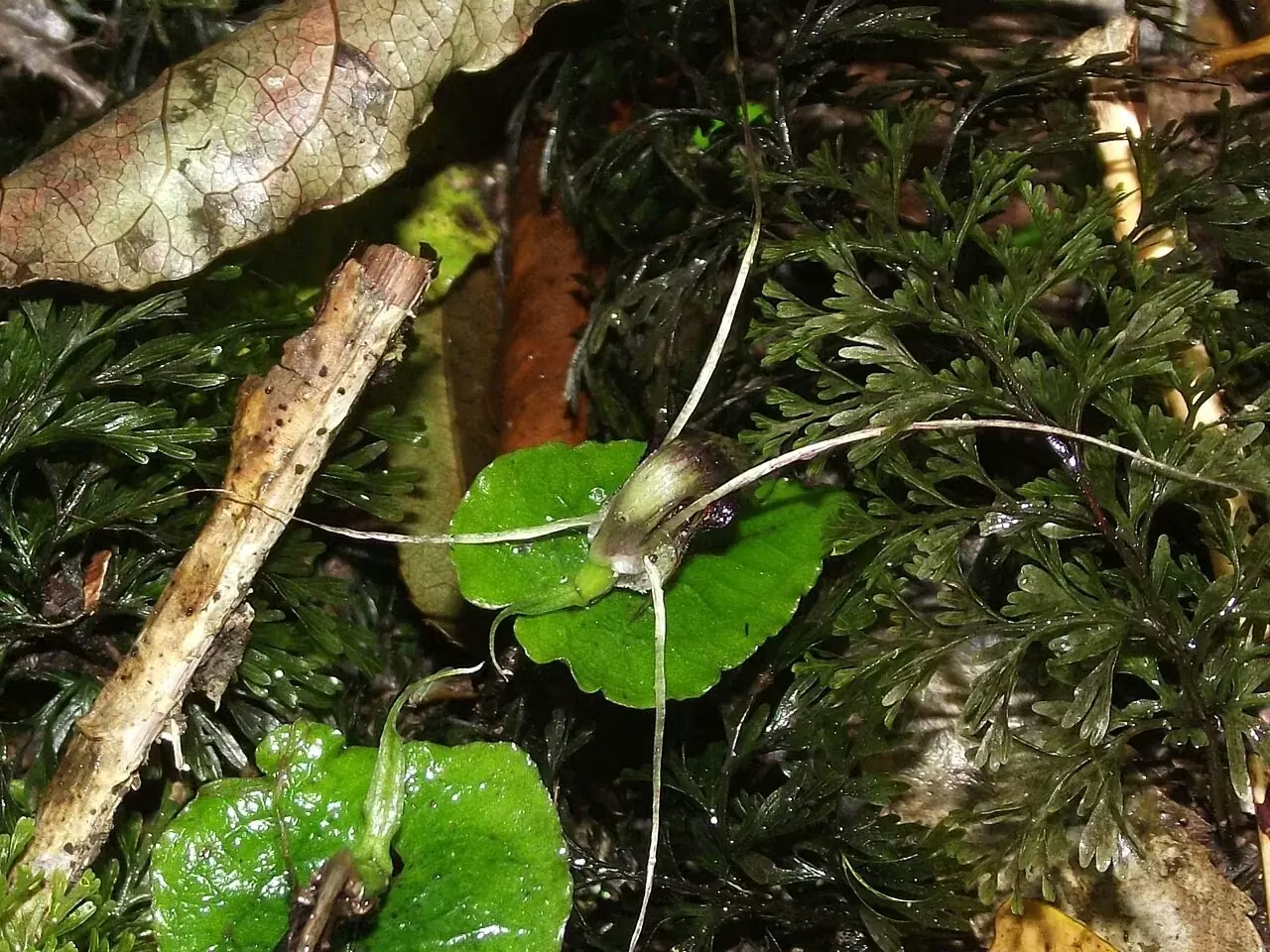
Corybas papa is an endemic North Island spider orchid with a mostly green flower and one fleshy leaf held against the ground. It often grows in damp places on papa rock.
Identification
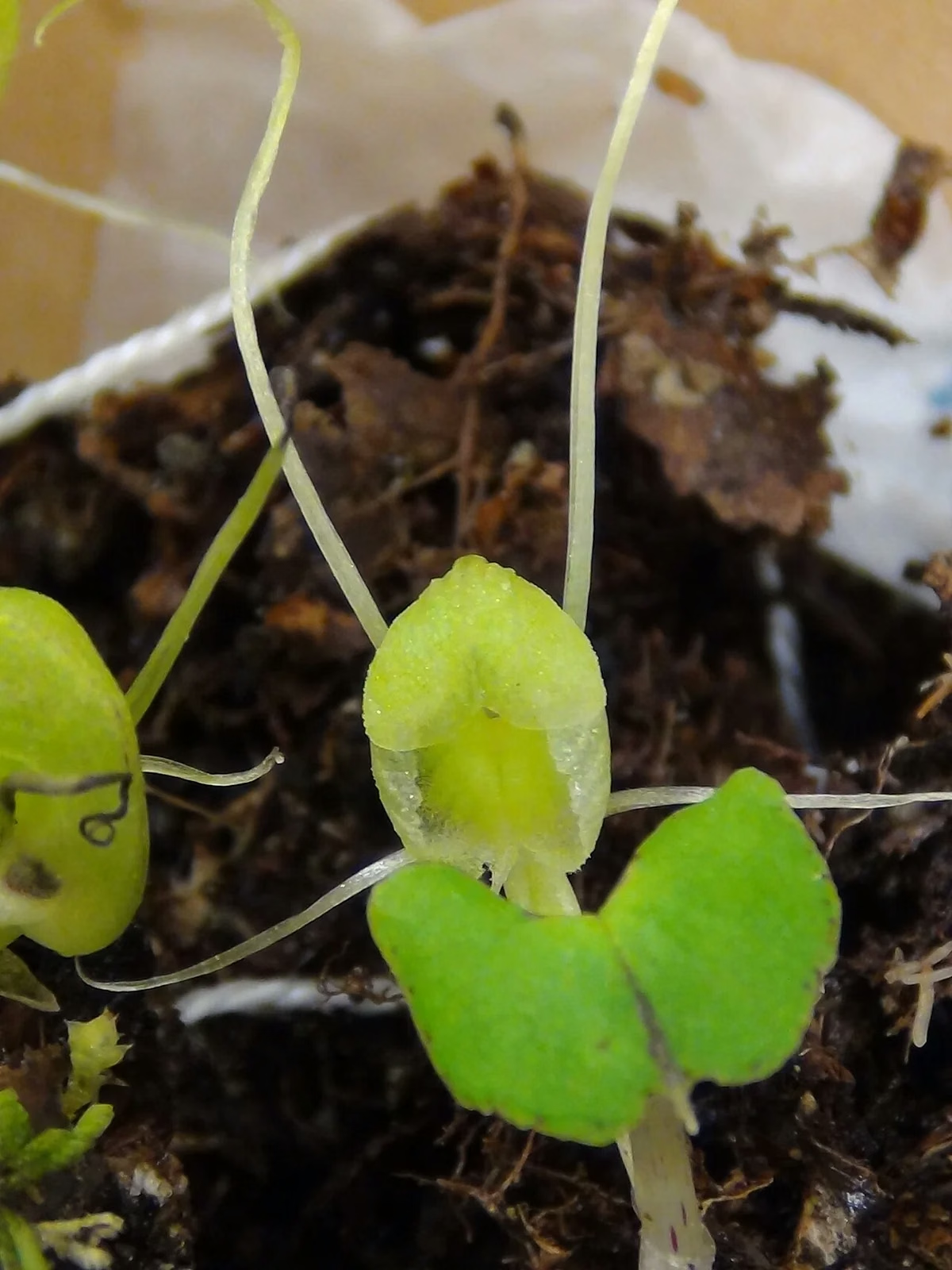
This tuberous orchid has one stalkless, fleshy leaf held flat to the ground. The leaf is 18-40 mm long, dull green above and silvery beneath, often with purple spots.
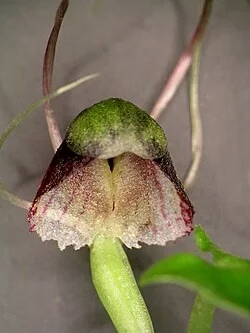
The generally green flower is 10-15 mm long. Its concave dorsal sepal arches over the lip, and threadlike lateral sepals and petals spread outward well beyond the flower.
Quick facts
| Scientific Name | Corybas papa |
|---|---|
| Former name | Nematoceras papa |
| Family | Orchidaceae |
| Leaf length | 18-40 mm |
| Flowering | August to October |
| Fruiting | October to January |
| National status | Not Threatened (2023) |
| Height | An overall plant-height measurement is not specified in the cited account |
| Water Needs | Usually beside seepages or slow-flowing streams; no cultivation schedule is given |
| Light | A cultivation light requirement is not specified |
| Spread | Forms extensive colonies; total colony width is not quantified |
| Frost Tolerance | Minimum tolerated temperature is not documented |
| Salt Tolerance | Salt tolerance is not documented |
| Growth Rate | Annual extension is not quantified in the cited accounts |
| Lifespan | Summer-green tuberous herb |
Natural range
NZPCN describes a western North Island distribution from about Port Waikato south to the western Ruahine Range. The species occurs from coastal to montane elevations, up to approximately 1,100 metres.
| City | Climate Suitability |
|---|---|
| Auckland | Not assessed |
| Wellington | Not assessed |
| Christchurch | Not assessed |
Habitat and distribution
The orchid grows in or near seepages and beside slow-flowing streams, favouring base-rich rock. These sites include calcareous mudstone and siltstone known as papa, limestone and basalt.
Its known range is in the western North Island; the original 1996 authors noted that it was especially common on roadside banks in the west-central region.
Natural growing conditions
Corybas papa is associated with damp seepages on base-rich substrates. Its original description records colonies on papa rock, but the cited sources do not provide a tested home garden planting protocol.
Planting considerations
NZPCN describes propagation of this terrestrial orchid as difficult and advises that plants should not be removed from the wild. Its occurrence on wet banks describes natural habitat rather than a tested garden method.
Pollination
Flora of New Zealand describes the flowers as likely insect-pollinated, possibly by fungus gnats. Observers reported that gnats visiting cultivated Corybas iridescens avoided C. papa grown alongside, so the proposed pollinator remains uncertain.
Observing the flower
Look for a stalkless, usually spotted leaf and a mostly green flower with a broad arched dorsal sepal. The lip bends downward against the ovary; the long threadlike petals and lateral sepals spread forward and outward.
Garden context
The original authors recorded this species on roadside papa banks, but the cited profile does not give garden establishment instructions. NZPCN describes propagation as difficult and advises leaving wild plants in place.
Flowering and fruiting
NZPCN records flowering from August to October and fruiting from October to January. Flora of New Zealand reports September to October flowering and notes that flowering intensity varies between years.
Seasonal growth
This is a summer-green terrestrial orchid with a single leaf and usually one flower. The cited profiles do not describe a pruning method; its foliage is normally held flat to the ground.
How to Grow Mudstone Spider Orchid (Corybas papa)
Propagation and seed limits
The published propagation entry for Corybas papa describes it as difficult and recommends leaving wild plants undisturbed. No seed-germination procedure is supplied in the NZ Plant Conservation Network profile. Its ability to form extensive colonies, with tuberoids on extended roots, records how the plant grows naturally; it is not a demonstrated method for establishing transplanted colonies in a garden.
Moist ground over papa rock
Typical sites are seepages and margins of slow-flowing streams on base-rich substrates. Calcareous mudstone and siltstone, commonly called papa, are particularly associated with the species, alongside limestone and basalt. The recorded elevational range extends from coastal sites to about 1,100 m. These conditions provide ecological context, while an artificial potting mix and an exact irrigation interval remain unspecified.
A leaf without a stalk
The firm, fleshy leaf usually lies flat on the ground and lacks a distinct petiole. Its blade is approximately 1.8-4 cm long and 1.5-3.5 cm wide, bluntly wedge-shaped to oblong-oval. Purple flecks may occur on its dull-green upper surface, and the underside is silvery. The midrib is slightly grooved above but flat beneath, useful details when comparing it with other flat-leaved spider orchids.
Flowers and seasonal growth
This is a summer-green herb, with flowering recorded from August to October and fruit from October to January. One or occasionally two flowers are produced, each about 10-15 mm long. Most flower parts are green, with the labellum forming the dominant structure. Confirming both the stalkless leaf and the flower is more reliable than identifying a colony from its damp-stream habitat alone.
Plant health
The cited species profiles do not specify pest or disease treatments. Purple spots on the dull green leaf and a mostly green flower are normal characteristics in the botanical description.
Naming and classification
Molloy and Irwin described Corybas papa in 1996. Flora explains that papa is a Māori word for earth and a name for the marine mudstones and siltstones associated with the orchid.
Distinguishing related orchids
Unlike Corybas hatchii, C. papa has a stalkless leaf and generally green flowers. Its lateral sepals and petals spread rather than pointing forward in the nearly parallel arrangement typical of C. hatchii.
Related New Zealand spider orchids
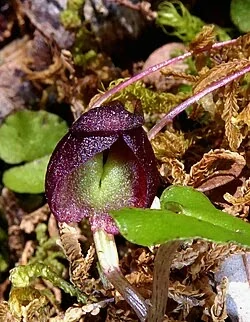
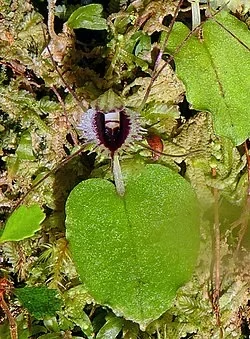
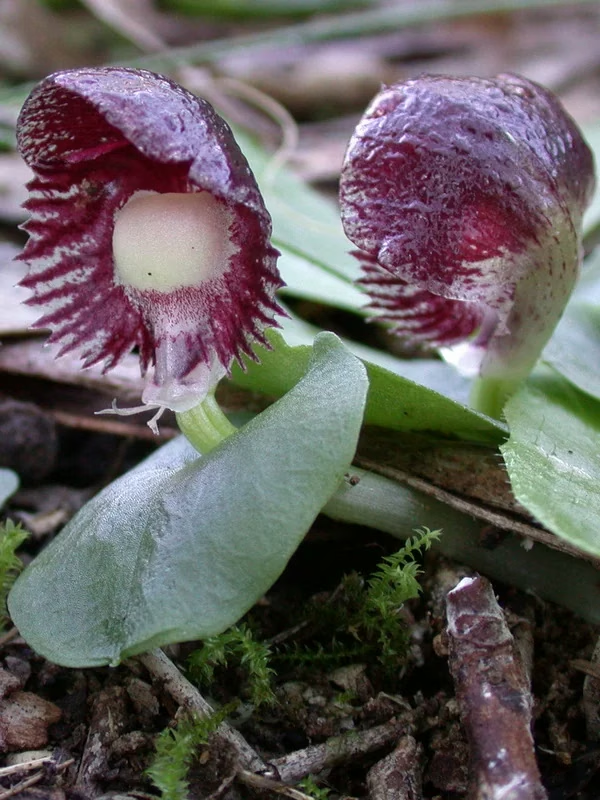
Explore other Corybas species and their distinctive flowers and leaves.
Conservation
Corybas papa is endemic to the North Island and was assessed as Not Threatened nationally in 2023. The species is associated with damp, base-rich sites, and NZPCN advises against removing wild plants.
Frequently asked questions
What is papa rock?
In the orchid’s habitat, papa refers to marine mudstones and siltstones; the name also comes from the Māori word for earth.
Is Nematoceras papa the same plant?
Yes. Flora of New Zealand lists it as a synonym of Corybas papa .
Does the leaf have a distinct stalk?
No. The leaf of Corybas papa is sessile, unlike the distinctly stalked leaf of some similar spider orchids.
Sources
Identification, habitat and conservation: NZPCN. Botanical description, naming and pollination observations: Flora of New Zealand. Original discovery: Molloy and Irwin, 1996.
Last updated: