Glass Spider Orchid
Corybas vitreus
Last updated:
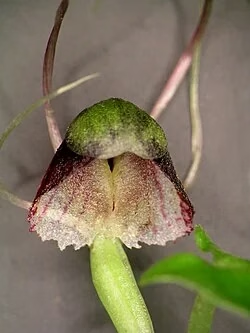
The glass spider orchid (Corybas vitreus) is a diminutive terrestrial orchid reaching only 14-30 mm tall when in flower. It produces a single, relatively large heart-shaped leaf that lies close to the ground, dull to bright green and sometimes flecked with maroon, ending in a pointed tip. Its name comes from the labellum: the central part of the lip is almost completely translucent and glass-like, framed by a dark maroon or purple band, beneath a pale-green dorsal sepal streaked with maroon. It grows in deep, moist leaf litter in mature beech forest and Kunzea or Leptospermum shrubland, often between 600 and 1300 metres elevation, from the Waikato southwards through the South Island. Shade loving and moisture dependent, it flowers rapidly in spring. Explore more native flowering plants in our native plant guide.
Plant Description
Identification and Physical Characteristics
Corybas vitreus is a diminutive, terrestrial orchid that typically reaches heights of only 1.4 to 3 cm when in flower. It produces a single, relatively large, cordiform (heart-shaped) leaf that lies close to the ground. The leaf is a dull to bright green, sometimes with maroon flecks, and features a prominent pointed tip. The flower is solitary and held erect on a short stem. Its most distinctive feature, which gives the species its name ( vitreus , meaning glass-like), is the labellum or lip. The central portion of the labellum is almost completely translucent, often framed by a dark maroon or purple band along the edges. The dorsal sepal is pale green with maroon streaks and forms a protective hood over the rest of the flower. Flowering occurs in early spring, from September to October.
Quick Facts
| Scientific Name | Corybas vitreus |
|---|---|
| Height | 1.4-3 cm (Small Herb) |
| Spread | 1-2 cm |
| Water Needs | Moderate (Moist Leaf Litter) |
| Light | Deep Shade to Dappled Light |
| Frost Tolerance | Moderate (Subalpine forms high) |
| Salt Tolerance | Low |
| Growth Rate | Seasonal (Rapid spring growth) |
| Lifespan | Perennial (Tuberous) |
Climate Best Suited to
The Glass Spider Orchid is well-adapted to the cool, temperate, and moist climates of New Zealand. It is found in both the North Island (from Waikato southwards) and the South Island. It thrives in regions with reliable winter and spring rainfall, as it completes its entire growth and flowering cycle during the moist months. It is particularly common in subalpine regions where it is protected by the forest canopy from extreme summer heat.
Regional Suitability
| City | Climate Suitability |
|---|---|
| Auckland | Suitable (In cooler ranges) |
| Wellington | Highly Suitable |
| Christchurch | Suitable |
| Dunedin | Highly Suitable |
| Queenstown | Highly Suitable |
| Invercargill | Highly Suitable |
Plant Habitat
Natural Occurrence and Ecology
In its natural environment, Corybas vitreus is a specialist of the forest floor. It is most frequently found in mature beech ( Fuscospora or Lophozonia ) forests and in Kunzea or Leptospermum (Kānuka and Mānuka) shrublands. It grows in deep, moist leaf litter, often at elevations between 600 and 1300 metres. It prefers heavily shaded spots where the humidity remains high and the soil surface does not dry out. It is often found growing alongside mosses and other tiny terrestrial orchids, forming part of the intricate miniature floor-scape of primary native forests.
Growing Requirements
Soil Requirements
Requires a loose, acidic medium that mimics forest leaf litter. It will not grow in standard garden soil.
- Composted beech leaves
- Pine bark / Perlite mix
- Acidic forest floor litter
Light Requirements
Thrives in low-light environments. Direct sunlight will quickly desiccate the tiny plants and kill the delicate flowers.
- Deep shade
- Dappled sunlight
- Protected southern aspect
Water Requirements
Must be kept moist during the growing and flowering season. It requires a dry summer rest period to prevent tuber rot.
- High spring moisture
- Consistent humidity
- Dry summer dormancy
Planting and Establishing
Establishment Guidance
Establishing the Glass Spider Orchid in a garden is extremely difficult and is only recommended for specialist native plant enthusiasts. They should never be removed from the wild. For those with nursery-raised plants, the best way to establish them is by planting their tiny tubers into a dedicated "orchid trough" or a protected spot under a native canopy. Plant tubers about 1-2 cm deep in late winter. Mulch the surface with a thin layer of native leaf litter to maintain humidity. Once planted, avoid any disturbance to the soil, as the fungal networks the orchid relies on are very sensitive. Success is indicated by the emergence of the single heart-shaped leaf in early spring.
Ecological Role
Biodiversity and Ecosystem Impact
Corybas vitreus plays a subtle but vital role in New Zealand's forest ecology. Like many native orchids, it has a complex symbiotic relationship with mycorrhizal fungi in the soil, which helps in the cycling of nutrients. The flowers are specifically adapted to attract small fungus gnats, which are the orchid's primary pollinators. By supporting these insect populations, the orchid contributes to the broader forest food web. Its presence is also an indicator of a healthy, intact forest ecosystem with an undisturbed leaf litter layer and stable humidity.
Uses & Significance
Garden Uses
Due to its extreme sensitivity, it is not used in general gardening. It is primarily a subject for conservation education and specialist cool-climate ferneries where its translucent flowers can be appreciated up close.
- Specialist ferneries
- Conservation education
- Botanical photography
Ecological Value
Supports specialized pollinator communities and represents New Zealand's unique terrestrial orchid diversity. It is a key indicator species for undisturbed forest health.
- Fungal symbioses
- Pollinator support
- Biodiversity indicator
Landscaping Uses
Its use is restricted to high-end native forest restoration projects or within specialized botanical collections. In these settings, it is used to demonstrate the incredible diversity of the New Zealand forest floor and the intricate details of our native flora.
Seasonal Care Calendar
Spring
Peak activity. Leaf emerges and flower opens. Maintain high humidity and consistent moisture in the leaf litter.
- Monitor moisture
- Protect from snails
Summer
Plant dies back to the underground tuber. Stop all supplemental watering to allow the tuber to rest in dry conditions.
- Stop watering
- Maintain shade
Autumn
Tubers remain dormant. Natural rainfall will slowly re-moisten the soil, preparing the orchid for spring growth.
- Minimal intervention
- Allow natural cycles
Winter
Tubers begin to activate underground. Ensure the area is not trampled or heavily compacted during the wet months.
- Avoid disturbance
- Keep leaf litter intact
When to Prune and How Much
Pruning is not applicable to Corybas vitreus . The plant naturally withers and disappears into the leaf litter after its short growing season.
- No pruning required
- Self-maintaining
Do not attempt to remove the dying leaf in late spring, as the plant is still transferring nutrients back into the underground tuber for the next year's growth.
How to Grow Glass Spider Orchid
Growing the Glass Spider Orchid ( Corybas vitreus ) is one of the most challenging tasks in New Zealand horticulture and is generally reserved for experts or specialized botanical gardens. Unlike most plants, spider orchids have an obligate relationship with specific soil fungi, meaning they cannot survive without them. Success in cultivation requires a complete shift in mindset-you are not just growing an orchid, you are cultivating an entire micro-ecosystem. The most critical factors are replicating the humid, shaded, and undisturbed conditions of a mature beech forest floor. This involves careful management of seasonal moisture and the absolute avoidance of any chemicals or fertilizers that could disrupt the delicate fungal symbiosis.
From Tubers
Tubers are the only practical way to introduce Corybas vitreus into a controlled environment. This must always be done using ethically sourced, nursery-raised stock.
Tubers should be handled with extreme care as they are very small and easily damaged.
- Wait until the plant has fully entered its summer dormancy and the foliage has completely disappeared.
- Carefully sieve the medium to find the tiny, rounded tubers. They are often less than 5 mm in diameter.
- Replant immediately into a fresh mix of composted beech leaf litter, coarse sand, and a small amount of fine pine bark.
- Ensure the potting mix is inoculated with fungi from the previous growing medium if possible.
- Place the tubers about 1-2 cm below the surface.
- Keep the pots in a cool, shaded place and allow them to remain dry over the summer months.
- Resume light misting in late winter to stimulate spring growth.
From Seed
Propagating Glass Spider Orchids from seed is an advanced technique that requires laboratory conditions. Like all orchids, the seeds are microscopic and lack any food reserves.
They will only germinate in the presence of the correct mycorrhizal fungi.
- Collect the elongated seed capsules just as they begin to turn brown and split.
- For non-laboratory growers, the best method is "symbiotic sowing"-scattering the seeds around the base of established parent plants where the necessary fungi already exist.
- In laboratories, seeds are sown on sterile agar plates that have been pre-inoculated with the specific fungus required by Corybas vitreus .
- The process from seed to a flowering-sized tuber can take several years of careful monitoring.
Additional Methods
Natural vegetative spread is the primary way these orchids form colonies in the wild. If the environment is stable and healthy, a single tuber will often produce one or more "daughter" tubers each season. Over several years, this can lead to a beautiful, dense patch of Glass Spider Orchids. The key to this "natural propagation" is zero disturbance; the more the soil and leaf litter are left alone, the more the colony will thrive and expand.
Pests & Diseases
The biggest threat to these tiny orchids is slugs and snails, which can consume an entire leaf or flower in a single night. Tuber rot is also a significant risk if the soil remains too wet during the summer dormant period. Always ensure good air circulation to prevent fungal pathogens from attacking the delicate foliage in the spring.
Cultural Significance
Spider orchids, or 'pekapeka' in some dialects, are treasures of the New Zealand bush. Corybas vitreus represents the incredible specialization of our native flora. It is a symbol of the fragile beauty of the forest floor. For Māori, these plants are part of the detailed knowledge of the forest's seasonal cycles and indicators of the health of the high-country landscapes.
- Forest floor treasure
- Indicator of ecosystem health
Bonus Tip
If you are lucky enough to see these in the wild, get down on your hands and knees! The translucent "glass" center of the flower is only truly visible when viewed from directly above or with a strong backlight. It is one of the most stunning sights in the New Zealand alpine forest.
Related Plants
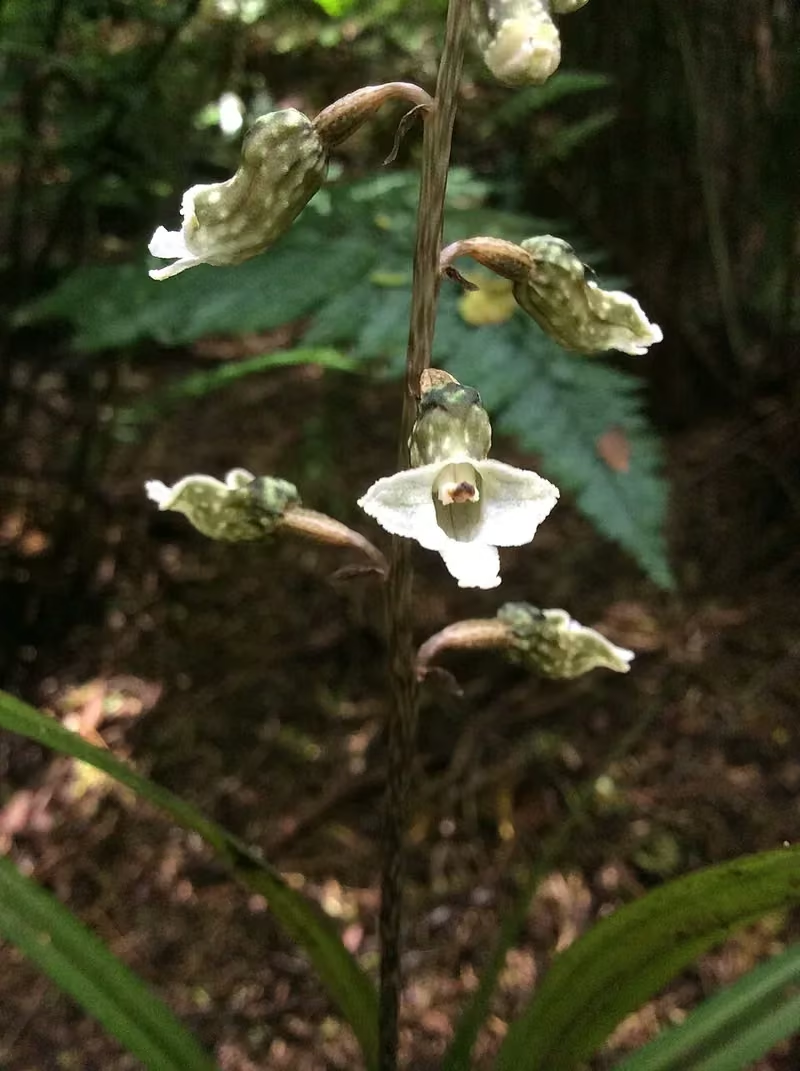
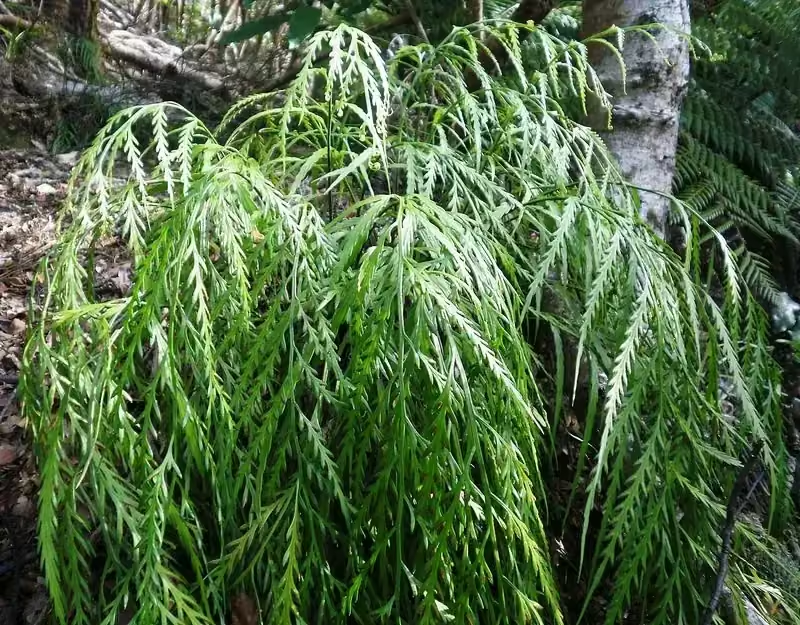
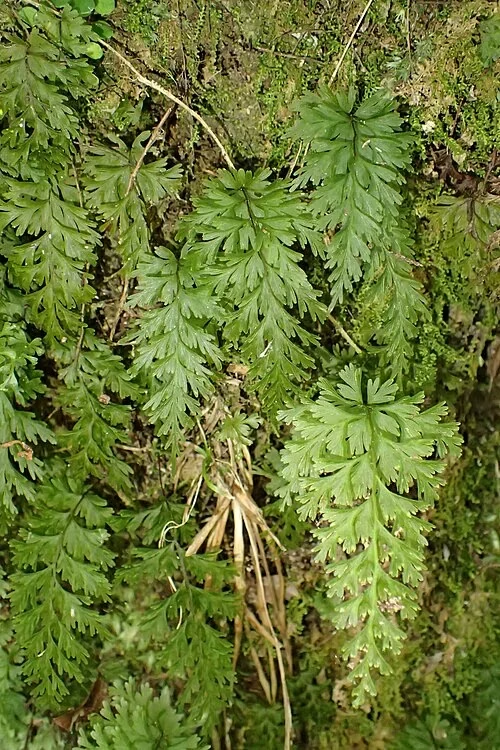
Explore other native plants that share similar characteristics or habitats with Glass Spider Orchid ( Corybas vitreus ), offering further insights into New Zealand's diverse flora. These related species provide context and opportunities for complementary planting in your garden.

Plant Conservation
Conservation Status and Threats
Corybas vitreus is currently classified as Not Threatened. It is locally common in suitable forest habitats across New Zealand. However, because it is so small and occupies such a specific ecological niche, it is highly vulnerable to local habitat changes, such as the drainage of forest floor moisture or the disturbance of the leaf litter by large mammals. Protecting intact native forest canopies and the associated soil health is essential for the ongoing survival of this delicate "glass" orchid.
Frequently Asked Questions
How tall does the glass spider orchid grow?
Corybas vitreus grows only 14-30 mm tall when in flower.
Why is it called the glass spider orchid?
Its labellum has an almost completely translucent, glass-like centre, reflected in the name vitreus.
Where does Corybas vitreus grow naturally?
It grows in beech forest and manuka or kanuka shrubland from the Waikato south, often at 600-1300 m elevation.
When does the glass spider orchid grow and flower?
It grows rapidly in spring, completing its flowering cycle before dying back to the tuber.
Sources and Further Reading
The botanical, growing, and conservation details for Glass Spider Orchid (Corybas vitreus) on this page draw on authoritative New Zealand plant references and citizen-science observation records. Consult the sources below for full technical records and the latest distribution data.