Spider Orchid
Corybas sanctigeorgianus
Last updated:
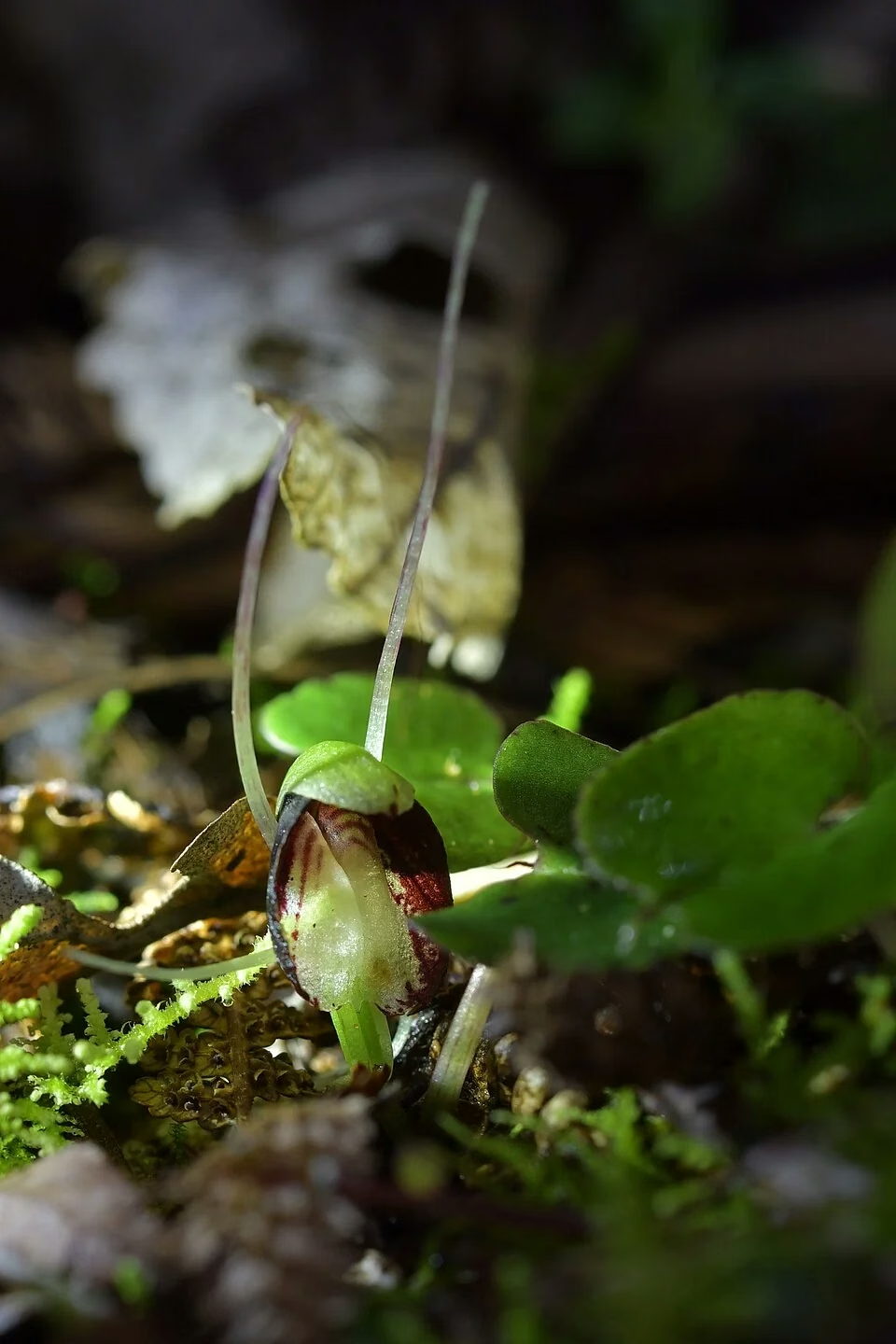
Corybas sanctigeorgianus is a diminutive terrestrial spider orchid that grows only 14-20 mm tall during its flowering phase. It produces a single stalked, kidney-shaped to heart-shaped leaf about 10-20 mm wide with a sharp tapering point and a dull green colour. Its solitary flower is the highlight: the labellum is white in the centre, deepening to dark red at the margins, and covered in microscopic hairs that give it a velvety texture, beneath an arching light-green dorsal sepal. A specialist of lowland mixed broadleaf and podocarp forest floors, it favours skeletal soils under deep leaf litter and the bases of tree ferns. Currently classed as Data Deficient, it is known mainly from the Hunua Ranges in the upper North Island. Explore more native flowering plants in our native plant guide.
Plant Description
Identification and Physical Characteristics
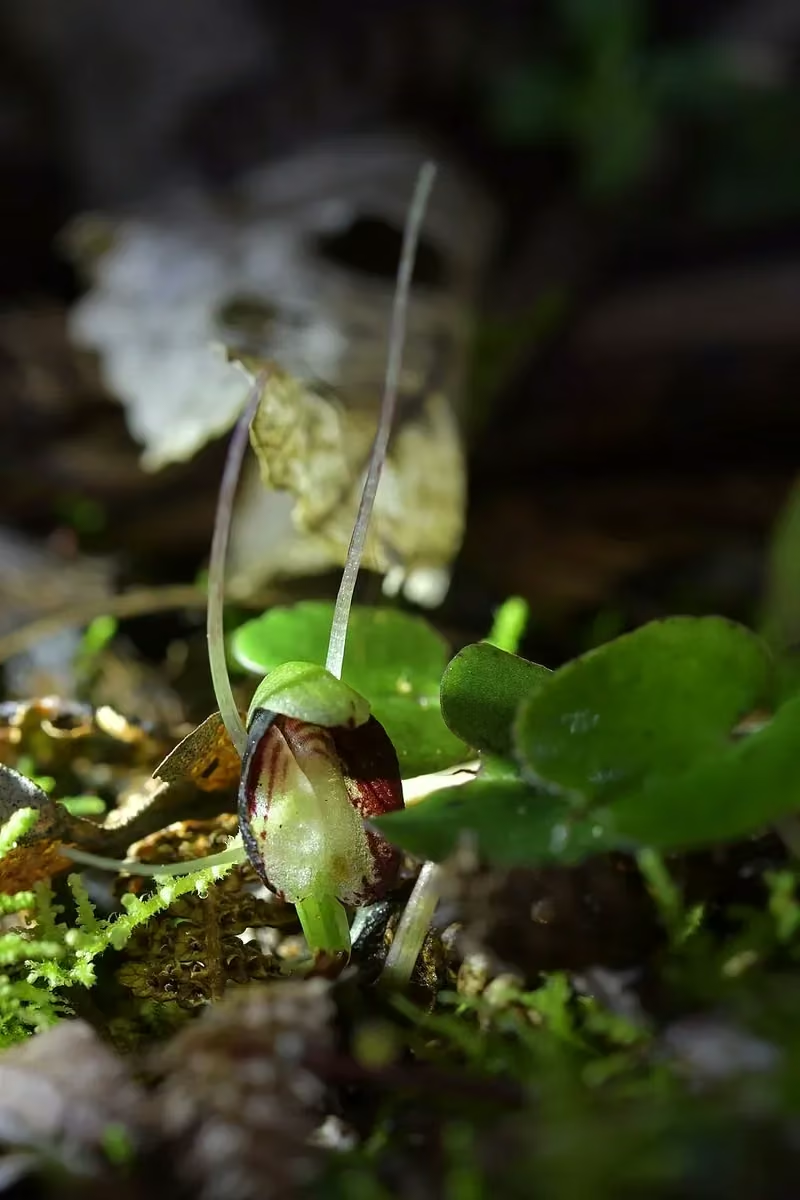
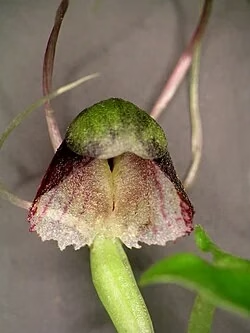
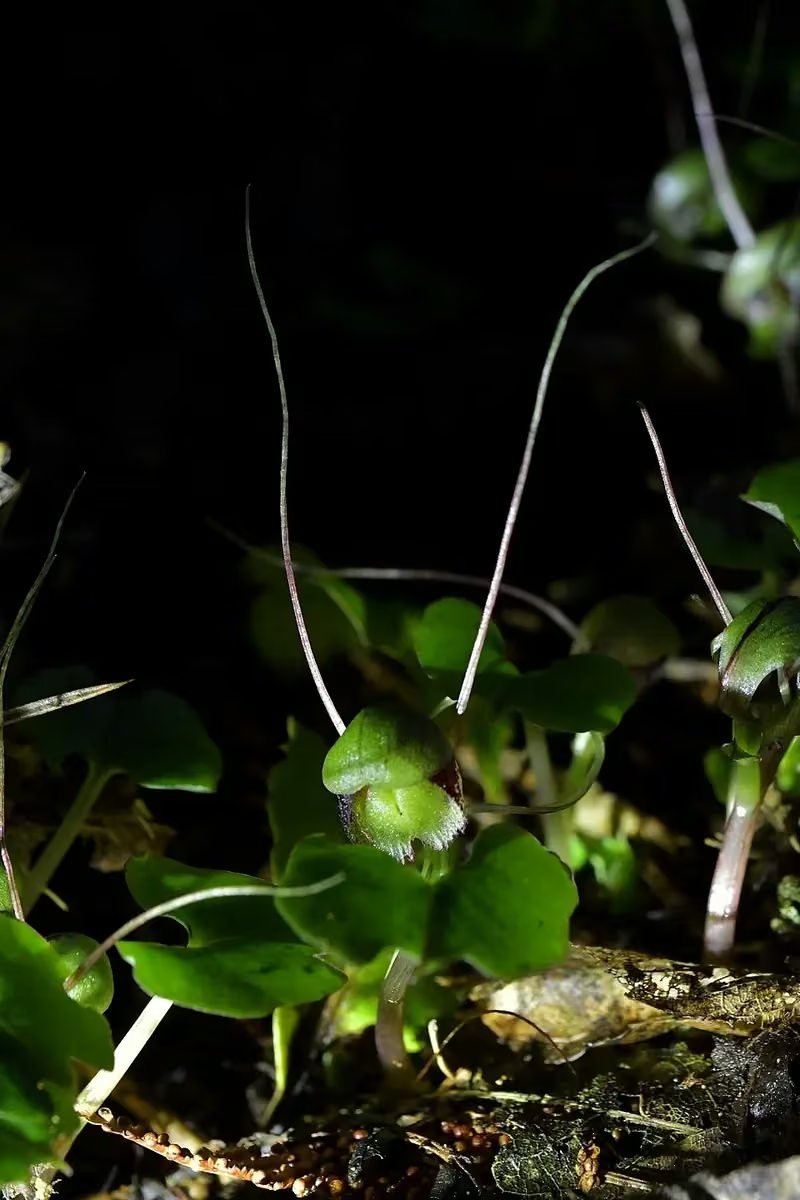
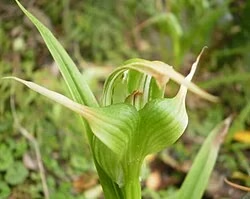
Corybas sanctigeorgianus is a diminutive, terrestrial orchid that grows only 1.4 to 2 cm tall during its flowering phase. It produces a single, petiolate leaf that is kidney-shaped to heart-shaped, typically measuring about 10-20 mm in width. The leaf has a characteristically sharp, tapering point at the apex and often shows a dull green colour. The solitary flower is the plant's most remarkable feature. The labellum, or lip, is predominantly white in the center and transitions to a deep, dark red towards the margins. The surface of the lip is covered in microscopic hairs, giving it a velvety texture. The dorsal sepal is light green and arches forward, hooded over the rest of the flower parts. The lateral sepals and petals are thin and thread-like, appearing white or translucent with fine dark red specks.
Quick Facts
| Scientific Name | Corybas sanctigeorgianus |
|---|---|
| Height | 1.4-2 cm (Small Herb) |
| Spread | 1-2 cm |
| Water Needs | Moderate (Moist Leaf Litter) |
| Light | Deep Shade |
| Frost Tolerance | Moderate |
| Salt Tolerance | Low |
| Growth Rate | Seasonal (Spring flowering) |
| Lifespan | Perennial (Tuberous) |
Climate Best Suited to
St George's Spider Orchid is best suited to the humid, temperate climates of the upper North Island. It is currently known primarily from the Hunua Ranges, where the consistent rainfall and high humidity provided by the forest canopy create the perfect microclimate. It requires a environment that never truly dries out, particularly during the critical spring growing season.
Regional Suitability
| City | Climate Suitability |
|---|---|
| Auckland | Highly Suitable (Local native) |
| Wellington | Suitable (In protected sites) |
| Christchurch | Challenging (Too dry) |
| Dunedin | Challenging (Too cold) |
| Hamilton | Suitable |
| Tauranga | Suitable |
Plant Habitat
Natural Occurrence and Ecology
The natural habitat of Corybas sanctigeorgianus is within lowland mixed broadleaf and podocarp forests. It is a specialist of the forest floor, typically found growing in skeletal soils that are heavily covered in deep leaf litter. It has a notable affinity for the bases of tree ferns (Ponga), where the decaying organic matter provides a stable, moisture-retentive substrate. It is often found in association with other shade-loving plants like mosses and ferns, tucked into the humid recesses at the base of large trees or logs where it is protected from wind and direct light.
Growing Requirements
Soil Requirements
Requires a highly organic, acidic medium mimicking the decaying trunks of tree ferns or deep forest litter.
- Decaying tree fern fiber
- Composted leaf mold
- Well-drained but moist
Light Requirements
Must be kept in deep shade. It is adapted to the very low light levels found on the floor of a primary native forest.
- Deep shade only
- Zero direct sunlight
- Protected microclimate
Water Requirements
High humidity and consistent soil moisture are essential during growth. Over-watering during dormancy can rot the tubers.
- Consistent spring moisture
- High ambient humidity
- Drier summer rest
Planting and Establishing
Establishment Guidance
Establishing Corybas sanctigeorgianus is exceptionally difficult and should only be attempted by native plant specialists using legally and ethically sourced nursery stock. It is a protected species and must never be taken from the wild. Tubers should be planted in late winter into a medium of shredded tree fern fiber and fine bark. Place them just under the surface and cover with a thin layer of leaf mulch. The most critical factor for establishment is maintaining a stable, humid environment that prevents the medium from ever drying out completely. Once planted, do not move or disturb the soil, as the plant relies on a delicate network of mycorrhizal fungi that is easily destroyed by physical disturbance or changes in soil chemistry.
Ecological Role
Biodiversity and Ecosystem Impact
Like all native orchids, St George's Spider Orchid is part of a complex web of soil life. It relies on specific mycorrhizal fungi for nutrient uptake, and in turn, contributes to the fungal diversity of the forest floor. Its flowers are adapted for pollination by tiny forest insects, particularly fungus gnats. Although it is a minor component of the overall forest biomass, its presence is a strong indicator of an undisturbed and healthy lowland forest ecosystem. The loss of these tiny orchids often signals a broader decline in forest floor health and the loss of specialized insect and fungal communities.
Uses & Significance
Garden Uses
Not suitable for general gardens. Its use is limited to specialized conservation collections or climate-controlled botanical displays where its rarity and beauty can be managed.
- Conservation collections
- Botanical research
- Specialist displays
Ecological Value
Represents a unique and rare lineage of New Zealand's orchid flora. It is a key species for studying the specific fungal symbioses of the Hunua Ranges.
- Fungal biodiversity
- Pollinator support
- Rare species conservation
Landscaping Uses
Due to its extreme rarity and specific needs, it is not used in landscaping. It is strictly a subject for forest restoration monitoring and high-level botanical conservation within its natural range in the upper North Island.
Seasonal Care Calendar
Spring
Active growth and flowering. Ensure maximum humidity and consistent moisture. Protect from all pests.
- Mist frequently
- Snail protection
Summer
Plant enters dormancy. Foliage dies back. Reduce watering to a minimum to allow the tuber to rest.
- Stop watering
- Monitor temperature
Autumn
Tubers are dormant underground. Maintain cool, shaded conditions and ensure the soil does not get waterlogged.
- Avoid disturbance
- Maintain shade
Winter
Tubers begin to prepare for growth. Ensure the soil medium is slightly moist as the first signs of the leaf may appear late in the season.
- Check moisture
- Prepare mulch
When to Prune and How Much
Pruning is not required for Corybas sanctigeorgianus . The plant is a small herb that naturally goes dormant.
- Zero pruning needed
- Natural seasonal cycle
Attempting to remove dead leaves prematurely can damage the tiny tuber and should be avoided. Let the foliage wither and disappear naturally into the mulch layer.
How to Grow Spider Orchid
Growing St George's Spider Orchid ( Corybas sanctigeorgianus ) is an endeavor that should only be undertaken by those with extensive experience in terrestrial orchid cultivation. It is one of the rarest orchids in New Zealand and is exceptionally sensitive to environmental changes. The primary challenge is not the plant itself, but the cultivation of the specific mycorrhizal fungi it depends upon for its entire lifecycle. Without these fungi, the orchid cannot take up nutrients effectively and will eventually waste away. Therefore, the "grower" is actually a manager of a complex fungal ecosystem that exists within the potting medium. This requires a meticulous approach to moisture, temperature, and the chemical composition of the substrate.
From Tubers
Tubers are the only viable method for most specialist growers. This must involve legally acquired tubers from registered native plant nurseries.
Handling should be minimal as the tubers are fragile and tiny, often smaller than a pea.
- Repotting should only occur during the peak of summer dormancy when no green growth is visible.
- Use a mix primarily composed of shredded tree fern fiber (Cyathea or Dicksonia) and fine, aged pine bark.
- The mix should be airy and acidic, mimicking the natural conditions of a rotting log or tree fern base.
- Tuck the tuber about 1 cm below the surface and apply a very light layer of forest floor mulch.
- Keep the container in a cool, deep-shade area where temperatures remain stable.
- Watering should be done with pure rainwater to avoid the buildup of salts or chlorine which can kill the fungi.
- Watch for the leaf emergence in early spring, which signals the start of the active watering cycle.
From Seed
Seed propagation is a high-level technical process usually conducted in sterile laboratories. The seeds are like dust and have no energy reserves.
They require a symbiotic relationship with a specific fungus to trigger the germination process.
- Seeds must be harvested from the capsule just as it begins to dehisce.
- Laboratory sowing involves placing seeds on a specialized nutrient medium that has been pre-inoculated with the specific fungus.
- For non-lab attempts, "symbiotic sowing" involves scattering the seeds onto the surface of the medium around established, healthy parent orchids.
- This process is slow, and it can take several years before a seedling develops a tuber large enough to produce a leaf and flower.
Conservation Propagation
The most important form of propagation for this species is protection in the wild. Ensuring that the Hunua Ranges remain free of invasive pests and that the forest floor is not disturbed is the most effective way to "grow" the population of St George's Spider Orchid. Human intervention should focus on habitat restoration and the mitigation of threats like soil compaction or the loss of the canopy that maintains the necessary microclimate.
Pests & Diseases
Snails and slugs are the primary predators of this tiny orchid. A single snail can destroy a whole colony's flowering effort in one night. Additionally, the plant is susceptible to various fungal rots if the growing medium becomes anaerobic or if humidity is too high without sufficient air movement. Constant vigilance is required to balance moisture and air flow.
Cultural Significance
While there are no specific Māori legends recorded for this particular species, all spider orchids (pekapeka) are regarded as indicators of forest purity. Their presence suggests a forest floor that has remained undisturbed for a long time. For modern New Zealanders, Corybas sanctigeorgianus is a symbol of the "hidden" biodiversity of the Auckland region and a reminder of why local conservation efforts in places like the Hunua Ranges are so critical.
- Hidden biodiversity symbol
- Hunua Ranges treasure
Bonus Tip
The best time to look for these in the wild is during a overcast, humid day in early spring. The white center of the flower acts like a small beacon on the dark forest floor, but you have to be looking straight down to see it!
Related Plants
Explore other native plants that share similar characteristics or habitats with St George's Spider Orchid ( Corybas sanctigeorgianus ), offering further insights into New Zealand's diverse flora. These related species provide context and opportunities for complementary planting in your garden. For another flowering native plant, explore Narrow-Leaved Sundew.

Plant Conservation
Conservation Status and Threats
Corybas sanctigeorgianus is currently classified as Data Deficient, but it is known to be very rare and localized to the Hunua Ranges. It was previously assessed as Nationally Critical. Its survival depends entirely on the protection of its very specific habitat from physical damage, pest animals (which can compact the soil or eat the plants), and changes in the local hydrology. Protecting the integrity of the Auckland region's native forest remnants is vital for this orchid and many other rare North Island species.
Frequently Asked Questions
How tall does Corybas sanctigeorgianus grow?
It grows only 14-20 mm tall during its spring flowering phase, spreading 1-2 cm.
Where does Corybas sanctigeorgianus grow?
It is known mainly from the Hunua Ranges in lowland broadleaf and podocarp forest of the upper North Island.
What is the conservation status of Corybas sanctigeorgianus?
It is classed as Data Deficient, meaning too little is known to assess its threat level.
What conditions does this spider orchid need?
It needs deep shade, moist leaf litter and skeletal soils, often near the bases of tree ferns.
Sources and Further Reading
The botanical, growing, and conservation details for Spider Orchid (Corybas sanctigeorgianus) on this page draw on authoritative New Zealand plant references and citizen-science observation records. Consult the sources below for full technical records and the latest distribution data.