Thick-Leaved Willowherb
Epilobium crassum
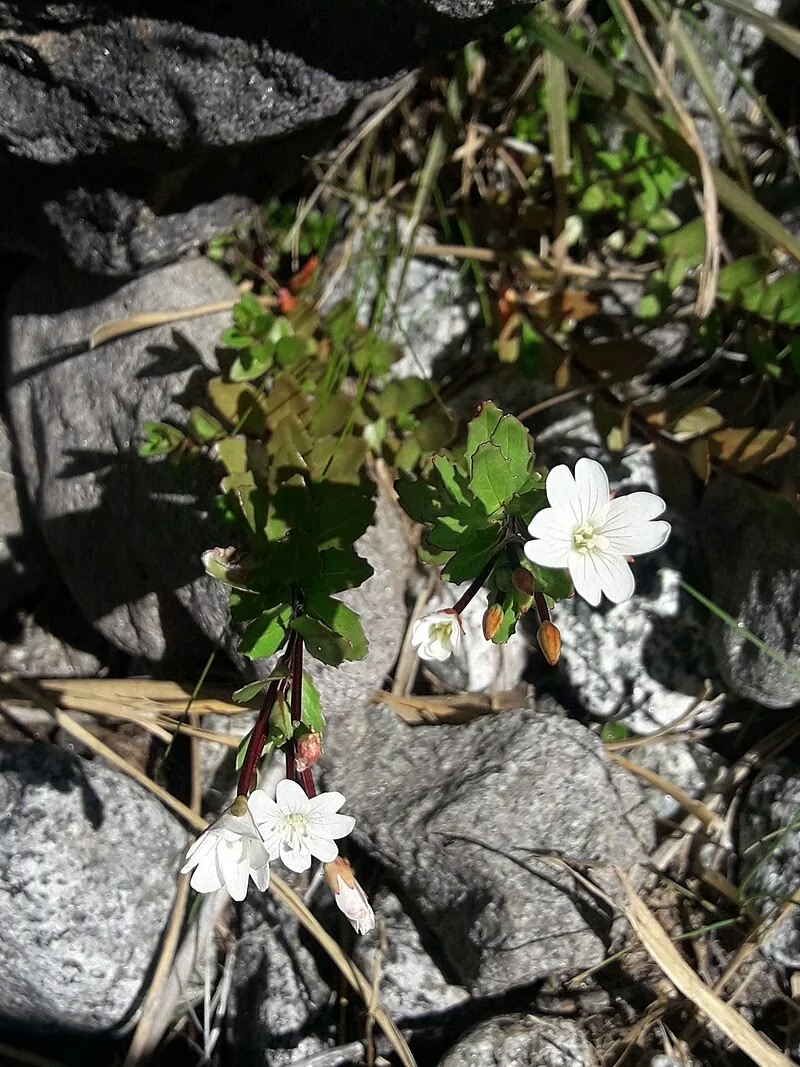
Epilobium crassum, the thick-leaved willowherb, is a creeping native herb of moist mountain scree. Its crowded, leathery leaves and white flowers distinguish it in its alpine habitat. This robust, creeping herb has hairless stems up to 10 cm long and crowded, leathery leaves.
Identification
This robust, creeping herb has hairless stems up to 10 cm long and crowded, leathery leaves. The leaves are narrowly obovate to oblanceolate, approximately 1.2-4 cm long, with winged stalks.
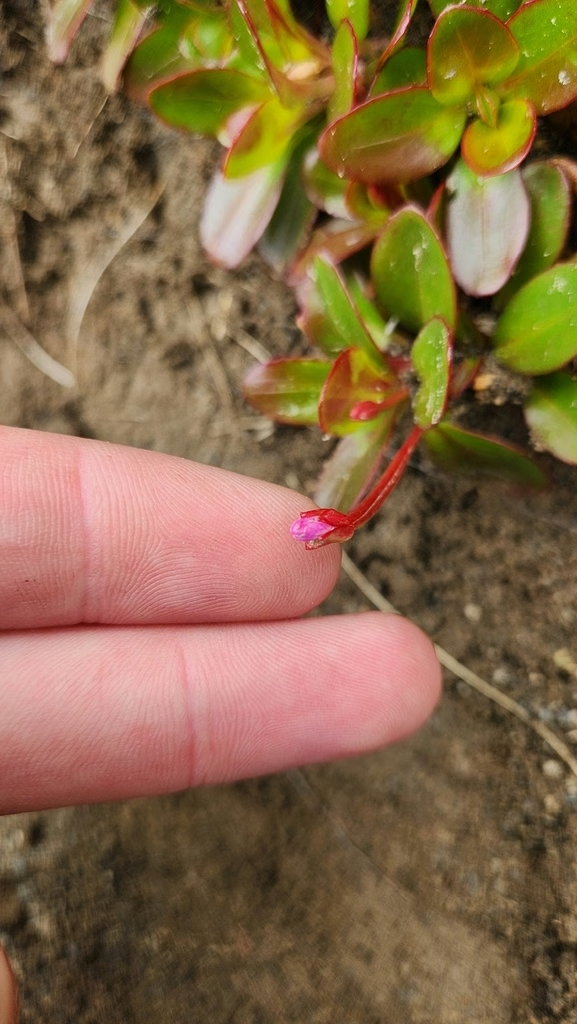
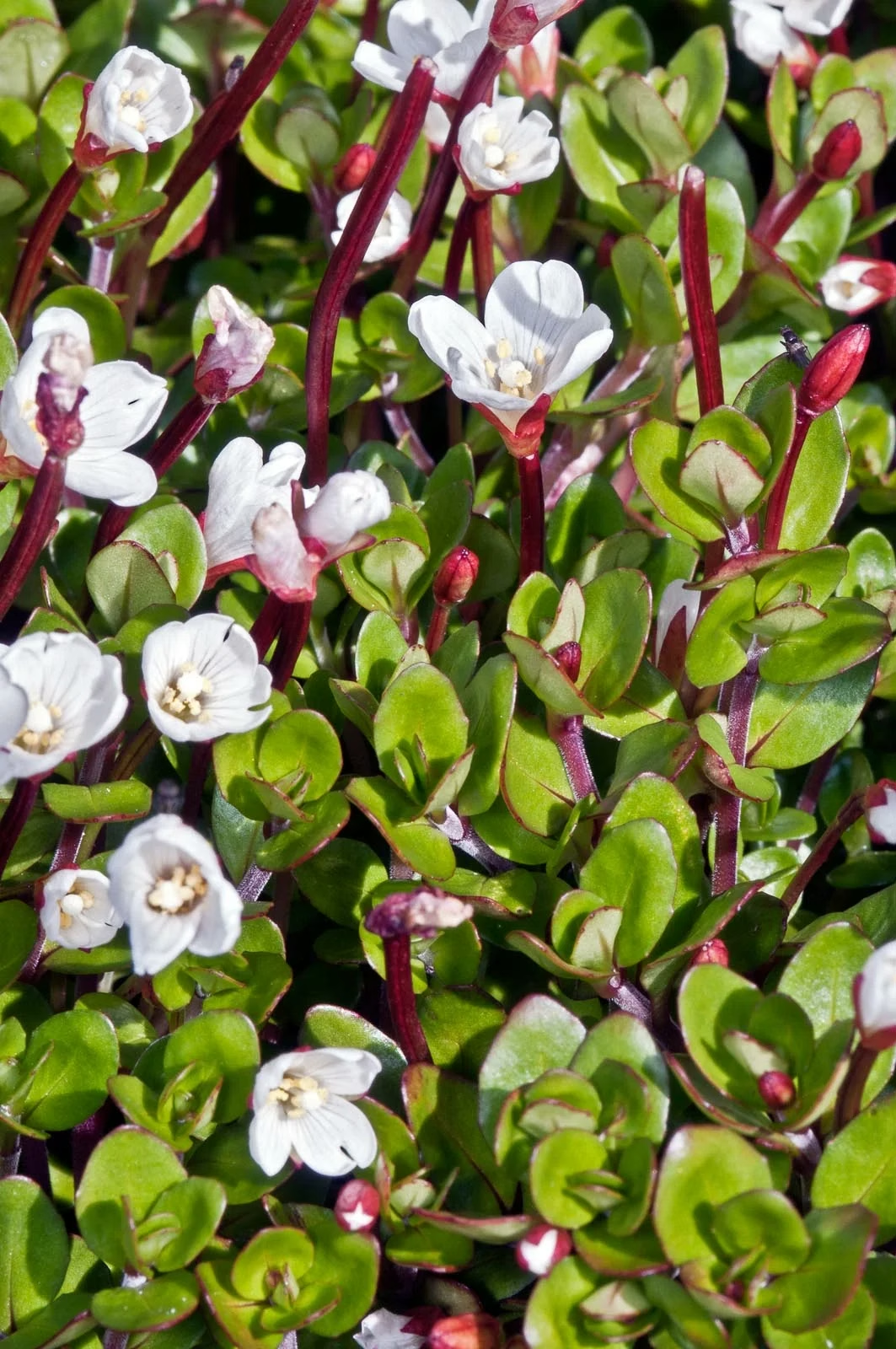
Its white petals have pink veins and flush pink after pollination. The smooth capsules are 3.6-7.5 cm long, carried on fruiting stalks 3-8 cm long.
Quick facts
| Scientific Name | Epilobium crassum |
|---|---|
| Synonym | Epilobium antipodum |
| Family | Onagraceae |
| Stem length | Up to 10 cm |
| Flowering | December to February |
| Habitat | Moist mountain scree |
| National status | Not Threatened (2023) |
| Height | Low creeping herb with stems up to 10 cm long |
| Water Needs | Moist scree habitat; no tested cultivation watering interval |
| Light | Open scree above the bushline in its natural habitat |
| Spread | Creeping stems and rhizomes; maximum patch width unquantified |
| Frost Tolerance | Minimum tolerated temperature is not documented |
| Salt Tolerance | Salt tolerance is not documented |
| Growth Rate | Annual extension is not quantified in the cited accounts |
| Lifespan | Rhizomatous herb; longevity in years is not quantified |
Mountain range
NZPCN records the species in the Kaweka Range in the North Island and along or east of the South Island main divide, from St Arnaud and the Clarence and Awatere rivers to the Aoraki/Mount Cook region.
| City | Climate Suitability |
|---|---|
| Auckland | Not assessed |
| Wellington | Not assessed |
| Christchurch | Not assessed |
Habitat and distribution
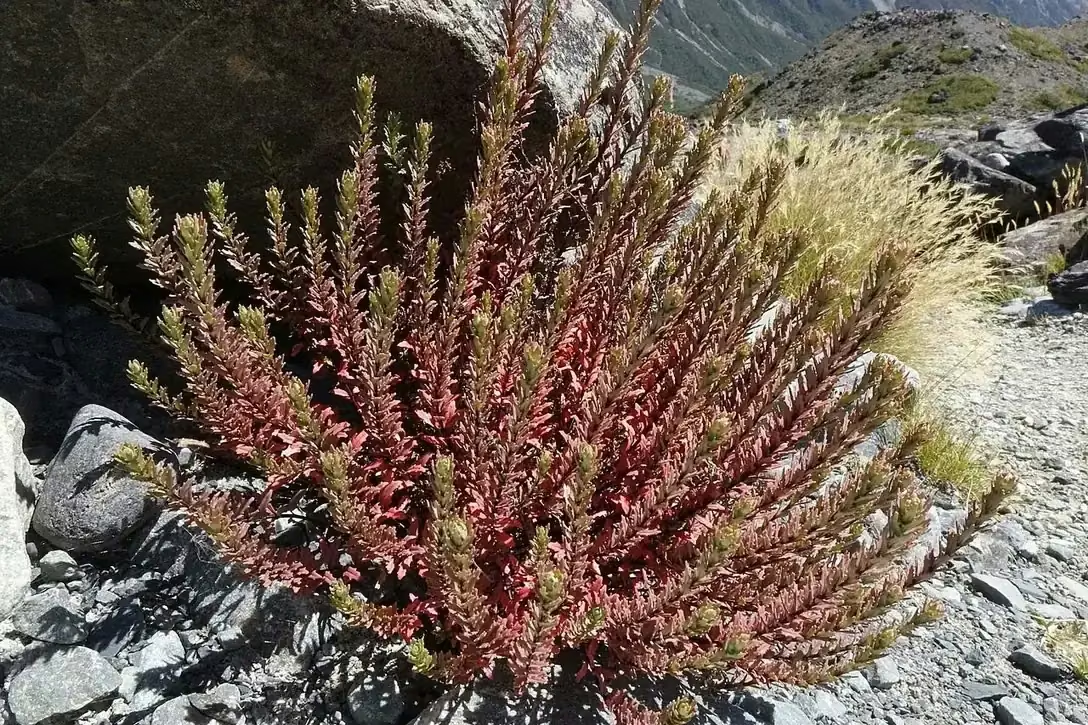
Thick-leaved willowherb grows above the bushline on fine-grained, relatively stable, moist scree, at about 600-1,800 metres elevation.
Its northern record is in the Kaweka Range. South Island records extend along and east of the main divide from northern ranges and river valleys toward Aoraki/Mount Cook.
Natural growing conditions
The plant is recorded on moist, relatively stable scree rather than all scree surfaces. Its field habitat gives useful ecological context, but the cited profiles do not provide a tested garden soil or watering recipe.
Planting considerations
NZPCN describes the species’ mountain scree habitat but does not give a species-specific planting protocol. Its creeping stems and underground rhizomes should be understood as botanical features, not evidence of garden performance.
Growth and ecology
After flowering, the creeping stems can produce long, whitish underground rhizomes. NZPCN records the species on fine-grained, moist scree above bushline, where its leathery leaves are crowded along the stems.
Observing the plant
Look for a low, rarely branching willowherb with crowded thick leaves and hairless creeping stems. The white, pink-veined petals can flush pink after pollination, while the fruit develops into a long smooth capsule.
Garden context
The documented habitat is moist mountain scree at 600-1,800 metres. The cited botanical accounts do not report garden trials, so the plant’s wild habitat should not be treated as a complete cultivation guide.
Flowering
Flowering is recorded from December to February. The petals are approximately 5.1-7.5 mm long and white with pinkish veins, becoming pink-flushed after pollination according to the botanical description.
Growth form
Stems creep along the ground and occasionally branch, reaching about 10 cm long. The botanical sources do not prescribe pruning; after flowering the plant may form long underground whitish rhizomes.
How to Grow Thick-Leaved Willowherb (Epilobium crassum)
Seed and rhizome evidence
The cited botanical accounts describe the fruit and creeping underground structures of Epilobium crassum, but do not provide a tested seed-germination or rhizome-division method. The earlier name Epilobium antipodum is useful when checking older records. Its documented morphology should be kept separate from cultivation results for other willowherbs.
Recognising the stable scree setting
This species occupies relatively stable, fine-grained, moist scree above the bushline. NZ Plant Conservation Network records an elevation range of approximately 600-1,800 m. The combination of moisture and relative stability is important: the habitat description does not apply indiscriminately to every dry or highly mobile scree slope.
Following crowded leaf growth
Hairless creeping stems reach about 10 cm long and seldom branch. Their leathery leaves are crowded, narrowly obovate to oblanceolate and approximately 1.2-4 cm long. The leaf stalks are winged. These features distinguish this low, robust herb from tall, freely branching willowherbs and are useful when documenting an established patch.
Observing pollination and capsules
The white petals have pink veins and can become pink after pollination. Flowers are recorded from December to February. Smooth capsules become approximately 3.6-7.5 cm long and are carried on fruiting stalks about 3-8 cm long, making reproductive growth conspicuous beside the short vegetative stems. The cited accounts do not quantify seedling emergence time, cultivation frost limits or an annual rate of patch expansion.
Plant health
The cited profiles do not list species-specific pest or disease treatments. Pink flushing of the petals after pollination is a normal floral change in the published description, rather than necessarily a symptom of damage.
Naming and classification
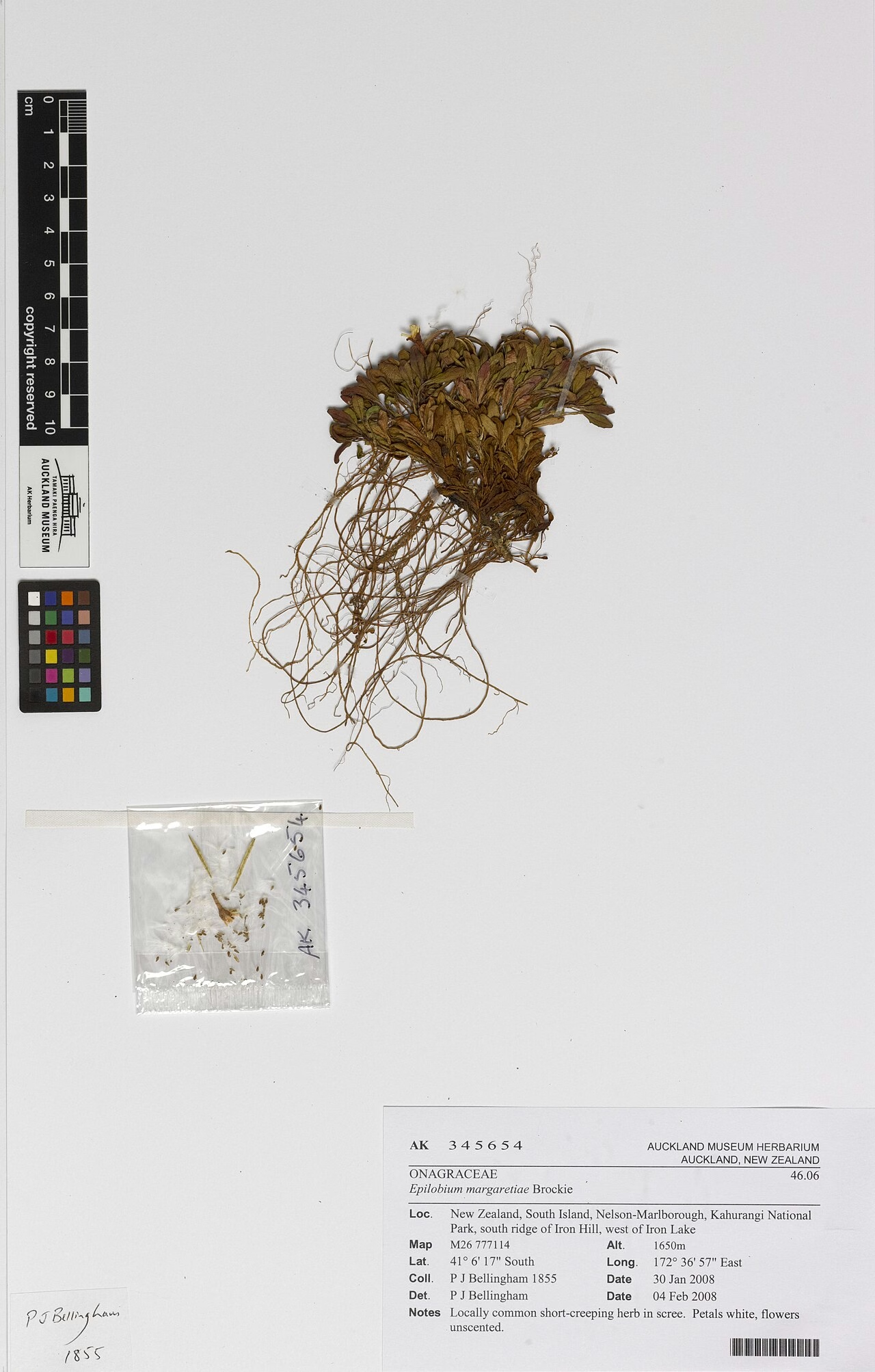
The epithet crassum means thick, referring to the plant’s thick-leaved character. Epilobium antipodum is listed as a synonym by both NZPCN and the New Zealand Organisms Register.
Distinguishing willowherbs
NZPCN lists Epilobium brevipes and E. petraeum among similar species. For E. crassum, examine the combination of creeping hairless stems, crowded leathery leaves, winged leaf stalks and its moist scree habitat.
Other New Zealand willowherbs
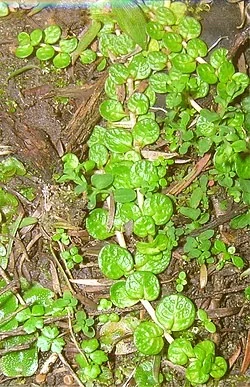
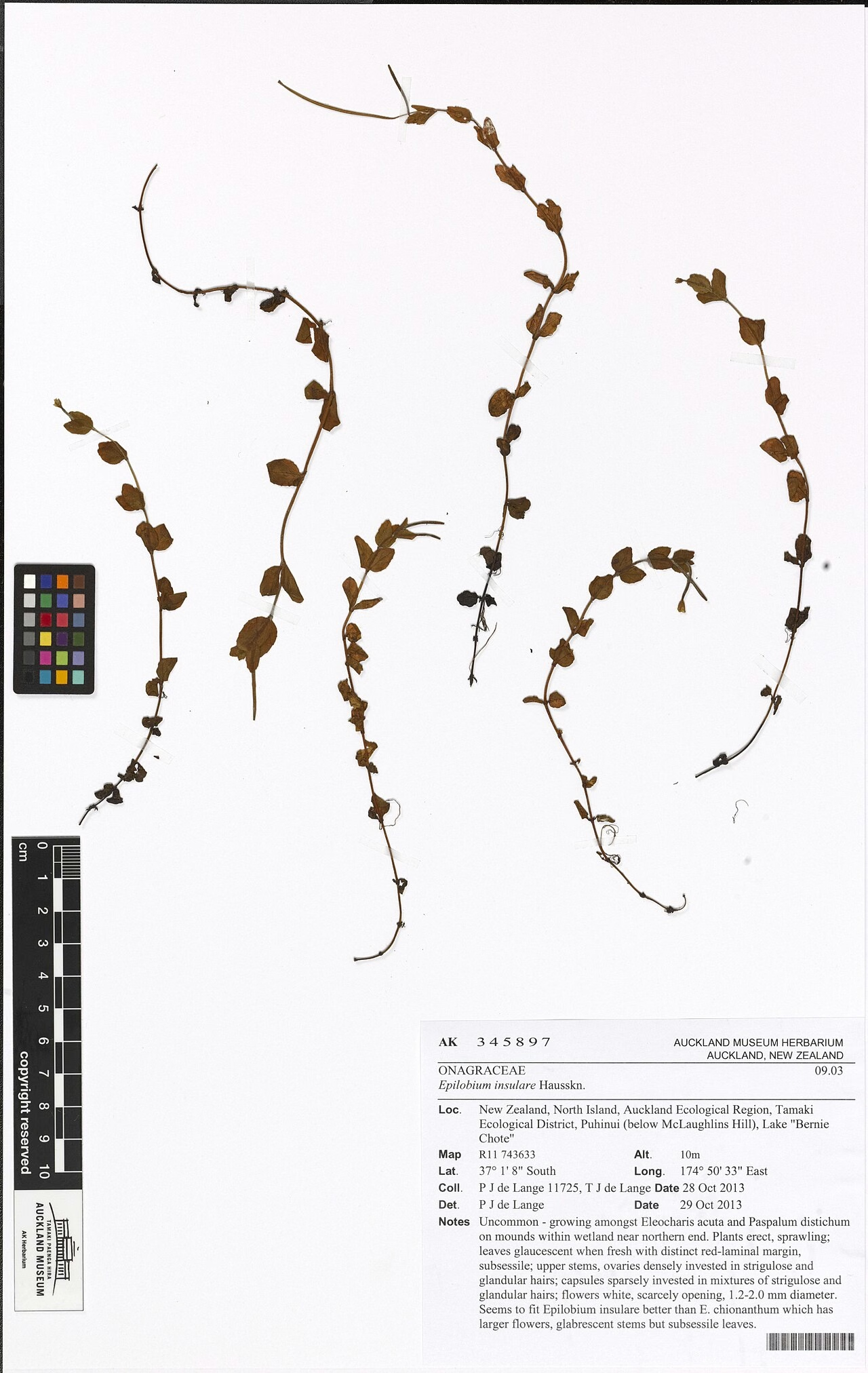
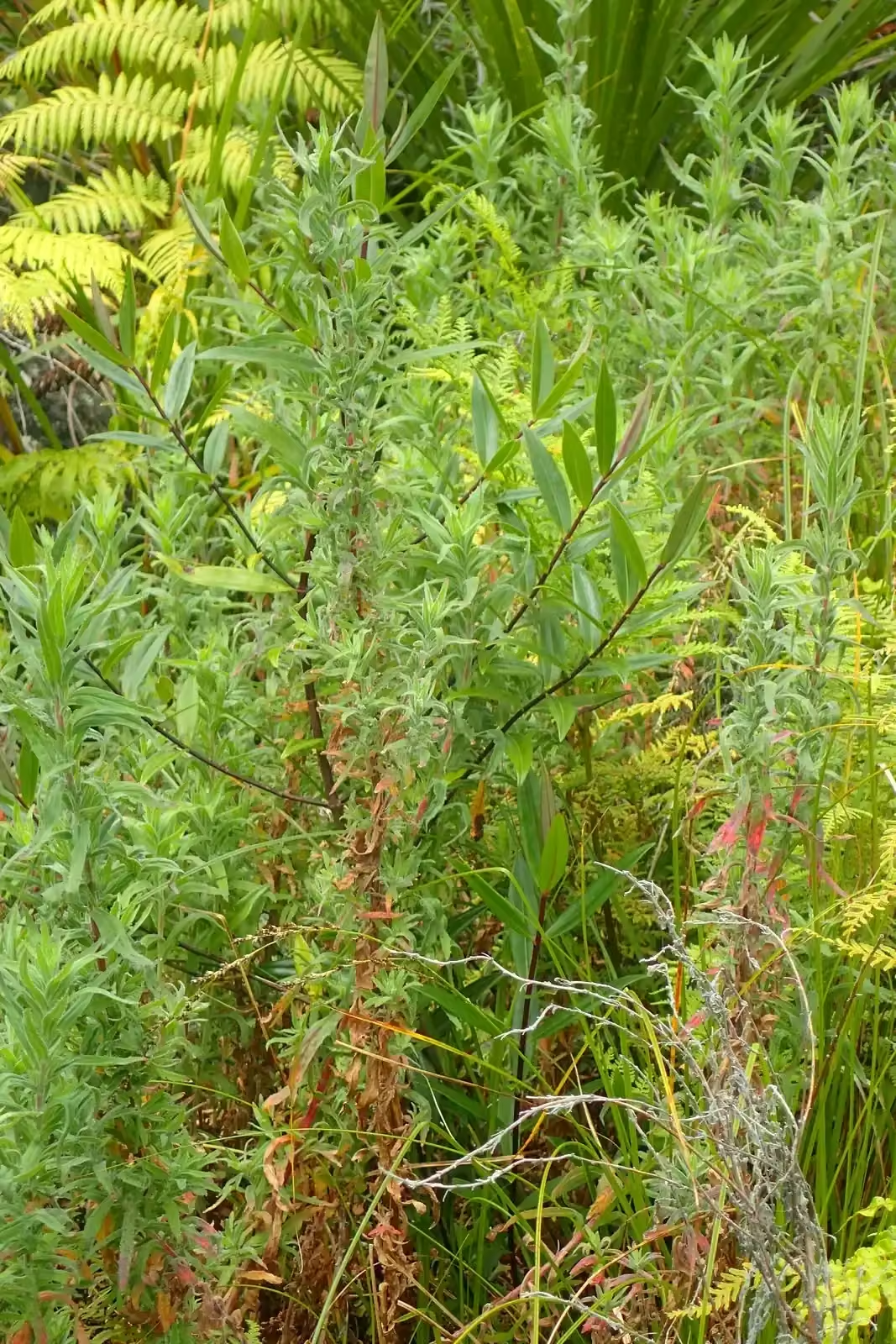
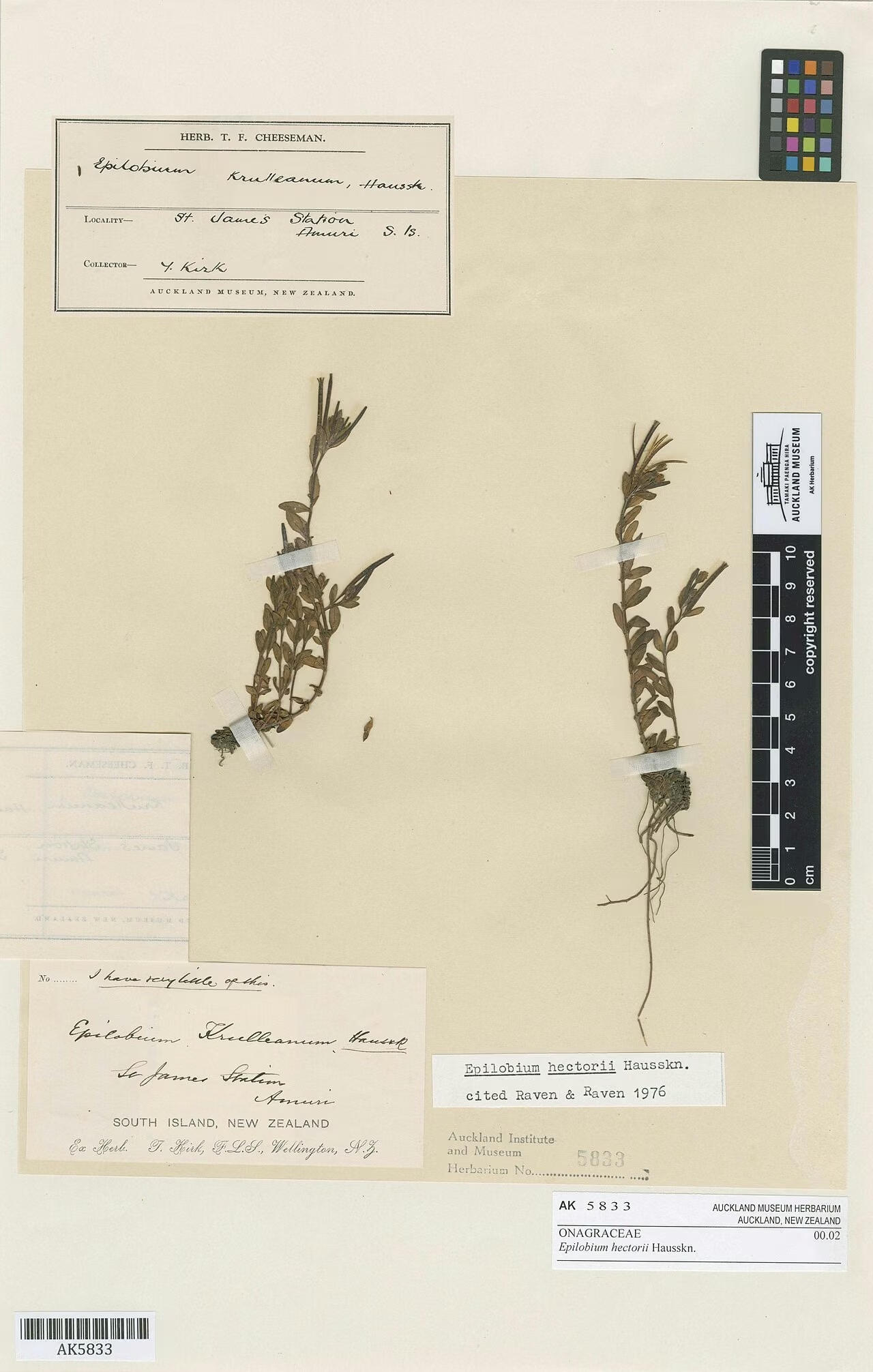
Explore other Epilobium species from New Zealand forests, wetlands and mountain habitats.
Conservation
Epilobium crassum was assessed as Not Threatened nationally in 2023, with decline qualifiers. NZPCN lists it as Regionally Naturally Uncommon in Otago in 2025, illustrating that local and national assessments can differ.
Frequently asked questions
Does it occupy any kind of scree?
The recorded preference is more specific: fine-grained, relatively stable, moist scree above the bushline.
Why can the flowers appear pink?
The white petals have pink veins and are described as becoming pink after pollination.
Is Epilobium antipodum the same plant?
It is an earlier name associated with Epilobium crassum in the cited taxonomic records.
Sources
Habitat, flowering and conservation: NZPCN. Botanical measurements and flower description: Manaaki Whenua Biota of New Zealand. Synonymy: New Zealand Organisms Register.
Last updated: