Dark Spider Orchid
Corybas obscurus
Last updated:
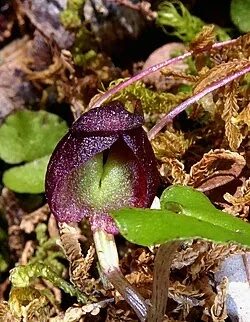
The dark spider orchid (Corybas obscurus) is a small terrestrial perennial orchid growing 14-30 mm tall in full bloom. It bears a single stalked leaf, heart-shaped to kidney-shaped and about 10-25 mm wide, lying flat near the ground. Its defining feature is the broad, rough, warty dorsal sepal, which ranges from dark crimson to an almost soot-like black, sitting above a similarly dark labellum with a pale green centre and a toothed, flared mouth. A specialist of montane to sub-alpine forest, it favours the dampest niches in mature southern beech forest near seepages and mossy banks, with strongholds in the Nelson Lakes and northern Westland regions. Frost hardy and shade demanding, it is one of the country's more cryptic native orchids. Explore more native flowering plants in our native plant guide.
Plant Description
Identification and Physical Characteristics
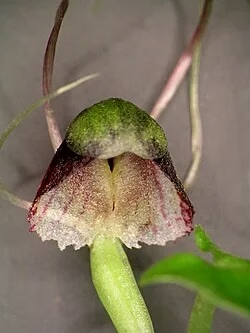
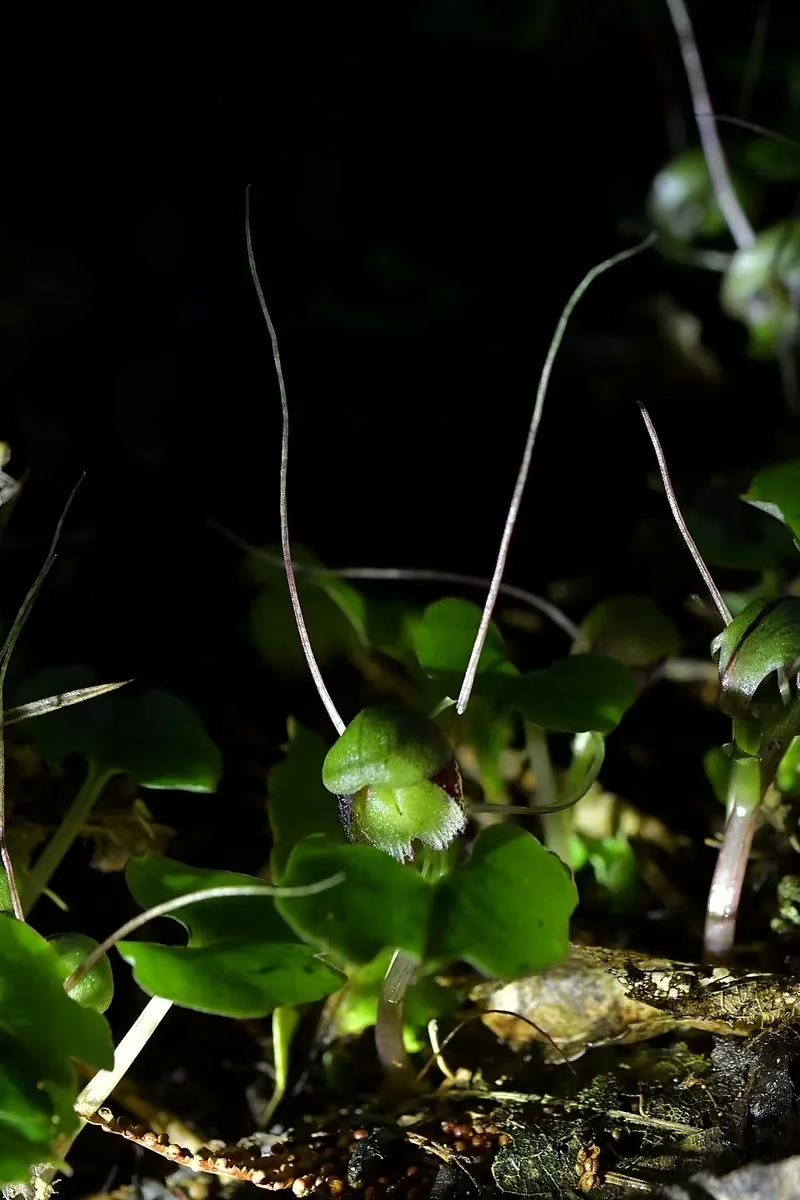
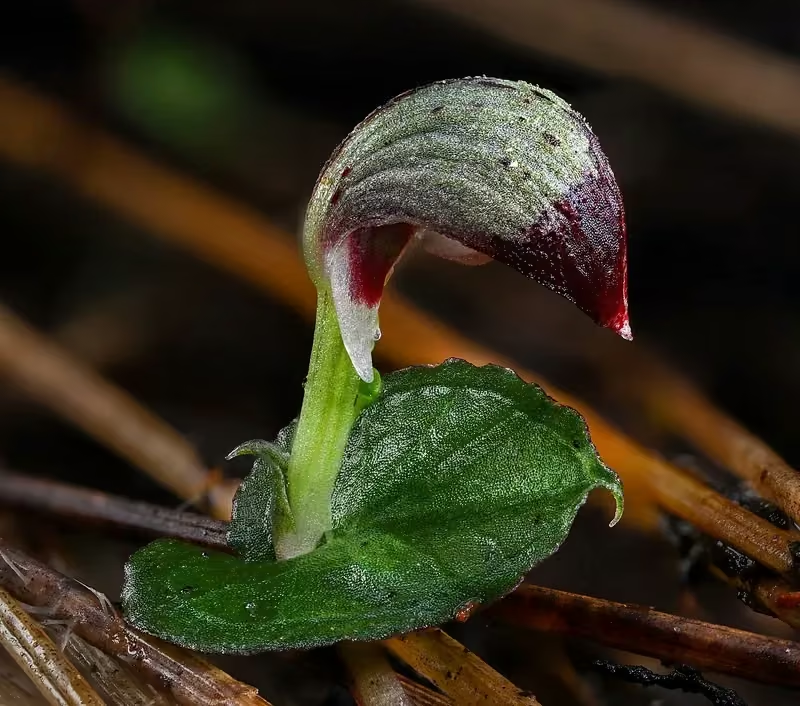
Corybas obscurus is a small, terrestrial perennial orchid that typically grows between 14 and 30 mm tall when in full bloom. It produces a single, petiolate leaf that is heart-shaped (cordiform) to kidney-shaped (reniform), measuring approximately 10-25 mm in width. The leaf lies flat or slightly angled near the ground. The solitary flower is held on a short stem. Its most defining characteristic is the dorsal sepal, which is broad, rough, and warty, ranging in colour from dark crimson to an almost soot-like black. The labellum, or lip, is similarly dark, often with a pale green center, and features a flared mouth with a highly toothed (fimbriate) edge. The lateral sepals and petals are crimson and thread-like, with the petals being significantly longer than the sepals.
Quick Facts
| Scientific Name | Corybas obscurus |
|---|---|
| Height | 1.4-3 cm (Small Herb) |
| Spread | 1-2.5 cm |
| Water Needs | Moderate to High (Moist Seepages) |
| Light | Deep Shade |
| Frost Tolerance | High (Subalpine sites) |
| Salt Tolerance | Low |
| Growth Rate | Seasonal (Late spring flowering) |
| Lifespan | Perennial (Tuberous) |
Climate Best Suited to
The Dark Spider Orchid is adapted to the cool, moist, and often mountainous climates of New Zealand. It is found on both the North and South Islands, but its primary strongholds are in the Nelson Lakes and northern Westland regions. It thrives in areas with consistent moisture and high humidity, often occurring near seepages or small forest ponds where the air remains cool and damp even in the summer.
Regional Suitability
| City | Climate Suitability |
|---|---|
| Auckland | Suitable (In cooler ranges) |
| Wellington | Highly Suitable |
| Christchurch | Suitable (Requires shade) |
| Nelson | Highly Suitable (Local native) |
| Dunedin | Highly Suitable |
| Invercargill | Highly Suitable |
Plant Habitat
Natural Occurrence and Ecology
Corybas obscurus is a specialist of the montane to sub-alpine forest floor. It is most commonly found in mature southern beech ( Fuscospora and Lophozonia ) forests. Within these forests, it seeks out the dampest niches, often growing in deep leaf litter near forest seepages, small ephemeral ponds, or mossy banks. It is also found in Kunzea (Kānuka) and Leptospermum (Mānuka) shrublands where the soil is moist and the shade is consistent. Its habitat is characterized by a very stable microclimate where the leaf litter remains perpetually damp, supporting the fungal networks the orchid requires.
Growing Requirements
Soil Requirements
Requires a loose, highly organic medium that stays moist but does not become stagnant.
- Beech leaf mold
- Fine bark / Perlite mix
- Acidic forest litter
Light Requirements
Strictly deep shade. It is highly sensitive to light-induced heat and will desiccate if exposed to direct sun.
- Deep shade
- Zero direct sun
- Cool south aspect
Water Requirements
High moisture needs during the spring growing season. It must have a summer rest period.
- Constant spring moisture
- High humidity
- Dormant summer rest
Planting and Establishing
Establishment Guidance
Establishing the Dark Spider Orchid in a home garden is extremely challenging and is not recommended for beginners. It is a specialist orchid that should never be removed from its natural habitat. For those working with ethically sourced tubers, the best way to establish them is by creating a dedicated moss trough or a shaded forest floor patch using composted beech leaves. Plant the tiny tubers about 1 cm deep in late winter. Mulch the surface with a thin layer of fine leaf litter to maintain the necessary high humidity at the soil surface. Disturbance must be kept to zero to protect the mycorrhizal fungi the plant depends on.
Ecological Role
Biodiversity and Ecosystem Impact
Corybas obscurus is an integral part of the micro-biodiversity of the New Zealand forest floor. Like many of our native orchids, it has a complex symbiotic relationship with soil fungi, which is vital for its nutrient cycle. The dark, often warty flowers are specifically designed to attract small forest gnats, which serve as its primary pollinators. By supporting these insect populations, the orchid contributes to the health of the wider forest ecosystem. Its presence is often a hallmark of an ancient, undisturbed forest floor where the soil and leaf litter cycles remain intact.
Uses & Significance
Garden Uses
Its use is restricted to specialized botanical collections and conservation education. It is highly valued by orchid enthusiasts for its unique, almost black flowers.
- Specialist collections
- Conservation education
- Botanical photography
Ecological Value
Supports specialized pollinator communities and represents the incredible diversity of New Zealand's terrestrial orchid flora.
- Fungal biodiversity
- Pollinator support
- Indicator of forest health
Landscaping Uses
Due to its size and sensitivity, it has no use in general landscaping. It is exclusively for high-level ecological restoration or specialized botanical gardens that can mimic the conditions of a sub-alpine forest floor.
Seasonal Care Calendar
Spring
The active period. Leaf emerges and flower opens in October-November. Keep humidity high and the soil moist.
- Monitor moisture
- Protect from snails
Summer
Plant enters dormancy. The leaf withers. Stop all additional watering to prevent the tubers from rotting.
- Stop watering
- Keep shaded and cool
Autumn
Tubers remain dormant. No action required other than ensuring the area remains shaded and undisturbed.
- Minimal intervention
- Maintain mulch layer
Winter
Tubers begin to activate. Ensure the soil medium is slightly moist as the first sign of growth may appear.
- Check moisture
- Avoid any digging
When to Prune and How Much
Pruning is not applicable to Corybas obscurus . The plant naturally withers and dies back to the underground tuber after its short growing season.
- No pruning needed
- Self-maintaining cycle
Never attempt to pull off the dying leaf, as it is still providing nutrients to the tuber for next year's growth cycle.
How to Grow Dark Spider Orchid
Cultivating the Dark Spider Orchid ( Corybas obscurus ) is an advanced horticultural challenge that requires a deep understanding of terrestrial orchid ecology. These plants are not typical garden subjects; they are part of a delicate symbiotic relationship with mycorrhizal fungi in the soil. Without these specific fungi, the orchid cannot survive, as it relies on them for essential nutrients. Therefore, "growing" this orchid is more about managing a soil-based ecosystem than just a single plant. The most critical requirements are maintaining high humidity, deep shade, and a soil medium that replicates the organic-rich, perpetually moist leaf litter of a beech forest floor.
From Tubers
Tuber propagation is the most common method used by specialist orchid growers. Tubers must always be sourced from ethical, registered nurseries.
Tubers are tiny and brittle, so they must be handled with extreme care.
- Repotting should only be done during the peak of summer dormancy when the above-ground parts have completely disappeared.
- Use a medium composed of shredded tree fern fiber, composted beech leaves, and a small amount of fine pumice or perlite for aeration.
- The medium should be acidic and airy to prevent the tiny tubers from suffocating.
- Place tubers about 1-2 cm deep and cover with a thin layer of forest litter.
- Keep the pots in a cool, deep-shade environment where the humidity remains high but the air is not stagnant.
- Resume light misting in late winter to stimulate the emerging spring growth.
From Seed
Propagation from seed is a highly technical process usually performed in sterile laboratory environments. The seeds are microscopic and contain no food reserves.
They will only germinate if they encounter the specific mycorrhizal fungus the species requires.
- Collect the seed capsules just as they begin to split in late spring.
- For specialist hobbyists, "symbiotic sowing" involves scattering the seeds onto the soil around existing healthy parent plants.
- In laboratories, seeds are sown onto specialized agar plates that have been pre-inoculated with the correct fungus.
- It can take several years for a seedling to grow into a flowering-sized tuber.
Group Propagation
The best way to "propagate" these orchids is to allow them to form a natural colony. In a healthy, undisturbed environment, a single tuber will often produce offsets, leading to a small cluster of orchids over time. The key to this natural increase is zero disturbance-the more the soil and leaf litter are left alone, the more the colony will expand.
Pests & Diseases
The primary threat to Corybas obscurus is snails and slugs, which can consume the entire plant in one night. Tuber rot is also a major risk if the soil medium becomes waterlogged or anaerobic during the summer dormancy. Maintain good air circulation to prevent foliage rots in the spring.
Cultural Significance
In Māori culture, spider orchids (pekapeka) are often associated with the hidden treasures of the forest. Corybas obscurus , with its dark, nearly black flowers, represents the mysterious and often overlooked diversity of our native flora. It is a symbol of the complex interdependencies that exist on the forest floor and a reminder of the importance of protecting even the smallest members of our ecosystem.
- Symbol of hidden biodiversity
- Indicator of ancient forest health
Bonus Tip
When searching for these in the wild, look for the dark, warty dorsal sepal. It blends in perfectly with decaying beech leaves, so you may need a magnifying glass to truly appreciate its intricate beauty!
Related Plants
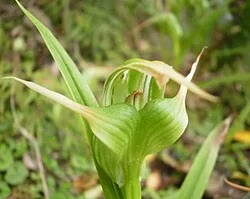
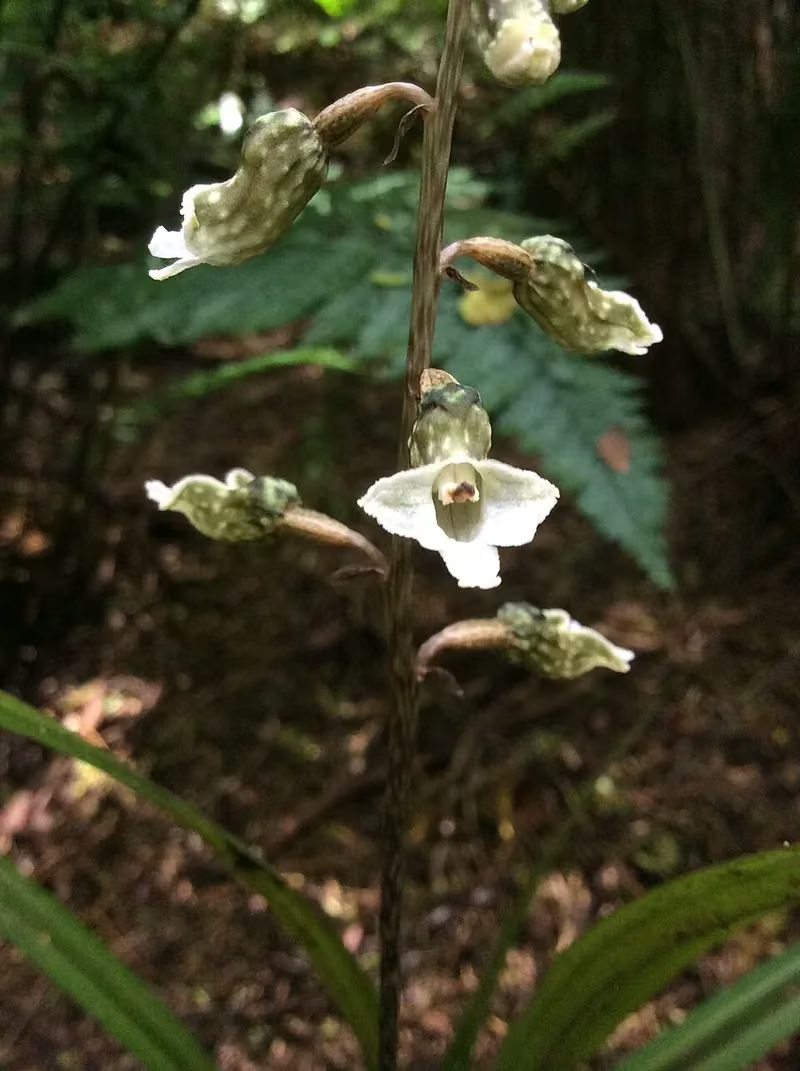
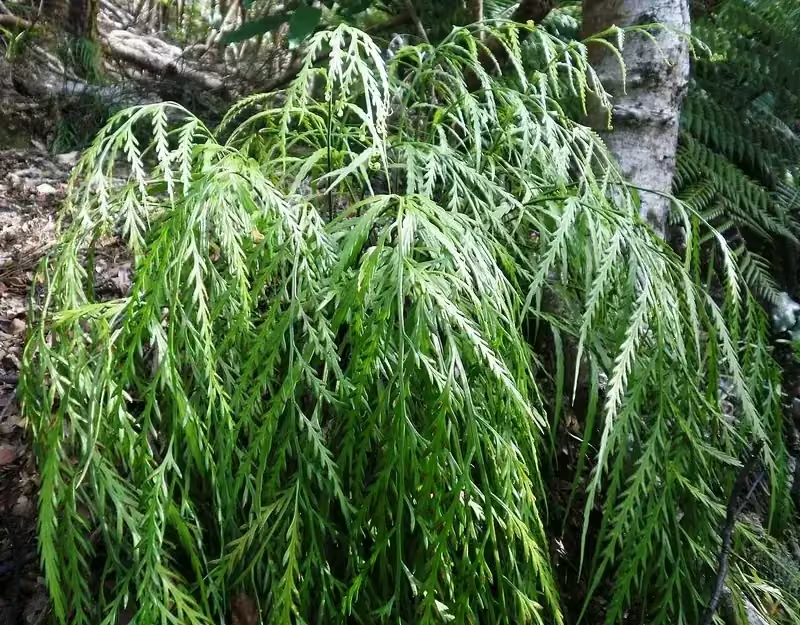
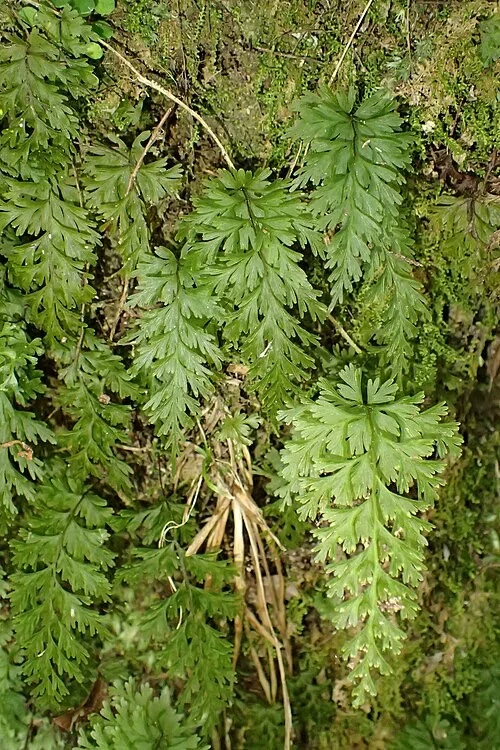
For congeneric comparisons with Dark Spider Orchid (Corybas obscurus), see Veined Helmet Orchid (Corybas diemenicus) and Spider Orchid (Corybas sanctigeorgianus). Veined Helmet Orchid and Spider Orchid.
Plant Conservation
Conservation Status and Threats
Corybas obscurus is currently classified as Not Threatened, but it is a highly specialized species with a localized distribution. Its survival is tied to the preservation of primary native forest ecosystems and the associated soil health. Threats include habitat loss due to land development, disturbance of the forest floor by invasive mammals, and changes in local humidity levels. Protecting intact forest canopies is essential for ensuring that this unique dark orchid continues to thrive.
Frequently Asked Questions
How tall does the dark spider orchid grow?
Corybas obscurus grows about 14-30 mm tall when in full flower.
Where does Corybas obscurus grow naturally?
It grows in montane to sub-alpine beech forest, with strongholds in Nelson Lakes and northern Westland.
Does the dark spider orchid tolerate frost?
Yes, it has high frost tolerance and occurs at subalpine sites in the South Island.
What does the dark spider orchid flower look like?
Its warty dorsal sepal ranges from dark crimson to almost soot-black over a pale-centred toothed lip.
Sources and Further Reading
The botanical, growing, and conservation details for Dark Spider Orchid (Corybas obscurus) on this page draw on authoritative New Zealand plant references and citizen-science observation records. Consult the sources below for full technical records and the latest distribution data.