Spider Orchid
Corybas confusus
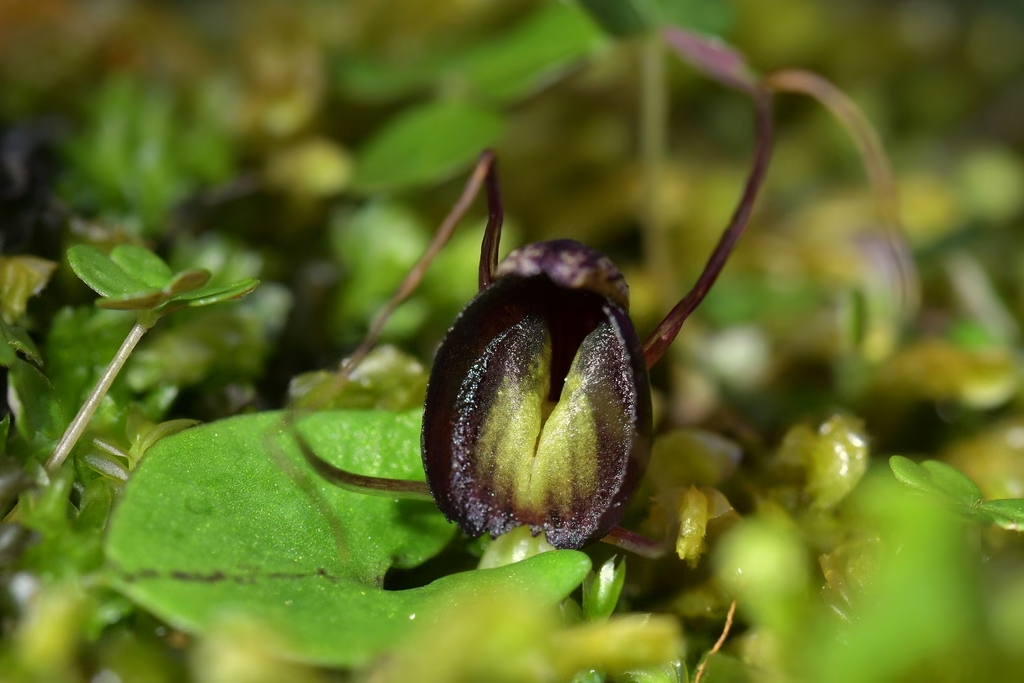
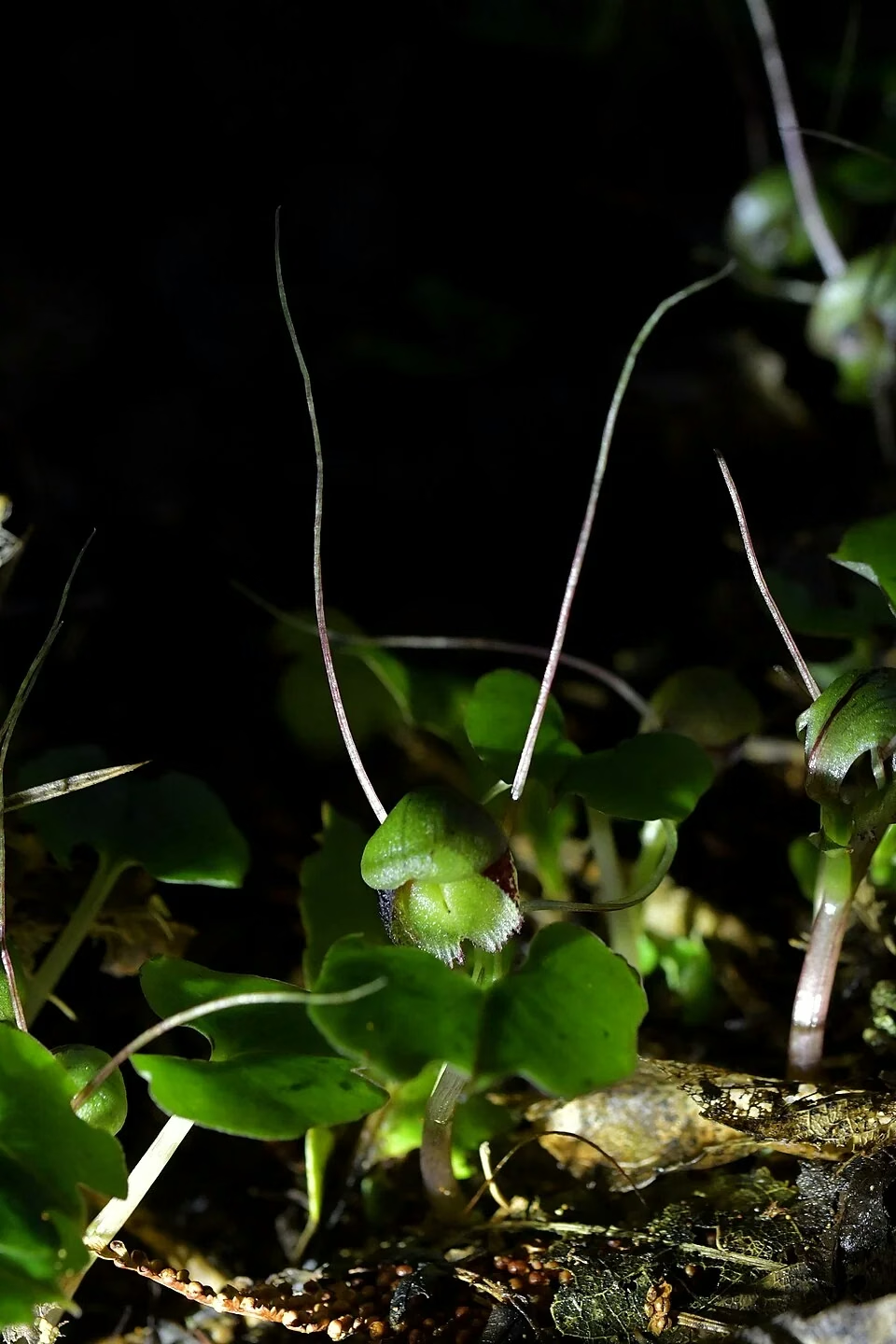
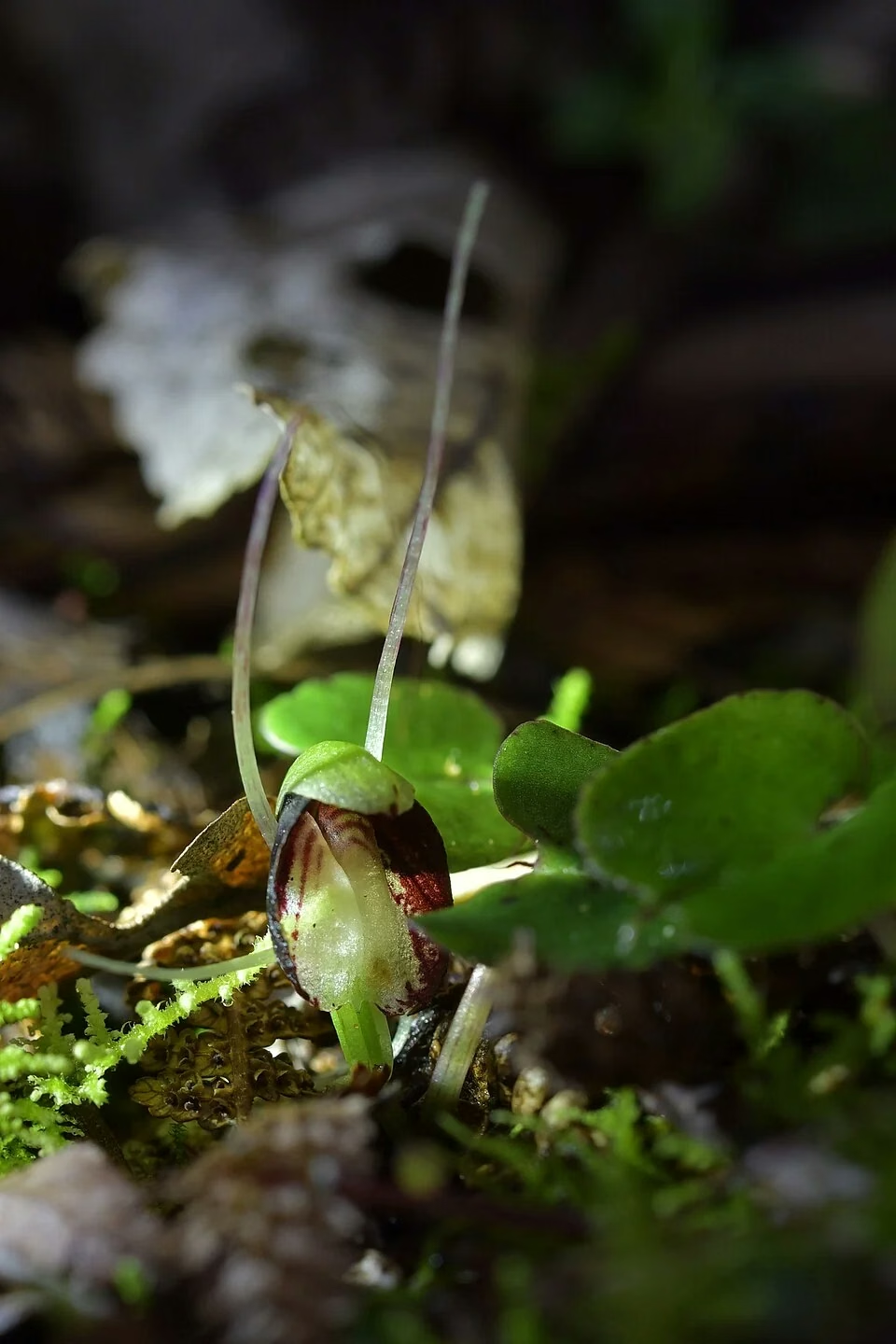
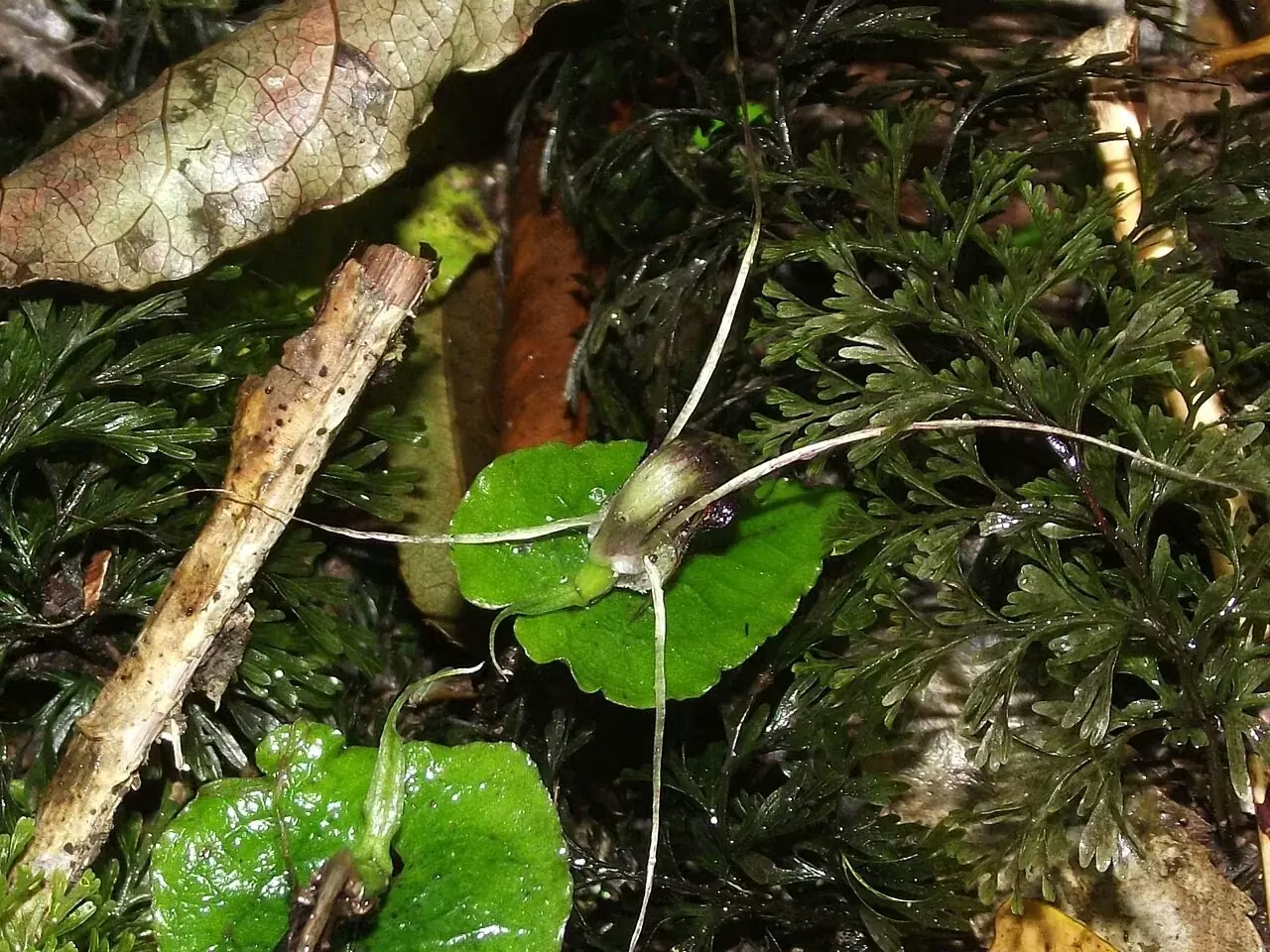
Corybas confusus is a tiny terrestrial spider orchid endemic to New Zealand. It produces a single heart-shaped or broadly oval leaf and a solitary dark maroon flower. Flowering plants stand just 12-30 mm tall.
Identification
Flowering plants stand just 12-30 mm tall. The solitary leaf is heart-shaped to broadly oval, with an obvious small point at the tip. Its blade measures roughly 10-19 mm long and 11-21 mm wide.
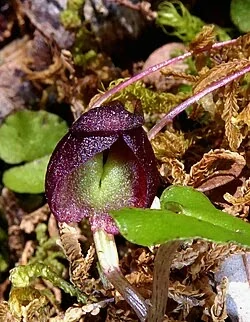
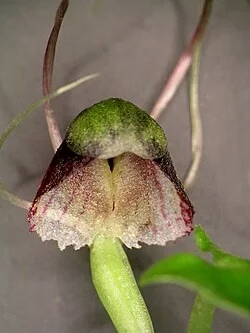
The flower has a dark red to maroon lip with a pale green to yellowish centre. A green dorsal sepal, streaked and blotched maroon toward its tip, arches above it.
Quick facts
| Scientific Name | Corybas confusus |
|---|---|
| Family | Orchidaceae |
| Height in flower | 12-30 mm |
| Leaf | One, heart-shaped to broadly oval |
| Flowering | October to December |
| Fruiting | November to January |
| National status | Not Threatened (2023) |
| Height | 1.2-3 cm at flowering |
| Water Needs | Damp mossy habitat; a garden watering regime has not been established |
| Light | Recorded in beech forest, montane scrub and tussock grassland; no cultivation rating is given |
| Spread | Lateral extent is not quantified in the species profile |
| Frost Tolerance | Minimum tolerated temperature is not documented |
| Salt Tolerance | Salt tolerance is not documented |
| Growth Rate | Annual extension is not quantified in the cited accounts |
| Lifespan | Longevity in years is not documented |
Natural range
This orchid is recorded in the North and South Islands. Its presence on the Chatham Islands remains possible but unconfirmed; the original authors called for fresh flowering material to resolve the identification.
| City | Climate Suitability |
|---|---|
| Auckland | Not assessed |
| Wellington | Not assessed |
| Christchurch | Not assessed |
Habitat and distribution
The original description records plants in leaf litter beneath southern beech, in scrub or tussock, and in damp mossy subalpine openings around 1,000-1,100 metres.
Documented collections include Kahurangi National Park and Arthur’s Pass. The Chatham Islands occurrence is uncertain, so it should not be treated as a confirmed part of the range.
Natural growing conditions
This seasonal terrestrial orchid is found in damp moss and forest leaf litter, as well as subalpine scrub and tussock. NZPCN describes propagation as difficult and advises against removing plants from the wild.
Planting considerations
NZPCN says propagation is difficult and that wild plants should not be removed. Its recorded damp, mossy habitat is useful for finding and understanding the orchid, but does not constitute a tested cultivation method.
Ecology
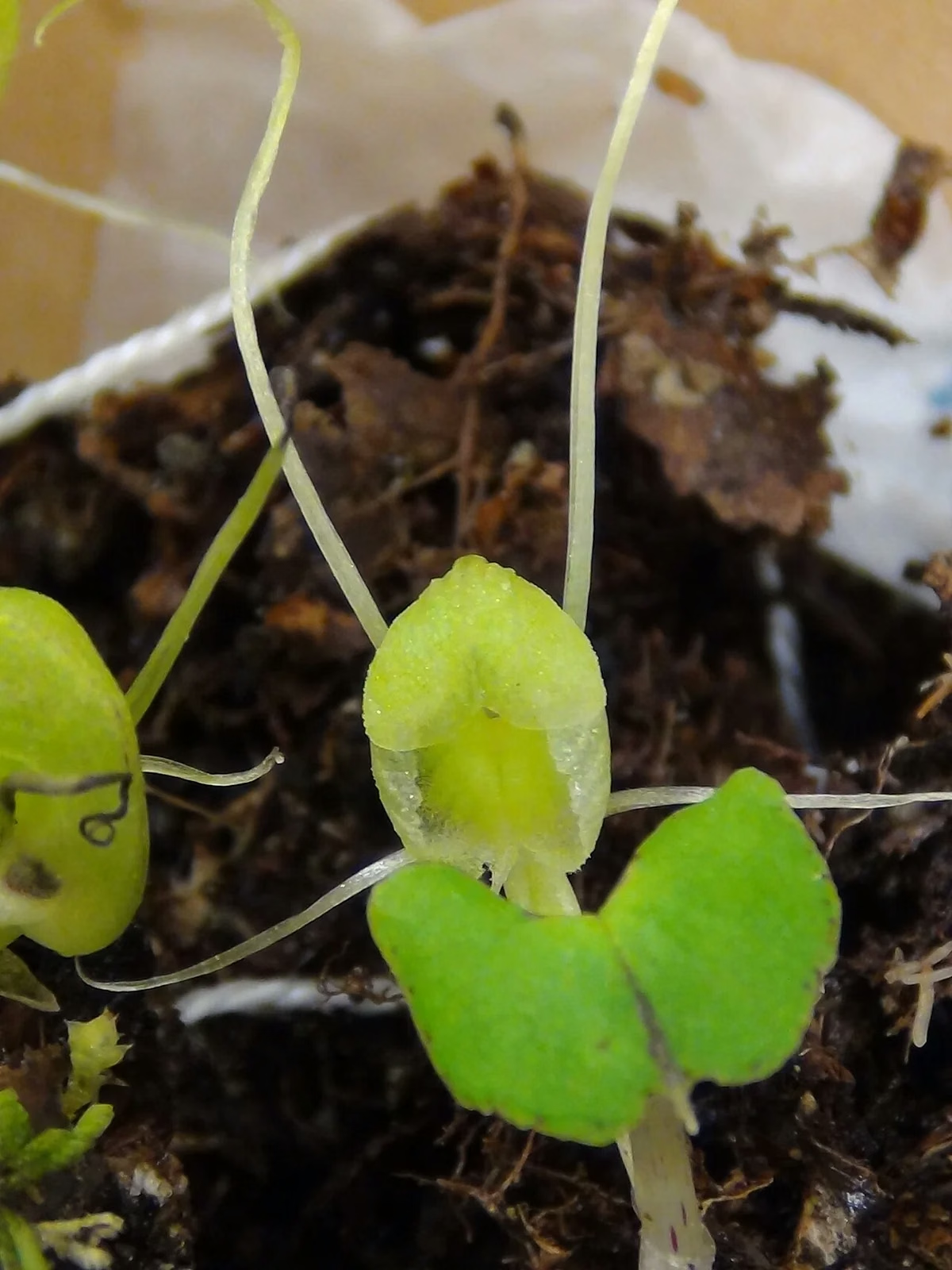
The orchid grows among leaf litter or moss in beech forest, scrub and tussock. Its single flower is borne just above the leaf; the threadlike lateral sepals and petals extend well beyond the small flower body.
Observing the flower
Check the green dorsal sepal, which arches over and extends beyond the maroon lip, and the distinctly pointed leaf tip. The lip has a central groove, a recessed pit and small hairs on its inner surface.
Garden context
This is a very small terrestrial orchid associated with damp mossy ground, not a plant with a documented garden protocol in the cited sources. NZPCN describes propagation as difficult and advises leaving wild specimens in place.
Flowering and fruiting
NZPCN records flowering from October to December and fruiting from November to January. The original species description specifies flowering from October to early December; exact timing may vary among sites and seasons.
Seasonal growth
NZPCN describes Corybas confusus as a seasonal terrestrial orchid. It produces one leaf and one flower when in flower, and the cited sources do not specify a pruning method for this tiny plant.
How to Grow Spider Orchid (Corybas confusus)
Propagation and seed evidence
NZ Plant Conservation Network describes propagation of Corybas confusus as difficult and advises leaving wild plants in place. Its account gives botanical and habitat information rather than a seed-germination recipe. The dimensions of the flower and leaf are useful for confirming an existing cultivated plant, but do not establish a method for raising seedlings or transplanting a wild orchid.
The documented mountain setting
Records place the species in damp mossy ground in beech forest, montane to subalpine scrub and tussock grassland, at approximately 1,000-1,100 m elevation. This is a much more specific setting than an unrestricted recommendation for ordinary garden soil. Moist moss and the surrounding mountain vegetation are the observed conditions; the source does not assign a potting mixture, shade percentage or irrigation interval.
Recognising flowering growth
The plant stands only 1.2-3 cm high at flowering. Its single leaf has a distinct stalk and a heart-shaped to broadly oval blade, roughly 1-2 cm across. A small point projects from the leaf tip. The solitary upright flower has a green hooded sepal marked with red-maroon streaks and blotches near its end. The lateral sepals are thread-like and can extend farther than the small plant's height.
Following Its Seasonal Development
The flowering window is October to December, with fruit recorded in November to January. These dates help separate active flowering and fruiting observations in an identified collection. They describe the plant's seasonal development and do not demonstrate that its seeds will germinate during the same months.
Plant health
The cited orchid profile does not list species-specific pest or disease treatments. Maroon markings on the green dorsal sepal and small hairs inside the lip are natural flower features used in describing the species.
Naming and discovery
Carlos Lehnebach and colleagues described this orchid in 2016. The name confusus refers to its similarity to several other species: its flower resembles C. obscurus, while its leaf resembles those of C. macranthus and C. orbiculatus.
Distinguishing similar orchids
Both C. confusus and C. obscurus have a dark maroon lip. In C. confusus, the green dorsal sepal has a blunt or slightly notched tip and extends beyond the lip; its leaf also has a distinct point.
Related New Zealand spider orchids
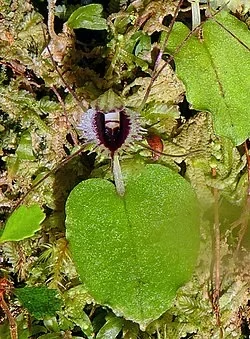
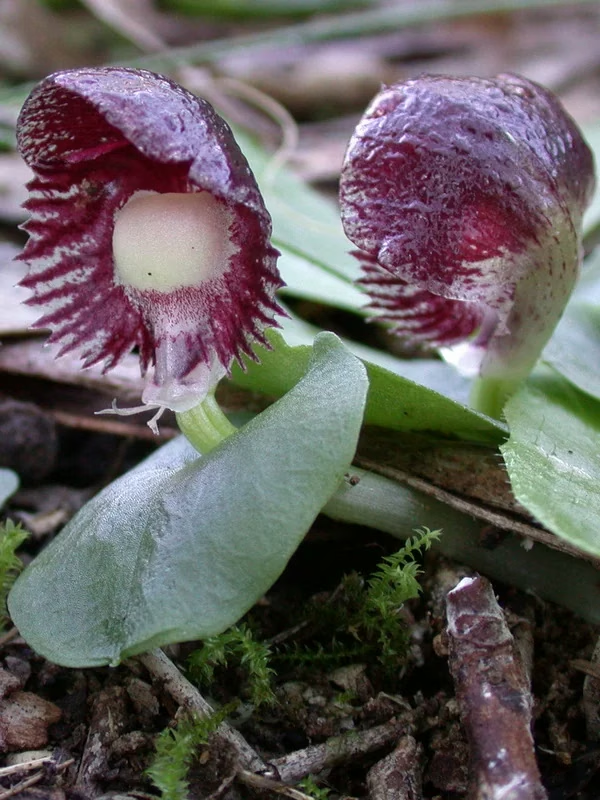
Explore other Corybas species and their distinctive flowers and leaves.
Conservation
Corybas confusus is endemic to New Zealand and was assessed as Not Threatened in 2023. The type specimen came from the Potholes track in Kahurangi National Park; NZPCN advises that plants should remain in the wild.
Frequently asked questions
How tall is the plant?
Flowering plants are typically only 12-30 mm tall, with a single leaf and a solitary flower.
Is it confirmed on the Chatham Islands?
No. The original authors considered it possible but said fresh fertile material was needed to confirm the identification.
How small is a flowering plant?
A flowering Corybas confusus is about 1.2-3 cm tall. Its long, thread-like lateral sepals can exceed that height.
Sources
Identification, habitat, phenology and conservation: NZPCN. Original species description and distribution: Lehnebach and colleagues, 2016. Name and type locality: Flora of New Zealand.
Last updated: