Silver-Back Spider Orchid
Corybas macranthus
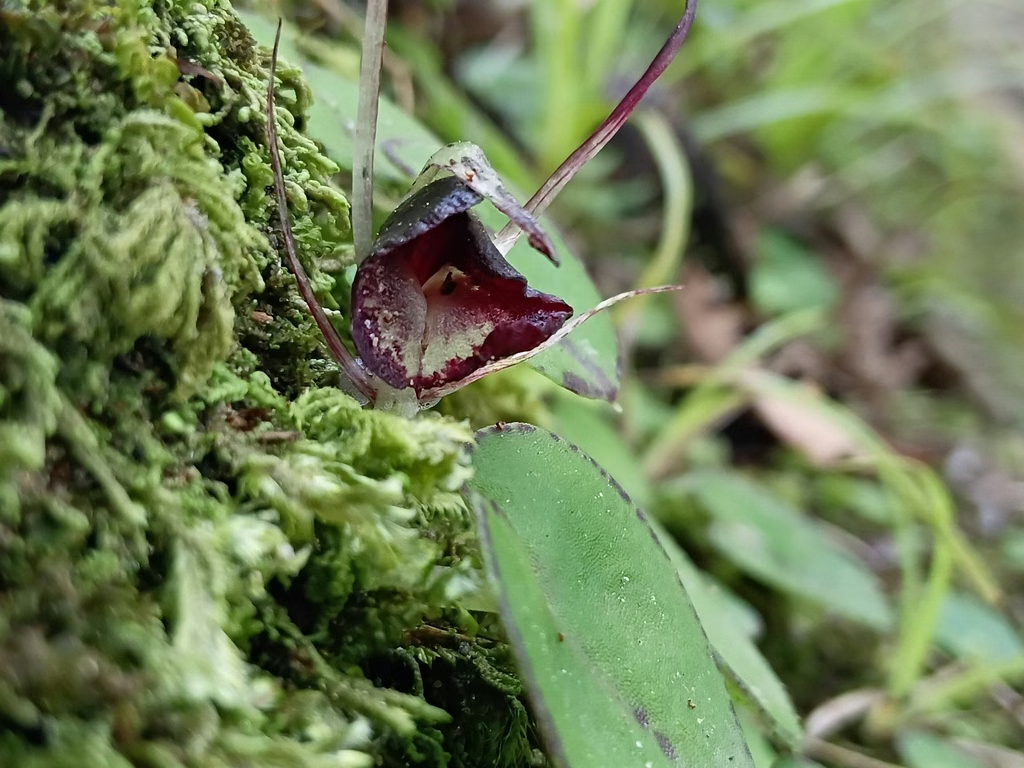
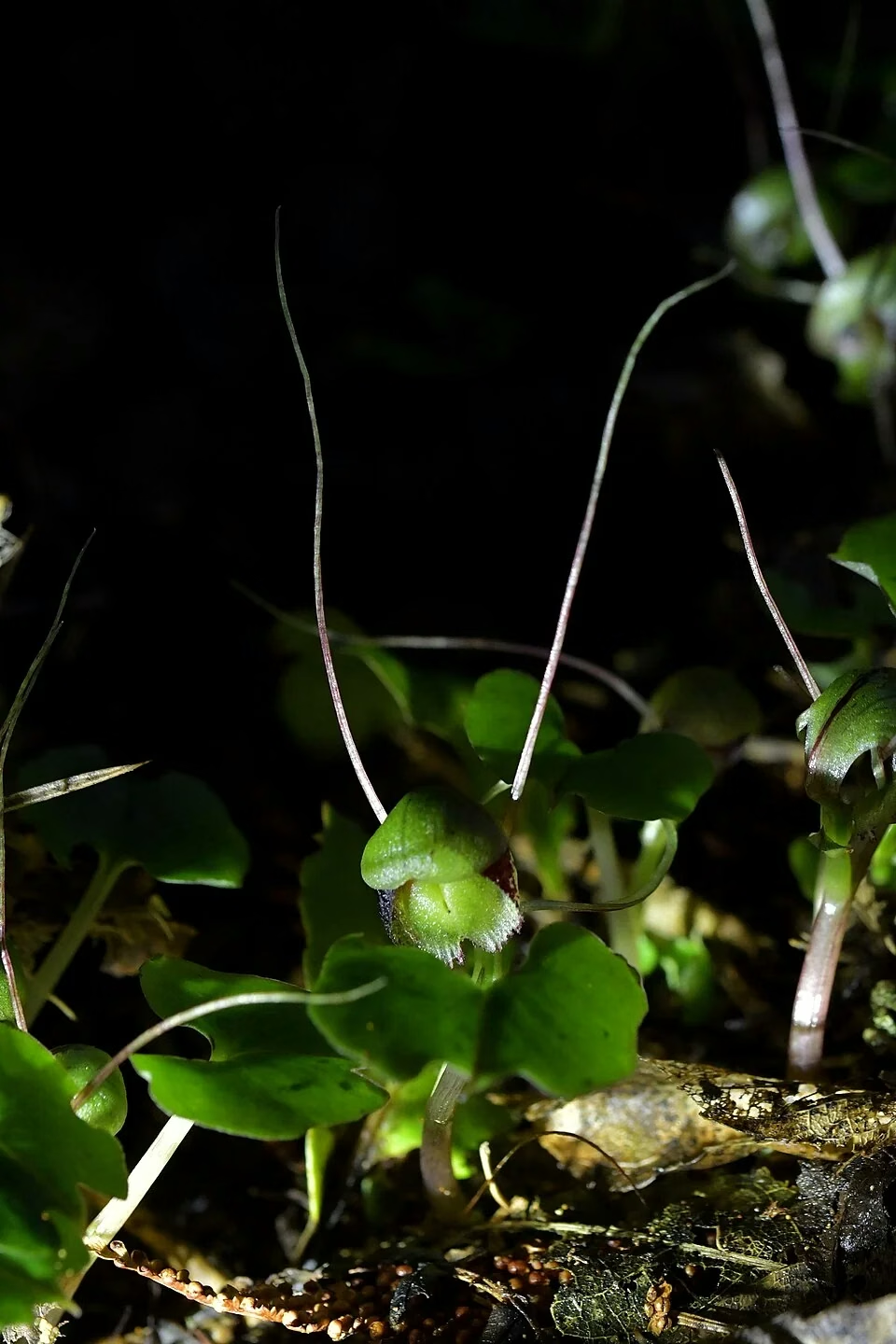
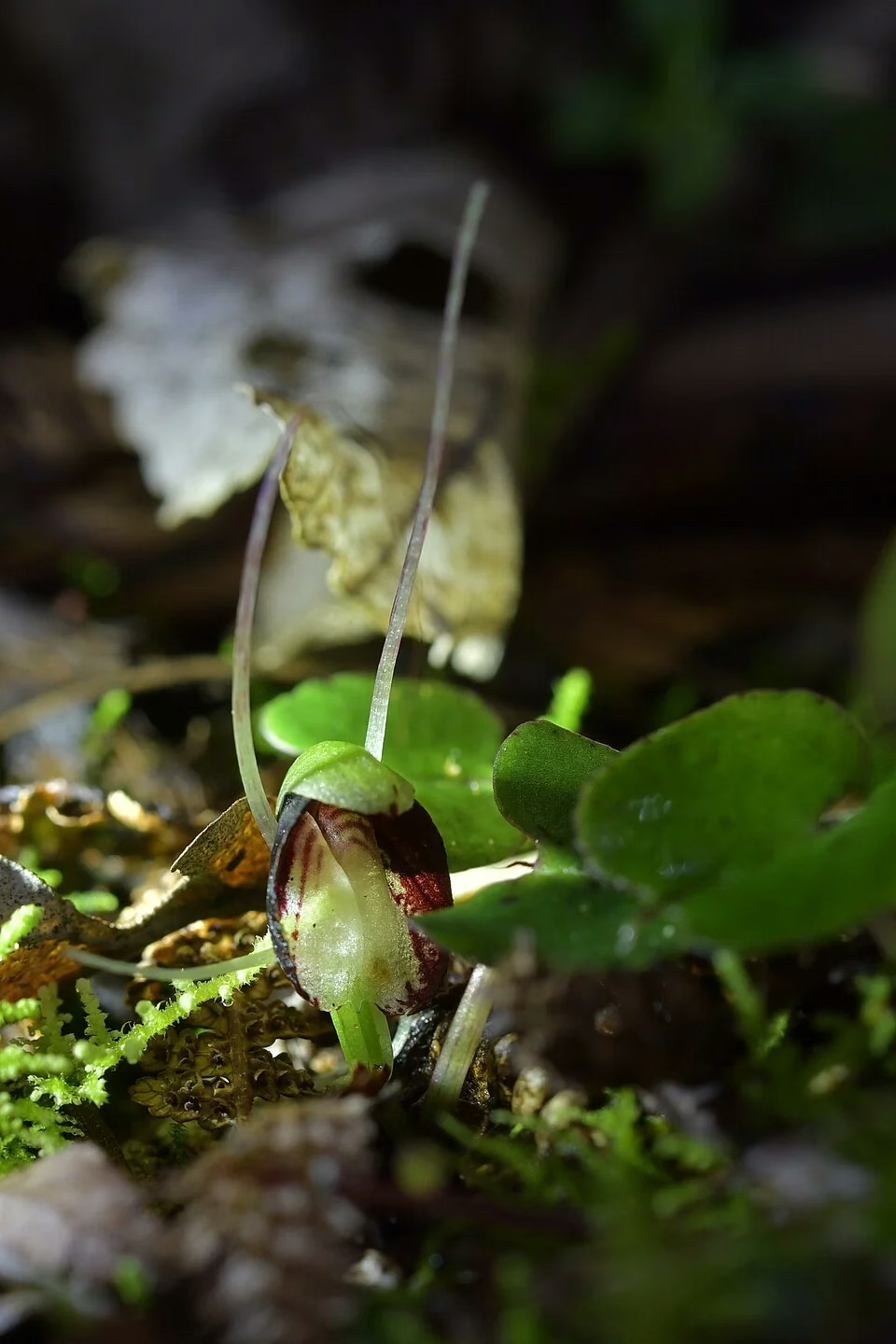
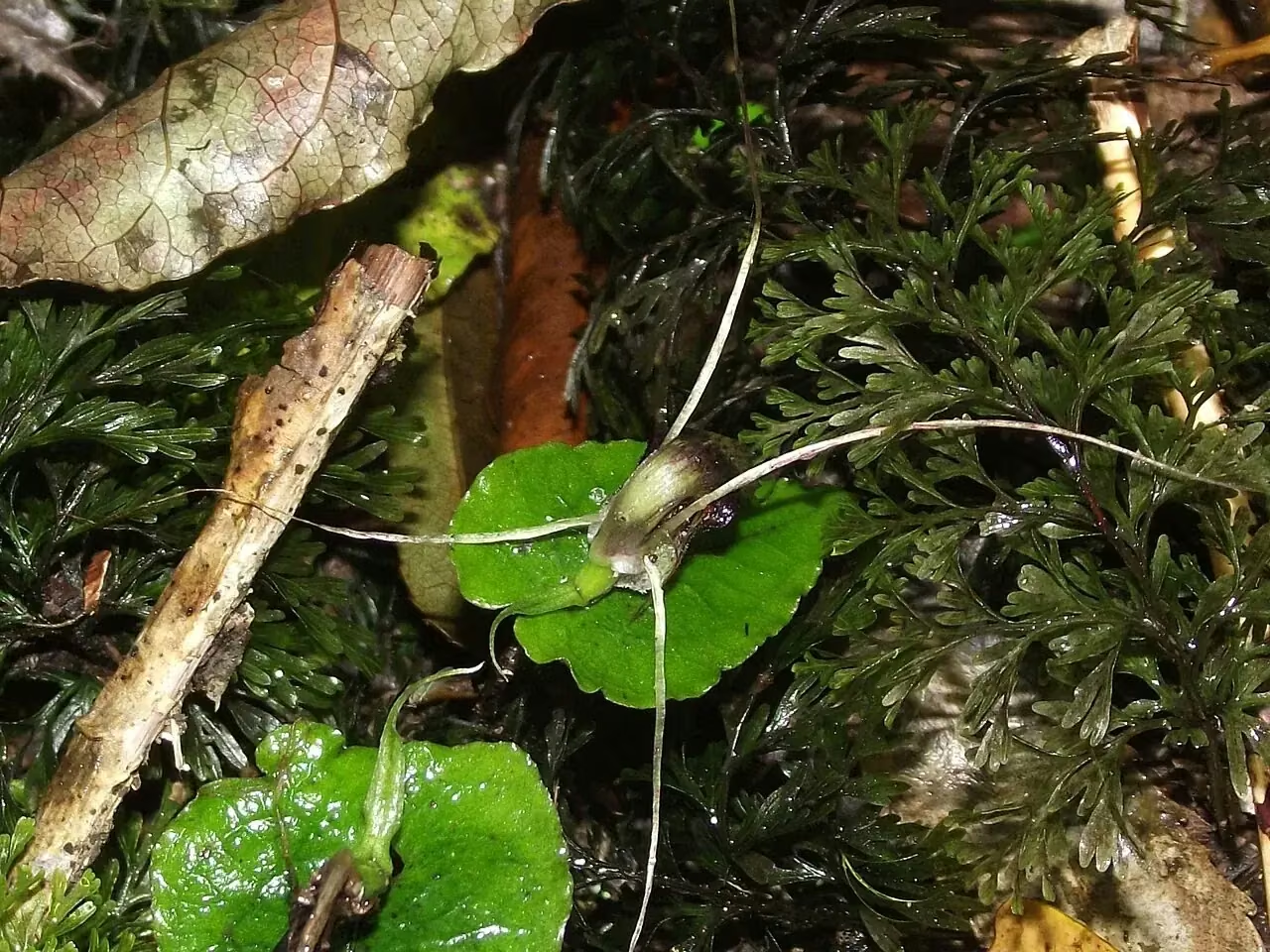
Corybas macranthus, the silver-back spider orchid, is an endemic terrestrial orchid with a fleshy, raised leaf and a dark, trumpet-shaped flower lip. Flowering plants stand 40-100 mm tall and bear one firm, fleshy leaf on a distinct stalk.
Identification
Flowering plants stand 40-100 mm tall and bear one firm, fleshy leaf on a distinct stalk. The rounded to oval leaf is green, often purple-spotted above, and silvery green to white beneath.
The flower has a broadly flaring, trumpet-shaped lip, wine red to maroon-black. A narrow dorsal sepal arches over the lip tube, while long threadlike lateral sepals extend beyond it.
Quick facts
| Scientific Name | Corybas macranthus |
|---|---|
| Former name | Nematoceras macranthum |
| Family | Orchidaceae |
| Height in flower | 40-100 mm |
| Flowering | September to January |
| Fruiting | October to February |
| National status | Not Threatened (2023) |
| Height | 4-10 cm at flowering |
| Water Needs | The cultivation guidance recommends moist pots throughout active growth |
| Light | The species profile gives general Corybas guidance of 50-70% shade in a cool shade-house |
| Spread | Forms dense colonies; total colony width is not specified |
| Frost Tolerance | Minimum tolerated temperature is not documented |
| Salt Tolerance | Salt tolerance is not documented |
| Growth Rate | Annual extension is not quantified in the cited accounts |
| Lifespan | Perennial; green from spring into summer |
Natural range
NZPCN records this endemic orchid from the North and South Islands, Rakiura, the Chatham Islands, Auckland Islands and Campbell Island/Motu Ihupuku. Its habitats range from lowland to subalpine elevations, up to about 1,200 metres.
| City | Climate Suitability |
|---|---|
| Auckland | Not assessed |
| Wellington | Not assessed |
| Christchurch | Not assessed |
Habitat and distribution
The orchid grows in damp seepages, shaded forest and under rock overhangs, where sites may be very dry. NZPCN records it on base-rich mudstone, siltstone, limestone, dolomite and marble, and on basalt-derived soils.
Its reported range includes both main islands and several offshore island groups, including Rakiura and the subantarctic Auckland and Campbell islands.
Natural growing conditions
This orchid is often found in damp seepages or shaded forest, but may also occupy very dry sites under rock overhangs. NZPCN describes propagation as difficult and advises against removing plants from the wild.
Planting considerations
NZPCN describes cultivation in a shaded orchid mix but cautions that propagation is difficult and wild plants should not be removed. Its range of natural sites includes both damp seepages and dry rock overhangs.
Ecology
This tuberous perennial can form dense colonies and is green from spring into summer. The national wetland plant list classifies it as facultative wetland, meaning it usually occurs in wetlands but can also occur elsewhere.
Observing the flower
Look for a narrow dorsal sepal arching over the flower tube and a widely flaring, dark lip. The leaf is often held above the flower and has a noticeably silvery underside.
Garden context
NZPCN describes a shaded orchid mix containing sand, soil or leaf mould, weathered wood and bark, with pots moist during growth. It also stresses that propagation is difficult and plants should not be collected from the wild.
Flowering and fruiting
NZPCN records flowering from September to January and fruiting from October to February. The plant is green from spring into summer, with the single leaf carried on a fleshy stalk.
Growth form
This orchid has one stalked leaf and grows from a tuberous perennial base, sometimes forming dense colonies. The cited species profile does not prescribe a pruning method for the plant.
How to Grow Silver-Back Spider Orchid (Corybas macranthus)
Cultivation and seed limitations
NZ Plant Conservation Network describes propagation of Corybas macranthus as difficult and advises leaving wild plants in place. Its profile supplies cultivation guidance, including a potting mixture, but does not provide a seed-germination protocol for this species. An orchid seed-sowing method should therefore not be inferred from the presence of a recipe for growing established plants.
The published potting mixture
The recipe is two parts medium-coarse sand, preferably clean river sand; two parts soil, humus or leaf mould; one part weathered sawdust or decaying wood; and one part granulated bark. The profile adds that many Corybas respond to additional leaf mould. These are general Corybas cultivation recommendations included in the species account, rather than a reported experimental comparison of mixtures for Corybas macranthus.
Shade and moisture during growth
The same guidance places pots in the cooler, darker part of a shade-house with approximately 50-70% shade and keeps them moist throughout the growing period. The species is a spring-to-summer-green perennial. Those instructions refer to the active season; the cited account does not establish a separate dormant-season watering schedule.
Recognising active plants
Flowering plants are about 4-10 cm tall and carry one fleshy leaf on a distinct stalk, which can reach 6 cm long. The blade may be up to 4 cm across, green or purple-flecked above and pale beneath. Flowers are recorded from September to January and fruit from October to February. Dense colonies are part of its natural growth form, but that observation does not demonstrate that wild colonies can be transplanted successfully.
Plant health
The cited NZPCN profile does not list species-specific pest or disease treatments. Purple flecks on the leaf and the dark maroon or wine-red flower lip are normal features of this orchid.
Naming and classification
The orchid was previously known as Nematoceras macranthum and Corysanthes macrantha. A former variety named Corybas macranthus var. longipetalus is now treated separately as Corybas hatchii.
Distinguishing related orchids
Corybas papillosus is similar but has a two-coloured lip, dark red above and pale pink to whitish below. C. macranthus typically has a dark lip and a stout leaf held above the flower.
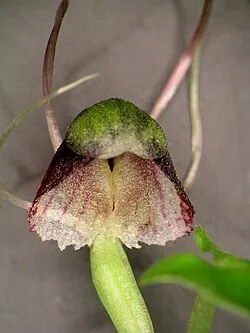
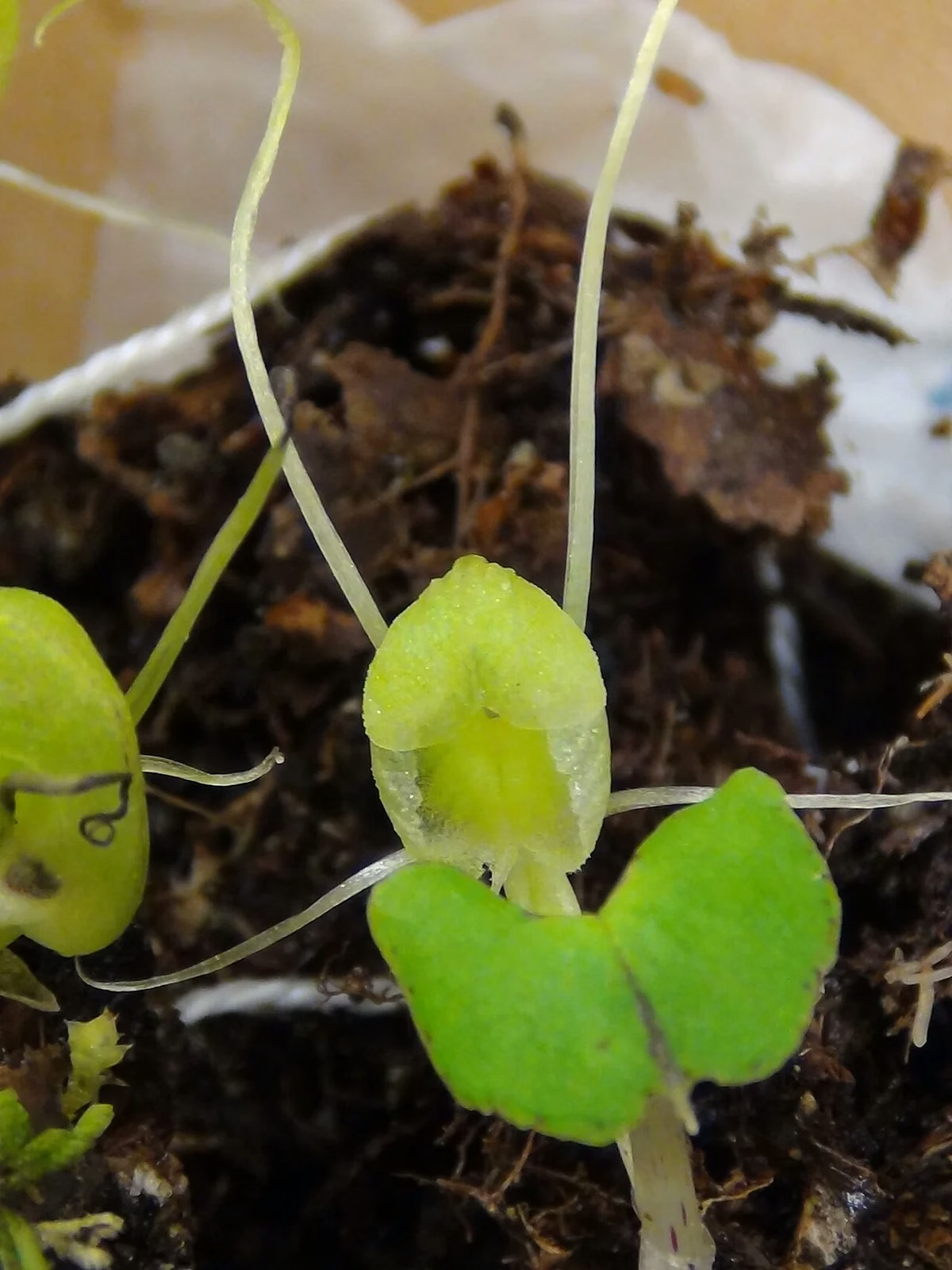
Related New Zealand spider orchids
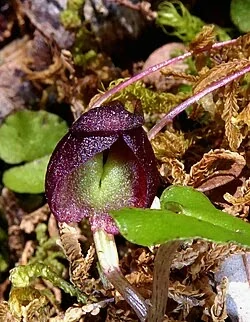
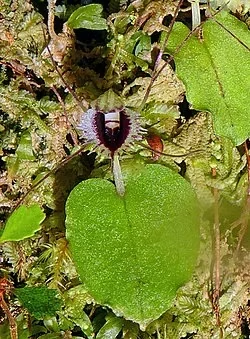
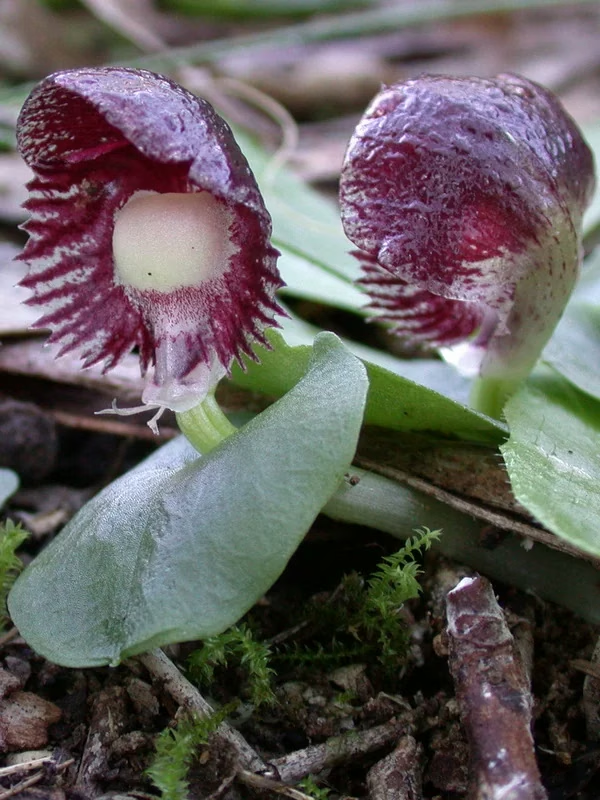
Explore other Corybas species and their distinctive flowers and leaves.
Conservation
Corybas macranthus was assessed as Not Threatened nationally in 2023. NZPCN lists it as Regionally Naturally Uncommon in Northland in 2026 and advises that plants should not be removed from the wild.
Frequently asked questions
Why is it called silver-back?
Its fleshy leaf is silvery green to white underneath, while the upper surface is green and often flecked purple.
Is Nematoceras macranthum the same plant?
Yes. Flora of New Zealand lists it as a synonym of Corybas macranthus .
Does the source provide a potting mixture?
Yes. Its general Corybas recipe combines sand, soil or humus, weathered wood and granulated bark in a 2:2:1:1 ratio. The profile still describes propagation as difficult.
Sources
Identification, habitats, cultivation and conservation: NZPCN. Scientific names: Flora of New Zealand. Wetland classification: New Zealand Wetland Plant List 2021.
The silver-backed leaf and broad trumpet-shaped lip are among the most useful characters for recognising this species.
Last updated: