Spider Orchid
Corybas iridescens
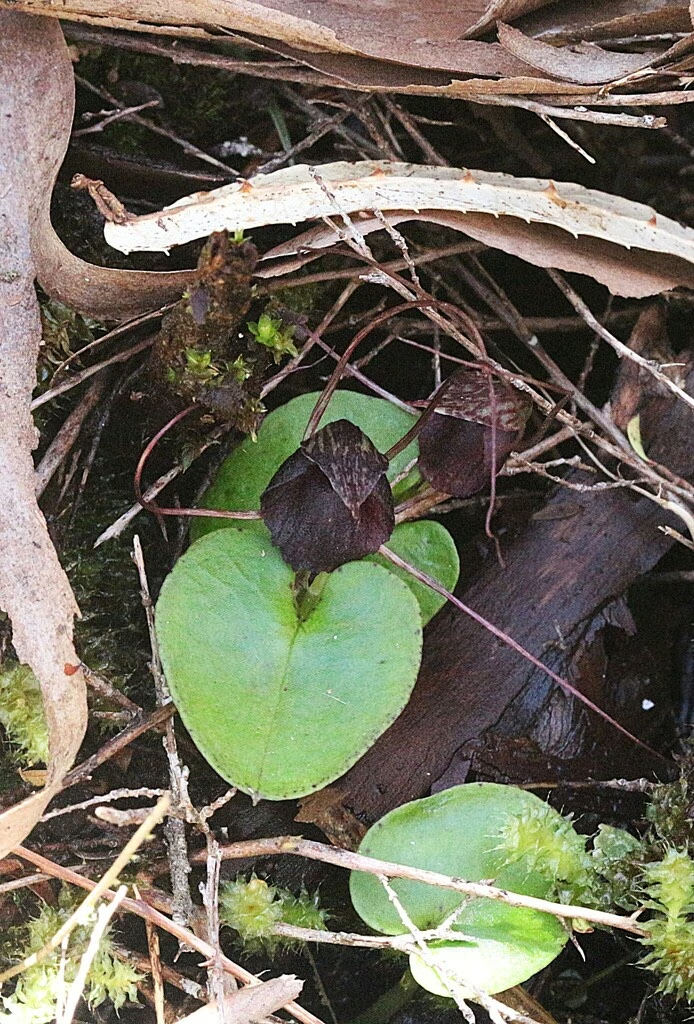
Corybas iridescens, sometimes called big red, is an endemic spider orchid whose dark red flower lip becomes iridescent when wet. It forms colonies in damp places throughout parts of New Zealand.
Identification
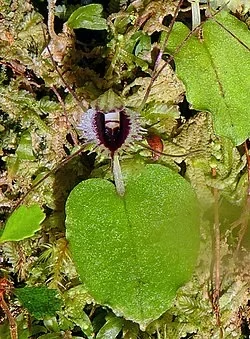
This terrestrial orchid has a single fleshy leaf, usually flat against the ground, 20-40 mm long and 15-35 mm wide. The upper surface is dull dark green, often purple-flecked; the underside is silvery.
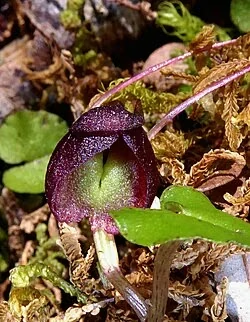
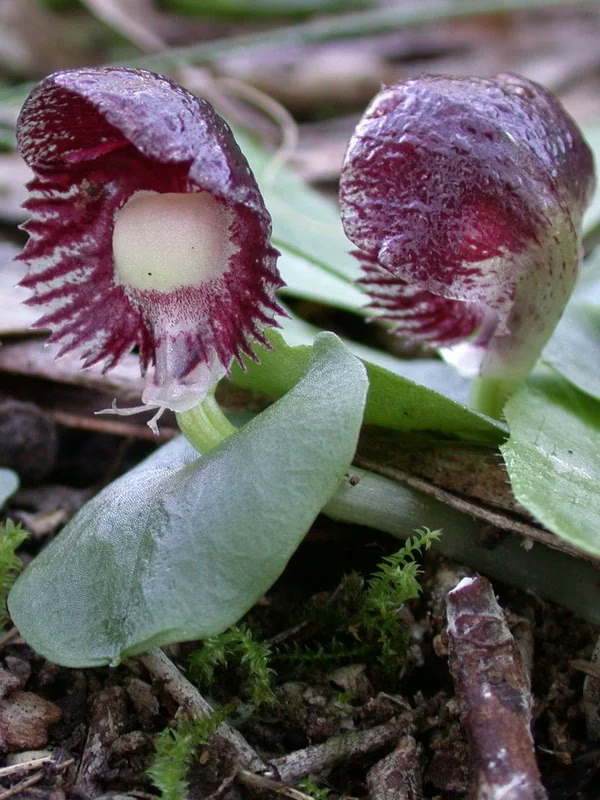
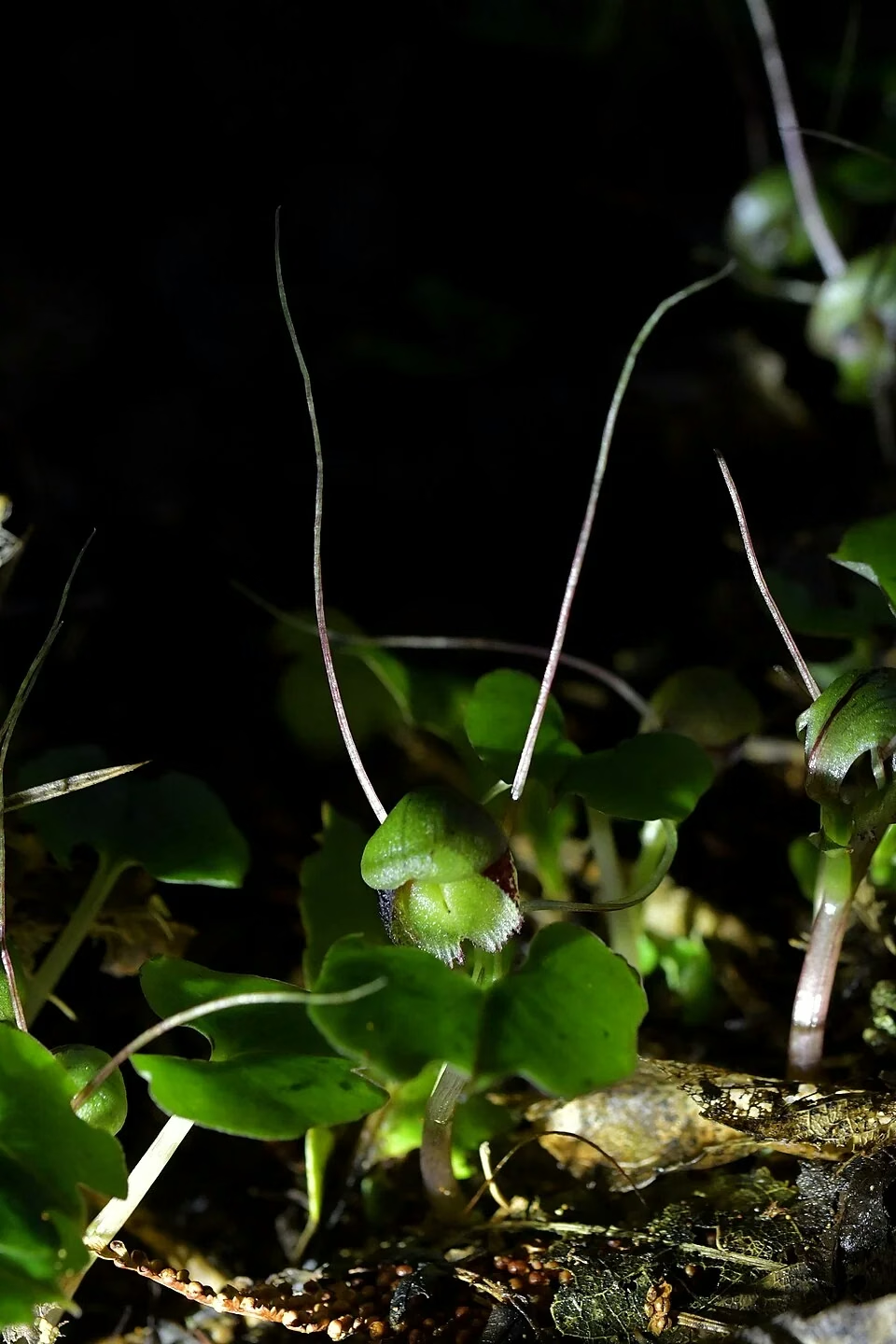
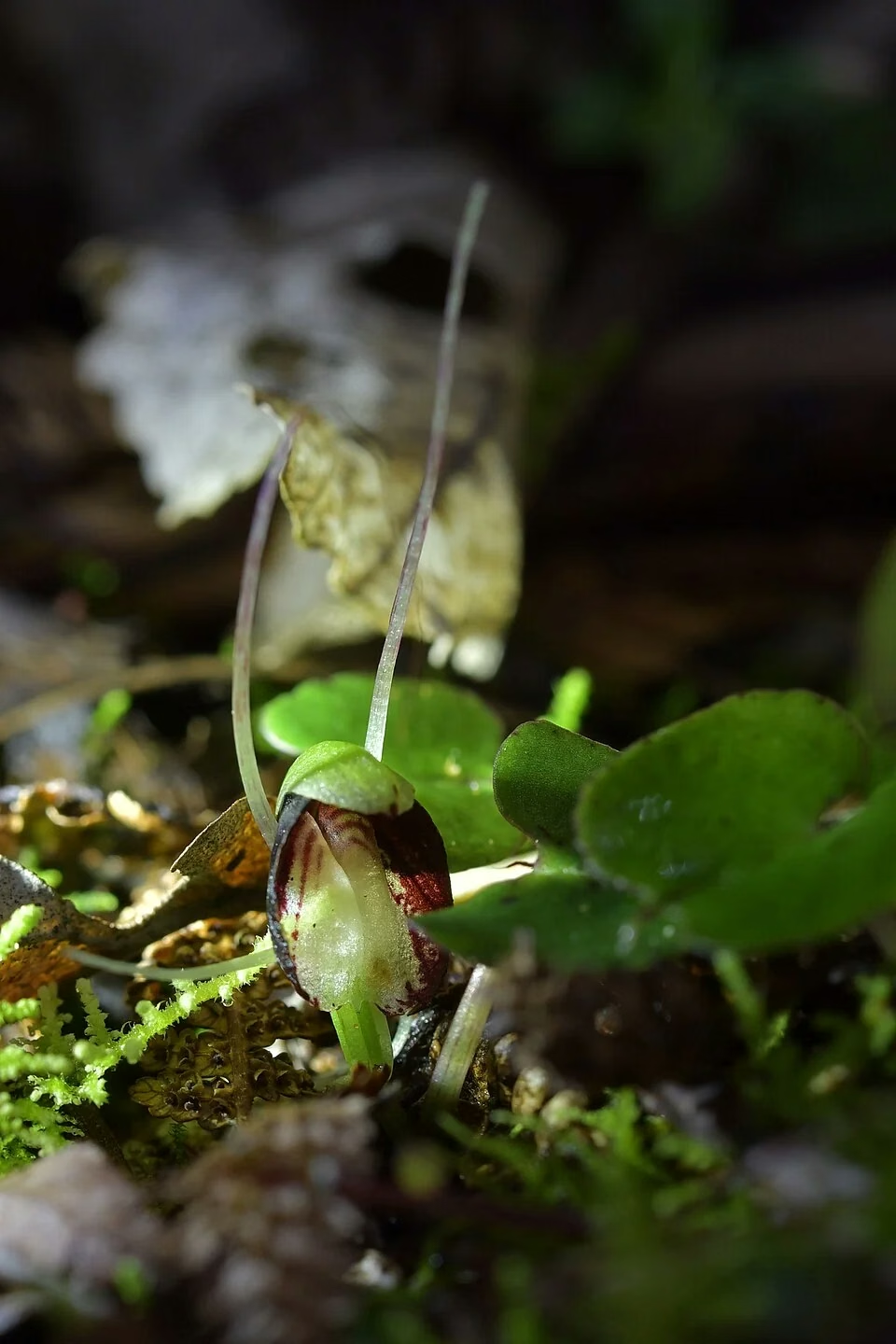
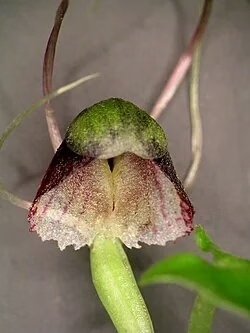
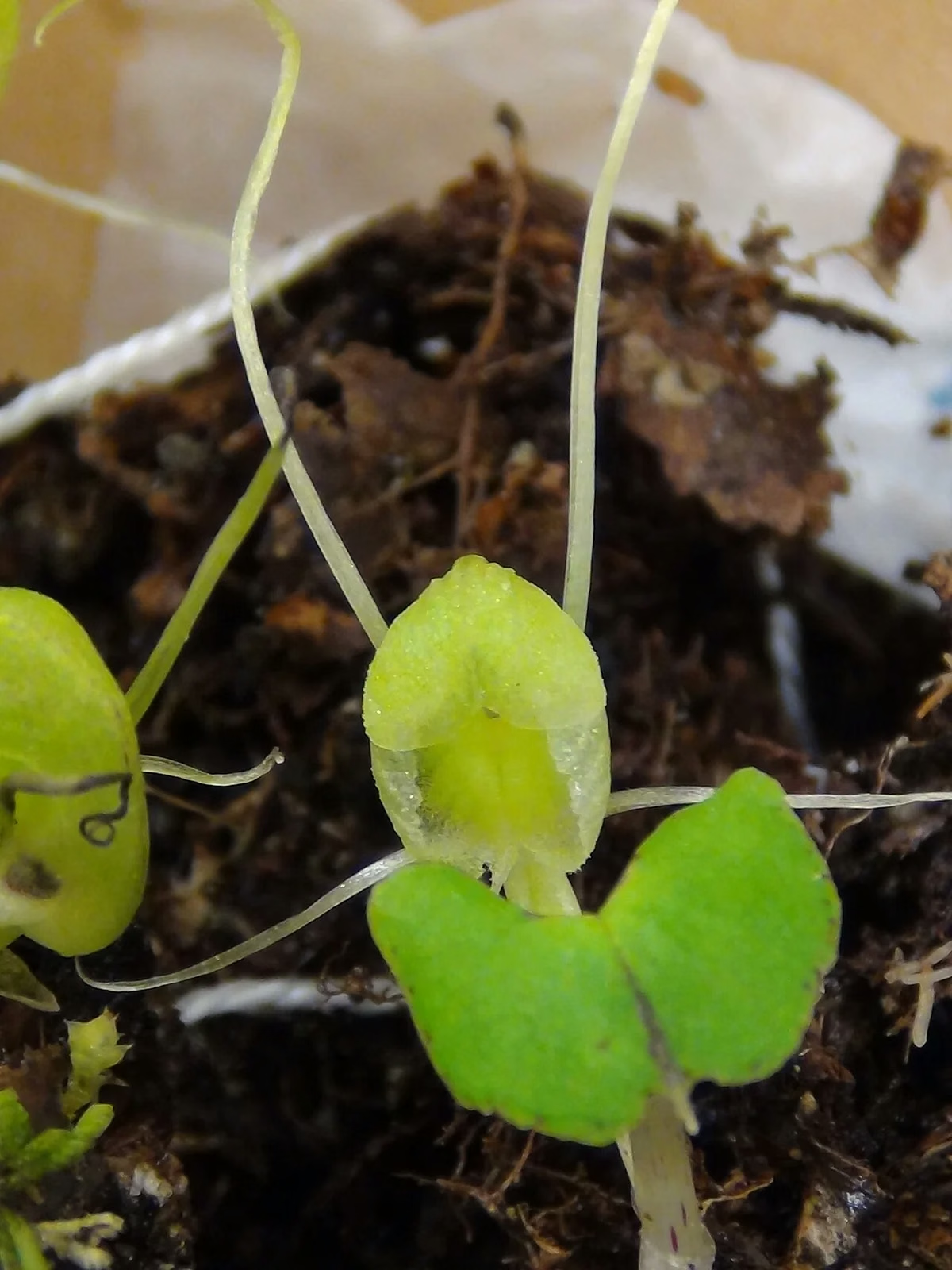
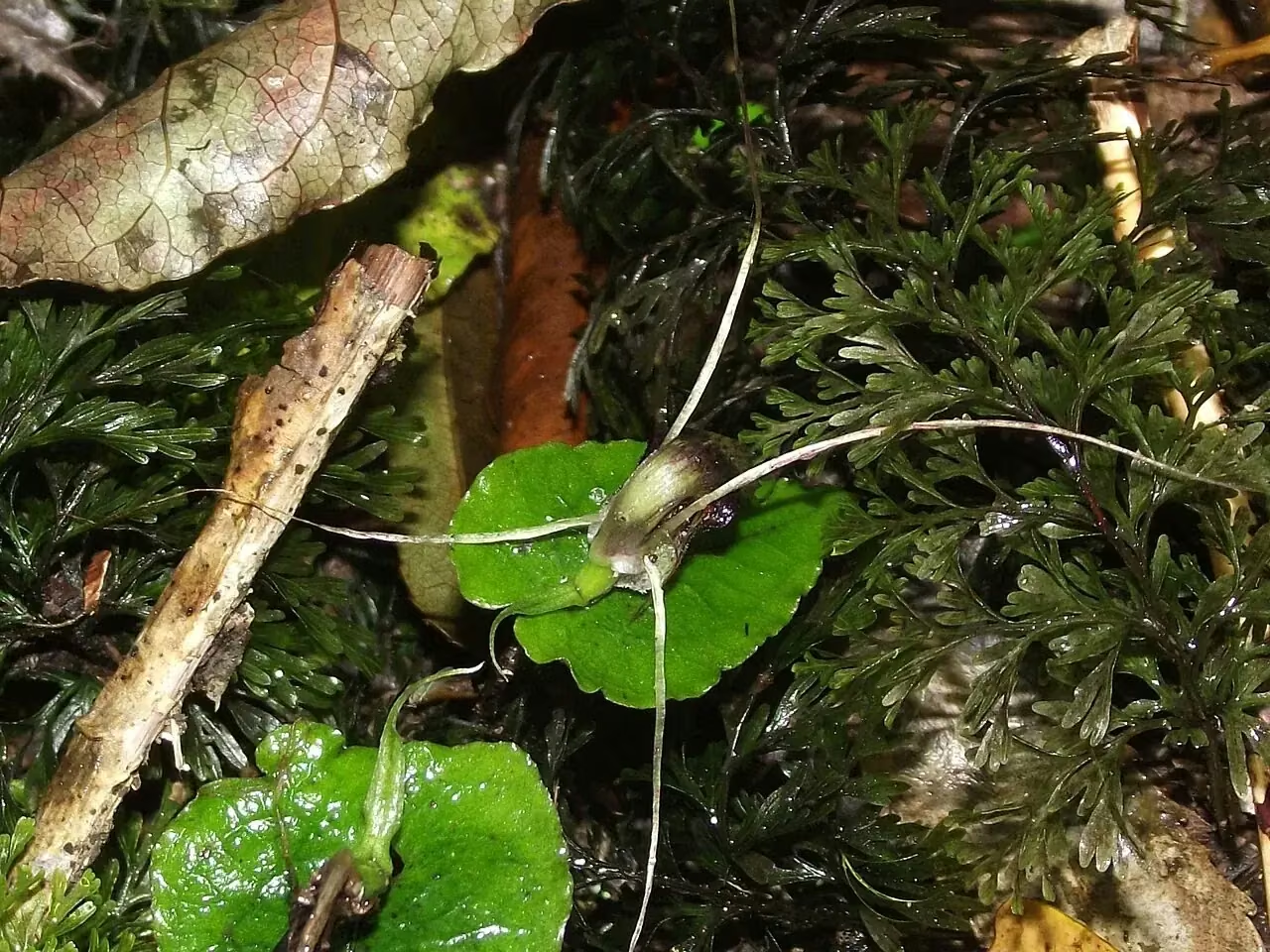
The flower lip is dark red to almost black and iridescent when wet. A broad green dorsal sepal arches over it, while long, threadlike petals and lateral sepals project outward.
Quick facts
| Scientific Name | Corybas iridescens |
|---|---|
| Former name | Nematoceras iridescens |
| Family | Orchidaceae |
| Leaf length | Usually 20-40 mm |
| Flowering | August to November |
| Fruiting | October to January |
| National status | Not Threatened (2023) |
| Height | An overall plant-height measurement is not specified in the cited account |
| Water Needs | Usually beside seepages or slow-flowing streams; no cultivation watering schedule is given |
| Light | A cultivation light requirement is not specified |
| Spread | Forms extensive colonies; total colony width is not quantified |
| Frost Tolerance | Minimum tolerated temperature is not documented |
| Salt Tolerance | Salt tolerance is not documented |
| Growth Rate | Annual extension is not quantified in the cited accounts |
| Lifespan | Summer-green tuberous herb |
Natural range
NZPCN records this endemic orchid on the North Island, South Island and Chatham Islands. It occurs from coastal to montane elevations, with records up to approximately 1,100 metres above sea level.
| City | Climate Suitability |
|---|---|
| Auckland | Not assessed |
| Wellington | Not assessed |
| Christchurch | Not assessed |
Habitat and distribution
The species grows in or near seepages and along slow-flowing streams. It favours base-rich materials, especially calcareous mudstone and siltstone, known as papa rock, as well as limestone and basalt.
Its range includes the North and South Islands and the Chatham Islands, from the coast to montane sites.
Natural growing conditions
This terrestrial orchid forms colonies in damp places, often near seepages on base-rich substrates. NZPCN describes its propagation as difficult and advises that plants should not be taken from the wild.
Planting considerations
NZPCN describes propagation as difficult and says wild plants should not be removed. Although the species is recorded beside streams and seepages, the profile does not provide a tested garden planting protocol.
Pollination
Flora of New Zealand reports fungus gnats entering and leaving cultivated flowers, sometimes carrying pollen; some flowers later produced capsules. It says the orchid’s pollination biology still needs experimental confirmation.
Observing the flower
The dark, abruptly downward-bent lip can appear iridescent when wet. A bead-like callus sits at the entrance to its tube, and the broad dorsal sepal extends beyond the lip and arches above it.
Garden context
Its recorded habitats are damp seepages and slow-stream margins, but NZPCN gives no garden planting protocol and describes propagation as difficult. An Ōtari-Wilton’s Bush Trust account records a cultivated plant in a pot.
Flowering and fruiting
NZPCN records flowering from August to November and fruiting from October to January. Flora of New Zealand gives August to October for flowering and notes that annual flowering intensity varies.
Seasonal growth
This summer-green orchid is tuberous and normally carries one leaf close to the ground. The cited botanical profiles do not specify a pruning method; its flower and leaf features are important for identification.
How to Grow Spider Orchid (Corybas iridescens)
Propagation and seed evidence
Propagation is described as difficult in the NZ Plant Conservation Network account, which also advises against removing Corybas iridescens from the wild. The profile does not supply a seed-germination procedure or a division method. Its extensive colonies and tuberoids on extended roots are documented biological features, rather than evidence of successful transplantation.
Its Damp, Base-Rich Habitat
Wild populations usually occupy seepages or the margins of slow-flowing streams, from coastal areas to approximately 1,100 m elevation. Favoured substrates include calcareous mudstone and siltstone, commonly called papa, as well as limestone and basalt. These records identify both moisture and geology as part of its natural setting, but do not establish a numerical soil pH, potting mixture or garden irrigation interval.
Recognising leaves before flowering
The single firm, fleshy leaf normally lies flat along the ground. Its blade is about 2-4 cm long and 1.5-3.5 cm wide, sometimes larger, on a short stalk. The upper surface is dull dark green with purple flecks, while the underside is silvery. The midrib is grooved above and raised beneath, and the short point at the leaf tip curves downwards.
Following the reproductive season
This is a summer-green orchid. Flowers are recorded from August to November, with fruit from October to January. Plants bear one or occasionally two flowers, approximately 12-20 mm long. Examining the leaf stalk, midrib and flower together is particularly useful when distinguishing it from other papa-associated spider orchids with similarly flat leaves.
Plant health
The cited species profiles do not list pest or disease treatments. Purple flecks on the leaf and the very dark lip are normal features, as is the lip’s iridescence when wet.
Naming and classification
Irwin and Molloy described Corybas iridescens in 1996. Its name refers to becoming iridescent. The plant has also been placed in Nematoceras and Corysanthes under the same epithet.
Recognising Big Red
Identify it using several features together: a shortly stalked, often spotted leaf; a broad dorsal sepal; long, almost equal petals and lateral sepals; and the almost black lip with a conspicuous bead-like callus.
Related New Zealand spider orchids
Explore other Corybas species and their distinctive flowers and leaves.
Conservation
Corybas iridescens is endemic to New Zealand and was assessed as Not Threatened in 2023. It is associated with damp, base-rich sites; NZPCN advises against removing plants from the wild.
Frequently asked questions
Why is it called iridescens?
The dark flower lip becomes strongly iridescent when wet, a feature reflected in the scientific name.
Do fungus gnats pollinate it?
They have been observed visiting cultivated flowers and carrying pollen, but Flora notes that pollination needs experimental confirmation.
Does the leaf sit above the ground?
It normally spreads flat along the ground on a short stalk. The leaf midrib is grooved on the upper surface and raised underneath.
Sources
Identification, habitat, phenology and conservation: NZPCN. Pollination observations and fruit development: Flora of New Zealand. Cultivation observation: Ōtari-Wilton’s Bush Trust newsletter.
Last updated: