Spider Orchid
Corybas hatchii
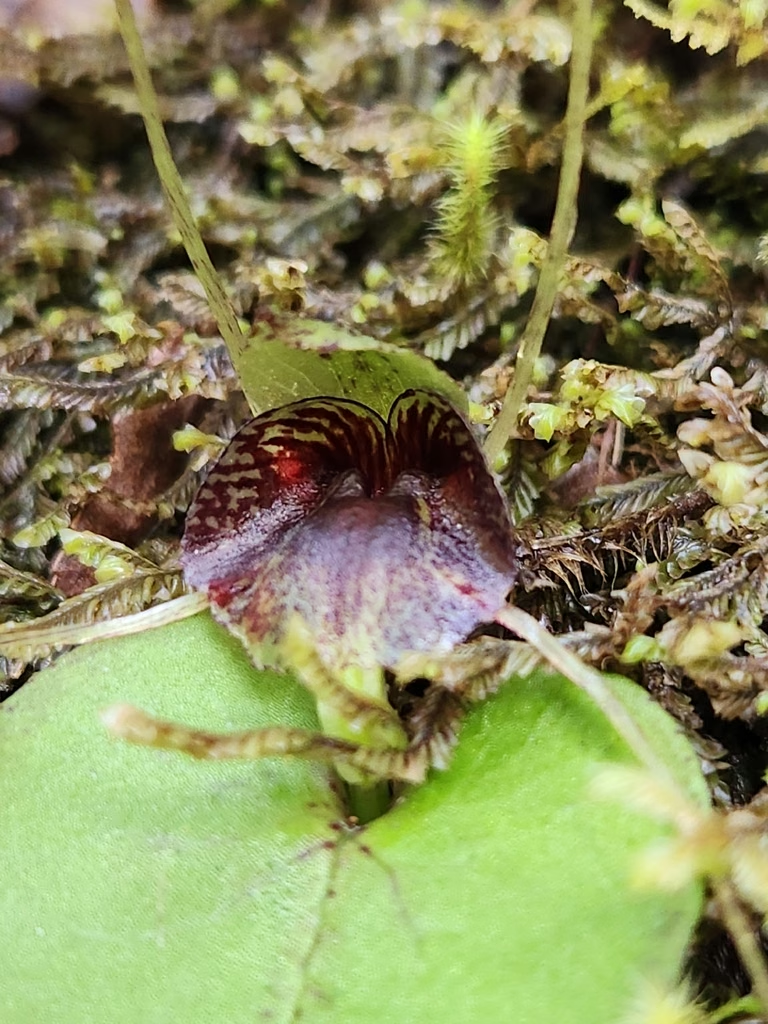
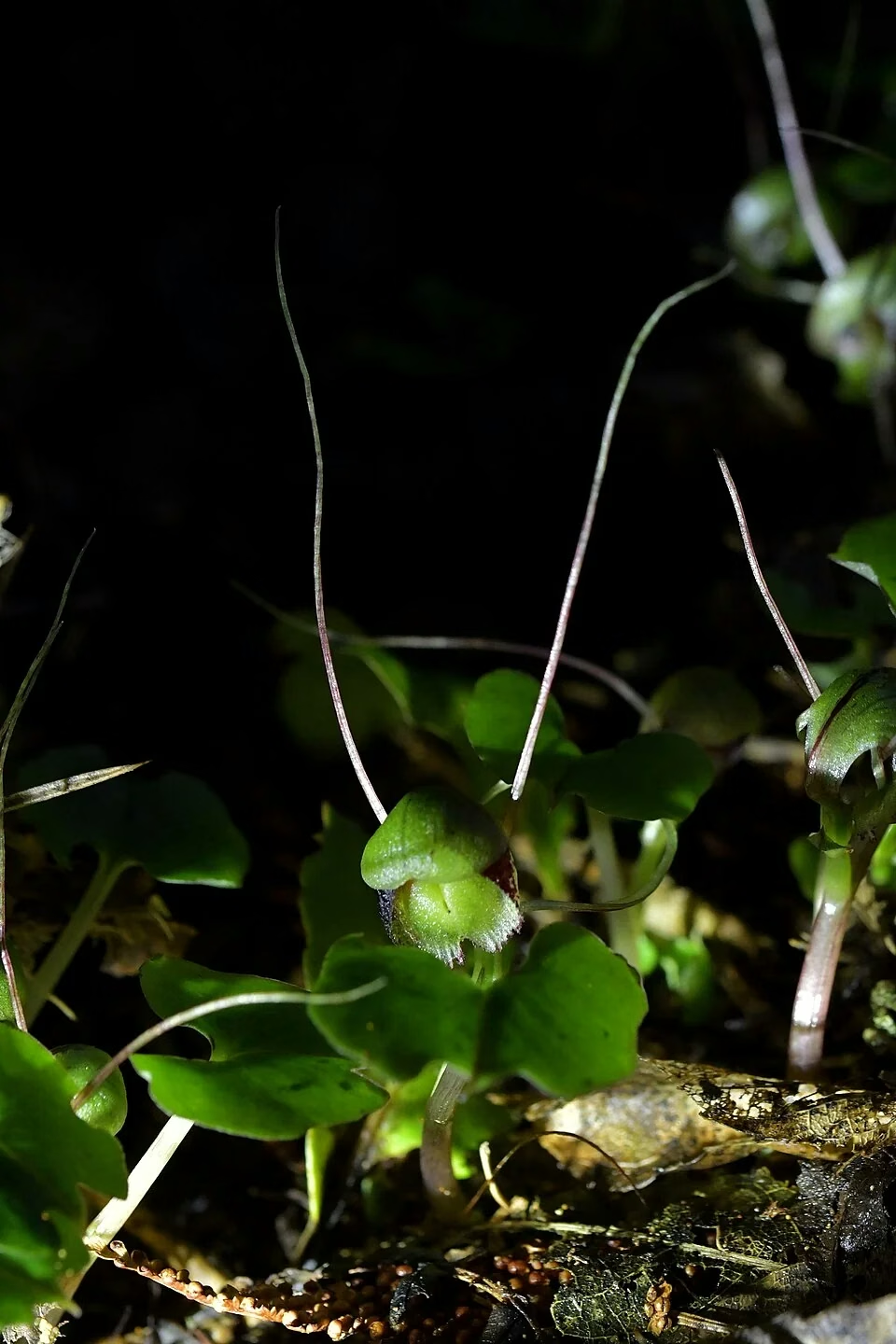
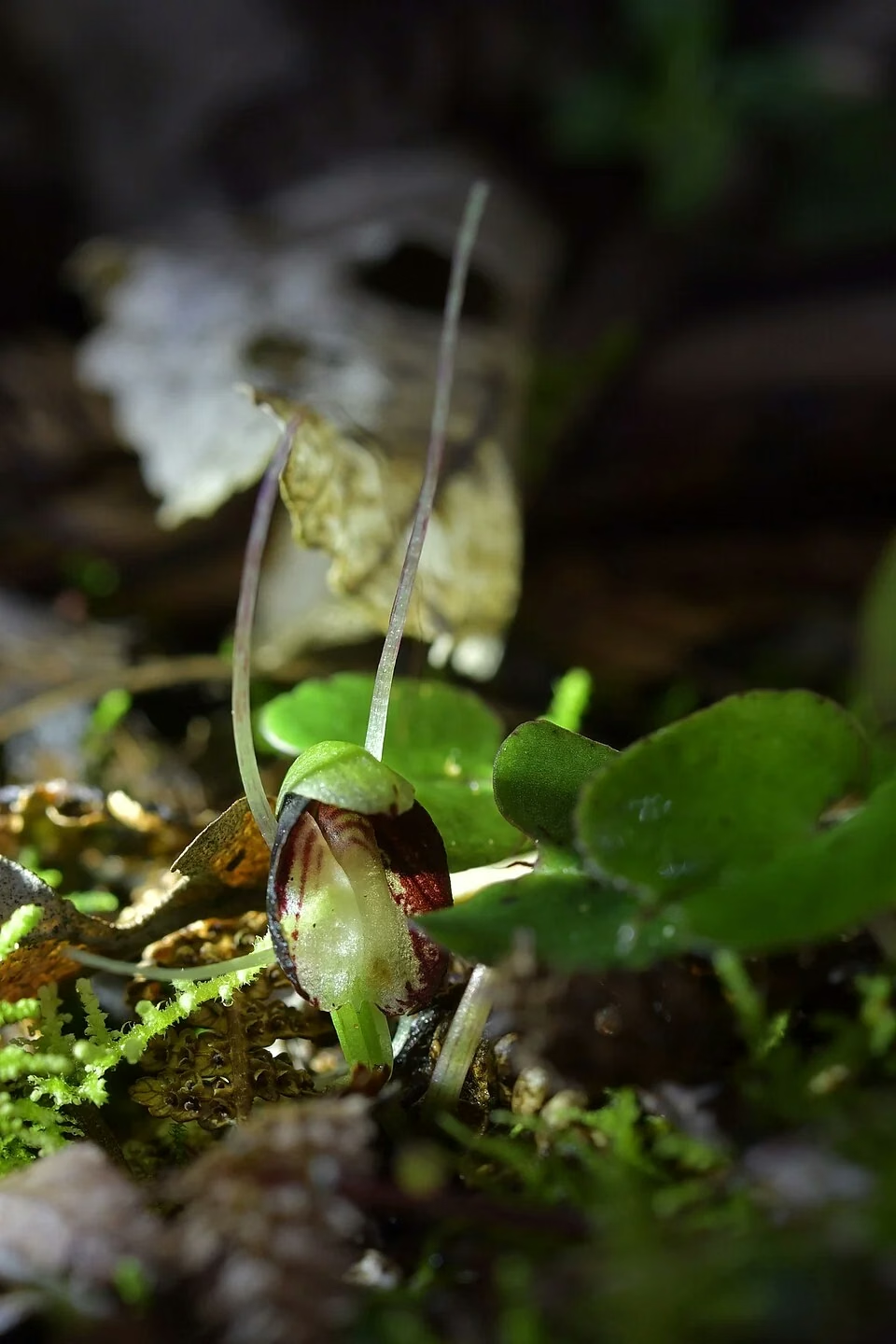
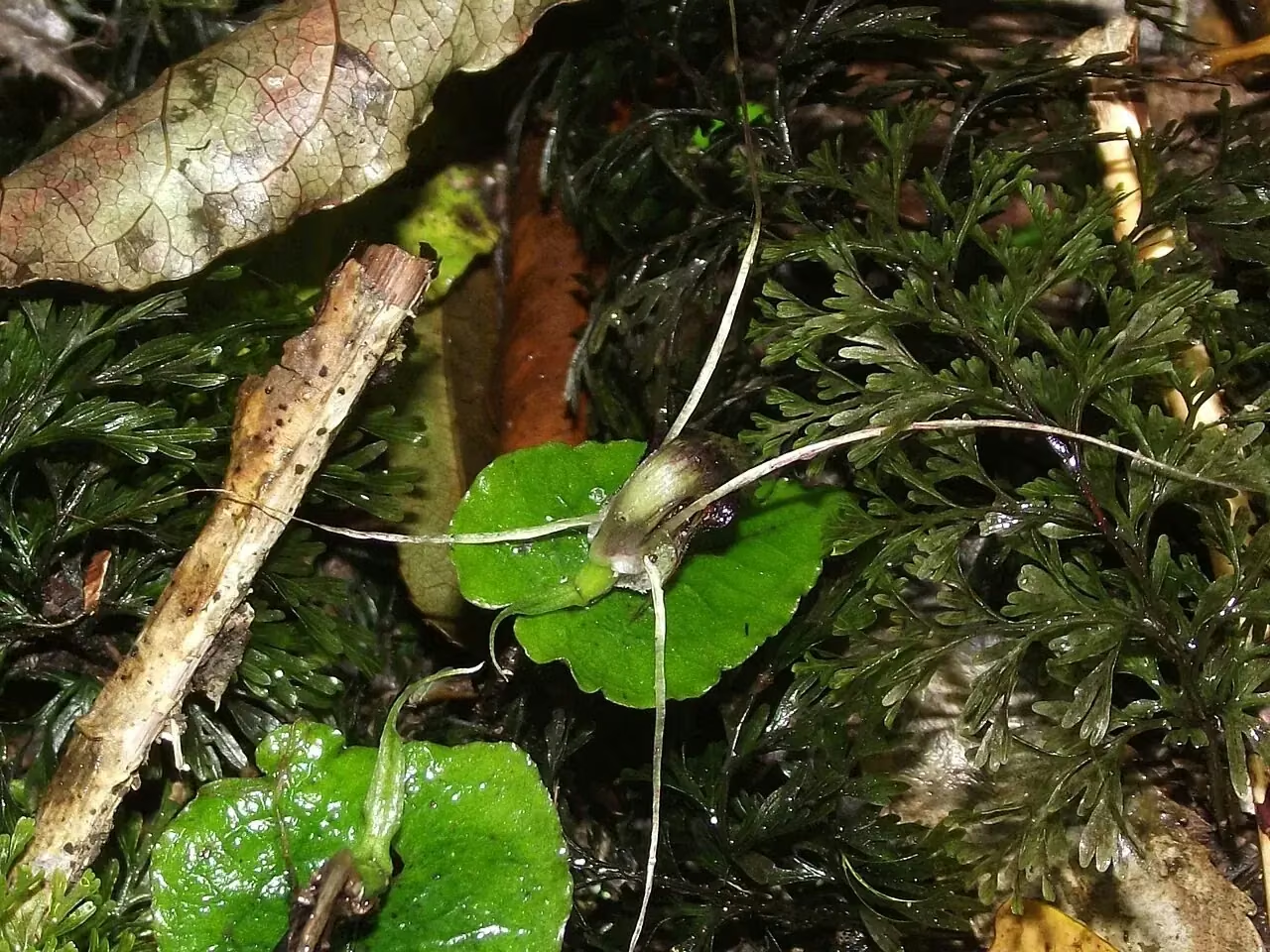
Corybas hatchii is an endemic spider orchid with a solitary leaf and a relatively large, translucent flower. Its long, threadlike petals and lateral sepals project forward in a nearly parallel group.
Identification
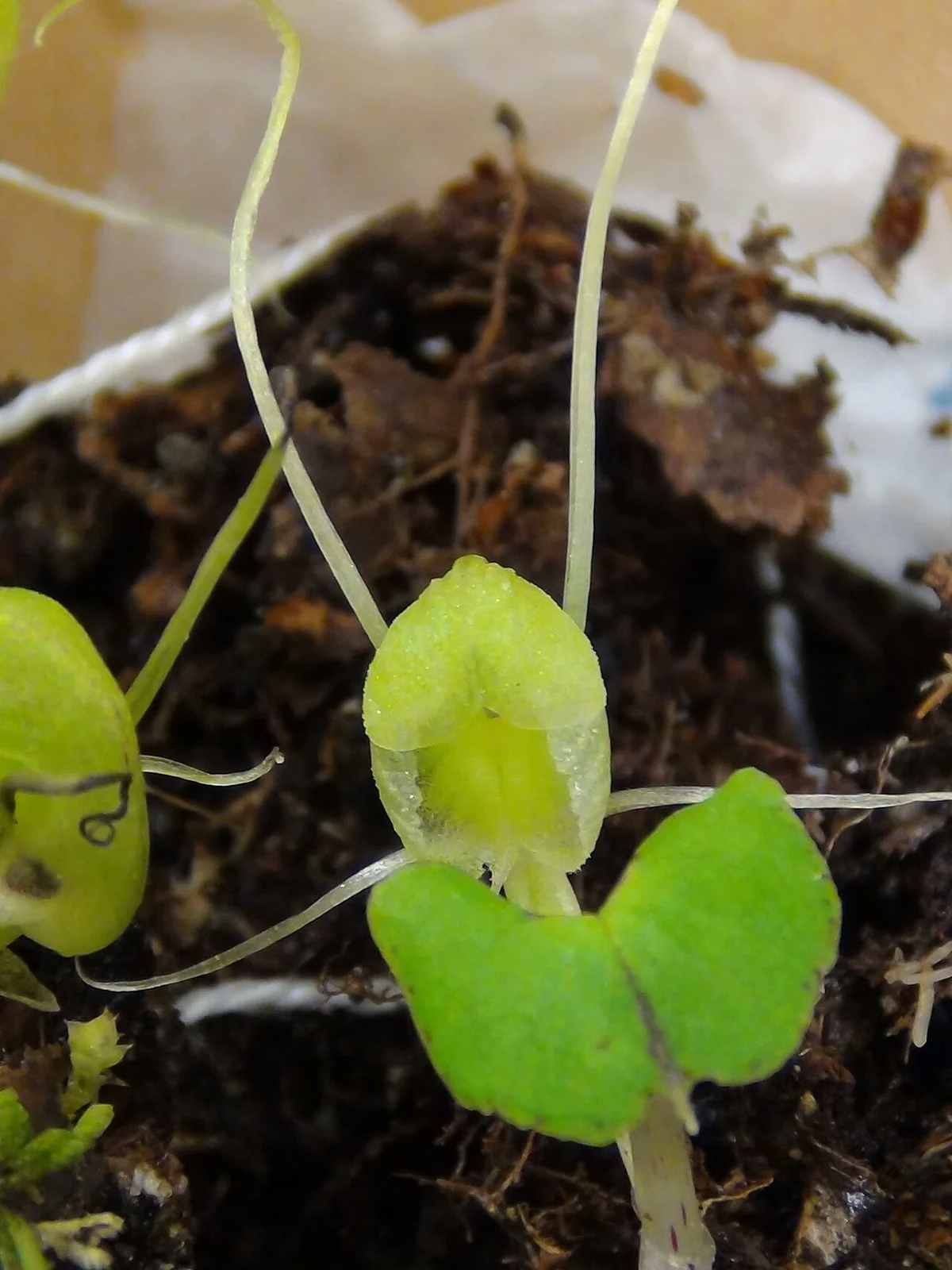
This colonial, terrestrial orchid reaches up to 60 mm tall in flower. Its single fleshy leaf is shortly stalked, oval to rounded, green or yellow-green, and often flecked with purple or red.
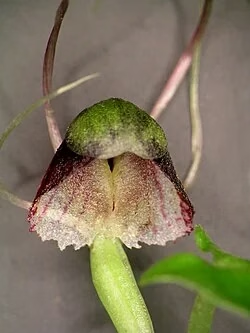
The flower is usually translucent white or red, with darker maroon markings toward the back. Its slender petals and lateral sepals project forward, generally parallel, and can reach 40 mm long.
Quick facts
| Scientific Name | Corybas hatchii |
|---|---|
| Former name | Nematoceras longipetalum |
| Family | Orchidaceae |
| Height in flower | Up to 60 mm |
| Flowering | July to November |
| Fruiting | October to January |
| National status | Not Threatened (2023) |
| Height | Up to 6 cm at flowering |
| Water Needs | Wild plants occupy damp seepages; cultivation is described as difficult |
| Light | Natural seepage sites range from well lit to shaded |
| Spread | Colonial growth from underground tuberoids; colony width is not quantified |
| Frost Tolerance | Minimum tolerated temperature is not documented |
| Salt Tolerance | Salt tolerance is not documented |
| Growth Rate | Annual extension is not quantified in the cited accounts |
| Lifespan | Tuberous herb; green from late winter into summer |
Natural range
NZPCN records this endemic orchid in the North and South Islands, mainly in the west, from lowland to subalpine sites up to about 1,200 metres. Kew’s distribution account lists the North Island.
| City | Climate Suitability |
|---|---|
| Auckland | Not assessed |
| Wellington | Not assessed |
| Christchurch | Not assessed |
Habitat and distribution
The orchid favours damp seepages in well-lit or shady places, often over base-rich materials. Recorded substrates include calcareous mudstone, siltstone, limestone, basalt, basaltic andesite and andesitic tephra.
NZPCN reports it mainly in western parts of the North and South Islands, at elevations from lowland to subalpine.
Natural growing conditions
NZPCN describes damp seepages over base-rich rock and volcanic materials as favoured habitats. The orchid grows in both well-lit and shady sites, but the network describes propagation as difficult and advises against removing wild plants.
Planting considerations
The cited NZPCN profile describes habitat rather than a tested planting method. It explicitly says propagation is difficult and that this terrestrial orchid should not be removed from the wild.
Growth and ecology
Corybas hatchii can form colonies and grows from rounded to ellipsoid tuberoids on extended roots. It is green from late winter into summer, with the single flower held above and back from its leaf.
Observing the flower
Look for an almost translucent flower with red or purple streaks, and long threadlike petals and lateral sepals projecting forward. The petals are approximately as long as the lateral sepals and all greatly exceed the lip.
Garden context
This small orchid is associated with natural seepages rather than a documented garden planting method in the NZPCN profile. Its propagation is described as difficult, and the network advises leaving wild plants in place.
Flowering and fruiting
NZPCN records flowering from July to November and fruiting from October to January. As the capsule develops, the supporting stalk can lengthen to 180 mm; the narrow oval capsule reaches 15 mm long.
Seasonal growth
The species has one fleshy leaf and is green from late winter into summer. The cited botanical profile does not specify a pruning technique for this tiny terrestrial orchid.
How to Grow Spider Orchid (Corybas hatchii)
Seed and propagation limitations
The published propagation assessment for Corybas hatchii is difficult, with an explicit recommendation against taking plants from the wild. NZ Plant Conservation Network does not supply a seed-sowing method for the species. Although colonies have underground tuberoids on extended roots, describing those structures is not evidence that dividing them is an established cultivation technique.
Seepages and substrates
The orchid favours damp seepages over base-rich substrates, including calcareous mudstone, siltstone, limestone, basalt, basaltic andesite and andesitic tephra. Sites can be well lit or shady and occur from lowland to subalpine elevations, up to about 1,200 m. These records describe the setting of natural plants without specifying a numerical soil pH or a tested artificial growing medium.
Late-Winter and Spring Observations
It is a late-winter-to-summer-green herb, with flowering recorded from July to November and fruit from October to January. Flowering plants may reach 6 cm tall. A single fleshy leaf, about 1.5-2.8 cm long, is carried on a short stalk. Red or purple flecks can occur at the margins or across the upper surface, while the underside is silvery and translucent.
Checking the flower
The flower sits well above and behind the leaf and is large relative to the plant, usually about 2 cm long. It is mostly translucent white or red, often streaked or flecked with red-purple, and only rarely green. Observing that position and colour pattern together is more useful for confirming cultivated material than treating every small colonial spider orchid as the same species.
Plant health
The NZPCN account does not list species-specific pest or disease treatments. Purple or red flecks on the leaf, and maroon colour toward the back of the flower, are normal features described for this orchid.
Naming and classification
The name hatchii honours orchidologist Dan Hatch, who initially described the taxon. Former names include Nematoceras longipetalum and Corybas macranthus var. longipetalus; the current replacement name was published in 2016.
Distinguishing related orchids
Compared with Corybas papa, this species has a shortly stalked rather than stalkless leaf, usually translucent or red rather than mostly green flowers, and forward-pointing rather than widely spreading petals and lateral sepals.
Related New Zealand spider orchids
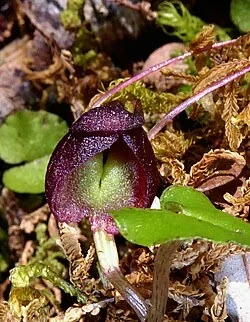
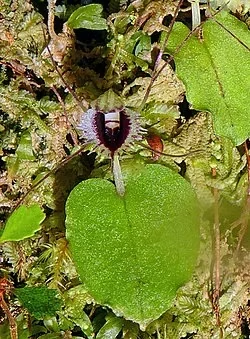
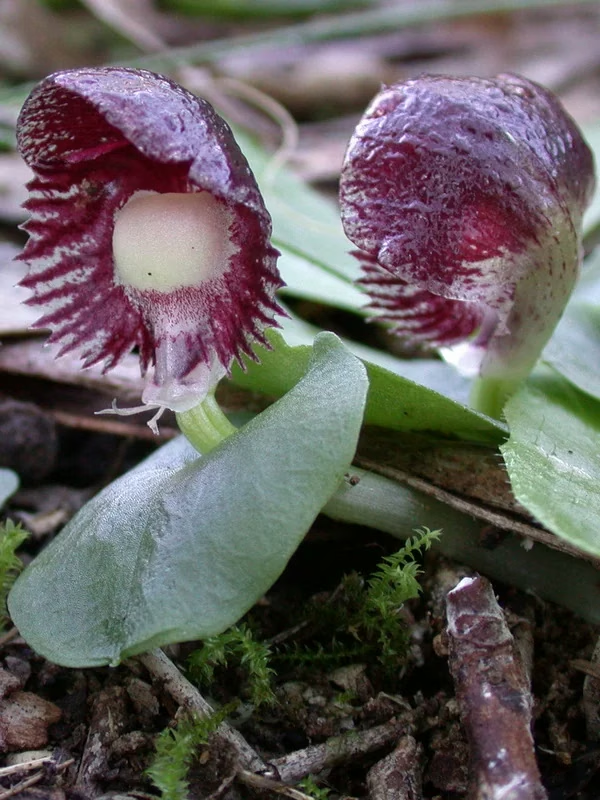
Explore other Corybas species and their distinctive flowers and leaves.
Conservation
Corybas hatchii is endemic to New Zealand and was assessed as Not Threatened nationally in 2023. NZPCN also lists it as Regionally Not Threatened in Otago and Wellington in 2025.
Frequently asked questions
Is Nematoceras longipetalum the same orchid?
Yes. Flora of New Zealand lists it as a synonym of Corybas hatchii .
When does it flower?
NZPCN records flowers from July to November; the New Zealand Native Orchids profile gives July to October.
Where is the flower positioned relative to the leaf?
The flower of Corybas hatchii is held well above and behind its single leaf. It is large for the plant, usually about 2 cm long.
Sources
Identification, habitat, propagation and conservation: NZPCN. Name history: Flora of New Zealand. Flowering observations: New Zealand Native Orchids.
The translucent flower and long forward-projecting petals and lateral sepals distinguish this spider orchid.
Last updated: