Mountain Daisy
Celmisia vespertina
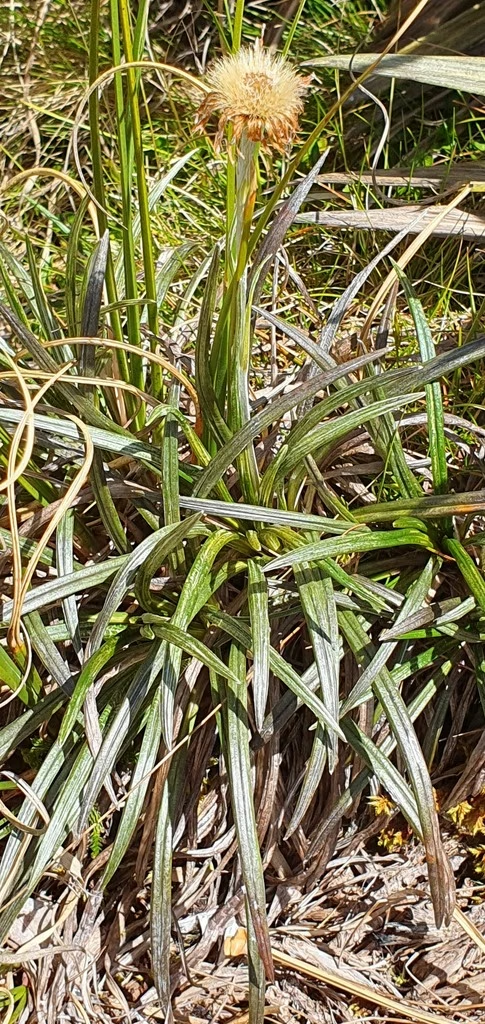
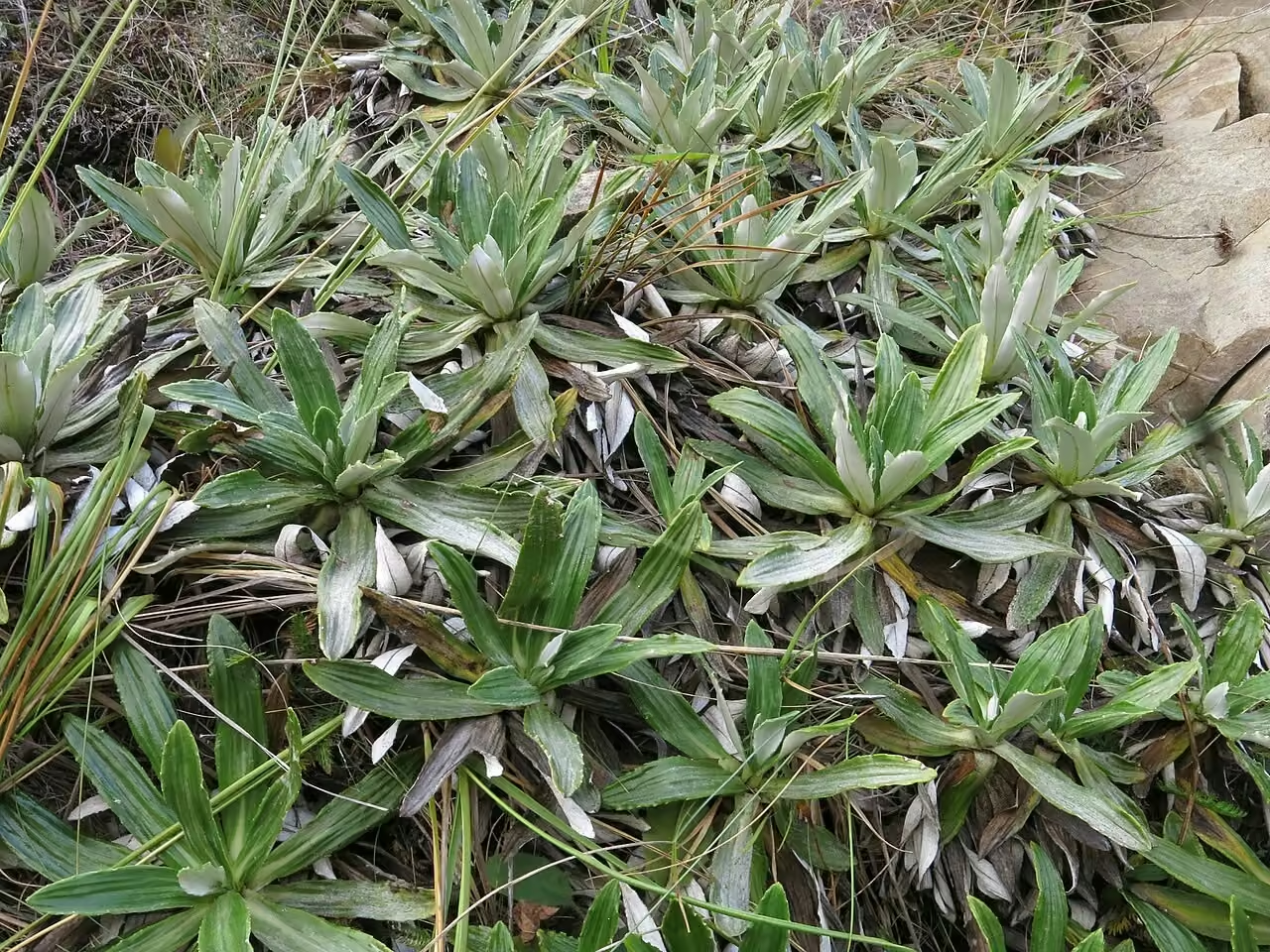
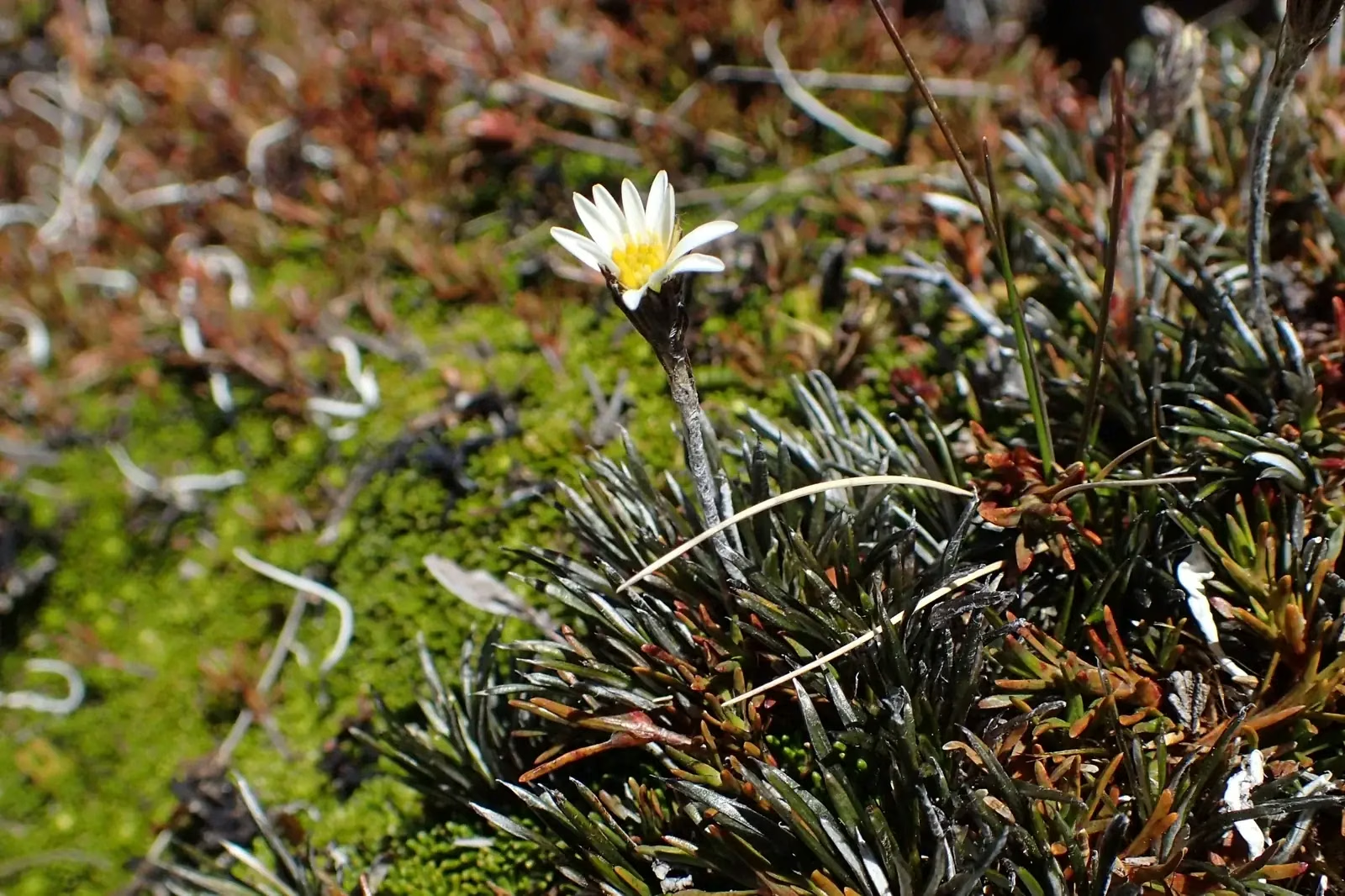
Celmisia vespertina is an endemic South Island mountain daisy. Its stiff, recurved leaves are dark green above and covered beneath with tightly pressed white hairs. This woody-based perennial grows from a stock with several crowns.
Identification
This woody-based perennial grows from a stock with several crowns. Its rigid, curved linear leaves are 5-15 cm long and 3-5 mm wide. Their dark-green upper surface is grooved; the underside bears dense white felt.
The leaf margins often roll backwards. Flower stalks are 10-15 cm long, and the flower-head bracts have fringes of long white hairs, especially near their bases.
Quick facts
| Scientific Name | Celmisia vespertina |
|---|---|
| Family | Asteraceae |
| Leaf length | 5-15 cm |
| Leaf width | 3-5 mm |
| Flower stalk | 10-15 cm |
| Distribution | South Island mountains |
| National status | Not Threatened (2023) |
| Height | Flowering stalks 10-15 cm long |
| Water Needs | A cultivation watering requirement is not given in the species profile |
| Light | A cultivation light requirement is not given in the species profile |
| Spread | Several crowns on a woody stock; overall width is not quantified |
| Frost Tolerance | Minimum tolerated temperature is not documented |
| Salt Tolerance | Salt tolerance is not documented |
| Growth Rate | Annual extension is not quantified in the cited accounts |
| Lifespan | Woody-based perennial herb |
Mountain range
In its original 1969 description, David Given reported the species chiefly from high-rainfall alpine areas west of the Southern Alps’ Main Divide, with records from near the Taramakau Valley south toward Mount Aspiring.
| City | Climate Suitability |
|---|---|
| Auckland | Not assessed |
| Wellington | Not assessed |
| Christchurch | Not assessed |
Habitat and distribution
Given described C. vespertina as common in higher alpine grassland on Mount Fox, at approximately 4,500-5,500 feet. At that time, the Ben Ohau Range was the only known collection locality east of the Main Divide.
Herbarium records also include Westland, Canterbury and Otago land districts; these collection records do not establish that the plant occurs throughout each district.
Natural conditions
The original description places the species mainly in high-rainfall alpine areas and reports it in Mount Fox grassland. It does not provide a tested garden soil mix or watering regime for this particular mountain daisy.
Planting considerations
The 1969 description records alpine grassland but does not offer a species-specific planting protocol. A plant’s occurrence in high-rainfall mountains alone does not establish its performance in lowland gardens or containers.
Growth and ecology
The plant is a perennial herb with a woody base and a stock bearing several crowns. Its narrow leaf blades curve backwards, while their undersides carry a dense, pressed layer of white hairs.
Observing the plant
Look for the combination of narrow, rigid curved leaves, grooved dark-green upper surfaces and white-felted undersides. Their yellow-orange sheaths and the hair-fringed bracts around the flower head provide further characters for identification.
Garden context
Given’s description documents a high-rainfall alpine plant, but does not report garden trials for Celmisia vespertina. Its mountain habitat and small flower stalks should be understood as field observations rather than a cultivation recipe.
Flowers and fruit
NZ Plant Conservation Network records flowering from December to February and fruit from January to March. The 10-15 cm flower stalks carry a few bracts. The original description records ribbed, spindle-shaped fruits about 2-3 mm long, bearing forked hairs.
Growth form
The plant arises from a woody stock with several crowns and carries rosettes of new leaves. Given’s botanical description does not specify a pruning method; the leaf sheaths are naturally yellow-orange and membranous.
How to Grow Mountain Daisy (Celmisia vespertina)
Seed and division evidence
The NZ Plant Conservation Network profile does not describe a propagation method for Celmisia vespertina. Its woody, multi-crowned stock and seed-bearing flower heads are described botanical structures, but those observations do not establish that dividing the crowns or sowing seed has been tested successfully. A general recipe for another mountain daisy should therefore not be presented as a verified method for this species.
Its alpine setting
The recorded habitat is alpine grassland and associated fellfield. Given's original description discussed high-rainfall mountain sites, notably Mount Fox. These observations explain its place in alpine vegetation while leaving a garden soil mixture, irrigation interval and shade rating unspecified. The plant's natural mountain occurrence is ecological evidence, not an experimental cultivation trial.
Recognising the stock and leaves
The perennial grows from a woody base with several crowns. Its rigid, recurved leaves are about 5-15 cm long and only 3-5 mm wide. The dark-green upper surface is grooved and covered with a film that becomes golden when dry; the lower surface has thick, closely pressed white felt. Yellow-orange membranous leaf sheaths are another normal feature.
Flowering and fruit development
Flowering stalks reach about 10-15 cm and carry few bracts. The bracts around the flower head have long white hairs along their edges, especially near the base. NZPCN records flowers from December to February and fruit from January to March. Those dates provide a current seasonal reference alongside the much older original botanical description.
Plant health
The original description does not specify pests, diseases or treatments. The thick coating on the dark-green upper leaf surface becomes golden as it dries, while the white felt beneath the leaf is a normal characteristic.
Naming and classification
David Given formally described Celmisia vespertina in 1969 from material collected east of Mount Fox in Westland. The earlier name Celmisia insignis var. dura is treated as a synonym.
Distinguishing related daisies
A botanical key separates C. vespertina from C. spedenii using the former’s yellowish-green leaf surface and nearly hairless flower-head bracts. C. spedenii has a silvery upper surface and strongly woolly bracts.
Other New Zealand mountain daisies
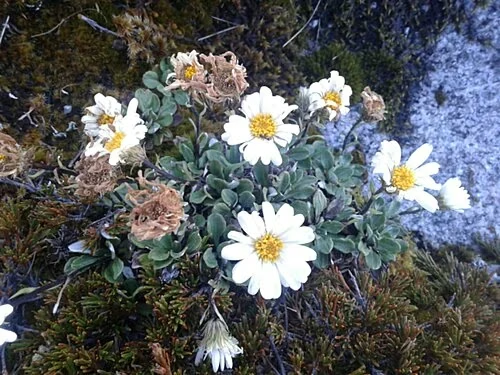
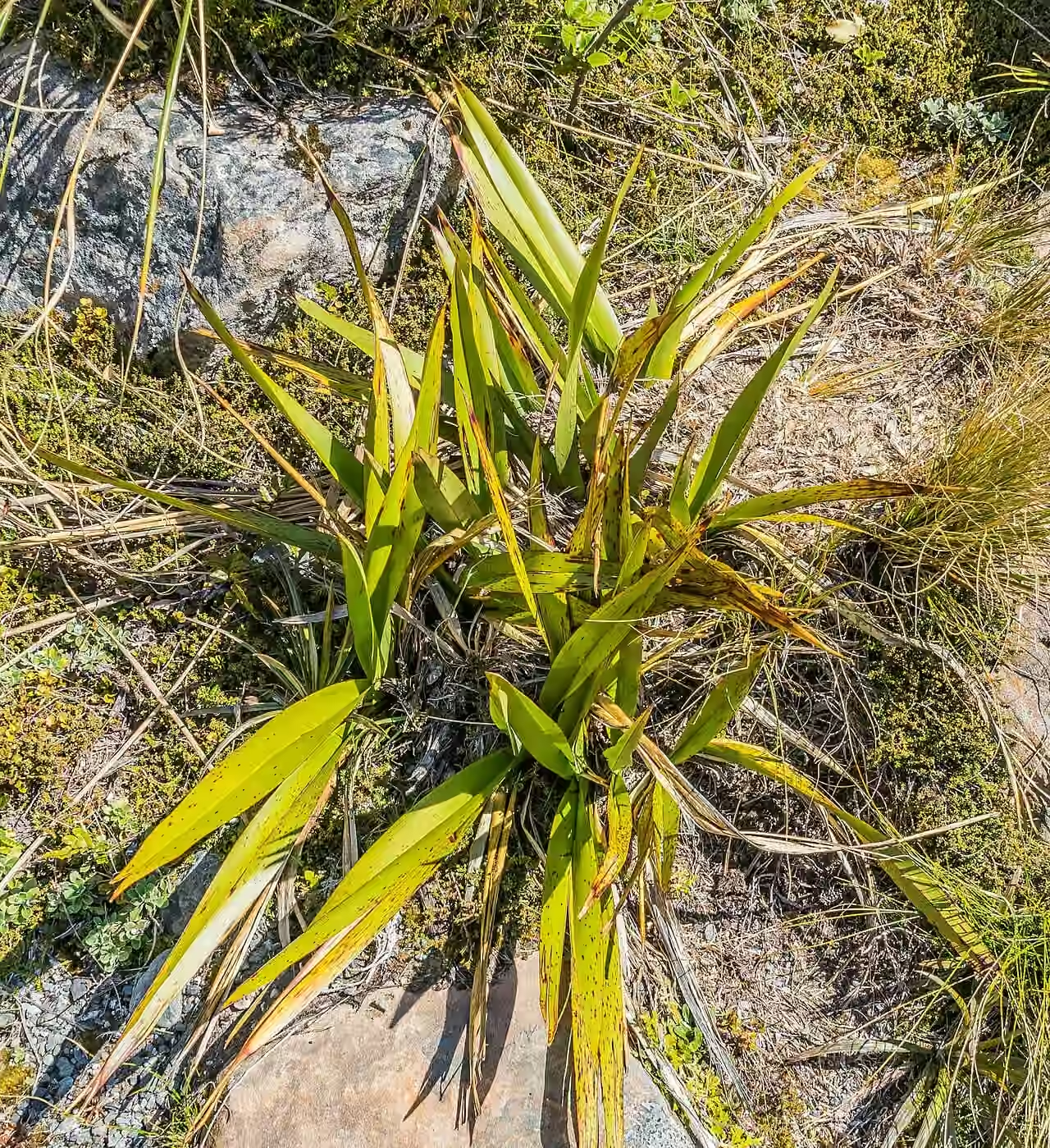
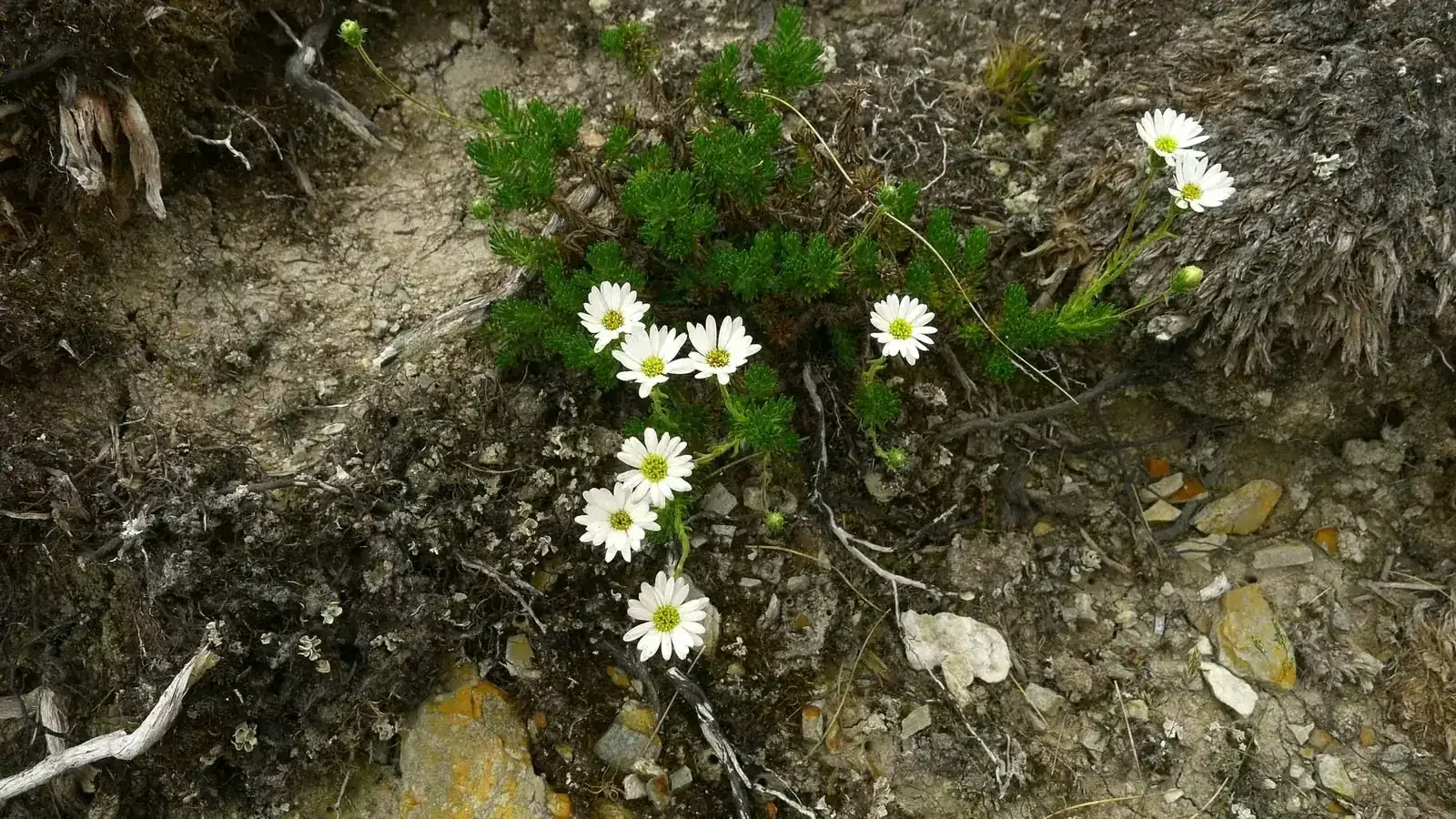
Explore other Celmisia species from New Zealand mountains, herbfields, forest edges and rocky places.
Conservation
Manaaki Whenua records this species as endemic to New Zealand. It was assessed as Not Threatened in the national 2023 assessment, which nevertheless includes qualifiers indicating partial population decline.
Frequently asked questions
Where is this daisy found?
The original description reported high-rainfall alpine areas mainly west of the Southern Alps’ Main Divide, including Mount Fox.
How narrow are its leaves?
Given described them as 3-5 mm wide and 5-15 cm long, with a white-felted underside.
When are flowers and fruit recorded?
NZ Plant Conservation Network records flowering from December to February and fruit from January to March.
Sources
Original description and distribution: Given, 1969, New Zealand Journal of Botany. Name and herbarium records: Manaaki Whenua Biota of New Zealand. Identification comparison: Lee and Given, 1984. Current propagation assessment and seasonal calendar: NZ Plant Conservation Network species profile.
Last updated: