Mountain Daisy
Celmisia bonplandii
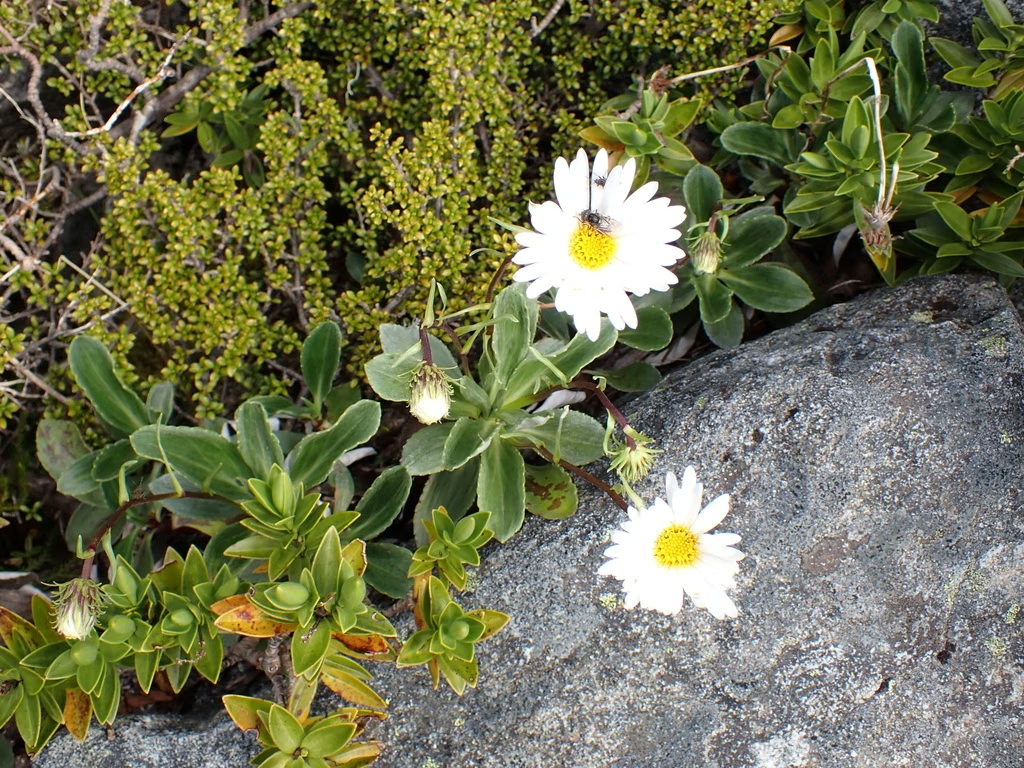
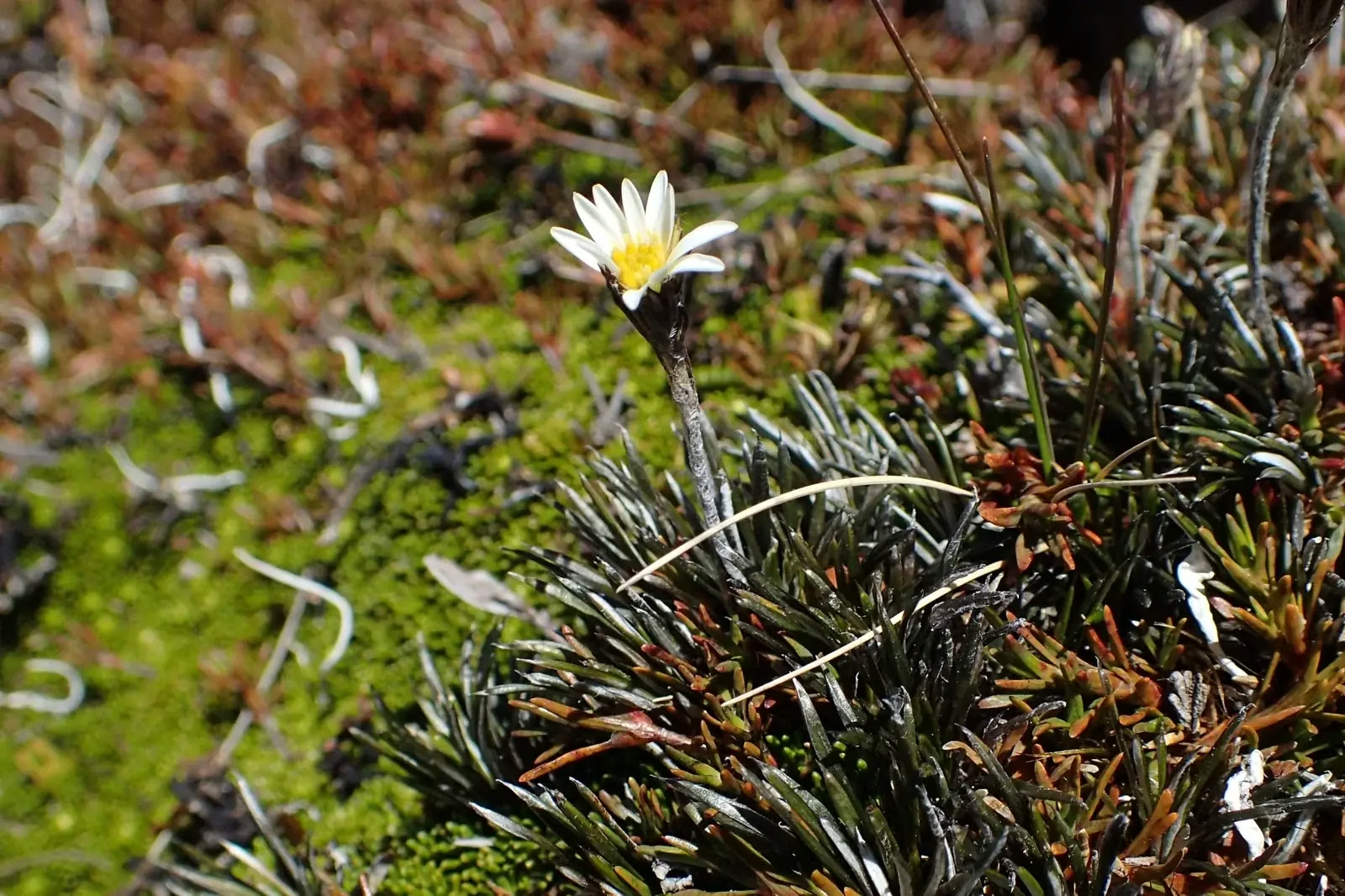
Celmisia bonplandii is a low, woody mountain daisy endemic to the South Island. Broad glossy leaves with pale felt underneath form tufts on the ends of its branches, and large daisy heads rise above them in summer.
Identification
The shrub forms loose patches up to about 50 cm across. Leaves are typically 4-10 cm long and 1.5-3 cm wide, glossy green above and covered with white felt beneath. Their midrib, stalk and broad sheath can be deep purple; flowering stalks are approximately 15-30 cm long.
Quick facts
| Scientific Name | Celmisia bonplandii (Buchanan) Allan |
|---|---|
| Earlier name | Erigeron bonplandii |
| Family | Asteraceae |
| Origin | Endemic to New Zealand |
| Habit | Low woody shrub, patches to about 50 cm |
| Habitat | Rocky subalpine and alpine sites |
| Flowering | Summer |
| National status | Not Threatened (2023) |
| Height | Low-growing subshrub; flowering stalks 15-30 cm long |
| Water Needs | Permanently moist soil with free drainage |
| Light | Shade |
| Spread | Loose patches up to about 2 m across |
| Frost Tolerance | Minimum tolerated temperature is not documented |
| Salt Tolerance | Salt tolerance is not documented |
| Growth Rate | Annual extension is not quantified in the cited accounts |
| Lifespan | Woody perennial subshrub |
Mountain range
The 2024 Celmisia revision records this species from the southern West Coast, western Otago and Southland, especially high-rainfall mountains from the Waipara Range south through Fiordland. There are also scarce records farther north near Franz Josef Glacier.
| City | Climate Suitability |
|---|---|
| Auckland | Not assessed |
| Wellington | Not assessed |
| Christchurch | Not assessed |
Habitat
The species grows from subalpine to high alpine elevations, approximately 750-1,700 metres. The revision describes rocky outcrops in snow-tussock herbfield and rocky, shaded sites at higher elevations, in the wetter southern mountains.
Natural growing conditions
In nature this mountain daisy occurs on rocky outcrops and shaded rocky places, often in high-rainfall regions. These are field observations; the botanical revision does not supply a tested lowland garden soil or watering prescription.
Planting considerations
This is a low woody plant that can spread into a patch approximately half a metre across. Its natural sites are in wet southern mountains; the cited descriptions do not establish a species-specific planting method.
Mountain growth form
Living leaves are clustered at the ends of the woody branches, while the broad sheaths wrap around the stems. The plant occupies rocky outcrops within subalpine and alpine snow-tussock herbfield and other rocky sites.
Observing the plant
Look for the contrast between glossy green upper leaf surfaces and white felt beneath, together with broad leaves and purplish sheaths. The long flower stalks and rocky alpine habitat provide additional clues when identifying this daisy.
Garden context
The loose low-growing woody habit and broad, contrasting leaves are distinctive features of this mountain daisy. The cited sources describe wild mountain plants rather than cultivation trials, so they cannot establish performance in a particular garden.
Flowers
The Hebe Society records the large flower heads in summer, on stalks about 15-30 cm long. The 2024 revision notes that the outer flower-head bracts curve strongly backwards as the flowers open.
Branch and leaf growth
The plant branches from a woody base, with living leaves gathered towards the branch tips. Leaf sheaths may be purple, and the undersides are naturally white-felted. The botanical accounts do not specify a pruning regime.
How to Grow Mountain Daisy (Celmisia bonplandii)
Fresh seed and division
NZ Plant Conservation Network recommends fresh seed as the best propagation route for Celmisia bonplandii. Division of established plants is also recorded. The preference for seed should be retained when describing these methods, rather than presenting every mountain daisy as equally suited to a standard division routine.
Shade with continuing moisture
The cultivation recommendation is a shaded position with permanently moist, freely draining soil. The species is reported to be easier in the southern part of New Zealand. Its natural habitat includes shaded rocky places in high-rainfall subalpine and alpine country, especially boulder falls and cliff faces, as well as damp grassland and fellfield. Avalanche debris near forest margins is another recorded setting.
Space for branching patches
This is a low-growing woody subshrub that can form loose patches up to about 2 m across. Branches remain clothed in downward-bent older leaves, while living leaves gather in rosette-like tufts at their tips. That branching structure is useful when assessing a mature cultivated plant and differs from a single, isolated basal rosette.
Foliage and seasonal growth
The leathery leaves are about 4-10 cm long and 1.5-3 cm wide, with a glossy upper surface and closely pressed, white satin-like hairs underneath. Living foliage can be sticky. Flowering stalks are approximately 15-30 cm long. Flowers are recorded from October to March and fruit from November to May, providing a broad seasonal context for checking identified seed-bearing plants.
Plant health
White felt on the leaf underside and purple on the sheath are normal identifying features. The cited descriptions do not list species-specific pests or diseases, and these natural colours should not be assumed to indicate a problem.
Name and taxonomy
The epithet refers to Mount Bonpland, where the plant was originally described. It was first named Erigeron bonplandii. Some historical treatments combined it with Celmisia lindsayi, but the 2024 revision recognises them as distinct species.
Compared with Lindsay’s daisy
Celmisia bonplandii has a leaf base running down into a false stalk and outer flower-head bracts that bend back at flowering. Coastal C. lindsayi has a tapering leaf base and bracts that remain pressed against the head.
Other New Zealand mountain daisies
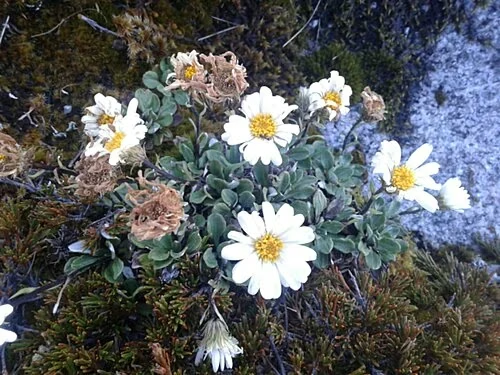
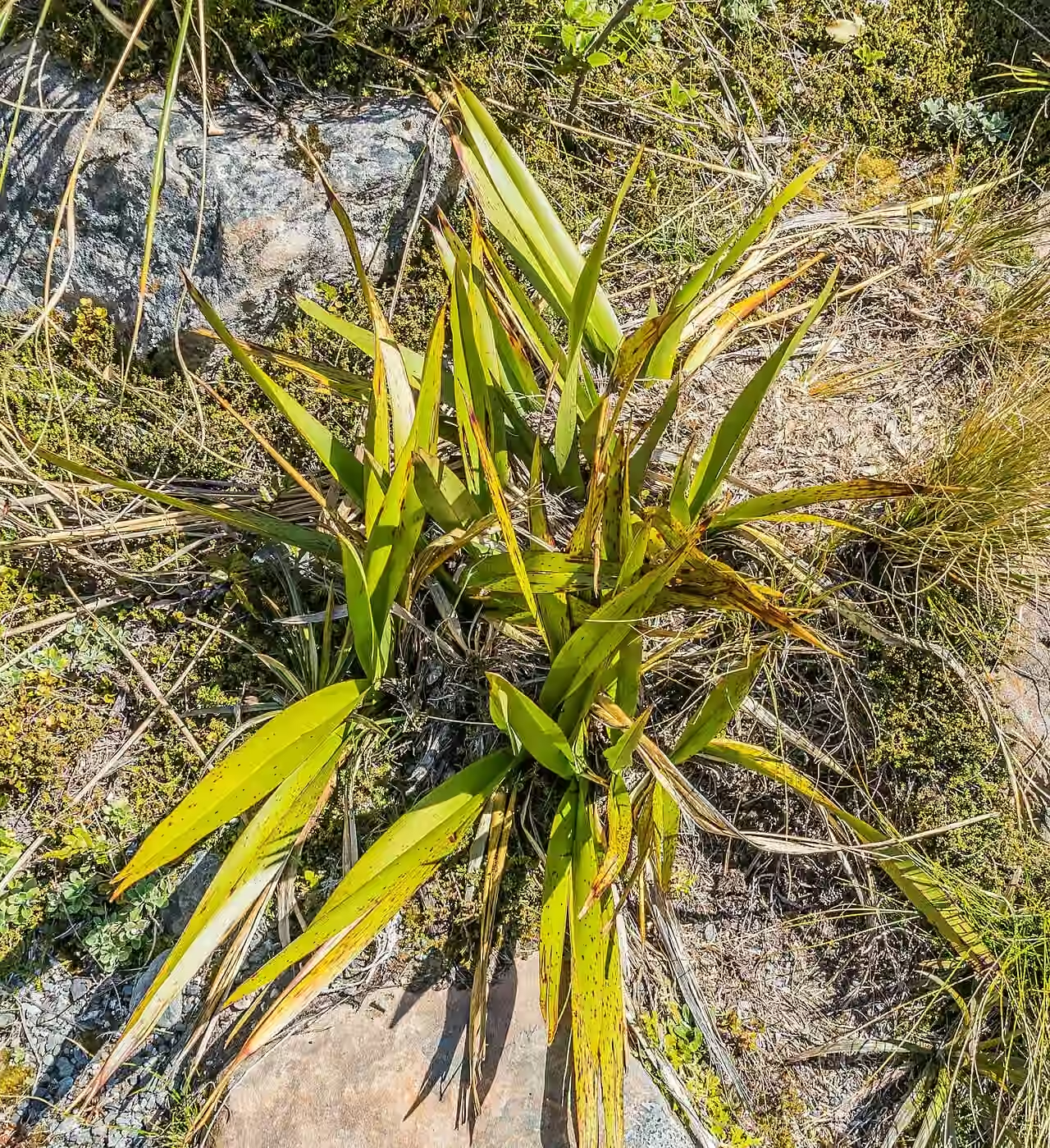
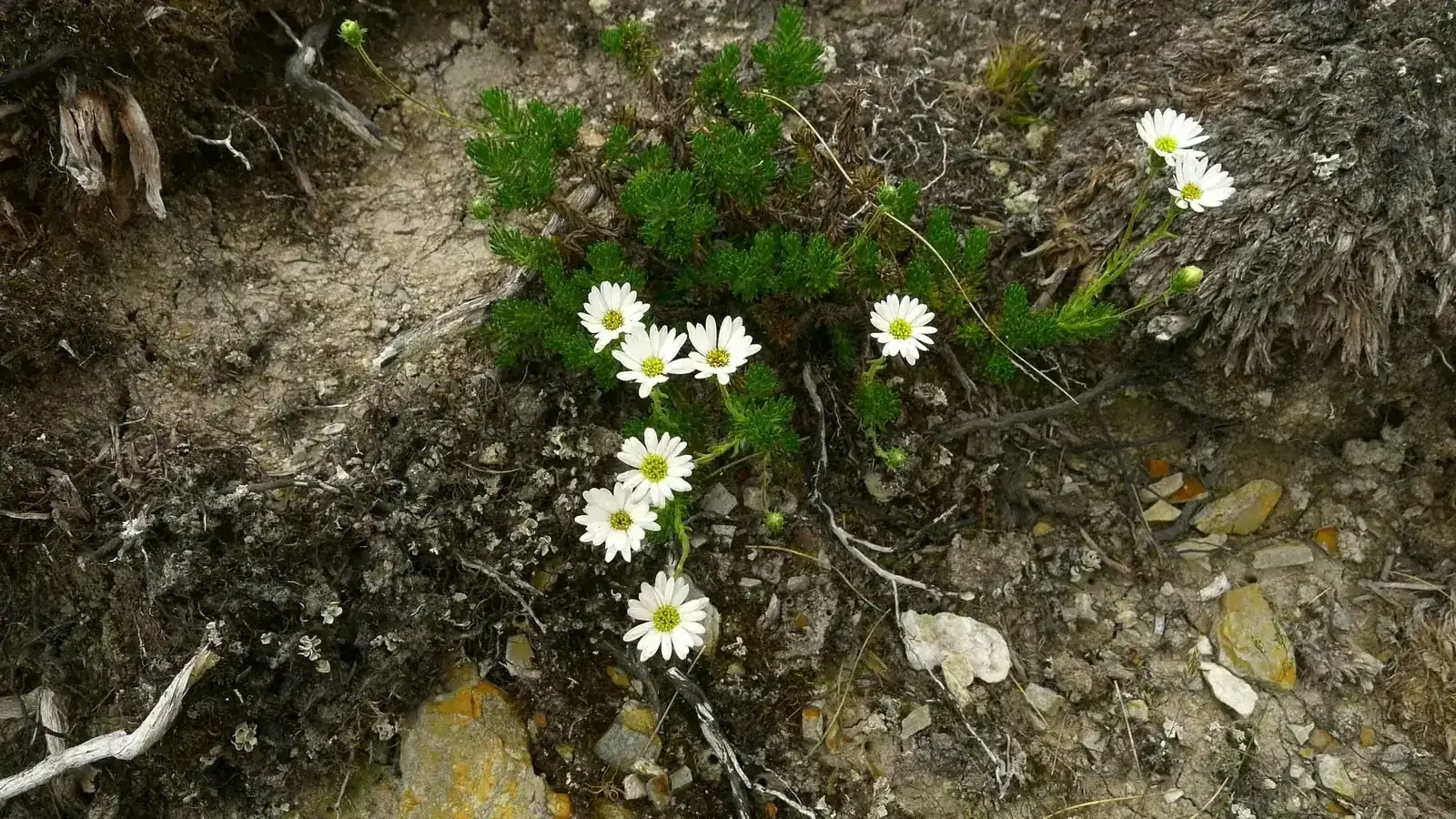
Explore other Celmisia species from New Zealand mountains, herbfields, forest edges and rocky places.
Conservation
The 2023 national assessment classifies Celmisia bonplandii as Not Threatened. New Zealand sources recognise this alpine endemic separately from the closely related coastal Celmisia lindsayi, which has a different national conservation status.
Frequently asked questions
Is it the same as Celmisia lindsayi?
Some older authors treated them together. The 2024 taxonomic revision recognises them separately, distinguishing their leaf bases, flower-head bracts and alpine versus coastal habitats.
Where does it grow?
It occurs in southern South Island mountains, often on rocky sites in high-rainfall areas from the subalpine to high alpine zone.
How wide can an established patch become?
Published descriptions record loose, branching patches of Celmisia bonplandii up to about 2 m across.
Sources
Identification, distribution, habitat and taxonomic comparison: Saldivia, 2024, revision of Celmisia subgenus Lignosae. Additional description and flowering: The Hebe Society.
National conservation status: Conservation status of vascular plants, 2023. Names: New Zealand Organisms Register.
Last updated: