Sedge
Carex calcis
Last updated:
Carex calcis is a stout, tufted sedge endemic to North-West Nelson in the South Island, where it grows only on soils derived from weathered limestone and calcareous mudstone or siltstone. Its stiff, channelled leaves reach 115 to 380 mm and its flowering stems up to about 575 mm, carrying 4 to 7 brown, erect spikes with speckled utricles tipped by white beaks. It occurs from about Garibaldi Ridge south to the Matiri Plateau, in upper montane to alpine shrubland and tussock grassland. Described only in 2007, it is ranked At Risk - Naturally Uncommon because it is range restricted and sparse. It is easily grown in moist, free-draining, lime-enriched soil. Explore more native grasses and flaxes in our native plant guide.
Plant Description
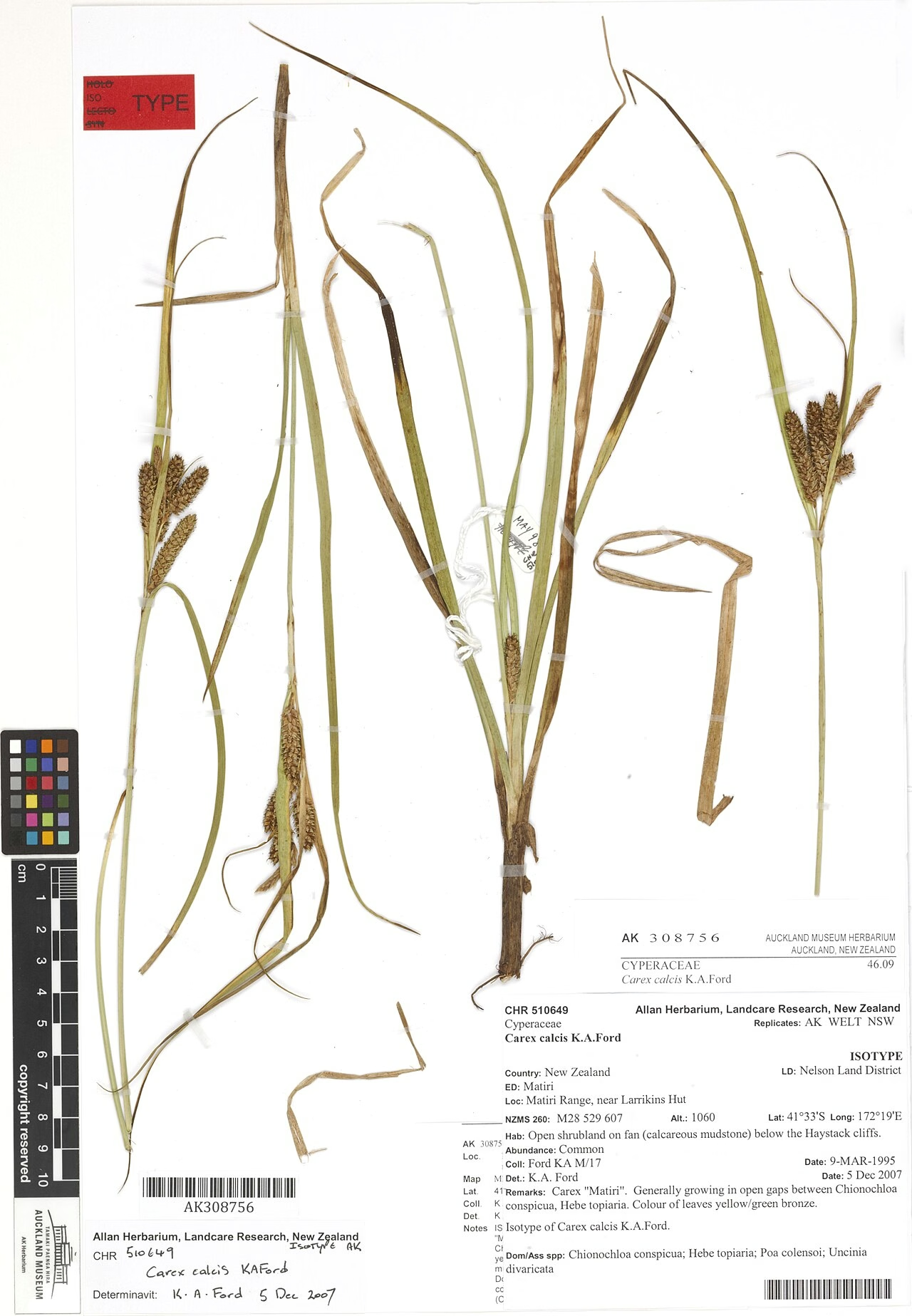
Carex calcis is a perennial sedge forming stout, rigid, spreading tufts. Its leaves are stiff and channelled, 115 to 380 mm long, and the leaf sheaths are loose, brown and often shred into fibres. The culms vary greatly in height, from 40 mm to about 575 mm.
The inflorescence has 4 to 7 densely flowered spikes, with separate male and female spikes. The female spikes are cylindrical, mostly brown and held erect. The utricles are 2.5 to 3.7 mm long and 1.2 to 2.3 mm wide, speckled brown and finished with a distinctive white beak.
Its closest relative is Carex dolomitica, another sedge of calcareous rock. Carex calcis is told apart by its loose, brown, shredding sheaths, its cylindrical brown female spikes and details of the utricle.
Quick Facts
| Scientific Name | Carex calcis |
|---|---|
| Height | 0.04-0.58 m |
| Spread | Spreading tufts up to about 0.4 m |
| Water Needs | Permanently moist but free draining |
| Light | Full sun |
| Frost Tolerance | High; upper montane to alpine |
| Salt Tolerance | No information available |
| Growth Rate | No information available |
| Lifespan | Perennial |
Climate Best Suited to
Suited to the cold, wet mountain climate of North-West Nelson, with heavy rainfall, frost and winter snow. It needs cool summers and consistent moisture.
Regional Suitability
| City | Climate Suitability |
|---|---|
| Auckland | Low |
| Wellington | Medium |
| Christchurch | Medium |
| Dunedin | Medium |
Plant Habitat
Carex calcis is endemic to North-West Nelson, where it ranges from about the Garibaldi Ridge south to the Matiri Plateau, within the Kahurangi region. The type material came from the calcareous mountains of this area.
It grows in upper montane to alpine zones and is exclusive to soils derived from weathered limestone and calcareous mudstone or siltstone. Typical sites are open shrubland and Chionochloa snow tussock grassland, along with colluvial deposits on lower slopes.
Growing Requirements
Soil Requirements
This is a strict calcicole: in the wild it only grows on soils weathered from limestone or calcareous mudstone and siltstone.
- Lime-rich, alkaline soil
- Permanently moist but free draining
- Gritty or stony colluvium suits it
Light Requirements
It grows in open shrubland and tussock grassland and does best in full sun.
- Full sun
- Avoid heavy shade
Water Requirements
North-West Nelson's mountains receive high rainfall, and the plant needs soil that stays moist yet never sits waterlogged.
- Keep evenly moist
- Ensure sharp drainage
Planting and Establishing
Choose a sunny position with gritty, free-draining soil and add lime, crushed limestone or limestone chip to the planting mix. A raised bed or rock garden built with limestone is ideal.
Water regularly through dry spells, as the plant expects consistent moisture. It is not commercially available, so plants usually come from specialist collections.
Ecological Role
Carex calcis is wind pollinated. It flowers in November, and fruit matures from January to March.
It is part of the distinctive flora of the Nelson limestone and marble country, which hosts many plants found nowhere else. In tussock grassland and open shrubland it adds to the low, tufted ground layer that binds colluvial soils on slopes.
Uses & Significance
Garden Uses
A specialist plant for alpine and limestone rock gardens and conservation collections.
- Limestone rock garden
- Alpine trough with lime-enriched mix
- Botanic garden and conservation collections
Ecological Value
As one of a suite of plants restricted to calcareous rock in North-West Nelson, it contributes to one of New Zealand's botanical hotspots.
- Endemic element of limestone tussock grassland
- Binds colluvium on lower slopes
- Seeds available to invertebrates and birds
Landscaping Uses
Its stiff, channelled leaves and erect brown spikes give it a structured look among limestone boulders, contrasting with low cushion plants.
Group a few plants in a lime-enriched scree bed alongside other Nelson limestone natives for a habitat-themed display.
Seasonal Care Calendar
Spring
New leaves grow as snow melts; flowering follows in November.
- Divide plants
- Top-dress with limestone chip
Summer
Fruit ripens from January to March.
- Keep moist
- Collect seed late summer
Autumn
Sow fresh seed collected in late summer.
- Sow seed fresh
Winter
Plants are dormant under frost and snow in the wild.
- Check drainage around crowns
When to Prune and How Much
No regular pruning is needed. Remove old flowering stems and dead leaves by hand in late winter if the tuft looks untidy.
Its shredding brown sheaths are a natural feature and need not be removed.
How to Grow Sedge
NZPCN describes Carex calcis as easily grown from fresh seed and by division of established plants. It prefers full sun in a permanently moist but free-draining soil enriched with lime. It is not commercially available, and as an At Risk species in a national park, wild material should only be collected under permit from the Department of Conservation. Propagating from plants already in cultivation is preferable.
From Seed
Fruit matures from January to March. Collect utricles once they have turned speckled brown and the white beaks are obvious, and sow fresh into a gritty mix with added lime to reflect its limestone soils.
- Collect ripe brown utricles in late summer.
- Mix fine limestone grit or a little garden lime into a free-draining seed mix.
- Sow on the surface and cover lightly with grit.
- Keep moist in a cool, bright position.
- Pot up seedlings into lime-enriched mix when large enough to handle.
By Division
Established tufts can be divided with a sharp knife or spade. The stout, rigid tufts are tough, so cut cleanly rather than tearing roots. Divide only well-established plants that have formed several crowns, and keep the divisions in a sheltered, bright spot for a few weeks so the roots can regrow before they face full sun and wind.
- Lift the clump in early spring.
- Cut into pieces each with roots and several shoots.
- Replant into moist, gritty, lime-enriched soil.
- Water well and keep moist until established.
Pests & Diseases
No specific pests or diseases are recorded for Carex calcis. Acidic, poorly drained soils are likely to be the main cause of failure in cultivation.
In the wild, browsing by introduced deer and goats and weed invasion are general pressures on Nelson limestone vegetation, although NZPCN does not single out a specific threat for this species.
Cultural Significance
No Māori name or traditional use is recorded for Carex calcis.
The species was only formally described in 2007 by Kerry Ford in the New Zealand Journal of Botany, and NZPCN featured it as Plant of the Month in January 2008. Its name reflects its strict association with limestone.
Bonus Tip
If you garden on acidic soil, grow Carex calcis in a container or raised bed of gritty mix with crushed limestone mixed through, and top-dress with limestone chip each year. This keeps the root zone alkaline, matching the weathered limestone soils it grows on in Kahurangi.
Related Plants
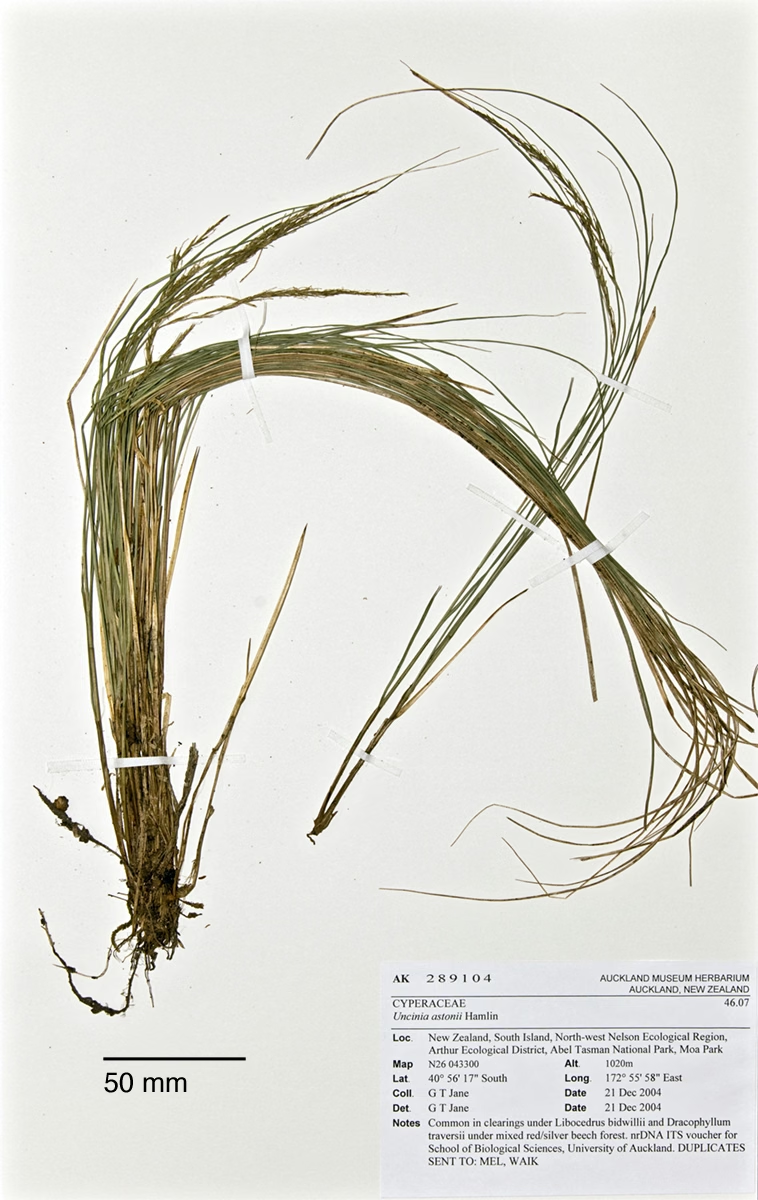
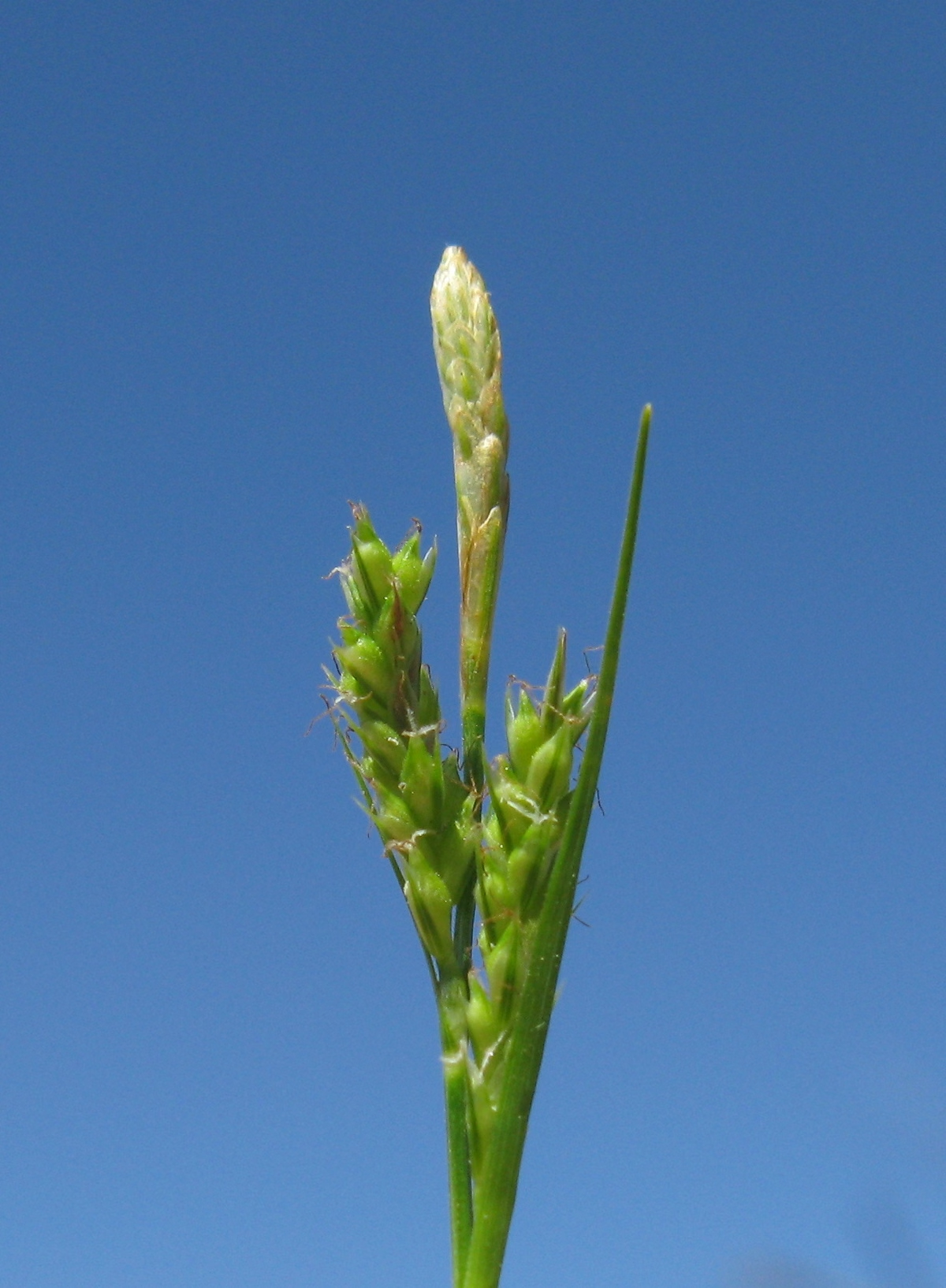
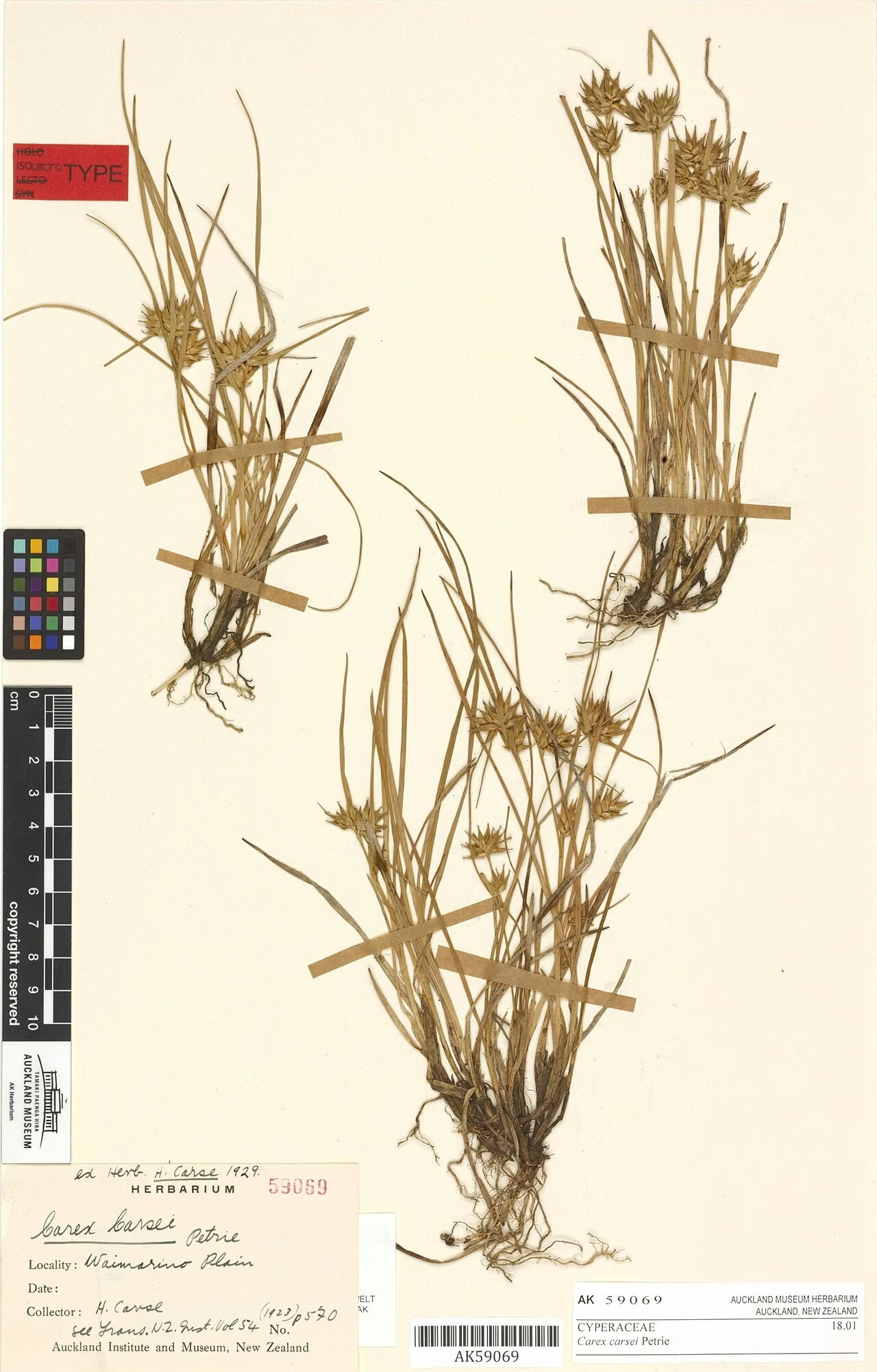
Explore other native plants that share similar characteristics or habitats with Sedge (Carex calcis), offering further insights into New Zealand's diverse flora. These related species provide context and opportunities for complementary planting in your garden.

Plant Conservation
Carex calcis is ranked At Risk - Naturally Uncommon (2023), with the qualifiers Range Restricted and Sparse. NZPCN notes that it is not threatened as such but is biologically sparse over its entire range.
Its range lies largely within the protected mountain lands of North-West Nelson. Maintaining protection of limestone habitats, controlling browsing animals and weeds, and holding plants in cultivation as a safeguard all help.
Frequently Asked Questions
Where does Carex calcis grow?
Only in North-West Nelson, from about Garibaldi Ridge south to the Matiri Plateau, in upper montane to alpine sites on soils formed from weathered limestone and calcareous mudstone or siltstone.
What does the name calcis mean?
Calcis comes from the Latin for lime or limestone, a fitting name because this sedge grows only on calcareous rock and soils in the Nelson mountains.
How is Carex calcis different from Carex dolomitica?
NZPCN notes that Carex calcis has loose brown sheaths that often shred, cylindrical brown female spikes, and differences in its utricles compared with the closely related Carex dolomitica.
Does Carex calcis need lime to grow?
NZPCN recommends growing it in full sun in permanently moist but free-draining soil enriched with lime, reflecting its natural restriction to limestone-derived soils.
Sources and Further Reading
The botanical, growing, and conservation details for Sedge (Carex calcis) on this page draw on the New Zealand plant references below. Consult them for full technical records and the latest distribution data.