Needle-Leaved Carex
Carex acicularis
Last updated:
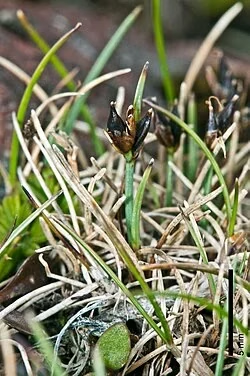
Carex acicularis, the needle-leaved Carex, is a diminutive endemic New Zealand sedge that forms small, dense tufts and mats of fine, hair-like foliage in shades of yellow-green to dark green. Its slender, smooth culms grow just 20 to 200 mm long, rising from chestnut to yellow-brown basal sheaths, while the very narrow leaves are grooved with slightly rough margins. Each stem bears a solitary small spike about 5 mm long holding a few female flowers. Found across the North, South and Stewart Islands, it grows in wet, open stony ground, damp seepages and tussock grassland from montane to subalpine zones, and is highly frost tolerant. Explore more native grasses and flaxes in our native plant guide.
Plant Description
Carex acicularis is a diminutive, perennial sedge that forms small, dense tufts and mats of fine, hair-like foliage, ranging in colour from yellow-green to dark green. Its culms (stems) are slender, smooth, and cylindrical, typically growing 20-200 mm long, emerging from chestnut-brown or yellow-brown basal sheaths. The leaves are very narrow, plano-convex (flat on one side, convex on the other), and grooved (canaliculated), with margins that are slightly rough (scabrid) towards their blunt (obtuse) tips. The inflorescence consists of a solitary, small spike, approximately 5 mm long, containing 2-6 female flowers. The fruits (utricles) are lanceolate, 3-5 mm long by 1 mm wide, smooth, and narrow to a distinctly rough, dark beak 1-2 mm long. The nut itself is oblong-trigonous and smooth, about 2 mm long. This sedge is characterized by its delicate appearance and preference for cool, moist, high-altitude environments.
Quick Facts
| Scientific Name | Carex acicularis |
|---|---|
| Height | 20-200 mm |
| Spread | Small tufts and mats |
| Water Needs | Moist, well-drained |
| Light | Semi-shaded |
| Frost Tolerance | High |
| Salt Tolerance | Low |
| Growth Rate | Slow |
| Lifespan | Perennial |
| Height (culms) | 20-200 mm |
| Foliage Colour | Yellow-green to dark green |
Climate Best Suited to
Needle-leaved Carex is endemic to New Zealand, thriving in montane to subalpine climates across the North, South, and Stewart Islands. It is adapted to cool, moist environments and is typically found in wet, open stony ground, damp seepages within scrub or forest, or within tussock grassland. While it prefers cooler conditions and does not tolerate high humidity well, it can sometimes be found in coastal areas in the southern part of its range.
Regional Suitability
| City | Climate Suitability |
|---|---|
| Best suited to cool, montane to subalpine climates with consistent moisture and good drainage. Less suitable for hot, humid, or dry climates. | |
Plant Habitat
Carex acicularis is an endemic New Zealand sedge, widely distributed across the North, South, and Stewart Islands. In the North Island, its presence is mainly restricted to the main axial mountains and the Volcanic Plateau, while it is more widespread in the South and Stewart Islands. Its preferred habitat is montane to subalpine, where it grows in wet, open stony ground, damp seepages within scrub or forest, and among tussock grasslands. In the southern parts of its range, it can occasionally be found in coastal areas, demonstrating some adaptability to different altitudes.
Growing Requirements
Soil Requirements
Needle-leaved Carex thrives in moist, well-drained soils. It can tolerate a range of soil types, including stony or gravelly compositions, as long as good drainage is ensured and waterlogging is avoided. In its natural habitat, it often grows in damp, peaty, or mineral soils.
- Moist, well-drained soil
- Tolerates stony/gravelly soils
- Avoid waterlogging
Light Requirements
Carex acicularis prefers semi-shaded sites in its natural montane to subalpine habitat. While it can tolerate a wider range of conditions once established, protection from intense, direct sunlight, especially in warmer climates, is beneficial.
- Semi-shaded (preferred)
- Tolerates wider range once established
- Avoid intense direct sun
Water Requirements
This sedge requires consistent moisture and is typically found in damp or wet ground. However, it does not tolerate waterlogging. Regular watering is necessary to maintain soil moisture, especially during dry periods, mimicking its natural damp seepages.
- Consistent moisture
- Avoid waterlogging
- Requires damp or wet ground
Planting and Establishing
When planting Needle-leaved Carex, choose a site that offers consistent moisture and good drainage, ideally in semi-shaded conditions. It is well-suited for rock gardens, alpine beds, or the edges of bog gardens where its specific needs can be met. Prepare the planting area with a moist, well-drained substrate, possibly enriched with organic matter. Plant rooted pieces or seedlings, ensuring good contact with the soil. For propagation from fresh seed, sow onto a well-draining mix and maintain consistent moisture at cool to moderate temperatures (10-18°C). This sedge is slow-growing, so patience is required for establishment.
Ecological Role
As an endemic New Zealand sedge, Carex acicularis plays an ecological role in montane to subalpine ecosystems. Its mat-forming growth can help stabilize soils in wet, stony ground, contributing to erosion control. It provides ground cover and microhabitats for small invertebrates within tussock grasslands and damp seepages. Its presence contributes to the biodiversity of these high-altitude environments. Being classified as "Not Threatened," it represents a healthy component of New Zealand's unique flora, especially among the diverse native sedges .
Uses & Significance
Garden Uses
Needle-leaved Carex is a valuable plant for specialist native gardens, rock gardens, or alpine plantings where its fine texture and mat-forming habit can be appreciated. It can be used to provide delicate ground cover in cool, moist, semi-shaded areas, adding a subtle touch to naturalistic designs.
- Alpine & Rock Gardens
- Native Plant Gardens
- Fine-textured Ground Cover
- Wetland Edge Plant
Ecological Value
The ecological value of Carex acicularis lies in its endemic status and its contribution to the unique montane and subalpine ecosystems of New Zealand. It aids in soil stabilization in wet areas and provides ground cover, contributing to microhabitat diversity. As a "Not Threatened" species, it is a healthy part of the native flora.
- Endemic Species
- Soil Stabilizer
- Habitat Provider (microhabitats)
- Biodiversity Contributor
Landscaping Uses
Carex acicularis can be used in specialized landscaping to create naturalistic alpine or montane scenes. Its delicate, mat-forming growth is excellent for planting between rocks, along damp paths, or at the edges of water features in a cool, semi-shaded environment. It provides fine texture and subtle colour, ideal for creating a sense of natural tranquility and accentuating the unique beauty of New Zealand's high-altitude flora.
Seasonal Care Calendar
Spring
As new growth appears, ensure consistent moisture and good drainage. This is a good time for light tidying and division if desired.
- Ensure consistent moisture
- Light tidying/division
Summer
Maintain consistent moisture. Protect from intense direct sun, especially in warmer climates. Growth is active.
- Consistent moisture
- Protect from intense sun
Autumn
Reduce watering as temperatures cool. Ensure excellent drainage to prepare for winter. Clear any fallen leaves or debris that might smother the plant.
- Reduce watering
- Ensure good drainage
- Clear debris
Winter
Highly frost-tolerant due to its alpine origin. Ensure good drainage to prevent waterlogging. Minimal maintenance required.
- Highly frost-tolerant
- Avoid waterlogging
- Minimal maintenance
When to Maintain and How Much
Maintenance for Needle-leaved Carex is minimal, primarily focusing on tidying and ensuring optimal conditions.
- Remove any dead or yellowing foliage to maintain a tidy appearance.
- Clear away fallen leaves or debris that might smother the delicate tufts.
- If the mats become too dense, light division can be done in spring to rejuvenate the plant.
Avoid heavy pruning; instead, focus on gentle care to allow its natural form to flourish.
How to Grow Needle-Leaved Carex
Cultivating Needle-leaved Carex ( Carex acicularis ) is best achieved by replicating its cool, moist, and well-drained montane to subalpine natural habitat. This endemic New Zealand sedge is slow-growing but can be successfully established from rooted pieces or fresh seeds. Understanding its preference for consistent moisture without waterlogging is crucial for its success in cultivation.
From Seed
Propagating Carex acicularis from fresh seed is a viable method, though it can be slow.
- Collect fresh seeds as they mature.
- Sow seeds thinly on the surface of a fine, well-draining seed-raising mix. Do not bury the seeds too deeply; a light covering of grit or fine mix is sufficient.
- Maintain consistent moisture in the seed tray. Ensure the mix remains damp but not waterlogged.
- Keep the seed tray in a cool to moderate temperature range (10-18°C).
- Germination can be slow and may take several weeks or even months. Patience is key.
- Once seedlings have developed a few true leaves and are robust enough to handle, prick them out carefully into individual pots containing a moist, well-drained potting mix.
- Grow on in a sheltered, semi-shaded location, gradually acclimating them to outdoor conditions before final planting.
From Division/Rooted Pieces
Propagating from rooted pieces or by division is a more reliable and faster method, especially for established clumps.
- In spring, carefully dig up a mature clump of Carex acicularis .
- Gently separate the clump into smaller sections, ensuring each section has a healthy portion of roots and foliage.
- Plant these divisions into prepared sites that offer consistent moisture and good drainage, ideally in semi-shaded conditions.
- Water thoroughly after planting and maintain consistent moisture until the divisions are well-established and showing new growth.
- This method allows for quicker establishment than seed propagation.
Additional Considerations
While adaptable, Carex acicularis does not tolerate high humidity well. Therefore, ensure good air circulation if growing in contained environments. Its slow growth rate means it will not quickly fill spaces, but its fine texture and delicate appearance make it a valuable addition to appropriate garden settings. Focus on maintaining its preferred cool, moist, and well-drained conditions.
Pests & Diseases
Needle-leaved Carex ( Carex acicularis ) is generally a robust and healthy sedge, with few significant pest or disease issues when grown in suitable conditions. Its primary vulnerabilities are typically related to environmental factors rather than specific biological threats.
- Waterlogging: This is the most significant threat. While it prefers moist conditions, prolonged waterlogging will lead to root rot and plant decline. Excellent drainage is crucial.
- Humidity: It does not tolerate high humidity well, which can potentially lead to fungal issues if combined with poor air circulation.
- Drying Out: While not as sensitive as some aquatic plants, prolonged dry spells can cause stress, especially in hot, exposed positions. Consistent moisture is important.
- Physical Damage: Being a small, delicate sedge, it can be susceptible to physical damage from heavy foot traffic or larger animals.
Maintaining its ideal growing conditions-moist, well-drained soil, semi-shade, and good air circulation-is the best defense against potential problems for Needle-leaved Carex.
Cultural Significance
Needle-leaved Carex ( Carex acicularis ) holds cultural significance as an endemic New Zealand sedge, contributing to the unique biodiversity of the North, South, and Stewart Islands. As a component of montane to subalpine ecosystems and tussock grasslands, it is part of the traditional landscape and ecological fabric. While specific traditional Māori uses are not extensively documented for this particular sedge, its presence is integral to the natural heritage of Aotearoa. The genus Carex , known as kāretu in Māori, often played roles in weaving and as ground cover. This species, though diminutive, is a testament to the diverse and specialized flora of New Zealand's high-altitude environments.
- Endemic to New Zealand
- Part of montane to subalpine ecosystems
- Contributes to biodiversity and natural heritage
- Genus often known as kāretu (Māori)
Bonus Tip
When designing a native alpine or rock garden, use Needle-leaved Carex to add a delicate, fine-textured element. Plant it alongside larger rocks or other low-growing alpine plants to create visual contrast and highlight its unique form.
Related Plants
Explore other native sedges and alpine plants that share similar characteristics or habitats with Needle-leaved Carex ( Carex acicularis ), offering further insights into New Zealand's diverse flora. These related species provide context and opportunities for complementary planting in your garden.


Plant Conservation
Carex acicularis is classified as "Not Threatened" under the New Zealand Threat Classification System. This status indicates that the species has a healthy and stable population across its natural range in the North, South, and Stewart Islands. Its adaptability to various montane to subalpine environments, including wet, stony ground and tussock grasslands, contributes to its resilience. Ongoing monitoring and responsible land management are essential to ensure the continued success of this endemic sedge and its ecological role within New Zealand's unique flora.
Frequently Asked Questions
How tall does Carex acicularis grow?
Its culms grow just 20 to 200 mm long, forming small, dense tufts and mats of fine foliage.
Where does needle-leaved Carex grow naturally?
It is endemic to New Zealand, growing in wet montane to subalpine ground across the North, South and Stewart Islands.
What conditions does Carex acicularis prefer?
It prefers moist, well-drained, wet stony ground and seepages in semi-shade, with high frost tolerance.
How fast does Carex acicularis grow?
It is a slow-growing perennial sedge that forms mats over time in cool, moist sites.
Sources and Further Reading
The botanical, growing, and conservation details for Needle-Leaved Carex (Carex acicularis) on this page draw on authoritative New Zealand plant references and citizen-science observation records. Consult the sources below for full technical records and the latest distribution data.