Azorella
Azorella schizeilema
Last updated:
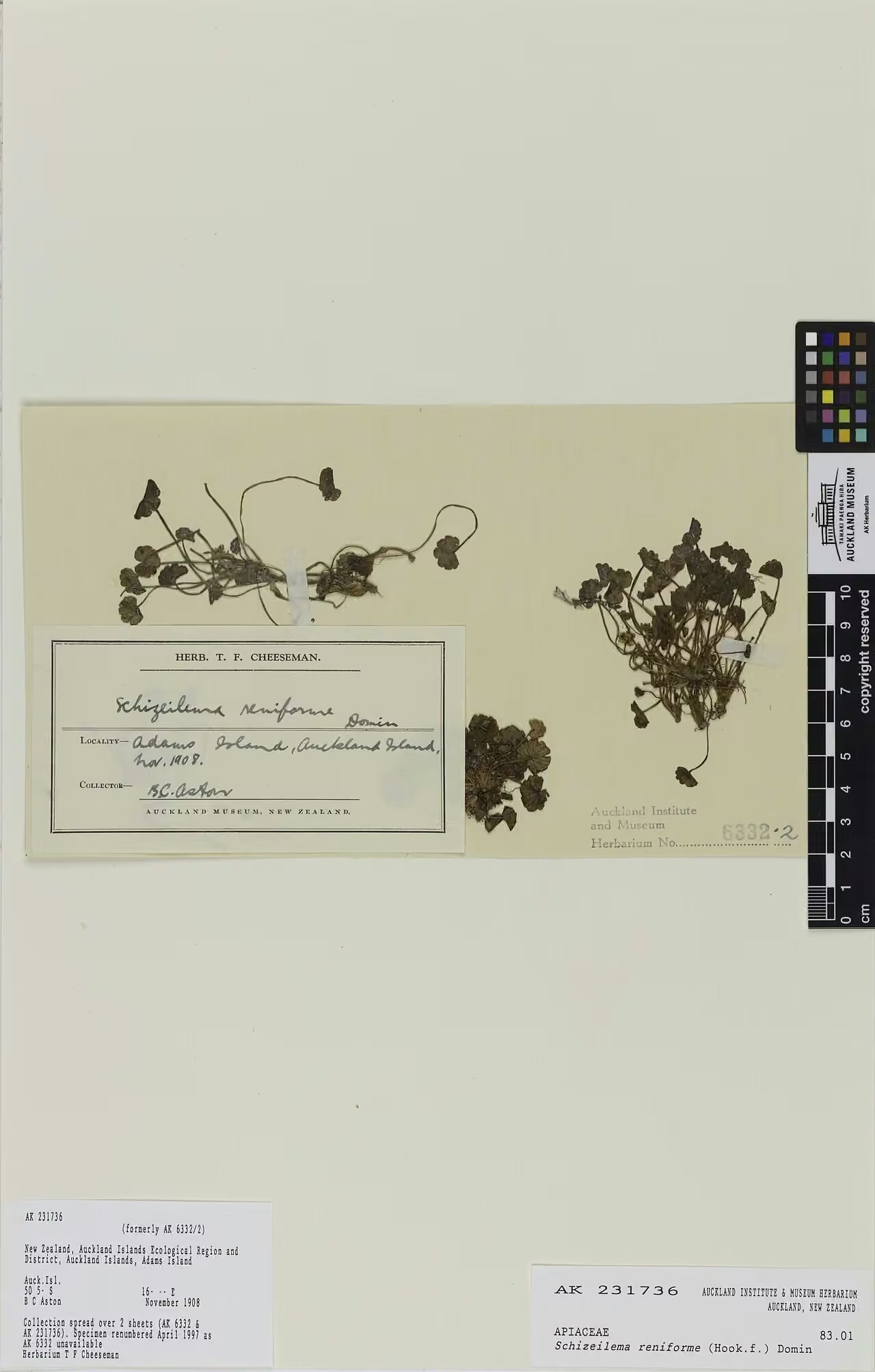
Azorella schizeilema, long known as Schizeilema reniforme, is a small creeping herb of the carrot family found only on New Zealand's subantarctic Auckland Islands and Campbell Island/Motu Ihupuku. Slender rhizomes send out short stolons, and its clustered, bright green, kidney-shaped to rounded leaves are 10-15 mm across with scalloped edges, on stalks 4-5 cm long. Allan's Flora records it from rocky places. It is ranked At Risk - Naturally Uncommon as an island endemic with a small range, though no threats to it are known. Its current name was coined because Azorella reniformis was already in use. Explore more native ground covers in our native plant guide.
Plant Description
Azorella schizeilema is a hairless perennial herb with slender rhizomes that give off short stolons. Its leaves are clustered on rather stout stalks usually 4-5 cm long (ranging from 2 to 6 cm), with entire, pointed stipules.
The leaf blades are usually 10-15 mm across (5-20 mm overall), kidney-shaped to nearly circular, slightly leathery and bright green, with scalloped margins that are hardly thickened and an open, more or less heart-shaped notch at the base. Flowers are almost stalkless, in umbels of three to eight on rather stout stalks up to about 3 cm long, above linear, blunt bracts. The calyx teeth are pointed and the petals about 1 mm long. The pale, four-angled fruit is about 2-3 mm long, its halves five-ribbed, though sometimes only obscurely.
Its undivided, scalloped, kidney-shaped leaves set it apart from the mainland species with three-parted leaves. It is the only member of the group confined to the subantarctic islands.
Quick Facts
| Scientific Name | Azorella schizeilema |
|---|---|
| Height | About 4-6 cm (leaf stalks 2-6 cm) |
| Spread | Spreads slowly by short stolons |
| Water Needs | Moderate to high; constantly moist |
| Light | Full sun to light shade |
| Frost Tolerance | Hardy; subantarctic climate |
| Salt Tolerance | Not documented; its island habitat exposes it to salt-laden wind, but tolerance is not known |
| Growth Rate | Slow |
| Lifespan | Perennial |
Climate Best Suited to
Adapted to the cold, windy, cloudy and very wet subantarctic oceanic climate, with cool summers and few warm days. Mainland gardens, especially in the north, are much warmer and drier.
Regional Suitability
| City | Climate Suitability |
|---|---|
| Auckland | Low |
| Wellington | Low |
| Christchurch | Low |
| Dunedin | Medium |
Plant Habitat
NZPCN gives the distribution of Azorella schizeilema as the Auckland Islands and Campbell Island/Motu Ihupuku, part of New Zealand's subantarctic island groups. Allan's Flora of New Zealand records it from rocky places.
Joseph Hooker described it as Pozoa reniformis in 1844 from collections made during the Ross expedition to the subantarctic. The Flora quotes Sorensen (1951) noting that it was reported from the Tucker Cove valley on Campbell Island, a record that needs verification.
Growing Requirements
Soil Requirements
On the islands it grows in rocky places, where soils are typically thin, cool, wet and peaty.
- Gritty mix with plenty of peat or humus
- Constantly moist but not stagnant
- Cool root zone
Light Requirements
The subantarctic islands are cloudy for most of the year, so it is adapted to bright but diffuse light.
- Bright, cool position
- Shade from strong afternoon sun on the mainland
- Good airflow
Water Requirements
Its home islands receive frequent rain and drizzle, so it needs steady moisture.
- Keep evenly moist all year
- Never allow to dry out in summer
- Ensure drainage so roots do not sit in warm water
Planting and Establishing
Azorella schizeilema is not commercially available and no cultivation records were found. Collection on the subantarctic islands, which are nature reserves and part of a World Heritage Area, requires a permit from the Department of Conservation, so it is effectively a plant only for research or botanic garden collections.
If grown, it is likely to need conditions similar to other subantarctic plants: a cool, moist, bright position in a gritty, peaty mix, protected from heat. Southern gardens with cool summers offer the best chance.
Ecological Role
Azorella schizeilema is a small component of the rocky-ground flora of the Auckland and Campbell Islands, a flora famous for its megaherbs but also rich in small herbs. Its flowers appear from November to February; pollination on the subantarctic islands is largely by flies, but no study specific to this species was found.
Its slender rhizomes and short stolons allow it to persist in crevices and among rocks. The removal of introduced grazing animals from Campbell Island and parts of the Auckland Islands has allowed much of the native flora there to recover, though no data on this species' response were found.
Uses & Significance
Garden Uses
It has no practical garden role on the mainland.
- Research and botanic garden collections only
- Illustrating the subantarctic flora in education
- Not commercially available
Ecological Value
As a subantarctic island endemic, it contributes to one of New Zealand's most distinctive floras.
- Endemic to the Auckland and Campbell Islands
- Ranked At Risk - Naturally Uncommon (Island Endemic, Range Restricted)
- Part of rocky-ground herb communities
Landscaping Uses
Azorella schizeilema has no realistic landscaping use. Its value is as a living example of the subantarctic flora in specialist collections, where its bright green, scalloped, kidney-shaped leaves could be shown alongside other island plants.
Gardeners wanting a similar look on the mainland would do better with readily grown native ground covers suited to their own climate.
Seasonal Care Calendar
Spring
Growth begins in the cool island spring.
- Leaves expand from the rhizomes
- Flowering begins from November
Summer
Flowering runs from November to February.
- Fruit forms from November
- Cool, cloudy island summer suits it
Autumn
Fruiting continues until March.
- Pale fruit 2-3 mm long ripens
- Growth slows as days shorten
Winter
A cold, windy, wet winter on the islands.
- Plants persist among rocks
- Little or no growth
When to Prune and How Much
No pruning is required or appropriate. In any cultivated plant, remove only dead leaves.
Keep surrounding mosses and weeds from smothering the low rhizomes and leaves.
How to Grow Azorella
No propagation information has been published for Azorella schizeilema, and it is not commercially available. Its structure suggests two possible methods: separating pieces of rhizome or stolon from an established plant, and sowing its pale, four-angled fruit, which ripens between November and March. Any material from the Auckland or Campbell Islands can only be collected under a Department of Conservation permit, because the islands are protected nature reserves. The steps below are therefore guidance for institutions holding legally sourced material, based on the plant's growth habit.
By Division of Rhizomes and Stolons
The slender rhizomes emit short stolons that can form new leaf clusters. Separating a rooted cluster is likely to be the most reliable approach.
- In spring, select a stolon with its own leaf cluster and roots.
- Cut it free from the parent rhizome with clean, sharp scissors, keeping as much root as possible.
- Pot into a cool, gritty, peaty mix.
- Keep in bright, diffuse light and constantly moist.
- Grow on in a cool house or shade house until established.
From Seed
Germination requirements are not known. Cool, moist conditions resembling the cloudy islands are the logical starting point, and seed should be sown fresh.
- Sow fresh fruit on the surface of a moist, gritty seed mix.
- Cover lightly with fine grit.
- Keep cool and moist, outdoors in a southern climate or in a cool room.
- Record timing and results, since there is no published data to guide you.
Pests & Diseases
No pests or diseases are recorded for Azorella schizeilema. NZPCN notes there are no apparent threats to wild populations.
In cultivation, warm temperatures are likely to be the main problem for any subantarctic plant, encouraging rot and stress, while slugs could damage the leaves.
Cultural Significance
No Māori name or traditional Māori use is recorded for Azorella schizeilema.
Joseph Hooker named it Pozoa reniformis in 1844, during his work on the plants gathered by the British Antarctic expedition of James Clark Ross, which visited the Auckland and Campbell Islands in 1840. Domin moved it to Schizeilema in 1908. Its current name, published by Plunkett and Nicolas, turns the old genus name into an epithet; NZPCN glosses schizeilema as 'split cover', a reference to the floral bracts.
Bonus Tip
When reading older subantarctic literature, look for this plant under Pozoa reniformis, Azorella reniformis and Azorella schizeilema. All refer to the same species now called Azorella schizeilema, so searching under every name will find far more records.
Related Plants
Explore other native plants that share similar characteristics or habitats with Azorella (Azorella schizeilema), offering further insights into New Zealand's diverse flora. These related species provide context and opportunities for complementary planting in your garden.
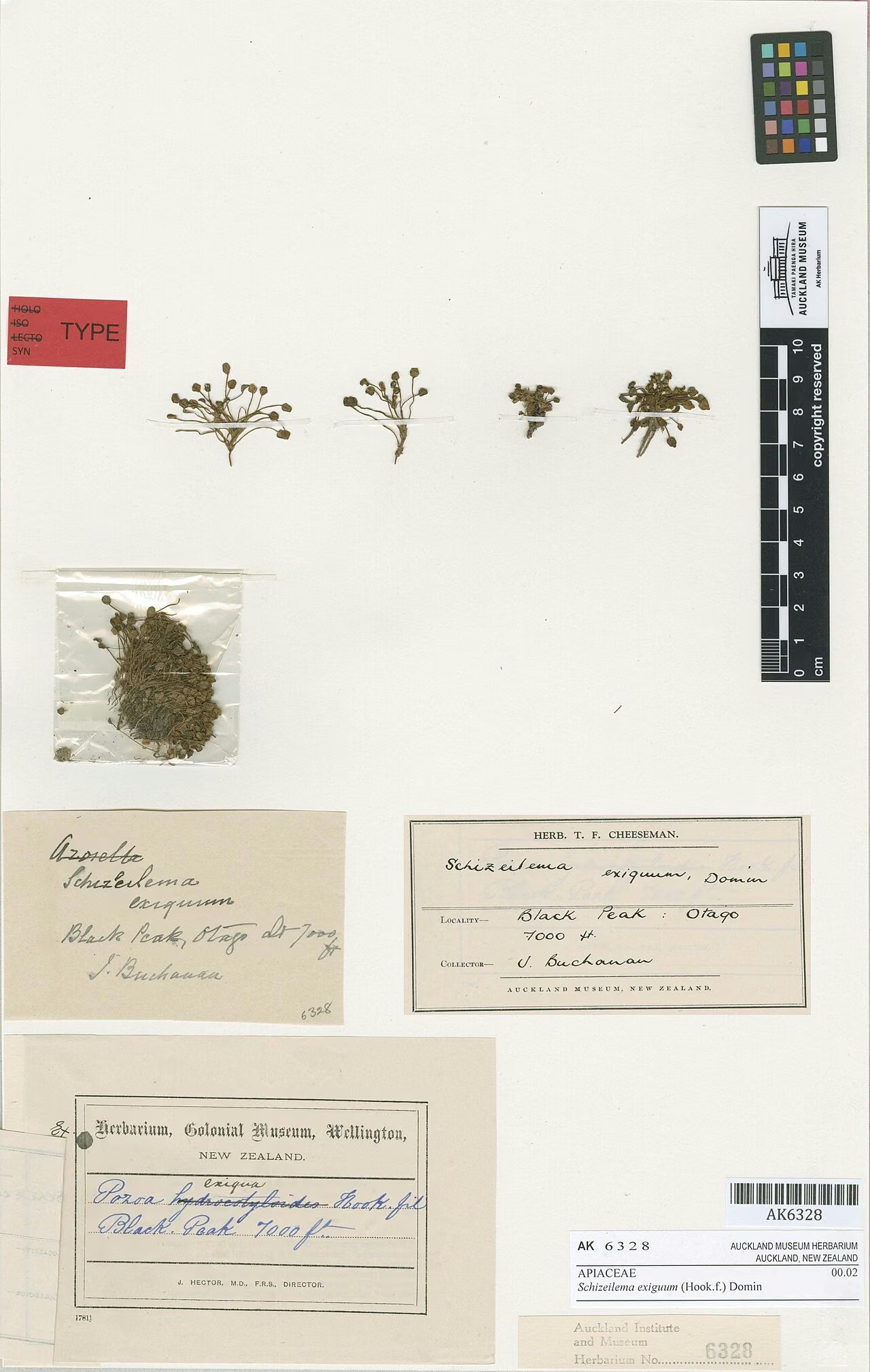
Azorella exigua
Azorella exigua
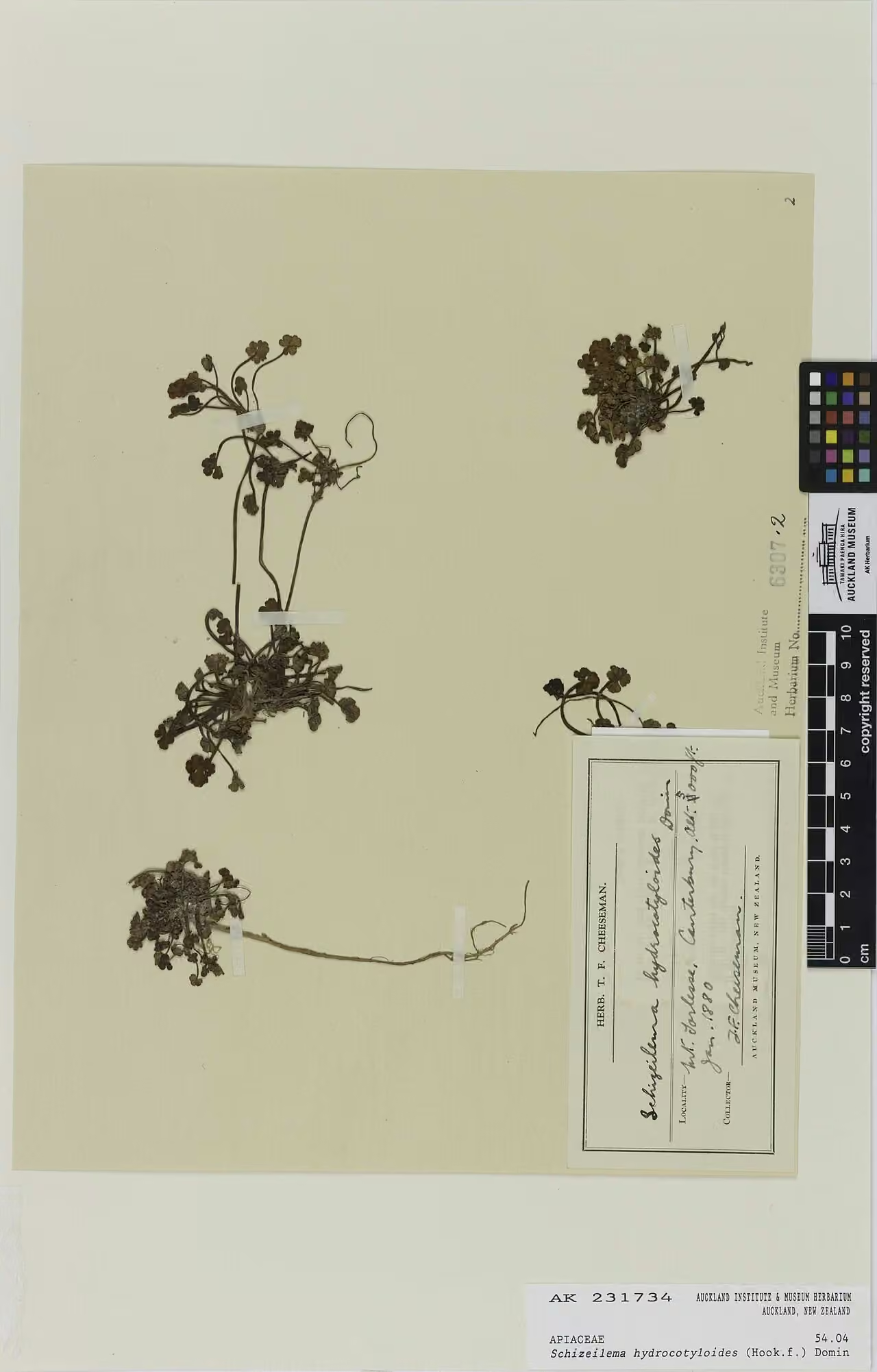
Azorella hydrocotyloides
Azorella hydrocotyloides
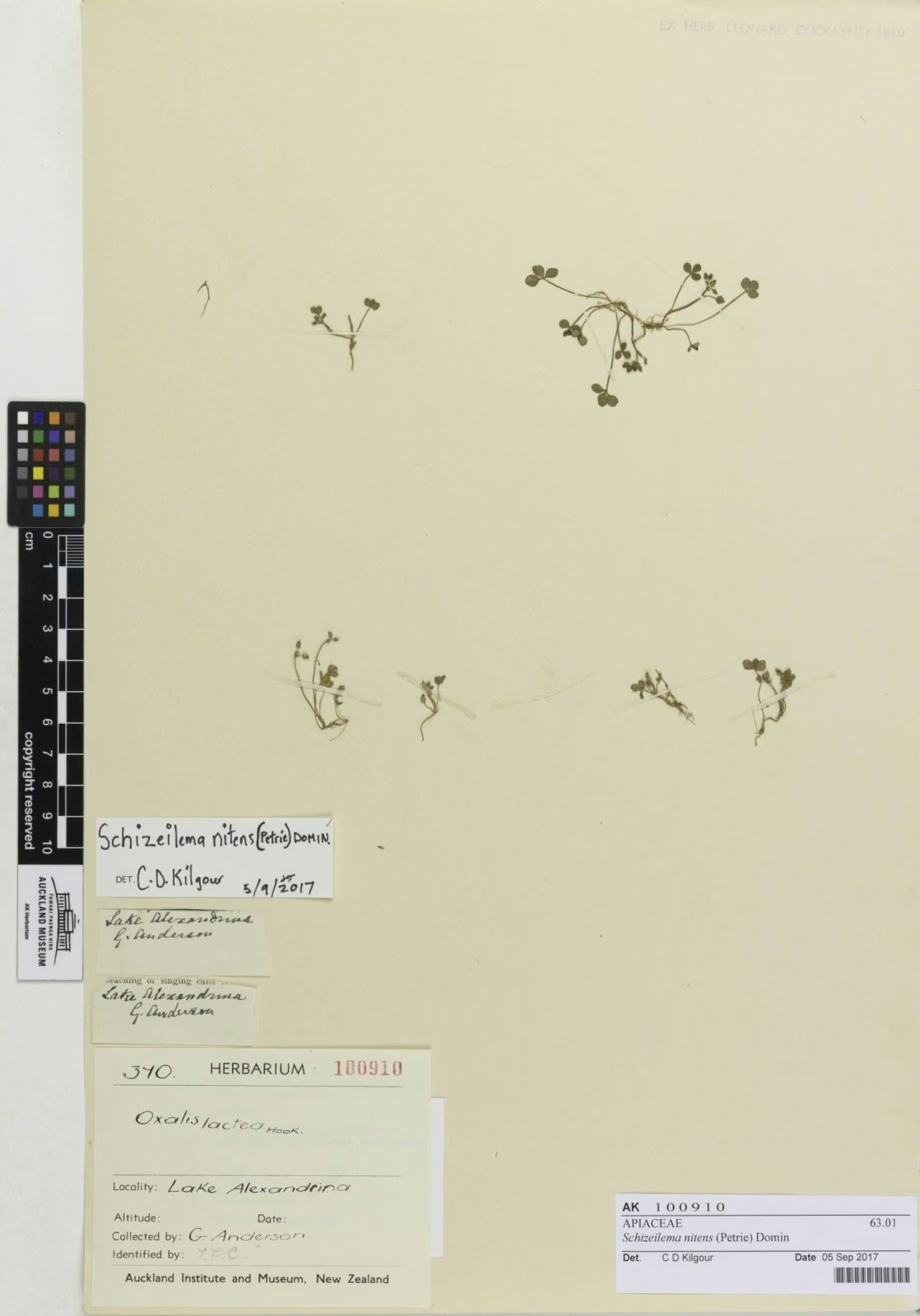
Azorella nitens
Azorella nitens
Schizeilema roughii
Schizeilema roughii
Three-Square
Schoenoplectus pungens
Kāpūngāwhā
Schoenoplectus tabernaemontani
Azorella allanii
Azorella allanii
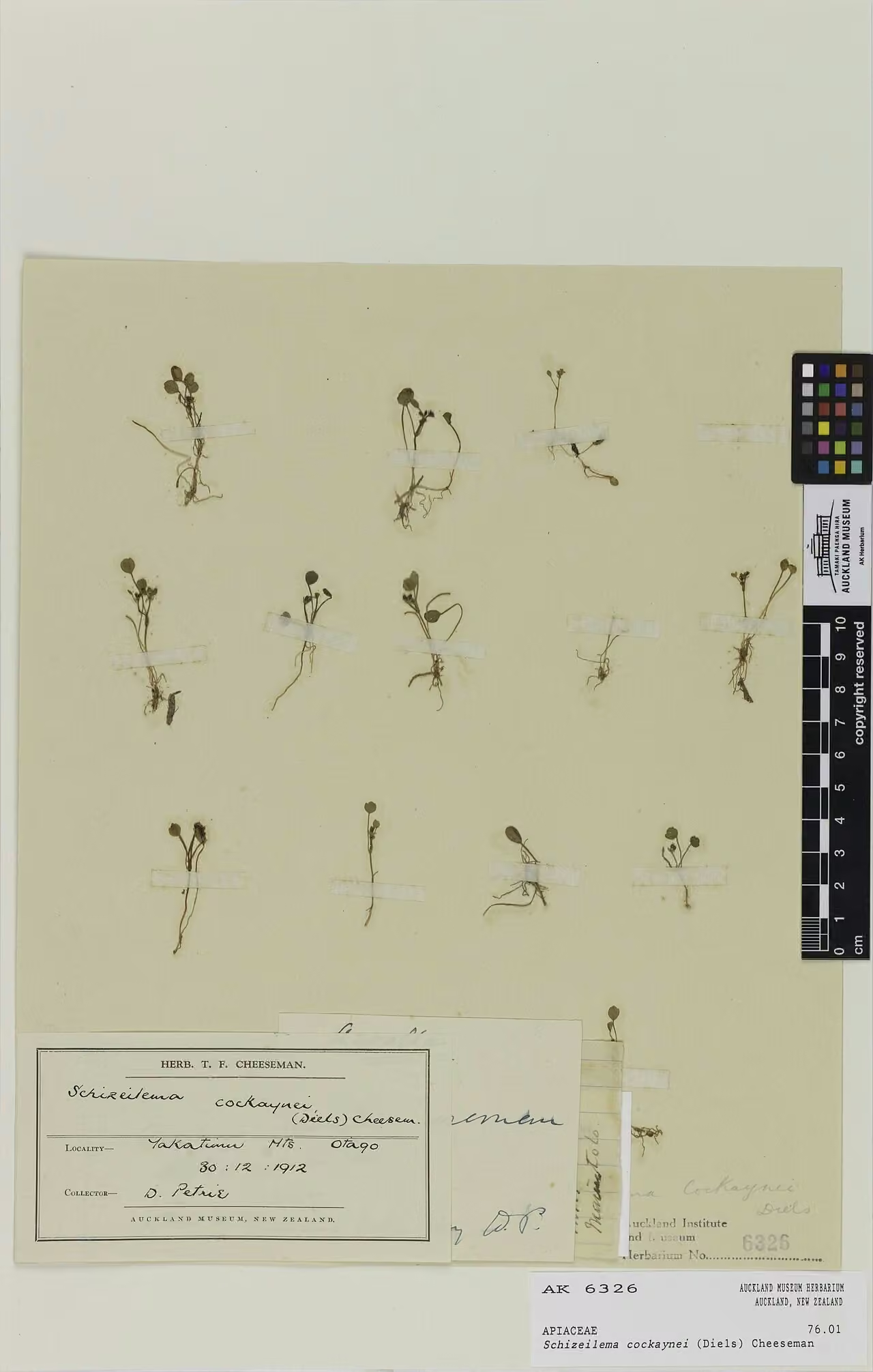
Azorella cockaynei
Azorella cockaynei
Plant Conservation
Azorella schizeilema is ranked At Risk - Naturally Uncommon in the 2023 New Zealand Threat Classification System assessment, with qualifiers IE (Island Endemic) and RR (Range Restricted). It was listed as Range Restricted in 2004 and Naturally Uncommon since 2009.
NZPCN states there are no apparent threats; it is listed because it is an island endemic occupying a rather small range. The Auckland and Campbell Islands are protected nature reserves, and continued biosecurity to keep pests and weeds off the islands is the main safeguard.
Frequently Asked Questions
Why is Schizeilema reniforme now called Azorella schizeilema?
When it was transferred to Azorella, the obvious name Azorella reniformis already belonged to a South American species. Plunkett and Nicolas therefore published the new name Azorella schizeilema in 2016, reusing the old genus name as the epithet.
Where does Azorella schizeilema grow?
It is endemic to New Zealand's subantarctic Auckland Islands and Campbell Island/Motu Ihupuku, where Allan's Flora records it in rocky places.
Is Azorella schizeilema threatened?
It is ranked At Risk - Naturally Uncommon with the qualifiers Island Endemic and Range Restricted. NZPCN notes there are no apparent threats; it is listed because of its small range.
What does reniforme mean?
Reniform means kidney-shaped, describing the leaf blades, which are kidney-shaped to almost round with a heart-shaped notch at the base.
Sources and Further Reading
The botanical, growing, and conservation details for Azorella (Azorella schizeilema) on this page draw on the New Zealand plant references below. Consult them for full technical records and the latest distribution data.