Three-Square
Schoenoplectus pungens
Last updated:
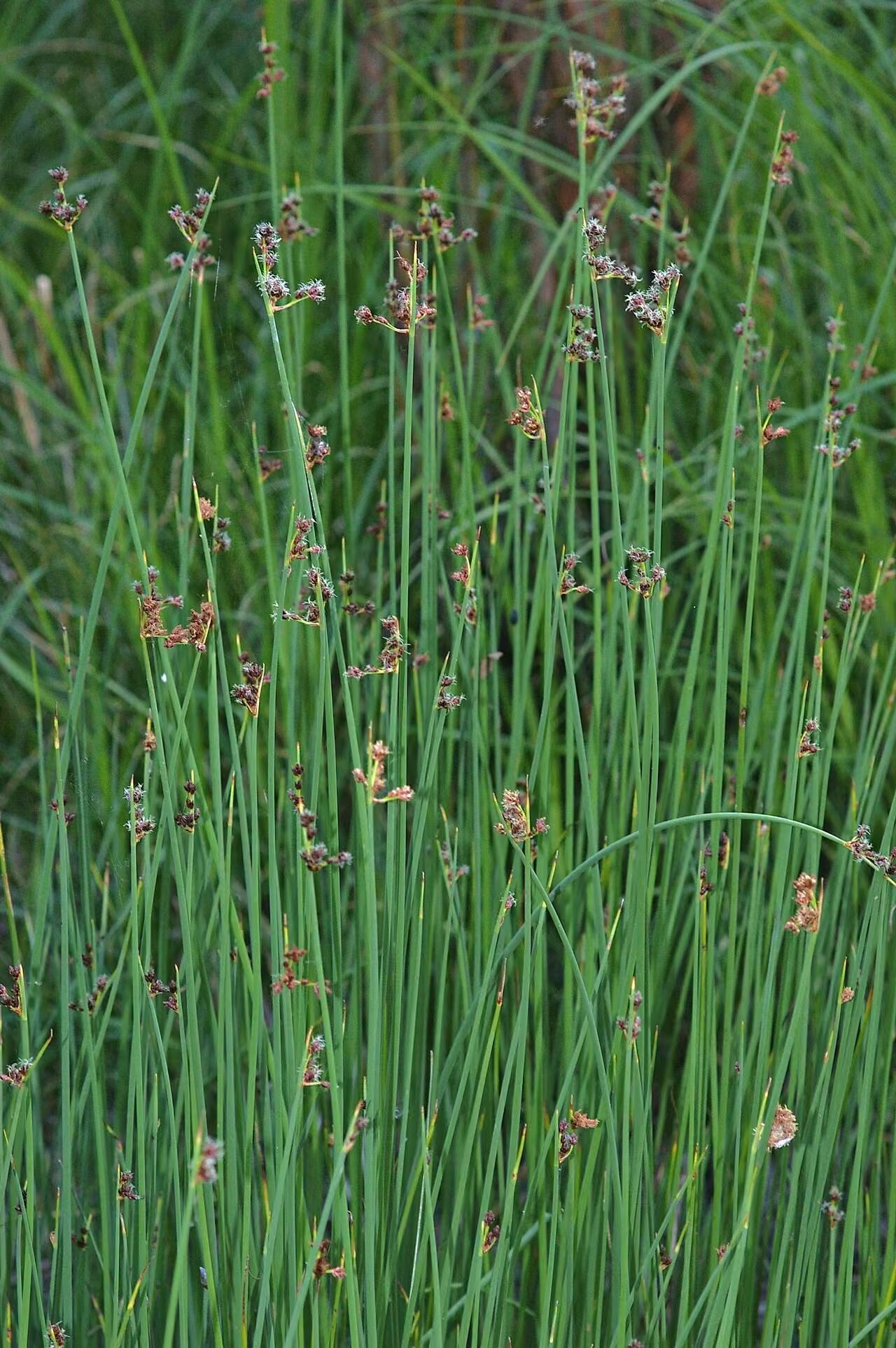
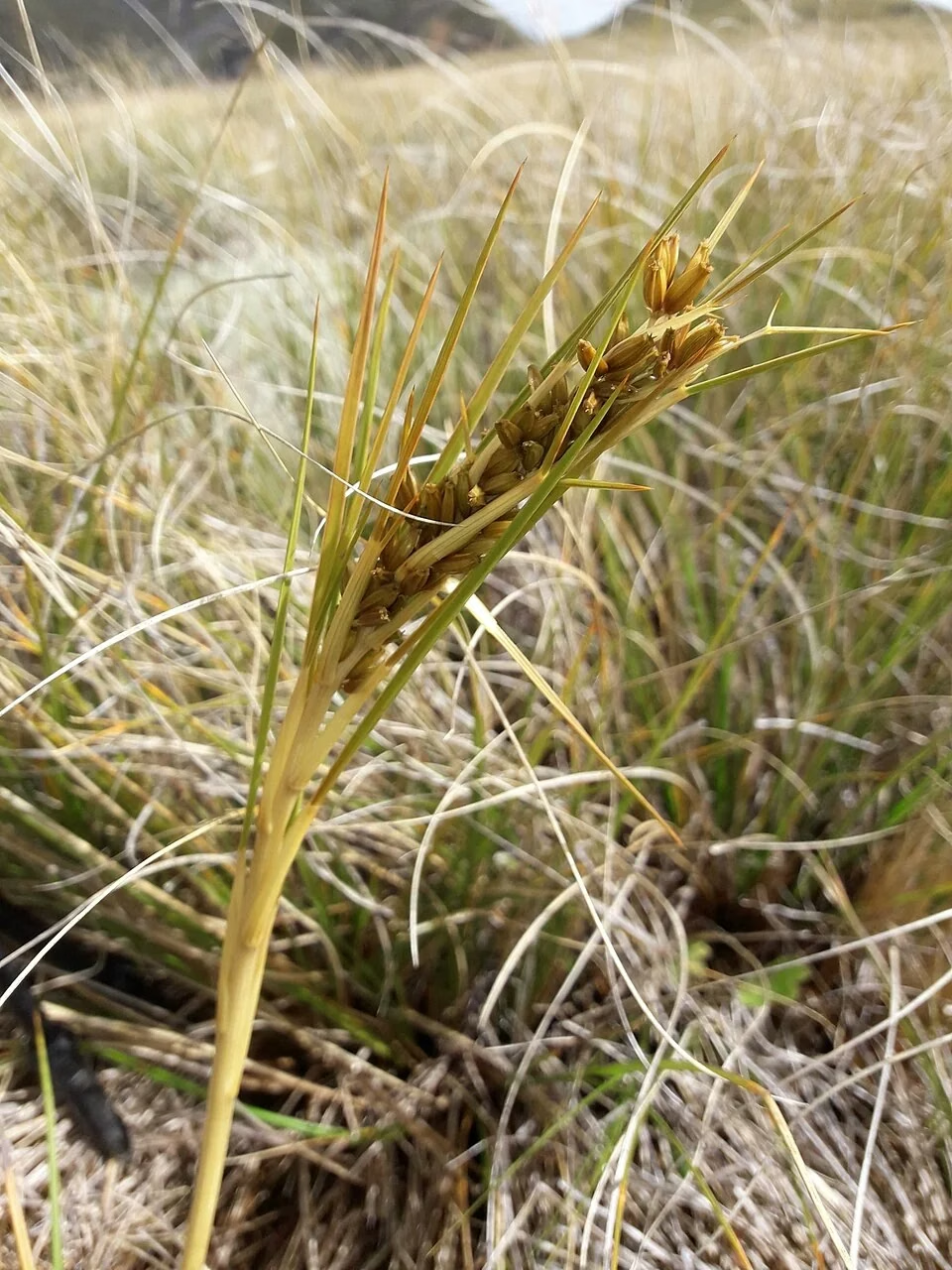
Three-square (Schoenoplectus pungens) is a rhizomatous sedge of saltmarshes, brackish swamps and estuaries, named for its sharply three-angled stems. Its pale grey-green to dark green culms rise 0.15 to 1.8 m from woody creeping rhizomes, carrying one to four compact clusters of dark purple-brown spikelets that look as if they sprout from the side of the stem. In New Zealand it grows on the North Island from West Auckland and Coromandel south, more sparingly in the South Island, and commonly on Chatham Island, also around some freshwater lakes and geothermal sites. It is indigenous, also found in Europe, the Americas and Australia, and is ranked Not Threatened. Explore more native grasses and flaxes in our native plant guide.
Plant Description
Three-square is a summer-green perennial sedge that spreads by woody rhizomes covered in membranous scales. The culms (flowering stems) are 0.15 to 1.8 m tall and 1 to 6 mm wide, pale glaucous grey to dark green, and distinctly three-angled with concave sides. Each culm has one to four narrow leaves shorter than the stem, 1 to 3 mm wide and becoming triangular toward the tip.
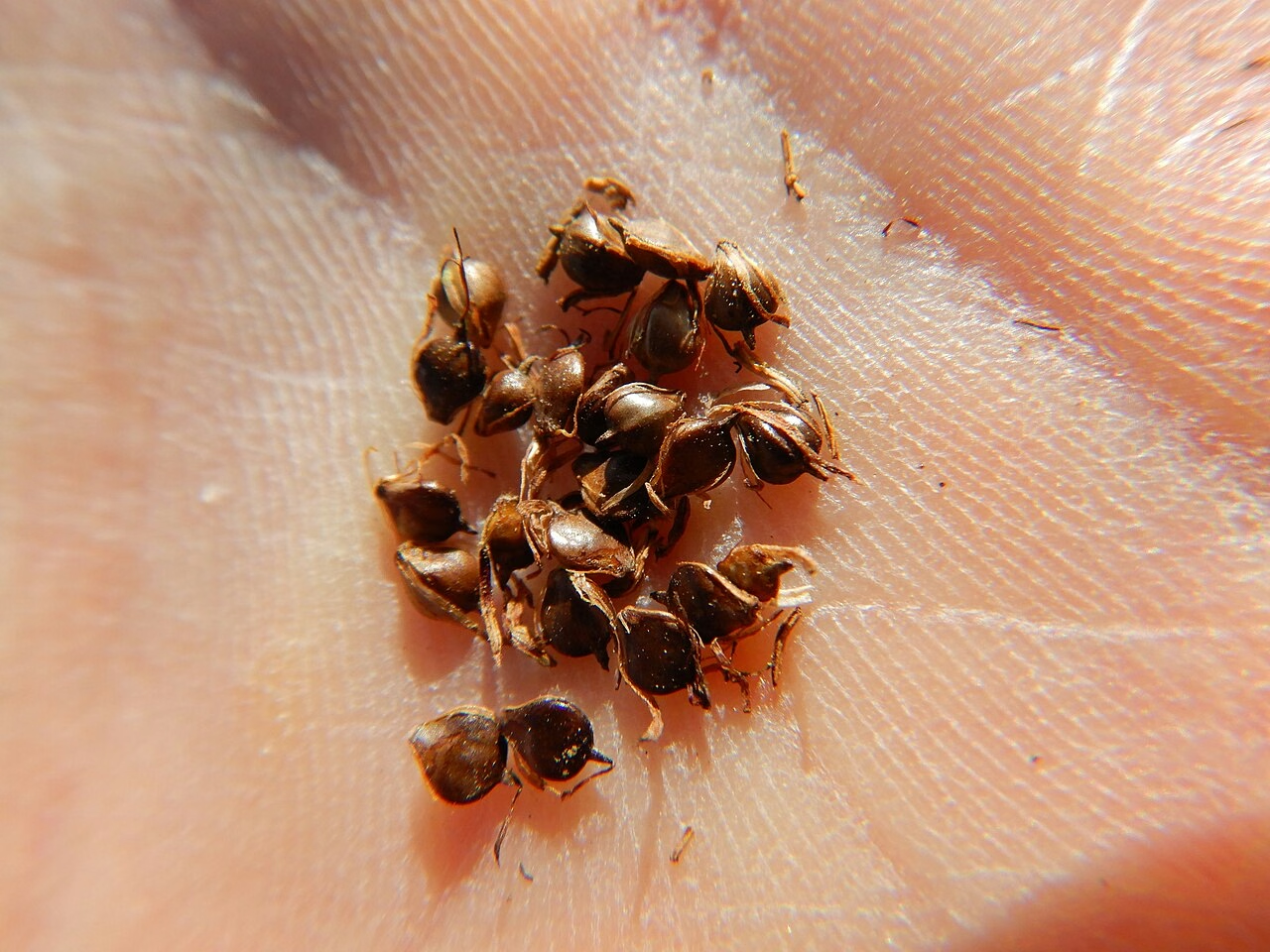
The inflorescence appears to arise from the side of the stem because the bract above it continues upward like an extension of the culm. It consists of one to four unequal, stalkless spikelets packed tightly together, each 6 to 11 mm long and dark purple-brown. The glumes are broadly ovate with fringed margins and a small point at the tip. The fruit is an obovoid nut about 3 x 2 mm, flat on one side and convex or bluntly angled on the other.
The combination of a sharply triangular stem and a small, tight cluster of sessile spikelets separates it from Schoenoplectus tabernaemontani, which has round stems and an open umbel of many stalked spikelets, and from the invasive Schoenoplectus californicus, a much taller plant with stems triangular only in the upper part and drooping spikelets. Sea clubrushes (Bolboschoenus) also have three-angled stems but bear leafy stems and spikelets in a terminal cluster with leaf-like bracts.
Quick Facts
| Scientific Name | Schoenoplectus pungens |
|---|---|
| Height | 0.15-1.8 m |
| Spread | Spreads indefinitely by creeping rhizomes |
| Water Needs | Wet; shallow water or saturated ground |
| Light | Full sun |
| Frost Tolerance | Moderate; grows from the coast to about 400 m |
| Salt Tolerance | High; typical of brackish saltmarsh |
| Growth Rate | Moderate to fast once established |
| Lifespan | Perennial (summer-green) |
Climate Best Suited to
It suits mild coastal climates and brackish wetlands from sea level to about 400 m, and handles the light frosts of lowland sites. It is most at home in the warmer north and east of the North Island and on the Chatham Islands.
Regional Suitability
| City | Climate Suitability |
|---|---|
| Auckland | High |
| Wellington | Medium |
| Christchurch | Medium |
| Dunedin | Low |
Plant Habitat
Schoenoplectus pungens is found on the North, South and Chatham Islands. In the North Island it occurs from West Auckland and Coromandel southward, it is scattered in the South Island, and it is common on Chatham Island. Overseas it grows in western Europe, the Americas and Australia.
It ranges from the coast to about 400 m above sea level but is usually found not far from the sea, in saltmarshes, brackish swamps and estuaries. It also grows around some freshwater lakes and at geothermal sites. It is classed as an obligate wetland plant, almost always found in wetlands.
Growing Requirements
Soil Requirements
In nature it roots into estuarine mud, silt and saturated peaty or sandy ground. It is not fussy about fertility but needs soil that stays wet through summer.
- Wet mud, silt or sandy loam
- Tolerates brackish, periodically saline soils
- Avoid dry, free-draining sites
Light Requirements
Three-square is a plant of open saltmarsh and swamp, growing among other low rushes and sedges in full sun.
- Full sun for best growth and flowering
- Shade from taller vegetation reduces its vigour
Water Requirements
It needs permanently wet ground or shallow standing water. Brackish water suits it well, making it a good choice where tidal influence rules out many freshwater sedges.
- Saturated soil to shallow water
- Brackish or fresh water
- Will not survive prolonged drying
Planting and Establishing
Plant divisions or potted plants in spring, when the summer-green shoots are emerging and the rhizomes establish quickly. Set them into wet mud at the upper edge of a saltmarsh, estuary or brackish pond, spaced about 30 to 50 cm apart for a solid stand within a few seasons.
For restoration, source plants grown from local seed or divisions, since this species occurs across several continents and local stock is best adapted to New Zealand conditions. Protect new plantings from stock, which trample soft estuary margins.
Ecological Role
Like other sedges, three-square is wind-pollinated. Its hard nuts are likely spread by water and by waterfowl, which feed in the brackish wetlands where it grows. Dense stands of culms and rhizomes give cover to wetland birds and invertebrates along estuary edges.
Its creeping rhizomes help bind estuarine mud and saltmarsh margins. It grows alongside other salt-tolerant sedges and rushes such as sea rush (Juncus kraussii) and Bolboschoenus species, forming part of the transition between open mudflat and coastal scrub.
Uses & Significance
Garden Uses
Three-square is mainly a restoration plant for brackish wetlands, but it also suits a large sunny pond or rain garden where something salt-tolerant is needed.
- Estuary and saltmarsh restoration
- Margins of brackish or freshwater ponds
- Stormwater swales near the coast
Ecological Value
As a native saltmarsh sedge it contributes to some of the most heavily modified habitats in New Zealand, where reclamation and drainage have removed much of the original vegetation.
- Stabilises estuary mud with dense rhizomes
- Shelter for wetland birds and invertebrates
- Seed food for waterfowl
Landscaping Uses
Grown in a broad drift, the upright grey-green triangular stems create a strong vertical texture that reads well against open water. Combine it with lower salt-tolerant plants such as Samolus repens and Selliera radicans for a natural saltmarsh look.
Because it spreads by rhizomes and dies back in winter, it is best placed where its seasonal change is acceptable and where it can colonise freely rather than in a tidy border.
Seasonal Care Calendar
Spring
New shoots emerge from the rhizomes as this summer-green sedge resumes growth, and flowering begins in October.
- Plant divisions now
- Clear old dead stems if needed
Summer
Flowering continues through to January, with tight purple-brown spikelet clusters near the top of each stem. Nuts begin ripening from January.
- Keep water levels up
- Collect seed late in summer
Autumn
Fruiting continues until June. Stems begin to brown as growth slows.
- Collect remaining ripe nuts
- Leave stems for wildlife cover
Winter
Above-ground growth largely dies back while the woody rhizomes rest in the mud.
- No feeding needed
- Mark plantings so they are not disturbed
When to Prune and How Much
No regular pruning is needed. Old brown stems can be cut to near ground level in late winter to tidy a pond planting before new shoots emerge.
In restoration sites, leave dead stems in place; they protect the rhizomes and provide cover for wetland birds.
How to Grow Three-Square
NZPCN notes that three-square is easily grown from fresh seed and from division of whole plants. Division is the quickest way to produce plants for a pond or restoration project, while seed is better for raising large numbers with local genetic diversity. Collect only small quantities, from sites where you have permission. Plants raised in containers should be kept standing in water so the roots never dry before planting.
From Seed
The nuts ripen from January to June. Fresh seed germinates most reliably, and as a wetland sedge it responds well to warmth and constantly wet conditions.
- Collect spikelets when the nuts are brown and fall easily from the glumes.
- Sow fresh on the surface of a fine, peaty seed mix and press gently into contact.
- Stand the tray in a shallow container of water so the mix stays saturated.
- Keep in a warm, bright position; germination usually follows once temperatures rise in spring.
- Prick seedlings into individual pots and keep them standing in water until planted out.
By Division
Division of the creeping rhizomes is simple and quick. Pieces with active shoots establish within a season when planted into wet ground.
- Lift a clump in spring as new shoots begin to emerge.
- Cut the rhizome into sections, each with several healthy shoots and roots.
- Trim the old stems back to reduce water loss.
- Pot into a heavy, moist mix or plant directly into wet mud.
- Keep saturated until new growth is well underway.
Pests & Diseases
No significant pests of three-square are recorded in New Zealand. The main problems are environmental: drying of the site, competition from taller exotic wetland weeds, and trampling or grazing by stock on estuary margins.
Where it grows beside freshwater lakes and geothermal sites, invasive wetland weeds can also crowd it out, so weed control is an important part of protecting and restoring its habitat.
Cultural Significance
No Māori name or traditional Māori use specific to Schoenoplectus pungens was found in the sources consulted.
The species has a tangled naming history in New Zealand. William Colenso described local plants as Scirpus novae-zelandiae in 1885, and for many years the name Scirpus americanus was wrongly applied here. Today it is placed in Schoenoplectus, and the epithet pungens means sharp-pointed.
Bonus Tip
To confirm three-square in the field, roll a stem between your fingers: the three sharp angles are obvious even without flowers, whereas the similar lake clubrush rolls smoothly because its stems are round.
Related Plants
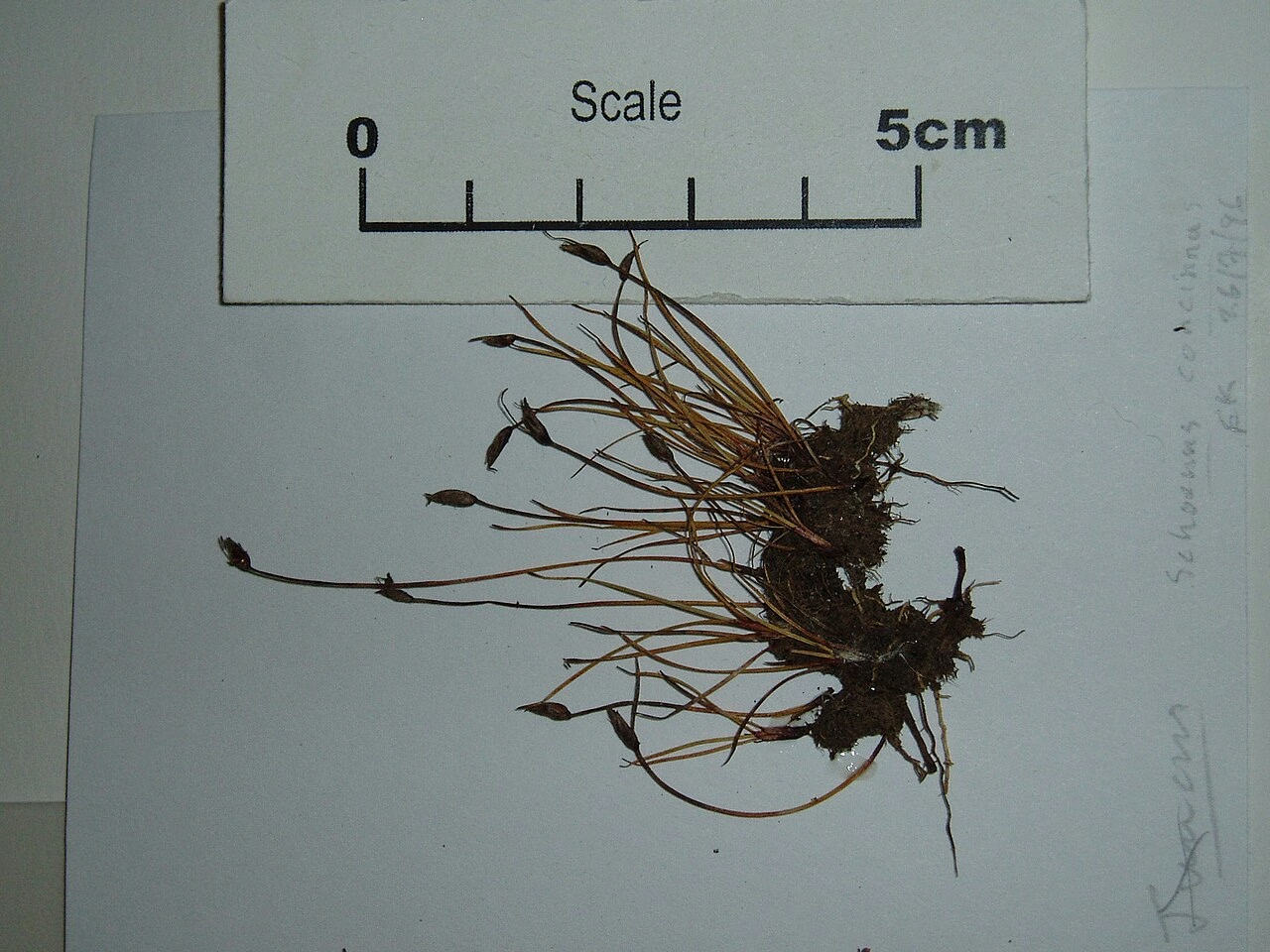
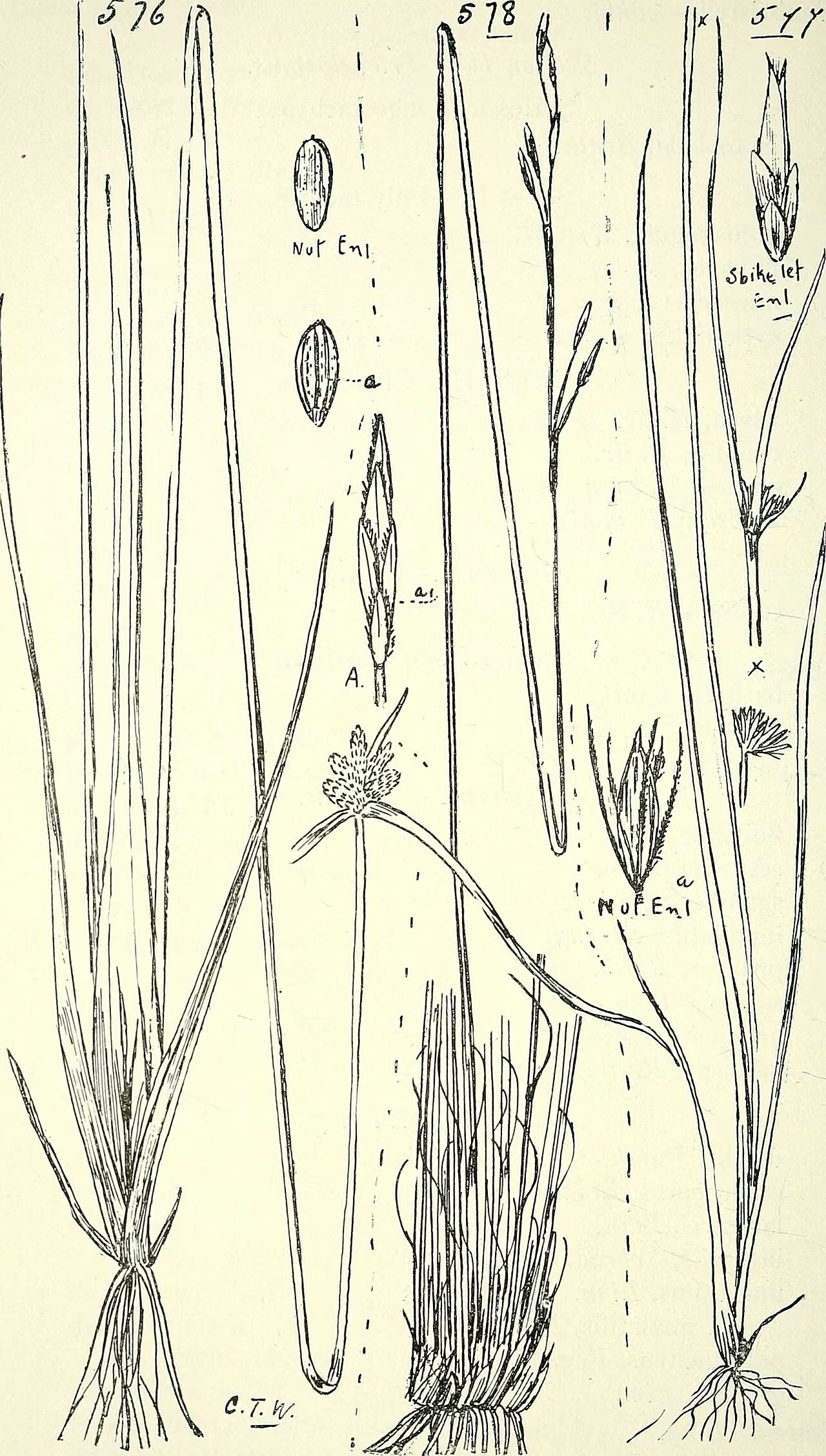
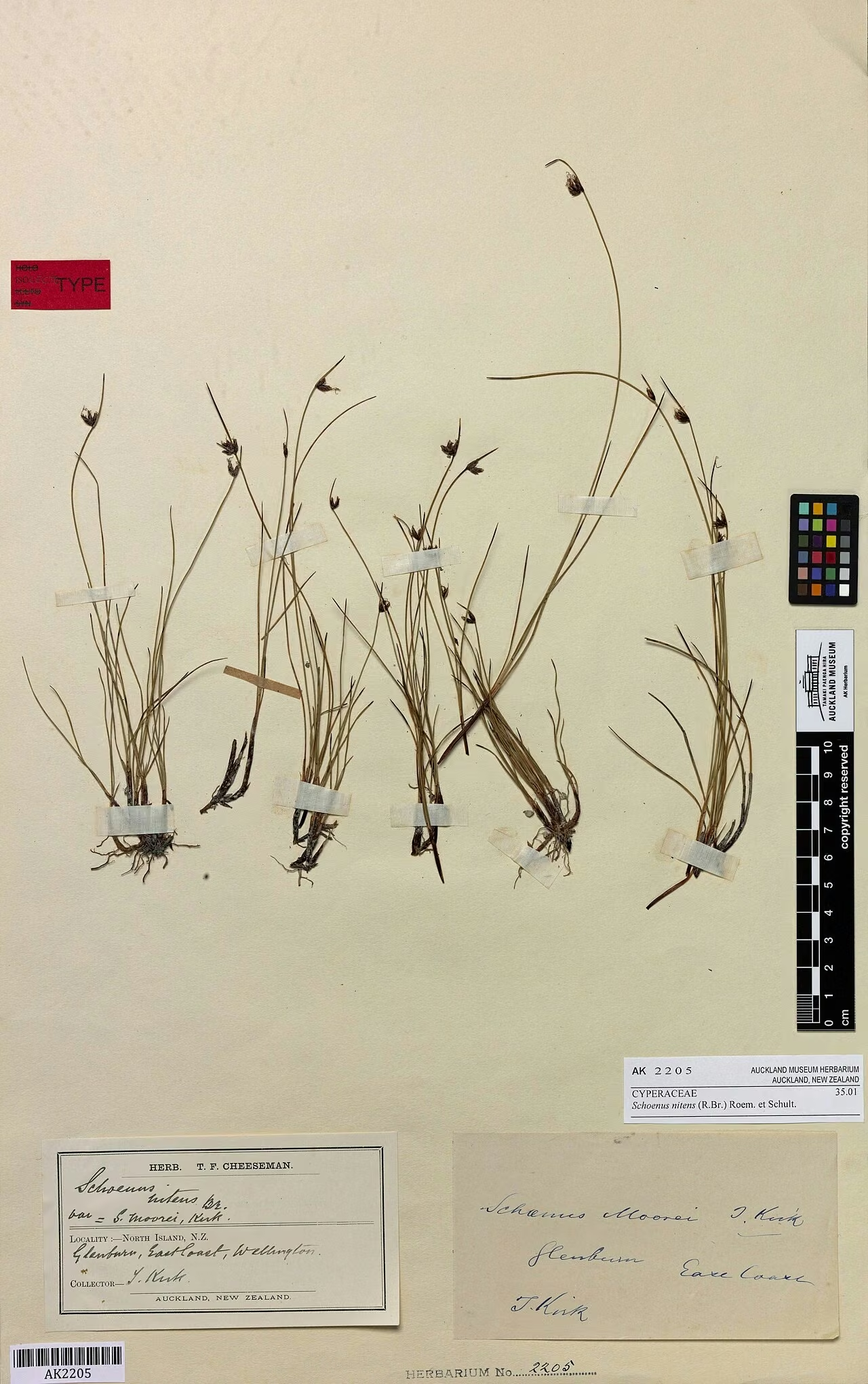
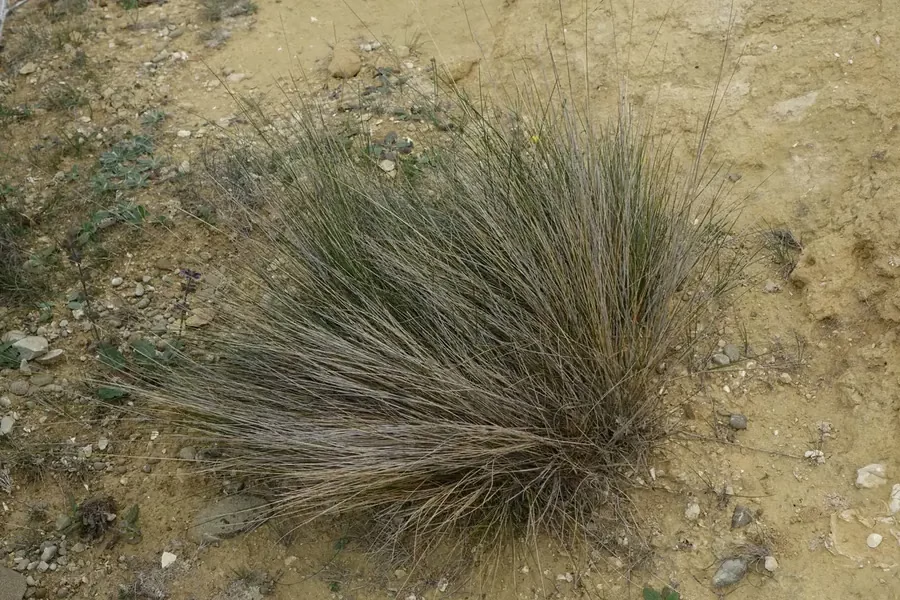
Explore other native plants that share similar characteristics or habitats with Three-Square (Schoenoplectus pungens), offering further insights into New Zealand's diverse flora. These related species provide context and opportunities for complementary planting in your garden.
Plant Conservation
Three-square is ranked Not Threatened (2023) nationally, with the qualifier Secure Overseas. Regionally its status varies: the Auckland assessment (2025) lists it as Regionally Threatened but Regionally Increasing, and in Wellington it is Regionally At Risk - Regionally Naturally Uncommon.
Loss of saltmarsh and estuary margins through reclamation, drainage and grazing is the main pressure on it. Fencing estuary edges, controlling weeds and replanting with locally sourced stock all help.
Frequently Asked Questions
Why is Schoenoplectus pungens called three-square?
The name refers to its stems, which are three-angled in cross-section along their whole length, with slightly concave sides, unlike the round stems of the related lake clubrush.
How do you tell three-square from Schoenoplectus tabernaemontani?
Three-square has triangular stems and only one to four stalkless spikelets in a tight cluster. Schoenoplectus tabernaemontani has round, spongy stems up to 3 m tall and a loose umbel of many stalked spikelets.
Does three-square grow in salt water?
It usually grows close to the sea in saltmarshes, brackish swamps and estuaries, so it tolerates brackish conditions, although it also occurs around some freshwater lakes and geothermal areas.
Is three-square native to New Zealand?
Yes. It is indigenous to the North, South and Chatham Islands but not endemic, as the same species occurs in western Europe, the Americas and Australia.
Sources and Further Reading
The botanical, growing, and conservation details for Three-Square (Schoenoplectus pungens) on this page draw on the New Zealand plant references below. Consult them for full technical records and the latest distribution data.