Everlasting Daisy
Anaphalioides subrigida
Last updated:
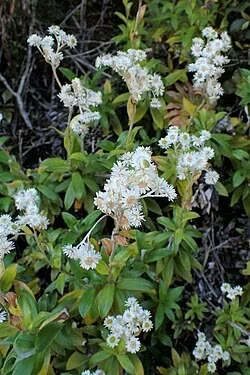
Anaphalioides subrigida is an uncommon everlasting daisy endemic to the North Island of New Zealand. It forms an erect, candelabra-like plant with purple-brown stems about 25 cm long, clothed in narrow leaves up to 24 mm long, and carries clusters of 6 to 9 white flower heads with yellow centres. It grows on lowland cliffs of soft grey papa mudstone, sandy mudstone and limestone from Kawhia and the East Coast south to the Aorangi Range in southern Wairarapa. It is ranked At Risk - Naturally Uncommon because its specialised cliff habitat is scattered and its populations are sparse. Explore more native flowering plants in our native plant guide.
Plant Description
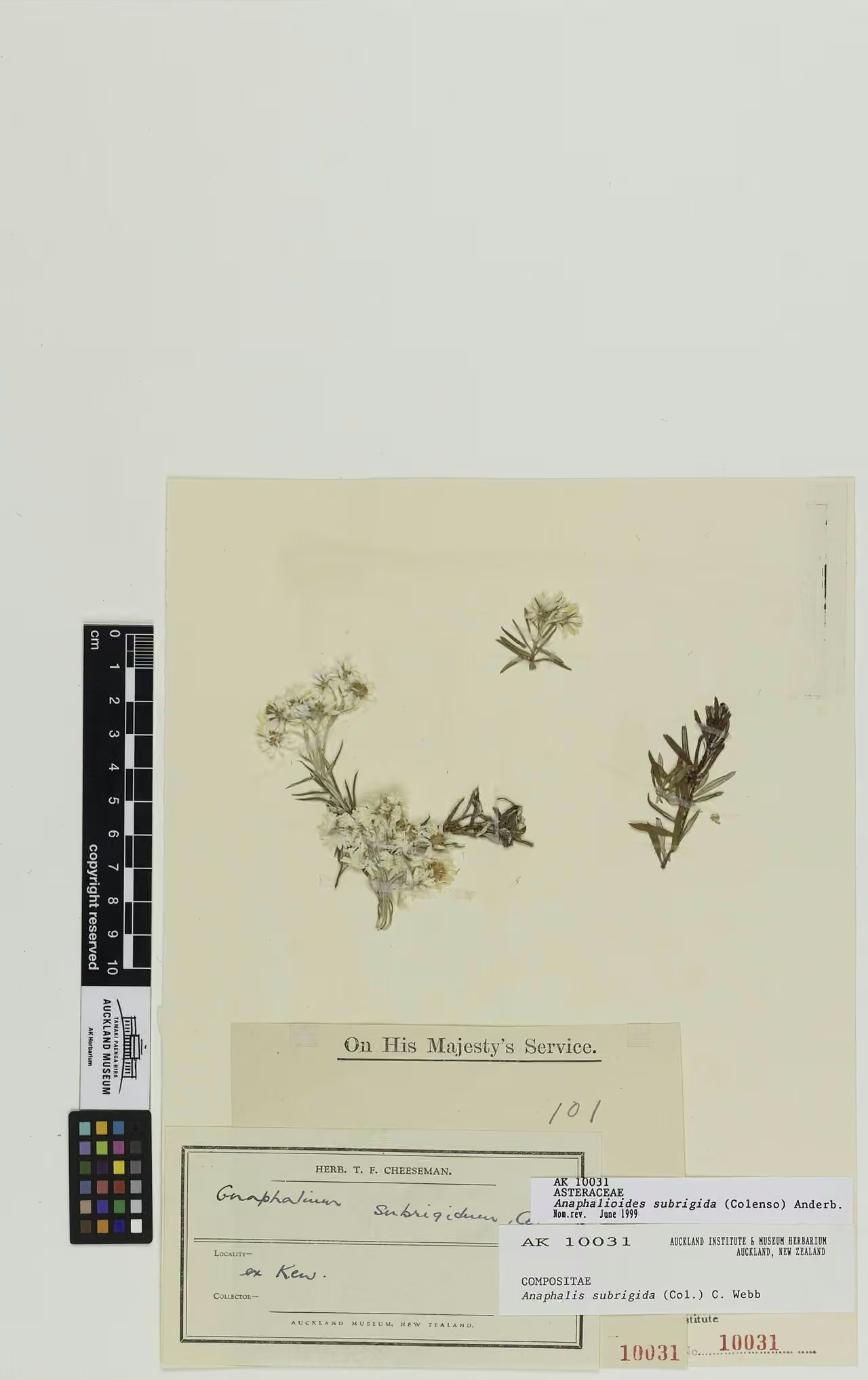
Anaphalioides subrigida is an erect perennial daisy with a candelabriform habit. Its stems are 1.5 to 3.5 mm thick and the sparse branches reach 10 to 25 cm, becoming dark purple towards their tips, with very short internodes of 1 to 3 mm so the leaves are densely crowded along them. NZPCN describes the purple-brown stems as about 25 cm long with numerous narrow leaves along their length.
The leaves stand out at about 45 degrees from the stem. They are narrowly oblong, 14 to 24 mm long and 1.7 to 5 mm wide, green to dark green, hairless above, three-veined and with margins rolled under, and each ends in a tiny dark red point about 0.4 mm long. The flowering stems are 22 to 27 cm long, dark purple and densely hairy, ending in a compound cluster of 6 to 9 flower heads. Each head is under 15 mm across, with white papery bracts around a yellow centre, giving the everlasting look typical of the group.
Its stiff branching gives the species its name, subrigida meaning somewhat rigid. Other Anaphalioides species, such as A. bellidioides, form low spreading mats with broader woolly leaves, whereas this species is upright with narrow, revolute leaves and grows on soft papa and limestone cliffs.
Quick Facts
| Scientific Name | Anaphalioides subrigida |
|---|---|
| Height | Flowering stems about 0.2-0.3 m |
| Spread | Branches 10-25 cm long |
| Water Needs | Low to moderate; free-draining cliff faces |
| Light | Full sun to light shade on open cliffs |
| Frost Tolerance | Moderate; a lowland species |
| Salt Tolerance | No information available |
| Growth Rate | Moderate |
| Lifespan | Perennial |
Climate Best Suited to
Suits the mild lowland climate of the central and eastern North Island, with warm summers and cool, moderately frosty winters. It is adapted to dry, sun-exposed rock faces rather than wet or very cold sites.
Regional Suitability
| City | Climate Suitability |
|---|---|
| Auckland | Medium |
| Wellington | Medium |
| Christchurch | Low |
| Dunedin | Low |
Plant Habitat
Anaphalioides subrigida is endemic to the North Island. NZPCN gives its range as Kawhia in the west to Mangatuna on the East Coast, extending south to the Aorangi Range in southern Wairarapa. Herbarium specimens record it from papa clay cliffs on the Makakahi River near Eketahuna and from a papa cliff near Mangaweka.
It is a lowland plant of 100 to 400 m altitude that favours base-rich rock. Its typical habitat is limestone outcrops and the papa cliffs of soft grey mudstone and sandy mudstone that line many North Island river gorges, where it grows on ledges and bare faces with little competition.
Growing Requirements
Soil Requirements
In the wild it roots into crumbling soft mudstone and limestone, which are base-rich, free-draining and low in organic matter.
- Gritty, free-draining mix with added limestone chip suits it
- Avoid rich, heavy or waterlogged soils
- A vertical or steeply sloping position copies its cliff habitat
Light Requirements
It grows on open cliff faces with little shading vegetation, so it needs a bright position.
- Full sun or bright light
- Keep it clear of overhanging shrubs and taller herbs
Water Requirements
Cliff faces shed water quickly, so the plant is adapted to sharp drainage and periodic dryness.
- Water sparingly once established
- Never let water sit around the crown
Planting and Establishing
This species is rarely offered by nurseries, and wild plants should not be dug up. If plants become available from a conservation or specialist source, give them a raised, sunny site in a rock garden, crevice bed or trough filled with a gritty, limy mix.
Plant slightly proud of the surrounding mix and top-dress with fine gravel or limestone chip, which keeps the crown dry and mimics the bare mudstone faces where it grows naturally.
Ecological Role
Anaphalioides subrigida is a specialist of eroding papa and limestone cliffs, a habitat where few competitors can establish. Its seeds are small hairless achenes carried on a pappus of 10 to 15 bristles, and NZPCN notes the pappate cypselae are dispersed by wind, letting it colonise fresh cliff faces.
Most florets in each head are female, with a smaller number of hermaphrodite florets. The insects that visit and pollinate its flowers have not been documented in the sources consulted.
Uses & Significance
Garden Uses
It is a plant for specialist collectors of rare North Island natives rather than general gardens.
- Crevice gardens and rock walls
- Troughs and alpine-style containers with a limy mix
- Conservation collections of East Coast and Wairarapa flora
Ecological Value
It is part of the distinctive flora of North Island mudstone and limestone cliffs, a habitat type with several uncommon specialists.
- Endemic to the North Island
- Colonises unstable, eroding cliff faces
- Flowers over a long season from spring into summer
Landscaping Uses
In a designed planting it is best placed where its upright, candelabra-like stems and white everlasting heads can be seen against rock, such as in a gap in a stone wall or on the face of a raised crevice bed.
Pair it with other low, sun-loving natives that tolerate dry, limy conditions, and keep vigorous groundcovers well away so they cannot smother it.
Seasonal Care Calendar
Spring
Flowering begins in September as the white heads open on dark purple stems.
- Check drainage after winter rain
- Remove any weeds creeping onto the crown
Summer
Flowering continues to January and seed starts ripening from November.
- Collect ripe seed heads before the pappus carries them away
- Water only in prolonged drought
Autumn
Fruiting continues into March, after which the plant settles into slower growth.
- Sow fresh seed promptly
- Trim spent flowering stems if desired
Winter
Growth is slow and wet soil is the main risk.
- Shelter potted plants from prolonged rain
- Keep gravel mulch around the crown
When to Prune and How Much
Little pruning is needed. Once seed has been collected or shed, the old flowering stems can be cut back to the leafy shoots below them to keep the plant tidy.
Avoid cutting into bare older stems, since short-lived cliff daisies often regrow poorly from old wood.
How to Grow Everlasting Daisy
No published propagation protocol specific to Anaphalioides subrigida was found in the sources consulted, and NZPCN gives no cultivation notes for it. The approach below follows general practice for New Zealand everlasting daisies of rocky places, based on the facts that the species sets small wind-dispersed seed from November to March and forms branching leafy shoots. Material should come only from plants already in cultivation or from authorised conservation programmes, not from wild cliff populations, which are sparse and naturally uncommon.
From Seed
The achenes are tiny, about 0.6 mm long, and carried on a short pappus, so heads must be gathered as soon as they turn fluffy. Fresh seed is likely to give the best results.
- Collect fluffy seed heads between November and March
- Sow on the surface of a fine, free-draining seed mix with a little added lime
- Do not cover the seed, but keep the surface just moist
- Prick seedlings out into small pots of gritty mix once they have several leaves
From Cuttings
Short, non-flowering side shoots from cultivated plants can be tried as cuttings. Leafy everlasting daisies rot easily, so a very open medium and good air movement are important.
- Take 3 to 5 cm non-flowering shoot tips in spring or early autumn
- Strip the lowest leaves and insert into pumice or coarse sand
- Keep in bright light out of hot sun with only light misting
- Pot on into a gritty limy mix once roots appear
Pests & Diseases
No specific pests are recorded for this species. As with other everlasting daisies, rot of the crown and stems in wet, humid or poorly drained conditions is the most likely problem in cultivation.
In the wild, cliff erosion, smothering by weeds and browsing animals on accessible ledges may affect individual plants, although the threat listing reflects natural rarity rather than documented decline.
Cultural Significance
No traditional Māori name or use is recorded for Anaphalioides subrigida in the sources consulted.
The species has been placed in several genera over time, including Gnaphalium as Gnaphalium subrigidum and Anaphalis as Anaphalis subrigida, before being included in the endemic-leaning genus Anaphalioides. Its epithet subrigida means somewhat rigid, describing its stiff, upright habit.
Bonus Tip
If you botanise along North Island river gorges with exposed grey papa cliffs, such as those around Mangaweka or the Makakahi River, scan the cliff faces between September and January for small clusters of white everlasting heads on purple stems. Photograph rather than collect them, and record sightings on iNaturalist, since better distribution data would help clarify this data-poor species.
Related Plants
Explore other native plants that share similar characteristics or habitats with Everlasting Daisy (Anaphalioides subrigida), offering further insights into New Zealand's diverse flora. These related species provide context and opportunities for complementary planting in your garden.
Alseuosmia turneri
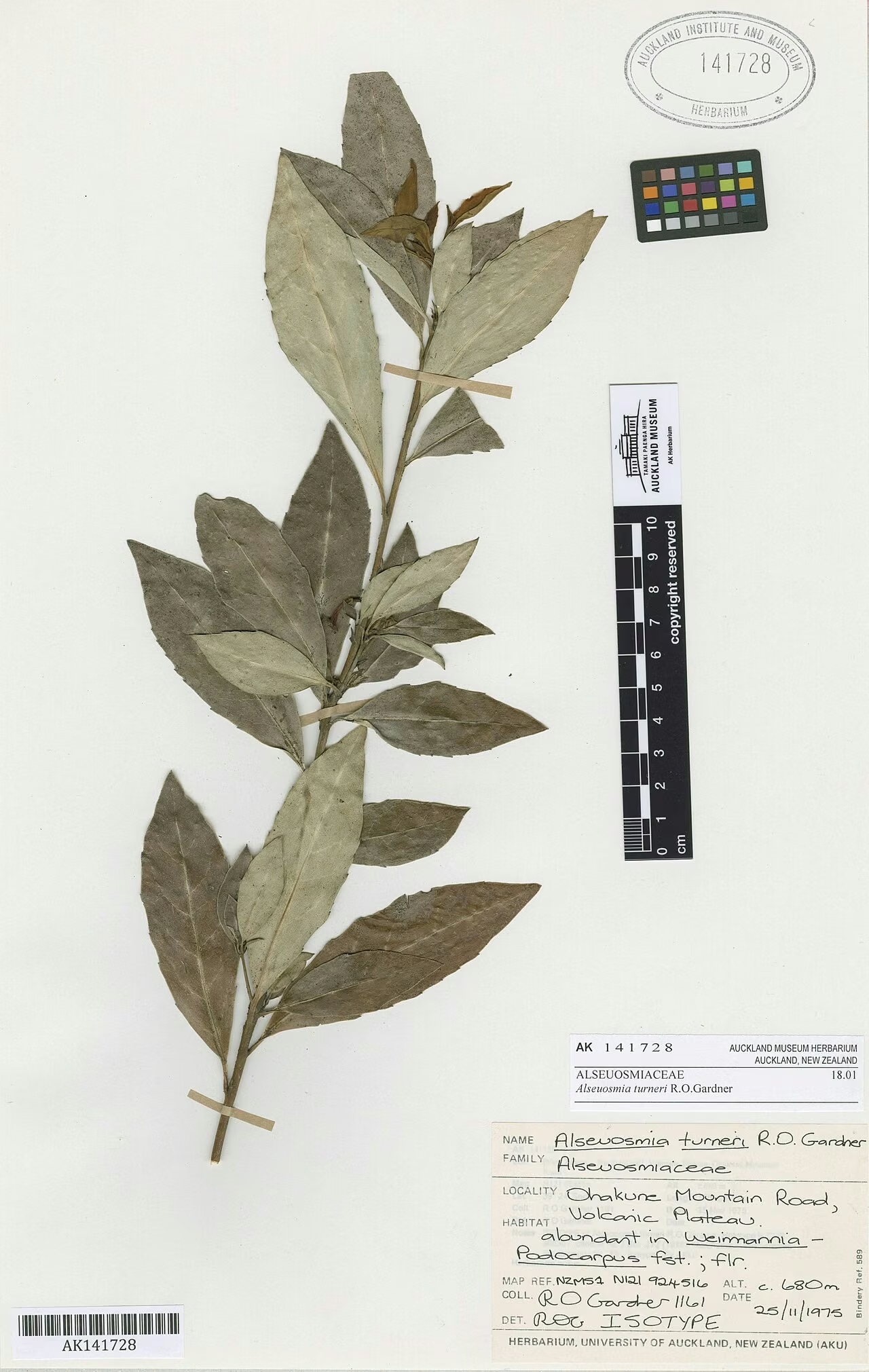
Alseuosmia turneri
Lesser Joyweed
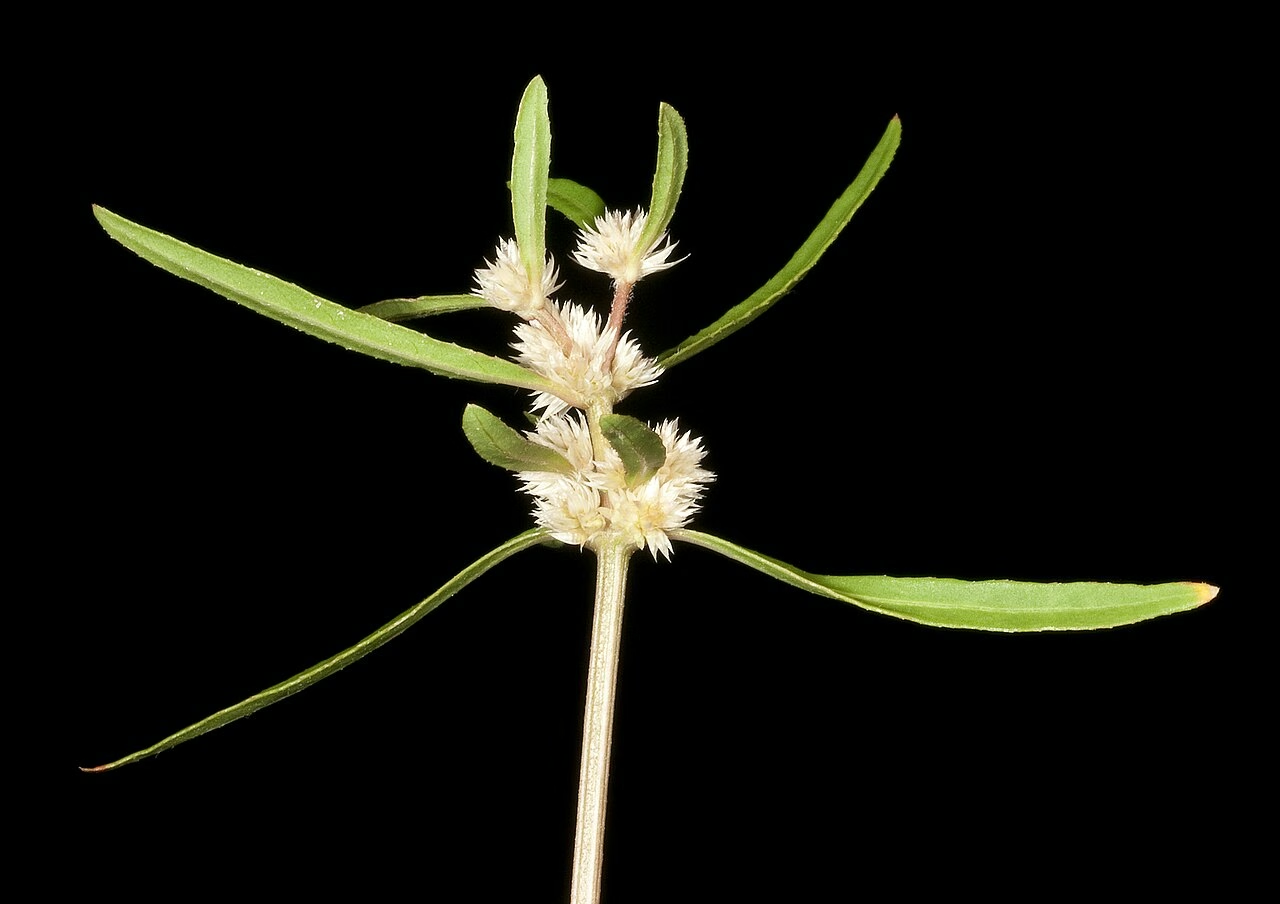
Alternanthera denticulata
Anaphalioides alpina
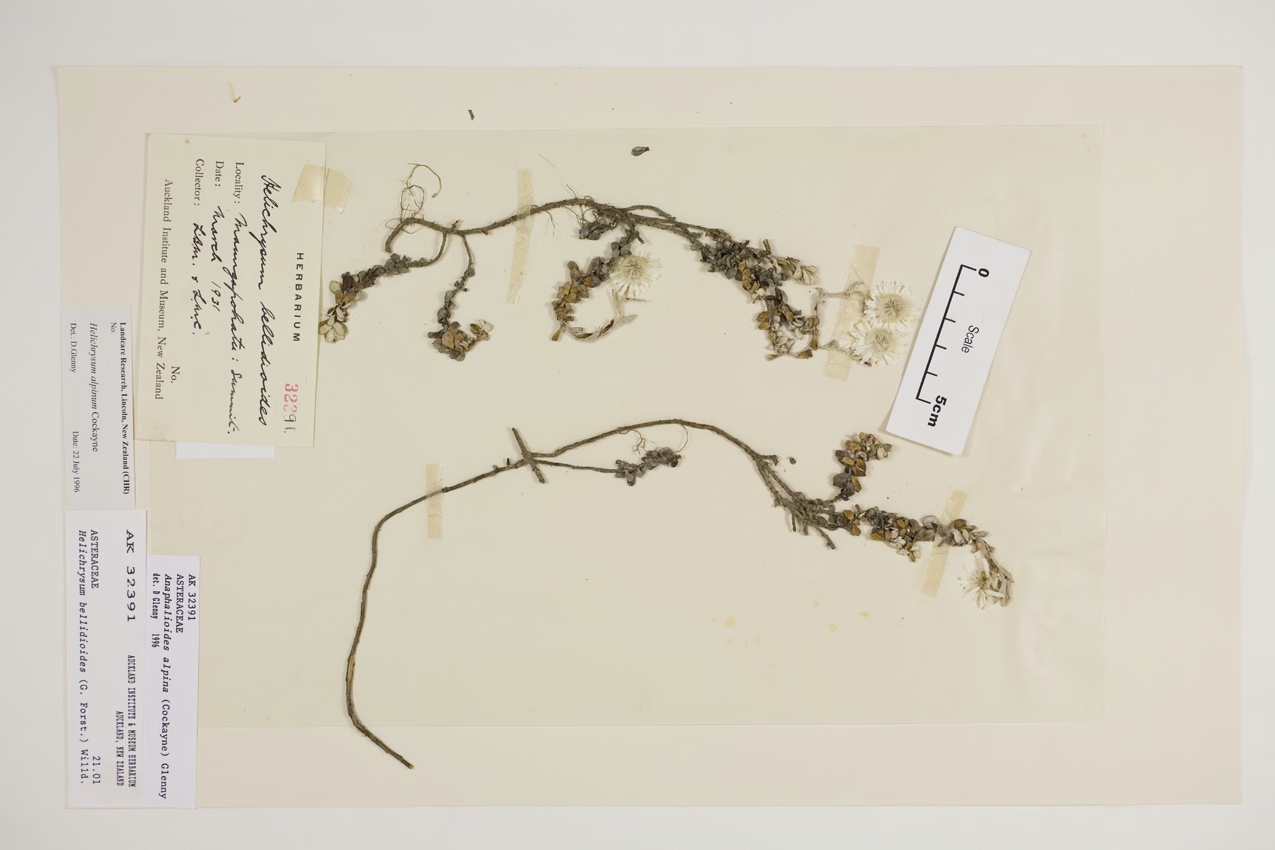
Anaphalioides alpina
Anaphalioides hookeri
Anaphalioides hookeri
New Zealand Anemone
Anemonastrum tenuicaule
Snares Islands Anisotome
Anisotome acutifolia
Anisotome antipoda
Anisotome antipoda
Puatea
Puatea
Plant Conservation
Anaphalioides subrigida is ranked At Risk - Naturally Uncommon (2023) with the qualifiers Sparse, Range Restricted, Data Poor: Size and Data Poor: Trend. This means it is scattered thinly across a specialised habitat and there is little data on how many plants exist or whether numbers are changing.
Protecting papa and limestone cliff habitats from weed invasion and browsing, avoiding collection from the wild, and recording new sightings are the most useful actions for this species.
Frequently Asked Questions
Where does Anaphalioides subrigida grow?
It is found only in the North Island, from Kawhia in the west to Mangatuna on the East Coast and south to the Aorangi Range in southern Wairarapa, on lowland cliffs between 100 and 400 m.
What kind of rock does Anaphalioides subrigida prefer?
NZPCN notes it favours base-rich substrates, especially limestone and papa cliffs of soft grey mudstone and sandy mudstone, such as those along inland river gorges.
Is Anaphalioides subrigida a threatened plant?
It is ranked At Risk - Naturally Uncommon (2023) because it is sparse and range restricted, and its status is listed as data poor in both trend and size.
How do you tell Anaphalioides subrigida from other everlasting daisies?
Look for its rather stiff, candelabra-like branching, dark purple stem tips, narrow three-veined leaves with rolled-under margins and a small dark red point, and its cliff habitat on mudstone or limestone.
Sources and Further Reading
The botanical, growing, and conservation details for Everlasting Daisy (Anaphalioides subrigida) on this page draw on the New Zealand plant references below. Consult them for full technical records and the latest distribution data.