Bristle Fern
Abrodictyum elongatum
Frond structure and growth
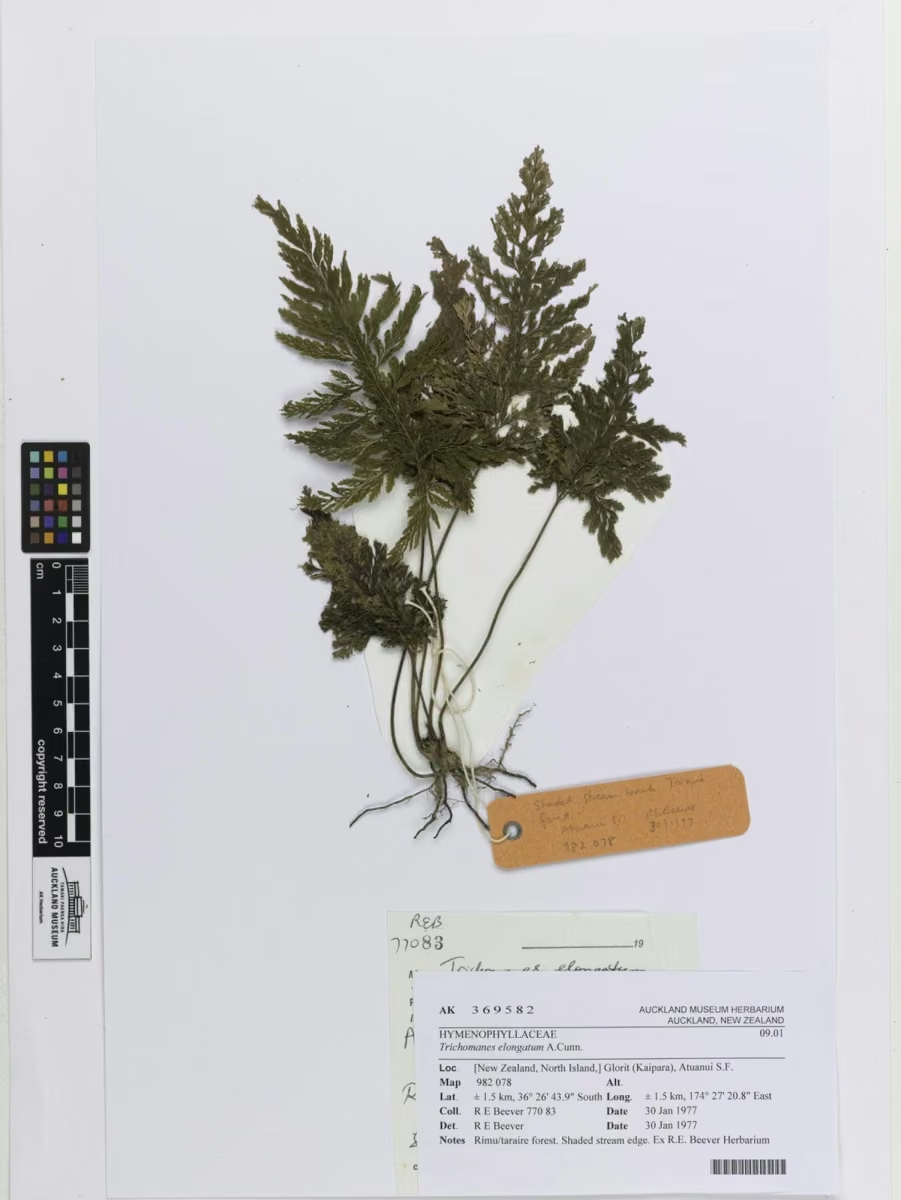
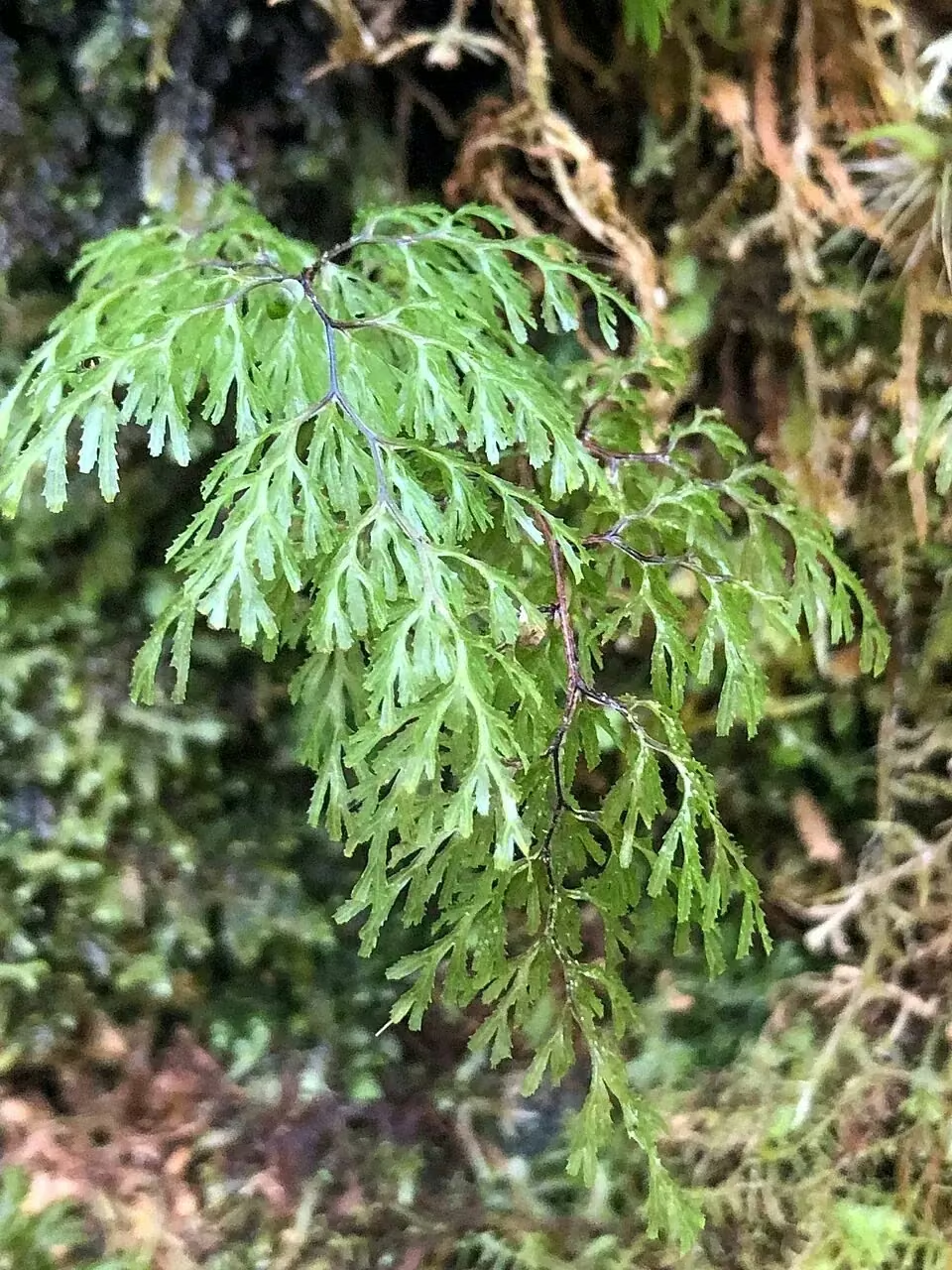
Abrodictyum elongatum is a terrestrial filmy fern endemic to New Zealand, part of the distinctive native fern flora. It grows in damp, shaded forest, where its dark olive-green fronds can be recognized by overlapping, repeatedly divided segments. The frond bears tubular sori with brown receptacles projecting beyond their openings; documented fronds measure 95-360 mm long.
Identification
This tufted fern has an erect or short-creeping rhizome and dark olive-green, triangular to oval fronds. The leaf blade is divided into overlapping segments, with veins that fork several times. Mosses and liverworts may grow on its surface. Its tubular spore-bearing structures contain conspicuous brown receptacles that project well beyond their openings.
The Flora of New Zealand records whole fronds 95-360 mm long. Most of the central frond axis lacks the winged tissue found in some related ferns. The specific name elongatum refers to the elongated receptacle.
Quick facts
| Scientific Name | Abrodictyum elongatum |
|---|---|
| Family | Hymenophyllaceae |
| Frond stalk length | 50-200 mm |
| NZ conservation status | Not Threatened (2023) |
| Whole frond length | 95-360 mm |
| Natural range | North, South and Chatham Islands |
| Height | Leaf stalks 5-20 cm long; the blade is additional |
| Water Needs | Poor drainage is reported to be unsuitable |
| Light | Semi-shaded banks and overhangs in its natural habitat |
| Spread | Tufted growth from a short, erect rhizome; width unquantified |
| Frost Tolerance | Minimum tolerated temperature is not documented |
| Salt Tolerance | Salt tolerance is not documented |
| Growth Rate | Annual extension is not quantified in the cited accounts |
| Lifespan | Rhizomatous fern |
Natural climate range
The Flora of New Zealand records this fern at approximately 10-700 metres above sea level. It occurs in coastal and lowland forests, reaching higher elevations on islands and northern ranges; the source does not specify a tested frost limit.
| City | Climate Suitability |
|---|---|
| Auckland | Not assessed |
| Wellington | Not assessed |
| Christchurch | Not assessed |
Habitat and distribution
It occurs in the North and South Islands and on Rēkohu / Chatham Island, where it is scarce. It grows from coastal to montane elevations, in forest and gumland scrub, often on partly shaded mossy clay banks, overhangs or stream banks. Some sites are seasonally dry.
Published herbarium records span approximately 10-700 metres above sea level. The Flora of New Zealand describes North Island records from Northland and Auckland south to Wellington and east to East Cape. South Island records include the Marlborough Sounds, north-west Nelson and an outlying population at Lake Matheson in Westland.
Growing requirements
Its natural sites are often partly shaded, and NZPCN notes that it appears to dislike poorly drained conditions. It is found on banks and overhangs as well as beside streams in forest and scrub.
Planting and establishment
NZPCN describes this fern as difficult to propagate and advises against removal from the wild. Its recorded habitat includes mossy clay banks and overhangs, but the source does not provide a verified planting procedure.
Ecology
The fronds can carry epiphyllous mosses and liverworts. Its sporangia develop on elongated receptacles projecting from tubular structures on the frond segments; this feature gives the fern its bristly appearance.
Observing bristle fern
The fern can be observed in forest on banks, amongst roots and beside streams. Its dark fronds and conspicuously protruding brown receptacles are useful identification features; NZPCN advises leaving wild plants in place.
Habitat protection
Bristle fern is recorded in forest and scrub, often on semi-shaded banks and beneath overhangs. Because propagation is difficult and NZPCN advises against wild collection, its natural habitat is the appropriate place to appreciate established plants.
Seasonal conditions
Some natural sites occupied by bristle fern are seasonally dry, although it also occurs beside streams and under forest overhangs. NZPCN does not provide a species-specific seasonal garden care calendar for this fern.
Pruning
The bristle fern is a small, tufted fern with fronds recorded at 95-360 mm long, not a woody shrub. The NZPCN profile does not provide a species-specific pruning method or recommend removing wild plants.
How to Grow Bristle Fern (Abrodictyum elongatum)
Spores and the available cultivation evidence
NZ Plant Conservation Network rates propagation of Abrodictyum elongatum as difficult and advises against taking plants from the wild. Its account does not provide a spore-sowing medium, temperature or development time. A short, stout, upright rhizome supports the tuft of fronds; this structure should not be confused with the widely creeping rhizomes of some other filmy ferns.
Drainage on banks and overhangs
Recorded sites include moss-covered clay banks, stream banks and sheltered overhangs on rock or soil. Although these are often semi-shaded, the species also occupies comparatively dry or seasonally dry places. The profile specifically reports an apparent dislike of poorly drained habitats. That observation is especially relevant when considering cultivation: permanently saturated compost cannot be inferred to suit this fern simply from its family.
Checking frond development
The dark olive-green fronds are glossy above and have a firmer texture than the very delicate blades of many familiar filmy ferns. Leaf stalks measure about 5-20 cm. The triangular blade is divided three times, with overlapping primary and secondary divisions and broadly toothed final segments. Mosses and liverworts can grow on the frond surface.
Recognising fertile structures
Look in the notches of the leaf segments for the tubular structures surrounding the spore-bearing receptacles. Their mouths flare slightly and the receptacles project beyond them. These are normal reproductive features. The source gives no seasonal spore-collection calendar, so an individual fertile frond needs direct examination rather than reliance on a stated flowering month.
Pests and diseases
The NZPCN profile does not list species-specific pest or disease treatments for bristle fern. Mosses and liverworts may naturally grow on its frond surfaces, so their presence is a documented feature rather than a diagnosis.
Historical Māori Use
Manaaki Whenua’s Ngā Rauropi Whakaoranga records an 1888 note on a specimen in the King Tāwhiao Collection at Te Papa. The note documents a Māori use of infused bristle fern fronds to expel parasitic worms. The record attributes this account to Charles Jeffs; it is a historical record, not evidence of clinical effectiveness. Read the original record
Identifying the fern
Look for a dark olive-green blade with overlapping, repeatedly divided segments and an axis that is mostly unwinged. The brown receptacles extend conspicuously beyond their tubular coverings.
Related ferns
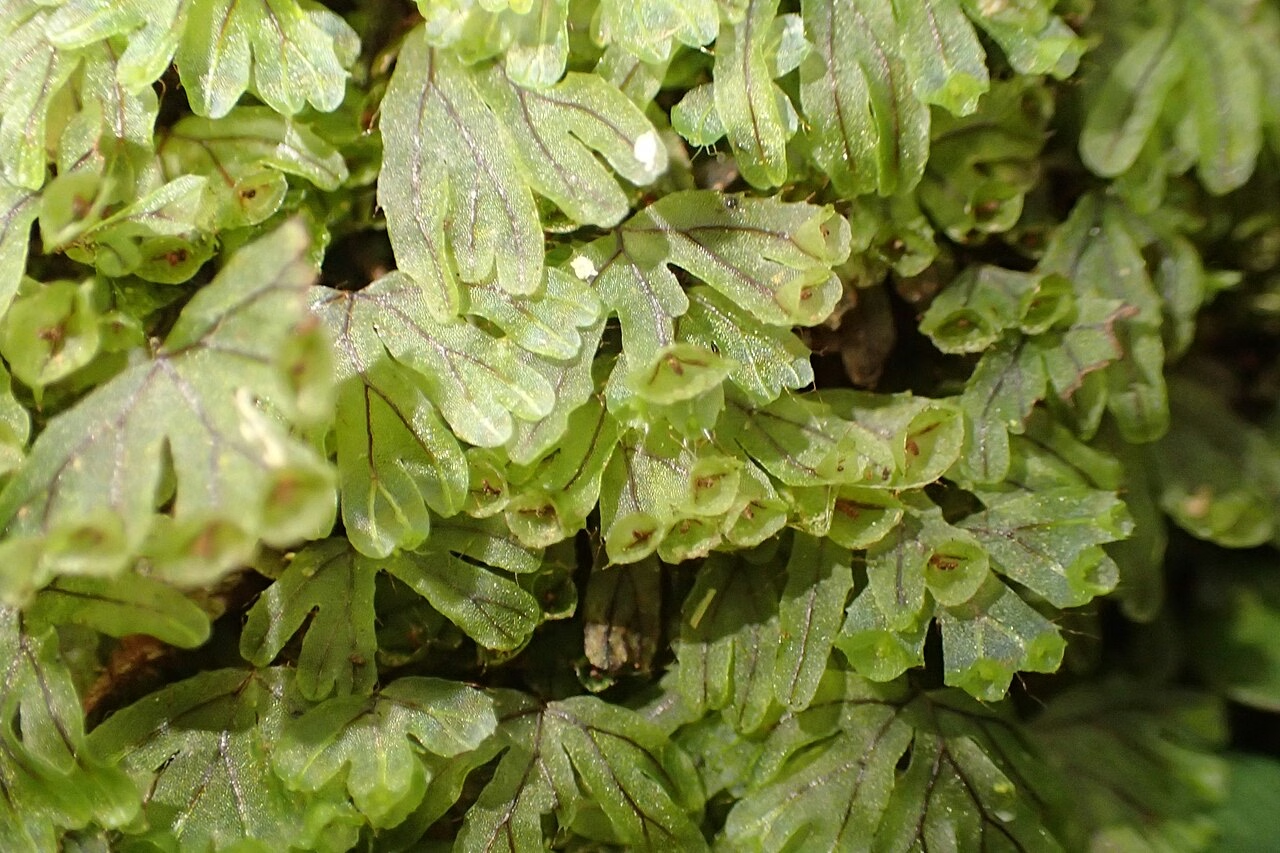
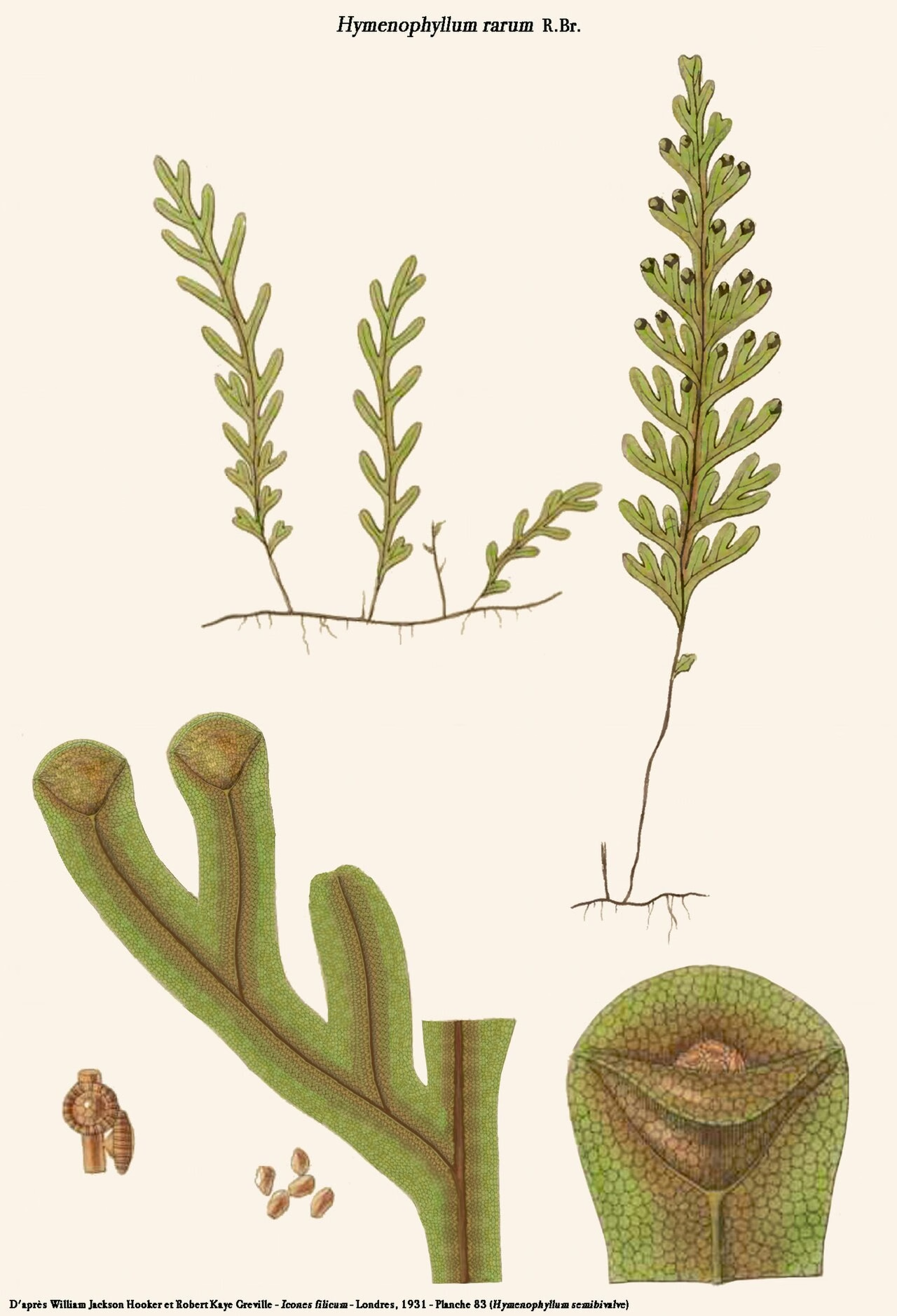
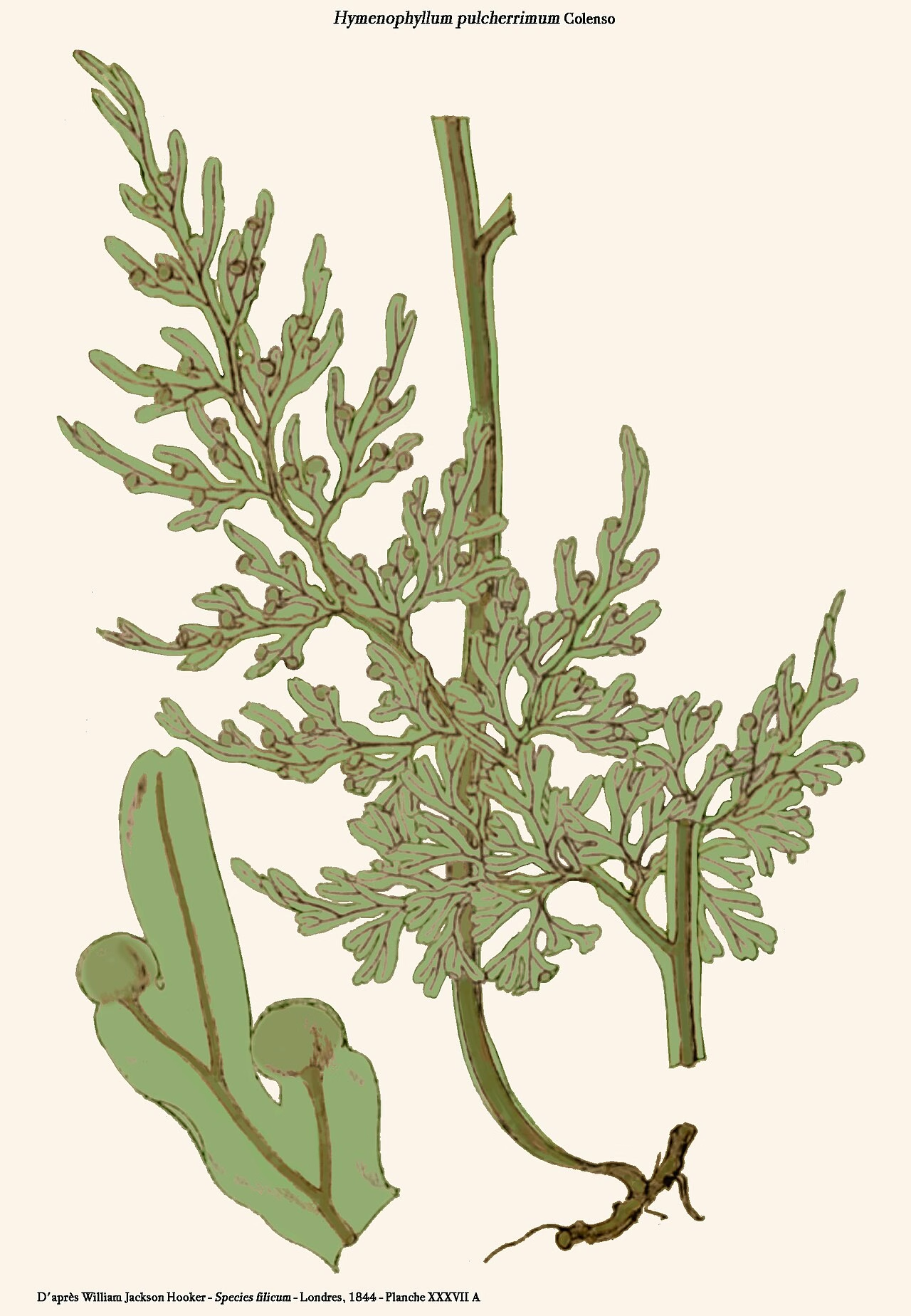
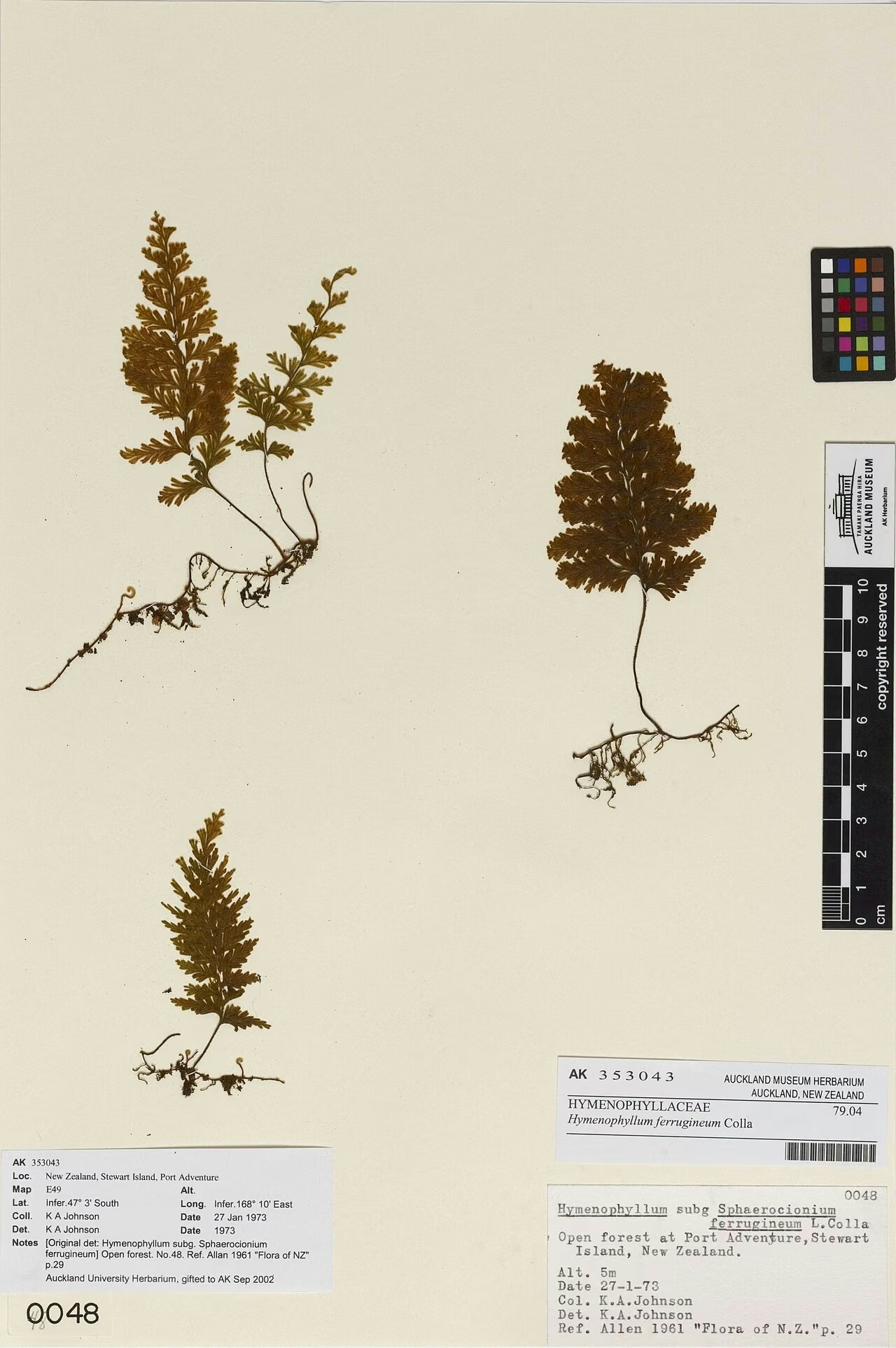
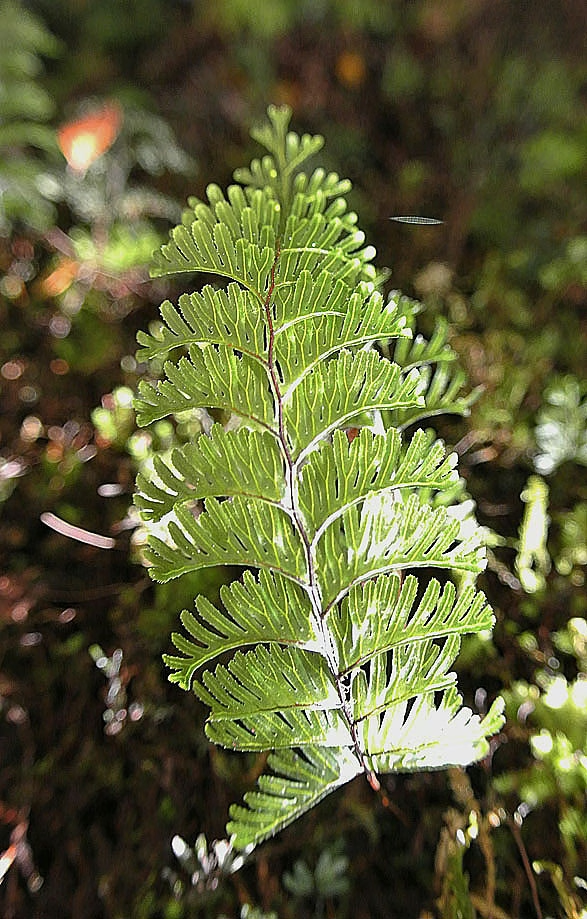
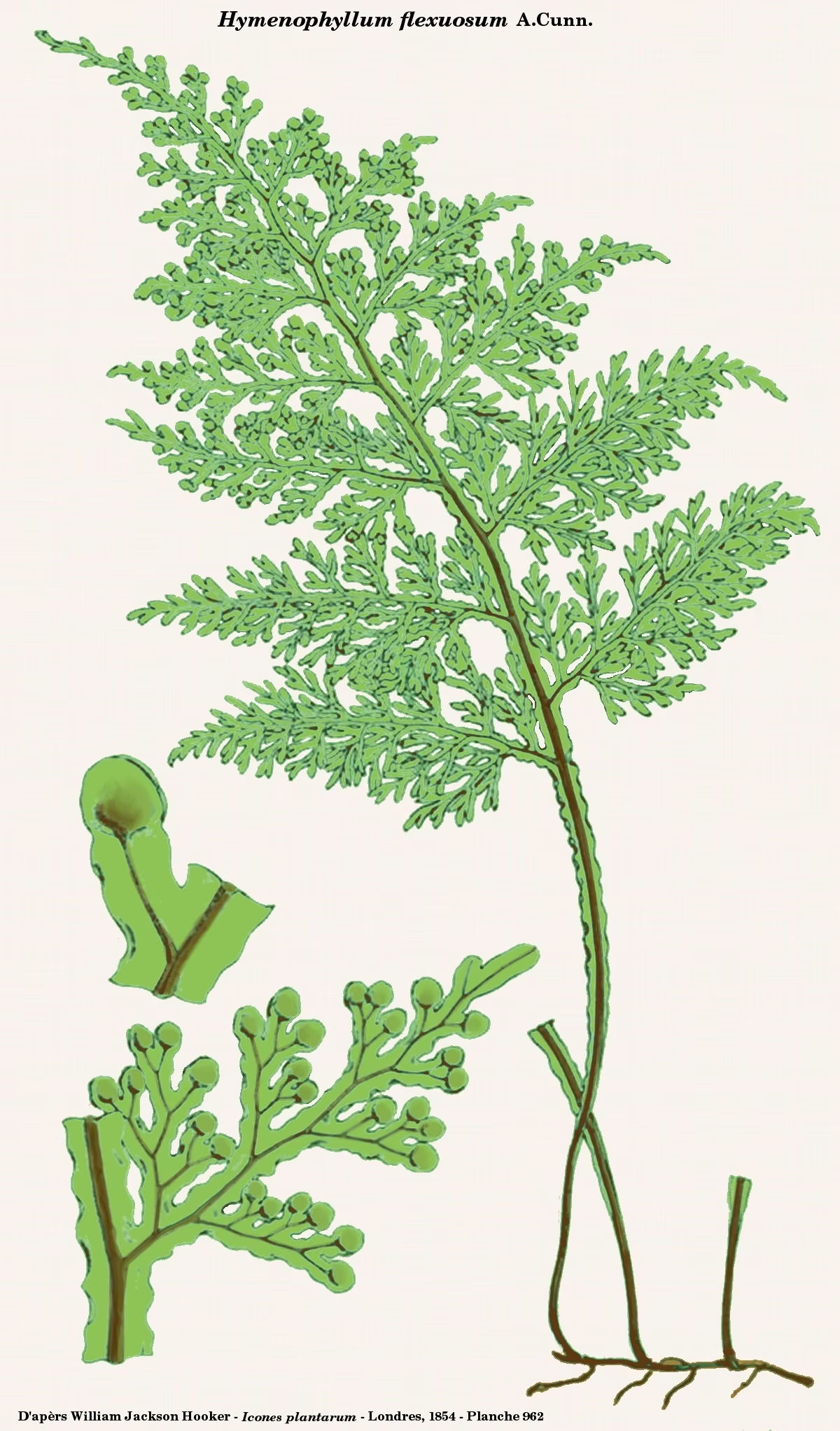
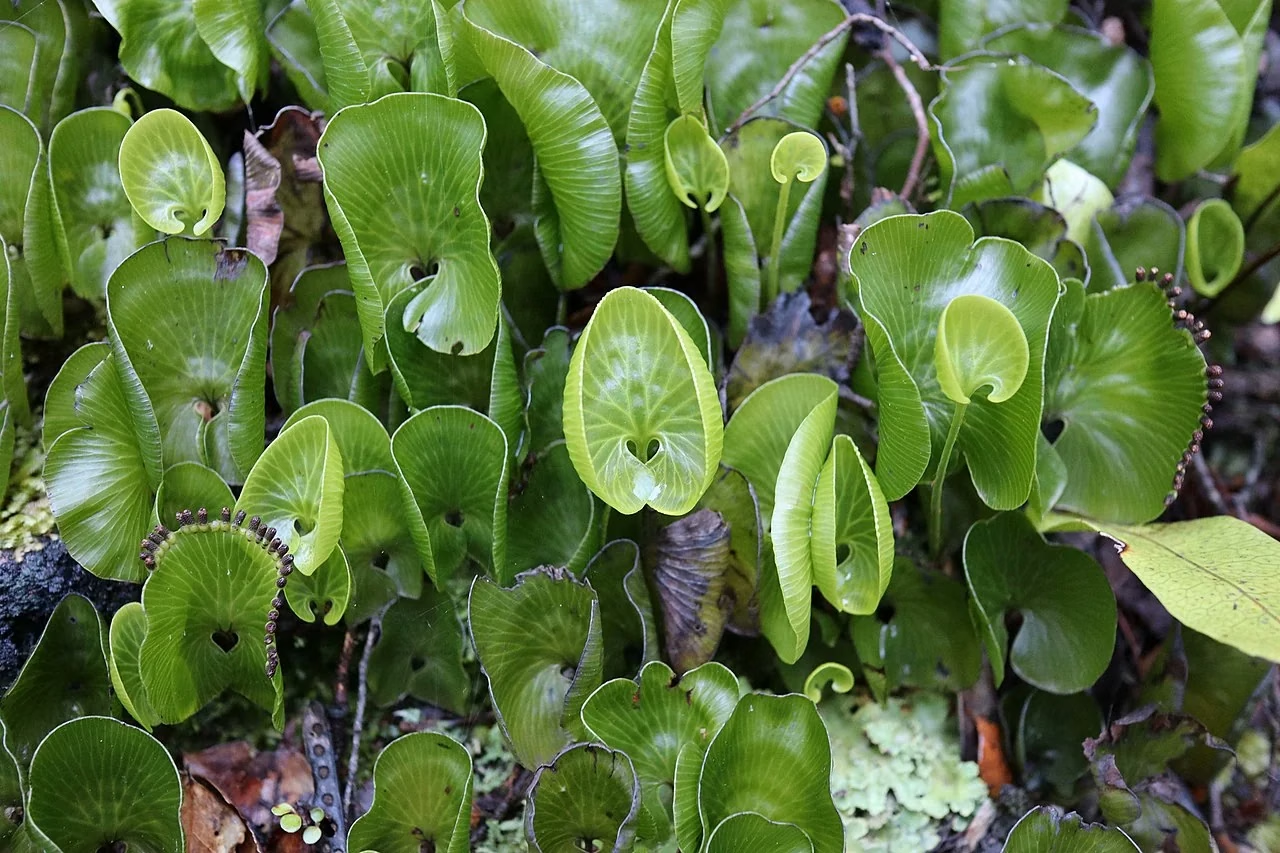
These filmy ferns belong to the same family, Hymenophyllaceae, as bristle fern.

Conservation
The 2023 New Zealand assessment classified Abrodictyum elongatum as Not Threatened. This national classification does not mean that it is common in every part of its range.
In the Wellington region, the 2025 regional assessment lists this fern as Regionally Critical, despite its national Not Threatened status.
Frequently asked questions
Does this fern need waterlogged soil?
No such cultivation recommendation is given. The species account instead notes that poorly drained habitats appear unsuitable, and records some seasonally dry banks.
What projects from the tubular structures on its fronds?
These projections are the receptacles of the sori, the structures associated with spore production. They are part of the fern's normal reproductive anatomy.
Can other plants grow on its leaves?
Yes. Epiphyllous mosses and liverworts are recorded on the upper surfaces of its fronds.
Sources
- NZPCN: Abrodictyum elongatum, accessed 29 October 2026.
- Flora of New Zealand: Trichomanes elongatum, Brownsey and Perrie (2016).
- Greater Wellington: regional conservation status of indigenous vascular plants (2025)
Last updated: